
Compound Monograph
3'-O-Galloylpaeoniflorin
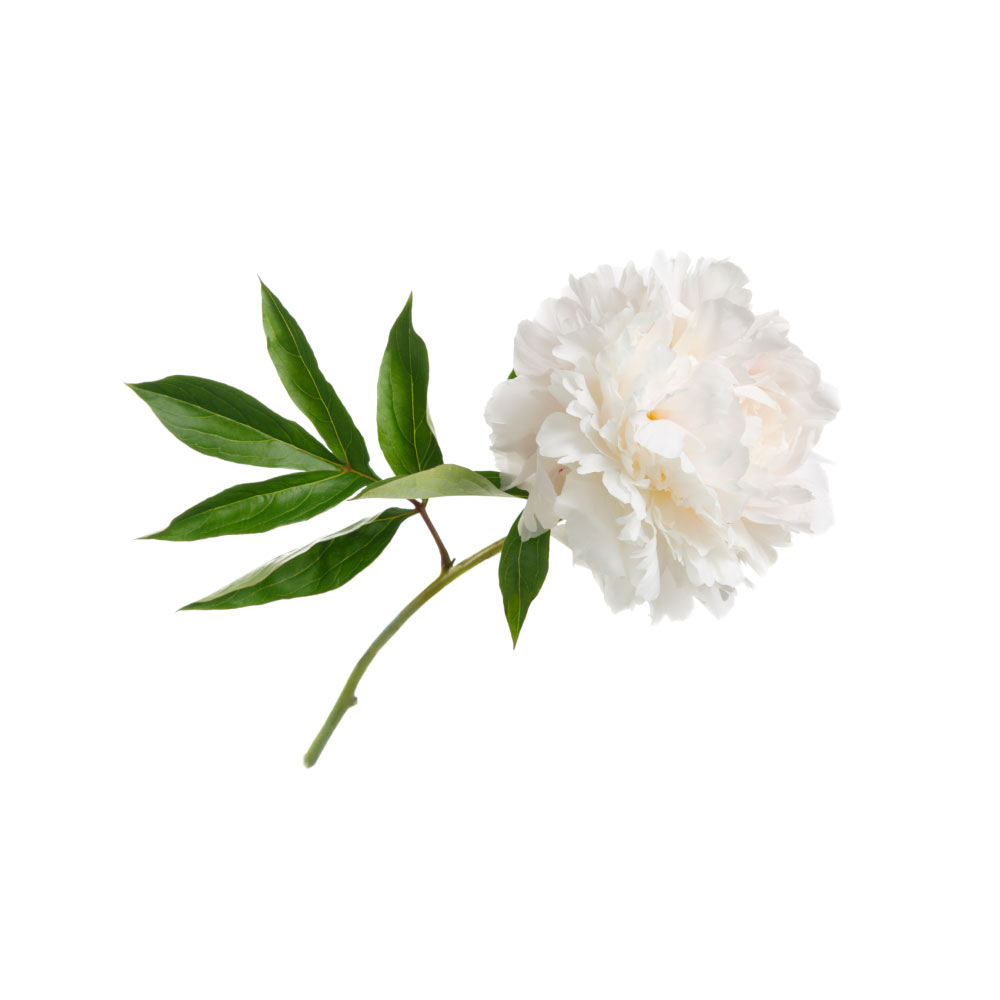
3'-O-Galloylpaeoniflorin is a galloylated monoterpene glycoside of Chinese peony (Paeonia lactiflora) root — the paeoniflorin backbone carrying a gallic-acid ester at the 3' position. It was isolated in 2009 as one of a series of peony androgen-receptor modulators, though it was itself only a modest binder; there are no human or pharmacokinetic data.

Sources · 2
Where Does It Come From?
3'-O-Galloylpaeoniflorin is a naturally occurring galloylated monoterpene glycoside (paeoniflorin gallate ester), found in Chinese peony and 1 other source. It is well tolerated orally (low toxicity).
Concentration
Content by Source
Concentrations not reported. No percent-dry-weight or mg/g figures have been published for this compound in its source plants.
3'-O-Galloylpaeoniflorin at a Glance
3’-O-Galloylpaeoniflorin is a galloylated monoterpene glycoside from the root of Chinese peony (Paeonia lactiflora). Structurally it is paeoniflorin — peony’s principal pinane-type monoterpene glycoside — carrying an extra gallic-acid ester at the 3’ position of the sugar.
It was first described in 2009 by a single Japanese research group (Washida and colleagues) who isolated it, alongside several related galloyl and benzoyl glycosides, while screening peony root for androgen-receptor (AR) modulators 1Reference 1Androgen modulators from the roots of Paeonia lactiflora (paeoniae radix) grown and processed in Nara prefecture, JapanView study →. That paper is essentially the whole primary literature on this specific molecule.
The honest headline is that 3’-O-galloylpaeoniflorin is thinly studied and, on the one screen that tested it, a modest actor. In the AR-binding assay it showed only weak activity (roughly 12–31% at 120 µg/mL); the strong binders in the same series were its relatives 6’-O-galloylalbiflorin and pentagalloylglucose, not this compound 1Reference 1Androgen modulators from the roots of Paeonia lactiflora (paeoniae radix) grown and processed in Nara prefecture, JapanView study →. There are no pharmacokinetic, animal-disease, or human data, and no toxicology for the isolate.
A Positional Galloyl Isomer of Paeoniflorin → Androgen Modulation
The single reason this molecule has a page is the structure-activity story of galloylated peony glycosides as anti-androgens, and 3’-O-galloylpaeoniflorin is one data point in it.
Peony root contains a family of monoterpene glycosides built on the same paeoniflorin/albiflorin skeletons, differing in which hydroxyl carries a gallic-acid (or benzoic-acid) ester and at which position. Washida and colleagues isolated a set of these and tested each for binding to the androgen receptor 1Reference 1Androgen modulators from the roots of Paeonia lactiflora (paeoniae radix) grown and processed in Nara prefecture, JapanView study →:
- The gallate (galloyl) ester is the feature that switches on AR binding — plain paeoniflorin and albiflorin, which lack it, showed no binding at all 1Reference 1Androgen modulators from the roots of Paeonia lactiflora (paeoniae radix) grown and processed in Nara prefecture, JapanView study →.
- But position and backbone matter as much as the presence of the ester. Of the series, the strong AR binders were 6’-O-galloylalbiflorin (IC₅₀ ≈ 33.7 µg/mL) and the fully galloylated tannin pentagalloylglucose (IC₅₀ ≈ 4.1 µg/mL). 3’-O-galloylpaeoniflorin, 6’-O-galloylpaeoniflorin and 6’-O-benzoylpaeoniflorin were only modest binders (~12–31% inhibition at 120 µg/mL) 1Reference 1Androgen modulators from the roots of Paeonia lactiflora (paeoniae radix) grown and processed in Nara prefecture, JapanView study →.
So the correct reading is that 3’-O-galloylpaeoniflorin belongs to a class of peony AR modulators, and contributes to the herb’s traditional reputation in hyperandrogenism, but is not itself the potent member — it is a weaker cousin of the more active galloylalbiflorin and gallotannin. The androgen-modulator label is a class finding worn by a modest individual.
3’-O vs. 6’-O-Galloylpaeoniflorin
These two are positional isomers — the same paeoniflorin backbone and the same single gallic-acid ester, differing only in which sugar hydroxyl the gallate sits on (the 3’ versus the 6’ position). They are not the same compound and should not be conflated, and the plain name “galloylpaeoniflorin” is ambiguous between them.
The distinction matters because the 6’-O isomer is the far better-studied molecule. It has a body of neuroprotective, cardioprotective and metabolic literature in cell and rodent models under the “galloylpaeoniflorin” name — much of which is often loosely attached to the unqualified term. That literature is the 6’-O isomer’s, not the 3’-O’s. For 3’-O-galloylpaeoniflorin, the demonstrated data begin and end with its isolation and the single AR-binding screen 1Reference 1Androgen modulators from the roots of Paeonia lactiflora (paeoniae radix) grown and processed in Nara prefecture, JapanView study →. When a source says only “galloylpaeoniflorin”, assume the 6’-O isomer unless the 3’ position is stated.
What It's Used For
The evidence base for 3’-O-galloylpaeoniflorin specifically is a single in-vitro isolation-and-screening paper 1Reference 1Androgen modulators from the roots of Paeonia lactiflora (paeoniae radix) grown and processed in Nara prefecture, JapanView study →, reinforced by a same-group companion paper on the broader galloyl-glycoside series 2Reference 2Two new galloylated monoterpene glycosides, 4-O-galloylalbiflorin and 4’-O-galloylpaeoniflorin, from the roots of Paeonia lactifloraView study →. Everything below is that narrow.
Support is an experimental score — weighted by study type (human > animal > in vitro) and volume. A beta, not a validated metric. Both rows are single-study, isolate-only, in-vitro; the antioxidant row is a structural inference with no direct assay for this isomer.
Tested as the isolated compound in a cell-free/receptor AR-binding assay, 3’-O-galloylpaeoniflorin behaved as one of the weaker androgen-receptor modulators in the peony galloyl-glycoside series, giving only modest binding (on the order of 12–31% inhibition at 120 µg/mL) while 6’-O-galloylalbiflorin (IC₅₀ ≈ 33.7 µg/mL) and pentagalloylglucose (IC₅₀ ≈ 4.1 µg/mL) were the strong binders 1Reference 1Androgen modulators from the roots of Paeonia lactiflora (paeoniae radix) grown and processed in Nara prefecture, JapanView study →.
The finding is best understood as supporting peony’s class of AR-modulating constituents rather than crediting this molecule specifically. A same-group follow-up isolated further galloylated monoterpene glycosides (4-O-galloylalbiflorin, 4’-O-galloylpaeoniflorin) with AR binding, extending the positional-isomer series but again not singling out the 3’-O compound 2Reference 2Two new galloylated monoterpene glycosides, 4-O-galloylalbiflorin and 4’-O-galloylpaeoniflorin, from the roots of Paeonia lactifloraView study →.
Gap: a single in-vitro binding screen, no functional (agonist/antagonist cell-reporter), no animal androgen endpoint, no human data; the potency belongs to the compound’s relatives, not to it.
No antioxidant assay has been reported for 3’-O-galloylpaeoniflorin itself. The interest is purely structural: the molecule carries a gallic-acid (gallate) ester, and galloyl groups are among the most reliable radical-scavenging motifs in plant phenolics, so some antioxidant capacity is chemically expected. This is an inference from the moiety, not a measured property of this isomer.
Gap: no DPPH/ORAC/cellular-antioxidant data for the isolate; the expectation rests on the general chemistry of gallate esters, and any measured antioxidant activity of peony root cannot be apportioned to this trace constituent.
Mechanisms
| Target / pathway | Effect | Relevant to |
|---|---|---|
| Androgen receptor (AR) | ligand binding — modest (weak-to-moderate) inhibition of AR binding in vitro; the gallate ester is the enabling feature, but this isomer is a weak member of the series | androgen-receptor modulation |
| Gallic-acid (gallate) ester group | canonical radical-scavenging motif — antioxidant capacity is chemically plausible but unmeasured for this isomer | antioxidant (inferred) |
The one load-bearing mechanistic point: the galloyl ester, not the paeoniflorin backbone, is what confers AR binding across this peony series — plain paeoniflorin and albiflorin do not bind 1Reference 1Androgen modulators from the roots of Paeonia lactiflora (paeoniae radix) grown and processed in Nara prefecture, JapanView study →. Position and backbone then tune the potency, and 3’-O-galloylpaeoniflorin sits at the low end.
Pharmacokinetics
None reported. There are no absorption, distribution, metabolism, oral-bioavailability, or half-life data for 3’-O-galloylpaeoniflorin — the compound has only ever been handled as an isolated substance in vitro. By analogy to related peony monoterpene glycosides such as paeoniflorin, poor oral absorption would be expected, which — combined with its status as a trace constituent — makes any systemic contribution from peony-root intake speculative. No parameter here is measured; this is a flagged hole, not a finding.
Clinical Trials
There are no clinical trials of 3’-O-galloylpaeoniflorin, and none are registered. Human evidence for peony’s androgen-related use rests on the whole root or on standardized extracts and the peony–licorice pairing, not on this isolated molecule.
| Completed | Planned | Terminated | Preclinical |
|---|---|---|---|
| — | — | — | In-vitro isolation + AR-binding screen only 1, |
Last checked: July 2026.
Isolate vs. Plant Studies
The only data on this molecule are isolate data — and that is a caveat, not a strength here. The compound was purified from peony root and screened in vitro 1Reference 1Androgen modulators from the roots of Paeonia lactiflora (paeoniae radix) grown and processed in Nara prefecture, JapanView study →, but it has never been tested as part of a defined whole-plant effect, nor shown to reach any tissue after peony ingestion. Peony’s actual human-relevant evidence — for immune/anti-inflammatory use and for the traditional hyperandrogenism application — belongs to the whole root, to total glucosides of paeony (TGP), and to the peony–licorice combination, complex preparations in which 3’-O-galloylpaeoniflorin is a trace component among dozens. Nothing about the herb’s activity can be attributed to this molecule, and the isolate’s own single in-vitro result cannot be transferred to a peony preparation.
Prevalence in Nature
3’-O-Galloylpaeoniflorin is reported as a minor galloylated glycoside of Chinese peony root (Paeonia lactiflora), the source from which Washida and colleagues isolated it (from material grown and processed in Nara prefecture, Japan) 1Reference 1Androgen modulators from the roots of Paeonia lactiflora (paeoniae radix) grown and processed in Nara prefecture, JapanView study →. It sits within peony’s larger family of monoterpene glycosides — the abundant paeoniflorin and albiflorin, their oxidized and galloyl/benzoyl derivatives (oxypaeoniflorin, the galloyl esters), and the astringent gallotannins.
Its concentration has not been quantified, and it has not been widely reported outside P. lactiflora root; whether it occurs in other Paeonia species or forms (red peony, tree peony/Moutan) at meaningful levels is not documented in the sources reviewed. Treat it as a trace, peony-specific constituent until a composition study puts a number on it.
Discovery & Synthesis
3’-O-Galloylpaeoniflorin was first isolated and structurally characterized in 2009 by Kazuto Washida, Yoshiyuki Itoh, Takashi Iwashita and Kyosuke Nomoto, who described it as a new compound while isolating androgen-receptor modulators from Paeonia lactiflora roots grown and processed in Nara prefecture, Japan 1Reference 1Androgen modulators from the roots of Paeonia lactiflora (paeoniae radix) grown and processed in Nara prefecture, JapanView study →. The same group published a companion study the same year reporting two further new galloylated monoterpene glycosides (4-O-galloylalbiflorin and 4’-O-galloylpaeoniflorin) from the same source, cementing peony root as a source of a positional series of galloylated glycosides 2Reference 2Two new galloylated monoterpene glycosides, 4-O-galloylalbiflorin and 4’-O-galloylpaeoniflorin, from the roots of Paeonia lactifloraView study →.
The name is descriptive: it is paeoniflorin bearing a galloyl (gallic-acid) ester at the 3’ hydroxyl. No total synthesis has been reported — the compound exists only as a natural-product isolate obtained by chromatographic separation from peony root, and there is no commercial production; it is a research substance, not a manufactured ingredient.
Patents: not yet researched.
Toxicity & Safety
There is no toxicology for isolated 3’-O-galloylpaeoniflorin — no acute, repeat-dose, genotoxicity, or reproductive data. The low flag is a placeholder reflecting its status as a minor, trace glycoside of an edible-medicinal root with no signal of concern, not the result of a completed safety assessment. Safety of peony intake is governed by the herb and its preparations, not by this constituent, and any pregnancy/lactation decision belongs on the peony monograph where intake is actually decided.
- Trace constituent of a long-used medicinal root. Occurs at minor levels in Chinese peony root, which has extensive traditional and clinical use as a standardized extract; no toxicity signal is attached to this molecule.
- No safety data for the isolate. No toxicology, no pharmacokinetics, no human exposure of the pure compound — absence of reported harm is not evidence of safety.
- Androgen-pathway activity in vitro. As a (modest) androgen-receptor modulator in the peony galloyl-glycoside series, any theoretical endocrine relevance would apply to peony preparations as a whole, not to this trace compound in isolation; hormone-sensitive contexts are decided at the herb/product level.
Dosage
There is no established dose for 3’-O-galloylpaeoniflorin. It is a research-isolated peony constituent, not a supplement or drug, and it has never been administered to an animal or a human. The only real-world exposure is incidental — as a trace component of whole peony root, total glucosides of paeony (TGP), or the peony–licorice combination, whose dosing is set at the peony level and standardized to paeoniflorin, not to this molecule. Nothing here is a personal recommendation.
References
- Washida K, Itoh Y, Iwashita T, Nomoto K (2009). Androgen modulators from the roots of Paeonia lactiflora (paeoniae radix) grown and processed in Nara prefecture, Japan. Chemical & Pharmaceutical Bulletin (Tokyo). https://pubmed.ncbi.nlm.nih.gov/19721258/
- Washida K, Yamagaki T, Iwashita T, Nomoto K (2009). Two new galloylated monoterpene glycosides, 4-O-galloylalbiflorin and 4’-O-galloylpaeoniflorin, from the roots of Paeonia lactiflora. Chemical & Pharmaceutical Bulletin (Tokyo). https://pubmed.ncbi.nlm.nih.gov/19801879/



