
Compound Monograph
6,7,8-Trimethoxycoumarin
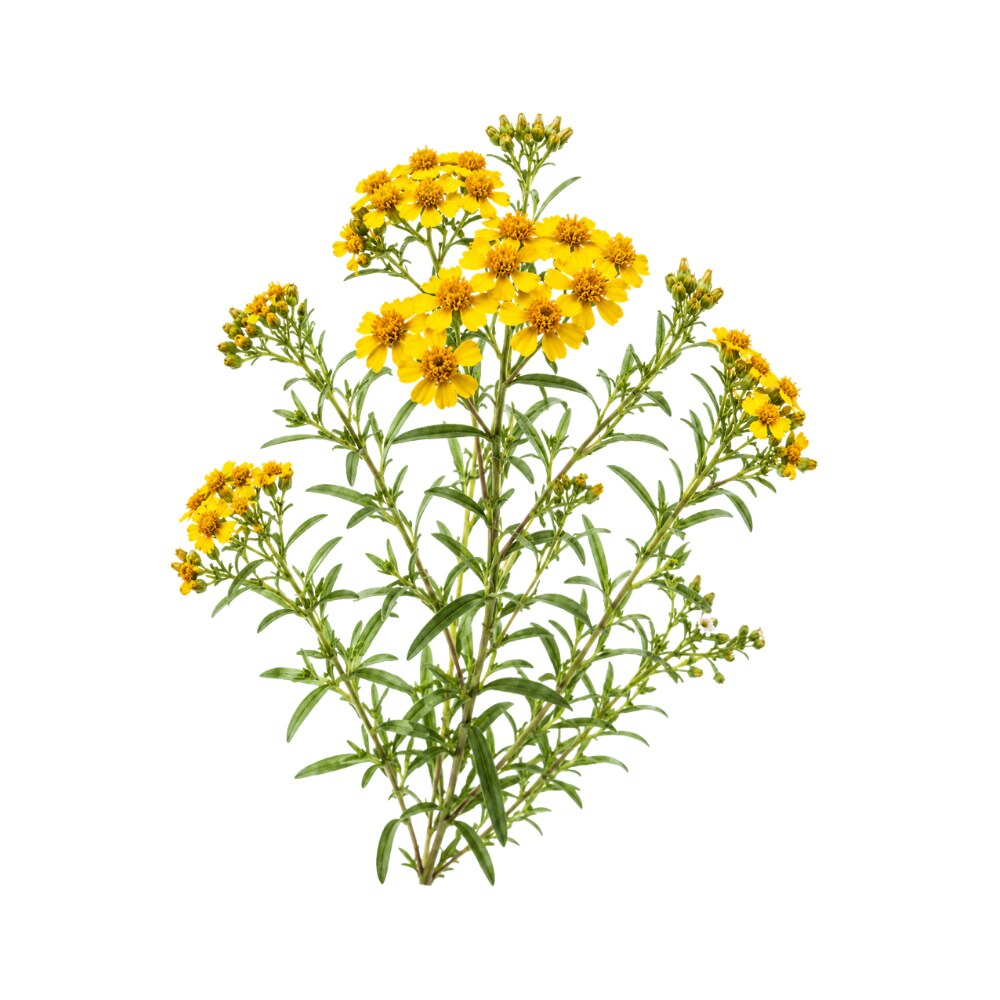
6,7,8-Trimethoxycoumarin (dimethylfraxetin) is a simple trimethoxy coumarin of Mexican tarragon (Tagetes lucida) — an animal-model vasorelaxant, neuroprotective and gastroprotective candidate with no human data. It is not a furanocoumarin and is not phototoxic.

Sources · 3
Where Does It Come From?
6,7,8-Trimethoxycoumarin is a naturally occurring coumarin (simple trimethoxycoumarin), found in Mexican tarragon and 2 other sources. It is well tolerated orally (low toxicity).
Concentration
Content by Source
Concentrations not reported. No percent-dry-weight or mg/g figures have been published for this compound in its source plants.
6,7,8-Trimethoxycoumarin at a Glance
6,7,8-Trimethoxycoumarin is a simple trimethoxy coumarin — a benzopyranone with three methoxy groups — most consistently reported from the aerial parts of Mexican tarragon (Tagetes lucida), the aromatic Mexican herb also called yauhtli or pericón 1,
Importantly, it is an ordinary coumarin, not a furanocoumarin: it has no furan ring fused to the benzopyranone, so it does not carry the photosensitising / phototoxic liability of psoralen-type furanocoumarins.
The evidence base is entirely preclinical. Across a handful of studies from a single Mexican research programme, the isolated molecule shows vasorelaxant/antihypertensive, neuroprotective, and antipsychotic-like activity in animal models, and a semi-synthetic screen ranks it among the gastroprotective coumarins with low toxicity 2,
Dimethylfraxetin: The Same Molecule
The most important thing to know about this compound is a naming collision: “dimethylfraxetin” and “6,7,8-trimethoxycoumarin” are the same molecule.
Fraxetin is 7,8-dihydroxy-6-methoxycoumarin. Methylating both of its free hydroxyls (at C-7 and C-8) converts them to methoxy groups, giving 6,7,8-trimethoxycoumarin (fraxetin dimethyl ether). PubChem resolves both names to the identical structure — 6,7,8-trimethoxychromen-2-one, C₁₂H₁₂O₅, CAS 6035-49-0.
This matters because the Tagetes lucida pharmacology papers split the work across both names: the vasorelaxant study calls it 6,7,8-trimethoxycoumarin 2Reference 2Antihypertensive and vasorelaxant mode of action of the ethanol-soluble extract from Tagetes lucida Cav. aerial parts and its main bioactive metabolitesView study →, while the neuroprotective and antipsychotic-like studies call it dimethylfraxetin (abbreviated “DF”) 3,
What It's Used For
All of the evidence below is preclinical — isolated tissue, or oral/behavioural experiments in mice and rats. Much of it comes from Tagetes lucida research, where 6,7,8-trimethoxycoumarin is studied both as an isolate and as a component of a standardised coumarin fraction, alongside its sibling coumarins scoparone (6,7-dimethoxycoumarin) and herniarin (7-methoxycoumarin).
Support is an experimental score — weighted by study type (human > animal > in vitro) and volume. A beta, not a validated metric. Every row here is preclinical only; no human outcome exists for any application, so scores stay low.
The best-developed strand, and the one that uses the isolated molecule most directly. In an ethnopharmacology study of Tagetes lucida aerial parts, the ethanol-soluble extract relaxed isolated rat aorta in a concentration-dependent, partially endothelium-dependent manner and lowered blood pressure in rats, acting through NO/cGMP-system activation and calcium-channel blockade. Bioassay-guided work named 6,7,8-trimethoxycoumarin, scoparone (6,7-dimethoxycoumarin) and herniarin (7-methoxycoumarin) as the main bioactive metabolites responsible 2Reference 2Antihypertensive and vasorelaxant mode of action of the ethanol-soluble extract from Tagetes lucida Cav. aerial parts and its main bioactive metabolitesView study →.
Gap: the vascular pharmacology is characterised at the level of the extract plus its named coumarins in animal tissue and rats; there is no isolated-compound dose-response in humans, and no clinical blood-pressure data 2Reference 2Antihypertensive and vasorelaxant mode of action of the ethanol-soluble extract from Tagetes lucida Cav. aerial parts and its main bioactive metabolitesView study →.
Studied under the name dimethylfraxetin. In a cuprizone mouse model (a standard model of demyelination and motor/neuroinflammatory damage relevant to multiple sclerosis), dimethylfraxetin was one of five T. lucida coumarins that, with standardised extracts, reduced motor impairment and neuroinflammation — modulating pro- and anti-inflammatory cytokines and helping protect the blood–brain barrier 3Reference 3Effects of five coumarins and standardized extracts from Tagetes lucida Cav. on motor impairment and neuroinflammation induced with cuprizoneView study →.
Gap: a single behavioural/histological study in mice, with the coumarin tested alongside an extract rather than head-to-head as the sole isolate; no mechanism at the receptor level and no human evidence 3Reference 3Effects of five coumarins and standardized extracts from Tagetes lucida Cav. on motor impairment and neuroinflammation induced with cuprizoneView study →.
Also studied as dimethylfraxetin. In a ketamine-induced psychosis model in mice — a pharmacological model of schizophrenia-like symptoms — dimethylfraxetin (with herniarin and T. lucida extracts) blocked ketamine’s effects on stereotyped behaviour, hyperlocomotion, cognitive impairment and social withdrawal, and its interaction with haloperidol was examined 4Reference 4Herniarin, dimethylfraxetin and extracts from Tagetes lucida, in psychosis secondary to ketamine and its interaction with haloperidolView study →.
Gap: one behavioural study, no defined molecular target for the isolate, and results entangled with the co-administered extract and reference drug; nothing translates to human data 4Reference 4Herniarin, dimethylfraxetin and extracts from Tagetes lucida, in psychosis secondary to ketamine and its interaction with haloperidolView study →.
Here the molecule appears in a medicinal-chemistry context rather than a Tagetes one. A screen of six scoparone-derived trimethoxy/methylenedioxy coumarins against rodent gastric lesions found 6,7,8-trimethoxycoumarin (and 5,6,7-trimethoxycoumarin) had gastroprotective activity greater than the reference drug rebamipide, with low acute oral toxicity and only minimal effects on CYP3A4/CYP2C9 5Reference 5AnimalGastroprotective efficacy and safety evaluation of scoparone derivatives on experimentally induced gastric lesions in rodentsView study →.
Gap: a structure-activity screen of semi-synthetic derivatives in rodents; the gastroprotective mechanism is not resolved for the isolate and there is no clinical follow-up 5Reference 5AnimalGastroprotective efficacy and safety evaluation of scoparone derivatives on experimentally induced gastric lesions in rodentsView study →.
Mechanisms
| Target / pathway | Effect | Relevant to |
|---|---|---|
| NO / cGMP signalling (endothelium) | activation → vasorelaxation (partially endothelium-dependent) | vasorelaxant / antihypertensive |
| Voltage-gated calcium channels | blockade → smooth-muscle relaxation | vasorelaxant / antihypertensive |
| Pro-/anti-inflammatory cytokines; blood–brain barrier | reduced neuroinflammation, BBB protection in demyelination model | neuroprotective |
| Ketamine-driven (glutamatergic/NMDA) behavioural cascade | normalised stereotypy, hyperlocomotion, cognition, social behaviour | antipsychotic-like |
| Human carbonic anhydrases (in-vitro screen) | coumarin “prodrug” CA inhibition via lactone hydrolysis; trimethoxycoumarins among the natural-coumarin inhibitors profiled | mechanistic interest only |
| CYP3A4 / CYP2C9 | only minimal in-vitro inhibition (≈16% CYP3A4 at 10 µM) → low predicted interaction risk | safety |
The vascular mechanism (NO/cGMP + Ca²⁺ block) is the load-bearing pharmacology; the carbonic-anhydrase result is a class-level in-vitro observation for natural coumarins, not a validated therapeutic mechanism for this molecule.
Pharmacokinetics
No dedicated pharmacokinetic profile (oral bioavailability, plasma half-life, metabolism, active metabolites) has been characterised for isolated 6,7,8-trimethoxycoumarin in the sources reviewed. The most relevant data are indirect: a standardised T. lucida coumarin fraction — of which this molecule is one component — has been the subject of pharmacokinetic study 1Reference 1Dose-effect determination of a neuroprotector fraction standardized in coumarins of Tagetes lucida and bioavailabilityView study →, and an in-vitro assay found the isolate causes only minimal CYP3A4/CYP2C9 inhibition, suggesting a low drug-interaction footprint 5Reference 5AnimalGastroprotective efficacy and safety evaluation of scoparone derivatives on experimentally induced gastric lesions in rodentsView study →. As a fully methylated coumarin it lacks free hydroxyls for direct glucuronidation/sulfation, so O-demethylation would be expected to dominate its metabolism — but this is inference, not measured data. This is the page’s clearest data hole.
Clinical Trials
There are no registered or published human clinical trials of 6,7,8-trimethoxycoumarin / dimethylfraxetin as an isolated compound. All evidence is preclinical.
| Completed | Planned | Terminated | Preclinical |
|---|---|---|---|
| — | — | — | Vasorelaxant, neuroprotective, antipsychotic-like, gastroprotective (animal + in vitro) 2, |
Last checked: July 2026.
Isolate vs. Plant Studies
The evidence sits between isolate and plant, and the distinction is honest to draw. The gastroprotective and carbonic-anhydrase findings use the pure compound (semi-synthetic derivative screen and a natural-product library, respectively) 5,
Prevalence in Nature
6,7,8-Trimethoxycoumarin is a minor coumarin with a scattered natural distribution. Its best-documented source is the aerial parts of Mexican tarragon (Tagetes lucida), where it is one of several coumarins — with scoparone, herniarin, scopoletin and esculetin — that make the plant’s coumarin fraction pharmacologically interesting 1,
No quantified concentration (% dry weight or mg/g) is reported for this compound in the sources reviewed; where it is measured it appears within a coumarin fraction rather than as an individually quantified peak. Reported citrus-peel / Artemisia occurrence was not verifiable in the sources checked and is not claimed here. Filling in a real concentration figure — and confirming genera beyond Tagetes — is a gap for a later pass.
Discovery & Synthesis
6,7,8-Trimethoxycoumarin has been known for decades as fraxetin dimethyl ether — the fully methylated relative of the plant coumarins fraxetin and scoparone — but a discrete first-isolation date and discoverer are not well documented in the accessible literature. It carries CAS 6035-49-0.
Because it is simply the trimethyl-oxygenated coumarin, it is readily obtained by exhaustive O-methylation of a hydroxy/methoxy coumarin precursor (e.g. methylating fraxetin’s free hydroxyls, or building it from a trihydroxy/trimethoxy benzaldehyde via a Pechmann/Knoevenagel coumarin condensation). In practice the compound is sold as a reference standard isolated from plant material or prepared semi-synthetically; there is no large-scale natural-extraction industry around it, and the pharmacology studies use plant-isolated or synthesised material 2,
Patents: not yet researched.
Toxicity & Safety
6,7,8-Trimethoxycoumarin carries a low flag. The direct evidence is limited but reassuring as far as it goes: a rodent screen reported low acute oral toxicity and only minimal effects on the major drug-metabolising enzymes CYP3A4/CYP2C9, implying a low drug-interaction risk 5Reference 5AnimalGastroprotective efficacy and safety evaluation of scoparone derivatives on experimentally induced gastric lesions in rodentsView study →. Critically, as a simple coumarin (not a furanocoumarin) it lacks the fused furan ring that makes psoralen-type molecules photo-toxic, so it is not expected to cause phototoxicity or photosensitisation.
The important caveat is the absence of data, not the presence of harm: there is no human safety experience, no repeat-dose or reproductive-toxicity dataset, and no genotoxicity package for the isolated compound. Coumarins as a class can raise hepatotoxicity questions (driven largely by the parent coumarin’s metabolism), but no specific hepatotoxic signal has been characterised for this trimethoxy derivative.
- Not a furanocoumarin. No fused furan ring, so no expected phototoxicity/photosensitisation — unlike psoralen, bergapten or xanthotoxin.
- Low measured toxicity signal. Low acute oral toxicity in mice and minimal CYP3A4/CYP2C9 inhibition in the one screen that assessed it 5Reference 5AnimalGastroprotective efficacy and safety evaluation of scoparone derivatives on experimentally induced gastric lesions in rodentsView study →.
- Animal data only. No human safety experience; all findings are preclinical and largely from a single research group.
- No repeat-dose, reproductive or genotoxicity data for the isolate; pregnancy/lactation and long-term safety are simply uncharacterised.
Dosage
There is no established human dose. Every figure in the literature is from animal research — oral milligram-per-kilogram dosing in mouse and rat models of hypertension, demyelination, ketamine psychosis and gastric injury — where the compound was usually given as an isolate or as part of a standardised Tagetes lucida coumarin preparation 2,
References
- Santibáñez A, et al. (2023). Dose-effect determination of a neuroprotector fraction standardized in coumarins of Tagetes lucida and bioavailability. Pharmaceutics. https://pubmed.ncbi.nlm.nih.gov/36986828/
- Estrada-Soto S, et al. (2021). Antihypertensive and vasorelaxant mode of action of the ethanol-soluble extract from Tagetes lucida Cav. aerial parts and its main bioactive metabolites. Journal of Ethnopharmacology. https://pubmed.ncbi.nlm.nih.gov/32961278/
- Castro-Martínez G, et al. (2023). Effects of five coumarins and standardized extracts from Tagetes lucida Cav. on motor impairment and neuroinflammation induced with cuprizone. Pharmaceuticals (Basel). https://pubmed.ncbi.nlm.nih.gov/37895861/
- Porras-Dávila SL, et al. (2022). Herniarin, dimethylfraxetin and extracts from Tagetes lucida, in psychosis secondary to ketamine and its interaction with haloperidol. Plants (Basel). https://pubmed.ncbi.nlm.nih.gov/36297813/
- Son DJ, et al. (2015). Gastroprotective efficacy and safety evaluation of scoparone derivatives on experimentally induced gastric lesions in rodents. Nutrients. https://pubmed.ncbi.nlm.nih.gov/25781220/
- Davis RA, et al. (2013). Natural product coumarins that inhibit human carbonic anhydrases. Bioorganic & Medicinal Chemistry. https://pubmed.ncbi.nlm.nih.gov/22892213/



