
Compound Monograph
6-Prenylnaringenin
6-Prenylnaringenin (6-PN) is a prenylated flavanone of hops — the 6-prenyl positional isomer of the potent phytoestrogen 8-prenylnaringenin, but, crucially, NOT strongly estrogenic itself. Its preclinical interest is as a cancer-selective antiproliferative and an estrogen-detoxification (CYP1A1) inducer.

Sources · 2
Where Does It Come From?
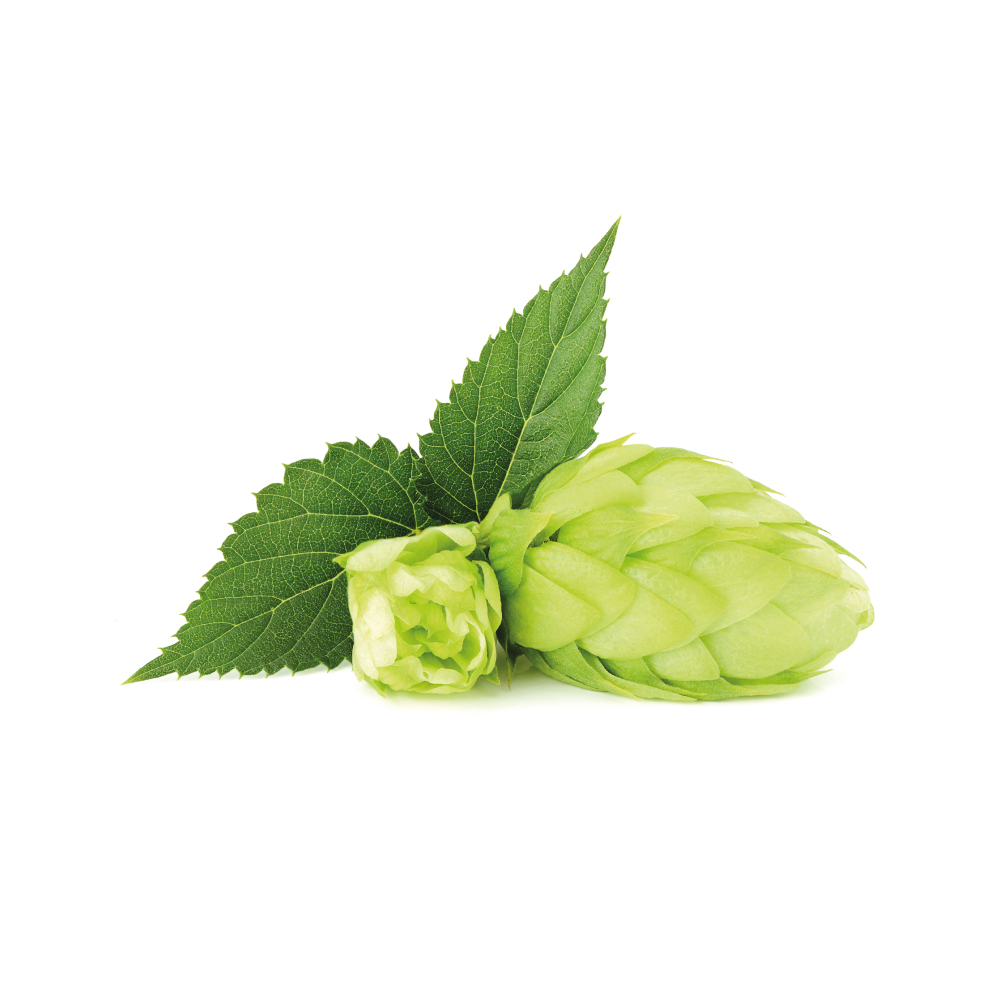
6-Prenylnaringenin is a naturally occurring prenylflavonoid (flavanone), found in Hops and 1 other source. It is well tolerated orally (low toxicity).
Concentration
Content by Source
Reported concentrations across the plants that contain 6-prenylnaringenin — the bar marks the typical level, the line shows the reported range.
Literature figures for varying plant parts and preparations. Read them as a comparative guide, not exact assays.
6-Prenylnaringenin at a Glance
6-Prenylnaringenin (6-PN) is a prenylated flavanone found almost exclusively in hops (Humulus lupulus), and, through them, in beer. Structurally it is the 6-prenyl positional isomer of 8-prenylnaringenin — the same naringenin skeleton carrying the same five-carbon prenyl side-chain, differing only in where that chain attaches to the A-ring. Both isomers form during brewing from the shared chalcone precursor desmethylxanthohumol.
That single positional difference is the whole story of this molecule. 8-PN is one of the most potent phytoestrogens known; 6-PN is not — its estrogen-receptor activity is under 1% of its famous sibling’s 1Reference 1The endocrine activities of 8-prenylnaringenin and related hop (Humulus lupulus L.) flavonoidsView study →. Because of that, 6-PN is often studied precisely because it does the interesting non-hormonal things — cancer-selective antiproliferation, estrogen-detoxification, antimicrobial synergy — without the estrogenic activity that complicates 8-PN.
The evidence is honest but modest and entirely preclinical: cell-line and mechanistic work, no human trials of the isolated molecule. Toxicity at dietary exposure appears low.
6-Prenylnaringenin vs. 8-Prenylnaringenin
This is the point of the page, so it is worth stating plainly. 6-PN and 8-PN are structural isomers — identical molecular formula, identical parent flavanone (naringenin), identical prenyl group. The prenyl sits on carbon 6 in one and carbon 8 in the other, and that is the only difference.
Biologically the two diverge sharply:
- 8-Prenylnaringenin is a strong, ERα-preferring phytoestrogen — arguably the most potent identified — and is the compound behind the estrogenic, menopause and bone-protective signals attributed to hop extracts 1Reference 1The endocrine activities of 8-prenylnaringenin and related hop (Humulus lupulus L.) flavonoidsView study →.
- 6-Prenylnaringenin is essentially non-estrogenic: in the same binding assays that flagged 8-PN, 6-PN’s estrogen-receptor activity came in at less than 1% of 8-PN’s 1Reference 1The endocrine activities of 8-prenylnaringenin and related hop (Humulus lupulus L.) flavonoidsView study →. Its interest lies elsewhere — cancer-cell selectivity, estrogen-metabolism modulation and antimicrobial action.
Practically, this means the two isomers cannot be treated as interchangeable “hop flavonoids.” A source standardised to 8-PN is being standardised for estrogenicity; 6-PN riding along in the same extract contributes a different, non-hormonal pharmacology. When hop products are discussed for hormone-sensitive concerns, it is 8-PN that is doing the estrogenic work — not 6-PN.
What It's Used For
All of the human-relevant pharmacology below is in-vitro or mechanistic. There are no clinical trials of isolated 6-PN, and most figures are cell-culture IC50 values.
Support is an experimental score — weighted by study type (human > animal > in vitro) and volume. A beta, not a validated metric. Every row here is preclinical, so scores are capped low; read the per-row basis.
The best-developed 6-PN-specific signal, and it is about selectivity. Screening natural prenylated flavonoids for antiproliferative activity, Bartmańska et al. found 6-PN inhibited several human cancer lines — reported IC50s in the tens of micromolar (e.g. PC-3 prostate, T-47D and MCF-7 breast) — and was more potent than cisplatin against the T-47D breast line, while being comparatively less toxic to normal cells 2Reference 2Highly cancer selective antiproliferative activity of natural prenylated flavonoidsView study →.
A proposed mechanism is inhibition of the Kv1.3 voltage-gated potassium channel, which is over-expressed in some proliferating cells: 6-PN blocked Kv1.3 far more effectively than its non-prenylated analogues, linking the prenyl group to the anti-proliferative effect 6Reference 6The influence of 6-prenylnaringenin and selected non-prenylated flavonoids on the activity of Kv1.3 channels in human Jurkat T cellsView study →.
Its anticancer potency is broadly comparable to 8-PN’s, with the advantage that 6-PN lacks the estrogenicity that complicates using 8-PN near hormone-sensitive tissue 1,
Gap: every result is isolated 6-PN in cell culture at micromolar concentrations. There are no animal-tumour or human data, and the poor oral bioavailability below makes it unclear whether these concentrations are reachable in vivo 5Reference 5Pharmacokinetics of prenylated hop phenols in women following oral administration of a standardized extract of hopsView study →.
The mechanism that makes the non-estrogenic isomer interesting. In breast-cell models, 6-PN behaves as an aryl-hydrocarbon-receptor (AhR) agonist: it disrupts the estrogen-receptor-α–mediated down-regulation of CYP1A1, restoring that enzyme’s activity and pushing estrogen metabolism toward 2-hydroxylation — the comparatively benign detoxification route — rather than toward the potentially genotoxic 4-hydroxy metabolites 3,
This is a chemopreventive rationale, entirely separate from receptor-level estrogenicity. Separately, hop prenylflavonoids as a class inhibit aromatase (estrogen synthase) — though that specific work centred on 8-PN, xanthohumol and isoxanthohumol, with 8-PN most potent (IC50 ~0.08 µM), not on 6-PN directly 8Reference 8Modulation of breast cancer cell survival by aromatase inhibiting hop (Humulus lupulus L.) flavonoidsView study →.
Gap: the CYP1A1/2-hydroxylation work is in-vitro mechanistic in cell lines; it demonstrates a plausible pathway, not a clinical chemoprevention outcome, and the aromatase data are for other hop flavonoids 3,
Prenylation tends to boost the antibacterial activity of flavonoids, and 6-PN is reported to have moderate-to-strong activity against Gram-positive bacteria (Bacillus, Staphylococcus), including methicillin-resistant S. aureus (MRSA), with a described synergy that lowers the effective doses of conventional antibiotics when combined 10Reference 10Tronina T, Bartmańska A, Popłoński J, Rychlicka M, et al. (2025). 6-Prenylnaringenin — its beneficial biological effects and possible applications. International Journal of Molecular Sciences. https://pubmed.ncbi.nlm.nih.gov/41226696/View study →. This is the least-developed of the three applications here.
Gap: these are in-vitro findings, and the compound-specific MRSA-synergy claim is drawn from a review summary rather than a large primary trial 10Reference 10Tronina T, Bartmańska A, Popłoński J, Rychlicka M, et al. (2025). 6-Prenylnaringenin — its beneficial biological effects and possible applications. International Journal of Molecular Sciences. https://pubmed.ncbi.nlm.nih.gov/41226696/View study →; no in-vivo antimicrobial data for isolated 6-PN were found.
Mechanisms
| Target / pathway | Effect | Relevant to |
|---|---|---|
| Kv1.3 voltage-gated K⁺ channel | potent block (prenyl-dependent) → anti-proliferative signal | anticancer |
| Aryl-hydrocarbon receptor (AhR) → CYP1A1 | AhR agonism restores CYP1A1; shifts estrogen to 2-hydroxylation | estrogen detoxification / chemoprevention |
| Estrogen receptors α/β | weak — <1% of 8-PN’s activity (the key contrast with 8-PN) | isomer distinction |
| Aromatase (estrogen synthase) | class-level inhibition by hop prenylflavonoids (chiefly 8-PN, not 6-PN) | context |
| Bacterial membrane / antibiotic co-action | antibacterial + reported synergy with antibiotics | antimicrobial |
The load-bearing contrast is the estrogen-receptor row: 6-PN and 8-PN are the same molecule bar one bond, yet 6-PN’s ER activity is <1% of 8-PN’s — which is exactly why 6-PN is studied for its non-hormonal actions.
Pharmacokinetics
Human pharmacokinetic data come from a study of a standardised hop extract (not isolated 6-PN) in women. Absorbed 6-PN reaches the circulation but is four to five times less bioavailable than 8-PN — mean Cmax on the order of ~480–600 nmol/L versus ~2,250–3,400 nmol/L for 8-PN — while both isomers show long half-lives (>20 h) consistent with enterohepatic recirculation 5Reference 5Pharmacokinetics of prenylated hop phenols in women following oral administration of a standardized extract of hopsView study →. As with other hop prenylflavonoids, free (unconjugated) 6-PN is scarce in blood; most circulates as phase-II conjugates. This poor oral bioavailability is the central caveat over the micromolar in-vitro potencies above — it is not clear those concentrations are achievable systemically 5Reference 5Pharmacokinetics of prenylated hop phenols in women following oral administration of a standardized extract of hopsView study →.
Clinical Trials
There are no clinical trials of isolated 6-prenylnaringenin. Human exposure has been measured only as one analyte within pharmacokinetic studies of whole standardised hop extracts 5Reference 5Pharmacokinetics of prenylated hop phenols in women following oral administration of a standardized extract of hopsView study →; all efficacy evidence is preclinical.
| Completed | Planned | Terminated | Preclinical |
|---|---|---|---|
| —(only PK of 6-PN within whole hop extract) | — | — | Anticancer(cell lines), AhR/CYP1A1 estrogen-metabolism, antimicrobial |
Last checked: July 2026.
Isolate vs. Plant Studies
The mechanistic and antiproliferative work is on the isolated molecule in cell culture — a clarity strength for attributing the effect to 6-PN specifically 2,
Prevalence in Nature
6-PN is, for practical purposes, a hops molecule. It occurs in the lupulin glands of hop cones (Humulus lupulus) at low levels — on the order of 0.004% of dry cone weight, rising to roughly 0.17% in concentrated hop CO2 extract 10Reference 10Tronina T, Bartmańska A, Popłoński J, Rychlicka M, et al. (2025). 6-Prenylnaringenin — its beneficial biological effects and possible applications. International Journal of Molecular Sciences. https://pubmed.ncbi.nlm.nih.gov/41226696/View study →. Most of the 6-PN people are exposed to is not stored pre-formed but generated during brewing: the chalcone desmethylxanthohumol isomerises and cyclises on wort boiling into a mixture of 6-PN and 8-prenylnaringenin 10Reference 10Tronina T, Bartmańska A, Popłoński J, Rychlicka M, et al. (2025). 6-Prenylnaringenin — its beneficial biological effects and possible applications. International Journal of Molecular Sciences. https://pubmed.ncbi.nlm.nih.gov/41226696/View study →. It therefore reaches beer at roughly 1–240 µg/L, varying widely by hop variety and brewing process 10Reference 10Tronina T, Bartmańska A, Popłoński J, Rychlicka M, et al. (2025). 6-Prenylnaringenin — its beneficial biological effects and possible applications. International Journal of Molecular Sciences. https://pubmed.ncbi.nlm.nih.gov/41226696/View study →. Analytical surveys of hop-containing supplements have found inconsistent 6-PN content between products, so label claims are unreliable 9Reference 9Stereospecific quantitation of 6-prenylnaringenin in commercially available H. lupulus-containing natural health products and dietary supplementsView study →. It is not a widespread plant constituent the way naringenin is — outside hops and hop-derived beverages it is rarely reported.
Discovery & Synthesis
6-PN was characterised as one of the minor prenylated flavanones of hops during the 1990s effort to map hop phenolics — the same body of work (Milligan, De Keukeleire, Stevens and colleagues) that identified 8-PN as the potent estrogen and clarified how both isomers arise from desmethylxanthohumol during brewing 1,
Patents: not yet researched.
Toxicity & Safety
6-PN carries a low toxicity flag. It has been consumed by beer drinkers at microgram-per-litre levels for as long as hops have been used in brewing, with no signal of harm at those exposures, and — importantly — it lacks the strong estrogenicity that drives the main safety discussion around its sibling 8-PN 1Reference 1The endocrine activities of 8-prenylnaringenin and related hop (Humulus lupulus L.) flavonoidsView study →. Its own toxicity data are limited to cell culture, where cytotoxic effects appear only at high concentrations (≥10⁻⁴ M), well above dietary exposure 7Reference 7Regulation of osteoblastic phenotype and gene expression by hop-derived phytoestrogensView study →.
- Low toxicity at dietary exposure. Long history of trace intake via beer; non-estrogenic, unlike 8-PN.
- Cytotoxic at high in-vitro concentrations. The same antiproliferative activity means cell-level toxicity appears at high micromolar/millimolar concentrations — a laboratory observation, not a dietary risk.
- No isolate safety dataset in humans. No repeat-dose, reproductive/developmental, or genotoxicity package exists for pure 6-PN; concentrated hop-supplement use has not been characterised for 6-PN specifically.
Dosage
There is no established human dose for isolated 6-prenylnaringenin. It is not sold as a stand-alone product. Real-world exposure is either dietary — beer, at roughly 1–240 µg/L 10Reference 10Tronina T, Bartmańska A, Popłoński J, Rychlicka M, et al. (2025). 6-Prenylnaringenin — its beneficial biological effects and possible applications. International Journal of Molecular Sciences. https://pubmed.ncbi.nlm.nih.gov/41226696/View study → — or as a minor constituent of standardised hop extracts marketed for non-hormonal menopause support, where the standardisation target is usually 8-PN rather than 6-PN. All the concentrations cited above (typically tens of micromolar) are in-vitro experimental values, not intakes, and 6-PN’s poor oral bioavailability 5Reference 5Pharmacokinetics of prenylated hop phenols in women following oral administration of a standardized extract of hopsView study → makes translating them to a dose speculative. These are research figures and not a personal recommendation.
References
- Milligan SR, Kalita JC, Pocock V, Van de Kauter V, Stevens JF, Deinzer ML, Rong H, De Keukeleire D (2000). The endocrine activities of 8-prenylnaringenin and related hop (Humulus lupulus L.) flavonoids. Journal of Clinical Endocrinology & Metabolism. https://pubmed.ncbi.nlm.nih.gov/11134162/
- Bartmańska A, Wałecka-Zacharska E, Tronina T, Popłoński J, et al. (2018). Highly cancer selective antiproliferative activity of natural prenylated flavonoids. Molecules. https://pubmed.ncbi.nlm.nih.gov/30423918/
- Hitzman RT, Dunlap TL, Howell CE, Chen SN, Vollmer G, Pauli GF, Bolton JL, Dietz BM (2020). 6-Prenylnaringenin from hops disrupts ERα-mediated downregulation of CYP1A1 to facilitate estrogen detoxification. Chemical Research in Toxicology. https://pubmed.ncbi.nlm.nih.gov/32986415/
- Bolton JL, Dunlap TL, Hajirahimkhan A, Mbachu O, et al. (2019). The multiple biological targets of hops and bioactive compounds. Chemical Research in Toxicology. https://pubmed.ncbi.nlm.nih.gov/30608650/
- van Breemen RB, Yuan Y, Banuvar S, Shulman LP, et al. (2014). Pharmacokinetics of prenylated hop phenols in women following oral administration of a standardized extract of hops. Molecular Nutrition & Food Research. https://pubmed.ncbi.nlm.nih.gov/25045111/
- Teisseyre A, Palko-Labuz A, Uryga A, Michalak K (2018). The influence of 6-prenylnaringenin and selected non-prenylated flavonoids on the activity of Kv1.3 channels in human Jurkat T cells. Journal of Membrane Biology. https://pubmed.ncbi.nlm.nih.gov/30187077/
- Effenberger KE, Johnsen SA, Monroe DG, Spelsberg TC, Westendorf JJ (2005). Regulation of osteoblastic phenotype and gene expression by hop-derived phytoestrogens. Journal of Steroid Biochemistry and Molecular Biology. https://pubmed.ncbi.nlm.nih.gov/16019205/
- Monteiro R, Faria A, Azevedo I, Calhau C (2007). Modulation of breast cancer cell survival by aromatase inhibiting hop (Humulus lupulus L.) flavonoids. Journal of Steroid Biochemistry and Molecular Biology. https://pubmed.ncbi.nlm.nih.gov/17643984/
- Martinez SE, Davies NM (2015). Stereospecific quantitation of 6-prenylnaringenin in commercially available H. lupulus-containing natural health products and dietary supplements. Research in Pharmaceutical Sciences. https://pubmed.ncbi.nlm.nih.gov/26600844/
- Tronina T, Bartmańska A, Popłoński J, Rychlicka M, et al. (2025). 6-Prenylnaringenin — its beneficial biological effects and possible applications. International Journal of Molecular Sciences. https://pubmed.ncbi.nlm.nih.gov/41226696/
- Urmann C, Riepl H (2020). Semi-synthetic approach leading to 8-prenylnaringenin and 6-prenylnaringenin: optimization of the microwave-assisted demethylation of xanthohumol using design of experiments. Molecules. https://pubmed.ncbi.nlm.nih.gov/32887388/



