
Compound Monograph
Desmethylxanthohumol
Desmethylxanthohumol (DMX) is a minor, unstable prenylated chalcone of hops — the biosynthetic precursor of xanthohumol and the branch-point molecule that cyclises to both 8-prenylnaringenin and 6-prenylnaringenin. Its own isolate data are sparse and entirely pre-clinical.

Sources · 2
Where Does It Come From?
Desmethylxanthohumol is a naturally occurring prenylflavonoid (chalcone), found in Hops and 1 other source. It is well tolerated orally (low toxicity).
Concentration
Content by Source
Concentrations not reported. No percent-dry-weight or mg/g figures have been published for this compound in its source plants.
Desmethylxanthohumol at a Glance
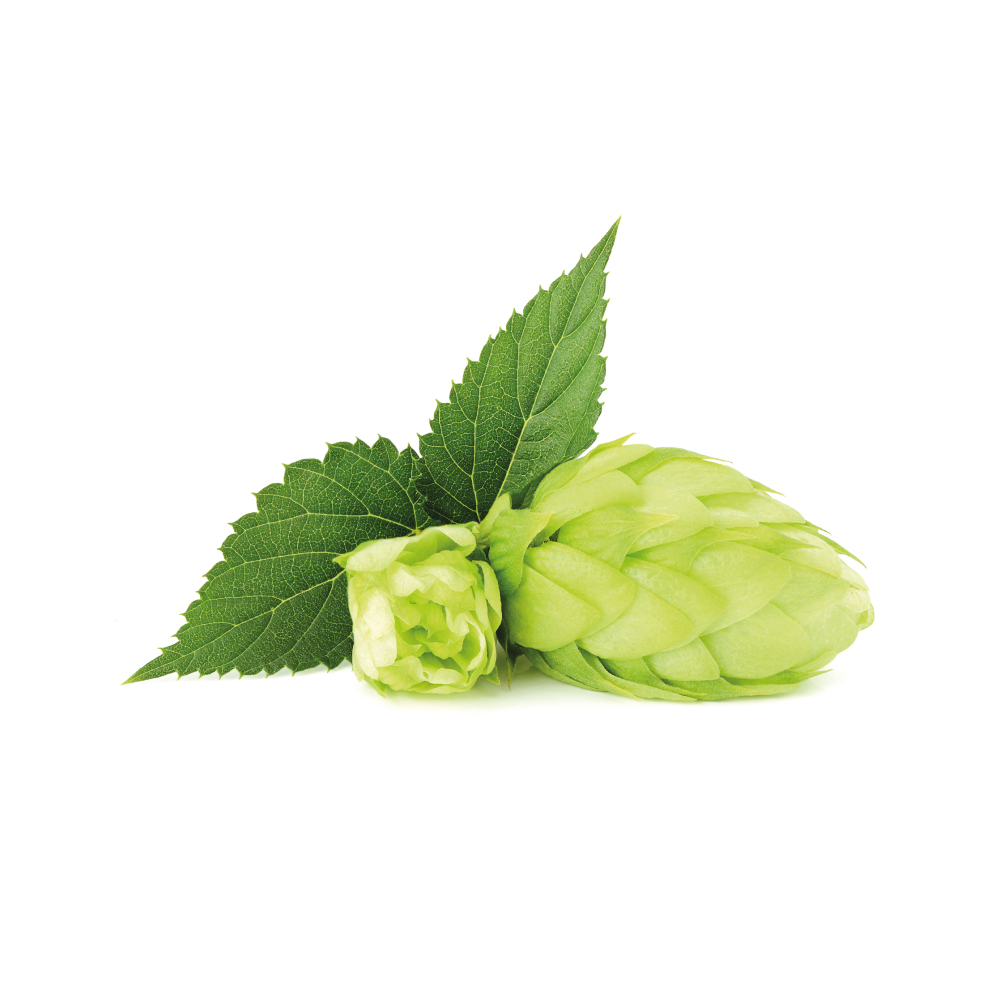
Desmethylxanthohumol (DMX) is a prenylated chalcone found in the lupulin glands of hops (Humulus lupulus). As its name signals, it is the demethyl analogue of xanthohumol — chemically, xanthohumol is simply DMX with one extra methyl group — and DMX is the direct biosynthetic precursor that hops methylate to make xanthohumol.
Its more interesting role is as a branch-point molecule. Because DMX is a chalcone carrying two free hydroxyl groups in the right positions, it can cyclise onto either of them, giving both 8-prenylnaringenin (the most potent phytoestrogen yet described) and its far weaker isomer 6-prenylnaringenin 1Reference 1Xanthohumol and related prenylflavonoids from hops and beer: to your good health! Phytochemistry. https://pubmed.ncbi.nlm.nih.gov/15231405/View study →. That single-precursor-to-two-products chemistry is what makes DMX matter, and it is the honest centre of it: most of what DMX “does” is done by the molecules it turns into.
As an isolated compound, DMX has only sparse, pre-clinical data — some in-vitro pro-apoptotic and antiproliferative activity and some antimicrobial screening. There are no human studies of the isolate, and the molecule is unstable, so it does not accumulate the way xanthohumol does. Its toxicity is flagged low, reflecting an absence of any documented toxic signal rather than a thorough safety dataset.
The Branch-Point Precursor
The compound-unique fact about DMX is that it sits at a fork in hop flavonoid chemistry — one chalcone that feeds three of the best-known hop molecules.
In the hop trichome, chalcone synthase builds the flavonoid backbone (chalconaringenin), an aromatic prenyltransferase adds the prenyl group to give desmethylxanthohumol, and finally an O-methyltransferase (OMT1) caps DMX with a methyl group to make xanthohumol — so DMX is the last intermediate before xanthohumol 2Reference 2EST analysis of hop glandular trichomes identifies an O-methyltransferase that catalyzes the biosynthesis of xanthohumolView study →.
Separately, DMX can cyclise (ring-close) into a flavanone. Here the two-hydroxyl geometry of the chalcone is decisive:
- DMX has two free ortho hydroxyls relative to the prenylated ring, so it can close onto either one, yielding both 8-prenylnaringenin and 6-prenylnaringenin 1Reference 1Xanthohumol and related prenylflavonoids from hops and beer: to your good health! Phytochemistry. https://pubmed.ncbi.nlm.nih.gov/15231405/View study →.
- Xanthohumol has only one free hydroxyl in that position, so it can close only one way — giving a single flavanone, isoxanthohumol 1Reference 1Xanthohumol and related prenylflavonoids from hops and beer: to your good health! Phytochemistry. https://pubmed.ncbi.nlm.nih.gov/15231405/View study →.
This is why DMX is described as a proestrogen: it is not itself a strong estrogen, but on drying, storage, extraction, or wort boiling it spontaneously (or with base/heat) isomerises to the potent estrogen 8-prenylnaringenin, plus the weak 6-prenylnaringenin 1,
What It's Used For
DMX’s own pharmacology is thin and entirely in-vitro / isolate-level. The evidence divides into three modest strands — pro-apoptotic/antiproliferative, its precursor role in estrogen activity, and antimicrobial screening — and none of it reaches animal, let alone human, endpoints.
Support is an experimental score — weighted by study type (human > animal > in vitro) and volume. A beta, not a validated metric. Every row here rests on isolated-molecule, pre-clinical data only, so the scores are low by design.
The best-characterised DMX activity. Synthesised DMX induced apoptosis via the mitochondrial (intrinsic) pathway in BJAB Burkitt-lymphoma cells and in primary lymphoblasts from children with acute lymphoblastic leukaemia, which is why the synthesis paper called it “a new potent apoptosis-inducing agent” 4Reference 4Synthesis of demethylxanthohumol, a new potent apoptosis-inducing agent from hopsView study →.
DMX also appears in broader hop-prenylflavonoid cancer-cell screens: it is one of the antiproliferative/cytotoxic hop chalcones against human cancer lines 6Reference 6Antiproliferative and cytotoxic effects of prenylated flavonoids from hops (Humulus lupulus) in human cancer cell linesView study →, but in a head-to-head prostate-cancer study (PC-3, DU145) DMX was weaker than xanthohumol and 6-prenylnaringenin 5Reference 5Anti-proliferative properties of prenylated flavonoids from hops (Humulus lupulus L.) in human prostate cancer cell linesView study →.
Gap: all of this is the isolated molecule in cell culture — there is no animal tumour model or clinical evidence for DMX, and because the compound is unstable, some assay-dish activity may reflect partial conversion to its flavanone products rather than DMX itself.
DMX’s connection to the famous “estrogenic hops” story is indirect. In the classic endocrine survey of hop flavonoids, 8-prenylnaringenin was the standout estrogen (competing strongly at both ERα and ERβ), while structurally related compounds — including 6-prenylnaringenin — had less than 1% of its potency 3Reference 3The endocrine activities of 8-prenylnaringenin and related hop (Humulus lupulus L.) flavonoidsView study →.
DMX is placed upstream of this: it is the proestrogen from which 6- and 8-prenylnaringenin form by spontaneous or base/heat-catalysed cyclisation during drying, storage, extraction, and wort boiling 1,
Gap: the meaningful estrogenic activity belongs to the product (8-PN), not to DMX. DMX itself is only weakly estrogenic, and no study establishes a clinical estrogenic effect for the intact precursor.
Hop chalcones have been screened as natural antimicrobials, and DMX is among the prenylated chalcones tested against methicillin-resistant Staphylococcus aureus (MRSA) and the trypanosomatid parasites Leishmania mexicana and Trypanosoma brucei; the chalcone class showed potent antibacterial action (MIC below 1 µg/mL for the most active member) alongside antiparasitic activity 7Reference 7Phenolic compounds from Humulus lupulus as natural antimicrobial products: new weapons in the fight against methicillin-resistant Staphylococcus aureus, Leishmania mexicana and Trypanosoma brucei strainsView study →.
Gap: these are in-vitro panels of several hop compounds, and DMX is generally not singled out as the most potent — xanthohumol and the bitter acids usually lead. No infection-model or clinical data exist for DMX.
Mechanisms
| Target / pathway | Effect | Relevant to |
|---|---|---|
| Mitochondrial (intrinsic) apoptosis pathway | induces apoptosis in lymphoma / leukaemia cells in vitro | anticancer / pro-apoptotic |
| Cancer-cell proliferation | antiproliferative / cytotoxic in cell screens, weaker than xanthohumol | anticancer / pro-apoptotic |
| Estrogen receptors (ERα/ERβ) | only weak direct binding — DMX is a precursor, potency resides in the 8-PN it forms | estrogenic precursor |
| Chalcone → flavanone cyclisation | two free ortho hydroxyls let DMX close onto either ring → both 6- and 8-prenylnaringenin | branch-point chemistry / prevalence |
| Bacterial / parasite viability | membrane-/redox-type activity shared by hop chalcones (class effect) | antimicrobial / antiparasitic |
The load-bearing row is the cyclisation chemistry: DMX’s biological “footprint” is largely carried by the molecules it isomerises into, which is exactly why the isolate literature stays thin.
Pharmacokinetics
There is essentially no pharmacokinetic dataset for DMX as an isolated compound — no measured oral bioavailability, distribution, or half-life in humans or animals. What is documented is its chemical instability: DMX readily isomerises to 6- and 8-prenylnaringenin under the mild heat and base of drying, storage, extraction and brewing 1,
Clinical Trials
There are no clinical trials of desmethylxanthohumol. Human exposure is dietary and incidental (hops, beer), and the therapeutically studied hop molecules are xanthohumol and 8-prenylnaringenin, not DMX.
| Completed | Planned | Terminated | Preclinical |
|---|---|---|---|
| — | — | — | Apoptosis / antiproliferative + antimicrobial cell assays 4, |
Last checked: July 2026.
Isolate vs. Plant Studies
DMX presents an unusually clean version of the isolate-vs-plant caveat: the isolate barely exists as a stable entity. Every biological result on DMX used the chemically synthesised or freshly isolated molecule in vitro 4,
Its Role in Plants
DMX is a genuine biosynthetic intermediate in the hop lupulin gland, not an end-product. Chalcone synthase condenses the flavonoid precursor to chalconaringenin; an aromatic prenyltransferase attaches the dimethylallyl (prenyl) group to give desmethylxanthohumol; and OMT1, the dominant O-methyltransferase in hop trichomes, methylates DMX to the accumulated product xanthohumol 2Reference 2EST analysis of hop glandular trichomes identifies an O-methyltransferase that catalyzes the biosynthesis of xanthohumolView study →. DMX therefore normally exists only briefly, on the way to xanthohumol.
Its ecological/chemical significance is the instability already described: with two reactive ortho hydroxyls, DMX spontaneously cyclises to the prenylnaringenins 1Reference 1Xanthohumol and related prenylflavonoids from hops and beer: to your good health! Phytochemistry. https://pubmed.ncbi.nlm.nih.gov/15231405/View study →. This is not a designed “function” so much as a chemical liability of the structure — but it is the reason hops (and hop-derived products) develop estrogenic 8-prenylnaringenin during processing and ageing.
Prevalence in Nature
DMX is, as far as the literature documents, a hops-specific chalcone — a lupulin-gland constituent of Humulus lupulus 1,
It reaches beer only in trace amounts, since brewing conditions drive its conversion to isoxanthohumol (from xanthohumol) and to 6-/8-prenylnaringenin (from DMX) 1,
Discovery & Synthesis
DMX was recognised through hop phytochemistry as the demethyl precursor of xanthohumol and the proestrogen behind hops’ prenylnaringenins, work consolidated in the comprehensive Stevens & Page review of hop prenylflavonoids 1Reference 1Xanthohumol and related prenylflavonoids from hops and beer: to your good health! Phytochemistry. https://pubmed.ncbi.nlm.nih.gov/15231405/View study →. Its place in the pathway — the prenylated chalcone standing immediately before xanthohumol — was pinned down by the trichome-enzyme study that identified the O-methyltransferase (OMT1) converting DMX to xanthohumol 2Reference 2EST analysis of hop glandular trichomes identifies an O-methyltransferase that catalyzes the biosynthesis of xanthohumolView study →.
Because DMX is minor and unstable in hops, a practical supply depends on total synthesis: Diller and colleagues reported an efficient chemical synthesis of demethylxanthohumol in 2005 (via aldol condensation of protected acetophenone and benzaldehyde building blocks), and it was in that synthetic material that its mitochondrial-pathway apoptosis activity was demonstrated 4Reference 4Synthesis of demethylxanthohumol, a new potent apoptosis-inducing agent from hopsView study →. There is no commercial-scale production of DMX as a product in its own right — industrial interest in hop chalcones centres on xanthohumol and on converting the pathway toward 8-prenylnaringenin.
Patents: not yet researched.
Toxicity & Safety
DMX carries a low toxicity flag. This reflects the absence of any documented toxic signal for the molecule together with only trace, dietary human exposure (hops, beer) — not a completed safety dataset. No repeat-dose, genotoxicity, or reproductive-toxicity study of isolated DMX is available.
The one substantive safety-relevant point is chemical, not toxicological: DMX is the proestrogen that generates the potent phytoestrogen 8-prenylnaringenin on processing and ageing of hops 1,
- No documented toxic signal. Human exposure is limited to trace dietary amounts in hops and beer; no adverse-effect reports for the isolate.
- Proestrogen chemistry. DMX isomerises to the potent phytoestrogen 8-prenylnaringenin during drying, storage and brewing — the endocrine caution belongs to that product and to estrogenic hop preparations.
- Safety data are absent, not reassuring. No repeat-dose, genotoxicity or reproductive-toxicity dataset exists for isolated DMX; “low” means no signal, not a clean bill.
Dosage
There is no established or recommended dose for desmethylxanthohumol. It is a minor, unstable hop constituent rather than a supplement or drug, and the only routine human exposure is dietary and incidental (hops in beer, herbal hop preparations), where DMX is present in trace amounts and largely already converted to other prenylflavonoids 1,
In research, DMX is used as an isolated (usually synthesised) molecule at micromolar concentrations in cell assays 4,
References
- Stevens JF, Page JE (2004). Xanthohumol and related prenylflavonoids from hops and beer: to your good health! Phytochemistry. https://pubmed.ncbi.nlm.nih.gov/15231405/
- Nagel J, Culley LK, Lu Y, Liu E, Matthews PD, Stevens JF, Page JE (2008). EST analysis of hop glandular trichomes identifies an O-methyltransferase that catalyzes the biosynthesis of xanthohumol. The Plant Cell. https://pubmed.ncbi.nlm.nih.gov/18223037/
- Milligan SR, Kalita JC, Pocock V, Van De Kauter V, Stevens JF, Deinzer ML, Rong H, De Keukeleire D (2000). The endocrine activities of 8-prenylnaringenin and related hop (Humulus lupulus L.) flavonoids. The Journal of Clinical Endocrinology & Metabolism. https://pubmed.ncbi.nlm.nih.gov/11134162/
- Diller RA, Riepl HM, Rose O, Frias C, Henze G, Prokop A (2005). Synthesis of demethylxanthohumol, a new potent apoptosis-inducing agent from hops. Chemistry & Biodiversity. https://pubmed.ncbi.nlm.nih.gov/17191934/
- Delmulle L, Bellahcène A, Dhooge W, Comhaire F, Roelens F, Huvaere K, Heyerick A, Castronovo V, De Keukeleire D (2006). Anti-proliferative properties of prenylated flavonoids from hops (Humulus lupulus L.) in human prostate cancer cell lines. Phytomedicine. https://pubmed.ncbi.nlm.nih.gov/16678392/
- Miranda CL, Stevens JF, Helmrich A, Henderson MC, Rodriguez RJ, Yang YH, Deinzer ML, Barnes DW, Buhler DR (1999). Antiproliferative and cytotoxic effects of prenylated flavonoids from hops (Humulus lupulus) in human cancer cell lines. Food and Chemical Toxicology. https://pubmed.ncbi.nlm.nih.gov/10418944/
- Bocquet L, Sahpaz S, Bonneau N, Beaufay C, Mahieux S, Samaillie J, Roumy V, Jacquin J, Bordage S, Hennebelle T, Chai F, Quetin-Leclercq J, Neut C, Rivière C (2019). Phenolic compounds from Humulus lupulus as natural antimicrobial products: new weapons in the fight against methicillin-resistant Staphylococcus aureus, Leishmania mexicana and Trypanosoma brucei strains. Molecules. https://pubmed.ncbi.nlm.nih.gov/30875854/



