
Compound Monograph
6-Shogaol
6-Shogaol is the principal shogaol of dried ginger — the pungent α,β-unsaturated ketone formed when 6-gingerol loses water on drying, cooking or storage. Its Michael-acceptor chemistry makes it more pungent and, in many lab assays, more potent than 6-gingerol (anti-inflammatory, anticancer, Nrf2-antioxidant and anti-neuroinflammatory), but nearly all human intake is as whole dried ginger and free 6-shogaol is over 90% metabolised on absorption.

Sources · 3
Where Does It Come From?
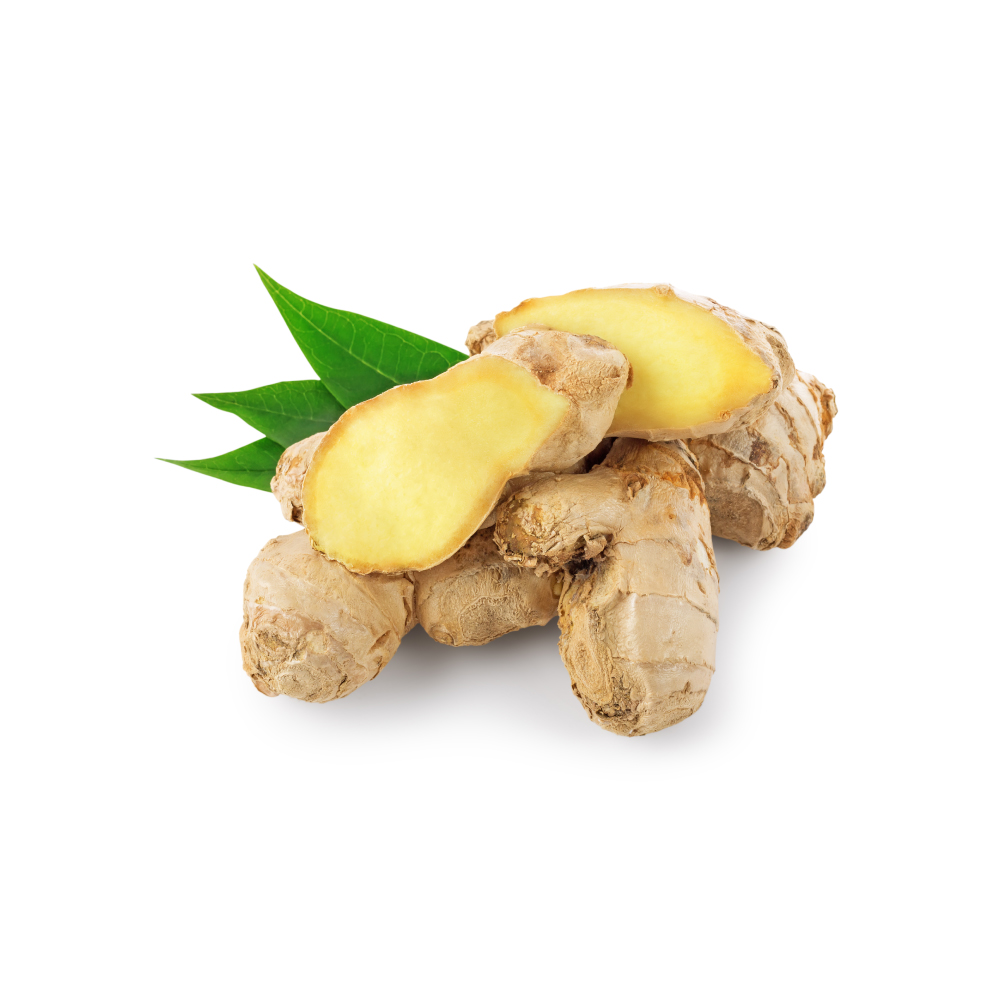
6-Shogaol is a naturally occurring shogaol (vanillyl α,β-unsaturated ketone / michael-acceptor phenol), found in Ginger and 2 other sources. It is well tolerated orally (low toxicity).
Concentration
Content by Source
Concentrations not reported. No percent-dry-weight or mg/g figures have been published for this compound in its source plants.
6-Shogaol at a Glance
6-Shogaol is the most abundant of the shogaols, the pungent phenolic ketones that define the sharper taste of dried ginger. It is not primarily made by the plant — it forms when 6-gingerol loses a molecule of water on drying, cooking or prolonged storage, converting a bland β-hydroxy ketone into an α,β-unsaturated ketone. That double bond next to the carbonyl is the whole story of this molecule: it makes 6-shogaol a Michael acceptor — an electrophile that reacts with protein and glutathione thiols — which is why it tastes hotter than 6-gingerol and, in a long list of cell and rodent assays, acts more potently 1,
Isolated 6-shogaol shows antiemetic, anti-inflammatory, anticancer, antioxidant and neuroprotective activity, with an especially clean Nrf2-antioxidant / anti-neuroinflammation signal that has drawn attention for neurodegeneration models 5,
Its safety flag is low — this is a spice constituent eaten daily — but two caveats travel with it: the electrophilic reactivity that drives its potency, and ginger’s documented antiplatelet effect.
Why Dried Ginger Is Different
The single most important fact about 6-shogaol is that it is a processing marker, not a fresh-plant constituent. Fresh ginger’s dominant pungent principle is 6-gingerol; as the rhizome is dried, steamed, cooked or simply stored, gingerols undergo a dehydration reaction that removes the β-hydroxyl and installs a carbon–carbon double bond, yielding the shogaols 1Reference 1Gingerols and shogaols: important nutraceutical principles from gingerView study →. So dried ginger is enriched in 6-shogaol while fresh ginger is enriched in 6-gingerol, and total gingerol-plus-shogaol content of dried powdered ginger runs several-fold higher than fresh rhizome 15Reference 15UHPLC-ESI-MS/MS for the quantification of eight major gingerols and shogaols in ginger productsView study →. This is the chemical basis for the traditional distinction between fresh ginger (Sheng Jiang) and dried ginger (Gan Jiang) in Chinese medicine — they are, quite literally, different chemistry.
The new double bond is not cosmetic. It makes 6-shogaol an electrophilic Michael acceptor: the β-carbon is attacked by nucleophilic thiols on proteins (for example the Keap1 cysteines that release Nrf2) and on glutathione. This reactivity is widely credited as the reason 6-shogaol out-performs 6-gingerol — and often curcumin — in anticancer, antioxidant and anti-inflammatory assays 1,
What It's Used For
6-Shogaol has a broad, genuinely multi-target preclinical profile, and it frequently beats its parent gingerol head-to-head. The load-bearing caveat is the usual one for a ginger constituent, only sharper: the human clinical record belongs to whole ginger, and 6-shogaol’s own data are cell, rodent and mechanistic — read against a pharmacokinetic ceiling of near-complete first-pass conjugation 12,
Support is an experimental score — weighted by study type (human > animal > in vitro) and volume. A beta, not a validated metric. Human efficacy data are whole ginger, not the isolate, so isolate scores stay modest by design.
The application that ties this molecule to a real human use. Ginger and its pungent constituents non-competitively inhibit the 5-HT3 receptor on enteric neurons, and in a direct comparison 6-shogaol, 6-gingerol and zingerone all blocked the serotonin response concentration-dependently, with 6-shogaol the most potent 3Reference 3Ginger and its pungent constituents non-competitively inhibit activation of human recombinant and native 5-HT3 receptors of enteric neuronsView study →.
Because 5-HT3 antagonism (with NK-1 antagonism) is the mechanism of standard antiemetic drugs, this gives dried, shogaol-rich ginger a coherent molecular rationale for the antinausea effect reviewed in the chemotherapy-induced-nausea literature 4Reference 4ReviewGinger—mechanism of action in chemotherapy-induced nausea and vomiting: a reviewView study →.
Gap: the receptor pharmacology is isolate work in vitro; the antiemetic clinical trials (pregnancy nausea, chemotherapy) dose whole/standardized ginger, not purified 6-shogaol, and no antinausea RCT has administered the isolated molecule 3,
A robust, mechanistically detailed isolate signal — and the clearest demonstration of the Michael-acceptor advantage. Reviews of 6-shogaol’s anti-inflammatory pharmacology document suppression of COX-2, iNOS, prostaglandin E2, TNF-α/IL-1β/IL-6 and NF-κB / p38-MAPK signalling, generally exceeding 6-gingerol at matched concentrations 2Reference 2Benefits of ginger and its constituent 6-shogaol in inhibiting inflammatory processesView study →.
In primary human endothelial cells — a more disease-relevant vascular model — 6-shogaol reduced leukocyte adhesion and migration, down-regulated cell-adhesion molecules, and blocked VEGF-induced vascular sprouting 14Reference 14Ginger constituent 6-shogaol inhibits inflammation- and angiogenesis-related cell functions in primary human endothelial cellsView study →.
Gap: in-vitro and cell-based, at concentrations that free 6-shogaol is unlikely to reach systemically given its rapid conjugation; no human anti-inflammatory trial isolates the molecule from whole ginger 2,
6-Shogaol’s most-studied laboratory application, where it is repeatedly reported as more active than 6-gingerol and than curcumin. In human hepatocellular-carcinoma cells and xenografts it induced apoptosis through reactive-oxygen-species generation and endoplasmic-reticulum stress (PERK/eIF2α) 9Reference 9AnimalHu R, Zhou P, Peng YB, et al. (2012). 6-Shogaol induces apoptosis in human hepatocellular carcinoma cells and exhibits anti-tumor activity in vivo through endoplasmic reticulum stress. PLoS One. https://pubmed.ncbi.nlm.nih.gov/22768104/View study →; strikingly, its cysteine-conjugated metabolites remain bioactive, inducing oxidative-stress-mediated, p53-dependent apoptosis in colon-cancer cells while sparing normal cells 10Reference 10Cysteine-conjugated metabolites of ginger components, shogaols, induce apoptosis through oxidative stress-mediated p53 pathway in human colon cancer cellsView study →.
The through-line is the electrophilic ketone driving pro-oxidant, thiol-reactive stress selectively in tumour cells.
Gap: entirely preclinical (cell lines + mouse xenografts); there are no anticancer clinical trials of 6-shogaol, and the pro-oxidant mechanism that kills cells in a dish does not establish oral efficacy or a therapeutic window in people 9,
The application generating the most current interest, and a genuine isolate signal. 6-Shogaol modulates neuroinflammation — suppressing microglial activation, iNOS/NO, COX-2 and pro-inflammatory cytokines — and was neuroprotective in transient global ischaemia 5Reference 5Ha SK, Moon E, Ju MS, et al. (2012). 6-Shogaol, a ginger product, modulates neuroinflammation: a new approach to neuroprotection. Neuropharmacology. https://pubmed.ncbi.nlm.nih.gov/22465818/View study →.
It protected dopaminergic neurons in MPTP/LPS Parkinson’s models by damping microglial activation 6Reference 6Park G, Kim HG, Ju MS, et al. (2013). 6-Shogaol, an active compound of ginger, protects dopaminergic neurons in Parkinson’s disease models via anti-neuroinflammation. Acta Pharmacologica Sinica. https://pubmed.ncbi.nlm.nih.gov/23811724/View study →.
It attenuated amyloid-β- and scopolamine-induced memory impairment in mice, reducing microgliosis/astrogliosis and raising hippocampal NGF and synaptic markers 8Reference 8AnimalMoon M, Kim HG, Choi JG, et al. (2014). 6-Shogaol, an active constituent of ginger, attenuates neuroinflammation and cognitive deficits in animal models of dementia. Biochemical and Biophysical Research Communications. https://pubmed.ncbi.nlm.nih.gov/24796668/View study →.
A separate line ties the anti-neuroinflammatory effect to PPAR-γ activation in BV2 microglia 7Reference 7Han Q, Yuan Q, Meng X, et al. (2017). 6-Shogaol attenuates LPS-induced inflammation in BV2 microglia cells by activating PPAR-γ. Oncotarget. https://pubmed.ncbi.nlm.nih.gov/28410218/View study →.
Gap: all rodent/cell models of the isolate, often by injection at defined doses; there is no human neurological efficacy evidence, and oral translation is constrained by the molecule’s poor systemic availability 5,
Mechanistically the cleanest expression of the Michael-acceptor chemistry. A 6-shogaol-rich ginger extract activated the Nrf2/ARE pathway and up-regulated antioxidant/phase-II defence enzymes (e.g. glutathione-related and heme-oxygenase systems) in cells and in mice 11Reference 11AnimalBak MJ, Ok S, Jun M, Jeong WS (2012). 6-Shogaol-rich extract from ginger up-regulates the antioxidant defense systems in cells and mice. Molecules. https://pubmed.ncbi.nlm.nih.gov/22763741/View study →.
The electrophilic ketone modifies Keap1 cysteines, releasing Nrf2 to drive the cytoprotective transcriptional program — the same reactivity that underlies the neuroprotective and anticancer effects.
Gap: the Nrf2 study used a 6-shogaol-rich extract, not the purified isolate, and the readouts are cell/mouse enzyme-induction endpoints rather than a human antioxidant outcome 11Reference 11AnimalBak MJ, Ok S, Jun M, Jeong WS (2012). 6-Shogaol-rich extract from ginger up-regulates the antioxidant defense systems in cells and mice. Molecules. https://pubmed.ncbi.nlm.nih.gov/22763741/View study →.
Mechanisms
| Target / pathway | Effect | Relevant to |
|---|---|---|
| 5-HT3 receptor (enteric neurons) | non-competitive blockade; most potent of ginger’s pungent constituents | antiemetic / antinausea |
| Keap1–Nrf2 / ARE | Michael-adduct on Keap1 cysteines → Nrf2 release → phase-II / antioxidant enzyme induction | antioxidantneuroprotection |
| NF-κB / p38-MAPK; COX-2, iNOS, PGE2 | suppression of inflammatory transcription and mediators | anti-inflammatoryneuroprotection |
| Microglial activation (iNOS, TNF-α, IL-1β) | quieting of activated microglia; PPAR-γ activation | neuroprotective |
| ROS generation + ER stress (PERK/eIF2α) | pro-oxidant, mitochondrial/ER-stress apoptosis in tumour cells | anticancer |
| Protein / glutathione thiols (Michael acceptor) | electrophilic conjugation — the reactivity behind potency and rapid metabolism | pharmacology & PK (throughline) |
| Platelet thromboxane pathway (shared ginger effect) | antiplatelet tendency | toxicity / interactions |
The α,β-unsaturated ketone is the load-bearing feature: one electrophilic reactivity explains the extra potency over 6-gingerol across antioxidant, anti-inflammatory and anticancer axes — and also why the molecule is largely consumed by thiol conjugation before it can circulate.
Pharmacokinetics
6-Shogaol is lipophilic and heavily first-pass-metabolised, and its pharmacokinetics are dominated by its own chemistry. Because it is a Michael acceptor, its major metabolic route is conjugation to thiols — cysteine, N-acetylcysteine and glutathione adducts via the mercapturic-acid pathway — alongside phase-I ketone/double-bond reduction (which generates 6-paradol and related reduced species) and glucuronidation 12,
Clinical Trials
There are no controlled efficacy trials of isolated 6-shogaol. The human evidence is for whole or standardized ginger — antiemetic trials in pregnancy and chemotherapy-induced nausea, plus anti-inflammatory and metabolic studies — within which 6-shogaol is one active constituent, enriched in dried preparations 4Reference 4ReviewGinger—mechanism of action in chemotherapy-induced nausea and vomiting: a reviewView study →. The only human 6-shogaol pharmacokinetic data come from ginger-dosing studies measuring the molecule and its metabolites in plasma/urine 13Reference 13Pharmacokinetics of gingerols, shogaols, and their metabolites in asthma patientsView study →.
| Completed | Planned | Terminated | Preclinical |
|---|---|---|---|
| Whole/standardized ginger (antiemetic, anti-inflammatory); human ginger PK measuring 6-shogaol | — | — | Extensive isolate: anticancer, neuroprotective, anti-inflammatory, antioxidant (cell + rodent) |
Last checked: July 2026.
How 6-Shogaol Works
Almost everything 6-shogaol does traces back to one reactive functional group — the α,β-unsaturated ketone — expressed through a few parallel channels.
The Michael-Acceptor Electrophile
The carbon–carbon double bond conjugated to the carbonyl makes the β-carbon electrophilic, so nucleophilic thiols add across it. Modifying reactive cysteines on regulatory proteins is the common mechanism behind 6-shogaol’s potency — and, by the same token, its conjugation to glutathione and cysteine is its main metabolic fate 1,
Nrf2 / Antioxidant Response
By adducting Keap1 cysteines, 6-shogaol releases Nrf2 to activate the antioxidant-response element and induce phase-II/antioxidant enzymes — a cytoprotective program that underlies its antioxidant and much of its neuroprotective effect 11Reference 11AnimalBak MJ, Ok S, Jun M, Jeong WS (2012). 6-Shogaol-rich extract from ginger up-regulates the antioxidant defense systems in cells and mice. Molecules. https://pubmed.ncbi.nlm.nih.gov/22763741/View study →.
5-HT3 Receptor Blockade
Independent of the electrophile story, 6-shogaol is a non-competitive antagonist of the 5-HT3 receptor on enteric neurons, the antiemetic mechanism shared with standard antinausea drugs — and it is the most potent of ginger’s pungent constituents in this assay 3Reference 3Ginger and its pungent constituents non-competitively inhibit activation of human recombinant and native 5-HT3 receptors of enteric neuronsView study →.
NF-κB, COX-2 and Microglia
6-Shogaol suppresses NF-κB / p38-MAPK inflammatory signalling and the downstream COX-2, iNOS and cytokine output, and specifically quiets activated microglia (with a PPAR-γ component) — the basis of both its peripheral anti-inflammatory and its anti-neuroinflammatory activity 2,
Pro-Oxidant Apoptosis in Tumour Cells
At the concentrations used in cancer models the same reactivity turns pro-oxidant: ROS generation and ER stress (PERK/eIF2α) push tumour cells into apoptosis, with bioactive thiol metabolites contributing 9,
A Unifying Interpretation
6-Shogaol is best understood as 6-gingerol plus a reactive double bond. That one structural change — the dehydration that happens when ginger is dried or cooked — converts a mild β-hydroxy ketone into an electrophilic Michael acceptor, and nearly the entire pharmacological story follows: the extra pungency, the greater potency than 6-gingerol across antioxidant/anti-inflammatory/anticancer assays, the Nrf2 activation (Keap1 thiol modification), the pro-oxidant tumour-cell apoptosis (thiol depletion/ROS), and even the rapid metabolism (thiol conjugation) that then limits how much of that potency reaches the bloodstream. Sitting beside this electrophile theme is a separate, receptor-level antiemetic action at 5-HT3. The honest frame for the whole page: a chemically interesting, reproducibly potent isolate whose human record is still ginger’s, not its own.
Isolate vs. Plant Studies
The split here is stark and worth stating plainly. The mechanistic and pharmacological work is overwhelmingly the isolated molecule in cell and rodent systems — the 5-HT3 pharmacology 3Reference 3Ginger and its pungent constituents non-competitively inhibit activation of human recombinant and native 5-HT3 receptors of enteric neuronsView study →, the HCC ER-stress apoptosis 9Reference 9AnimalHu R, Zhou P, Peng YB, et al. (2012). 6-Shogaol induces apoptosis in human hepatocellular carcinoma cells and exhibits anti-tumor activity in vivo through endoplasmic reticulum stress. PLoS One. https://pubmed.ncbi.nlm.nih.gov/22768104/View study →, the neuroinflammation/Parkinson’s/dementia models 5,
Prevalence in Nature
6-Shogaol is effectively specific to ginger (Zingiber officinale) and close Zingiber relatives, and even there it is a secondary, processing-dependent constituent rather than a primary product of the living plant. Fresh rhizome contains little; the shogaols accumulate as 6-gingerol dehydrates during drying, steaming, cooking or storage, which is why dried ginger is the shogaol-rich form and total gingerol-plus-shogaol content of dried powdered ginger runs several-fold above fresh rhizome 1,
Discovery & Synthesis
The shogaols take their name from the Japanese word for ginger, shōga, and were characterised as the pungent principles of dried ginger in the early twentieth century — a discovery framed from the outset around processing, since these compounds are largely absent from the fresh rhizome and appear on drying 1Reference 1Gingerols and shogaols: important nutraceutical principles from gingerView study →. Chemically, 6-shogaol is the dehydration product of 6-gingerol (loss of water across the β-hydroxy ketone to give the α,β-unsaturated ketone), and it can be prepared either by controlled dehydration of isolated 6-gingerol or by total synthesis via aldol-type condensation routes to install the vanillyl α,β-enone; both approaches, along with synthesis of its thiol conjugates and analogues, appear in the anticancer-metabolite literature 10Reference 10Cysteine-conjugated metabolites of ginger components, shogaols, induce apoptosis through oxidative stress-mediated p53 pathway in human colon cancer cellsView study →. Manufacture for research and supplements today rests on extraction from ginger (often after processing to raise shogaol content) and semisynthesis/synthesis, rather than isolation from fresh plant material.
Patents: not yet researched.
Toxicity & Safety
6-Shogaol carries a low flag: it is a constituent of ginger, one of the most widely eaten spices, with a long dietary safety record and no signal of serious toxicity at food-level intake. Two caveats specific to this molecule and to concentrated ginger are worth holding.
- A food-grade spice constituent. Dietary 6-shogaol intake (as ginger, especially dried) has a long history of safe use, and acute toxicity is low.
- Antiplatelet / bleeding caution. Ginger’s pungent constituents have a documented antiplatelet tendency; concentrated dried-ginger or shogaol-rich supplements warrant caution with anticoagulant/antiplatelet drugs and around surgery.
- Reactive-electrophile chemistry. The Michael-acceptor reactivity that drives potency also means high-concentration/pro-oxidant effects seen in cell studies do not translate to a food; concentrated isolate supplements are not as well characterised as dietary ginger.
- Preparation matters. Dried and processed ginger is the shogaol-enriched form, so a “ginger” safety impression from fresh rhizome understates shogaol exposure from dried products.
Full Safety & Interactions Detail
Dietary vs. concentrated exposure. As a normal component of ginger, 6-shogaol is consumed routinely without evidence of harm; the toxicology concerns attach to concentrated dried-ginger extracts and purified/high-dose isolate, which are far less characterised than culinary ginger 2Reference 2Benefits of ginger and its constituent 6-shogaol in inhibiting inflammatory processesView study →.
Antiplatelet / bleeding. Ginger’s pungent constituents (gingerols and shogaols) can inhibit platelet aggregation, so shogaol-rich preparations carry the same theoretical bleeding-risk / anticoagulant-interaction caution applied to ginger generally — relevant with warfarin or antiplatelet therapy and before surgery.
Reactive-electrophile / pro-oxidant reactivity. The α,β-unsaturated ketone reacts with cellular thiols and, at the concentrations used in cancer models, acts pro-oxidant to trigger apoptosis 9,
Reproductive note (prose only). Ginger is among the most-studied antiemetics in early-pregnancy nausea, but that evidence is for whole ginger, not isolated 6-shogaol, and no dedicated reproductive-toxicity dataset characterises the pure molecule. Pregnancy/lactation decisions belong to the herb or product page where intake is decided, not to this molecule page. No comprehensive isolate genotoxicity or repeat-dose package is characterised here beyond the dietary-ginger safety record and the reactivity notes above.
Dosage
There is no established or recommended human dose for isolated 6-shogaol. Human efficacy figures in the ginger literature are for whole or standardized ginger — commonly around 0.5–2 g/day of dried rhizome in antiemetic and anti-inflammatory trials — not for the purified molecule, and the shogaol content of any product depends heavily on how the ginger was processed (dried and cooked preparations are shogaol-enriched) 1,
| Exposure | Form | Notes |
|---|---|---|
| Culinary | Fresh vs. dried/cooked ginger | Dried, stored and cooked ginger is the shogaol-rich form; fresh is gingerol-rich 1, |
| Research (whole ginger) | Standardized capsule / dried powder | ~0.5–2 g/day dried rhizome in antiemetic/anti-inflammatory trials 4Reference 4ReviewGinger—mechanism of action in chemotherapy-induced nausea and vomiting: a reviewView study → |
| Isolated 6-shogaol | Purified compound | Preclinical only — cell/rodent doses, no established human dose 5, |
Cited figures are research and dietary exposures, not a personal recommendation, and the isolate’s poor systemic availability 13Reference 13Pharmacokinetics of gingerols, shogaols, and their metabolites in asthma patientsView study → means an in-vitro concentration is not a guide to an oral dose.
References
- Semwal RB, Semwal DK, Combrinck S, Viljoen AM (2015). Gingerols and shogaols: important nutraceutical principles from ginger. Phytochemistry. https://pubmed.ncbi.nlm.nih.gov/26228533/
- Bischoff-Kont I, Fürst R (2021). Benefits of ginger and its constituent 6-shogaol in inhibiting inflammatory processes. Pharmaceuticals (Basel). https://pubmed.ncbi.nlm.nih.gov/34203813/
- Walstab J, Krüger D, Stark T, et al. (2013). Ginger and its pungent constituents non-competitively inhibit activation of human recombinant and native 5-HT3 receptors of enteric neurons. Neurogastroenterology & Motility. https://pubmed.ncbi.nlm.nih.gov/23490018/
- Marx W, Ried K, McCarthy AL, et al. (2017). Ginger—mechanism of action in chemotherapy-induced nausea and vomiting: a review. Critical Reviews in Food Science and Nutrition. https://pubmed.ncbi.nlm.nih.gov/25848702/
- Ha SK, Moon E, Ju MS, et al. (2012). 6-Shogaol, a ginger product, modulates neuroinflammation: a new approach to neuroprotection. Neuropharmacology. https://pubmed.ncbi.nlm.nih.gov/22465818/
- Park G, Kim HG, Ju MS, et al. (2013). 6-Shogaol, an active compound of ginger, protects dopaminergic neurons in Parkinson’s disease models via anti-neuroinflammation. Acta Pharmacologica Sinica. https://pubmed.ncbi.nlm.nih.gov/23811724/
- Han Q, Yuan Q, Meng X, et al. (2017). 6-Shogaol attenuates LPS-induced inflammation in BV2 microglia cells by activating PPAR-γ. Oncotarget. https://pubmed.ncbi.nlm.nih.gov/28410218/
- Moon M, Kim HG, Choi JG, et al. (2014). 6-Shogaol, an active constituent of ginger, attenuates neuroinflammation and cognitive deficits in animal models of dementia. Biochemical and Biophysical Research Communications. https://pubmed.ncbi.nlm.nih.gov/24796668/
- Hu R, Zhou P, Peng YB, et al. (2012). 6-Shogaol induces apoptosis in human hepatocellular carcinoma cells and exhibits anti-tumor activity in vivo through endoplasmic reticulum stress. PLoS One. https://pubmed.ncbi.nlm.nih.gov/22768104/
- Fu J, Chen H, Soroka DN, et al. (2014). Cysteine-conjugated metabolites of ginger components, shogaols, induce apoptosis through oxidative stress-mediated p53 pathway in human colon cancer cells. Journal of Agricultural and Food Chemistry. https://pubmed.ncbi.nlm.nih.gov/24786146/
- Bak MJ, Ok S, Jun M, Jeong WS (2012). 6-Shogaol-rich extract from ginger up-regulates the antioxidant defense systems in cells and mice. Molecules. https://pubmed.ncbi.nlm.nih.gov/22763741/
- Chen H, Soroka DN, Hu Y, et al. (2013). Characterization of thiol-conjugated metabolites of ginger components shogaols in mouse and human urine and modulation of the glutathione levels in cancer cells by [6]-shogaol. Molecular Nutrition & Food Research. https://pubmed.ncbi.nlm.nih.gov/23322393/
- Zhang S, DiMango E, Zhu Y, et al. (2022). Pharmacokinetics of gingerols, shogaols, and their metabolites in asthma patients. Journal of Agricultural and Food Chemistry. https://pubmed.ncbi.nlm.nih.gov/35916113/
- Bischoff-Kont I, Primke T, Niebergall LS, et al. (2022). Ginger constituent 6-shogaol inhibits inflammation- and angiogenesis-related cell functions in primary human endothelial cells. Frontiers in Pharmacology. https://pubmed.ncbi.nlm.nih.gov/35281937/
- Park SY, Jung SY, Lee GB, et al. (2016). UHPLC-ESI-MS/MS for the quantification of eight major gingerols and shogaols in ginger products. Journal of Food Science. https://pubmed.ncbi.nlm.nih.gov/27589022/



