
Compound Monograph
Achillolide A
Achillolide A is a germacranolide sesquiterpene lactone described in 1987 from the desert shrub Achillea fragrantissima — not, on the primary record, from common yarrow. Its entire pharmacology is five in-vitro neuroprotection papers from a single Israeli laboratory, plus one mouse study that was essentially null.

Sources · 3
Where Does It Come From?
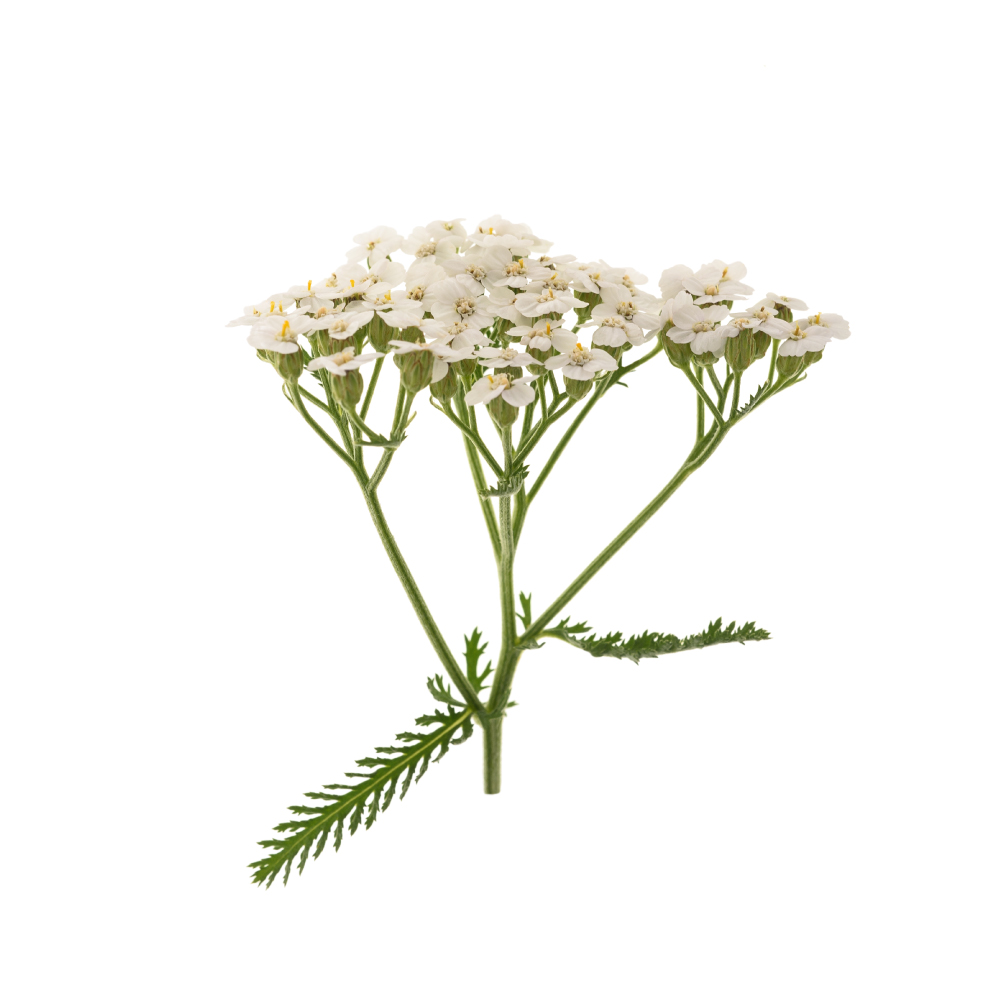
Achillolide A is a naturally occurring sesquiterpene lactone — germacranolide (acetylated, 13-hydroxy), found in Fragrant yarrow / qaysoom and 2 other sources. Its toxicity is not yet characterized.
Concentration
Content by Source
Concentrations not reported. No percent-dry-weight or mg/g figures have been published for this compound in its source plants.
Achillolide A at a Glance
Achillolide A is a germacranolide sesquiterpene lactone — one of the bitter, Asteraceae-typical lactones that also gives the family parthenolide, achillin and the proazulene achillicin. It was described in 1987 by Segal, Dor and colleagues, who isolated it together with achillolide B from the aerial parts of Achillea fragrantissima (Forssk.) Sch. Bip. — the aromatic desert shrub known in Arabic as qaysoom, not the common yarrow of European herbal practice 1Reference 1The sesquiterpene lactones from Achillea fragrantissima, IView study →.
That species distinction is the first thing to say about this molecule, because this database has it filed under yarrow. Every published isolation of achillolide A, and every study that has ever tested it, used A. fragrantissima. No primary report placing it in Achillea millefolium could be found (see The Plant Is Not Common Yarrow).
The second thing to say is how thin the record is. A PubMed search for achillolide returns six records in total; Europe PMC, which also searches full text, returns eleven, five of which mention the molecule only in passing. Of the six primary papers, five come from one research group — Ayelet Elmann’s laboratory at Israel’s Volcani Center, working with Yoel Kashman at Tel Aviv University and Rivka Ofir at Ben-Gurion — and the sixth is a German phytochemistry paper that isolated the compound but reported its activity in something else 7Reference 7In vitroImproving anti-trypanosomal activity of alkamides isolated from Achillea fragrantissima — [in vitro]View study →. There is no independent replication of any pharmacological finding. (All searches run 31 July 2026; see One Laboratory, Six Papers.)
Everything that laboratory reported points the same way: achillolide A lowers intracellular reactive oxygen species and blunts MAPK-cascade phosphorylation in cultured brain cells. That is a real, internally consistent result set — and it is also, almost exactly, what non-specific electrophilic reactivity looks like in a sesquiterpene lactone. The page below takes that alternative seriously rather than presenting the finding as established, target-specific pharmacology.
The Plant Is Not Common Yarrow
Achillea fragrantissima and Achillea millefolium are different species with different chemistry, different habitats and different traditional use. The first is a strongly aromatic shrub of the Levantine and Arabian deserts; the second is the temperate-meadow yarrow of European and North American herbal medicine.
Achillolide A belongs to the first. The tracing runs cleanly:
- Original isolation (1987): A. fragrantissima 1Reference 1The sesquiterpene lactones from Achillea fragrantissima, IView study →.
- All five pharmacology papers (2015–2018): compound “isolated as previously described from the aerial parts of Af” — A. fragrantissima, with voucher material from the Arava Rift Valley collection 2,
3, .4, 5, 6Reference 2In vitroDownregulation of microglial activation by achillolide A — [in vitro]View study →Reference 3In vitroAchillolide A protects astrocytes against oxidative stress by reducing intracellular reactive oxygen species and interfering with cell signaling — [in vitro]View study →Reference 4In vitroGlutamate toxicity to differentiated neuroblastoma N2a cells is prevented by the sesquiterpene lactone achillolide A and the flavonoid 3,5,4′-trihydroxy-6,7,3′-trimethoxyflavone from Achillea fragrantissima — [in vitro]View study →Reference 5In vitroElmann A, Telerman A, Ofir R, Kashman Y, Lazarov O (2018). β-amyloid cytotoxicity is prevented by natural achillolide A — [in vitro]. Journal of Natural Medicines. https://pubmed.ncbi.nlm.nih.gov/29546477/View study →Reference 6AnimalPhytochemicals from Achillea fragrantissima are modulators of AβPP metabolism — [mouse in vivo]View study → - The one independent isolation (2018): A. fragrantissima, Würzburg 7Reference 7In vitroImproving anti-trypanosomal activity of alkamides isolated from Achillea fragrantissima — [in vitro]View study →.
- KNApSAcK, the natural-products occurrence database, lists exactly one source organism for achillolide A: Achillea fragrantissima 17Reference 17https://www.knapsackfamily.com/knapsack_core/information.php?word=C00012255View study →.
Nothing was found in the other direction. A Europe PMC query combining achillolide with millefolium OR yarrow returns a single record, and it is an A. fragrantissima rat study that mentions A. millefolium only in its introduction 16Reference 16AnimalReproductive and immune-related consequences of Achillea fragrantissima (Forssk.) in male rats via modulation of steroidogenesis- and immune-related gene expression — [rat in vivo]View study →. Meanwhile, the sesquiterpene lactones actually characterised from A. millefolium are a different structural subclass — the guaianolides millefolacton A–G and millefoliumin A–C, plus the proazulene achillicin and the guaianolides achillin and leucodin — not germacranolides 10Reference 10In vitroGuaianolides from Achillea millefolium L. and their anti-inflammatory activity — [in vitro]View study →.
This is the exact error the genus is notorious for. As Németh and Bernáth put it in their review of the genus, Achillea species “have different chemical and therapeutical values,” and evaluating the literature is difficult because there is no generally accepted taxonomic nomenclature 11Reference 11ReviewBiological activities of yarrow species (Achillea spp.) — [review]View study →. This database’s own yarrow research notes warn against attributing findings from other Achillea species to A. millefolium; the achillolide A attribution appears to be that warning being breached.
What this means for the reader: if you take yarrow, there is no evidence you are getting achillolide A at all. If a source claims yarrow’s neuroprotective activity comes from achillolide A, that claim rests on a species substitution.
One Laboratory, Six Papers
The whole pharmacological literature on this molecule, checked 31 July 2026:
| Year | Study | Group | What was tested |
|---|---|---|---|
| 2015 | Microglial activation, LPS-stimulated primary cultures 2Reference 2In vitroDownregulation of microglial activation by achillolide A — [in vitro]View study → | Elmann / Kashman / Ofir | Isolate, in vitro |
| 2016 | Astrocyte protection against H₂O₂ 3Reference 3In vitroAchillolide A protects astrocytes against oxidative stress by reducing intracellular reactive oxygen species and interfering with cell signaling — [in vitro]View study → | Elmann / Kashman / Ofir | Isolate, in vitro |
| 2017 | Glutamate toxicity, differentiated N2a cells 4Reference 4In vitroGlutamate toxicity to differentiated neuroblastoma N2a cells is prevented by the sesquiterpene lactone achillolide A and the flavonoid 3,5,4′-trihydroxy-6,7,3′-trimethoxyflavone from Achillea fragrantissima — [in vitro]View study → | Elmann / Kashman / Ofir | Isolate, in vitro |
| 2018 | β-amyloid toxicity, N2a cells 5Reference 5In vitroElmann A, Telerman A, Ofir R, Kashman Y, Lazarov O (2018). β-amyloid cytotoxicity is prevented by natural achillolide A — [in vitro]. Journal of Natural Medicines. https://pubmed.ncbi.nlm.nih.gov/29546477/View study → | Elmann / Kashman / Ofir + Lazarov | Isolate, in vitro |
| 2018 | APPswe/PS1ΔE9 transgenic mice 6Reference 6AnimalPhytochemicals from Achillea fragrantissima are modulators of AβPP metabolism — [mouse in vivo]View study → | Lazarov (Chicago) + Elmann | Isolate, in vivo |
| 2018 | Anti-trypanosomal fractionation of A. fragrantissima 7Reference 7In vitroImproving anti-trypanosomal activity of alkamides isolated from Achillea fragrantissima — [in vitro]View study → | Holzgrabe (Würzburg) | Isolate, in vitro |
Five of the six share Ayelet Elmann as an author; four share Yoel Kashman, who supplied the compound. The mouse study 6Reference 6AnimalPhytochemicals from Achillea fragrantissima are modulators of AβPP metabolism — [mouse in vivo]View study → is led from the University of Illinois at Chicago, but Elmann is a co-author and provided the material, so it is a collaboration rather than an independent test. The only group that has worked on achillolide A without the originating laboratory is Holzgrabe’s in Würzburg — and that paper isolated it as one of seven sesquiterpene lactones in a bioassay-guided search for anti-trypanosomal actives, then reported the activity in a different compound class entirely (alkamides) 7Reference 7In vitroImproving anti-trypanosomal activity of alkamides isolated from Achillea fragrantissima — [in vitro]View study →.
Single-source literatures are not automatically wrong. They are, however, unvalidated: no one has re-isolated the compound, re-run the assays with independent material, or checked whether the effects survive a different cell-culture setup. Until someone does, every number below carries an unquantified risk that it reflects one laboratory’s material, methods and assumptions.
A related unresolved problem sits inside the group’s own work. The 2016 astrocyte paper reports maximal protection at 80 µM 3Reference 3In vitroAchillolide A protects astrocytes against oxidative stress by reducing intracellular reactive oxygen species and interfering with cell signaling — [in vitro]View study →; the 2018 neuroblastoma paper reports 71% rescue at 16 nM and 79% inhibition of MAPK phosphorylation at 158 nM 5Reference 5In vitroElmann A, Telerman A, Ofir R, Kashman Y, Lazarov O (2018). β-amyloid cytotoxicity is prevented by natural achillolide A — [in vitro]. Journal of Natural Medicines. https://pubmed.ncbi.nlm.nih.gov/29546477/View study →. That is a roughly thousand-fold spread in the active concentration between two papers from the same laboratory on the same molecule, and neither paper reconciles it.
The Structure & the Michael-Acceptor Question
Sesquiterpene lactones are notorious for a class property: most of them carry an α-methylene-γ-lactone — an exocyclic methylene conjugated to the lactone carbonyl — which acts as a Michael acceptor and alkylates cysteine thiols on whatever protein it meets. That single feature is why so many unrelated lactones report the same profile: NF-κB inhibition (via alkylation of cysteine-38 on the p65 subunit), Nrf2/Keap1 activation, oxidative-stress markers moving, and MAPK-adjacent signalling shifting 8,
So the question worth asking of achillolide A is whether it carries one. The deposited structure records give a specific and slightly surprising answer.
It does not have the classic α-methylene-γ-lactone. In achillolide A the carbon that would normally be that exocyclic methylene (C-13) is instead oxidised to a hydroxymethyl group, and the lactone’s α,β-unsaturation is pulled into the ring as part of the fusion to the ten-membered carbocycle. Structurally it is a butenolide with a CH₂OH substituent, not a methylenelactone 17Reference 17https://www.knapsackfamily.com/knapsack_core/information.php?word=C00012255View study →.
But it does carry an equivalent electrophile elsewhere. The same records place an exocyclic methylene on the ten-membered ring directly conjugated to a ring ketone — an α-methylene ketone. That is the same methylene-carbonyl motif the Wagner model identifies as the site of cysteine attack 9Reference 9Development of a structural model for NF-kappaB inhibition of sesquiterpene lactones using self-organizing neural networksView study →, simply relocated from the lactone to the macrocycle. There is also an acetate ester and a trisubstituted macrocyclic alkene.
Two conclusions follow, and the page holds both:
- The class explanation is not excluded. A reported profile of “lower ROS, less MEK1/ERK phosphorylation, less JNK phosphorylation, less LPS-induced iNOS/COX-2/TNF-α” is precisely the signature of a reactive electrophile engaging thiols broadly. Achillolide A has the electrophile. No one has run the experiment that would distinguish the two possibilities — no thiol-adduct study, no comparison against the reduced or saturated analogue, no cysteine-mutant control, no proteome-wide reactivity profiling.
- The specific pharmacology is not excluded either. One detail in the astrocyte paper cuts against pure chemical scavenging: achillolide A reduced intracellular ROS but the authors explicitly attribute the effect not to H₂O₂ scavenging 3Reference 3In vitroAchillolide A protects astrocytes against oxidative stress by reducing intracellular reactive oxygen species and interfering with cell signaling — [in vitro]View study →. Something more than stoichiometric quenching is happening. Whether that something is a defined target or generalised thiol chemistry is exactly what remains unknown.
A note on the databases themselves, because it bears on confidence: achillolide A has no named PubChem entry. KNApSAcK records it as C₁₇H₂₀O₆ (CAS 121663-00-1) 17Reference 17https://www.knapsackfamily.com/knapsack_core/information.php?word=C00012255View study →; Wikidata’s entry, mapped to a patent-mined PubChem structure with no name synonyms, records C₁₆H₁₈O₆ — one methyl group fewer. The two agree on every feature described above, but they disagree on the molecular formula, and neither has been curated against the 1987 primary paper. For a molecule this obscure, that is itself part of the picture.
What It's Used For
Five studies, one laboratory, four of them in cultured cells and one in mice. There is no human data of any kind.
Support is an experimental score — weighted by study type (human > animal > in vitro) and volume. A beta, not a validated metric. Every score here is additionally discounted for single-laboratory provenance: no application below has been tested by an independent group, so none of these numbers should be read as replicated. The ceiling for a molecule in this position is low by construction.
The core of the record, and all isolate work. In primary rat/mouse brain astrocytes, achillolide A prevented H₂O₂-induced death and attenuated the induced accumulation of intracellular ROS; the authors attributed this to inhibition of H₂O₂-induced MEK1 and p44/42 MAPK phosphorylation and to the compound’s own antioxidant capacity (measured by differential pulse voltammetry in a cell-free system) — and explicitly not to direct H₂O₂ scavenging. Maximal protection was 55%, at 80 µM 3Reference 3In vitroAchillolide A protects astrocytes against oxidative stress by reducing intracellular reactive oxygen species and interfering with cell signaling — [in vitro]View study →.
In differentiated N2a neuroblastoma cells the same group reported protection against glutamate excitotoxicity, again with reduced ROS, alongside a structurally unrelated flavonoid from the same plant that behaved the same way 4Reference 4In vitroGlutamate toxicity to differentiated neuroblastoma N2a cells is prevented by the sesquiterpene lactone achillolide A and the flavonoid 3,5,4′-trihydroxy-6,7,3′-trimethoxyflavone from Achillea fragrantissima — [in vitro]View study →.
A third paper reported 71% reduction of β-amyloid(25–35)-induced death at 16 nM, 78% suppression of Aβ-induced ROS, and ~79% inhibition of SAPK/JNK and p44/42 phosphorylation at 158 nM, with no cytotoxicity of the compound itself up to 1,566 nM 5Reference 5In vitroElmann A, Telerman A, Ofir R, Kashman Y, Lazarov O (2018). β-amyloid cytotoxicity is prevented by natural achillolide A — [in vitro]. Journal of Natural Medicines. https://pubmed.ncbi.nlm.nih.gov/29546477/View study →.
Gap: three papers, one laboratory, one compound source, no independent replication. The active concentrations differ by roughly a thousand-fold between 3Reference 3In vitroAchillolide A protects astrocytes against oxidative stress by reducing intracellular reactive oxygen species and interfering with cell signaling — [in vitro]View study → and 5Reference 5In vitroElmann A, Telerman A, Ofir R, Kashman Y, Lazarov O (2018). β-amyloid cytotoxicity is prevented by natural achillolide A — [in vitro]. Journal of Natural Medicines. https://pubmed.ncbi.nlm.nih.gov/29546477/View study → with no explanation offered. The endpoints (ROS, MAPK phosphorylation) are exactly those a promiscuous thiol-alkylating electrophile would move, and no control for that was run. Immortalised neuroblastoma cells are not neurons. Nothing here has been shown in a living brain.
The first paper on the molecule, and the origin of everything that followed. Using activity-guided fractionation of A. fragrantissima, Elmann and colleagues purified achillolide A and tested it in primary cultures of lipopolysaccharide-activated microglia, where it lowered the induced levels of glutamate, nitric oxide, matrix metalloproteinase-9, COX-2, iNOS, IL-1β and TNF-α, and reduced intracellular ROS 2Reference 2In vitroDownregulation of microglial activation by achillolide A — [in vitro]View study →. This is isolate work in primary cells.
Gap: a single study, never repeated by anyone. The endpoint panel — NO/iNOS/COX-2/IL-1β/TNF-α suppressed together — is the canonical readout of NF-κB pathway inhibition, which is also the canonical readout of any cysteine-alkylating sesquiterpene lactone 8,
The only time the isolated molecule has been given to a living animal, and it is a mostly negative result that deserves to be read plainly. Six-month-old female APPswe/PS1ΔE9 Alzheimer’s-model mice received 25 µg of achillolide A intraperitoneally, daily, for 28 days (a separate arm received the companion flavonoid) 6Reference 6AnimalPhytochemicals from Achillea fragrantissima are modulators of AβPP metabolism — [mouse in vivo]View study →.
Outcome: a “trend of improvement, albeit statistically insignificant” on novel-object recognition; no improvement on contextual fear conditioning; no change in soluble Aβ, oligomeric Aβ or APP C-terminal fragments either in vivo or in vitro. The one positive finding was an increase in full-length AβPP, which the authors interpret as stabilisation of the precursor rather than worsening of pathology.
Gap: underpowered on the face of it, task-specific by the authors’ own admission, and administered intraperitoneally — so it says nothing about oral exposure, the route any herbal or supplemental use would take. A null behavioural result in the one animal study is the single most important counterweight to the in-vitro enthusiasm above, and it should not be buried.
Mechanisms
| Target / pathway | Effect | Relevant to |
|---|---|---|
| MEK1 and p44/42 MAPK (ERK1/2) phosphorylation | inhibited under H₂O₂ and Aβ stress, in astrocytes and N2a cells 3, | neuroprotection |
| SAPK / c-Jun N-terminal kinase phosphorylation | inhibited under Aβ stress in N2a cells 5Reference 5In vitroElmann A, Telerman A, Ofir R, Kashman Y, Lazarov O (2018). β-amyloid cytotoxicity is prevented by natural achillolide A — [in vitro]. Journal of Natural Medicines. https://pubmed.ncbi.nlm.nih.gov/29546477/View study → | neuroprotection |
| Intracellular reactive oxygen species | reduced under H₂O₂, glutamate and Aβ challenge — explicitly not by direct H₂O₂ scavenging 3, | neuroprotectionantioxidant |
| Intrinsic electrochemical reducing capacity | measurable in a cell-free system by differential pulse voltammetry 3Reference 3In vitroAchillolide A protects astrocytes against oxidative stress by reducing intracellular reactive oxygen species and interfering with cell signaling — [in vitro]View study → | antioxidant |
| iNOS, COX-2, MMP-9, IL-1β, TNF-α, NO, glutamate release | all lowered in LPS-activated primary microglia 2Reference 2In vitroDownregulation of microglial activation by achillolide A — [in vitro]View study → | neuroinflammation |
| Cysteine thiols (α-methylene ketone Michael acceptor) | inferred from structure, never measured for this molecule — the sesquiterpene-lactone class alkylates protein cysteines, including p65 Cys38 of NF-κB 8, | the unexcluded alternative explanation |
No receptor, enzyme or binding-site has been identified. The MAPK observations are downstream phosphorylation readouts, not evidence that achillolide A binds MEK1 or any kinase — the compound was never shown to engage a target directly. Read this table as “what moved”, not “what it acts on”.
Pharmacokinetics
No data whatsoever. Absorption, oral bioavailability, plasma concentration, distribution, blood–brain-barrier penetration, metabolism, active metabolites, protein binding and half-life are all entirely unstudied for achillolide A.
This matters more than usual, because the entire case for the molecule is neuroprotection — a claim that requires it to reach the brain. It has never been given by mouth to anything; the sole in-vivo study used intraperitoneal injection 6Reference 6AnimalPhytochemicals from Achillea fragrantissima are modulators of AβPP metabolism — [mouse in vivo]View study →, which bypasses first-pass metabolism and gut absorption. Sesquiterpene lactones as a class are electrophiles that react readily with glutathione and other thiols, which typically means rapid conjugation and low systemic exposure, but that has not been measured here either.
Clinical Trials
None, in any indication, at any stage. No trial of achillolide A has been registered or reported, and the compound has never been administered to a human being. Preclinical work stands at four in-vitro studies and one mouse study, all traceable to one laboratory.
| Completed | Planned | Terminated | Preclinical |
|---|---|---|---|
| — | — | — | Four in-vitro (isolate) + one mouse study, single-lab |
Last checked: July 2026.
Isolate vs. Plant Studies
Unusually for a data-poor molecule, the isolate is what was tested. All five pharmacology papers used purified achillolide A at stated concentrations, not an extract 2,
The strength is undercut on the other side. The isolate work is one laboratory using one batch lineage of one plant, and the two directions of transferability both fail:
- Plant → molecule. A. fragrantissima whole-extract studies exist — cardioprotection against adriamycin in rats via antioxidant and anti-inflammatory pathways, and a 30-day oral study of reproductive and immune endpoints in male rats 16Reference 16AnimalReproductive and immune-related consequences of Achillea fragrantissima (Forssk.) in male rats via modulation of steroidogenesis- and immune-related gene expression — [rat in vivo]View study →. Neither isolates achillolide A’s contribution; the cardioprotection paper attributes activity to the extract’s phenolic and flavonoid fraction and explicitly calls for work to identify the responsible constituents. Nothing licenses reading extract-level effects onto this molecule.
- Molecule → plant. Because achillolide A has never been quantified in any plant material, no one can say what fraction of an A. fragrantissima preparation it represents, and the yarrow attribution is unverified in the first place. The concentrations that worked in culture cannot be mapped onto any real preparation.
One further datum sits awkwardly for the compound. The single independent isolation — Holzgrabe’s Würzburg group, running a bioassay-guided fractionation of A. fragrantissima for anti-trypanosomal activity — recovered achillolide A among seven sesquiterpene lactones, and then reported the active compounds as alkamides, not lactones 7Reference 7In vitroImproving anti-trypanosomal activity of alkamides isolated from Achillea fragrantissima — [in vitro]View study →. A bioassay-guided fractionation is designed to concentrate whatever is active; in that assay, achillolide A was not it.
Prevalence in Nature
Achillolide A is a compound of one documented species: Achillea fragrantissima (Asteraceae), a strongly aromatic desert shrub of the Levant, Sinai and Arabian Peninsula. The material used in every study came from aerial parts collected in Israel’s Arava Valley 3Reference 3In vitroAchillolide A protects astrocytes against oxidative stress by reducing intracellular reactive oxygen species and interfering with cell signaling — [in vitro]View study → or, for the independent isolation, from Palestinian-sourced aerial parts 7Reference 7In vitroImproving anti-trypanosomal activity of alkamides isolated from Achillea fragrantissima — [in vitro]View study →. KNApSAcK lists no other source organism 17Reference 17https://www.knapsackfamily.com/knapsack_core/information.php?word=C00012255View study →.
No concentration figure exists. Not for A. fragrantissima, not for anything else. The only quantity in the entire literature is a preparative recovery: 37 g of dried aerial parts yielded 90 mg of crude achillolide A and, after purification, 40 mg at 98% purity 3Reference 3In vitroAchillolide A protects astrocytes against oxidative stress by reducing intracellular reactive oxygen species and interfering with cell signaling — [in vitro]View study →. That is an isolation yield subject to extraction and chromatography losses — a floor on content at best, not a measurement of what the plant contains, and not comparable to the % dry-weight figures quoted for better-studied constituents.
On the yarrow question and chemotype variability. Even if a report of achillolide A in Achillea millefolium were to surface, a single presence/absence finding would settle very little. A. millefolium is not one plant but an aggregate — one of the most diverse polyploid complexes in the Northern Hemisphere, spanning diploid, tetraploid, hexaploid and octoploid cytotypes across Eurasia and North America 12Reference 12The polyploid series of the Achillea millefolium aggregate in the Iberian Peninsula investigated using microsatellitesView study →. Its chemistry follows suit: the proazulene content that produces chamazulene on distillation ranges from absent to dominant depending on chemotype and ploidy, and a survey of 40 commercial yarrow samples found only about half met European Pharmacopoeia standards for essential-oil and proazulene content 13Reference 13Yarrow (Achillea millefolium L. s.l.): pharmaceutical quality of commercial samplesView study →. Németh and Bernáth’s genus review makes the same point at species level: Achillea taxa differ enough in chemistry that results cannot be pooled 11Reference 11ReviewBiological activities of yarrow species (Achillea spp.) — [review]View study →. Whatever “yarrow” contains, it varies — which is a further reason not to assume any particular sesquiterpene lactone is present in the material in front of you.
Discovery & Synthesis
First isolation, 1987. Achillolide A was described by Rachel Segal, A. Dor and co-workers (with Duddeck, Snatzke, Rosenbaum and Kajtár contributing the spectroscopic and chiroptical analysis) in Tetrahedron, in a paper titled “The sesquiterpene lactones from Achillea fragrantissima, I. Achillolide A and B, two novel germacranolides” 1Reference 1The sesquiterpene lactones from Achillea fragrantissima, IView study →. The name is straightforwardly generic — Achillea plus the -olide suffix that marks a lactone — with A and B distinguishing the two new compounds reported together. The structures were settled by NMR, mass spectrometry and circular dichroism at the time of the report; achillolide A carries CAS registry number 121663-00-1 17Reference 17https://www.knapsackfamily.com/knapsack_core/information.php?word=C00012255View study →.
Total synthesis: none. A Europe PMC full-text search for achillolide AND "total synthesis" returns a single record, and it is a review that does not describe one (checked 31 July 2026). Germacranolides are difficult synthetic targets — the ten-membered ring is conformationally awkward and prone to transannular cyclisation — so the absence is unsurprising, but it is an absence: there is no synthetic route, and therefore no route to analogues that would let anyone probe the structure–activity question raised above.
Manufacture today: none. Achillolide A is not produced commercially, is not sold as a reference standard by the major suppliers, and is not available as a supplement in any form. Every gram of it that has ever existed was isolated from plant material by the laboratories that studied it.
Patents: not yet researched.
Toxicity & Safety
No toxicology exists for the isolated molecule, and the unknown grading means exactly that. There is no acute or repeat-dose study, no LD₅₀, no genotoxicity or mutagenicity assay, no reproductive or developmental data, no organ-specific toxicity work, no CYP or transporter interaction data, and no human exposure of any kind. There is nothing to grade.
The one toxicity-adjacent observation is narrow. In the Aβ study, achillolide A was reported non-cytotoxic to N2a neuroblastoma cells at concentrations up to 1,566 nM 5Reference 5In vitroElmann A, Telerman A, Ofir R, Kashman Y, Lazarov O (2018). β-amyloid cytotoxicity is prevented by natural achillolide A — [in vitro]. Journal of Natural Medicines. https://pubmed.ncbi.nlm.nih.gov/29546477/View study →. That is a cell-viability control in one immortalised line, not a safety assessment, and it says nothing about a whole animal.
Do not read safety from silence. An untested compound is unassessed, not benign — and here there is a specific structural reason for caution rather than comfort. Achillolide A carries an exocyclic α-methylene ketone 17Reference 17https://www.knapsackfamily.com/knapsack_core/information.php?word=C00012255View study →. Reactive sesquiterpene lactones of this kind are the chemical basis of the Asteraceae family’s best-documented human hazard.
Asteraceae Contact Allergy
Sesquiterpene lactones are the principal contact allergens of the Compositae/Asteraceae family, and the reason “sesquiterpene lactone mix” is a standard patch-test reagent. In a north Indian series of 90 patients with suspected occupational plant dermatitis, sesquiterpene lactone mix was the single most frequent positive (19 of the 24 reactors), and Achillea millefolium extract itself elicited reactions in 10 14Reference 14ObservationalPerformance of a commercially available plant allergen series in the assessment of suspected occupational contact dermatitis to plants in north Indian patients — [cross-sectional patch-test study]View study →. Yarrow appears as a routine allergen in Compositae patch-test panels alongside chamomile, arnica, tansy and feverfew 15Reference 15Clinical trialContact allergy to Compositae plants in patients with atopic dermatitisView study →, and Németh and Bernáth’s genus review names contact dermatitis as the adverse effect connected with yarrow’s sesquiterpenes 11Reference 11ReviewBiological activities of yarrow species (Achillea spp.) — [review]View study →.
Achillolide A has never been patch-tested and is not a component of any commercial allergen mix. The class-level risk is well documented; whether this particular lactone contributes to it is unknown. That said, an alkylating electrophile from an Asteraceae plant is precisely the structural profile that produces the class effect, which is a reason to assume the risk applies until it is shown not to.
Plant-Level Signals (Not the Molecule)
A 2026 rat study gave A. fragrantissima extract orally for 30 days at 500 and 1,000 mg/kg. The low dose improved sperm and hormonal parameters, but the high dose produced histopathological changes in the testis — irregular seminiferous tubules, reduced mature sperm, increased interstitial oedema — a clear dose-dependent turn 16Reference 16AnimalReproductive and immune-related consequences of Achillea fragrantissima (Forssk.) in male rats via modulation of steroidogenesis- and immune-related gene expression — [rat in vivo]View study →. This is the whole extract, in which achillolide A is one unquantified component among many; it cannot be attributed to the molecule. It is recorded here because it is the only in-vivo toxicity signal anywhere near this compound, and because it points the wrong way for anyone assuming a desert Achillea is innocuous at high intake.
Safety decisions about yarrow itself belong on the yarrow monograph, where intake is actually decided.
- Toxicity genuinely unknown. No toxicology, genotoxicity, reproductive or human data exist for isolated achillolide A. Absence of reported harm is not evidence of safety.
- Asteraceae contact-allergy class risk. Sesquiterpene lactones are the family’s principal contact allergens, and Achillea millefolium is itself a standard patch-test allergen. Achillolide A has never been tested but carries the reactive motif.
- No interaction data at all. No CYP, P-glycoprotein or transporter work has been done, so drug-interaction potential is completely uncharacterised.
- An electrophile, not an inert antioxidant. The exocyclic α-methylene ketone is a cysteine-alkylating motif. That is the same chemistry behind both the reported benefits and the class’s allergenicity.
- Structurally characterised since 1987. Unlike some orphan natural products, achillolide A has a settled structure, a CAS number and a published isolation route — so there is a defined molecule to study if anyone chooses to.
Dosage
There is no dose, and no basis for constructing one. Achillolide A has never been administered to a human being, is not sold in any form, and has no bioavailability, half-life or exposure data.
The only administered quantity in the literature is 25 µg per mouse, intraperitoneally, once daily for 28 days — roughly 1 mg/kg for a 25 g mouse, by a route that bypasses the gut entirely — and that study found no statistically significant behavioural benefit 6Reference 6AnimalPhytochemicals from Achillea fragrantissima are modulators of AβPP metabolism — [mouse in vivo]View study →. The in-vitro concentrations (16 nM to 80 µM, a range the source papers do not reconcile) are culture-medium exposures, not doses, and cannot be converted into an intake.
Because the molecule has never been quantified in any plant, it is not even possible to say how much of it a given quantity of Achillea fragrantissima — let alone yarrow — would supply. Nothing here is dosing guidance.
References
- Segal R, Dor A, Duddeck H, Snatzke G, Rosenbaum D, Kajtár M (1987). The sesquiterpene lactones from Achillea fragrantissima, I. Achillolide A and B, two novel germacranolides. Tetrahedron 43(18):4125–4132. https://doi.org/10.1016/S0040-4020(01)83452-9
- Elmann A, Telerman A, Mordechay S, Erlank H, Rindner M, Kashman Y, Ofir R (2015). Downregulation of microglial activation by achillolide A — [in vitro]. Planta Medica. https://pubmed.ncbi.nlm.nih.gov/25654405/
- Elmann A, Telerman A, Erlank H, Ofir R, Kashman Y, Beit-Yannai E (2016). Achillolide A protects astrocytes against oxidative stress by reducing intracellular reactive oxygen species and interfering with cell signaling — [in vitro]. Molecules. https://pubmed.ncbi.nlm.nih.gov/26950103/
- Elmann A, Telerman A, Ofir R, Kashman Y (2017). Glutamate toxicity to differentiated neuroblastoma N2a cells is prevented by the sesquiterpene lactone achillolide A and the flavonoid 3,5,4′-trihydroxy-6,7,3′-trimethoxyflavone from Achillea fragrantissima — [in vitro]. Journal of Molecular Neuroscience. https://pubmed.ncbi.nlm.nih.gov/28401371/
- Elmann A, Telerman A, Ofir R, Kashman Y, Lazarov O (2018). β-amyloid cytotoxicity is prevented by natural achillolide A — [in vitro]. Journal of Natural Medicines. https://pubmed.ncbi.nlm.nih.gov/29546477/
- Bartolotti N, Disouky A, Kalinski A, Elmann A, Lazarov O (2018). Phytochemicals from Achillea fragrantissima are modulators of AβPP metabolism — [mouse in vivo]. Journal of Alzheimer’s Disease. https://pubmed.ncbi.nlm.nih.gov/30400087/
- Skaf J, Hamarsheh O, Berninger M, Balasubramanian S, Oelschlaeger TA, Holzgrabe U (2018). Improving anti-trypanosomal activity of alkamides isolated from Achillea fragrantissima — [in vitro]. Fitoterapia. https://pubmed.ncbi.nlm.nih.gov/29108932/
- Siedle B, García-Piñeres AJ, Murillo R, Schulte-Mönting J, Castro V, Rüngeler P, Klaas CA, Da Costa FB, Kisiel W, Merfort I (2004). Quantitative structure-activity relationship of sesquiterpene lactones as inhibitors of the transcription factor NF-kappaB — [in vitro structure–activity study of 103 lactones]. Journal of Medicinal Chemistry. https://pubmed.ncbi.nlm.nih.gov/15537359/
- Wagner S, Hofmann A, Siedle B, Terfloth L, Merfort I, Gasteiger J (2006). Development of a structural model for NF-kappaB inhibition of sesquiterpene lactones using self-organizing neural networks. Journal of Medicinal Chemistry. https://pubmed.ncbi.nlm.nih.gov/16570920/
- Li H, Liu L, Gou G, Xin X, Li J, Aisa HA (2023). Guaianolides from Achillea millefolium L. and their anti-inflammatory activity — [in vitro]. Phytochemistry. https://pubmed.ncbi.nlm.nih.gov/36963706/
- Németh E, Bernáth J (2008). Biological activities of yarrow species (Achillea spp.) — [review]. Current Pharmaceutical Design. https://pubmed.ncbi.nlm.nih.gov/19075697/
- López-Vinyallonga S, Soriano I, Susanna A, Montserrat JM, Roquet C, Garcia-Jacas N (2015). The polyploid series of the Achillea millefolium aggregate in the Iberian Peninsula investigated using microsatellites. PLoS One. https://pubmed.ncbi.nlm.nih.gov/26091537/
- Benedek B, Rothwangl-Wiltschnigg K, Rozema E, Gjoncaj N, Reznicek G, Jurenitsch J, Kopp B, Glasl S (2008). Yarrow (Achillea millefolium L. s.l.): pharmaceutical quality of commercial samples. Pharmazie. https://pubmed.ncbi.nlm.nih.gov/18271298/
- De D, Khullar G, Handa S (2015). Performance of a commercially available plant allergen series in the assessment of suspected occupational contact dermatitis to plants in north Indian patients — [cross-sectional patch-test study]. Indian Journal of Dermatology, Venereology and Leprology. https://pubmed.ncbi.nlm.nih.gov/25937142/
- Jovanović M, Poljacki M, Duran V, Vujanović L, Sente R, Stojanović S (2004). Contact allergy to Compositae plants in patients with atopic dermatitis. Medicinski Pregled. https://pubmed.ncbi.nlm.nih.gov/15503788/
- Abu-Zeid EH, et al. (2026). Reproductive and immune-related consequences of Achillea fragrantissima (Forssk.) in male rats via modulation of steroidogenesis- and immune-related gene expression — [rat in vivo]. Frontiers in Veterinary Science. https://pubmed.ncbi.nlm.nih.gov/42078841/
- KNApSAcK Core System — Achillolide A (C00012255; CAS 121663-00-1; C₁₇H₂₀O₆; InChI and SMILES records) — [chemical database record]. https://www.knapsackfamily.com/knapsack_core/information.php?word=C00012255



