
Compound Monograph
α-Isolupanine
α-Isolupanine is a minor lupanine-type quinolizidine alkaloid of blue cohosh and lupines — a stereoisomer of lupanine whose only documented role is as a contributor to the blue-cohosh alkaloid fraction's in-vitro cytochrome-P450 inhibition.

Sources · 3
Where Does It Come From?
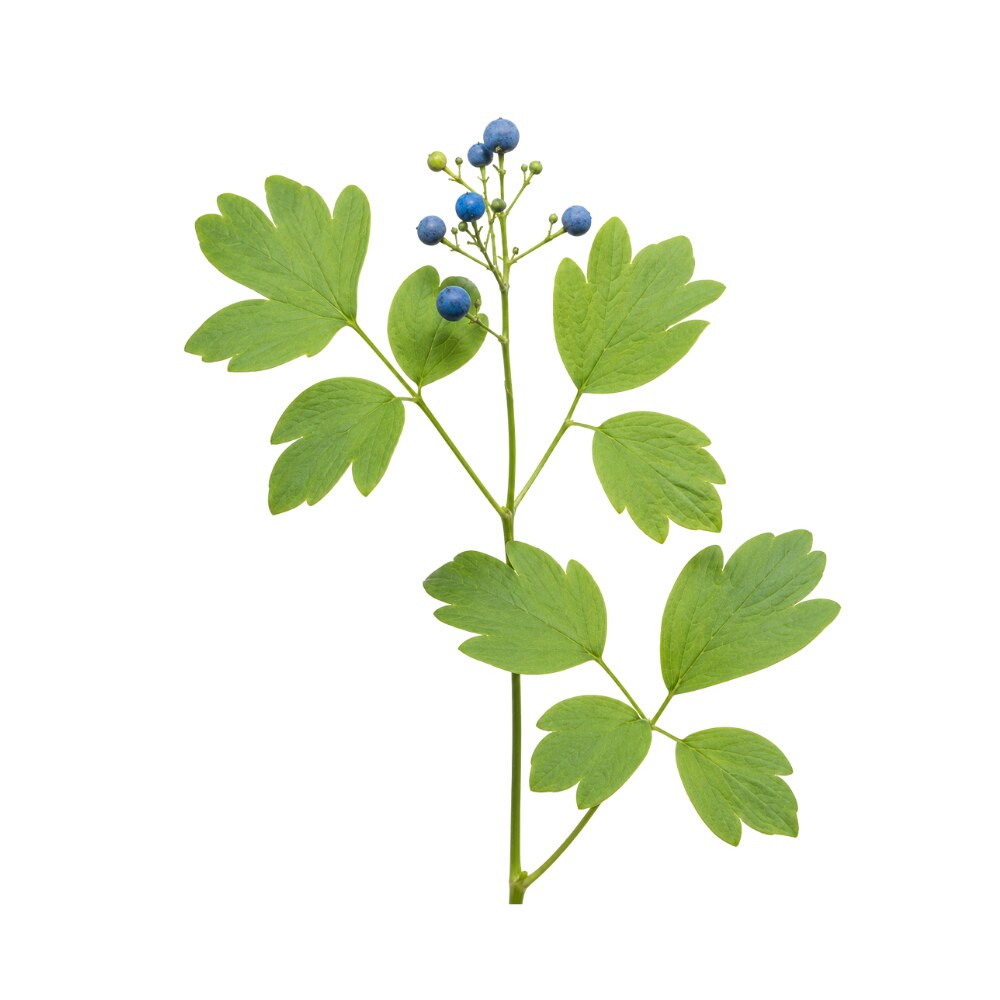
α-Isolupanine is a naturally occurring quinolizidine alkaloid (lupanine type; a stereoisomer of lupanine), found in Blue cohosh, Lupins and 1 other source. It is flagged as moderately toxic.
Concentration
Content by Source
Concentrations not reported. No percent-dry-weight or mg/g figures have been published for this compound in its source plants.
α-Isolupanine at a Glance
α-Isolupanine is a minor lupanine-type quinolizidine alkaloid — a stereoisomer of lupanine — that occurs in blue cohosh (Caulophyllum thalictroides) and in lupines (Lupinus spp.). In blue-cohosh rhizome it sits within the same lupine-type quinolizidine group as lupanine, 5,6-dehydro-α-isolupanine and sparteine 1Reference 1In vitroDetecting potential teratogenic alkaloids from blue cohosh rhizomes using an in vitro rat embryo cultureView study →.
It is not a compound studied in its own right. Its single documented pharmacological role is as one of several blue-cohosh alkaloids that inhibit cytochrome-P450 (CYP) enzymes in vitro, a herb-drug-interaction concern for the plant as a whole 2Reference 2In vitroAlkaloids and saponins as cytochrome P450 inhibitors from blue cohosh (Caulophyllum thalictroides) in an in vitro assayView study →. Everything else here is context, not evidence for the isolated molecule.
The honest posture is that this is a very thin molecule: no human data, no isolate pharmacokinetics, and no toxicology specific to the α-isomer. Its cautions are inherited from its chemical class and from the reproductive-toxic, teratogenic backdrop of the herb it is found in.
A Minor Lupanine-Isomer Quinolizidine Of The Blue-Cohosh Alkaloid Complex
The reason α-isolupanine has a page at all is its membership in a complex, not any standalone activity. Blue cohosh carries a mixed alkaloid load — the nicotinic marker N-methylcytisine (caulophylline), the teratogenic quinolizidine anagyrine, baptifoline, the aporphine magnoflorine — and, as a minor fraction, the lupine-type quinolizidines: lupanine, α-isolupanine, 5,6-dehydro-α-isolupanine and sparteine 1Reference 1In vitroDetecting potential teratogenic alkaloids from blue cohosh rhizomes using an in vitro rat embryo cultureView study →.
α-Isolupanine is a stereoisomer of lupanine and typically co-occurs with 5,6-dehydro-α-isolupanine, its dehydro relative. It is a different molecule from lupanine and its properties should not be assumed identical: lupanine is the well-characterised, frankly toxic bitter principle of lupin beans, whereas α-isolupanine has almost no isolate-specific data of its own. What is documented is narrow — it is one of the blue-cohosh alkaloids credited with contributing to the plant’s in-vitro CYP inhibition 2Reference 2In vitroAlkaloids and saponins as cytochrome P450 inhibitors from blue cohosh (Caulophyllum thalictroides) in an in vitro assayView study → — and that is the sole claim any weight rests on.
What It's Used For
There is very little to review. α-Isolupanine has not been the subject of dedicated pharmacology; it appears in the literature only as a named constituent within blue-cohosh and lupine alkaloid surveys 1,
Support is an experimental score — weighted by study type (human > animal > in vitro) and volume. A beta, not a validated metric. The single row below reflects one in-vitro finding for the molecule as part of a plant alkaloid mixture.
In an in-vitro study of blue-cohosh alkaloids and saponins as cytochrome-P450 inhibitors, α-isolupanine is named among the alkaloids contributing to CYP450 inhibition 2Reference 2In vitroAlkaloids and saponins as cytochrome P450 inhibitors from blue cohosh (Caulophyllum thalictroides) in an in vitro assayView study →.
This is the molecule’s only documented functional role. It is a plant-fraction observation, not an isolate potency measurement: the study characterises which blue-cohosh constituents inhibit CYP enzymes in an enzyme assay, placing α-isolupanine (with lupanine) in that group, but does not establish that the purified isomer inhibits any specific CYP at concentrations reachable from ordinary intake.
Gap: no isoform-resolved IC50, no purified-compound dose-response, and no in-vivo or human interaction data exist for α-isolupanine; the herb-drug-interaction concern is properly a property of blue-cohosh preparations as a whole 2Reference 2In vitroAlkaloids and saponins as cytochrome P450 inhibitors from blue cohosh (Caulophyllum thalictroides) in an in vitro assayView study →.
Mechanisms
| Target / pathway | Effect | Relevant to |
|---|---|---|
| Cytochrome-P450 (CYP) enzymes | in-vitro inhibition as a member of the blue-cohosh alkaloid fraction (isoform-level potency not resolved for this isomer) | herb-drug interaction |
The mechanism table is deliberately one line — it is the only mechanistic claim the evidence supports for the α-isomer, and even that is a fraction-level, not isolate-level, finding 2Reference 2In vitroAlkaloids and saponins as cytochrome P450 inhibitors from blue cohosh (Caulophyllum thalictroides) in an in vitro assayView study →.
Pharmacokinetics
No pharmacokinetic data exist for α-isolupanine. Absorption, oral bioavailability, distribution, metabolism and half-life are all uncharacterised for this molecule. It cannot be assumed to share lupanine’s kinetics despite the isomerism. Because the only reported activity is an in-vitro CYP observation, there is no exposure figure against which to judge whether that inhibition is achievable in a person.
Clinical Trials
There are no clinical trials of α-isolupanine, and none are anticipated — it is a minor constituent, not a drug candidate. Any human relevance is indirect, through blue-cohosh exposure.
| Completed | Planned | Terminated | Preclinical |
|---|---|---|---|
| — | — | — | In-vitro CYP-inhibition (as part of the blue-cohosh alkaloid set) 2Reference 2In vitroAlkaloids and saponins as cytochrome P450 inhibitors from blue cohosh (Caulophyllum thalictroides) in an in vitro assayView study → |
Last checked: July 2026.
Isolate Vs. Plant Studies
Almost everything here is plant-level, not isolate-level. α-Isolupanine has not been studied as a purified compound for any therapeutic endpoint; it appears only as a named entry in whole-plant alkaloid surveys of blue-cohosh rhizome 1Reference 1In vitroDetecting potential teratogenic alkaloids from blue cohosh rhizomes using an in vitro rat embryo cultureView study → and lupine seed, and in an in-vitro CYP assay that profiled the blue-cohosh alkaloid mixture 2Reference 2In vitroAlkaloids and saponins as cytochrome P450 inhibitors from blue cohosh (Caulophyllum thalictroides) in an in vitro assayView study →. Where a “role” is attributed to it, the vehicle was the plant or its alkaloid fraction, not the isolated molecule. This is the weakest evidentiary footing a page can have, and it is stated plainly: any claim reduced to α-isolupanine alone is an inference from mixture data.
Prevalence In Nature
α-Isolupanine is a low-abundance quinolizidine alkaloid of two documented settings. In blue cohosh (Caulophyllum thalictroides, Berberidaceae) it is a minor component of the rhizome’s lupine-type quinolizidine fraction, reported alongside lupanine, 5,6-dehydro-α-isolupanine and sparteine 1Reference 1In vitroDetecting potential teratogenic alkaloids from blue cohosh rhizomes using an in vitro rat embryo cultureView study →. In lupines, it occurs in the quinolizidine-alkaloid profile of narrow-leafed lupine (Lupinus angustifolius) seed, part of the alkaloid load that must be reduced by breeding (sweet cultivars) or debittering before lupin is eaten 3Reference 3Alkaloid content variability in the seeds of narrow-leafed lupine accessions from the VIR collection under the conditions of the Russian NorthwestView study →.
It has not been separately quantified in either source — the surveys that name it report the alkaloid profile qualitatively or as a total-alkaloid figure rather than an isomer-resolved concentration 1,
Discovery & Synthesis
α-Isolupanine has no distinct discovery narrative of its own in the accessible literature — it enters the record as one of the resolved quinolizidine alkaloids in blue-cohosh and lupine alkaloid analyses rather than through a landmark first isolation 1Reference 1In vitroDetecting potential teratogenic alkaloids from blue cohosh rhizomes using an in vitro rat embryo cultureView study →. As the “iso” and “α-” prefixes indicate, it was characterised as a stereoisomer of lupanine, the long-known principal lupin alkaloid, and is named by that relationship.
Total synthesis: not well documented for this isomer specifically. Manufacture: none — α-isolupanine is not produced commercially; it exists only as a natural minor constituent and, incidentally, as an analytical reference point in alkaloid surveys.
Patents: not yet researched.
Toxicity & Safety
α-Isolupanine carries a moderate flag as a class-and-context precaution, not a measured hazard. There is no toxicology dataset for the isolated α-isomer — no acute, repeat-dose, genotoxicity or reproductive study. The flag reflects two facts: it is a lupine-type quinolizidine alkaloid, a class that includes frankly toxic members such as its isomer lupanine; and it occurs in blue cohosh, a herb with a serious reproductive-toxic and teratogenic backdrop. Assigning it a low flag would wrongly imply safety from an absence of data.
The host-plant context is the real safety story. Blue cohosh’s characteristic alkaloids — N-methylcytisine and anagyrine — are nicotinic and teratogenic, and the plant is associated with a nicotinic toxidrome and neonatal cardiac case reports; its alkaloid fraction (α-isolupanine included) also inhibits CYP450 enzymes in vitro, the basis of a herb-drug-interaction concern 1,
- No isolate toxicity signal on record. α-Isolupanine has not itself been shown teratogenic; the teratogenic blue-cohosh alkaloids are others (N-methylcytisine, anagyrine) 1Reference 1In vitroDetecting potential teratogenic alkaloids from blue cohosh rhizomes using an in vitro rat embryo cultureView study →.
- Quinolizidine-class alkaloid. Belongs to the lupine-type quinolizidine family, which includes toxic bitter alkaloids; treat with the caution due an uncharacterised member of a toxic class.
- Blue-cohosh / CYP context. Named among the blue-cohosh alkaloids that inhibit CYP450 in vitro — a herb-drug-interaction concern for the plant, whose broader alkaloid load carries reproductive-toxic and teratogenic risk 2Reference 2In vitroAlkaloids and saponins as cytochrome P450 inhibitors from blue cohosh (Caulophyllum thalictroides) in an in vitro assayView study →.
- No isolate safety data. No pharmacokinetics, reproductive, or repeat-dose toxicology exist for the α-isomer specifically; the moderate flag is precautionary, not measured.
Dosage
There is no dose for α-isolupanine. It is not used or sold as an isolated compound and has no therapeutic application. Human exposure is incidental — as a minor quinolizidine alkaloid of blue-cohosh rhizome preparations, or of inadequately debittered lupin. There is nothing to recommend, and given the blue-cohosh safety backdrop, no reason to seek exposure. This is a description of a trace natural constituent, not a personal recommendation.
References
- Kennelly EJ, Flynn TJ, Mazzola EP, Roach JA, et al. (1999). Detecting potential teratogenic alkaloids from blue cohosh rhizomes using an in vitro rat embryo culture. Journal of Natural Products. https://pubmed.ncbi.nlm.nih.gov/10543898/
- Madgula VL, Ali Z, Smillie T, et al. (2009). Alkaloids and saponins as cytochrome P450 inhibitors from blue cohosh (Caulophyllum thalictroides) in an in vitro assay. Planta Medica. https://pubmed.ncbi.nlm.nih.gov/19137500/
- Vishnyakova MA, Salikova AV, Shelenga TV, Egorova GP, Novikova LY (2023). Alkaloid content variability in the seeds of narrow-leafed lupine accessions from the VIR collection under the conditions of the Russian Northwest. Vavilovskii Zhurnal Genetiki i Selektsii. https://pubmed.ncbi.nlm.nih.gov/37063513/



