
Compound Monograph
Arjungenin
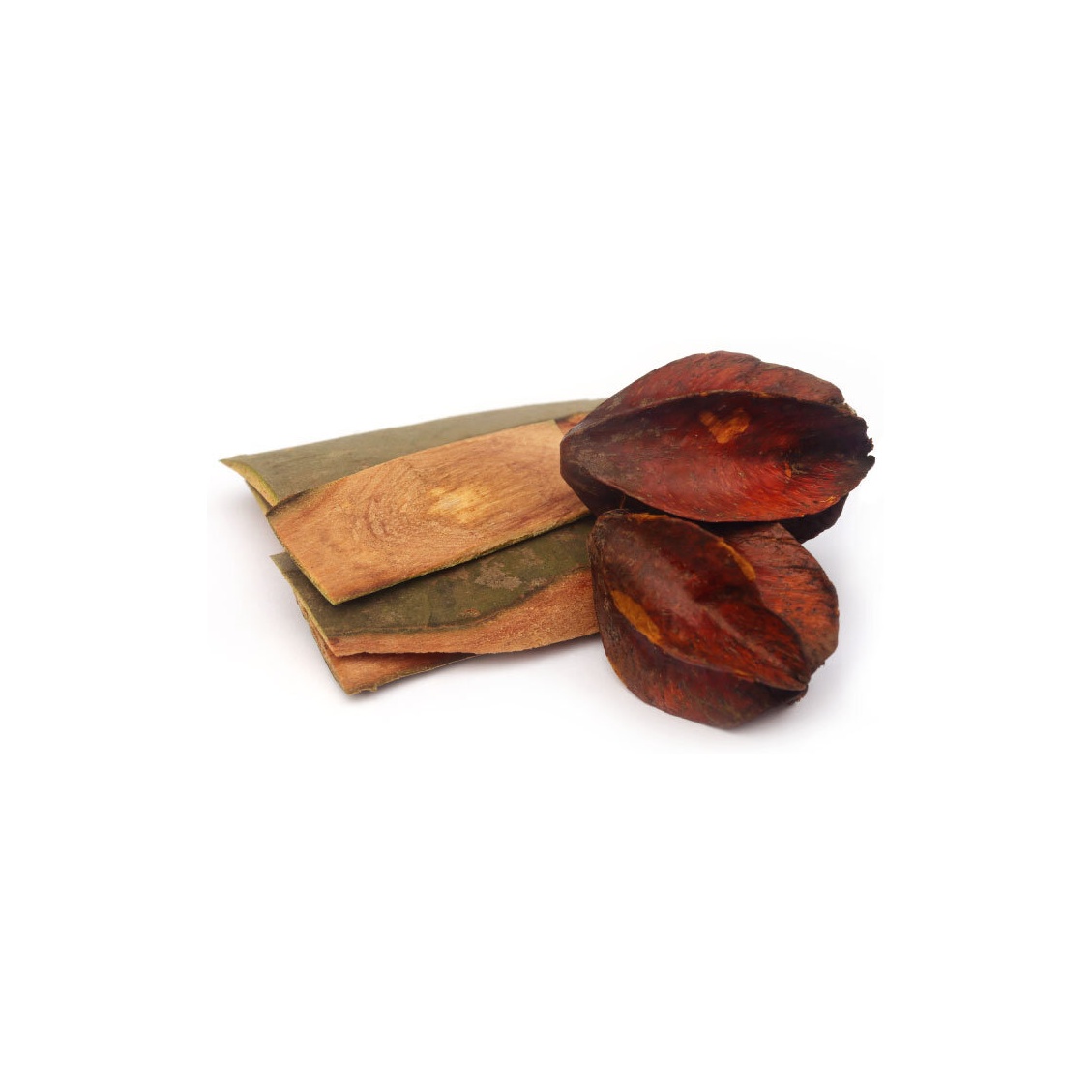
Arjungenin is an oleanane-type triterpenoid sapogenin from the bark of arjuna (Terminalia arjuna) — the aglycone backbone of the tree's arjunglucoside saponins. As an isolated molecule its data are thin: moderate antioxidant and anti-inflammatory activity in vitro and an in-silico/adipocyte metabolic signal, with no human evidence of its own.

Sources · 2
Where Does It Come From?
Arjungenin is a naturally occurring triterpenoid (oleanane-type pentacyclic sapogenin), found in Arjuna and 1 other source. It is well tolerated orally (low toxicity).
Concentration
Content by Source
Reported concentrations across the plants that contain arjungenin — the bar marks the typical level, the line shows the reported range.
Literature figures for varying plant parts and preparations. Read them as a comparative guide, not exact assays.
Arjungenin at a Glance
Arjungenin is an oleanane-type pentacyclic triterpenoid — chemically 2,3,19,23-tetrahydroxyolean-12-en-28-oic acid — from the bark of arjuna (Terminalia arjuna), the South-Asian tree with a long cardiac-tonic reputation. It sits in the same family of bark triterpenes as arjunolic acid and arjunic acid, but its defining role is structural: arjungenin is the sapogenin (aglycone) that carries the sugar in the bark’s saponins, chiefly arjunglucoside I and arjunetin.
As an isolated molecule the evidence is genuinely thin. The real, compound-specific signal is a single in-vitro study showing moderate free-radical scavenging and inhibition of an inflammatory neutrophil oxidant 2Reference 2Effect of oleanane triterpenoids from Terminalia arjuna — a cardioprotective drug — on the process of respiratory oxyburstView study →, plus an in-silico-plus-cell study framing it as a metabolic (FXR-agonist) candidate 6Reference 6In-silico therapeutic investigations of arjunic acid and arjungenin as an FXR agonist and validation in 3T3-L1 adipocytesView study → and an in-silico acetylcholinesterase-docking result 7Reference 7Molecular and pharmacokinetic aspects of the acetylcholinesterase-inhibitory potential of the oleanane-type triterpenes and their glycosidesView study →. There are no human trials of arjungenin, and the clinical reputation of arjuna belongs to the whole bark extract, not to this one molecule.
The honest headline: arjungenin is best understood as a minor building block of arjuna’s saponin chemistry with a promising but preliminary isolate profile, undercut by the usual triterpene problem of poor oral absorption.
Arjungenin, the Arjuna Sapogenin
The point of this molecule is its place in arjuna’s triterpene architecture. Arjuna bark makes a small set of oleanane triterpene acids — arjunolic acid (the most abundant, ~0.5% w/w), arjunic acid, and arjungenin (~0.3% w/w) — and then glucosylates them at the C-28 carboxyl to form the corresponding saponin esters 3,
Structurally it differs from the better-known arjunolic acid by one extra hydroxyl: arjungenin is the 2,3,19,23-tetrahydroxy oleanane acid, arjunolic acid the 2,3,23-trihydroxy one. That added 19-hydroxyl makes arjungenin more polar than arjunolic or arjunic acid — relevant to its likely-poor membrane permeability. Its oleanane skeleton is shared with widespread plant triterpenes such as oleanolic acid and, in the ursane series, ursolic acid; beta-sitosterol is the co-occurring sterol of the same bark.
What isolate signal actually exists is modest and preliminary — antioxidant/anti-inflammatory in vitro 2Reference 2Effect of oleanane triterpenoids from Terminalia arjuna — a cardioprotective drug — on the process of respiratory oxyburstView study → and a metabolic-receptor result that is mostly computational 6Reference 6In-silico therapeutic investigations of arjunic acid and arjungenin as an FXR agonist and validation in 3T3-L1 adipocytesView study →. No human data exist for arjungenin specifically, and in the one cytotoxicity screen that isolated it alongside its siblings, the active molecule was arjunic acid, not arjungenin 4Reference 4Cytotoxic agents from Terminalia arjunaView study →. This section is deliberately short because the honest evidence base is short.
What It's Used For
Arjungenin’s pharmacology is early-stage and almost entirely non-human. The load-bearing caveat is the compound-page discipline: what human evidence exists for arjuna is for the whole bark extract, while the arjungenin-specific data are a handful of in-vitro and in-silico studies.
Support is an experimental score — weighted by study type (human > animal > in vitro) and volume. A beta, not a validated metric. Every row here is isolate-level in-vitro or in-silico work; none rests on human data, so the scores are low by design.
The most concrete arjungenin-specific finding. In a study of oleanane triterpenoids from arjuna bark on the respiratory oxyburst, arjungenin and its glucoside exhibited moderate free-radical scavenging, and arjungenin was the more active at inhibiting hypochlorous-acid production by stimulated human neutrophils — an anti-inflammatory-relevant effect, since neutrophil-derived HOCl drives oxidative tissue damage. Neither compound affected superoxide release from the same cells, so the effect is selective rather than a blanket antioxidant action 2Reference 2Effect of oleanane triterpenoids from Terminalia arjuna — a cardioprotective drug — on the process of respiratory oxyburstView study →.
This is the isolated molecule tested directly.
Gap: a single in-vitro study on cell/cell-free preparations; the effect is “moderate,” untested in animals or humans, and says nothing about what concentrations are reachable in the body after oral arjuna 2Reference 2Effect of oleanane triterpenoids from Terminalia arjuna — a cardioprotective drug — on the process of respiratory oxyburstView study →.
A newer, mechanistically interesting but preliminary signal. Molecular docking placed arjungenin in the farnesoid X receptor (FXR) binding pocket with strong predicted affinity, and in 3T3-L1 adipocytes arjungenin raised secreted adiponectin (~+133%) and leptin (~+150%), up-regulated FXR, PPAR-γ and SREBP-1c mRNA, and lowered cyp7a1 — a pattern the authors read as FXR agonism relevant to metabolic disease, with no cytotoxicity up to 150 µM 6Reference 6In-silico therapeutic investigations of arjunic acid and arjungenin as an FXR agonist and validation in 3T3-L1 adipocytesView study →. It is a plausible link between arjuna’s triterpenes and its lipid/metabolic reputation.
Gap: the receptor interaction is in silico and the biology is a single adipocyte cell-line study — no animal metabolic outcome, no human data, and gene/adipokine shifts in cultured cells do not establish a clinical effect 6Reference 6In-silico therapeutic investigations of arjunic acid and arjungenin as an FXR agonist and validation in 3T3-L1 adipocytesView study →.
The thinnest of the three. A study of oleanane-type triterpenes and their glycosides from arjuna modelled their acetylcholinesterase-inhibitory potential; arjungenin was one of six compounds, all binding AChE with similar high predicted affinity (~−15 to −13 kcal/mol), with the wet-lab kinetics characterised for arjunglucoside I, not arjungenin 7Reference 7Molecular and pharmacokinetic aspects of the acetylcholinesterase-inhibitory potential of the oleanane-type triterpenes and their glycosidesView study →.
Gap: the arjungenin result is docking only — no isolated-arjungenin enzyme assay, no cellular or animal neuroprotection, and no human data 7Reference 7Molecular and pharmacokinetic aspects of the acetylcholinesterase-inhibitory potential of the oleanane-type triterpenes and their glycosidesView study →.
Mechanisms
| Target / pathway | Effect | Relevant to |
|---|---|---|
| Free radicals (DPPH-type) & neutrophil hypochlorous acid | moderate radical scavenging; inhibits HOCl production; no effect on superoxide release | antioxidant / anti-inflammatory |
| Farnesoid X receptor (FXR) | agonist binding (in-silico); ↑ adiponectin/leptin, ↑ PPAR-γ/SREBP-1c, ↓ cyp7a1 in adipocytes | metabolic (in-silico + cell) |
| Acetylcholinesterase | high predicted docking affinity among oleananes (no isolate wet-lab result) | neuroprotective (in-silico only) |
| CYP3A4 / CYP2D6 / CYP2C9 | no significant inhibition by the isolate (the crude bark extract does inhibit) | drug-interaction risk (reassuring for the isolate) |
| UGT73FB1 C28-O-glucosylation (in planta) | serves as an aglycone substrate → C28-glucosyl ester, though converted poorly to arjunglucoside I | plant biosynthesis / prevalence |
The load-bearing honesty is that the antioxidant row is the only wet-lab isolate result; the FXR and AChE rows are largely computational, and the CYP row is a useful negative — arjungenin itself did not inhibit the major drug-metabolising enzymes even though whole arjuna extract did.
Pharmacokinetics
There is no human or animal pharmacokinetic dataset for arjungenin — no absorption, Cmax, half-life or oral bioavailability figure exists for the isolate. What can be said is structural and comparative: arjungenin is a large, highly polar tetrahydroxy triterpene acid, and this class of oleanane sapogenins and saponins is characteristically poorly absorbed orally, which is the standing caveat over every in-vitro and in-silico claim above — the concentrations that scavenge radicals or dock into FXR in a dish may simply not be reachable in plasma after oral arjuna. In the bark much of the molecule is present bound as its glucoside (arjunglucoside I / arjunetin) and would require hydrolysis to release the free sapogenin 1Reference 1Arjungenin, arjunglucoside I, and arjunglucoside IIView study →. One useful negative PK-adjacent result: isolated arjungenin did not significantly inhibit CYP3A4, CYP2D6 or CYP2C9 in human liver microsomes, even though the whole bark extract did — so the extract’s drug-interaction potential is not attributable to this molecule 5Reference 5In vitroIn vitro modulatory effects of Terminalia arjuna, arjunic acid, arjunetin and arjungenin on CYP3A4, CYP2D6 and CYP2C9 enzyme activity in human liver microsomesView study →.
Clinical Trials
There are no clinical trials of isolated arjungenin — it has never been administered to humans as a single compound. Every human study of Terminalia arjuna uses crude stem-bark powder or a water/alcohol extract, within which arjungenin is a minor, largely bound constituent; those trials cannot be attributed to the sapogenin.
| Completed | Planned | Terminated | Preclinical |
|---|---|---|---|
| None(isolate); arjuna human trials are whole-bark extract | — | — | In-vitro antioxidant/anti-inflammatory 2Reference 2Effect of oleanane triterpenoids from Terminalia arjuna — a cardioprotective drug — on the process of respiratory oxyburstView study →; in-silico + adipocyte FXR 6Reference 6In-silico therapeutic investigations of arjunic acid and arjungenin as an FXR agonist and validation in 3T3-L1 adipocytesView study →; in-silico AChE 7Reference 7Molecular and pharmacokinetic aspects of the acetylcholinesterase-inhibitory potential of the oleanane-type triterpenes and their glycosidesView study → |
Last checked: July 2026.
Isolate vs. Plant Studies
This molecule sits firmly on the plant side of the isolate-vs-plant line. All of arjuna’s human evidence — the heart-failure and angina work, the lipid and antioxidant outcomes — is for the whole stem-bark extract or powder, a complex mixture of triterpene acids, saponins, tannins, flavonoids and sterols, dosed at roughly 500 mg three times daily 3Reference 3Extraction and TLC densitometric determination of triterpenoid acids (arjungenin, arjunolic acid) from Terminalia arjuna stem bark without interference of tanninsView study →. Arjungenin’s own record is three small non-clinical studies: one wet-lab in-vitro antioxidant/anti-inflammatory result on the isolate 2Reference 2Effect of oleanane triterpenoids from Terminalia arjuna — a cardioprotective drug — on the process of respiratory oxyburstView study →, one in-silico-plus-adipocyte metabolic study 6Reference 6In-silico therapeutic investigations of arjunic acid and arjungenin as an FXR agonist and validation in 3T3-L1 adipocytesView study →, and one docking study 7Reference 7Molecular and pharmacokinetic aspects of the acetylcholinesterase-inhibitory potential of the oleanane-type triterpenes and their glycosidesView study →. Even where the isolate was purified alongside its siblings and screened for cytotoxicity, the active compound was arjunic acid, not arjungenin 4Reference 4Cytotoxic agents from Terminalia arjunaView study →. The correct framing is therefore: a well-used botanical with a genuine clinical reputation, and a minor constituent molecule whose independent contribution is essentially uncharacterised.
Prevalence in Nature
Arjungenin is, in practical terms, an arjuna-bark molecule. It was first isolated from the stem bark of Terminalia arjuna (Combretaceae) 1Reference 1Arjungenin, arjunglucoside I, and arjunglucoside IIView study →, and quantitative analysis of that bark puts it at roughly 0.3% of dry weight (0.324% w/w reported), alongside arjunolic acid at about 0.5% — the two being the measurable oleanane triterpene acids of the bark, within a total triterpenoid fraction under 1% 3Reference 3Extraction and TLC densitometric determination of triterpenoid acids (arjungenin, arjunolic acid) from Terminalia arjuna stem bark without interference of tanninsView study →. Much of it occurs bound as its C-28 glucoside saponins rather than as the free aglycone 1,
In the plant, arjungenin is part of a scaffold-selective saponin pathway: the UDP-glucosyltransferase UGT73FB1 glucosylates oleanane aglycones at the C-28 carboxyl to build the bark’s triterpenoid glucosyl esters, though arjungenin is converted to arjunglucoside I comparatively inefficiently, which may be why arjunetin and arjunglucoside II (from arjunic and arjunolic acids) accumulate to higher levels in the bark 8Reference 8UGT73FB1 contributes to scaffold-selective biosynthesis of triterpenoid glucosyl esters in saponin-rich bark of arjuna treeView study →. This is plant biochemistry, not human pharmacology, and should not be read as such.
Discovery & Synthesis
Arjungenin was first isolated and characterised in 1976 by Tadashi Honda, Tatsushi Murae and co-workers (University of Tokyo), who reported it together with the two new triterpene glucosides arjunglucoside I and arjunglucoside II from Terminalia arjuna bark and assigned its structure as 2α,3β,19α,23-tetrahydroxyolean-12-en-28-oic acid 1Reference 1Arjungenin, arjunglucoside I, and arjunglucoside IIView study →. The name marks its origin — the arjun tree — in the botanical-sapogenin tradition (compare arjunolic and arjunic acids). Its close structural relatives arjunolic acid and arjunic acid, and the saponins arjunetin and the arjunglucosides, were mapped out in the same body of Indian and Japanese phytochemistry.
Manufacture today is entirely by extraction from arjuna bark, not synthesis — arjungenin is obtained (often after acid hydrolysis of the bark saponins to free the aglycone) as a research reference compound rather than a commercial product; no total synthesis is in routine use and there is no meaningful market for the pure molecule beyond analytical standards.
Patents: not yet researched.
Toxicity & Safety
Arjungenin carries a low flag. There is no isolate-specific toxicity signal in the small literature that exists: the one study that measured cytotoxicity found arjungenin unremarkable (activity belonged to arjunic acid) 4Reference 4Cytotoxic agents from Terminalia arjunaView study →, and the adipocyte study reported no cytotoxicity up to 150 µM 6Reference 6In-silico therapeutic investigations of arjunic acid and arjungenin as an FXR agonist and validation in 3T3-L1 adipocytesView study →. This is consistent with the generally low acute toxicity of dietary oleanane triterpenes — but the reassurance is shallow, because no dedicated safety, repeat-dose, genotoxicity or reproductive study of isolated arjungenin has been done, and safety should never be inferred from absence of data.
A useful data point on interactions: isolated arjungenin did not significantly inhibit CYP3A4, CYP2D6 or CYP2C9 in human liver microsomes, so it is unlikely to be the driver of arjuna’s own CYP-inhibitory (drug-interaction) potential, which tracks the whole extract instead 5Reference 5In vitroIn vitro modulatory effects of Terminalia arjuna, arjunic acid, arjunetin and arjungenin on CYP3A4, CYP2D6 and CYP2C9 enzyme activity in human liver microsomesView study →. No reproductive or developmental data exist for the isolate; any pregnancy/lactation judgement belongs to the arjuna herb page, where intake is actually decided, not to this molecule page.
- No isolate toxicity signal. The cytotoxicity screen found arjungenin unremarkable, and adipocyte work showed no cytotoxicity to 150 µM 4,
6Reference 4Cytotoxic agents from Terminalia arjunaView study →Reference 6In-silico therapeutic investigations of arjunic acid and arjungenin as an FXR agonist and validation in 3T3-L1 adipocytesView study → . - Unlikely to drive CYP drug interactions. Isolated arjungenin did not significantly inhibit CYP3A4/2D6/2C9, unlike the whole bark extract 5Reference 5In vitroIn vitro modulatory effects of Terminalia arjuna, arjunic acid, arjunetin and arjungenin on CYP3A4, CYP2D6 and CYP2C9 enzyme activity in human liver microsomesView study →.
- Safety data are essentially absent. No dedicated repeat-dose, genotoxicity or reproductive study of the isolate exists — low toxicity is inferred, not demonstrated.
- Judge exposure at the herb level. Real-world intake is whole arjuna bark; pregnancy/lactation and dosing decisions belong to the arjuna herb page, not to this molecule.
Dosage
There is no established or recommended dose for isolated arjungenin — it has never been administered to people as a single compound, and every cited figure above is an in-vitro or in-silico concentration, not a human dose. Real-world exposure is through whole arjuna bark: traditional and clinical use is bark powder or a water/alcohol extract, typically around 500 mg three times daily, or a 750 mg twice-daily standardised water extract in the heart-failure trials 3Reference 3Extraction and TLC densitometric determination of triterpenoid acids (arjungenin, arjunolic acid) from Terminalia arjuna stem bark without interference of tanninsView study → — within which arjungenin is a minor (~0.3% of bark), largely bound constituent. These are botanical-extract research figures, not a personal recommendation, and none of them is a dose of arjungenin.
References
- Honda T, Murae T, Tsuyuki T, Takahashi T, Sawai M (1976). Arjungenin, arjunglucoside I, and arjunglucoside II. A new triterpene and new triterpene glucosides from Terminalia arjuna. Bulletin of the Chemical Society of Japan. https://doi.org/10.1246/bcsj.49.3213
- Pawar RS, Bhutani KK (2005). Effect of oleanane triterpenoids from Terminalia arjuna — a cardioprotective drug — on the process of respiratory oxyburst. Phytomedicine. https://pubmed.ncbi.nlm.nih.gov/15957375/
- Kalola J, Rajani M (2006). Extraction and TLC densitometric determination of triterpenoid acids (arjungenin, arjunolic acid) from Terminalia arjuna stem bark without interference of tannins. Chromatographia. https://doi.org/10.1365/s10337-006-0772-3
- Saxena M, Faridi U, Mishra R, Gupta MM, Darokar MP, Srivastava SK, Singh D, Luqman S, Khanuja SP (2007). Cytotoxic agents from Terminalia arjuna. Planta Medica. https://pubmed.ncbi.nlm.nih.gov/18008199/
- Varghese A, Savai J, Pandita N, Gaud R (2015). In vitro modulatory effects of Terminalia arjuna, arjunic acid, arjunetin and arjungenin on CYP3A4, CYP2D6 and CYP2C9 enzyme activity in human liver microsomes. Toxicology Reports. https://pubmed.ncbi.nlm.nih.gov/28962416/
- T MM, T A, P BK, et al. (2020). In-silico therapeutic investigations of arjunic acid and arjungenin as an FXR agonist and validation in 3T3-L1 adipocytes. Computational Biology and Chemistry. https://pubmed.ncbi.nlm.nih.gov/31767507/
- Stępnik K, Kukula-Koch W, Płaziński W (2023). Molecular and pharmacokinetic aspects of the acetylcholinesterase-inhibitory potential of the oleanane-type triterpenes and their glycosides. Biomolecules. https://pubmed.ncbi.nlm.nih.gov/37759757/
- Vyas P, Srivastava P, Srivastava G, Kumar A, Garg A, C H R, Ghosh S (2025). UGT73FB1 contributes to scaffold-selective biosynthesis of triterpenoid glucosyl esters in saponin-rich bark of arjuna tree. The Plant Journal. https://pubmed.ncbi.nlm.nih.gov/40227097/



