
Compound Monograph
Arjunic Acid
Arjunic acid is an oleanane-type triterpene acid from the bark of arjuna (Terminalia arjuna), the Ayurvedic cardiac tonic — a trihydroxy relative of oleanolic acid and a positional isomer of arjunolic acid. In isolation it is a potent in-vitro antioxidant with cardiomyocyte-protective and anticancer signals, but every human study of arjuna uses the whole bark, not this molecule.

Sources · 3
Where Does It Come From?
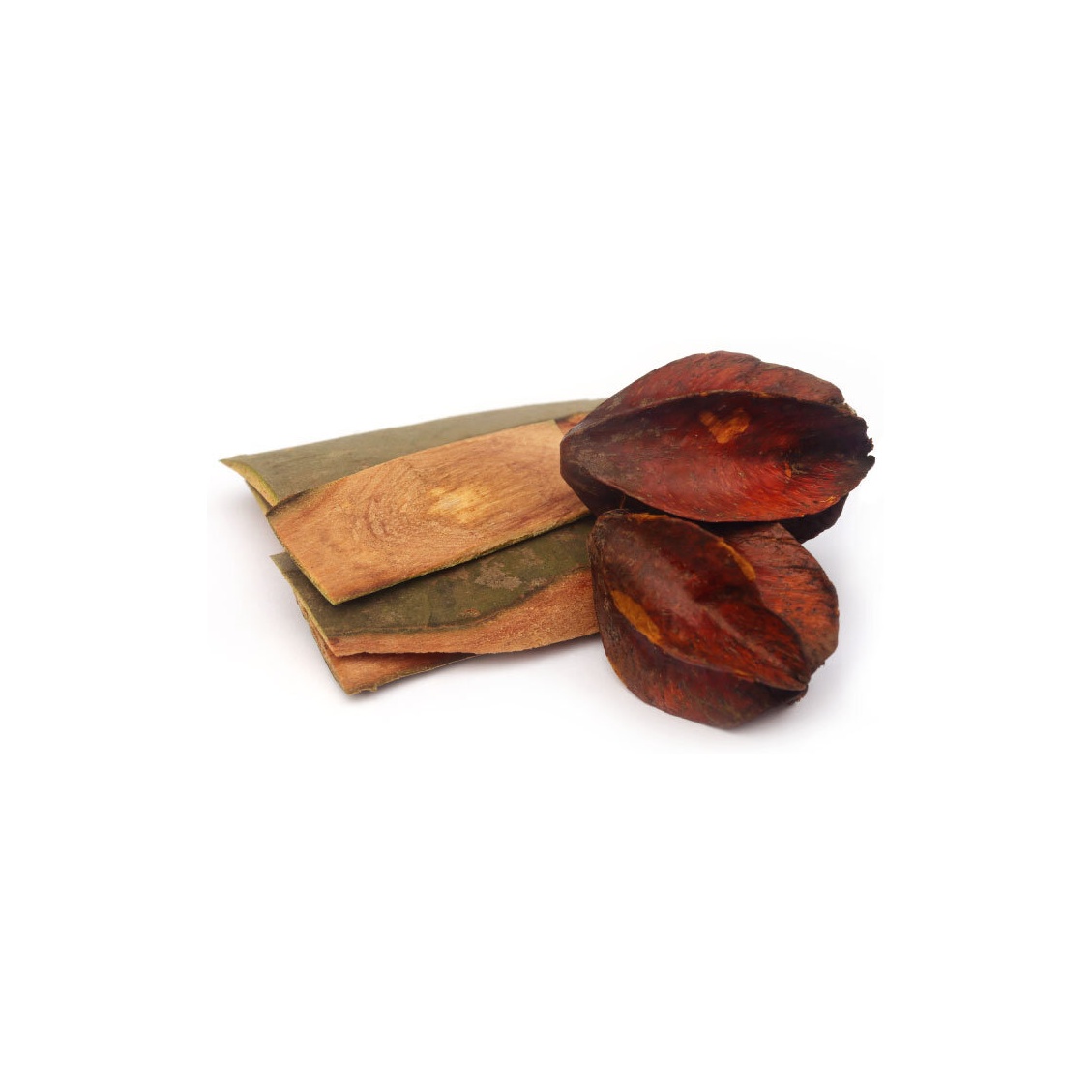
Arjunic Acid is a naturally occurring triterpenoid (pentacyclic, oleanane-type acid), found in Arjuna bark and 2 other sources. It is well tolerated orally (low toxicity).
Concentration
Content by Source
Concentrations not reported. No percent-dry-weight or mg/g figures have been published for this compound in its source plants.
Arjunic Acid at a Glance
Arjunic acid is a pentacyclic triterpene acid of the oleanane type (2α,3β,19α-trihydroxyolean-12-en-28-oic acid) isolated from the bark of arjuna (Terminalia arjuna), the tree whose bark has been used for centuries in Ayurvedic medicine as a cardiac tonic. Structurally it is a trihydroxylated cousin of oleanolic acid and a close relative of arjunolic acid, the better-studied arjuna triterpene.
Its clearest isolated-molecule signal is as an antioxidant: in cell-free and red-blood-cell assays purified arjunic acid scavenges free radicals more strongly than ascorbic acid 1Reference 1In vitroArjunic acid, a strong free radical scavenger from Terminalia arjuna — in vitro studyView study →. It also protects cultured heart-muscle cells from oxidative/hypoxic injury 2Reference 2In vitroTerminalia arjuna extract and arjunic acid mitigate cobalt chloride-induced hypoxia stress-mediated apoptosis in H9c2 cells — in vitro cardiomyocyte studyView study → and triggers apoptosis in several cancer cell lines 3,
The honest caveat runs through the whole page: all of arjuna’s human evidence is for the whole bark, and all of arjunic acid’s own evidence is preclinical — in-vitro assays and cell models, never a controlled human trial of the isolate. Like its triterpene siblings, it is a large, poorly water-soluble acid with limited expected oral bioavailability, so in-vitro potency should not be read as an oral-dose effect.
Arjunic Acid Among the Arjuna Triterpenes
The cardioactive reputation of Terminalia arjuna bark rests on a small suite of oleanane-type triterpene acids, of which the two headline molecules are arjunic acid and arjunolic acid. Both are trihydroxy derivatives of oleanolic acid sharing the molecular formula C₃₀H₄₈O₅, and they are in fact positional isomers — arjunic acid carries its third hydroxyl at the 19α position (2α,3β,19α-trihydroxy), while arjunolic acid carries it at C-23 (2α,3β,23-trihydroxy) 10Reference 10ReviewMedicinal properties of Terminalia arjuna (Roxb.) Wight & Arn.: a reviewView study →. Alongside them sit the aglycone arjungenin, the saponin glycosides arjunetin and arjunin, and the related triterpene terminic acid; quantitatively the whole triterpene fraction is minor, under ~1% of the bark 9,
Within that set, arjunolic acid is the more mechanistically developed molecule — a PPAR-α agonist with anti-fibrotic cardiac data — and it is the one most often carried forward as arjuna’s “active.” Arjunic acid is the quieter sibling: grouped with arjunolic acid in the plant’s cardioprotective mechanism tables, but studied in its own right mainly as an antioxidant, a cardiomyocyte protectant, and an anticancer cytotoxin 1,
What It's Used For
Arjunic acid’s evidence is entirely preclinical, and it splits into a genuinely strong antioxidant signal, a cardiomyocyte-protective signal that connects it to arjuna’s traditional use, and an anticancer signal from cell-line work — each on the isolated molecule, none confirmed in humans.
Support is an experimental score — weighted by study type (human > animal > in vitro) and volume. A beta, not a validated metric. Every row here is isolate in vitro, with no human or whole-animal isolate data, so scores stay modest by design.
The strongest and best-characterised isolate signal. Purified arjunic acid was a strong free-radical scavenger, more potent than ascorbic acid in lipid-peroxidation (rat liver microsomes), DPPH, hydrogen-peroxide-induced haemolysis and DCFH₂-DA fluorescence assays 1Reference 1In vitroArjunic acid, a strong free radical scavenger from Terminalia arjuna — in vitro studyView study →.
In a cardiomyocyte model the same antioxidant character showed up functionally: it raised superoxide dismutase and catalase activity and lowered reactive-oxygen species in cobalt-chloride-stressed cells 2Reference 2In vitroTerminalia arjuna extract and arjunic acid mitigate cobalt chloride-induced hypoxia stress-mediated apoptosis in H9c2 cells — in vitro cardiomyocyte studyView study →.
This is the isolated molecule tested directly.
Gap: all cell-free / cell-based in-vitro chemistry — no in-vivo antioxidant biomarker data and no human study of the isolate; antioxidant potency in a tube does not establish an oral antioxidant effect at achievable plasma levels 1Reference 1In vitroArjunic acid, a strong free radical scavenger from Terminalia arjuna — in vitro studyView study →.
The application that links arjunic acid to arjuna’s cardiac-tonic tradition. In rat H9c2 cardiomyocytes, both Terminalia arjuna extract and isolated arjunic acid significantly protected against cobalt-chloride-induced hypoxic apoptosis, cutting ROS, preserving mitochondrial function, and shifting the Bcl-2/Bax/caspase-3 balance away from cell death 2Reference 2In vitroTerminalia arjuna extract and arjunic acid mitigate cobalt chloride-induced hypoxia stress-mediated apoptosis in H9c2 cells — in vitro cardiomyocyte studyView study →.
Because the study ran the extract and the isolate side by side, it is one of the few places arjunic acid is credited on its own rather than as a whole-bark constituent.
Gap: a single cell model of chemical hypoxia — not a whole-heart, whole-animal or human endpoint. Arjuna’s actual cardiovascular human evidence (angina, heart failure) is for the whole bark, where arjunic acid is only one minor triterpene among many actives 10Reference 10ReviewMedicinal properties of Terminalia arjuna (Roxb.) Wight & Arn.: a reviewView study →. Isolate-to-clinic transfer is unproven.
A consistent cell-line signal. Arjunic acid isolated from arjuna bark was significantly cytotoxic to human oral (KB), ovarian (PA-1) and liver (HepG-2, WRL-68) cancer cell lines 4Reference 4In vitroCytotoxic agents from Terminalia arjuna — in vitro studyView study →, and in non-small-cell lung cancer cells (A549, H460) it induced apoptosis through a c-Jun N-terminal kinase (JNK)-dependent endoplasmic-reticulum-stress pathway (IRE1α, ATF4, CHOP up-regulation; the JNK inhibitor SP600125 blocked the effect) 3Reference 3In vitroc-Jun N-terminal kinase-dependent endoplasmic reticulum stress pathway is critically involved in arjunic acid induced apoptosis in non-small cell lung cancer cells — in vitro studyView study →. Semi-synthetic esters such as 2-O-palmitoyl arjunic acid were more potent still 4Reference 4In vitroCytotoxic agents from Terminalia arjuna — in vitro studyView study →.
Gap: in-vitro cancer-cell cytotoxicity only — no in-vivo tumour models or human oncology data for the isolate, and cytotoxic potency against cultured cells does not establish selectivity or efficacy in a body 3,
A modest, direct-isolate activity. Arjunic acid purified from Terminalia sericea roots showed antibacterial activity with minimum inhibitory concentrations of ~1.9–15.6 µg/mL against Gram-positive and Gram-negative bacteria (though inactive against Mycobacterium aurum), plus weak cyclo-oxygenase inhibition (COX-1 IC₅₀ ~36 µM, COX-2 ~253 µM) and no mutagenicity in the Ames assay 5Reference 5In vitroIsolation and biological activities of termilignan B and arjunic acid from Terminalia sericea roots — in vitro studyView study →.
Gap: in-vitro MIC/enzyme data from a different Terminalia species; the antimicrobial concentrations are not obviously achievable systemically, so this is a screening-level finding, not a therapeutic use 5Reference 5In vitroIsolation and biological activities of termilignan B and arjunic acid from Terminalia sericea roots — in vitro studyView study →.
The weakest and most speculative strand. In an in-silico plus cell-marker study, arjunic acid (with arjungenin) docked as a farnesoid X receptor (FXR) agonist and, in 3T3-L1 mouse adipocytes, raised adiponectin and leptin and up-regulated FXR and PPAR-γ while down-regulating cyp7a1 — a proposed handle on lipid/insulin dysregulation 7Reference 7In vitroIn-silico therapeutic investigations of arjunic acid and arjungenin as an FXR agonist and validation in 3T3-L1 adipocytes — in vitro/in silico studyView study →.
Gap: the receptor interaction is computational (molecular docking), and the biology is a single adipocyte cell line; there is no functional in-vivo metabolic data for isolated arjunic acid 7Reference 7In vitroIn-silico therapeutic investigations of arjunic acid and arjungenin as an FXR agonist and validation in 3T3-L1 adipocytes — in vitro/in silico studyView study →.
Mechanisms
| Target / pathway | Effect | Relevant to |
|---|---|---|
| Free radicals / lipid peroxidation | direct scavenging; ↑ SOD & catalase, ↓ ROS | antioxidant; cardiomyocyte protection |
| Bcl-2 / Bax / caspase-3 (mitochondrial apoptosis) | shifted away from apoptosis in stressed heart cells; toward apoptosis in cancer cells | cardiomyocyte protection; anticancer |
| JNK / ER stress (IRE1α, ATF4, CHOP) | activated in NSCLC cells → apoptosis | anticancer |
| Bacterial membranes / cell viability | growth inhibition (MIC 1.9–15.6 µg/mL) | antimicrobial |
| Cyclo-oxygenase (COX-1/COX-2) | weak inhibition (COX-1 ≫ COX-2 selectivity) | anti-inflammatory (minor) |
| Farnesoid X receptor / PPAR-γ | agonism (docking + adipocyte markers) | metabolic (speculative) |
| CYP3A4 / CYP2D6 / CYP2C9 | no significant inhibition by the isolate | drug-interaction safety |
The antioxidant → anti-apoptotic axis is the load-bearing story: the same free-radical-quenching chemistry that raises antioxidant enzymes and protects heart cells also underlies its apoptosis-tuning in cancer lines. Every entry is in-vitro.
Pharmacokinetics
There is no dedicated pharmacokinetic dataset for arjunic acid — no measured oral bioavailability, Cmax or half-life for the isolate. What can be said is structural: arjunic acid is a large, lipophilic, poorly water-soluble pentacyclic triterpene acid, the same physicochemical class as oleanolic acid and ursolic acid, whose oral bioavailabilities are very low (oleanolic acid ~0.7%). By analogy, arjunic acid is expected to be poorly absorbed orally, which is the central reason its striking in-vitro potency should not be read as an oral-dose effect. One relevant interaction data point exists: in human liver microsomes, isolated arjunic acid produced no significant inhibition of CYP3A4, CYP2D6 or CYP2C9 — unlike the whole arjuna bark extract, which inhibited all three 6Reference 6In vitroIn vitro modulatory effects of Terminalia arjuna, arjunic acid, arjunetin and arjungenin on CYP3A4, CYP2D6 and CYP2C9 enzyme activity in human liver microsomes — in vitro studyView study →.
Clinical Trials
There are no clinical trials of isolated arjunic acid. The human cardiovascular evidence attached to this molecule’s plant source belongs to whole Terminalia arjuna bark (chronic stable angina, heart failure), not to the isolate; arjunic acid appears in that literature only as one minor triterpene constituent of the tested extract 10Reference 10ReviewMedicinal properties of Terminalia arjuna (Roxb.) Wight & Arn.: a reviewView study →.
| Completed | Planned | Terminated | Preclinical |
|---|---|---|---|
| None(isolate) | — | — | Antioxidant, cardiomyocyte-protection, anticancer, antimicrobial, FXR mechanistic 1, |
Last checked: July 2026.
Isolate vs. Plant Studies
This is the crux of the arjunic-acid file. The mechanistic work is the isolated molecule — the antioxidant assays 1Reference 1In vitroArjunic acid, a strong free radical scavenger from Terminalia arjuna — in vitro studyView study →, the H9c2 cardioprotection (extract and isolate, side by side) 2Reference 2In vitroTerminalia arjuna extract and arjunic acid mitigate cobalt chloride-induced hypoxia stress-mediated apoptosis in H9c2 cells — in vitro cardiomyocyte studyView study →, the NSCLC and multi-line cytotoxicity 3,
The clinical evidence, by contrast, is entirely the plant. Arjuna’s randomised and controlled cardiovascular data are for whole stem-bark preparations, within which arjunic acid is one of several oleanane triterpenes (alongside arjunolic acid, arjungenin and the saponin glycosides) plus a large tannin and flavonoid fraction 9,
Prevalence in Nature
Arjunic acid is a characteristic triterpene acid of arjuna (Terminalia arjuna) stem bark, the classical source, where it co-occurs with arjunolic acid, arjungenin, terminic acid and the saponin glycosides arjunetin and arjunin 9,
Discovery & Synthesis
Arjunic acid entered the literature as one of the triterpene acids of Terminalia arjuna bark, catalogued alongside arjunolic acid and arjungenin in twentieth-century phytochemical surveys of the Ayurvedic cardiac tonic; a precise first-isolation date and author are not well documented. Its modern profile begins with the 2008 characterisation of the purified compound as a strong free-radical scavenger 1Reference 1In vitroArjunic acid, a strong free radical scavenger from Terminalia arjuna — in vitro studyView study →, followed by the cytotoxicity, cardioprotection and mechanism studies above. Preparation today is by extraction from arjuna bark — the microwave-assisted / HPLC-PDA route is the representative modern method — rather than by total synthesis, which is not a documented commercial route for this molecule 8Reference 8Microwave extraction and rapid isolation of arjunic acid from Terminalia arjuna stem bark and quantification of arjunic acid and arjunolic acid using HPLC-PDA — analytical studyView study →. Semi-synthetic derivatives (e.g. 2-O-acyl esters such as 2-O-palmitoyl arjunic acid) have been prepared from the natural acid to probe structure–activity relationships in cancer cells 4Reference 4In vitroCytotoxic agents from Terminalia arjuna — in vitro studyView study →.
Patents: not yet researched.
Toxicity & Safety
Arjunic acid carries a low flag. It is a minor triterpene of a bark with a long Ayurvedic-use history; the isolated molecule was non-mutagenic in the Ames assay 5Reference 5In vitroIsolation and biological activities of termilignan B and arjunic acid from Terminalia sericea roots — in vitro studyView study →, did not inhibit the major drug-metabolising CYP enzymes (3A4, 2D6, 2C9) in human liver microsomes 6Reference 6In vitroIn vitro modulatory effects of Terminalia arjuna, arjunic acid, arjunetin and arjungenin on CYP3A4, CYP2D6 and CYP2C9 enzyme activity in human liver microsomes — in vitro studyView study →, and its expected poor oral absorption further limits systemic exposure. The safety record is thin because the isolate has never been given to humans — absence of harm here reflects absence of testing, not a clean bill of health.
- Low-hazard triterpene of a food/medicine bark. Non-mutagenic in vitro, from a plant with long traditional cardiac use; the isolate showed a benign antioxidant profile 1,
5Reference 1In vitroArjunic acid, a strong free radical scavenger from Terminalia arjuna — in vitro studyView study →Reference 5In vitroIsolation and biological activities of termilignan B and arjunic acid from Terminalia sericea roots — in vitro studyView study → . - No CYP inhibition by the isolate. Purified arjunic acid did not significantly inhibit CYP3A4/2D6/2C9 in human liver microsomes — note the whole bark did, so herb–drug interaction caution belongs to arjuna, not necessarily to this molecule 6Reference 6In vitroIn vitro modulatory effects of Terminalia arjuna, arjunic acid, arjunetin and arjungenin on CYP3A4, CYP2D6 and CYP2C9 enzyme activity in human liver microsomes — in vitro studyView study →.
- No human safety data for the isolate. All findings are in-vitro; no repeat-dose, reproductive or clinical safety package exists for isolated arjunic acid.
- Poor oral bioavailability is unproven either way. As a poorly-soluble triterpene acid, systemic exposure from ordinary intake is likely low, which cuts both benefit and risk claims 8Reference 8Microwave extraction and rapid isolation of arjunic acid from Terminalia arjuna stem bark and quantification of arjunic acid and arjunolic acid using HPLC-PDA — analytical studyView study →.
Any pregnancy, lactation or reproductive decision is a per-herb / per-supplement matter and is not adjudicated on this molecule page — no isolate-specific reproductive-toxicity data exist for arjunic acid, and the decision belongs to the arjuna monograph where intake is actually decided.
Dosage
There is no established or recommended human dose for isolated arjunic acid. The cited figures here are in-vitro research concentrations (µg/mL and µM), which are not convertible to a human oral dose. Human exposure to arjunic acid is indirect — as one minor triterpene within arjuna stem-bark preparations, whose cardiovascular research uses the whole bark, commonly around 500 mg three times daily of powder/extract or a standardised water extract near 750 mg twice daily 10Reference 10ReviewMedicinal properties of Terminalia arjuna (Roxb.) Wight & Arn.: a reviewView study →. These are whole-bark research regimens, not doses of this molecule, and are not a personal recommendation.
References
- Sun FY, Chen XP, Wang JH, Qin HL, Yang SR, Du GH (2008). Arjunic acid, a strong free radical scavenger from Terminalia arjuna — in vitro study. American Journal of Chinese Medicine. https://pubmed.ncbi.nlm.nih.gov/18306462/
- Manu TM, Anand T, Pandareesh MD, Bhuvanesh Kumar P, Khanum F (2019). Terminalia arjuna extract and arjunic acid mitigate cobalt chloride-induced hypoxia stress-mediated apoptosis in H9c2 cells — in vitro cardiomyocyte study. Naunyn-Schmiedeberg’s Archives of Pharmacology. https://pubmed.ncbi.nlm.nih.gov/31069430/
- Joo H, Lee HJ, Shin EA, Kim H, Seo KH, Baek NI, Kim B, Kim SH (2016). c-Jun N-terminal kinase-dependent endoplasmic reticulum stress pathway is critically involved in arjunic acid induced apoptosis in non-small cell lung cancer cells — in vitro study. Phytotherapy Research. https://pubmed.ncbi.nlm.nih.gov/26787261/
- Saxena M, Faridi U, Mishra R, Gupta MM, Darokar MP, Srivastava SK, Singh D, Luqman S, Khanuja SP (2007). Cytotoxic agents from Terminalia arjuna — in vitro study. Planta Medica. https://pubmed.ncbi.nlm.nih.gov/18008199/
- Eldeen IM, Van Heerden FR, Van Staden J (2008). Isolation and biological activities of termilignan B and arjunic acid from Terminalia sericea roots — in vitro study. Planta Medica. https://pubmed.ncbi.nlm.nih.gov/18484533/
- Varghese A, Savai J, Pandita N, Gaud R (2015). In vitro modulatory effects of Terminalia arjuna, arjunic acid, arjunetin and arjungenin on CYP3A4, CYP2D6 and CYP2C9 enzyme activity in human liver microsomes — in vitro study. Toxicology Reports. https://pubmed.ncbi.nlm.nih.gov/28962416/
- Manu Mohan T, Anand T, Bhuvanesh Kumar P, Fathima A, Khanum F (2020). In-silico therapeutic investigations of arjunic acid and arjungenin as an FXR agonist and validation in 3T3-L1 adipocytes — in vitro/in silico study. Computational Biology and Chemistry. https://pubmed.ncbi.nlm.nih.gov/31767507/
- Verma SC, Jain CL, Padhi MM, Devalla RB (2012). Microwave extraction and rapid isolation of arjunic acid from Terminalia arjuna stem bark and quantification of arjunic acid and arjunolic acid using HPLC-PDA — analytical study. Journal of Separation Science. https://pubmed.ncbi.nlm.nih.gov/22761141/
- Kalola J, Rajani M (2006). Extraction and TLC densitometric determination of triterpenoid acids (arjungenin, arjunolic acid) from Terminalia arjuna stem bark without interference of tannins — analytical study. Chromatographia. https://doi.org/10.1365/s10337-006-0772-3
- Amalraj A, Gopi S (2017). Medicinal properties of Terminalia arjuna (Roxb.) Wight & Arn.: a review. Journal of Traditional and Complementary Medicine. https://pubmed.ncbi.nlm.nih.gov/28053890/



