
Compound Monograph
Asperuloside
Asperuloside is the signature iridoid glycoside of the Rubiaceae (coffee family) — the bitter marker compound of cleavers, sweet woodruff and Eucommia leaf, also present in noni fruit. Its most-developed signal is anti-obesity / metabolic (rat, isolate), alongside anti-inflammatory (NF-κB/MAPK) and hepatoprotective activity; there are no isolate human trials, the human antihypertensive data belong to whole Eucommia-leaf extract, and it is a poorly-absorbed glycoside hydrolysed in the gut to its acid derivatives.

Sources · 11
Where Does It Come From?
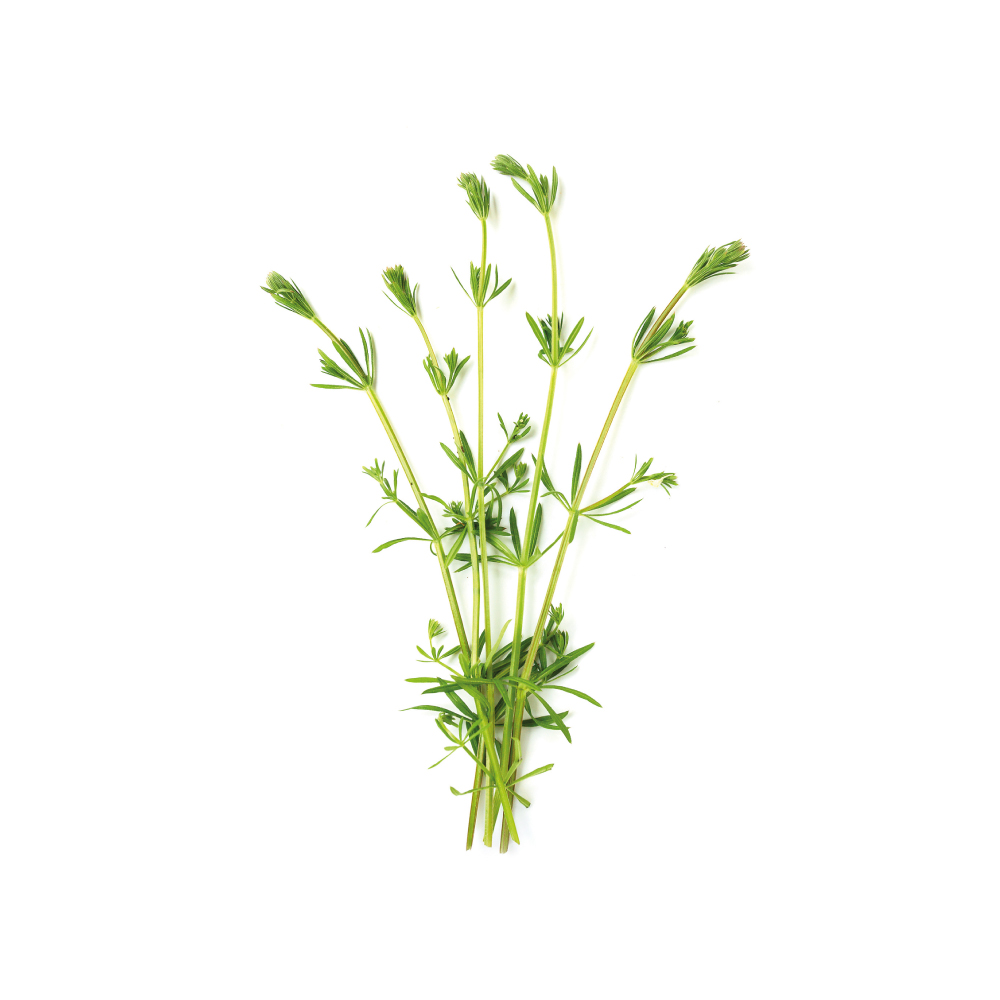
Asperuloside is a naturally occurring iridoid glycoside (asperuloside-type), found in Cleavers — aerial parts, Sweet woodruff — the namesake source, Eucommia — leaf and 8 other sources. It is well tolerated orally (low toxicity).
Concentration
Content by Source
Concentrations not reported. No percent-dry-weight or mg/g figures have been published for this compound in its source plants.
Asperuloside at a Glance
Asperuloside is an iridoid glycoside — a bitter monoterpene glucoside — and the single most characteristic iridoid of the Rubiaceae, the coffee/madder family. It recurs across the database as the marker compound of cleavers (Galium aparine) and its bedstraw relatives, of sweet woodruff (Galium odoratum), of Eucommia ulmoides leaf, and of noni (Morinda citrifolia) fruit 1,
Its evidence is entirely preclinical but reasonably developed for an iridoid. The best-worked signal is metabolic / anti-obesity — isolated asperuloside improves body weight, glucose and lipid handling in high-fat-fed rats, partly by reshaping the gut microbiota 5,
Two disciplines are load-bearing throughout. First, the human antihypertensive reputation belongs to whole Eucommia-leaf extract, not to isolated asperuloside 7Reference 7AnimalThe differences of mechanisms in antihypertensive and anti-obesity effects of Eucommia leaf extract between rodents and humansView study → — a marker-vs-agent distinction it shares with its sibling iridoid aucubin. Second, like most iridoid glucosides it is poorly absorbed orally and hydrolysed in the gut to its acid derivatives (asperulosidic acid and deacetylasperulosidic acid) and a reactive aglycone, so in-vitro potency overreads what an oral dose delivers 1Reference 1Systematic reviewPhytochemical and pharmacological properties of asperuloside, a systematic reviewView study →.
The Rubiaceae Marker Iridoid
If a plant is in the coffee family and tastes bitter, asperuloside is a good bet for why. It is the chemotaxonomic signature iridoid of the Rubiaceae, distributed across Galium (cleavers, woodruff, the bedstraws), Eucommia, Morinda (noni), Hedyotis/Oldenlandia, Paederia and their madder-family relatives, where it functions as the bitter, cooling principle of the traditional preparations 1,
The wilting-woodruff smell is a separate molecule — and worth getting right. Sweet woodruff is famous for the “fresh hay” or new-mown-grass scent it releases as it wilts and dries (the aroma of German Maiwein/May wine). That fragrance is coumarin, not asperuloside. In the living plant the coumarin is stored as a non-volatile, odourless bound glycoside; enzymatic hydrolysis on wilting and drying liberates free coumarin, which is what you smell — a process characterised in detail during woodruff drying 12Reference 12Comprehensive analysis of natural products of Galium odoratum (Rubiaceae), focusing on the formation of coumarin during the drying processView study →. Asperuloside co-occurs in the same tissue as the bitter iridoid marker; it is itself essentially odourless and bitter, and is a different compound on a different biosynthetic route from the coumarin aroma. The two are easy to conflate because they share the plant and both depend on glycoside hydrolysis — but the smell is coumarin’s, and the bitterness (and the pharmacology here) is asperuloside’s.
Asperuloside & Its Acid Derivatives
Asperuloside sits at the head of a small, closely-related family of Rubiaceae iridoids that are constantly interconverted by simple deacetylation and ester hydrolysis — and keeping them straight matters, because the literature often tests one and generalises to the group.
- Asperuloside — the parent, an acetylated iridoid glucoside.
- Asperulosidic acid — asperuloside with the lactone/methyl-ester arrangement opened to the free carboxylic acid; a co-occurring bedstraw iridoid and the form carrying much of the anticancer data (see below).
- Deacetylasperulosidic acid — the de-acetylated acid, one of the main downstream forms and a common circulating/urinary metabolite of dietary iridoids; noni’s principal iridoid is this compound.
In cleavers and other Galium these appear together — the herb-extraction record for cleavers lists asperuloside, asperulosidic acid, deacetylasperulosidic acid and 10-desacetylasperulosidic acid side by side as the bitter cooling iridoids 14Reference 14In vitroPhytochemical profiles and in vitro immunomodulatory activity of ethanolic extracts from Galium aparine LView study →. The practical consequences are two. First, on hydrolysis (gut β-glucosidase, or acid/enzyme during processing) asperuloside loses its acetyl and sugar groups, so what reaches the circulation after an oral dose is largely the deacetylated acids and aglycone, not intact asperuloside. Second, some of the headline “asperuloside-family” bioactivity is really its derivative’s: the strongest anticancer finding is for asperulosidic acid, which restrained hepatocellular-carcinoma cells and enhanced chemosensitivity by inactivating the MEKK1/NF-κB pathway 9Reference 9Asperulosidic acid restrains hepatocellular carcinoma development and enhances chemosensitivity through inactivating the MEKK1/NF-κB pathwayView study → — a result for the acid, not the parent acetate. This page keeps asperuloside itself in focus and flags where a claim actually rests on a derivative. (Dedicated pages for asperulosidic acid, deacetylasperulosidic acid and the related Rubiaceae iridoid monotropein are not yet built.)
What It's Used For
Asperuloside’s profile is preclinical but multi-organ, and unusually weighted toward metabolic endpoints for an iridoid. The load-bearing caveat is the compound-page discipline: no human isolate trials, the human antihypertensive data are a whole Eucommia extract 7Reference 7AnimalThe differences of mechanisms in antihypertensive and anti-obesity effects of Eucommia leaf extract between rodents and humansView study →, and its poor absorption / gut hydrolysis 1Reference 1Systematic reviewPhytochemical and pharmacological properties of asperuloside, a systematic reviewView study → limit how far in-vitro potency translates.
Support is an experimental score — weighted by study type (human > animal > in vitro) and volume. A beta, not a validated metric. No human isolate data exist, so scores stay modest by design; the antihypertensive row rests on a whole extract.
The best-developed strand, and where the isolate carries real in-vivo weight. In high-fat-fed rats, isolated asperuloside suppressed body-weight and visceral-fat gain, reduced food intake and lowered circulating glucose, insulin and lipids while raising plasma adiponectin — acting “like the major ingredient of Eucommia leaves with anti-obesity activity” and cutting hypothalamic and hepatic mRNA of IL-1, IL-6 and TNF-α plus blood PAI-1 5Reference 5AnimalAsperuloside stimulates metabolic function in rats across several organs under high-fat diet conditions, acting like the major ingredient of Eucommia leaves with anti-obesity activityView study →.
A later study found asperuloside improved obesity and type-2-diabetes measures (insulin resistance, glucose intolerance) in large part by modulating the gut microbiota — decreasing Firmicutes, increasing Bacteroidetes and enriching beneficial taxa including Akkermansia 6Reference 6Asperuloside improves obesity and type 2 diabetes through modulation of gut microbiota and metabolic signaling. iScience. https://pubmed.ncbi.nlm.nih.gov/32932138/View study →.
Gap: all rodent, all the isolate, with no human data; and because the effect is partly gut-microbiota-mediated, it depends on the compound’s poor absorption rather than a clean systemic drug level — an oral-exposure and translation question, not a settled human effect 5,
The shared engine under much of the file. In LPS-stimulated RAW 264.7 macrophages, asperuloside and asperulosidic acid significantly reduced nitric oxide, prostaglandin E₂, TNF-α and IL-6, in parallel with lowered iNOS, COX-2, TNF-α and IL-6 expression — via suppression of the NF-κB and MAPK signalling pathways 3Reference 3Asperuloside and asperulosidic acid exert an anti-inflammatory effect via suppression of the NF-κB and MAPK signaling pathways in LPS-induced RAW 264.7 macrophagesView study →.
A scoping review of Rubiaceae-derived iridoids places asperuloside among the compounds that attenuate inflammatory cytokines and mediators chiefly through NF-κB inhibition across in-vitro and in-vivo models 4Reference 4In vitroTherapeutic potentials of iridoids derived from Rubiaceae against in vitro and in vivo inflammation: a scoping reviewView study →.
In whole-plant terms, an anti-inflammatory Galium odoratum (woodruff) extract reduced inflammatory signalling in murine bone-marrow-derived macrophages, though there the activity is attributed to the phenolic fraction of the extract, not isolated asperuloside 13Reference 13AnimalPhenolic content and anti-inflammatory activity of cultivated and wild-type Galium odoratum extracts in murine bone marrow-derived macrophagesView study →.
Gap: the isolate mechanism is in-vitro macrophage work; there is no human anti-inflammatory trial, and the whole-herb evidence 13Reference 13AnimalPhenolic content and anti-inflammatory activity of cultivated and wild-type Galium odoratum extracts in murine bone marrow-derived macrophagesView study → cannot be assigned to asperuloside specifically 3,
A newer but coherent liver thread, all in the isolate. In a mouse model of drug-induced hepatic fibrosis, asperuloside reduced serum ALT, AST and total bilirubin, improved histopathology and suppressed fibrogenesis, with SIRT6 / Toll-like-receptor signalling identified as a key pathway 10Reference 10Asperuloside, an iridoid glycoside found in Rubiaceae plants, for attenuating fibrogenesis and inflammation in hepatic fibrosisView study →.
A separate metabolomics study attributed asperuloside’s protection against liver injury to regulation of mTOR-mediated hepatic autophagy 11Reference 11The protective effect of asperuloside on liver injury: insights from metabolomics and the mTOR-mediated autophagy perspectiveView study →.
Both dovetail with the anti-inflammatory NF-κB story and with the reduced hepatic cytokine expression seen in the metabolic work 5Reference 5AnimalAsperuloside stimulates metabolic function in rats across several organs under high-fat diet conditions, acting like the major ingredient of Eucommia leaves with anti-obesity activityView study →.
Gap: two recent single-group animal studies on different injury models and different pathways (SIRT6/TLR vs mTOR/autophagy), neither independently replicated and neither human 10,
A toxicology-model strand. In rats, asperuloside attenuated cadmium-induced toxicity, reducing oxidative stress, inflammation, fibrosis and apoptosis across affected tissue 8Reference 8AnimalAsperuloside attenuates cadmium-induced toxicity by inhibiting oxidative stress, inflammation, fibrosis and apoptosis in ratsView study →; antioxidant activity (including reports of Nrf2/ARE-linked upregulation of HO-1, SOD2 and SIRT3 in hepatocytes) is a recurring property in the asperuloside reviews 1,
This is best read as the antioxidant/anti-inflammatory core surfacing as organ protection rather than a distinct therapeutic claim.
Gap: a protective-against-a-toxin rodent model, not a demonstrated human antioxidant benefit; effect sizes depend on doses well above ordinary dietary exposure 1,
The clearest example of the marker-vs-agent problem. Eucommia ulmoides bark and leaf are a traditional hypotensive medicine, and in Japan the Eucommia-leaf beverage Tochu-cha is a government-approved food for high blood pressure 2,
A comparative review concluded the antihypertensive and anti-obesity effects of Eucommia-leaf extract “may be caused by the geniposidic acid and/or asperuloside” present — but the effect is a property of the whole extract, and the review explicitly contrasts the mechanisms between rodents and humans 7Reference 7AnimalThe differences of mechanisms in antihypertensive and anti-obesity effects of Eucommia leaf extract between rodents and humansView study →.
Gap: the human/regulatory evidence is a whole Eucommia-leaf extract, not isolated asperuloside; the isolate has no controlled antihypertensive trial, and co-occurring iridoids (e.g. geniposidic acid) are equally implicated 7Reference 7AnimalThe differences of mechanisms in antihypertensive and anti-obesity effects of Eucommia leaf extract between rodents and humansView study →.
Mechanisms
| Target / pathway | Effect | Relevant to |
|---|---|---|
| NF-κB and MAPK signalling | suppressed → ↓iNOS, COX-2, TNF-α, IL-6; ↓NO, PGE₂ | anti-inflammatory |
| Hepatic & hypothalamic cytokines (IL-1, IL-6, TNF-α); PAI-1 | reduced; adiponectin raised | anti-obesity / metabolic |
| Gut microbiota (↓Firmicutes, ↑Bacteroidetes, ↑Akkermansia) | remodelled toward a lean/insulin-sensitive profile | anti-obesity / type-2 diabetes |
| Nrf2 / ARE → HO-1, SOD2, SIRT3 | antioxidant gene upregulation | antioxidant / organ protection |
| SIRT6 / Toll-like-receptor signalling | anti-fibrotic; ↓ALT/AST/bilirubin | hepatoprotective (fibrosis) |
| mTOR-mediated autophagy | restored/regulated hepatic autophagy | hepatoprotective (liver injury) |
| β-glucosidase / esterase hydrolysis → deacetylasperulosidic acid + reactive aglycone | deacetylation & deglycosylation on ingestion or tissue damage | pharmacokinetics; plant defence |
The load-bearing, most-reproduced findings are the metabolic (rat, isolate) and anti-inflammatory (NF-κB/MAPK) signals; the liver, antioxidant and antihypertensive rows are single- or few-study extensions of that same anti-inflammatory/antioxidant core, and the antihypertensive one is a whole-extract property.
Pharmacokinetics
Asperuloside behaves as a typical poorly-absorbed iridoid glucoside. Its polar, glycosylated structure gives low membrane permeability, and — like related iridoids — it is hydrolysed in the gastrointestinal tract by β-glucosidase and esterases, losing its acetyl and sugar groups to yield deacetylasperulosidic acid, asperulosidic acid and a reactive aglycone 1Reference 1Systematic reviewPhytochemical and pharmacological properties of asperuloside, a systematic reviewView study →. The practical reading is that intact asperuloside reaching the systemic circulation after an oral dose is low, and much of what is measured downstream is its acid metabolites; robust isolate ADME numbers (Cmax, half-life, absolute oral bioavailability) for asperuloside itself are not well established 1,
Clinical Trials
There are no clinical trials of isolated asperuloside — the systematic review is explicit that despite its breadth of preclinical activity, no clinical trial has been performed 1Reference 1Systematic reviewPhytochemical and pharmacological properties of asperuloside, a systematic reviewView study →. The nearest human/real-world footprint is whole Eucommia-leaf extract: a traditional hypotensive medicine and, as Tochu-cha, a government-approved food for high blood pressure in Japan — a whole-extract exposure in which asperuloside is one implicated iridoid among several, not the tested agent 2,
| Completed | Planned | Terminated | Preclinical |
|---|---|---|---|
| —(none for the isolate; asperuloside appears only within whole Eucommia-leaf extract 7Reference 7AnimalThe differences of mechanisms in antihypertensive and anti-obesity effects of Eucommia leaf extract between rodents and humansView study →) | — | — | Moderate(multi-organ rodent/in-vitro; metabolic- and anti-inflammatory-led) |
Last checked: July 2026.
Isolate vs. Plant Studies
The split here is comparatively favourable on the mechanism side and honest on the human side. The metabolic, anti-inflammatory, hepatoprotective and antioxidant work is largely done with the isolated molecule in rats and cell lines 3,
Its Role in Plants
In the plant, asperuloside is a defensive iridoid. Iridoid glycosides are bitter, deterrent compounds stored inert as the glucoside; tissue damage brings them into contact with β-glucosidase, releasing a reactive aglycone that deters and can harm herbivores and pathogens — the same enzyme-triggered activation that governs its pharmacokinetics 1Reference 1Systematic reviewPhytochemical and pharmacological properties of asperuloside, a systematic reviewView study →. Its concentration in the bitter aerial parts and leaves of Rubiaceae is consistent with this chemical-defence role, and its taxonomic constancy makes it a chemotaxonomic marker for the family and for the Galium genus in particular 2Reference 2Emerging therapeutic potential of the iridoid molecule, asperuloside: A snapshot of its underlying molecular mechanismsView study →.
A related but distinct piece of plant chemistry runs alongside it in sweet woodruff: the plant’s coumarin — the source of the wilting “fresh hay” aroma — is likewise stored as an odourless bound glycoside and freed by hydrolysis when the tissue is damaged or dried 12Reference 12Comprehensive analysis of natural products of Galium odoratum (Rubiaceae), focusing on the formation of coumarin during the drying processView study →. Asperuloside and the coumarin precursor are different molecules on different pathways that happen to share the same enzyme-triggered “damage-activated” logic. As always, a compound’s defensive role in the plant is plant biology, not human pharmacology, and does not predict what it does as a medicine.
Prevalence in Nature
Asperuloside is one of the defining iridoids of the Rubiaceae and is distributed across many of the family’s genera 1,
- Bedstraws and cleavers (Galium spp.) — cleavers (Galium aparine) aerial parts carry it alongside asperulosidic acid, deacetylasperulosidic acid and 10-desacetylasperulosidic acid as the bitter cooling iridoids 14Reference 14In vitroPhytochemical profiles and in vitro immunomodulatory activity of ethanolic extracts from Galium aparine LView study →;
- Sweet woodruff (Galium odoratum) — the namesake source (the old genus name Asperula gives the compound its name), where it co-occurs with the coumarin responsible for the aroma 12Reference 12Comprehensive analysis of natural products of Galium odoratum (Rubiaceae), focusing on the formation of coumarin during the drying processView study →;
- Eucommia (Eucommia ulmoides) leaf — a well-studied source used in the anti-obesity/antihypertensive work 5,
7Reference 5AnimalAsperuloside stimulates metabolic function in rats across several organs under high-fat diet conditions, acting like the major ingredient of Eucommia leaves with anti-obesity activityView study →Reference 7AnimalThe differences of mechanisms in antihypertensive and anti-obesity effects of Eucommia leaf extract between rodents and humansView study → ; - Noni (Morinda citrifolia) fruit — a Rubiaceae food source in which iridoids of this family (chiefly the deacetylated acid) are characteristic;
- Hedyotis / Oldenlandia, Paederia and other madder-family (Rubiaceae) relatives 4Reference 4In vitroTherapeutic potentials of iridoids derived from Rubiaceae against in vitro and in vivo inflammation: a scoping reviewView study →.
Its absolute content is rarely reported as a reliable % dry weight and varies widely with species, plant part and provenance, so no dependable cross-source concentration ranking exists — a gap tracked for a later pass rather than asserted here. Biosynthetically it belongs to the iridoid pathway (geraniol → 8-oxogeranial → iridodial via iridoid synthase, then oxidation, esterification and glucosylation), the same route that produces its sibling iridoids aucubin and harpagide.
Discovery & Synthesis
Asperuloside was first isolated in the nineteenth century from woodruff, then classified as Asperula odorata (now Galium odoratum) — the genus name is the origin of the compound’s name, and the old synonym rubichloric acid survives from that early work. As with most abundant plant iridoids, characterisation of its structure as an acetylated iridoid glucoside was the work of nineteenth- and twentieth-century natural-product chemistry, and the compound is a standard chemotaxonomic marker of the Rubiaceae 1,
Total synthesis of asperuloside is not well documented and is not the source of supply: the molecule is abundant in nature and its reactive, hydrolysis-prone chemistry makes synthesis unattractive versus extraction from iridoid-rich Rubiaceae (notably Eucommia leaf and Galium aerial parts). Commercial and research supply is therefore by isolation, not manufacture.
Patents: not yet researched.
Toxicity & Safety
Asperuloside reads as a low-toxicity, food-and-medicine-adjacent Rubiaceae iridoid. It occurs in materials with a long dietary/medicinal history — Eucommia-leaf tea is an approved food in Japan 7Reference 7AnimalThe differences of mechanisms in antihypertensive and anti-obesity effects of Eucommia leaf extract between rodents and humansView study →, noni fruit is eaten, and cleavers and woodruff have long traditional use — and the systematic reviews characterise its toxicity as low, with rodent efficacy studies (including a protective role against cadmium toxicity) reporting no acute toxicity signal at the doses used 1,
- A widespread dietary/medicinal plant iridoid. Present in eaten and long-used Rubiaceae (Eucommia-leaf tea, noni fruit, cleavers, woodruff) with no acute toxicity signal at the doses used in rodent studies 1,
2Reference 1Systematic reviewPhytochemical and pharmacological properties of asperuloside, a systematic reviewView study →Reference 2Emerging therapeutic potential of the iridoid molecule, asperuloside: A snapshot of its underlying molecular mechanismsView study → . - Poorly absorbed and gut-metabolised. Low systemic exposure of the intact molecule limits the scope for systemic isolate toxicity 1Reference 1Systematic reviewPhytochemical and pharmacological properties of asperuloside, a systematic reviewView study →.
- Hydrolysis releases a reactive aglycone. Like other iridoid glucosides, β-glucosidase cleavage yields a reactive aglycone — a chemistry caveat behind treating high-dose/aglycone exposure cautiously 1Reference 1Systematic reviewPhytochemical and pharmacological properties of asperuloside, a systematic reviewView study →.
- No comprehensive isolate toxicology. No definitive LD50, genotoxicity or repeat-dose package for the pure compound; reproductive safety of the isolate is not established.
- Woodruff’s coumarin is a separate consideration. In sweet woodruff the co-occurring coumarin (not asperuloside) carries its own dose-dependent cautions — a whole-herb issue that belongs to the woodruff page, not to this molecule.
Full Safety & Interactions Detail
Asperuloside carries a low flag. It is a natural Rubiaceae iridoid glycoside of foods and traditional medicines with no acute toxicity signal in the rodent studies available, and reviews characterise its toxicity profile as low 1,
Indeed one rat study reports it protecting against cadmium-induced organ toxicity 8Reference 8AnimalAsperuloside attenuates cadmium-induced toxicity by inhibiting oxidative stress, inflammation, fibrosis and apoptosis in ratsView study →.
The caveats are chemical and evidentiary rather than documented harms. First, as an iridoid glucoside it is hydrolysed by β-glucosidase to a reactive aglycone (and its deacetylated acid metabolites) — the standard iridoid-class reason to treat high-dose or aglycone exposure cautiously, though poor oral absorption limits real-world isolate exposure 1Reference 1Systematic reviewPhytochemical and pharmacological properties of asperuloside, a systematic reviewView study →.
Second, there is no comprehensive isolate toxicology — no definitive LD50, genotoxicity or repeat-dose organ-toxicity package — and no reproductive-safety data for pure asperuloside; any pregnancy/lactation caution around asperuloside-containing herbs (cleavers, woodruff, Eucommia, noni) is a per-herb decision that belongs on the source-herb or product page where intake is decided, not on this molecule page. Finally, the safety story of sweet woodruff specifically is dominated by its coumarin content, not asperuloside: coumarin has its own dose-dependent hepatic cautions and is the reason woodruff is used sparingly — a whole-herb consideration distinct from the iridoid discussed here 12Reference 12Comprehensive analysis of natural products of Galium odoratum (Rubiaceae), focusing on the formation of coumarin during the drying processView study →.
No isolate drug-interaction data (CYP/transporter) are characterised for asperuloside.
Dosage
There is no established or recommended human dose for isolated asperuloside — it has never been given to people as a purified drug. Cited figures are preclinical research doses: micromolar concentrations in cell assays, and low-to-mid mg/kg (or, in the anti-obesity work, roughly 1% of a high-fat diet) in rats 5,
| Source | Form of exposure |
|---|---|
| Eucommia (Eucommia ulmoides) leaf | Tochu-cha tea (an approved food in Japan) 7Reference 7AnimalThe differences of mechanisms in antihypertensive and anti-obesity effects of Eucommia leaf extract between rodents and humansView study → |
| Noni (Morinda citrifolia) fruit | Eaten fruit / juice |
| Cleavers (Galium aparine) | Traditional aerial-part preparations |
| Sweet woodruff (Galium odoratum) | Flavouring / traditional preparations (coumarin-limited) |
In every case asperuloside is one bitter iridoid among many constituents, standardised (if at all) as a marker rather than dosed as an active. These are doses studied in research and are not a personal recommendation.
References
- Manzione MG, et al. (2020). Phytochemical and pharmacological properties of asperuloside, a systematic review. European Journal of Pharmacology. https://pubmed.ncbi.nlm.nih.gov/32659300/
- Chan Y, et al. (2020). Emerging therapeutic potential of the iridoid molecule, asperuloside: A snapshot of its underlying molecular mechanisms. Chemico-Biological Interactions. https://pubmed.ncbi.nlm.nih.gov/31786185/
- He J, et al. (2018). Asperuloside and asperulosidic acid exert an anti-inflammatory effect via suppression of the NF-κB and MAPK signaling pathways in LPS-induced RAW 264.7 macrophages. International Journal of Molecular Sciences. https://pubmed.ncbi.nlm.nih.gov/30002289/
- Jaafar A, et al. (2024). Therapeutic potentials of iridoids derived from Rubiaceae against in vitro and in vivo inflammation: a scoping review. Saudi Pharmaceutical Journal. https://pubmed.ncbi.nlm.nih.gov/38226349/
- Fujikawa T, et al. (2012). Asperuloside stimulates metabolic function in rats across several organs under high-fat diet conditions, acting like the major ingredient of Eucommia leaves with anti-obesity activity. Journal of Nutritional Science. https://pubmed.ncbi.nlm.nih.gov/25191539/
- Nakamura A, et al. (2020). Asperuloside improves obesity and type 2 diabetes through modulation of gut microbiota and metabolic signaling. iScience. https://pubmed.ncbi.nlm.nih.gov/32932138/
- Nishibe S, et al. (2023). The differences of mechanisms in antihypertensive and anti-obesity effects of Eucommia leaf extract between rodents and humans. Molecules. https://pubmed.ncbi.nlm.nih.gov/36838952/
- Kong Z, et al. (2023). Asperuloside attenuates cadmium-induced toxicity by inhibiting oxidative stress, inflammation, fibrosis and apoptosis in rats. Scientific Reports. https://pubmed.ncbi.nlm.nih.gov/37029128/
- Li L, et al. (2024). Asperulosidic acid restrains hepatocellular carcinoma development and enhances chemosensitivity through inactivating the MEKK1/NF-κB pathway. Applied Biochemistry and Biotechnology. https://pubmed.ncbi.nlm.nih.gov/37097403/
- Wang Y, et al. (2025). Asperuloside, an iridoid glycoside found in Rubiaceae plants, for attenuating fibrogenesis and inflammation in hepatic fibrosis. Natural Product Research. https://pubmed.ncbi.nlm.nih.gov/41418300/
- Huang H, et al. (2026). The protective effect of asperuloside on liver injury: insights from metabolomics and the mTOR-mediated autophagy perspective. Journal of Pharmaceutical and Biomedical Analysis. https://pubmed.ncbi.nlm.nih.gov/41187509/
- Herre I, et al. (2025). Comprehensive analysis of natural products of Galium odoratum (Rubiaceae), focusing on the formation of coumarin during the drying process. Phytochemistry. https://pubmed.ncbi.nlm.nih.gov/40122276/
- Razzivina V, et al. (2024). Phenolic content and anti-inflammatory activity of cultivated and wild-type Galium odoratum extracts in murine bone marrow-derived macrophages. Antioxidants (Basel). https://pubmed.ncbi.nlm.nih.gov/39765776/
- Ilina T, et al. (2019). Phytochemical profiles and in vitro immunomodulatory activity of ethanolic extracts from Galium aparine L. Plants (Basel). https://pubmed.ncbi.nlm.nih.gov/31775336/



