
Compound Monograph
Baptifoline
Baptifoline is a hydroxylated quinolizidine alkaloid of blue cohosh, Baptisia and lupine legumes. It has no therapeutic use of its own — it is documented mainly as a cytochrome-P450 inhibitor and as one strand of blue cohosh's toxic alkaloid complex, alongside its co-occurring O-acetyl ester.

Sources · 5
Where Does It Come From?
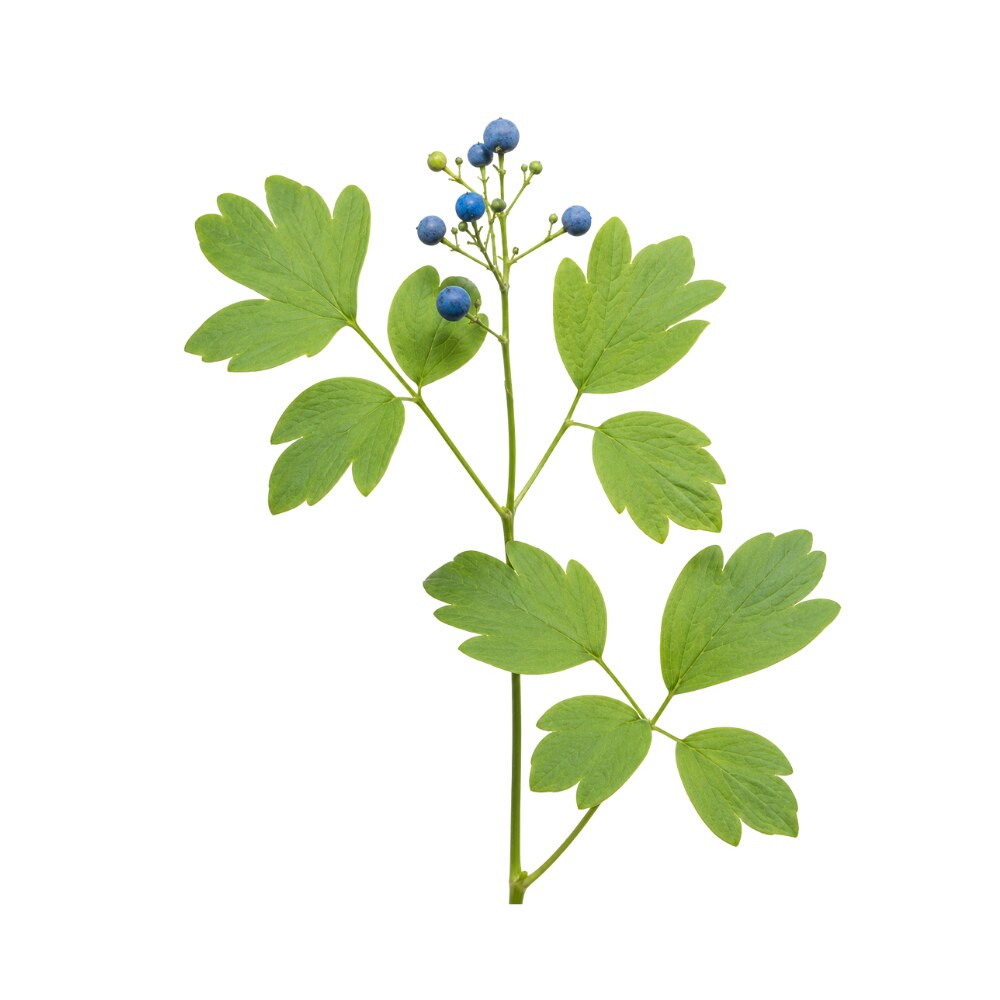
Baptifoline is a naturally occurring quinolizidine alkaloid (anagyrine/cytisine-type, hydroxylated), found in Blue cohosh, Wild indigo, Lupins and 2 other sources. It is flagged as moderately toxic.
Concentration
Content by Source
Reported concentrations across the plants that contain baptifoline — the bar marks the typical level, the line shows the reported range.
Literature figures for varying plant parts and preparations. Read them as a comparative guide, not exact assays.
Baptifoline at a Glance
Baptifoline is a hydroxylated quinolizidine alkaloid — a member of the anagyrine/cytisine structural family — found in blue cohosh (Caulophyllum thalictroides) and in a range of legumes, including Baptisia (the genus it is named after) and lupins. In blue cohosh rhizome and root it typically runs at roughly 9–900 ppm of dry weight, and it is usually accompanied by its O-acetyl ester, O-acetylbaptifoline 1,
It has no therapeutic use of its own and is not sold or studied as a medicine. Its documented significance is twofold and unflattering: it is a measurable cytochrome-P450 inhibitor in vitro — one contributor to blue cohosh’s herb–drug-interaction potential — and it is one strand of the quinolizidine alkaloid complex behind that herb’s toxic, historically oxytocic and abortifacient reputation 2,
Because blue cohosh’s alkaloid burden and its most clearly harmful members (N-methylcytisine and anagyrine) are the real story, baptifoline is best understood as a co-traveller and analytical marker, not a molecule with a case to make of its own. This page is deliberately lean: the honest position is that individual data on baptifoline are thin.
A Blue-Cohosh Quinolizidine — CYP Inhibition & the O-Acetylbaptifoline Pair
Two facts specific to this molecule are worth stating plainly, because almost everything else about it is inherited from its plant of origin.
It travels as an ester pair. In blue cohosh, baptifoline co-occurs with O-acetylbaptifoline, its acetate ester 3Reference 3Analytical methods for determination of magnoflorine and saponins from roots of Caulophyllum thalictroides (L.) Michx. using UPLC, HPLC and HPTLCView study →. This matters for two reasons. First, analytically: the two are resolved and quantified together in the alkaloid profiling that defines blue cohosh supplements, so “baptifoline” figures in the literature sometimes refer to the pair. Second, pharmacokinetically (by expectation, not by measurement): an acetate ester of this kind would be expected to hydrolyse back toward the parent alcohol, so O-acetylbaptifoline is best read as a pro-form of the same core molecule rather than a distinct actor.
Its documented activity is enzyme inhibition, not receptor agonism. In the one dedicated pharmacology screen, baptifoline appears among the blue cohosh alkaloids that inhibit cytochrome-P450 enzymes in vitro 2Reference 2In vitroAlkaloids and saponins as cytochrome P450 inhibitors from blue cohosh (Caulophyllum thalictroides) in an in vitro assayView study →. Unlike its relatives N-methylcytisine and anagyrine — whose defining hazard is agonism at nicotinic acetylcholine receptors — baptifoline has not been individually shown to be a potent nicotinic ligand or an isolated teratogen. That is a genuine distinction, and it is why this molecule carries a moderate flag rather than the higher one its more toxic siblings warrant. It is not, however, a clean bill of health: baptifoline was simply not the alkaloid that the teratogenicity screens singled out 5Reference 5In vitroDetecting potential teratogenic alkaloids from blue cohosh rhizomes using an in vitro rat embryo cultureView study →.
What It's Used For
The evidence base for baptifoline as an individual compound is small, in vitro, and almost entirely about how it behaves inside blue cohosh rather than as a candidate drug.
Support is an experimental score — weighted by study type (human > animal > in vitro) and volume. A beta, not a validated metric. Every row here rests on in-vitro or analytical data with baptifoline as one component of a plant extract; there is no human or therapeutic application to score.
The only application with any direct isolate-adjacent data. In a cell-free assay of blue cohosh constituents, baptifoline was among the alkaloids that inhibited cytochrome-P450 enzymes, alongside lupanine, α-isolupanine and the piperidine alkaloid caulophyllumine B 2Reference 2In vitroAlkaloids and saponins as cytochrome P450 inhibitors from blue cohosh (Caulophyllum thalictroides) in an in vitro assayView study →.
This is in-vitro, plant-derived evidence: the alkaloids were isolated from blue cohosh and tested in an enzyme assay, not in animals or people. It provides a plausible mechanism for why blue cohosh carries a theoretical herb–drug-interaction caution, but says nothing about whether the concentrations reached in a person taking the herb would inhibit drug metabolism in practice.
Gap: no isoform-resolved potency (IC₅₀) for baptifoline specifically, no in-vivo confirmation, and no clinical interaction study. The finding is “baptifoline inhibits CYP in a tube,” not “baptifoline causes interactions in people.”
Not an application so much as a hazard classification. Baptifoline is counted within blue cohosh’s quinolizidine alkaloid complex, the fraction credited with the herb’s nicotinic and reproductive toxicity 3Reference 3Analytical methods for determination of magnoflorine and saponins from roots of Caulophyllum thalictroides (L.) Michx. using UPLC, HPLC and HPTLCView study →.
Importantly, when Kennelly and colleagues screened blue cohosh alkaloids for teratogenicity in an in-vitro rat-embryo-culture assay, the compounds that flagged were N-methylcytisine and anagyrine (teratogenic) and taspine (embryotoxic) — baptifoline was not the one singled out 5Reference 5In vitroDetecting potential teratogenic alkaloids from blue cohosh rhizomes using an in vitro rat embryo cultureView study →.
So its inclusion here is by structural analogy and co-occurrence, not by a positive result of its own.
Gap: baptifoline has not been individually tested for nicotinic-receptor agonism or for teratogenicity at defined doses; whether it shares any of anagyrine’s fetal-nAChR activity 7Reference 7Actions of piperidine alkaloid teratogens at fetal nicotinic acetylcholine receptorsView study → is unknown. Absence of a positive screen is not evidence of safety.
Mechanisms
| Target / pathway | Effect | Relevant to |
|---|---|---|
| Cytochrome-P450 enzymes | in-vitro inhibition (one of several blue cohosh alkaloids) 2Reference 2In vitroAlkaloids and saponins as cytochrome P450 inhibitors from blue cohosh (Caulophyllum thalictroides) in an in vitro assayView study → | herb–drug interaction potential |
| Nicotinic acetylcholine receptors | not individually demonstrated for baptifoline — the defining action of its relatives NMC/anagyrine (fetal-nAChR agonism), not shown for this molecule 5, | quinolizidine class context |
| O-acetyl ester (O-acetylbaptifoline) | expected hydrolysis toward the parent alcohol (by chemical expectation, not measured) 3Reference 3Analytical methods for determination of magnoflorine and saponins from roots of Caulophyllum thalictroides (L.) Michx. using UPLC, HPLC and HPTLCView study → | pharmacokinetics / analytical identity |
The load-bearing point: baptifoline’s one measured activity is enzyme inhibition, not the receptor agonism that makes its siblings dangerous. That does not make it safe — it makes it under-studied.
Pharmacokinetics
There is no dedicated pharmacokinetic data for baptifoline — no measured oral bioavailability, distribution, metabolism or half-life. What can be said is structural and inferential: baptifoline is a hydroxylated quinolizidine, and its co-occurring O-acetyl ester would be expected to hydrolyse to the parent in vivo 3Reference 3Analytical methods for determination of magnoflorine and saponins from roots of Caulophyllum thalictroides (L.) Michx. using UPLC, HPLC and HPTLCView study →. Any in-vitro CYP-inhibition finding 2Reference 2In vitroAlkaloids and saponins as cytochrome P450 inhibitors from blue cohosh (Caulophyllum thalictroides) in an in vitro assayView study → should therefore be read cautiously, because whether ingested baptifoline reaches CYP-inhibiting concentrations in human tissue is entirely uncharacterised. Treat every mechanistic claim here as unanchored by real ADME.
Clinical Trials
There are no clinical trials of baptifoline, and none are expected — it is a toxicological marker constituent, not a drug candidate. The only human-relevant data are toxicology and poisoning reports for whole blue cohosh (e.g. nicotinic toxicity after tincture used as an abortifacient), in which baptifoline is merely one of the alkaloids present 6Reference 6Nicotinic toxicity from tincture of blue cohosh (Caulophyllum thalictroides) used as an abortifacientView study →.
| Completed | Planned | Terminated | Preclinical |
|---|---|---|---|
| — | — | — | In-vitro CYP inhibition; alkaloid quantification; teratogen screen (siblings, not baptifoline) 2, |
Last checked: July 2026.
Isolate vs. Plant Studies
Every finding here is a plant-extract study in which baptifoline was one isolated or quantified component, never a stand-alone investigation of the pure molecule for its own sake. The CYP-inhibition result comes from alkaloids isolated from blue cohosh and tested together in a panel 2Reference 2In vitroAlkaloids and saponins as cytochrome P450 inhibitors from blue cohosh (Caulophyllum thalictroides) in an in vitro assayView study →; the concentration figures come from analytical profiling of blue cohosh supplements 1,
Prevalence in Nature
Baptifoline is a legume (Fabaceae) quinolizidine alkaloid with a scattered distribution across the family. It is named for Baptisia (wild indigo), and is documented as a constituent of blue cohosh (Caulophyllum thalictroides, family Berberidaceae — an unusual non-legume host for this alkaloid type) 1,
In blue cohosh specifically, baptifoline (with O-acetylbaptifoline) is quantified at roughly 9–900 ppm of dry weight in rhizome and root 1Reference 1Primary constituents of blue cohosh: quantification in dietary supplements and potential for toxicityView study →. That range sits inside a striking overall variability: individual alkaloids in blue cohosh span ~0.02–1.1% w/w, and total measured alkaloid or saponin content can vary more than 100-fold between commercial products, driven by extract type and manufacturing rather than plant part alone 1,
Discovery & Synthesis
Baptifoline takes its name from Baptisia, the legume genus from which quinolizidine alkaloids of this hydroxylated type were characterised during the mid-twentieth-century era of alkaloid chemistry; the primary isolation report is not well documented in accessible sources, and it is safest to treat the discovery lineage as “unattributed in the material reviewed here” rather than assign a specific author or year. Structurally it is a hydroxylated member of the anagyrine/cytisine (α-pyridone bis-quinolizidine) series, and it occurs naturally paired with its O-acetyl ester.
No total synthesis is described in the sources reviewed, and there is no commercial production of baptifoline: it is not manufactured or sold as an isolate, appearing only as a natural constituent (and analytical reference marker) of the plants above. Any material used in research is obtained by extraction from plant sources, not synthesis.
Patents: not yet researched.
Toxicity & Safety
Baptifoline carries a moderate flag. That rating is a deliberate middle position: it is not one of the blue cohosh alkaloids shown to be teratogenic or a potent nicotinic agonist (N-methylcytisine and anagyrine hold those distinctions 5,
- Not an isolated teratogen on current evidence. In the blue cohosh teratogen screen, baptifoline was not the alkaloid flagged — that was N-methylcytisine and anagyrine.
- Reproductive-toxicity class concern. Baptifoline is part of blue cohosh’s quinolizidine alkaloid complex; blue cohosh is a historically oxytocic/abortifacient herb with documented neonatal harm, and the alkaloid fraction is implicated. Reproductive-exposure decisions belong to the blue cohosh herb page, not to this molecule alone.
- Herb–drug-interaction potential. Baptifoline inhibits cytochrome-P450 enzymes in vitro, so blue cohosh material carrying it could in principle affect the metabolism of CYP-cleared drugs — an unquantified, mechanism-level caution.
- Under-characterised. No pharmacokinetics, no isoform-resolved potency, no dedicated toxicology for the isolate. Do not read the thin data as reassurance.
Any decision about blue cohosh in pregnancy, lactation or before surgery is a whole-herb decision made on the blue cohosh monograph, where the combined alkaloid load — N-methylcytisine, anagyrine, baptifoline and the caulosides — is weighed together. Baptifoline should not be assessed for safety in isolation.
Dosage
There is no dose for baptifoline: it is not a medicine, a supplement, or an intentional intake. Exposure is incidental, as a minor alkaloid within blue cohosh or lupine-containing plant material. For orientation only, reported blue cohosh content is roughly 9–900 ppm of baptifoline (with O-acetylbaptifoline) by dry weight 1Reference 1Primary constituents of blue cohosh: quantification in dietary supplements and potential for toxicityView study →, within a total-alkaloid load that varies more than 100-fold between products 4Reference 4Determination of saponins and alkaloids in Caulophyllum thalictroides (blue cohosh) by high-performance liquid chromatography and evaporative light scattering detectionView study → — which is precisely why a “dose” of baptifoline from a botanical cannot be predicted. These are analytical figures, not a personal recommendation.
References
- Rader JI, Pawar RS (2013). Primary constituents of blue cohosh: quantification in dietary supplements and potential for toxicity. Analytical and Bioanalytical Chemistry. https://pubmed.ncbi.nlm.nih.gov/23420136/
- Madgula VL, Ali Z, Smillie T, et al. (2009). Alkaloids and saponins as cytochrome P450 inhibitors from blue cohosh (Caulophyllum thalictroides) in an in vitro assay. Planta Medica. https://pubmed.ncbi.nlm.nih.gov/19137500/
- Avula B, Wang YH, Rumalla CS, et al. (2011). Analytical methods for determination of magnoflorine and saponins from roots of Caulophyllum thalictroides (L.) Michx. using UPLC, HPLC and HPTLC. Journal of Pharmaceutical and Biomedical Analysis. https://pubmed.ncbi.nlm.nih.gov/21872415/
- Ganzera M, Dharmaratne HR, Nanayakkara NP, Khan IA (2003). Determination of saponins and alkaloids in Caulophyllum thalictroides (blue cohosh) by high-performance liquid chromatography and evaporative light scattering detection. Phytochemical Analysis. https://pubmed.ncbi.nlm.nih.gov/12597249/
- Kennelly EJ, Flynn TJ, Mazzola EP, et al. (1999). Detecting potential teratogenic alkaloids from blue cohosh rhizomes using an in vitro rat embryo culture. Journal of Natural Products. https://pubmed.ncbi.nlm.nih.gov/10543898/
- Rao RB, Hoffman RS (2002). Nicotinic toxicity from tincture of blue cohosh (Caulophyllum thalictroides) used as an abortifacient. Veterinary and Human Toxicology. https://pubmed.ncbi.nlm.nih.gov/12136970/
- Green BT, Lee ST, Panter KE, et al. (2010). Actions of piperidine alkaloid teratogens at fetal nicotinic acetylcholine receptors. Neurotoxicology and Teratology. https://pubmed.ncbi.nlm.nih.gov/20116429/
- Innocenti G, Dall’Acqua S, Viola G, et al. (2006). Cytotoxic constituents from Anagyris foetida leaves. Fitoterapia. https://pubmed.ncbi.nlm.nih.gov/16887297/
- Máximo P, et al. (2006). Chemotaxonomy of Portuguese Ulex: quinolizidine alkaloids as taxonomical markers. Phytochemistry. https://pubmed.ncbi.nlm.nih.gov/16876210/
- Sagen AL, Gertsch J, Becker R, et al. (2002). Quinolizidine alkaloids from the curare adjuvant Clathrotropis glaucophylla. Phytochemistry. https://pubmed.ncbi.nlm.nih.gov/12453529/



