
Compound Monograph
Anagyrine
Anagyrine is a quinolizidine alkaloid of lupines and blue cohosh, and the classic teratogen behind livestock "crooked calf disease" — skeletal contractures and cleft palate in calves whose dams grazed anagyrine-containing lupine. It acts through fetal nicotinic acetylcholine receptors to suppress fetal movement, and it also inhibits cytochrome-P450 enzymes.

Sources · 4
Where Does It Come From?
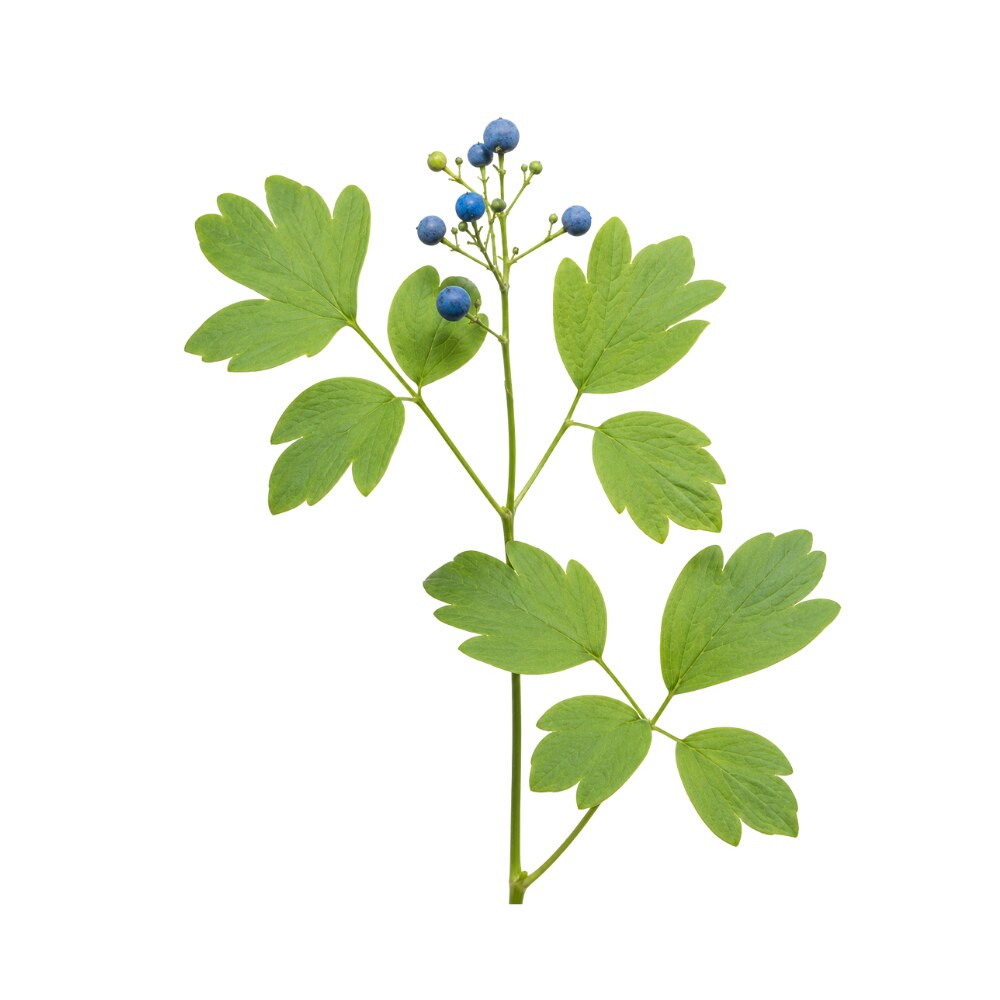
Anagyrine is a naturally occurring quinolizidine alkaloid (bis-quinolizidine, α-pyridone type), found in Lupines, Blue cohosh and 2 other sources. It is flagged as toxic.
Concentration
Content by Source
Reported concentrations across the plants that contain anagyrine — the bar marks the typical level, the line shows the reported range.
Literature figures for varying plant parts and preparations. Read them as a comparative guide, not exact assays.
Anagyrine at a Glance
Anagyrine is a quinolizidine alkaloid — a bicyclic, nicotine-adjacent plant nitrogen compound — produced by many lupines (Lupinus spp.) and present as a minor constituent of blue cohosh (Caulophyllum thalictroides) rhizome. It is not a medicine and has no established therapeutic use. Its significance is almost entirely toxicological: it is the compound most closely associated with “crooked calf disease,” the congenital limb-and-jaw deformity seen in calves born to cows that grazed anagyrine-bearing lupine during a susceptible window of pregnancy 1,
The core mechanism is now reasonably well understood. Anagyrine and its co-occurring alkaloid relatives act on fetal nicotinic acetylcholine receptors (nAChR), first stimulating then desensitising them, which suppresses fetal movement. A fetus that cannot move freely during the weeks its joints and palate are forming develops fixed skeletal contractures (arthrogryposis) and, in the worst cases, cleft palate — a mechanical, movement-dependent birth defect rather than a direct chemical malformation 5,
For a herbal-medicine audience the practical point is this: blue cohosh’s long and troubling reputation as a uterine stimulant, abortifacient and reproductive toxin — including documented harm from prenatal use — rests substantially on its nicotinic quinolizidine alkaloids, of which anagyrine (alongside N-methylcytisine) is the flagship teratogen 2,
Crooked Calf Disease: The Teratogen Signature
The single fact that defines anagyrine is its role in “crooked calf disease” (lupine-induced congenital arthrogryposis). This is the point of the page, so it deserves to be stated carefully and precisely.
What it is. When pregnant cattle graze certain lupines during a specific gestational window — roughly days 40 to 100 — a fraction of the resulting calves are born with multiple congenital contractures: twisted, fixed limbs (arthrogryposis), spinal curvature (scoliosis/torticollis), and sometimes cleft palate 1,
Why anagyrine. Keeler’s foundational lupin-alkaloid work in the 1970s established that the teratogenic potential of a given lupine population tracked its anagyrine content — teratogenic lupines carried anagyrine, non-teratogenic selections largely did not — and that anagyrine concentration varied by species, plant part and stage of growth 1Reference 1Lupin alkaloids from teratogenic and nonteratogenic lupinsView study →. This is why anagyrine became the marker alkaloid used to gauge whether a lupine stand is dangerous to grazing cattle 3,
How it causes the defect. The deformity is not a direct poisoning of developing bone. It is a consequence of reduced fetal movement: the alkaloids depress the fetus’s own neuromuscular activity through nicotinic receptors, and a fetus held still during the contracture-susceptible weeks develops permanently fixed joints, while an immobile tongue and jaw can mechanically obstruct closure of the palatal shelves, producing cleft palate 5,
An important nuance — handled in its own section below (Anagyrine, the Piperidine Alkaloids, and the “Marker vs. Actor” Question) — is that modern receptor work has complicated the simple “anagyrine is the teratogen” story: several piperidine alkaloids that co-occur with anagyrine are potent fetal-movement suppressors in their own right, and anagyrine may act partly as a reliable biomarker of teratogenic lupine as well as a direct actor 6,
The Human Question
Direct human evidence is thin, and it must be stated without either alarmism or false reassurance.
There is one much-cited case report: an infant with skeletal dysplasia, a vascular anomaly and red-cell aplasia whose defects were attributed to maternal consumption of goat’s milk from goats that had grazed anagyrine-containing lupine — a proposed “crooked baby” analogue of crooked calf disease, since anagyrine can pass into milk 12Reference 12Anagyrine-induced red cell aplasia, vascular anomaly, and skeletal dysplasiaView study →. This is a single, uncontrolled case report: it is hypothesis-generating, it cannot establish causation, and it has not been reproduced. It is genuinely notable — it is essentially the only human datapoint linking anagyrine specifically to a birth defect — but it should be read as a plausibility signal, not proof 12Reference 12Anagyrine-induced red cell aplasia, vascular anomaly, and skeletal dysplasiaView study →.
The more relevant human exposure is blue cohosh in pregnancy. Blue cohosh has been used traditionally to stimulate labour and, historically, as an abortifacient; there are documented cases of serious neonatal harm (including cardiac injury and perinatal complications) after prenatal use, and a case of maternal nicotinic toxicity from blue cohosh tincture taken as an abortifacient 9,
What It's Used For
Anagyrine has no therapeutic pharmacology to report — the “evidence by application” below is really evidence by documented biological effect, ranked by how well each is supported. The load-bearing caveat of the whole page is that the strongest evidence is livestock and receptor work, not human data, and that anagyrine rarely acts alone.
Support is an experimental score — weighted by study type (human > animal > in vitro) and volume. A beta, not a validated metric. These rows are documented toxicological effects, not therapeutic uses — a higher bar means the harm/effect is better evidenced, never that the effect is desirable.
The defining effect, and the only one with a large, coherent evidence base — though that base is livestock, not human. Keeler’s series established that lupine teratogenicity tracks anagyrine content and that it produces congenital contractures and cleft palate when susceptible cows graze the plant during roughly gestational days 40–100 1,
The alkaloid profiles of the lupines responsible for outbreaks in Washington and Oregon (L. sulphureus, L. leucophyllus, L. sericeus) were chemically identified, cementing anagyrine as the field marker 3Reference 3Lupine induced “crooked calf disease” in Washington and Oregon: identification of the alkaloid profiles in Lupinus sulfureus, Lupinus leucophyllus, and Lupinus sericeusView study →.
This is whole-plant lupine exposure in which anagyrine is quantified and correlated — not a pure-isolate dosing study — and cattle susceptibility varies by breed and body condition 11,
Gap: the direct evidence is cattle and goats grazing whole lupine; anagyrine is the marker the field tracks, but the syndrome reflects the whole alkaloid mixture, and human teratogenicity rests on a single case report 12Reference 12Anagyrine-induced red cell aplasia, vascular anomaly, and skeletal dysplasiaView study →.
The mechanistic core. Teratogenic lupine and poison-hemlock alkaloids act on fetal muscle-type nicotinic acetylcholine receptors, producing an initial agonist (depolarising) phase followed by desensitisation/blockade that reduces fetal movement — the immediate cause of the contractures and cleft palate 5,
Anagyrine specifically has been shown to desensitise peripheral nicotinic receptors, which is why it functions both as a marker and as a proposed contributor to the effect 8Reference 8Anagyrine desensitization of peripheral nicotinic acetylcholine receptorsView study →.
Comparative work found breed differences (Angus vs. Holstein) in lupine-induced inhibition of fetal activity, consistent with a receptor-level mechanism modulated by the dam 14Reference 14Differences between Angus and Holstein cattle in the Lupinus leucophyllus induced inhibition of fetal activityView study →.
Gap: receptor and in-vivo fetal-movement studies are animal/ex-vivo; the relative potency of anagyrine itself versus co-occurring piperidine alkaloids at the fetal receptor is still debated (see below) 6,
Distinct from the teratogenic story and relevant to drug interactions, not toxicity to the fetus. In an in-vitro assay of blue cohosh constituents, its quinolizidine alkaloids — anagyrine among them — contributed to inhibition of cytochrome-P450 enzymes 13Reference 13In vitroAlkaloids and saponins as cytochrome P450 inhibitors from blue cohosh (Caulophyllum thalictroides) in an in vitro assayView study →.
On the parent herb this is reported across several isoforms (including CYP2C19, CYP3A4, CYP2D6 and CYP1A2), flagging a theoretical interaction risk for anyone taking a blue cohosh product alongside CYP-metabolised drugs 13Reference 13In vitroAlkaloids and saponins as cytochrome P450 inhibitors from blue cohosh (Caulophyllum thalictroides) in an in vitro assayView study →.
Gap: in-vitro only, at assay concentrations; no human pharmacokinetic interaction study exists for isolated anagyrine, and its individual contribution within the alkaloid mixture is not quantified 13Reference 13In vitroAlkaloids and saponins as cytochrome P450 inhibitors from blue cohosh (Caulophyllum thalictroides) in an in vitro assayView study →.
As a nicotinic quinolizidine, anagyrine belongs to a class that produces the familiar nicotinic toxidrome (nausea, sweating, tachycardia, muscle fasciculation, and in severe poisoning weakness and respiratory compromise). This is best documented for the class and for the parent herb — a case of nicotinic toxicity followed ingestion of blue cohosh tincture used as an abortifacient — rather than for anagyrine as an isolate, where N-methylcytisine is generally considered the more potent acute nicotinic agonist 8,
Gap: acute-toxicity data are class-level and herb-level; there is no isolated-anagyrine human dose-response, and its acute potency is likely lower than that of N-methylcytisine 8,
Mechanisms
| Target / pathway | Effect | Relevant to |
|---|---|---|
| Fetal muscle-type nicotinic ACh receptor (nAChR) | agonist → desensitisation/blockade; suppresses fetal neuromuscular activity | teratogenicity — the load-bearing mechanism |
| Reduced fetal movement during gestational days ~40–100 | fixed joint contractures (arthrogryposis), spinal deformity; immobile jaw/tongue → cleft palate | crooked calf disease / birth defects |
| Peripheral nicotinic receptors | desensitisation — the basis for using anagyrine response as a teratogenesis biomarker | mechanism / diagnostics |
| Cytochrome-P450 (multiple isoforms) | in-vitro enzyme inhibition | drug-interaction potential |
| Ganglionic / neuromuscular nicotinic signalling | acute nicotinic toxidrome at poisoning-level exposure | acute toxicity |
The throughline is nicotinic: a receptor that normally drives fetal muscle contraction is silenced by desensitisation, and it is the resulting stillness of the fetus — not a direct chemical attack on cartilage or bone — that deforms the calf 5,
Pharmacokinetics
Robust pharmacokinetic data for isolated anagyrine are limited, and essentially all of it is livestock-oriented. Key points that are documented: anagyrine is maternally ingested (whole plant) and reaches the fetus, since the teratogenic effect is transplacental; it can also be excreted into milk, the basis of the proposed goat-milk human exposure 12Reference 12Anagyrine-induced red cell aplasia, vascular anomaly, and skeletal dysplasiaView study →. Its serum concentration in grazing cattle depends on the dam’s body condition — thin animals and those in different physiological states show different serum levels of anagyrine (and the co-teratogen ammodendrine), which helps explain why not every exposed pregnancy yields an affected calf 15,
Clinical Trials
There are no clinical trials of anagyrine and there will not be — it is a teratogen, not a candidate therapeutic. The human record consists of a single case report 12Reference 12Anagyrine-induced red cell aplasia, vascular anomaly, and skeletal dysplasiaView study → and the pregnancy-harm literature of the parent herb 9,
| Completed | Planned | Terminated | Preclinical |
|---|---|---|---|
| None(human) — 1 case report only 12Reference 12Anagyrine-induced red cell aplasia, vascular anomaly, and skeletal dysplasiaView study → | None | None | Extensive: cattle/goat teratogenicity + fetal-nAChR mechanism 1, |
Last checked: July 2026.
Anagyrine, the Piperidine Alkaloids, and the “Marker vs. Actor” Question
The most important scientific subtlety about anagyrine — and one worth getting exactly right — is whether it is itself the direct teratogen or a reliable chemical marker for teratogenic lupine populations.
The classic view (Keeler) was straightforward: teratogenic lupines contain anagyrine, non-teratogenic ones do not, and anagyrine concentration predicts the risk of crooked calf disease 1Reference 1Lupin alkaloids from teratogenic and nonteratogenic lupinsView study →. On that basis anagyrine has been used for decades as the alkaloid to measure when assessing whether a lupine stand is safe to graze 3,
Later mechanistic work complicated this. The most potent fetal-movement suppressors identified are often piperidine alkaloids — such as ammodendrine and related compounds — that frequently co-occur with anagyrine in the same lupines 7,
The careful synthesis: anagyrine is both a genuine nicotinic-active alkaloid and the field’s most useful biomarker of teratogenic lupine, and the crooked-calf syndrome is best understood as the effect of a nicotinic-alkaloid mixture acting on the fetal receptor, not of one molecule in isolation 6,
Isolate vs. Plant Studies
Almost all anagyrine evidence is whole-plant (lupine) exposure, not isolated-compound dosing. The teratogenicity is established by cattle and goats grazing lupine and by chemical correlation of anagyrine content with outbreaks 1,
Its Role in Plants
In lupines and related legumes, quinolizidine alkaloids such as anagyrine are chemical defence compounds — bitter, nicotinic-active nitrogen metabolites that deter insect and vertebrate herbivores. They are synthesised from the amino acid lysine via cadaverine and a series of quinolizidine-forming steps, and they accumulate in a species-, tissue- and season-dependent pattern: anagyrine content shifts markedly with plant part and stage of growth, which is exactly why grazing risk is seasonal 1Reference 1Lupin alkaloids from teratogenic and nonteratogenic lupinsView study →. The same bitterness that makes high-alkaloid (“bitter”) lupines toxic is what plant breeders selected against to create low-alkaloid (“sweet”) lupine varieties for food and feed 18Reference 18The total alkaloid and anagyrine contents of some bitter and sweet selections of lupin species used as foodView study →. Anagyrine’s ecological job — repelling herbivores — is incidental to its accidental veterinary importance: cattle will graze lupine anyway, especially when other forage is scarce.
Prevalence in Nature
Anagyrine is characteristic of the legume family (Fabaceae), above all the genus Lupinus — many bitter lupine species carry it, and it is the alkaloid used to rate their teratogenic risk 1,
Outside the lupines, its notable occurrence for this database is blue cohosh (Caulophyllum thalictroides), where it is a minor, product-dependent rhizome alkaloid measured at roughly 2–390 ppm dry weight and present in some but not all commercial supplements — unlike N-methylcytisine, which is found in essentially every analysed blue cohosh product 2Reference 2Primary constituents of blue cohosh: quantification in dietary supplements and potential for toxicityView study →. In “sweet” (low-alkaloid) food lupines bred for the human and animal food chain, anagyrine is deliberately minimised, though the adequacy of debittering is a recognised food-safety concern 18Reference 18The total alkaloid and anagyrine contents of some bitter and sweet selections of lupin species used as foodView study →.
Discovery & Synthesis
Anagyrine was isolated from lupines and related legumes in the early twentieth century as part of the broad chemical survey of quinolizidine (“lupin”) alkaloids; the name derives from the genus Anagyris, a Mediterranean legume in which such alkaloids occur. Its lasting scientific identity, however, was fixed not by its isolation but by Richard Keeler’s lupin-alkaloid programme in the 1970s, which linked anagyrine content to the teratogenicity of lupines and made it the marker molecule of crooked calf disease 1Reference 1Lupin alkaloids from teratogenic and nonteratogenic lupinsView study →. Structurally it is a bis-quinolizidine (α-pyridone-type) alkaloid, related to the sparteine/lupanine family and to cytisine-type nicotinic quinolizidines.
Anagyrine is obtained for research by extraction from plant material rather than by synthesis; there is no commercial manufacture, because it is a toxin of study interest, not a product. Its total synthesis is not well documented in the accessible literature, and no established industrial route exists.
Patents: not yet researched.
Toxicity & Safety
Anagyrine carries a strong toxicity flag because it is a bona-fide developmental toxin (teratogen), not because of high acute lethality. Its danger is specific and conditional: it threatens a pregnancy exposed during a defined window, far more than it threatens a non-pregnant adult at ordinary exposure.
- Teratogen in pregnancy — the defining risk. Established cause (as the marker alkaloid) of lupine “crooked calf disease”: skeletal contractures and cleft palate when susceptible cattle graze anagyrine-containing lupine during roughly gestational days 40–100 1,
4, .5Reference 1Lupin alkaloids from teratogenic and nonteratogenic lupinsView study →Reference 4Piperidine alkaloid composition and relation to crooked calf disease-inducing potential of Lupinus formosusView study →Reference 5Multiple congenital contractures (MCC) and cleft palate induced in goats by ingestion of piperidine alkaloid-containing plants: reduction in fetal movement as the probable causeView study → - Blue cohosh in pregnancy is the real-world exposure. Present in some blue cohosh products (~2–390 ppm); the herb has documented prenatal harm and an abortifacient history, driven by its nicotinic quinolizidine alkaloids as a group 2,
9, .10Reference 2Primary constituents of blue cohosh: quantification in dietary supplements and potential for toxicityView study →Reference 9In vitroDetecting potential teratogenic alkaloids from blue cohosh rhizomes using an in vitro rat embryo cultureView study →Reference 10Nicotinic toxicity from tincture of blue cohosh (Caulophyllum thalictroides) used as an abortifacientView study → - Human evidence is a single case report. An infant’s skeletal dysplasia was attributed to anagyrine passing into goat’s milk — notable but unreplicated and not proof of causation 12Reference 12Anagyrine-induced red cell aplasia, vascular anomaly, and skeletal dysplasiaView study →.
- Nicotinic and CYP-inhibitory. Belongs to the class producing the nicotinic toxidrome at poisoning-level exposure and inhibits cytochrome-P450 enzymes in vitro (drug-interaction flag) 8,
10, .13Reference 8Anagyrine desensitization of peripheral nicotinic acetylcholine receptorsView study →Reference 10Nicotinic toxicity from tincture of blue cohosh (Caulophyllum thalictroides) used as an abortifacientView study →Reference 13In vitroAlkaloids and saponins as cytochrome P450 inhibitors from blue cohosh (Caulophyllum thalictroides) in an in vitro assayView study → - Not a hazard at trace dietary levels in properly debittered “sweet” lupine food. Risk is tied to bitter, high-alkaloid material and to concentrated herbal products, not to well-processed lupine foods 18Reference 18The total alkaloid and anagyrine contents of some bitter and sweet selections of lupin species used as foodView study →.
Full Safety & Interactions Detail
Teratogenicity (the central concern). Anagyrine is the alkaloid by which lupine teratogenicity is measured; whole-plant exposure during the susceptible gestational window causes congenital contractures and cleft palate in calves through fetal-movement suppression at nicotinic receptors 1,
Blue cohosh in pregnancy. The herb’s traditional use to induce labour and its historical use as an abortifacient sit on top of documented cases of serious perinatal harm, and in-vitro embryo screening flags its alkaloids — including anagyrine — as potential teratogens 9Reference 9In vitroDetecting potential teratogenic alkaloids from blue cohosh rhizomes using an in vitro rat embryo cultureView study →. A case of maternal nicotinic toxicity followed blue cohosh tincture taken as an abortifacient 10Reference 10Nicotinic toxicity from tincture of blue cohosh (Caulophyllum thalictroides) used as an abortifacientView study →. Anagyrine is one of several nicotinic quinolizidines responsible (N-methylcytisine being the most abundant), so the caution attaches to the whole herb in pregnancy, not to a single molecule 2,
The human goat-milk case. A single report attributes an infant’s skeletal dysplasia, vascular anomaly and red-cell aplasia to maternal ingestion of goat’s milk from lupine-grazing goats — a proposed transfer of anagyrine into milk 12Reference 12Anagyrine-induced red cell aplasia, vascular anomaly, and skeletal dysplasiaView study →. It is the strongest specific human signal for anagyrine and simultaneously the weakest kind of evidence (n = 1, uncontrolled, unreplicated); it warrants caution, not certainty.
Drug interactions. Blue cohosh alkaloids including anagyrine inhibit cytochrome-P450 enzymes in vitro (isoforms reported for the herb include CYP2C19, CYP3A4, CYP2D6 and CYP1A2), a theoretical interaction risk for co-administered CYP-metabolised drugs; no human interaction study exists for the isolate 13Reference 13In vitroAlkaloids and saponins as cytochrome P450 inhibitors from blue cohosh (Caulophyllum thalictroides) in an in vitro assayView study →.
Acute toxicity. As a nicotinic alkaloid, anagyrine can contribute to the nicotinic toxidrome at poisoning-level exposure, though within blue cohosh the acute nicotinic effect is generally attributed more to N-methylcytisine 8,
Pregnancy and lactation decisions for blue cohosh belong on the herb monograph, where intake is decided; the finding stated here is that anagyrine is a documented developmental toxin and that anagyrine-containing material should be avoided in pregnancy.
Dosage
There is no therapeutic dose for anagyrine — it is a plant toxin with no medicinal use. The only meaningful “dose” figures are exposure and research figures, presented to describe risk:
| Context | Figure | Note |
|---|---|---|
| Blue cohosh rhizome content | ~2–390 ppm dry weight | Present in some (not all) products 2Reference 2Primary constituents of blue cohosh: quantification in dietary supplements and potential for toxicityView study → |
| Teratogenic exposure (cattle) | Whole-plant lupine grazing, gestational days ~40–100 | Dose is grazing intake × plant alkaloid content, not an isolate dose 1, |
| Human case (proposed) | Goat’s-milk transfer | Single unreplicated report 12Reference 12Anagyrine-induced red cell aplasia, vascular anomaly, and skeletal dysplasiaView study → |
| Mechanistic / in-vitro | Receptor and CYP assay concentrations | Not translatable to a human dose 8, |
These are exposure and research figures used to characterise a hazard. They are not a recommendation, and anagyrine has no safe intended dose.
References
- Keeler RF, Cronin EH (1976). Lupin alkaloids from teratogenic and nonteratogenic lupins. IV. Concentration of total alkaloids, individual major alkaloids, and the teratogen anagyrine as a function of plant part and stage of growth and their relationship to crooked calf disease. Journal of Toxicology and Environmental Health. https://pubmed.ncbi.nlm.nih.gov/966319/
- Rader JI, Pawar RS (2013). Primary constituents of blue cohosh: quantification in dietary supplements and potential for toxicity. Analytical and Bioanalytical Chemistry. https://pubmed.ncbi.nlm.nih.gov/23420136/
- Lee ST, Cook D, Panter KE, et al. (2007). Lupine induced “crooked calf disease” in Washington and Oregon: identification of the alkaloid profiles in Lupinus sulfureus, Lupinus leucophyllus, and Lupinus sericeus. Journal of Agricultural and Food Chemistry. https://pubmed.ncbi.nlm.nih.gov/18038992/
- Keeler RF, Panter KE (1989). Piperidine alkaloid composition and relation to crooked calf disease-inducing potential of Lupinus formosus. Teratology. https://pubmed.ncbi.nlm.nih.gov/2623630/
- Panter KE, Bunch TD, Keeler RF, et al. (1990). Multiple congenital contractures (MCC) and cleft palate induced in goats by ingestion of piperidine alkaloid-containing plants: reduction in fetal movement as the probable cause. Journal of Toxicology. Clinical Toxicology. https://pubmed.ncbi.nlm.nih.gov/2381024/
- Green BT, Lee ST, Panter KE, et al. (2010). Actions of piperidine alkaloid teratogens at fetal nicotinic acetylcholine receptors. Neurotoxicology and Teratology. https://pubmed.ncbi.nlm.nih.gov/20116429/
- Panter KE, James LF, Gardner DR (1999). Lupines, poison-hemlock and Nicotiana spp: toxicity and teratogenicity in livestock. Journal of Natural Toxins. https://pubmed.ncbi.nlm.nih.gov/10091132/
- Green BT, Lee ST, Welch KD, et al. (2017). Anagyrine desensitization of peripheral nicotinic acetylcholine receptors. A potential biomarker of quinolizidine alkaloid teratogenesis in cattle. Research in Veterinary Science. https://pubmed.ncbi.nlm.nih.gov/28494312/
- Kennelly EJ, Flynn TJ, Mazzola EP, et al. (1999). Detecting potential teratogenic alkaloids from blue cohosh rhizomes using an in vitro rat embryo culture. Journal of Natural Products. https://pubmed.ncbi.nlm.nih.gov/10543898/
- Rao RB, Hoffman RS (2002). Nicotinic toxicity from tincture of blue cohosh (Caulophyllum thalictroides) used as an abortifacient. Veterinary and Human Toxicology. https://pubmed.ncbi.nlm.nih.gov/12136970/
- Green BT, Lee ST, Panter KE, Welch KD (2013). Plant alkaloids that cause developmental defects through the disruption of cholinergic neurotransmission. Birth Defects Research Part C: Embryo Today. https://pubmed.ncbi.nlm.nih.gov/24339035/
- Ortega JA, Lazerson J (1987). Anagyrine-induced red cell aplasia, vascular anomaly, and skeletal dysplasia. The Journal of Pediatrics. https://pubmed.ncbi.nlm.nih.gov/3110390/
- Madgula VL, Ali Z, Smillie T, et al. (2009). Alkaloids and saponins as cytochrome P450 inhibitors from blue cohosh (Caulophyllum thalictroides) in an in vitro assay. Planta Medica. https://pubmed.ncbi.nlm.nih.gov/19137500/
- Green BT, Panter KE, Lee ST, et al. (2015). Differences between Angus and Holstein cattle in the Lupinus leucophyllus induced inhibition of fetal activity. Toxicon. https://pubmed.ncbi.nlm.nih.gov/26341422/
- Lee ST, Panter KE, Gardner DR, et al. (2008). The effect of body condition on serum concentrations of two teratogenic alkaloids (anagyrine and ammodendrine) from lupines (Lupinus species) that cause crooked calf disease. Journal of Animal Science. https://pubmed.ncbi.nlm.nih.gov/18539842/
- Lopez-Ortiz S, Panter KE, Pfister JA, Launchbaugh KL (2004). The effect of body condition on disposition of alkaloids from silvery lupine (Lupinus argenteus Pursh) in sheep. Journal of Animal Science. https://pubmed.ncbi.nlm.nih.gov/15446497/
- Stonecipher CA, Lee ST, Welch KD, Valles KR, et al. (2024). The use of earwax to determine livestock exposure to teratogenic lupine. Toxicon. https://pubmed.ncbi.nlm.nih.gov/39084529/
- Keeler RF, Gross R (1980). The total alkaloid and anagyrine contents of some bitter and sweet selections of lupin species used as food. Journal of Environmental Pathology and Toxicology. https://pubmed.ncbi.nlm.nih.gov/7441088/



