
Compound Monograph
beta-Turmerone
beta-Turmerone (curlone) is a bisabolane sesquiterpene of turmeric essential oil — a non-aromatic ring ketone distinct from curcumin and from its ar-turmerone sibling. Most data study it inside the turmerone/turmeric-oil fraction; one recent activity-guided isolation gives it a genuine isolate-specific anti-inflammatory signal, all still preclinical.

Sources · 3
Where Does It Come From?
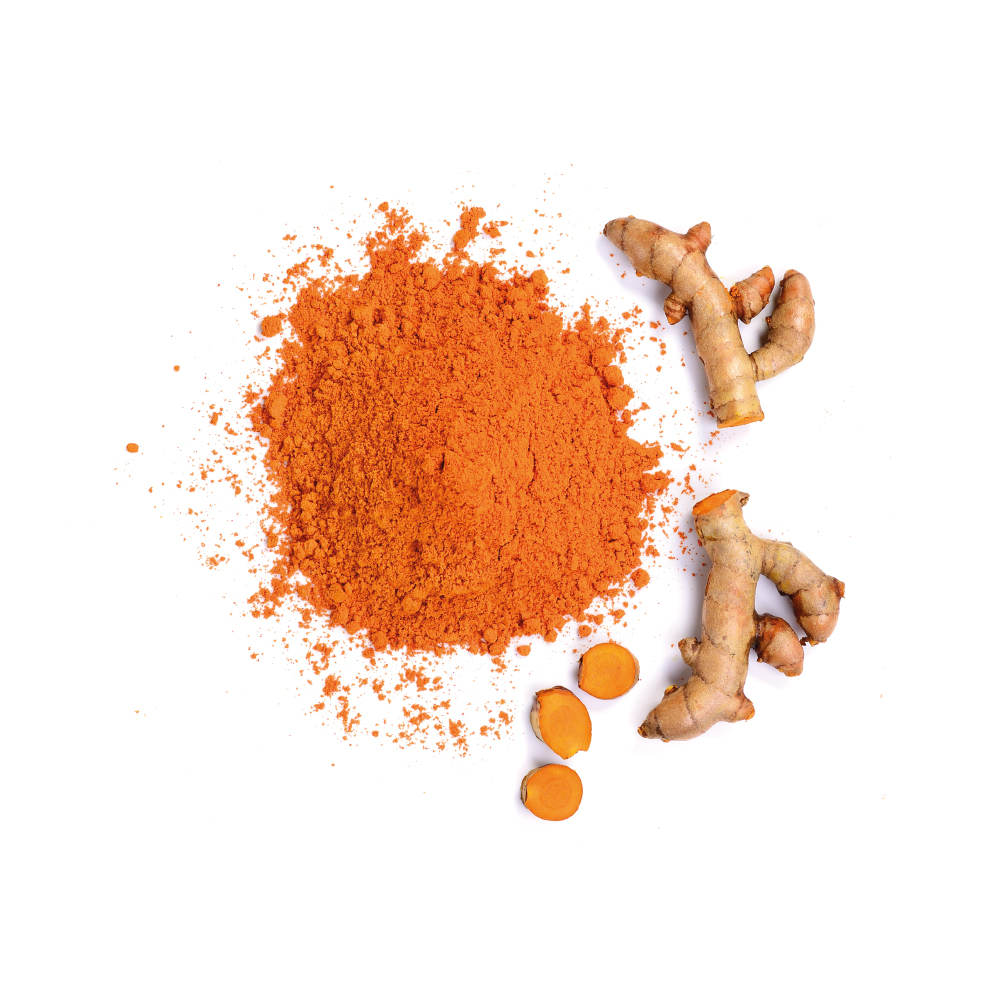
beta-Turmerone is a naturally occurring bisabolane sesquiterpene, found in Turmeric and 2 other sources. It is well tolerated orally (low toxicity).
Concentration
Content by Source
Reported concentrations across the plants that contain beta-turmerone — the bar marks the typical level, the line shows the reported range.
Literature figures for varying plant parts and preparations. Read them as a comparative guide, not exact assays.
beta-Turmerone at a Glance
beta-Turmerone is a bisabolane sesquiterpene — one of the ring-ketone turmerones that, with the aromatic ar-turmerone, make up the bulk of steam-distilled turmeric (Curcuma longa) essential oil. It is chemically unrelated to curcumin, the yellow diarylheptanoid curcuminoid that carries turmeric’s human clinical evidence; the oil and the curcuminoid extract are different fractions and should not be read onto one another.
The honest posture on this molecule is that most of its data come from the turmerone/turmeric-oil mixture, not the purified isolate. Where a source resolves activity to beta-turmerone specifically — most cleanly a 2025 activity-guided isolation that found the pure compound to be a strong anti-inflammatory in vitro 2Reference 2Anti-Inflammatory Activity-Guided Isolation and In Silico Validation of Turmeric (Curcuma longa L.) PhytochemicalsView study → — it is attributed here; where the evidence is whole-oil or whole-fraction, that is stated. Everything is preclinical, and there are no human trials of the isolate.
Naming: beta-Turmerone, Curlone & the Turmerone Family
The naming here is a genuine source of confusion, so it is worth being precise. beta-Turmerone is the same molecule as “curlone” — PubChem lists curlone as a synonym of beta-turmerone (CID 196216, CAS 82508-14-3, C₁₅H₂₂O) 1Reference 1PubChem Compound Summary for CID 196216, beta-Turmerone (curlone; CAS 82508-14-3)View study →. Older and some analytical literature nonetheless list “α/β-turmerone” and “curlone” side by side as if they were separate analytes 7Reference 7LC–UV assay for simultaneous estimation of aromatic turmerone, α/β-turmerone and curlone: major bisabolane sesquiterpenes of turmeric oil in rabbit plasmaView study →, and one biosynthesis study explicitly re-labelled material once called “curlone” as beta-turmerone 6Reference 6Suites of terpene synthases explain differential terpenoid production in ginger and turmeric tissuesView study → — so treat curlone as a historical name for this compound, not a distinct one.
Three turmerones share the turmeric-oil stage and must be kept apart:
- beta-Turmerone (curlone) — a non-aromatic bisabolane ketone with an exocyclic methylene on the ring (this one).
- alpha-Turmerone — its non-aromatic ring isomer, differing only in ring unsaturation.
- ar-Turmerone — the fully aromatic (“ar-”) aryl-sesquiterpene ketone, with its own separate page and its own (neuro-led) evidence.
None of them is a curcuminoid, and none carries turmeric’s clinical record — that belongs to curcumin.
What It's Used For
The evidence splits by whether beta-turmerone was actually isolated or studied as part of the oil. Only one line resolves cleanly to the pure compound; the rest are fraction- or oil-level and are flagged as such.
Support is an experimental score — weighted by study type (human > animal > in vitro) and volume. A beta, not a validated metric. No human isolate data, so scores stay low by design, and mixture-only rows are scored lower than the one isolate-resolved row.
The one application resolved to the purified molecule. A 2025 activity-guided study isolated pure beta-turmerone from a dichloromethane fraction of turmeric and tested it in a luminol-enhanced chemiluminescence assay of reactive-oxygen-species production in serum-opsonised-zymosan-stimulated whole blood; it inhibited ROS with an IC₅₀ ≈ 4.7 µg/mL — more potent than the ibuprofen reference (~11.2 µg/mL) — and showed stronger in silico binding to myeloperoxidase than ibuprofen 2Reference 2Anti-Inflammatory Activity-Guided Isolation and In Silico Validation of Turmeric (Curcuma longa L.) PhytochemicalsView study →.
Gap: a single in-vitro / in-silico study on isolated whole blood, with no cellular mechanism confirmed, no in-vivo dosing and no human data; potency in a chemiluminescence assay does not establish a therapeutic effect 2Reference 2Anti-Inflammatory Activity-Guided Isolation and In Silico Validation of Turmeric (Curcuma longa L.) PhytochemicalsView study →.
In a zebrafish-based, bioassay-guided fractionation of turmeric for anticonvulsant activity, beta-turmerone was one of the bisabolene sesquiterpenoids (with ar-turmerone, alpha-turmerone and alpha-atlantone) that suppressed pentylenetetrazole-induced seizures 3Reference 3AnimalAnticonvulsant activity of bisabolene sesquiterpenoids of Curcuma longa in zebrafish and mouse seizure modelsView study →.
Gap: beta-turmerone was active within the fraction, but ar-turmerone — not beta-turmerone — was the compound carried forward to the mouse PTZ/6-Hz seizure models; there is no isolate-specific mammalian anticonvulsant data for beta-turmerone 3Reference 3AnimalAnticonvulsant activity of bisabolene sesquiterpenoids of Curcuma longa in zebrafish and mouse seizure modelsView study →.
beta-Turmerone is a major constituent (~22.7%) of a turmeric essential oil shown to inhibit Aspergillus flavus growth, germination and sporulation and to damage hyphal membranes and conidiophores 4Reference 4The inhibitory effects of Curcuma longa L. essential oil and curcumin on Aspergillus flavus Link growth and morphologyView study →; turmeric oils rich in the turmerones also carry the plant’s insecticidal/larvicidal reputation 5Reference 5Variation in the chemical composition of five varieties of Curcuma longa rhizome essential oils (turmerone abundance)View study →.
Gap: this is whole-oil activity, in which ar-turmerone and alpha-turmerone are co-present and usually credited as the drivers; beta-turmerone’s individual contribution and MICs are not separated out, and there is no in-vivo anti-infective data for the isolate 4,
Mechanisms
| Target / pathway | Effect | Relevant to |
|---|---|---|
| Reactive oxygen species (whole blood) | inhibited ROS production in vitro (IC₅₀ ~4.7 µg/mL) | anti-inflammatory (isolate) |
| Myeloperoxidase | favourable in-silico binding (docking) | anti-inflammatory (proposed) |
| Neuronal excitability (PTZ model) | fraction suppressed chemically-induced seizures | anticonvulsant (fraction-level) |
| Fungal membrane / conidiophore integrity | whole-oil disruption of A. flavus structures | antifungal (oil-level) |
Only the first row is resolved to isolated beta-turmerone; the rest describe fraction- or oil-level activity in which beta-turmerone is one of several co-acting turmerones.
Pharmacokinetics
beta-Turmerone is a small, volatile, lipophilic bisabolane ketone and behaves like a typical essential-oil sesquiterpene: poor and erratic oral bioavailability, rapid metabolism and high first-pass susceptibility should be assumed. There is no dedicated human pharmacokinetic study of isolated beta-turmerone. The nearest data are analytical: an LC–UV method quantified ar-, alpha-/beta-turmerone and curlone simultaneously in rabbit plasma to support preliminary turmeric-oil pharmacokinetics after intravenous dosing, confirming the turmerones are measurable in plasma but not establishing oral exposure 7Reference 7LC–UV assay for simultaneous estimation of aromatic turmerone, α/β-turmerone and curlone: major bisabolane sesquiterpenes of turmeric oil in rabbit plasmaView study →. Quantitative absorption, distribution and half-life for the purified compound in humans are unknown.
Clinical Trials
There are no human clinical trials of isolated beta-turmerone. All human turmeric evidence pertains to curcumin/curcuminoid extracts or whole spice — a different molecule and fraction — and is deliberately excluded here; beta-turmerone’s own evidence base is entirely in vitro, in silico and lower-vertebrate.
| Completed | Planned | Terminated | Preclinical |
|---|---|---|---|
| —(none, isolate) | — | — | Low–moderate(mostly fraction/oil) |
Last checked: July 2026.
Isolate vs. Plant Studies
This molecule sits firmly on the mixture side of the isolate-vs-plant divide, and saying so plainly is the point. The bulk of what is claimed for beta-turmerone comes from turmeric essential oil or the “turmerone fraction”, where ar-turmerone and alpha-turmerone are always co-present and are usually the compounds credited 4,
Its Role in Plants
In turmeric, beta-turmerone is a product of the sesquiterpene branch of terpenoid metabolism. Farnesyl diphosphate is cyclised by turmeric terpene synthases (ST00A/ST00B) to bisabolene-type precursors — chiefly α-zingiberene and β-sesquiphellandrene — which cytochrome-P450 monooxygenases hydroxylate and a dehydrogenase then oxidises to the ring-ketone turmerones; beta-turmerone derives from the β-sesquiphellandrene precursor 6Reference 6Suites of terpene synthases explain differential terpenoid production in ginger and turmeric tissuesView study →. These oil sesquiterpenes accumulate mainly in the rhizome (and leaf) and form part of the plant’s volatile chemical defence — consistent with the antifungal and insecticidal activity seen for the oil 4,
Prevalence in Nature
beta-Turmerone is essentially a turmeric-oil compound. It is a major sesquiterpene of steam-distilled Curcuma longa rhizome essential oil, reported at roughly 4.8–18.4% of the oil across five varieties 5Reference 5Variation in the chemical composition of five varieties of Curcuma longa rhizome essential oils (turmerone abundance)View study →, with regional surveys giving ~14.7–18.4% in Indian material versus ~2.9–5.6% in Korean material and ~7.4% in Ecuadorian oil 8Reference 8Turmeric essential oil constituents as potential drug candidates: a comprehensive overview of their individual bioactivitiesView study → — a several-fold swing driven by cultivar, provenance and season. It also occurs in the oils of related Curcuma species such as wild turmeric (C. aromatica) and zedoary (C. zedoaria), but it is not a meaningful constituent of unrelated plants, and the free compound is not stored in significant amounts outside the essential oil.
Discovery & Synthesis
The turmerones were recognised as the major sesquiterpenes of turmeric oil in the mid-20th century, but their stereochemistry proved stubborn: the full absolute configurations of alpha- and beta-turmerone were only settled in 1992, when high-field ¹H-NMR and chiroptical analysis assigned beta-turmerone as (1′R,6S)-2-methyl-6-(4-methylenecyclohex-2-enyl)hept-2-en-4-one 9Reference 9Structures of α- and β-turmeroneView study → — the “methylene-on-the-ring” feature that distinguishes it from alpha-turmerone. The historical name curlone dates from this earlier, less-resolved period and is now understood to denote the same molecule 1,
Patents: not yet researched.
Toxicity & Safety
As part of the turmeric people eat and of a widely used essential oil, beta-turmerone raises no specific flags — but there is essentially no isolate-specific toxicology, so nothing here vouches for concentrated turmeric essential oil.
- A normal dietary/essential-oil constituent of turmeric. Low apparent toxicity as part of the food spice and its distilled oil.
- No isolate-specific toxicology. No genotoxicity, repeat-dose or human safety data exist for the purified compound.
- Concentrated oil is irritant and uncharacterised. Undiluted turmeric essential oil can irritate skin and mucous membranes, and ingesting it is not characterised for safety.
Full Safety & Interactions Detail
beta-Turmerone has low apparent toxicity as a normal dietary and essential-oil constituent of turmeric, but no isolate-specific toxicology, genotoxicity or repeat-dose data have been characterised for the pure compound. As a concentrated essential-oil sesquiterpene, undiluted turmeric oil can irritate skin and mucous membranes, and ingestion of concentrated oil is not characterised for safety. No dedicated reproductive-toxicity dataset exists for the isolated molecule; pregnancy and lactation decisions belong to the herb or product page where intake is decided, not to this molecule page. Drug-interaction data specific to beta-turmerone (CYP or transporter effects) have not been assessed.
Dosage
There is no established or validated human dose — beta-turmerone is not sold or dosed as a clinical isolate. Preclinical work uses research exposures (in-vitro assay concentrations; whole-oil dosing in animal/fungal models) that are not human recommendations, and human exposure occurs incidentally via culinary turmeric and turmeric essential oil. These are figures studied in research and are not a personal recommendation.
References
- National Center for Biotechnology Information. PubChem Compound Summary for CID 196216, beta-Turmerone (curlone; CAS 82508-14-3). https://pubchem.ncbi.nlm.nih.gov/compound/196216
- Uvaniskanova Z, et al. (2025). Anti-Inflammatory Activity-Guided Isolation and In Silico Validation of Turmeric (Curcuma longa L.) Phytochemicals. Foods. https://pubmed.ncbi.nlm.nih.gov/41464912/
- Orellana-Paucar AM, et al. (2012). Anticonvulsant activity of bisabolene sesquiterpenoids of Curcuma longa in zebrafish and mouse seizure models. Epilepsy & Behavior. https://pubmed.ncbi.nlm.nih.gov/22483646/
- Ferreira FD, et al. (2013). The inhibitory effects of Curcuma longa L. essential oil and curcumin on Aspergillus flavus Link growth and morphology. The Scientific World Journal. https://pubmed.ncbi.nlm.nih.gov/24367241/
- Setzer WN, et al. (2021). Variation in the chemical composition of five varieties of Curcuma longa rhizome essential oils (turmerone abundance). Foods. https://pubmed.ncbi.nlm.nih.gov/33494170/
- Koo HJ, Gang DR (2012). Suites of terpene synthases explain differential terpenoid production in ginger and turmeric tissues. PLoS ONE. https://journals.plos.org/plosone/article?id=10.1371/journal.pone.0051481
- Mehrotra N, et al. (2009). LC–UV assay for simultaneous estimation of aromatic turmerone, α/β-turmerone and curlone: major bisabolane sesquiterpenes of turmeric oil in rabbit plasma. Chromatographia. https://doi.org/10.1365/s10337-009-1007-1
- Orellana-Paucar AM (2024). Turmeric essential oil constituents as potential drug candidates: a comprehensive overview of their individual bioactivities. Molecules. https://doi.org/10.3390/molecules29174210
- Golding BT, Pombo-Villar E (1992). Structures of α- and β-turmerone. Journal of the Chemical Society, Perkin Transactions 1, 1519–1524. https://doi.org/10.1039/P19920001519



