
Compound Monograph
Biapigenin
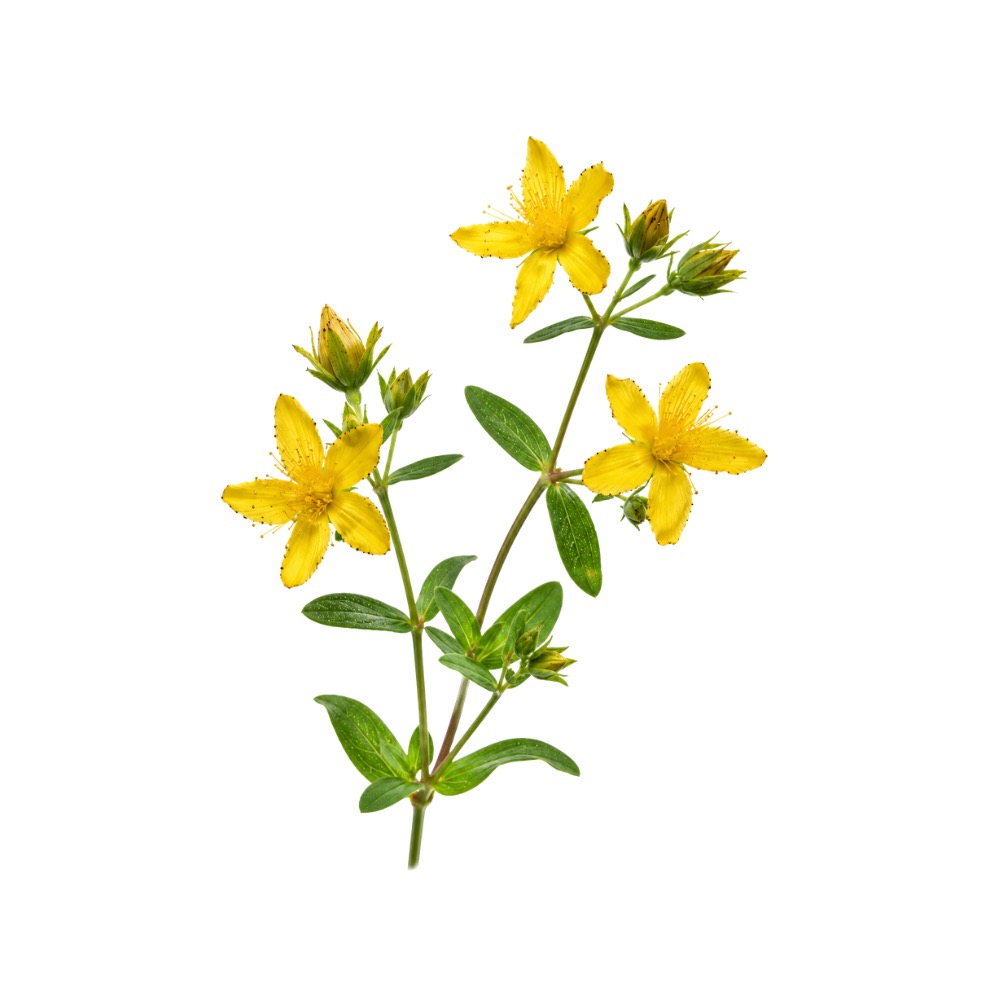
Biapigenin (I3,II8-biapigenin) is the major biflavone of St John's wort, concentrated in the flower buds. It is a distinct molecule from amentoflavone, not another name for it. Its best-defined property is potent in-vitro inhibition of CYP3A4; its CNS reputation is largely borrowed from its more famous isomer.

Sources · 6
Where Does It Come From?
Biapigenin is a naturally occurring biflavone (apigenin dimer, c3-c8'' linked), found in St John's Wort, Hairy St John's wort, Imperforate St John's wort and 3 other sources. It is well tolerated orally (low toxicity).
Concentration
Content by Source
Reported concentrations across the plants that contain biapigenin — the bar marks the typical level, the line shows the reported range.
Literature figures for varying plant parts and preparations. Read them as a comparative guide, not exact assays.
Biapigenin at a Glance
Biapigenin is a biflavone — a molecule built from two apigenin units joined by a single carbon–carbon bond — and it is the most abundant biflavone in St John’s wort (Hypericum perforatum) 1,
Those locants matter more than they look, because biapigenin is not amentoflavone. The two are structural isomers with the same formula (C30H18O10) and near-identical names, they occur together in the same plant, and they are routinely confused. They are different molecules with meaningfully different pharmacology — see the section below, which is the single most important thing here.
On its own merits biapigenin is thinly characterised. There are no human efficacy trials, no isolated-compound product, and no dedicated toxicology package. What does exist is a small, decent set of in-vitro findings: it is a potent competitive inhibitor of CYP3A4 4Reference 4Inhibition of human cytochrome P450 enzymes by constituents of StView study →, it modulates mitochondrial calcium handling in isolated rat brain mitochondria 12,
Biapigenin vs. Amentoflavone
This is the confusion to settle. Biapigenin and amentoflavone are two different molecules, both present in Hypericum perforatum, distinguished in print by a single prime symbol.
| Biapigenin (this one) | Amentoflavone | |
|---|---|---|
| Full name | I3,II8-biapigenin | I3’,II8-biapigenin |
| Alternative style | 3,8”-biapigenin | 3’,8”-biapigenin |
| Interflavonyl bond springs from | C3 — the pyranone (C) ring | C3’ — the phenyl (B) ring |
| Formula / mass | C30H18O10 / 538.5 | C30H18O10 / 538.5 |
| PubChem CID | 10414856 | 5281600 |
| Role in H. perforatum | the major biflavone | the minor biflavone |
| Distribution | narrow — essentially a Hypericum compound | broad — 120+ species incl. Ginkgo, Selaginella, conifers |
The clinching evidence is that the same analytical papers quantify both compounds side by side in the same extract. Michler and colleagues built an LC-MS assay explicitly “for simultaneous quantitation of amentoflavone and biapigenin, the minor and major biflavones from Hypericum perforatum” 3Reference 3Development of an LC-MS method for simultaneous quantitation of amentoflavone and biapigenin, the minor and major biflavones from Hypericum perforatum L., in human plasma and its application to real bloodView study →; Umek’s survey of six Slovenian Hypericum species reported I3,II8-biapigenin and amentoflavone as separate analytes with different distribution behaviour 10Reference 10Quantitative phytochemical analyses of six Hypericum species growing in SloveniaView study →; and Büter’s cultivation trial tracked them as two of eight distinct secondary metabolites 20Reference 20Significance of genetic and environmental aspects in the field cultivation of Hypericum perforatumView study →. A pharmacokinetic review from the Mario Negri institute states the relationship plainly, calling the pair “the biflavones amentoflavone and its I3,II8-analog biapigenin” 2Reference 2Caccia S, Gobbi M (2009). St. John’s wort components and the brain: uptake, concentrations reached and the mechanisms underlying pharmacological effects. Current Drug Metabolism. https://pubmed.ncbi.nlm.nih.gov/20214594/View study →.
They also behave differently. The cleanest demonstration comes from a single 1997 study that tested both in the same assay: amentoflavone inhibited [3H]flumazenil binding at the benzodiazepine site with an IC50 of 14.9 nM, while I3,II8-biapigenin did not inhibit at all up to 1 µM 5Reference 5In vitroInhibition of benzodiazepine binding in vitro by amentoflavone, a constituent of various species of HypericumView study →. That is at least a hundredfold difference in the same experiment. Any claim that St John’s wort’s calming reputation rests on “biflavone benzodiazepine affinity” is a claim about amentoflavone, not about biapigenin.
Two practical warnings when reading the literature:
- A third isomer exists.
2',8''-biapigeninis a separate compound, characterised largely from Selaginella. Work on biflavonoids and amyloid-β aggregation, for instance, tested 2’,8”-biapigenin and amentoflavone — not I3,II8-biapigenin 26Reference 26Biflavonoids are superior to monoflavonoids in inhibiting amyloid-β toxicity and fibrillogenesis via accumulation of nontoxic oligomer-like structuresView study →. Those results should not be carried across. - The primes get dropped. Papers write “biapigenin”, “3,8’-biapigenin” and “3,8”-biapigenin” for this molecule 21Reference 21TLC-direct bioautography as a bioassay guided method for investigation of antibacterial compounds in Hypericum perforatum LView study →, and “3’,8”-biapigenin” for amentoflavone. A lost apostrophe changes which compound is being discussed. Where the source is ambiguous, the locants are followed, not the short name.
Verdict: these are distinct compounds and both deserve their own page. Nothing here is a duplicate of amentoflavone.
A Flower-and-Bud Marker
Biapigenin’s most reliable property is chemotaxonomic. Its concentration in H. perforatum tracks flower development with unusual sharpness, which makes it a useful readout of what fraction of a harvest is actually flowering material.
A Slovak ontogenesis study measured I3,II8-biapigenin across the flowering cycle and found it climbing from 0.21% of dry weight in small buds to 1.04% in buds just before opening, then falling away steadily to 0.02% in unripe fruits 9Reference 9Quantitative changes of dianthrones, hyperforin and flavonoids content in the flower ontogenesis of Hypericum perforatumView study →. That is a fiftyfold swing driven purely by harvest timing. For comparison, hyperforin in the same study went the other way — rising to 8.07% in fruits — so the two constituents are close to anticorrelated across the season 9Reference 9Quantitative changes of dianthrones, hyperforin and flavonoids content in the flower ontogenesis of Hypericum perforatumView study →.
The pattern holds across species too: a survey of 74 samples from six Hypericum species, analysing flowers separately from the green herb, found the highest levels of most measured constituents in the flowers of H. perforatum, with the herb-fraction and flower-fraction contents strongly correlated for biapigenin — unlike amentoflavone, whose levels in the two fractions moved independently 10Reference 10Quantitative phytochemical analyses of six Hypericum species growing in SloveniaView study →. A Swiss two-year field trial across seven accessions and three sites is a useful counterpoint: of eight secondary metabolites tracked, biapigenin was the one showing no significant genotype effect, suggesting its content is governed more by developmental stage and harvest than by cultivar choice 20Reference 20Significance of genetic and environmental aspects in the field cultivation of Hypericum perforatumView study →.
Because it survives ordinary sample preparation and has a clean chromatographic signature, biapigenin appears routinely in quality-control panels — quantified alongside hyperforin, hypericin and the flavonol glycosides in commercial product comparisons 18Reference 18Comparison of the synaptosomal uptake inhibition of serotonin by St John’s wort productsView study →, confirmed by LC/SPE/NMR in Greek material 16Reference 16Identification of the major constituents of Hypericum perforatum by LC/SPE/NMR and/or LC/MSView study → and by HPLC-ESI-Q-TOF in Syrian material 25Reference 25Identification of major constituents of Hypericum perforatum L. extracts in Syria by development of a rapid, simple, and reproducible HPLC-ESI-Q-TOF MS analysis and their antioxidant activitiesView study →, and detected in oil macerates at 4.4–7.4 µg/g depending on extraction temperature and light exposure 19Reference 19Comprehensive phytochemical characterization of StView study →. A dedicated HPLC method exists specifically for measuring its release from dosage forms, where over 80% dissolved within 20 minutes in fed-state simulated intestinal fluid 17Reference 17Development of a high-performance-liquid-chromatographic method for the determination of biapigenin in biorelevant mediaView study →.
What It's Used For
The honest summary is that biapigenin has one well-defined pharmacological property, one interesting mechanism, and a lot of unfinished business. Everything below is in vitro or ex vivo; nothing is a human outcome.
Support is an experimental score — weighted by study type (human > animal > in vitro) and volume. A beta, not a validated metric. Every row here is preclinical; the scores are correspondingly low and should be read as “how well characterised”, not “how likely to work”.
The strongest and most consequential data on this molecule. Working at Pfizer, Obach fractionated commercial St John’s wort extracts by HPLC to find which constituents were responsible for the extracts’ cytochrome-P450 inhibition, then isolated the actives and measured inhibition constants. I3,II8-biapigenin proved to be a potent, competitive inhibitor of CYP3A4 (Ki = 0.038 µM), CYP2C9 (0.32 µM) and CYP1A2 (0.95 µM) 4Reference 4Inhibition of human cytochrome P450 enzymes by constituents of StView study →.
On CYP3A4 that is more potent than hyperforin measured in the same study (Ki 0.48 µM) and comparable to the strongest constituents in the plant.
Phase-II metabolism has been mapped more recently: in human liver microsomes I3,II8-biapigenin forms three glucuronide metabolites, and recombinant-enzyme plus chemical-inhibitor work identified UGT1A1, UGT1A3, UGT1A9 and UGT1A10 as the enzymes responsible 15Reference 15In vitroIdentification of human UDP-glucuronosyltransferases involved in I3,II8-biapigenin glucuronidation in vitroView study →. The authors frame this as a two-way interaction risk — biapigenin’s own clearance can be altered by UGT inhibitors or inducers.
Gap: all of this is in-vitro enzymology on an isolated compound. No in-vivo interaction study has attributed any clinical effect to biapigenin specifically, and the net clinical direction of St John’s wort on CYP3A4 is induction, not inhibition (see the section below). Whether biapigenin’s exquisite in-vitro potency survives its poor absorption is untested 4,
The most mechanistically distinctive work on biapigenin, from a group at Coimbra. In the first study, biapigenin, quercetin and kaempferol all reduced neuronal death from combined kainate/NMDA excitotoxic insult, but by different routes: quercetin and kaempferol acted mainly as antioxidants, while biapigenin’s protection was attributed to effects on mitochondrial bioenergetics and calcium uptake 12Reference 12Quercetin, kaempferol and biapigenin from Hypericum perforatum are neuroprotective against excitotoxic insultsView study →.
A follow-up in isolated rat brain mitochondria pinned this down further. Biapigenin decreased ADP-induced membrane depolarisation by 68% and increased repolarisation by 37%; the effects were blocked by atractyloside and bongkrekic acid but not oligomycin, implicating the adenine nucleotide translocator (ANT). Biapigenin also reduced mitochondrial calcium retention by increasing calcium efflux, an effect blocked by ADP plus oligomycin — pointing to modulation of the mitochondrial permeability transition pore as the protective mechanism 13Reference 13AnimalBiapigenin modulates the activity of the adenine nucleotide translocator in isolated rat brain mitochondriaView study →.
Gap: isolated mitochondria and primary cultures, one laboratory, no in-vivo neuroprotection study. The findings also sit awkwardly against the pharmacokinetics — biapigenin is essentially excluded from brain tissue after oral extract 11Reference 11Liquid chromatography-tandem mass spectrometry of I3,II8-biapigenin, the major biflavone in Hypericum perforatum extractsView study →, so these concentrations are not reached where they would be needed. Attempts to engineer around that have so far only reached in-vitro blood-brain-barrier models, using quercetin-biapigenin polycaprolactone nanoparticles 23Reference 23Quercetin-biapigenin nanoparticles are effective to penetrate the blood-brain barrierView study →.
Where the amentoflavone confusion causes the most damage. Three radioligand studies from two groups tested I3,II8-biapigenin across CNS receptors:
- Benzodiazepine site. Baureithel tested biapigenin and amentoflavone in the same [3H]flumazenil assay: amentoflavone gave IC50 = 14.9 nM; biapigenin showed no inhibition up to 1 µM 5Reference 5In vitroInhibition of benzodiazepine binding in vitro by amentoflavone, a constituent of various species of HypericumView study →. Gobbi’s group, testing a wider panel, found biapigenin inhibited benzodiazepine-site binding with IC50 ≈ 2 µM and inhibited nothing else among 5-HT6, 5-HT7, sigma, NPY-Y1/Y2 receptors and dopamine transporters 6Reference 6In vitroIn vitro binding studies with two Hypericum perforatum extracts — hyperforin, hypericin and biapigenin — on 5-HT6, 5-HT7, GABA(A)/benzodiazepine, sigma, NPY-Y1/Y2 receptors and dopamine transportersView study →. The two results are consistent — the affinity is real but micromolar, roughly a hundredfold weaker than amentoflavone’s.
- Oestrogen receptor. Using receptors expressed via the Semliki Forest virus system, the Basel group found the biflavonoid I3,II8-biapigenin inhibited [3H]estradiol binding to ER-alpha with an IC50 around 1 µM — the most selective activity they recorded for it 7,
8Reference 7In vitroNeurochemical studies with StView study →Reference 8Extracts and constituents of Hypericum perforatum inhibit the binding of various ligands to recombinant receptors expressed with the Semliki Forest virus systemView study → . - Membrane effects. In rat C6 glioblastoma cells, biapigenin was named as one of five constituents (with hypericin, hyperforin, quercetin and amentoflavone) mediating the membrane-rigidifying effect of a standardised extract, which altered β1-adrenoceptor lateral mobility and cAMP formation 22Reference 22AnimalSt John’s wort extract influences membrane fluidity and composition of phosphatidylcholine and phosphatidylethanolamine in rat C6 glioblastoma cellsView study →.
Gap: micromolar affinities in isolated-membrane assays, and the pharmacokinetics argue against relevance — brain concentrations of biapigenin after pharmacologically effective extract doses are far below those needed to engage these targets 2,
A screening study of St John’s wort constituents against pancreatic lipase — the enzyme responsible for dietary fat digestion, and the target of orlistat. Of all compounds tested, three showed IC50 values below 1 µM: hypericin, pseudohypericin and I3,II8-biapigenin. Kinetics indicated mixed-type inhibition, and molecular dynamics placed the inhibitors at both the catalytic cavity and the colipase interface 14Reference 14In vitroInhibition of pancreatic lipase by the constituents in StView study →.
Biapigenin has also appeared as one of the antibacterial principles in a TLC-direct-bioautography study of H. perforatum tincture, isolated alongside apigenin, quercetin, kaempferol and linolenic acid as the compounds giving inhibition zones against a nine-strain bacterial panel 21Reference 21TLC-direct bioautography as a bioassay guided method for investigation of antibacterial compounds in Hypericum perforatum LView study →.
Gap: single in-vitro screens, no animal or human follow-up, and both applications would require the compound to act locally in the gut — which is at least consistent with its poor systemic absorption, but has never been tested. Treat as lead-generation, not evidence.
Mechanisms
| Target / pathway | Effect | Relevant to |
|---|---|---|
| CYP3A4 | competitive inhibition, Ki 0.038 µM — the most potent single finding for this molecule | drug interactions |
| CYP2C9 / CYP1A2 | competitive inhibition, Ki 0.32 / 0.95 µM | drug interactions |
| UGT1A1, 1A3, 1A9, 1A10 | glucuronidate biapigenin (three metabolites in human liver microsomes) | its own clearance; two-way interaction risk |
| Adenine nucleotide translocator (ANT) | modulation → altered ADP-induced depolarisation/repolarisation | neuroprotection |
| Mitochondrial permeability transition pore | promotes calcium efflux, reduces calcium burden | neuroprotection |
| GABA-A benzodiazepine site | weak binding inhibition, IC50 ≈ 2 µM (inactive ≤1 µM in a second assay) | CNS — contrast with amentoflavone at 14.9 nM |
| Oestrogen receptor alpha | inhibits [3H]estradiol binding, IC50 ≈ 1 µM | uncharacterised; no follow-up |
| Pancreatic lipase | mixed-type inhibition, IC50 <1 µM | metabolic (gut-local) |
| Plasma-membrane order | contributes to extract-mediated membrane rigidification in glial cells | receptor signalling |
The load-bearing rows are the top two blocks. The benzodiazepine row is included precisely because it is so often mis-stated — the nanomolar number belongs to a different molecule.
Pharmacokinetics
Biapigenin is a large, poorly water-soluble biflavone, and its pharmacokinetics reflect that. A validated LC-MS/MS assay detected it in mouse and rat plasma after a standardised H. perforatum extract, but it was not detectable in brain (<5 ng/g). Even after direct intraperitoneal biapigenin at 10 mg/kg, brain levels reached only about 2% of the equivalent systemic exposure once residual blood was accounted for — indicating genuinely poor blood-brain-barrier permeability rather than a sampling artefact 11Reference 11Liquid chromatography-tandem mass spectrometry of I3,II8-biapigenin, the major biflavone in Hypericum perforatum extractsView study →.
A review of St John’s wort brain penetration puts biapigenin in the same category as hyperforin, quercetin, hypericin and amentoflavone: high-molecular-weight, poorly soluble compounds whose brain concentrations after pharmacologically effective extract doses fall far below the concentrations effective at neurotransmitter receptors in vitro 2Reference 2Caccia S, Gobbi M (2009). St. John’s wort components and the brain: uptake, concentrations reached and the mechanisms underlying pharmacological effects. Current Drug Metabolism. https://pubmed.ncbi.nlm.nih.gov/20214594/View study →. This is the central problem for every CNS claim about the molecule.
In humans, an LC-MS method quantified biapigenin and amentoflavone in plasma across 13 volunteers, with the authors reporting preliminary biphasic concentration-time curves 3Reference 3Development of an LC-MS method for simultaneous quantitation of amentoflavone and biapigenin, the minor and major biflavones from Hypericum perforatum L., in human plasma and its application to real bloodView study → — the only human pharmacokinetic data that exist for this compound, and not extended since. Release from dosage forms is not the limiting step: over 80% of biapigenin dissolved within 20 minutes in fed-state simulated intestinal fluid and within 80 minutes in fasted-state fluid 17Reference 17Development of a high-performance-liquid-chromatographic method for the determination of biapigenin in biorelevant mediaView study →. Phase-II clearance proceeds via UGT1A1/1A3/1A9/1A10 glucuronidation 15Reference 15In vitroIdentification of human UDP-glucuronosyltransferases involved in I3,II8-biapigenin glucuronidation in vitroView study →.
Clinical Trials
None. There are no clinical trials of isolated biapigenin for any indication, and no product containing it as a defined active. The human evidence base for St John’s wort belongs to the whole standardised extract, within which biapigenin is a minor and unstandardised co-constituent. The only human study to measure it at all was a pharmacokinetic method-development paper in 13 volunteers 3Reference 3Development of an LC-MS method for simultaneous quantitation of amentoflavone and biapigenin, the minor and major biflavones from Hypericum perforatum L., in human plasma and its application to real bloodView study →.
| Completed | Planned | Terminated | Preclinical |
|---|---|---|---|
| None(one human PK method study, n=13) | — | — | Enzyme inhibition, mitochondrial neuroprotection, receptor binding, lipase screening |
Last checked: July 2026.
The Induction–Inhibition Paradox
Biapigenin sits inside one of the more instructive contradictions in herbal pharmacology, and it is worth stating explicitly because it is easy to misread the CYP data above.
St John’s wort is famous — notorious — for inducing CYP3A4 and P-glycoprotein, which is what causes its clinically serious interactions with oral contraceptives, ciclosporin, warfarin and antiretrovirals. That induction is driven chiefly by hyperforin acting on the pregnane X receptor, a transcriptional effect that plays out over days.
Yet several of the plant’s constituents, biapigenin most potently among them, are strong inhibitors of the very same enzyme in vitro 4Reference 4Inhibition of human cytochrome P450 enzymes by constituents of StView study →. There is no contradiction in the chemistry — inhibition is an immediate, competitive, molecule-on-enzyme effect, while induction is a slower change in how much enzyme the liver makes. In a person taking the herb daily, induction wins: the net clinical picture is faster clearance of CYP3A4 substrates, not slower.
The practical consequence: do not read biapigenin’s 0.038 µM Ki as a reason to expect drug levels to rise on St John’s wort. They generally fall. Biapigenin’s inhibition is a real property of the molecule and a legitimate reason to keep it in the interaction conversation, particularly for single-dose or short-exposure scenarios, but it is not the story of the herb. The related review literature on St John’s wort’s mechanism makes the same broader point about the extract: activities demonstrated in vitro for individual constituents frequently do not survive translation to whole-animal or human exposure 24Reference 24Mechanism of action of St John’s wort in depression: what is known? CNS Drugs. https://pubmed.ncbi.nlm.nih.gov/12775192/View study →.
Isolate vs. Plant Studies
The split here is unusually clean, and unusually unflattering to the isolate.
Every pharmacological finding here is isolate work — purified biapigenin in microsomes, isolated mitochondria, receptor membranes or enzyme assays 4,
The plant-level evidence, conversely, is all analytical rather than pharmacological. Biapigenin’s confirmed roles in the H. perforatum literature are as a quantified marker in quality-control panels 18,
Where the two layers do meet, it is as a named contributor within an extract effect rather than as a demonstrated active: biapigenin is one of five constituents implicated in the membrane-rigidifying action of a standardised extract 22Reference 22AnimalSt John’s wort extract influences membrane fluidity and composition of phosphatidylcholine and phosphatidylethanolamine in rat C6 glioblastoma cellsView study → and one of five antibacterial principles isolated by bioautography from a tincture 21Reference 21TLC-direct bioautography as a bioassay guided method for investigation of antibacterial compounds in Hypericum perforatum LView study →. Both are attributions within a mixture, not isolate efficacy.
Prevalence in Nature
Biapigenin is close to a genus-restricted molecule. Its documented occurrence is essentially confined to Hypericum, where it is the dominant biflavone of H. perforatum 1,
Within the plant it is a reproductive-tissue compound. Content peaks in buds immediately before opening and collapses after fruiting 9Reference 9Quantitative changes of dianthrones, hyperforin and flavonoids content in the flower ontogenesis of Hypericum perforatumView study →, which is consistent with the traditional practice of harvesting St John’s wort at flowering. Because commercial extracts are standardised to hypericins (typically ~0.3%) or hyperforin rather than to biflavones, the biapigenin content of a given product is essentially uncontrolled and varies between preparations 18Reference 18Comparison of the synaptosomal uptake inhibition of serotonin by St John’s wort productsView study →.
It travels into lipophilic preparations too: infused-oil macerates of flowering tops contain 4.4–7.4 µg/g of I3,II8-biapigenin, with the level depending measurably on maceration temperature and light exclusion 19Reference 19Comprehensive phytochemical characterization of StView study →.
Discovery & Synthesis
Biapigenin was isolated in 1987 by R. Berghöfer and J. Hölzl at the Institut für Pharmazeutische Biologie in Marburg, from a Soxhlet extract of Hypericum perforatum. They purified the biflavonoid fraction by column chromatography on Sephadex LH-20 followed by preparative TLC, and established the structure of the main component by UV, 1H- and 13C-NMR spectroscopy and mass spectrometry as I3,II8-biapigenin 1Reference 1Biflavonoids in Hypericum perforatum; Part 1View study →. The paper was explicitly framed as “Biflavonoids in Hypericum perforatum, Part 1” — the compound’s separate identity from amentoflavone was clear from the moment it was described.
Structure confirmation in the plant has since been repeated with modern hyphenated methods, notably LC/DAD/SPE/NMR and LC/MS on Greek H. perforatum, which listed I3,II8-biapigenin among the fully characterised major constituents 16Reference 16Identification of the major constituents of Hypericum perforatum by LC/SPE/NMR and/or LC/MSView study →.
There is no commercial synthesis. Biapigenin is obtained by isolation from Hypericum material for use as an analytical reference standard; no total synthesis, semisynthetic route or manufacturing process is established for it, and it is not produced at scale. Biosynthetically it is presumed to arise from oxidative phenolic coupling of two apigenin units, but the coupling enzymes in Hypericum have not been identified — the regiochemistry that distinguishes it from amentoflavone remains unexplained.
Patents: not yet researched.
Toxicity & Safety
Biapigenin carries a low flag. It is a plant flavone with no described acute-toxicity signal, no reported organ toxicity, and pharmacokinetics — poor absorption, essentially no brain penetration — that limit systemic exposure 11,
- No acute-toxicity signal. No reported organ toxicity, and human exposure is limited to trace amounts within St John’s wort preparations.
- Poorly absorbed and brain-excluded. Not detectable in brain tissue (<5 ng/g) after standardised extract dosing, which caps systemic and CNS exposure.
- Potent CYP3A4 inhibitor in vitro. Ki 0.038 µM, plus CYP2C9 and CYP1A2 — enough to keep it in the drug-interaction conversation even though the herb’s net clinical effect is induction.
- UGT-dependent clearance. Glucuronidated by UGT1A1, 1A3, 1A9 and 1A10, so co-administered UGT inhibitors or inducers could alter its own exposure.
- Safety data are absent, not reassuring. No repeat-dose, genotoxicity or reproductive toxicology exists for the isolated compound; “low” reflects the absence of signals in a thin dataset.
Full Safety & Interactions Detail
Enzyme inhibition. The one property with real numbers behind it. Purified from a commercial extract, I3,II8-biapigenin inhibited CYP3A4 competitively at Ki = 0.038 µM, with CYP2C9 at 0.32 µM and CYP1A2 at 0.95 µM 4Reference 4Inhibition of human cytochrome P450 enzymes by constituents of StView study →. In isolation those figures would flag a serious interaction risk. In practice the direction of the whole-herb effect is the opposite — CYP3A4 induction via hyperforin and the pregnane X receptor dominates with repeated dosing — so biapigenin’s inhibition is best understood as a real but subordinate component of a complex interaction profile rather than an independent hazard. Anyone taking St John’s wort alongside prescription medication should be managing the herb-level interaction risk, which is substantial and well documented, and which is discussed on the St John’s wort page.
Its own metabolism. Three glucuronide metabolites form in human liver microsomes, generated by UGT1A1, UGT1A3, UGT1A9 and UGT1A10 15Reference 15In vitroIdentification of human UDP-glucuronosyltransferases involved in I3,II8-biapigenin glucuronidation in vitroView study →. The authors note the corresponding two-way interaction potential — co-administered UGT inhibitors or inducers could shift biapigenin’s exposure, and biapigenin could in principle compete for those enzymes with other UGT substrates. No clinical consequence has been demonstrated.
Oestrogen-receptor binding. Biapigenin inhibits [3H]estradiol binding to ER-alpha at around 1 µM in a recombinant-receptor assay 7,
Photosensitivity is not this molecule’s. St John’s wort’s dose-related phototoxicity belongs to the naphthodianthrones hypericin and pseudohypericin, which are photodynamic pigments. Biapigenin is not photoactive and does not contribute to that risk.
Reproductive note (prose only). No reproductive-toxicity data exist for isolated biapigenin, and none should be inferred from the flavonoid class. Pregnancy and lactation decisions belong to the herb or product page where intake is actually decided, not to this molecule page — see St John’s wort. Likewise, no genotoxicity, repeat-dose or carcinogenicity package has been reported for the pure compound.
Dosage
There is no dose for biapigenin. It is not sold as an isolated compound, no human dose has been established, and no product is standardised to it.
Human exposure is entirely indirect, through St John’s wort preparations — commonly 300 mg of standardised extract three times daily in the trial literature — where biapigenin is a minor co-constituent alongside the hypericins and hyperforin that the extract is actually standardised to 18Reference 18Comparison of the synaptosomal uptake inhibition of serotonin by St John’s wort productsView study →. Because that standardisation ignores the biflavones, biapigenin content varies between products and between harvests 18,
The figures cited throughout fall into two categories, neither of which is a dose:
| Figure type | Example | What it is |
|---|---|---|
| In-vitro potency | CYP3A4 Ki 0.038 µM 4Reference 4Inhibition of human cytochrome P450 enzymes by constituents of StView study → | Enzyme-assay concentration, not an intake |
| Plant content | 0.21–1.04% dry wt in buds 9Reference 9Quantitative changes of dianthrones, hyperforin and flavonoids content in the flower ontogenesis of Hypericum perforatumView study → | Raw-material measurement, not a serving |
| Extract content | 4.4–7.4 µg/g in oil macerates 19Reference 19Comprehensive phytochemical characterization of StView study → | Preparation analysis, not a dose |
Treat all of them as research measurements. Anyone considering St John’s wort should be weighing the herb’s well-documented drug interactions with a prescriber, not targeting a constituent.
References
- Berghöfer R, Hölzl J (1987). Biflavonoids in Hypericum perforatum; Part 1. Isolation of I3,II8-biapigenin. Planta Medica. https://pubmed.ncbi.nlm.nih.gov/17268997/
- Caccia S, Gobbi M (2009). St. John’s wort components and the brain: uptake, concentrations reached and the mechanisms underlying pharmacological effects. Current Drug Metabolism. https://pubmed.ncbi.nlm.nih.gov/20214594/
- Michler H, Laakmann G, Wagner H (2011). Development of an LC-MS method for simultaneous quantitation of amentoflavone and biapigenin, the minor and major biflavones from Hypericum perforatum L., in human plasma and its application to real blood. Phytochemical Analysis. https://pubmed.ncbi.nlm.nih.gov/20821812/
- Obach RS (2000). Inhibition of human cytochrome P450 enzymes by constituents of St. John’s Wort, an herbal preparation used in the treatment of depression. Journal of Pharmacology and Experimental Therapeutics. https://pubmed.ncbi.nlm.nih.gov/10871299/
- Baureithel KH, et al. (1997). Inhibition of benzodiazepine binding in vitro by amentoflavone, a constituent of various species of Hypericum. Pharmaceutica Acta Helvetiae. https://pubmed.ncbi.nlm.nih.gov/9204773/
- Gobbi M, et al. (2001). In vitro binding studies with two Hypericum perforatum extracts — hyperforin, hypericin and biapigenin — on 5-HT6, 5-HT7, GABA(A)/benzodiazepine, sigma, NPY-Y1/Y2 receptors and dopamine transporters. Pharmacopsychiatry. https://pubmed.ncbi.nlm.nih.gov/11518075/
- Simmen U, et al. (2001). Neurochemical studies with St. John’s wort in vitro. Pharmacopsychiatry. https://pubmed.ncbi.nlm.nih.gov/11518063/
- Simmen U, et al. (1999). Extracts and constituents of Hypericum perforatum inhibit the binding of various ligands to recombinant receptors expressed with the Semliki Forest virus system. Journal of Receptor and Signal Transduction Research. https://pubmed.ncbi.nlm.nih.gov/10071750/
- Tekel’ová D, et al. (2000). Quantitative changes of dianthrones, hyperforin and flavonoids content in the flower ontogenesis of Hypericum perforatum. Planta Medica. https://pubmed.ncbi.nlm.nih.gov/11199145/
- Umek A, et al. (1999). Quantitative phytochemical analyses of six Hypericum species growing in Slovenia. Planta Medica. https://pubmed.ncbi.nlm.nih.gov/17260265/
- Colovic M, Caccia S (2008). Liquid chromatography-tandem mass spectrometry of I3,II8-biapigenin, the major biflavone in Hypericum perforatum extracts. Journal of Chromatography B. https://pubmed.ncbi.nlm.nih.gov/18243074/
- Silva B, et al. (2008). Quercetin, kaempferol and biapigenin from Hypericum perforatum are neuroprotective against excitotoxic insults. Neurotoxicity Research. https://pubmed.ncbi.nlm.nih.gov/18522906/
- Silva BA, et al. (2010). Biapigenin modulates the activity of the adenine nucleotide translocator in isolated rat brain mitochondria. Neurotoxicity Research. https://pubmed.ncbi.nlm.nih.gov/19597902/
- Hou XD, et al. (2020). Inhibition of pancreatic lipase by the constituents in St. John’s Wort: in vitro and in silico investigations. International Journal of Biological Macromolecules. https://pubmed.ncbi.nlm.nih.gov/31883893/
- Li M, et al. (2025). Identification of human UDP-glucuronosyltransferases involved in I3,II8-biapigenin glucuronidation in vitro. Journal of Pharmaceutical and Biomedical Analysis. https://pubmed.ncbi.nlm.nih.gov/39923326/
- Tatsis EC, et al. (2007). Identification of the major constituents of Hypericum perforatum by LC/SPE/NMR and/or LC/MS. Phytochemistry. https://pubmed.ncbi.nlm.nih.gov/17196625/
- Schulte-Löbbert S, et al. (2003). Development of a high-performance-liquid-chromatographic method for the determination of biapigenin in biorelevant media. Journal of Pharmaceutical and Biomedical Analysis. https://pubmed.ncbi.nlm.nih.gov/12946531/
- Schulte-Löbbert S, et al. (2004). Comparison of the synaptosomal uptake inhibition of serotonin by St John’s wort products. Journal of Pharmacy and Pharmacology. https://pubmed.ncbi.nlm.nih.gov/15231048/
- Heinrich M, et al. (2017). Comprehensive phytochemical characterization of St. John’s wort (Hypericum perforatum L.) oil macerates obtained by different extraction protocols via analytical tools applicable in routine control. Die Pharmazie. https://pubmed.ncbi.nlm.nih.gov/29442047/
- Büter B, et al. (1998). Significance of genetic and environmental aspects in the field cultivation of Hypericum perforatum. Planta Medica. https://pubmed.ncbi.nlm.nih.gov/9690345/
- Jesionek W, et al. (2015). TLC-direct bioautography as a bioassay guided method for investigation of antibacterial compounds in Hypericum perforatum L. Journal of AOAC International. https://pubmed.ncbi.nlm.nih.gov/26268984/
- Keksel N, et al. (2019). St John’s wort extract influences membrane fluidity and composition of phosphatidylcholine and phosphatidylethanolamine in rat C6 glioblastoma cells. Phytomedicine. https://pubmed.ncbi.nlm.nih.gov/30668384/
- Oliveira AI, et al. (2022). Quercetin-biapigenin nanoparticles are effective to penetrate the blood-brain barrier. Drug Delivery and Translational Research. https://pubmed.ncbi.nlm.nih.gov/33709285/
- Butterweck V (2003). Mechanism of action of St John’s wort in depression: what is known? CNS Drugs. https://pubmed.ncbi.nlm.nih.gov/12775192/
- Alahmad A, et al. (2022). Identification of major constituents of Hypericum perforatum L. extracts in Syria by development of a rapid, simple, and reproducible HPLC-ESI-Q-TOF MS analysis and their antioxidant activities. ACS Omega. https://pubmed.ncbi.nlm.nih.gov/35559140/
- Thapa A, et al. (2011). Biflavonoids are superior to monoflavonoids in inhibiting amyloid-β toxicity and fibrillogenesis via accumulation of nontoxic oligomer-like structures. Biochemistry. https://pubmed.ncbi.nlm.nih.gov/21322641/



