
Compound Monograph
Bilobalide
Bilobalide is the sesquiterpene trilactone of Ginkgo biloba — the only sesquiterpene among the extract's terpene lactones and structurally distinct from the diterpenoid ginkgolides. Its signature is not the ginkgolides' PAF antagonism but GABA-A / glycine-receptor antagonism and strong preclinical neuroprotection (mitochondrial, anti-ischemic). Almost all of the evidence is animal or in-vitro work on the isolate; the human record belongs to the whole EGb 761 extract.

Sources · 1
Where Does It Come From?
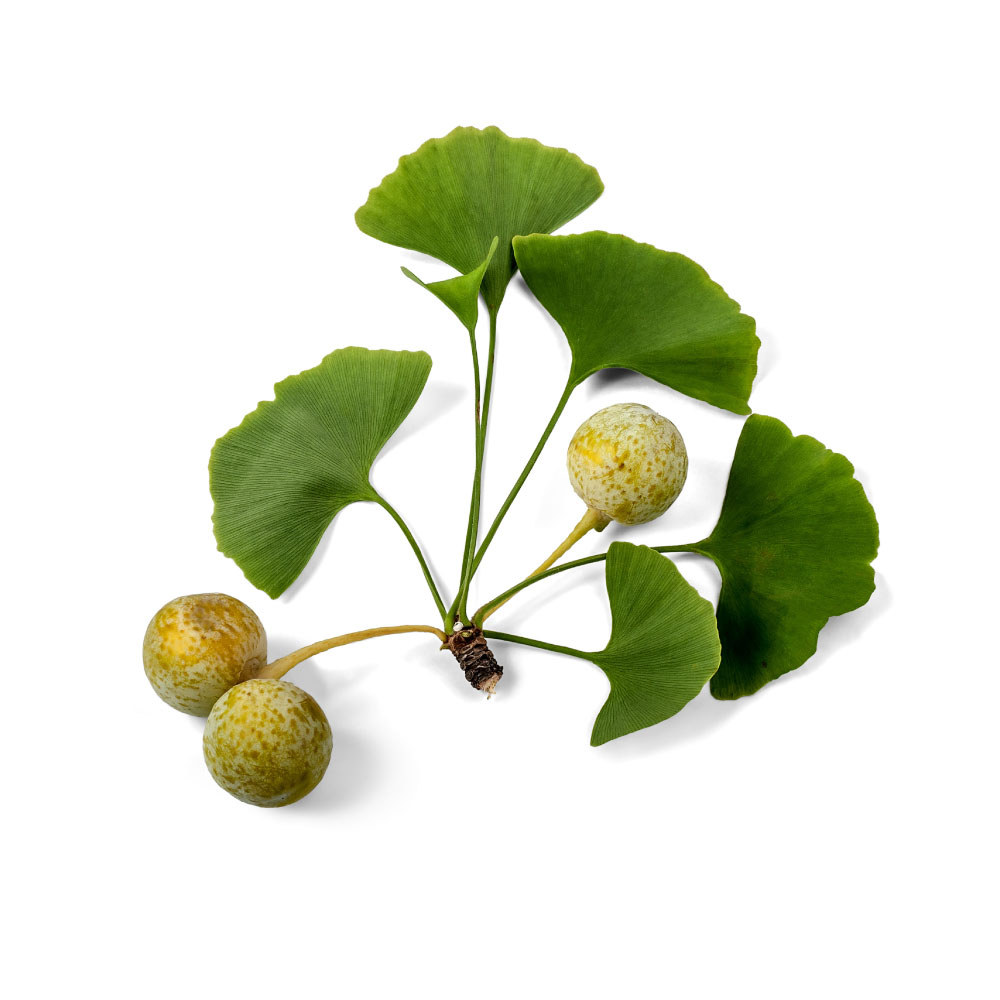
Bilobalide is a naturally occurring sesquiterpene lactone (trilactone), found in Ginkgo. It is well tolerated orally (low toxicity).
Concentration
Content by Source
Reported concentrations across the plants that contain bilobalide — the bar marks the typical level, the line shows the reported range.
Literature figures for varying plant parts and preparations. Read them as a comparative guide, not exact assays.
Bilobalide at a Glance
Bilobalide is a sesquiterpene trilactone found essentially only in ginkgo (Ginkgo biloba), where — with the ginkgolides — it forms the terpene-lactone fraction used to standardize the leaf extract. It is the single most abundant terpene trilactone in the standardized extract EGb 761, and one of its two marker classes alongside the flavonol glycosides 1,
The compound-defining point is structural: bilobalide is the only sesquiterpene (C15) trilactone in ginkgo, distinct from the diterpenoid (C20) ginkgolides it sits beside. That difference tracks a difference in pharmacology. The ginkgolides — ginkgolide B in particular — are prototypical platelet-activating-factor (PAF) antagonists; bilobalide’s signature is instead antagonism of GABA-A and glycine receptors and a broad, mechanistically layered neuroprotection (mitochondrial protection, reduced excitotoxicity, anti-apoptotic and anti-inflammatory signalling) 4,
The honest headline is the compound-page discipline: almost all bilobalide data are rodent or in-vitro studies of the isolated molecule, and the human evidence that people associate with “ginkgo” belongs to the whole EGb 761 extract, not to isolated bilobalide. There are no controlled human trials of the isolate 1,
Bilobalide vs. The Ginkgolides
Ginkgo’s “terpene lactones” are two chemically different things, and conflating them is the commonest error about bilobalide.
The ginkgolides (A, B, C, J) are C20 diterpene trilactones. Their defining action is selective PAF-receptor antagonism — the basis of ginkgo’s circulatory effects and its antiplatelet/bleeding caution — see ginkgolide B 3Reference 3Ginkgo biloba extract (EGb 761) and CNS functions: basic studies and clinical applicationsView study →.
Bilobalide is a C15 sesquiterpene trilactone — the only sesquiterpene of the group. It is a poor PAF antagonist and is not the source of ginkgo’s antiplatelet signal; its own pharmacology runs through GABA-A / glycine-receptor antagonism and neuroprotection instead 1,
The practical framing:
- Ginkgolides — PAF antagonists (circulation, platelets).
- Bilobalide — GABA-A/glycine antagonist and neuroprotectant (CNS).
- EGb 761 — the standardized whole extract that carries the actual human evidence, in which bilobalide is one active among many.
The Anticonvulsant Paradox
Bilobalide has a genuinely paradoxical relationship with seizures that earns its own section. At the receptor it is a non-competitive antagonist of the inhibitory GABA-A receptor 4,
Yet at the tissue level bilobalide can be anti-convulsant and neuroprotective. In mouse brain it raises GABA content by increasing the activity of glutamic acid decarboxylase (GAD), the enzyme that synthesises GABA 7Reference 7AnimalEffects of bilobalide on gamma-aminobutyric acid levels and glutamic acid decarboxylase in mouse brainView study →, and it specifically prevents the fall in GABA and GAD caused by 4′-O-methylpyridoxine (ginkgotoxin) — the vitamin-B6-antagonist neurotoxin of ginkgo seeds that triggers seizures in ginkgo-nut poisoning 8Reference 8AnimalBilobalide prevents reduction of gamma-aminobutyric acid levels and glutamic acid decarboxylase activity induced by 4-O-methylpyridoxine in mouse hippocampusView study →. So the same molecule can block the GABA receptor while defending the brain’s GABA supply.
The resolution is that bilobalide’s net CNS effect is dose- and context-dependent: receptor-level antagonism at high concentrations versus GAD-mediated GABA preservation and anti-excitotoxic protection at the doses used in neuroprotection studies 4,
What It's Used For
Bilobalide’s preclinical profile is broad and mechanistically coherent, but the load-bearing caveat holds throughout: it is nearly all isolated-molecule work in rodents and cell models, with the human record belonging to the whole extract 1,
Support is an experimental score — weighted by study type (human > animal > in vitro) and volume. A beta, not a validated metric. All human efficacy data are the extract, not the isolate, so isolate scores stay modest by design.
Bilobalide’s marquee — and the reason it is one of the neuroprotective actives of EGb 761. In cerebral-ischemia and neuronal-injury models the isolated molecule reduces infarct volume and cerebral edema, preserves mitochondrial ATP synthesis, curbs membrane-phospholipid breakdown, and suppresses apoptosis 10Reference 10Bilobalide and neuroprotectionView study →. A dedicated review frames it as protecting the ischemic brain through reduced excitotoxicity, oxidative stress and inflammation 11Reference 11ReviewThe neuroprotective mechanisms of ginkgolides and bilobalide in cerebral ischemic injury: a literature reviewView study →, and mechanistic work shows it lowers the release of excitatory amino acids (glutamate, aspartate) in cortical tissue — a plausible upstream anti-excitotoxic node 9Reference 9Effects of bilobalide on amino acid release and electrophysiology of cortical slicesView study →.
Gap: the evidence is entirely preclinical (rodent stroke models, brain slices, neuronal cultures) using the isolate; no human ischemia trial has tested bilobalide alone, and the neuroprotective effect people cite is really the whole EGb 761 extract 10,
The molecular signature that defines the compound. On recombinant α1β2γ2L GABA-A receptors bilobalide is a non-competitive antagonist with an IC50 of about 4.6 µM, approaching classical GABA-A blockers 4Reference 4Bilobalide, a sesquiterpene trilactone from Ginkgo biloba, is an antagonist at recombinant alpha1beta2gamma2L GABA(A) receptorsView study →.
Independent work shows the ginkgo terpene trilactones antagonise both cortical glycine and GABA-A receptors, with bilobalide the strongest GABA-A inhibitor of the set 5Reference 5Terpene trilactones from Ginkgo biloba are antagonists of cortical glycine and GABA(A) receptorsView study →, and it shows mixed antagonism at the ρ1 GABA-C receptor — competitive at low, non-competitive at high concentrations 6Reference 6Mixed antagonistic effects of bilobalide at the rho1 GABA(C) receptorView study →.
Synthetic-chemistry work confirmed that resynthesised (−)-bilobalide reproduces these effects on inhibitory GABAergic currents 5,
Gap: this is receptor pharmacology (recombinant channels, native slices), not a therapeutic outcome; GABA-A antagonism is normally proconvulsant, so the CNS benefit only emerges via the anticonvulsant-paradox route above, and no human receptor-occupancy data exist 4,
A consistent supporting mechanism in the neuroprotection literature. In ischemic and neuronal-injury models the isolate suppresses NF-κB-driven inflammatory transcription, lowers pro-inflammatory cytokines and dampens microglial activation, as compiled in the mechanism reviews 1,
Gap: all preclinical and largely downstream of the same ischemia/excitotoxicity machinery rather than an independent, separately-trialled claim; there is no human anti-inflammatory endpoint for the isolate 1,
A defined pro-survival signal at the cell level. In human SH-SY5Y neuroblastoma cells bilobalide prevented apoptosis by activating the PI3K/Akt pathway, protecting against injury-induced cell death 12Reference 12Bilobalide prevents apoptosis through activation of the PI3K/Akt pathway in SH-SY5Y cellsView study → — one of the concrete molecular routes underlying the broader neuroprotection story.
Gap: a single cell-line model of the isolate; it demonstrates a mechanism, not an in-vivo or human effect, and sits underneath the neuroprotection heading rather than beside it 12Reference 12Bilobalide prevents apoptosis through activation of the PI3K/Akt pathway in SH-SY5Y cellsView study →.
The clearest example of a signal off the CNS axis. In 3T3-L1 adipocytes bilobalide suppressed adipogenesis and lipid accumulation via AMPK activation 13Reference 13Bilobalide suppresses adipogenesis in 3T3-L1 adipocytes via the AMPK signaling pathwayView study →; a separate cell study reported it counteracting morphine-induced changes through miR-101 upregulation 14Reference 14Bilobalide assuages morphine-induced addiction in hippocampal neuron cells through upregulation of microRNA-101View study →.
Gap: isolated in-vitro cell studies only, unconnected to any human metabolic outcome — interesting mechanism-hunting, not a use 13,
Mechanisms
| Target / pathway | Effect | Relevant to |
|---|---|---|
| GABA-A receptor (defining) | non-competitive antagonist (IC50 ≈ 4.6 µM at α1β2γ2L) — blocks inhibitory GABA-gated Cl⁻ currents | CNS excitability; proconvulsant ceiling; the ginkgolide-vs-bilobalide distinction |
| Glycine + ρ1 GABA-C receptors | antagonist (mixed competitive/non-competitive at GABA-C) | CNS inhibitory-tone modulation |
| Glutamic acid decarboxylase (GAD) | increases GAD activity → raises brain GABA content; blunts ginkgotoxin-induced GABA loss | the anticonvulsant paradox; anti-excitotoxic protection |
| Excitatory amino-acid release | ↓ glutamate/aspartate release in cortical tissue | anti-excitotoxicity; ischemic neuroprotection |
| Mitochondria | preserves ATP synthesis, protects respiratory function under ischemia | core neuroprotection |
| PI3K/Akt survival pathway | activation → ↓ neuronal apoptosis | anti-apoptotic neuroprotection |
| NF-κB / cytokines / microglia | suppression of inflammatory signalling | neuroinflammation |
| AMPK | activation → ↓ adipogenesis (in vitro) | off-target metabolic curiosity |
The GABA-A antagonism is the load-bearing signature — it, not PAF antagonism, is what separates bilobalide from the ginkgolides. The GAD/GABA-content effect is what keeps a GABA-A antagonist net-neuroprotective rather than net-convulsant at therapeutic doses.
Pharmacokinetics
For a terpene lactone, bilobalide has unusually good oral absorption. In healthy volunteers its absolute oral bioavailability was ~0.79 with an elimination half-life of ~3.2 h after ginkgo dosing — among the highest bioavailability of the ginkgo terpene lactones 16Reference 16Pharmacokinetic properties of bilobalide and ginkgolides A and B in healthy subjects after intravenous and oral administration of Ginkgo biloba extract (EGb 761)View study →. Human single-dose studies of standardized preparations report bilobalide Cmax up to ~27 ng/mL (highest from EGb 761, lower from other formulations) 15Reference 15Pharmacokinetics of bilobalide, ginkgolide A and B after administration of three different Ginkgo biloba L. preparations in humansView study →. Distribution is wide and elimination relatively slow among the trilactones, with predominantly renal clearance 1Reference 1ReviewBilobalide: a review of its pharmacology, pharmacokinetics, toxicity, and safetyView study →. The practical implication mirrors the ginkgolides: even with good fractional absorption, the absolute plasma levels from oral ginkgo (low ng/mL) sit far below the low-µM concentrations at which bilobalide antagonises GABA-A receptors in vitro 4,
Clinical Trials
There are no controlled clinical trials of isolated bilobalide for any indication. The human evidence that gets attached to bilobalide is really the standardized whole-leaf extract EGb 761 (cognition, peripheral circulation, tinnitus), within which bilobalide is one of several actives and the neuroprotective effects are extract-level, not isolate-level 1,
| Completed | Planned | Terminated | Preclinical |
|---|---|---|---|
| None for the isolate (human data are whole EGb 761) | — | — | Extensive(ischemia, GABA-A/glycine pharmacology, anti-apoptotic, anti-inflammatory) |
Last checked: July 2026.
How Bilobalide Works
Bilobalide’s neuroprotection is not one mechanism but a convergent set, which is why it survives loss of any single pathway.
GABAergic & Glycinergic Modulation
At the receptor level bilobalide antagonises GABA-A and glycine receptors, reducing inhibitory chloride currents 4,
Mitochondrial Protection
A core, distinctive feature: bilobalide preserves mitochondrial ATP synthesis and respiratory function under ischemic and toxic stress, helping neurons hold their energy charge through an insult 10Reference 10Bilobalide and neuroprotectionView study →. This mitochondrial angle is much more prominent for bilobalide than for the PAF-antagonist ginkgolides.
Anti-Excitotoxicity
By lowering the release of excitatory amino acids (glutamate, aspartate) 9Reference 9Effects of bilobalide on amino acid release and electrophysiology of cortical slicesView study → and blunting downstream excitotoxic cascades, bilobalide reduces the glutamate-driven neuronal death that follows ischemia — the upstream node that ties several of its downstream effects together.
Anti-Apoptotic & Anti-Inflammatory Signalling
Downstream, bilobalide activates PI3K/Akt survival signalling 12Reference 12Bilobalide prevents apoptosis through activation of the PI3K/Akt pathway in SH-SY5Y cellsView study → and suppresses NF-κB-mediated neuroinflammation (cytokines, microglial activation) 1,
Isolate vs. Plant Studies
Bilobalide sits at the honest end of the isolate-vs-plant spectrum. The mechanistic and neuroprotection work is overwhelmingly the isolated molecule — the GABA-A/glycine electrophysiology 4,
Its Role in Plants
Bilobalide is biosynthesised through the plastidial MEP (methylerythritol-phosphate) terpenoid pathway that also builds the ginkgolides. Although it is a C15 sesquiterpene, it is thought to arise from a diterpenoid (ginkgolide-type) precursor by degradative loss of carbons rather than from a conventional sesquiterpene route — a “degraded diterpene” origin consistent with its shared caged trilactone skeleton and the rare tert-butyl group it holds in common with the ginkgolides 1,
Functionally, the ginkgo terpene lactones are regarded as defensive metabolites — deterring insects and other herbivores — which fits their concentration in the leaves and the tree’s famous resistance to pests. These are plant-biology roles and do not, on their own, predict human pharmacology.
Prevalence in Nature
Bilobalide is, for practical purposes, unique to Ginkgo biloba — a living-fossil gymnosperm with no close relatives — and is one of the marker compounds used to authenticate genuine ginkgo material 1,
Discovery & Synthesis
Bilobalide was isolated from Ginkgo biloba leaves and its structure elucidated by Koji Nakanishi and colleagues around 1967–1971, close on the heels of the ginkgolides they had characterised — the name simply marks its botanical origin (Ginkgo biloba) 2Reference 2Ginkgolides and bilobalide: their physical, chromatographic and spectroscopic propertiesView study →. Its densely oxygenated, caged trilactone framework with a tert-butyl group made it a landmark target for synthetic chemistry: E. J. Corey reported the first total synthesis in 1987, and the molecule has remained a benchmark ever since, most recently in a concise asymmetric synthesis by Shenvi and co-workers (2019) and related mechanistic-synthesis programmes that resynthesised bilobalide specifically to interrogate its GABAergic targets 5,
Manufacture today is not by total synthesis — the laboratory routes are elegant but far too complex to compete commercially. Practical supply is extraction and enrichment from ginkgo leaves, as the standardized terpene-lactone fraction of EGb 761-type extracts; isolated bilobalide is a research chemical, not a bulk commodity 1,
Patents: not yet researched.
Toxicity & Safety
Bilobalide carries a low toxicity flag: within standardized ginkgo extracts it is consumed at a few milligrams a day and those extracts are generally well tolerated, and the isolate shows a wide margin in animal studies 1Reference 1ReviewBilobalide: a review of its pharmacology, pharmacokinetics, toxicity, and safetyView study →. Two mechanism-linked cautions keep it off “harmless,” and neither is well quantified in humans.
- Low toxicity at extract-level exposure. Bilobalide is a well-characterized marker of standardized ginkgo leaf extract, consumed at milligram levels with a good tolerability record 1Reference 1ReviewBilobalide: a review of its pharmacology, pharmacokinetics, toxicity, and safetyView study →.
- Not the allergenic or seed-toxin fractions. It is distinct from the allergenic ginkgolic acids and from the seizure-inducing seed neurotoxin ginkgotoxin (4′-O-methylpyridoxine) — against which it is actually protective 8Reference 8AnimalBilobalide prevents reduction of gamma-aminobutyric acid levels and glutamic acid decarboxylase activity induced by 4-O-methylpyridoxine in mouse hippocampusView study →.
- Theoretical proconvulsant ceiling. As a GABA-A/glycine-receptor antagonist it could in principle lower seizure threshold at high exposure, even though at therapeutic doses its GAD/GABA effects run the other way 4,
5Reference 4Bilobalide, a sesquiterpene trilactone from Ginkgo biloba, is an antagonist at recombinant alpha1beta2gamma2L GABA(A) receptorsView study →Reference 5Terpene trilactones from Ginkgo biloba are antagonists of cortical glycine and GABA(A) receptorsView study → . - Whole-extract bleeding caution carries over. Ginkgo extract can add to antiplatelet/anticoagulant effects — this is chiefly the PAF-antagonist ginkgolides, not bilobalide, but applies to any ginkgo product bilobalide comes in 3Reference 3Ginkgo biloba extract (EGb 761) and CNS functions: basic studies and clinical applicationsView study →.
- No isolate human safety data. No dedicated human toxicology, interaction or reproductive dataset exists for purified bilobalide; safety is inferred from the extract.
Full Safety & Interactions Detail
Within standardized ginkgo leaf extract, bilobalide is one of the better-characterized and better-tolerated constituents, and it is not the source of ginkgo’s main safety flags — it is distinct from the allergenic/cytotoxic ginkgolic acids (a contaminant class capped in quality extracts) and from the seed neurotoxin ginkgotoxin, which bilobalide actually counteracts by defending brain GABA 8Reference 8AnimalBilobalide prevents reduction of gamma-aminobutyric acid levels and glutamic acid decarboxylase activity induced by 4-O-methylpyridoxine in mouse hippocampusView study →.
Its own mechanism-linked concern is the GABA-A/glycine antagonism: because blocking inhibitory neurotransmission is normally proconvulsant, high-concentration exposure carries a theoretical seizure-threshold caution — offset at ordinary doses by its GAD-mediated rise in GABA content and anti-excitotoxic action, but worth noting for anyone with a seizure disorder 4,
The familiar bleeding/antiplatelet caution for ginkgo (additive risk with anticoagulants, antiplatelets and NSAIDs, especially perioperatively) is driven mainly by the PAF-antagonist ginkgolides, not by bilobalide, but it applies to any whole-extract product in which bilobalide is delivered 3Reference 3Ginkgo biloba extract (EGb 761) and CNS functions: basic studies and clinical applicationsView study →.
No dedicated human interaction, repeat-dose or reproductive-toxicity dataset exists for the isolate; pregnancy/lactation decisions belong to the ginkgo herb page and the specific product, where intake is decided, not to this molecule page.
Dosage
There is no established human dose for isolated bilobalide — it has never been trialled as an isolate. Human exposure is indirect, through standardized ginkgo leaf extract: EGb 761-type products at 120–240 mg/day are standardized to ~6% terpene lactones and deliver only a few milligrams of bilobalide, reaching low ng/mL plasma levels 15,
References
- Lu J, Xie L, Liu K, et al. (2021). Bilobalide: a review of its pharmacology, pharmacokinetics, toxicity, and safety. Phytotherapy Research. https://pubmed.ncbi.nlm.nih.gov/34342079/
- van Beek TA (2005). Ginkgolides and bilobalide: their physical, chromatographic and spectroscopic properties. Bioorganic & Medicinal Chemistry. https://pubmed.ncbi.nlm.nih.gov/15993092/
- DeFeudis FV, Drieu K (2000). Ginkgo biloba extract (EGb 761) and CNS functions: basic studies and clinical applications. Current Drug Targets. https://pubmed.ncbi.nlm.nih.gov/11475535/
- Huang SH, Duke RK, Chebib M, Sasaki K, Wada K, Johnston GAR (2003). Bilobalide, a sesquiterpene trilactone from Ginkgo biloba, is an antagonist at recombinant alpha1beta2gamma2L GABA(A) receptors. European Journal of Pharmacology. https://pubmed.ncbi.nlm.nih.gov/12600688/
- Ivic L, Sands TT, Fishkin N, Nakanishi K, Kriegstein AR, Strømgaard K (2003). Terpene trilactones from Ginkgo biloba are antagonists of cortical glycine and GABA(A) receptors. Journal of Biological Chemistry. https://pubmed.ncbi.nlm.nih.gov/14504293/
- Huang SH, Duke RK, Chebib M, Sasaki K, Wada K, Johnston GAR (2006). Mixed antagonistic effects of bilobalide at the rho1 GABA(C) receptor. Neuroscience. https://pubmed.ncbi.nlm.nih.gov/16300902/
- Sasaki K, Hatta S, Haga M, Ohshika H (1999). Effects of bilobalide on gamma-aminobutyric acid levels and glutamic acid decarboxylase in mouse brain. European Journal of Pharmacology. https://pubmed.ncbi.nlm.nih.gov/10078989/
- Sasaki K, Hatta S, Wada K, Ohshika H, Haga M (2000). Bilobalide prevents reduction of gamma-aminobutyric acid levels and glutamic acid decarboxylase activity induced by 4-O-methylpyridoxine in mouse hippocampus. Life Sciences. https://pubmed.ncbi.nlm.nih.gov/12659176/
- Jones FA, Chatterjee SS, Davies JA (2002). Effects of bilobalide on amino acid release and electrophysiology of cortical slices. Amino Acids. https://pubmed.ncbi.nlm.nih.gov/12107763/
- DeFeudis FV (2002). Bilobalide and neuroprotection. Pharmacological Research. https://pubmed.ncbi.nlm.nih.gov/12457632/
- Feng Z, Sun Q, Chen W, Bai Y, Hu D, Xie X (2019). The neuroprotective mechanisms of ginkgolides and bilobalide in cerebral ischemic injury: a literature review. Molecular Medicine. https://pubmed.ncbi.nlm.nih.gov/31864312/
- Shi C, Wu F, Yew DT, Xu J, Zhu Y (2010). Bilobalide prevents apoptosis through activation of the PI3K/Akt pathway in SH-SY5Y cells. Apoptosis. https://pubmed.ncbi.nlm.nih.gov/20333467/
- Bu S, Yuan CY, Xue Q, Chen Y, Cao F (2019). Bilobalide suppresses adipogenesis in 3T3-L1 adipocytes via the AMPK signaling pathway. Molecules. https://pubmed.ncbi.nlm.nih.gov/31569605/
- Zhang Y, Zhai Q (2020). Bilobalide assuages morphine-induced addiction in hippocampal neuron cells through upregulation of microRNA-101. Journal of Biochemical and Molecular Toxicology. https://pubmed.ncbi.nlm.nih.gov/32319158/
- Woelkart K, Feizlmayr E, Dittrich P, et al. (2010). Pharmacokinetics of bilobalide, ginkgolide A and B after administration of three different Ginkgo biloba L. preparations in humans. Phytotherapy Research. https://pubmed.ncbi.nlm.nih.gov/20041430/
- Fourtillan JB, Brisson AM, Girault J, et al. (1995). Pharmacokinetic properties of bilobalide and ginkgolides A and B in healthy subjects after intravenous and oral administration of Ginkgo biloba extract (EGb 761). Thérapie. https://pubmed.ncbi.nlm.nih.gov/7631288/
- Baker MA, Demoret RM, Ohtawa M, Shenvi RA (2019). Concise asymmetric synthesis of (−)-bilobalide. Nature. https://pubmed.ncbi.nlm.nih.gov/31618759/



