
Compound Monograph
Calycosin
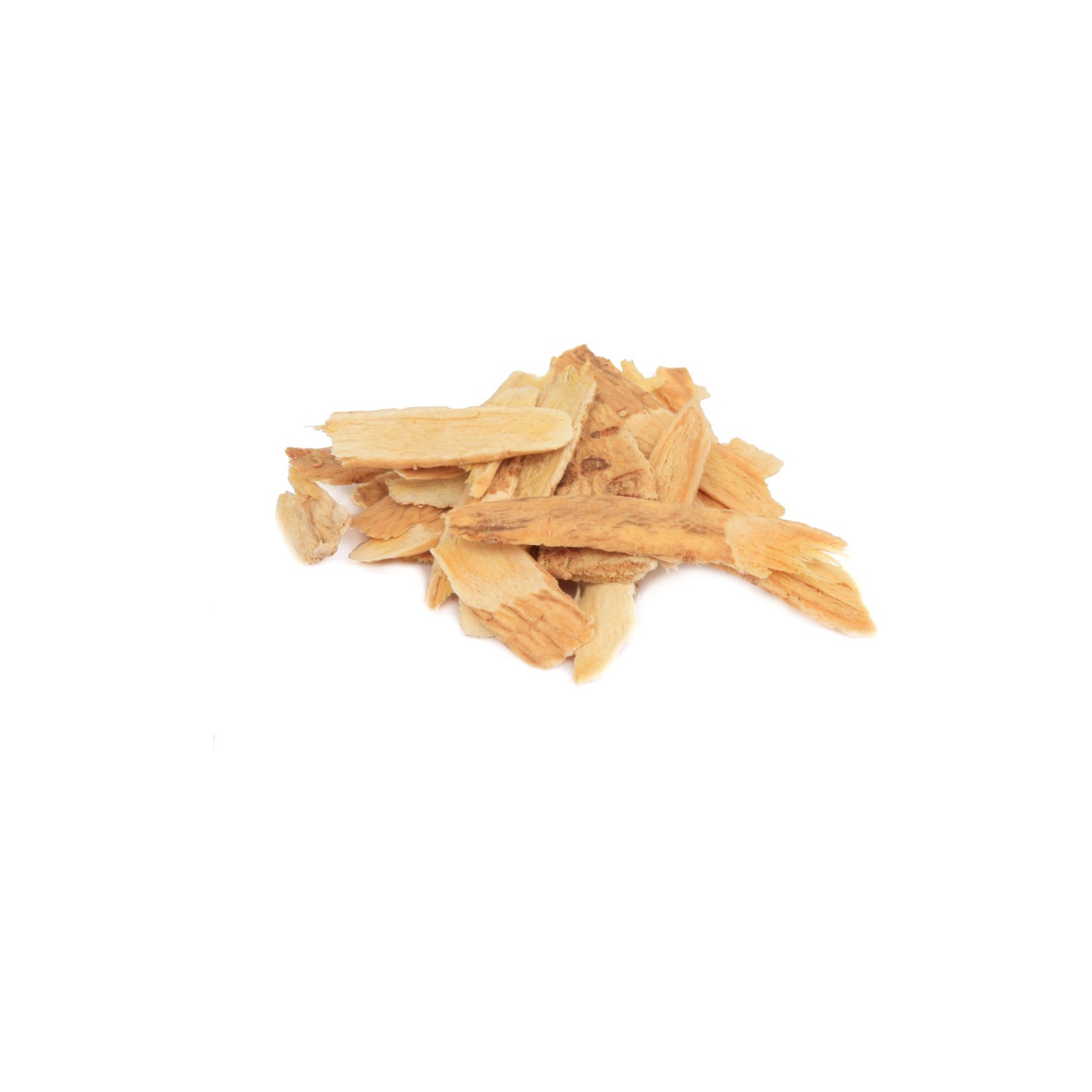
Calycosin is the signature isoflavone of astragalus (Astragalus membranaceus / huang qi) — structurally 3'-hydroxyformononetin, and together with its glycoside calycosin-7-O-glucoside a Chinese Pharmacopoeia quality marker for the root. It is a selective estrogen-receptor-β phytoestrogen with a large preclinical footprint (anti-breast-cancer, pro-angiogenic, neuroprotective), but almost all of it is isolated-compound cell and rodent work; the aglycone is heavily glucuronidated, so systemic exposure is low and no isolated-compound human trial exists.

Sources · 3
Where Does It Come From?
Calycosin is a naturally occurring flavonoid (isoflavone), found in Astragalus and 2 other sources. It is well tolerated orally (low toxicity).
Concentration
Content by Source
Reported concentrations across the plants that contain calycosin — the bar marks the typical level, the line shows the reported range.
Literature figures for varying plant parts and preparations. Read them as a comparative guide, not exact assays.
Calycosin at a Glance
Calycosin is the best-known isoflavone of astragalus (Astragalus membranaceus, huang qi). Structurally it is 3’-hydroxyformononetin — the hydroxylated sibling of formononetin — and, together with its sugar-bound form calycosin-7-O-glucoside, it is one of the marker compounds the Chinese Pharmacopoeia uses to certify astragalus root 1,
Like other isoflavones it is a phytoestrogen, but a selective one: its distinctive pharmacology runs through estrogen receptor β (ERβ) rather than ERα, and this ERβ route is the mechanism behind its most-studied effect — an anti-proliferative action on breast-cancer cells 2,
The honest frame for the whole page: this is a large but almost entirely preclinical literature on the isolated molecule in cells and rodents. Calycosin is extensively glucuronidated, so systemic levels of the free aglycone are low, and no isolated-compound human trial exists — human evidence for astragalus is whole-extract and does not transfer to calycosin specifically 1,
Calycosin & Estrogen Receptor β
The feature that sets calycosin apart from a generic antioxidant flavonoid is that it behaves as a selective estrogen-receptor-β agonist. Estrogen has two main receptors — ERα, which tends to drive proliferation in breast tissue, and ERβ, which tends to oppose it — and calycosin’s activity is consistently reported to depend on the β receptor.
The clearest evidence is in breast-cancer cells. In ER-positive lines (MCF-7, T-47D), the isolated molecule inhibited proliferation and triggered apoptosis in a dose-dependent way, and the effect was ERβ-dependent: it worked through ERβ-mediated regulation of IGF-1R signalling, p38 MAPK and the PI3K/Akt pathway (with miR-375 involvement), and was lost when ERβ was blocked 2Reference 2In vitroCalycosin suppresses breast cancer cell growth via ERβ-dependent regulation of IGF-1R, p38 MAPK and PI3K/Akt pathways — in vitroView study →. A companion study found both calycosin and its sibling formononetin drove ERβ-mediated growth inhibition and apoptosis, with calycosin the more potent of the two 3Reference 3In vitroEstrogen receptor beta-mediated proliferative inhibition and apoptosis in human breast cancer by calycosin and formononetin — in vitroView study →. Later work extended the anti-cancer signal beyond the classical receptors — to membrane GPR30 (GPER) via WDR7-7 4Reference 4In vitroCalycosin inhibits the in vitro and in vivo growth of breast cancer cells through WDR7-7-GPR30 signaling — in vitro / xenograftView study → and, in triple-negative disease, to down-regulation of the ER-α30 splice variant–driven PI3K/AKT axis 5Reference 5In vitroCalycosin inhibits triple-negative breast cancer progression through down-regulation of the novel estrogen receptor-α splice variant ER-α30-mediated PI3K/AKT signaling pathway — in vitro / in vivoView study →.
This is also where the phytoestrogen double nature matters. Isoflavones are classic biphasic agents — at low, physiologic concentrations they can act as weak estrogens (potentially proliferative), while at the higher concentrations used in these experiments they are anti-proliferative. In the published breast-cancer work the net isolate effect was inhibitory via ERβ 2,
The Astragalus Isoflavone Marker
Calycosin is inseparable from the identity of astragalus as a herb. Astragalus root is standardised on two chemotypes of marker compound: the cycloartane saponin astragaloside IV, and the isoflavone calycosin — specifically its glycoside calycosin-7-O-glucoside (calycosin-7-O-β-D-glucoside). Both the glucoside and astragaloside IV are the compounds the Chinese Pharmacopoeia names to quality-control the root and its products 1,
There is a practical wrinkle in using the glucoside as the marker: calycosin-7-O-glucoside is chemically unstable during processing and storage — malic-acid esters of it decompose to the glucoside, and the glucoside can itself lose its sugar — which is why analysts have argued the free aglycone calycosin, which stays stable through manufacture, is the more reliable quality marker 11Reference 11Quality markers for Astragali Radix and its products based on process analysis — analytical / QCView study →.
Its relationship to formononetin is structural and biosynthetic. Calycosin is 3’-hydroxyformononetin: formononetin bears a single 4’-methoxy group on the B-ring, and adding a hydroxyl at the 3’ position — the reaction of an isoflavone 3’-hydroxylase — converts formononetin into calycosin. The two co-occur in astragalus and share a weak-phytoestrogen profile, but the extra 3’-OH gives calycosin its own hydrogen-bonding, antioxidant and ERβ-binding character. Both are secondary to astragaloside IV and the astragalus polysaccharides by study volume 1Reference 1ReviewPharmaceutical Values of Calycosin: One Type of Flavonoid Isolated from Astragalus — reviewView study →.
What It's Used For
The evidence is broad in topic but narrow in tier: isolated-molecule experiments, overwhelmingly in cells and rodents, aggregated in a dedicated review 1Reference 1ReviewPharmaceutical Values of Calycosin: One Type of Flavonoid Isolated from Astragalus — reviewView study →. Read each row for what it actually rests on — and remember the pharmacokinetic ceiling (low circulating aglycone) that sits under all of it.
Support is an experimental score — weighted by study type (human > animal > in vitro) and volume, tempered for isolate-vs-plant match and bioavailability. A beta, not a validated metric. Every score here is capped by the same ceiling: no isolated-compound human trial, and low systemic exposure of the free aglycone. Each application links to its write-up.
The marquee application, and the one with the most internally-consistent mechanism. The isolated molecule inhibited proliferation and induced apoptosis in ER-positive breast-cancer cells (MCF-7, T-47D) dose-dependently, through an ERβ-dependent cascade — IGF-1R, p38 MAPK and PI3K/Akt, with miR-375 involvement — abolished when ERβ was antagonised 2Reference 2In vitroCalycosin suppresses breast cancer cell growth via ERβ-dependent regulation of IGF-1R, p38 MAPK and PI3K/Akt pathways — in vitroView study →.
Calycosin and formononetin together showed the same ERβ-mediated inhibition/apoptosis, calycosin more potently 3Reference 3In vitroEstrogen receptor beta-mediated proliferative inhibition and apoptosis in human breast cancer by calycosin and formononetin — in vitroView study →.
Further studies implicated membrane GPR30/WDR7-7 signalling 4Reference 4In vitroCalycosin inhibits the in vitro and in vivo growth of breast cancer cells through WDR7-7-GPR30 signaling — in vitro / xenograftView study → and, in triple-negative cells, down-regulation of the ER-α30 splice variant driving PI3K/AKT — with in-vivo xenograft support 5Reference 5In vitroCalycosin inhibits triple-negative breast cancer progression through down-regulation of the novel estrogen receptor-α splice variant ER-α30-mediated PI3K/AKT signaling pathway — in vitro / in vivoView study →.
Some inhibition of ER-negative cells also occurred, implying non-ER routes contribute 2Reference 2In vitroCalycosin suppresses breast cancer cell growth via ERβ-dependent regulation of IGF-1R, p38 MAPK and PI3K/Akt pathways — in vitroView study →.
Gap: all data are cell lines plus a xenograft — no human trial; and because calycosin is a biphasic phytoestrogen, low-exposure behaviour in hormone-sensitive tissue cannot be assumed from these higher-concentration inhibitory results 2,
The distinctive — and double-edged — action. The isolated molecule induced angiogenesis in human umbilical-vein endothelial cells (HUVEC) in vitro and in zebrafish embryos in vivo, up-regulating VEGF, VEGFR1 and VEGFR2 and acting through estrogen-receptor and MAPK signalling (with FGF/ErbB contributions) 6Reference 6In vitroCalycosin promotes angiogenesis involving estrogen receptor and mitogen-activated protein kinase (MAPK) signaling pathway in zebrafish and HUVEC — in vitro / zebrafishView study →.
Promoting new blood-vessel growth is attractive for wound healing and ischaemic tissue — but the same pro-angiogenic push is a theoretical liability in cancer, an internal tension with calycosin’s ERβ anti-tumour signal that the literature has not resolved.
Gap: endothelial-culture and zebrafish models only; no mammalian in-vivo wound/ischaemia efficacy for the isolate, and the pro-angiogenic/anti-tumour paradox is unreconciled 6Reference 6In vitroCalycosin promotes angiogenesis involving estrogen receptor and mitogen-activated protein kinase (MAPK) signaling pathway in zebrafish and HUVEC — in vitro / zebrafishView study →.
A rodent-level signal in stroke models. In rat middle-cerebral-artery-occlusion (cerebral ischaemia–reperfusion), the isolated molecule reduced infarct size and neurological deficit, with mechanisms described as anti-apoptotic, anti-autophagic and anti-inflammatory 7Reference 7AnimalNeuroprotective mechanisms of calycosin against focal cerebral ischemia and reperfusion injury in rats — rat in vivoView study →; a later study attributed part of the benefit to TLR4-mediated suppression of neuroinflammation in vivo and in vitro 8Reference 8In vitroCalycosin ameliorates neuroinflammation via TLR4-mediated signal following cerebral ischemia/reperfusion injury in vivo and in vitro — rat in vivo / in vitroView study →.
Gap: small rat studies, varied models and routes (including intraperitoneal/intracerebroventricular dosing that sidesteps oral absorption); no human stroke data for isolated calycosin 7,
Two related cardiovascular actions of the isolated molecule. In rat aorta, calycosin was a vasorelaxant acting as a non-competitive Ca²⁺-channel blocker, with a mechanism distinct from dihydropyridine blockers 9Reference 9AnimalCalcium channel blocking activity of calycosin, a major active component of Astragali Radix, on rat aorta — ex vivoView study →.
Separately, calycosin inhibited platelet activation and thrombus formation in vivo and in vitro, partly by targeting glycoprotein VI (GPVI)–mediated signalling, and did so without impairing normal haemostasis in the models tested 12Reference 12In vitroCalycosin extracted from Astragalus membranaceus root inhibits platelet activation and thrombus formation: insights from in vivo and in vitro experiments — animal / in vitroView study →.
Gap: isolated rat-tissue and animal-thrombosis models; no human cardiovascular outcome data for the isolate, and the antiplatelet finding is a preclinical signal, not an established interaction 9,
Mechanisms
| Target / pathway | Effect | Relevant to |
|---|---|---|
| Estrogen receptor β (ERβ) | selective agonism → anti-proliferative / pro-apoptotic signalling in breast-cancer cells | anti-breast-cancer (the load-bearing mechanism) |
| IGF-1R / p38 MAPK / PI3K-Akt (+ miR-375) | ERβ-dependent down-regulation of proliferative signalling | anti-breast-cancer |
| GPR30 (GPER) / WDR7-7; ER-α30 splice variant | membrane-ER and splice-variant routes to growth inhibition | anti-breast-cancer (incl. triple-negative) |
| VEGF / VEGFR1 / VEGFR2 (via ER + MAPK, FGF/ErbB) | up-regulation → pro-angiogenic (endothelial, zebrafish) | angiogenesis / wound & ischaemia (double-edge) |
| TLR4 / neuroinflammatory signalling; apoptosis & autophagy regulators | suppressed neuroinflammation and neuronal death (rat) | neuroprotection |
| Voltage-gated Ca²⁺ channels (non-competitive) | vasorelaxation of rat aorta | cardiovascular |
| Glycoprotein VI (GPVI) platelet signalling | inhibited platelet activation / thrombus formation | cardiovascular / antithrombotic |
The through-line is estrogen-receptor signalling: ERβ carries the anti-cancer effect and ER + MAPK helps carry the pro-angiogenic one — the same receptor family pulling in two directions, which is why calycosin reads as both anti-tumour and pro-angiogenic.
Pharmacokinetics
This is the section that caps the whole page. Calycosin’s problem is not getting into cells — it is staying intact in the circulation. The free aglycone permeates reasonably well, but it is a prime substrate for glucuronidation: human liver microsomes and recombinant enzymes conjugate it regioselectively, and UGT1A9 drives formation of calycosin-3’-glucuronide as the dominant metabolite 10Reference 10In vitroRegioselective glucuronidation of the isoflavone calycosin by human liver microsomes and recombinant human UDP-glucuronosyltransferases — in vitro metabolismView study →. Intestinal glucuronidation acts before the liver even sees it, so first-pass conjugation is extensive and circulating free-aglycone levels are low 1,
Clinical Trials
There are no registered trials of isolated calycosin. All therapeutic evidence for the molecule is preclinical; human data for astragalus are whole-extract and do not establish anything about the isolated isoflavone 1Reference 1ReviewPharmaceutical Values of Calycosin: One Type of Flavonoid Isolated from Astragalus — reviewView study →.
| Completed | Planned | Terminated | Preclinical |
|---|---|---|---|
| None(isolated compound) | — | — | Extensive(cell + rodent) |
Last checked: July 2026.
Isolate vs. Plant Studies
Calycosin sits firmly on the isolate side — and that is both its strength and its limit. Nearly every mechanistic claim above used purified calycosin in cell or rodent systems 2,
Prevalence in Nature
Calycosin is characteristically an astragalus isoflavone. It occurs in the root of Astragalus membranaceus (huang qi) — chiefly as the glycoside calycosin-7-O-glucoside, with the free aglycone a minor fraction: measured free-calycosin content across processed root batches ran roughly 0–0.035% of dry weight 11Reference 11Quality markers for Astragali Radix and its products based on process analysis — analytical / QCView study →. It is also reported in other Astragalus species and, as an isoflavone, is biosynthesised in various legumes (Fabaceae) that carry the isoflavonoid pathway. Within astragalus it is quantitatively secondary to the cycloartane saponins (astragaloside IV) and the polysaccharide fraction, but as a marker for identity and quality it is central 1,
Its place in the plant’s chemistry is defined by one biosynthetic step: the isoflavonoid pathway builds formononetin first, and an isoflavone 3’-hydroxylase adds the 3’-hydroxyl that turns formononetin into calycosin — so the two always travel together, with calycosin downstream.
Discovery & Synthesis
Calycosin (CAS 20575-57-9) is 7,3’-dihydroxy-4’-methoxyisoflavone, long characterised as one of the isoflavones of astragalus and structurally the 3’-hydroxy analogue of formononetin. Its early history is bound up with the phytochemical work-up of Astragalus membranaceus, where it and its glucoside were identified as the isoflavone markers of the root 1,
Patents: not yet researched.
Toxicity & Safety
Calycosin carries a low flag: it is a dietary-type isoflavone consumed for centuries as part of whole astragalus, its free-aglycone systemic exposure is intrinsically low because of extensive glucuronidation 10Reference 10In vitroRegioselective glucuronidation of the isoflavone calycosin by human liver microsomes and recombinant human UDP-glucuronosyltransferases — in vitro metabolismView study →, and reviews of the isolated compound describe a broadly favourable preclinical safety profile 1Reference 1ReviewPharmaceutical Values of Calycosin: One Type of Flavonoid Isolated from Astragalus — reviewView study →. The meaningful cautions are not general toxicity but two mechanism-specific double-edges.
The first is phytoestrogenic. Calycosin is a selective ERβ phytoestrogen with biphasic, dose-dependent behaviour: anti-proliferative in the higher-concentration cancer studies 2,
- Low intrinsic toxicity. A dietary-type isoflavone from whole astragalus, with low free-aglycone systemic exposure due to extensive glucuronidation.
- Selective phytoestrogen. ERβ-selective and biphasic — concentrated isoflavone intake warrants individual caution in hormone-sensitive conditions; reproductive decisions belong to the herb/product page.
- Pro-angiogenic double-edge. Up-regulates VEGF/new-vessel growth — useful for wounds/ischaemia but a theoretical concern in angiogenesis-dependent cancer.
- Preclinical antiplatelet signal. A GPVI-mediated antiplatelet/antithrombotic effect (rodent) is the most likely site of a future interaction with blood-thinning drugs; not established in people.
Dosage
There is no established human dose for isolated calycosin, and its poor systemic exposure means research doses do not translate into an oral human regimen. Human exposure occurs as one minor isoflavone within whole astragalus preparations, standardised (where standardised at all) to calycosin-7-O-glucoside and astragaloside IV rather than to free calycosin 1,
References
- Gong G, Zheng Y, Yang Y, Sui Y, Wen Z (2021). Pharmaceutical Values of Calycosin: One Type of Flavonoid Isolated from Astragalus — review. Evidence-Based Complementary and Alternative Medicine. https://pubmed.ncbi.nlm.nih.gov/34035829/
- Chen J, Hou R, Zhang X, Ye Y, Wang Y, Tian J (2014). Calycosin suppresses breast cancer cell growth via ERβ-dependent regulation of IGF-1R, p38 MAPK and PI3K/Akt pathways — in vitro. PLoS One. https://pubmed.ncbi.nlm.nih.gov/24618835/
- Chen J, Zhao X, Ye Y, Wang Y, Tian J (2013). Estrogen receptor beta-mediated proliferative inhibition and apoptosis in human breast cancer by calycosin and formononetin — in vitro. Cellular Physiology and Biochemistry. https://pubmed.ncbi.nlm.nih.gov/24355881/
- Tian J, Wang Y, Zhang X, Ren Q, Li R, Huang Y, Lu H, Chen J (2017). Calycosin inhibits the in vitro and in vivo growth of breast cancer cells through WDR7-7-GPR30 signaling — in vitro / xenograft. Journal of Experimental & Clinical Cancer Research. https://pubmed.ncbi.nlm.nih.gov/29096683/
- Li Y, Hu S, Chen Y, Zhang X, Gao H, Tian J, Chen J (2023). Calycosin inhibits triple-negative breast cancer progression through down-regulation of the novel estrogen receptor-α splice variant ER-α30-mediated PI3K/AKT signaling pathway — in vitro / in vivo. Phytomedicine. https://pubmed.ncbi.nlm.nih.gov/37393829/
- Tang JY, Li S, Li ZH, Zhang ZJ, Hu G, Cheang LCV, Alex D, Hoi MPM, Kwan YW, Chan SW, Leung GPH, Lee SMY (2010). Calycosin promotes angiogenesis involving estrogen receptor and mitogen-activated protein kinase (MAPK) signaling pathway in zebrafish and HUVEC — in vitro / zebrafish. PLoS One. https://pubmed.ncbi.nlm.nih.gov/20686605/
- Wang Y, Ren Q, Zhang X, Lu H, Chen J (2018). Neuroprotective mechanisms of calycosin against focal cerebral ischemia and reperfusion injury in rats — rat in vivo. Cellular Physiology and Biochemistry. https://pubmed.ncbi.nlm.nih.gov/29402799/
- Yang X, Pan Y, Cai L, Wang W, Zhai X, Zhang Y, Wu Q, Chen J, Zhang C, Wang Y (2024). Calycosin ameliorates neuroinflammation via TLR4-mediated signal following cerebral ischemia/reperfusion injury in vivo and in vitro — rat in vivo / in vitro. Journal of Inflammation Research. https://pubmed.ncbi.nlm.nih.gov/39677283/
- Wu XL, Wang YY, Cheng J, Zhao YY (2006). Calcium channel blocking activity of calycosin, a major active component of Astragali Radix, on rat aorta — ex vivo. Acta Pharmacologica Sinica. https://pubmed.ncbi.nlm.nih.gov/16867251/
- Ruan JQ, Yan R (2014). Regioselective glucuronidation of the isoflavone calycosin by human liver microsomes and recombinant human UDP-glucuronosyltransferases — in vitro metabolism. Chemico-Biological Interactions. https://pubmed.ncbi.nlm.nih.gov/25044472/
- Dai Y, Wang D, Zhao M, Yan L, Zhu C, Li P, Qin X, Verpoorte R, Chen S (2020). Quality markers for Astragali Radix and its products based on process analysis — analytical / QC. Frontiers in Pharmacology. https://pubmed.ncbi.nlm.nih.gov/33390938/
- Li JY, Lin KH, Chen TY, Chen RJ, Wang HH, Peng HY, Lu WJ (2026). Calycosin extracted from Astragalus membranaceus root inhibits platelet activation and thrombus formation: insights from in vivo and in vitro experiments — animal / in vitro. Biomedicine & Pharmacotherapy. https://pubmed.ncbi.nlm.nih.gov/41633254/



