
Compound Monograph
Cascaroside D
Cascaroside D is one of the four principal cascarosides (A–D) of cascara sagrada bark — the C-10 diastereomer of cascaroside C and, like it, a chrysophanol-derived anthrone glycoside. It is a stimulant-laxative prodrug: colonic bacteria strip its sugars to release an active anthrone. As an isolated molecule it has essentially no pharmacology of its own; everything known about it is collective, shared with the other cascarosides and inseparable from cascara's genotoxicity and regulatory restriction.

Sources · 2
Where Does It Come From?
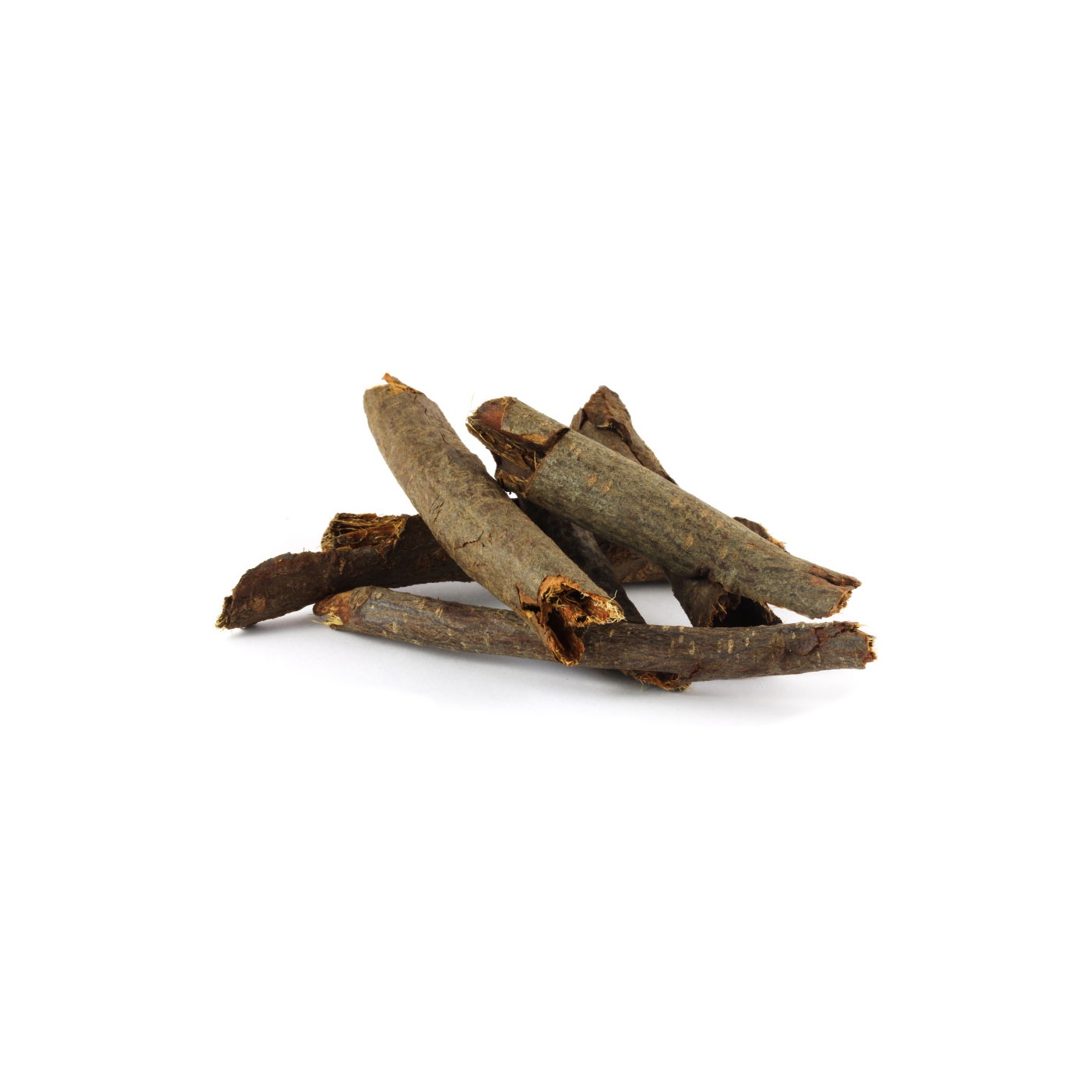
Cascaroside D is a naturally occurring anthrone diglucoside (chrysophanol-derived c,o-diglucosyl anthrone; hydroxyanthracene derivative), found in Cascara sagrada and 1 other source. It is flagged as moderately toxic.
Concentration
Content by Source
Concentrations not reported. No percent-dry-weight or mg/g figures have been published for this compound in its source plants.
Cascaroside D at a Glance
Cascaroside D is one of the four principal cascarosides (A, B, C and D) — the characteristic anthrone glycosides of aged cascara sagrada (Rhamnus purshiana) bark. Structurally it is the C-10 diastereomer of cascaroside C, and both are derived from chrysophanol rather than from aloe-emodin (the parent of cascarosides A and B) 1,
Like the whole cascaroside group it is a stimulant-laxative prodrug. It is not itself active: taken in cascara, it survives the upper gut and is only broken down in the colon, where resident bacteria strip its sugars to release an active anthrone that stimulates the bowel — the same mechanism established for the closely related anthrone C-glycoside barbaloin 3Reference 3A purgative action of barbaloin is induced by Eubacterium sp. strain BAR, a human intestinal anaerobe, capable of transforming barbaloin to aloe-emodin anthroneView study →.
As an isolated molecule cascaroside D has essentially no pharmacology of its own. There are no isolate studies of its potency, kinetics or safety. Everything that can honestly be said about it is collective — a property of the cascarosides as a set, of the cascara extract they come in, and of the hydroxyanthracene-derivative class to which they belong, a class flagged for genotoxicity and now restricted by regulators 4Reference 4Safety of hydroxyanthracene derivatives for use in foodView study →. That honesty is the spine of the whole account.
Cascaroside D vs. Cascaroside C
Cascaroside D and cascaroside C are diastereomers — the same molecule differing only in configuration at the C-10 anthrone carbon, exactly the relationship that cascaroside A has to cascaroside B 1,
The plain fact to state is that the evidence for cascaroside D is collective, not individual. The two diastereomers co-occur, co-elute and are reported together; analytical work isolates the cascaroside set (A–F) as a group rather than characterising C versus D pharmacologically 2Reference 2Isolation of six anthraquinone diglucosides (cascarosides A–F) from cascara sagrada (Rhamnus purshiana) bark by high-performance countercurrent chromatographyView study →. The C-10 stereochemistry that separates them has no documented functional consequence — no differential potency, metabolism or toxicity has been shown between cascaroside C and cascaroside D. Where the text describes a laxative action or a safety concern, it is describing a property the two share with each other, and largely with cascarosides A and B, not a cascaroside-D-specific finding. There is no basis for attributing any distinct effect to cascaroside D alone.
What It's Used For
Cascaroside D has no isolate pharmacology on record. Its only meaningful activity is the collective stimulant-laxative action of the cascarosides, and even that is indirect — the work of a bacterial anthrone metabolite, not of the intact glycoside.
Support is an experimental score — weighted by study type (human > animal > in vitro) and volume. A beta, not a validated metric. Cascaroside D has no isolate evidence, so the single row scores its collective laxative standing, not an individual result.
The cascarosides are the characteristic laxative glycosides of cascara, and cascaroside D is one of them — but the action is collective and indirect, and no part of it is demonstrated for cascaroside D as an isolate. The intact cascaroside reaches the colon largely undigested; there, anaerobic bacteria remove its sugars to liberate a free anthrone, which stimulates propulsive motility and shifts the colonic mucosa toward net water and electrolyte secretion. This prodrug-to-anthrone mechanism is established in detail for the related anthrone C-glycoside barbaloin (activated to aloe-emodin anthrone by Eubacterium sp. strain BAR in gnotobiotic rats) and is read across to the chrysophanol-derived cascarosides C/D by structural analogy 3Reference 3A purgative action of barbaloin is induced by Eubacterium sp. strain BAR, a human intestinal anaerobe, capable of transforming barbaloin to aloe-emodin anthroneView study →.
The aglycone that cascaroside D ultimately traces to, chrysophanol, is itself a comparatively weak anthranoid — less cytotoxic and a milder laxative contributor than aloe-emodin or emodin 1Reference 1In vitroCytotoxicity of Structurally Diverse Anthranoids and Correlation with Mechanism of Action and Side Effects — in vitro structure–activity studyView study → — so on the family gradient the chrysophanol-based cascarosides C/D are the gentler pair.
Gap: every step of this is a class/analogy argument. There is no cascaroside-D isolate laxative study, no measured conversion yield to its anthrone, and the effect is flora-dependent; the use is also regulatorily withdrawn/restricted (see Toxicity & Safety), not a recommendable application 4,
Mechanisms
| Target / pathway | Effect | Relevant to |
|---|---|---|
| Colonic bacterial glycosidases | strip the cascaroside sugars → free chrysophanol-type anthrone (the active species) | laxative activation (prodrug step) |
| Colonic enterocytes & myenteric neurons (via the anthrone) | stimulate propulsive motility; net water/electrolyte secretion | stimulant-laxative effect |
| Hydroxyanthracene / anthrone chemistry (class, via metabolites) | the genotoxicity signal that anchors the cascara regulatory restrictions | toxicity / regulatory |
The load-bearing point mirrors barbaloin’s: cascaroside D does nothing until gut bacteria convert it to an anthrone, and the same colon-delivered anthrone chemistry that produces the effect underlies the class safety concern. No mechanism here is cascaroside-D-specific.
Pharmacokinetics
There are no isolate pharmacokinetic data for cascaroside D — no absorption, half-life or bioavailability figures for the pure molecule. By class behaviour, the cascarosides are poorly absorbed from the upper gastrointestinal tract and reach the colon largely intact, where bacterial glycosidases release the active anthrone; little intact parent glycoside is thought to circulate, so the pharmacology is local to the large bowel and flora-dependent 3Reference 3A purgative action of barbaloin is induced by Eubacterium sp. strain BAR, a human intestinal anaerobe, capable of transforming barbaloin to aloe-emodin anthroneView study →. This is the same colon-targeted prodrug behaviour documented for barbaloin, read across by structural similarity rather than measured for cascaroside D. Whether cascaroside C and cascaroside D differ kinetically is unknown.
Clinical Trials
There are no clinical trials of isolated cascaroside D, and none are planned or known. Human exposure occurs only through cascara bark preparations, a multi-constituent, glycoside-driven laxative whose (now restricted) use cannot be attributed to this single diastereomer. Everything here is class-level or analogical.
| Completed | Planned | Terminated | Preclinical |
|---|---|---|---|
| —(no isolate trials; historical cascara laxative use only) | — | — | Class/analogy only (no cascaroside-D isolate studies) |
Last checked: July 2026.
Isolate vs. Plant Studies
This is the clearest case on the page: there is no isolate evidence at all. Cascaroside D has never been studied as a purified molecule for efficacy, kinetics or safety — the analytical literature isolates it (with cascarosides A–F) chiefly to characterise cascara chemically, not to test the compound pharmacologically 2Reference 2Isolation of six anthraquinone diglucosides (cascarosides A–F) from cascara sagrada (Rhamnus purshiana) bark by high-performance countercurrent chromatographyView study →. Its entire evidentiary footprint is whole-plant / whole-fraction: the laxative action belongs to cascara bark and the cascaroside group, the activation mechanism is read across from the isolate work on barbaloin 3Reference 3A purgative action of barbaloin is induced by Eubacterium sp. strain BAR, a human intestinal anaerobe, capable of transforming barbaloin to aloe-emodin anthroneView study →, and the safety signal belongs to the cascara extract and the hydroxyanthracene class 4,
Prevalence in Nature
Cascaroside D occurs essentially only as a minor member of the cascaroside fraction of aged cascara sagrada (Rhamnus purshiana) bark. The bark’s laxative activity is standardised to its total hydroxyanthracene content (pharmacopoeially not less than ~8% of the dried bark), of which the cascarosides make up roughly 60–70% of the anthracene glycosides, quantified and standardised as cascaroside A 4Reference 4Safety of hydroxyanthracene derivatives for use in foodView study →. Within that pool the chrysophanol-derived pair (cascarosides C and D) is a smaller share than the aloe-emodin-derived A/B pair, and cascaroside D is only one diastereomer of that smaller share — so on any reckoning it is a minor constituent. The six cascarosides A–F were resolved from R. purshiana bark by high-performance countercurrent chromatography, confirming the set present in the bark 2Reference 2Isolation of six anthraquinone diglucosides (cascarosides A–F) from cascara sagrada (Rhamnus purshiana) bark by high-performance countercurrent chromatographyView study →. Cascaroside content depends strongly on bark age: fresh bark is rich in harsh free anthrones, and cascara is deliberately aged (commonly a year or more) so those oxidise to the gentler cascaroside glycosides before use 4Reference 4Safety of hydroxyanthracene derivatives for use in foodView study →.
No cascaroside-D-specific concentration figure on a comparable dry-weight basis is available (see the compound’s gaps tracker); the honest statement is that it is a small, un-individually-quantified fraction of the cascaroside pool.
Major Natural Sources
| Source (Botanical) | Part | Notes on cascaroside D |
|---|---|---|
| Cascara sagrada (Rhamnus purshiana) | Aged bark | The only established source. A minor member of the cascaroside A–F set; cascarosides = ~60–70% of the bark’s anthracene glycosides, standardised as cascaroside A 2, |
| Other Rhamnus / Frangula barks | Bark | Reported for the anthraquinone-laxative barks generally; not individually quantified for cascaroside D and not to be assumed species-identical to R. purshiana |
Discovery & Synthesis
The cascarosides were characterised as the distinctive glycosides of cascara during 20th-century cascara pharmacognosy, with cascaroside D recognised as the C-10 diastereomer of cascaroside C and one of the four principal cascarosides (A–D). Their number was later extended: in 2020, Rho and colleagues isolated six anthraquinone diglucosides — cascarosides A–F — from Rhamnus purshiana bark by high-performance countercurrent chromatography, a modern confirmation of the full cascaroside set rather than a first report of cascaroside D itself 2Reference 2Isolation of six anthraquinone diglucosides (cascarosides A–F) from cascara sagrada (Rhamnus purshiana) bark by high-performance countercurrent chromatographyView study →. There is no total synthesis of cascaroside D on record — it is not manufactured, and it is obtained (when needed as a reference standard) only by extraction from cascara bark. As a molecule it exists in commerce, if at all, as an analytical marker, not as a made or dosed substance.
Patents: not yet researched.
Toxicity & Safety
Cascaroside D carries a moderate flag — heavier than an ordinary plant glycoside — not because of any isolate toxicology (there is none) but because it is a hydroxyanthracene-derivative prodrug in the cascara/anthranoid class that regulators have restricted on genotoxicity grounds. The flag is a class read-across, and the page says so plainly.
The class hazard, and why cascara is restricted. EFSA’s 2018 opinion concluded that hydroxyanthracene derivatives should be regarded as genotoxic and carcinogenic unless specific data show otherwise, that aloe-emodin and emodin are genotoxic, and that no safe daily intake could be established — the efficacy and the hazard share the same anthranoid chemistry 4Reference 4Safety of hydroxyanthracene derivatives for use in foodView study →. In the United States, after the requested genotoxicity/carcinogenicity data were not supplied, the FDA ruled aloe and cascara sagrada stimulant-laxative ingredients “not generally recognized as safe and effective” and removed them from the OTC market, effective November 2002 5Reference 5Status of certain additional over-the-counter drug category II and III active ingredients (aloe & cascara sagrada stimulant laxatives)View study →. The EU restricts hydroxyanthracene derivatives in food to trace levels. Consistent with the class concern, cascara bark extracts themselves are cytogenotoxic: aqueous and lyophilised R. purshiana extracts induced mitodepressive and aneugenic effects (a large rise in mitotic abnormalities) in a plant-cell genotoxicity model, with cascaroside A among the anthranoids present 6Reference 6Phytotoxicity and cytogenotoxic effects of extracts from the medicinal bark of Rhamnus purshiana DC. (Rhamnaceae)View study →.
The honest caveat, both ways. No genotoxicity or carcinogenicity study has been run on pure cascaroside D — the direct data are for the cascara extract, and for the aglycone/anthrone relatives aloe-emodin and emodin 4,
Stimulant-laxative and pregnancy notes (prose only). As a component of a stimulant laxative, cascara/cascaroside exposure carries the class’s functional harms — cramping, fluid and electrolyte (potassium) loss, and dependence/atony with chronic use. Stimulant anthranoid laxatives are conventionally cautioned in pregnancy and lactation, and the class genotoxicity signal is an added reason for avoidance; but pregnancy/lactation decisions belong to the herb or product page where intake is actually decided, not to this molecule page — no isolate-specific verdict is issued here.
- No systemic isolate exposure by design. As a poorly-absorbed prodrug glycoside, little intact cascaroside D is thought to circulate — its chemistry keeps it in the gut lumen 3Reference 3A purgative action of barbaloin is induced by Eubacterium sp. strain BAR, a human intestinal anaerobe, capable of transforming barbaloin to aloe-emodin anthroneView study →.
- Hydroxyanthracene-derivative class concern. The cascarosides sit in the class EFSA treats as genotoxic/carcinogenic-until-proven-otherwise; cascara bark extract is cytogenotoxic in a plant-cell assay 4,
6Reference 4Safety of hydroxyanthracene derivatives for use in foodView study →Reference 6Phytotoxicity and cytogenotoxic effects of extracts from the medicinal bark of Rhamnus purshiana DC. (Rhamnaceae)View study → . - Removed / restricted by regulators. The FDA took cascara stimulant laxatives off the US OTC market (2002); the EU restricts hydroxyanthracene derivatives in food to trace levels 5Reference 5Status of certain additional over-the-counter drug category II and III active ingredients (aloe & cascara sagrada stimulant laxatives)View study →.
- Stimulant-laxative harms (class). Cramping, electrolyte (potassium) loss, and dependence/atony with chronic use of cascara preparations.
- No isolate data. No cascaroside-D-specific potency, kinetics or toxicology exists — everything here is class/analogy, so absence of a finding is not evidence of safety.
Dosage
There is no recommended dose for cascaroside D, and it is never taken as an isolate — it occurs only as one of the cascarosides in cascara bark. Historically, cascara was dosed as a stimulant (purgative) laxative standardised to its hydroxyanthracene/cascaroside-A content, but that use has been withdrawn or restricted: the FDA removed cascara stimulant-laxative ingredients from the US OTC market in 2002 5Reference 5Status of certain additional over-the-counter drug category II and III active ingredients (aloe & cascara sagrada stimulant laxatives)View study →, and the EU limits hydroxyanthracene derivatives in food to trace levels. Any historical or pharmacopoeial figures are context, not a personal recommendation, and given the genotoxicity-class concern there is no basis for dosing isolated cascaroside D.
References
- Demarque DP, et al. (2018). Cytotoxicity of Structurally Diverse Anthranoids and Correlation with Mechanism of Action and Side Effects — in vitro structure–activity study. Journal of Pharmacy & Pharmaceutical Sciences. https://pubmed.ncbi.nlm.nih.gov/30321134/
- Rho T, Kil HW, Seo YJ, Shin KJ, Wang D, Yoon KD (2020). Isolation of six anthraquinone diglucosides (cascarosides A–F) from cascara sagrada (Rhamnus purshiana) bark by high-performance countercurrent chromatography. Journal of Separation Science. https://pubmed.ncbi.nlm.nih.gov/32876395/
- Akao T, Che QM, Kobashi K, Hattori M, Namba T (1996). A purgative action of barbaloin is induced by Eubacterium sp. strain BAR, a human intestinal anaerobe, capable of transforming barbaloin to aloe-emodin anthrone. Biological & Pharmaceutical Bulletin. https://pubmed.ncbi.nlm.nih.gov/8820926/
- EFSA ANS Panel (2018). Safety of hydroxyanthracene derivatives for use in food. EFSA Journal. https://pubmed.ncbi.nlm.nih.gov/32625659/
- Food and Drug Administration (2002). Status of certain additional over-the-counter drug category II and III active ingredients (aloe & cascara sagrada stimulant laxatives). Final rule. Federal Register 67(90):31125-7. https://pubmed.ncbi.nlm.nih.gov/12001972/
- Souza KS, et al. (2025). Phytotoxicity and cytogenotoxic effects of extracts from the medicinal bark of Rhamnus purshiana DC. (Rhamnaceae). Journal of Toxicology and Environmental Health, Part A. https://pubmed.ncbi.nlm.nih.gov/39964315/



