
Compound Monograph
Cissampareine
Cissampareine is a bisbenzylisoquinoline alkaloid isolated from abuta (Cissampelos pareira) root in 1965 during the mid-century plant tumour-inhibitor screening programme. Sixty years later it still has exactly one dedicated paper, one modern screening data set, no identified target, no pharmacokinetics, no toxicology and no dose — and what follows is mostly a careful account of that emptiness.

Sources · 1
Where Does It Come From?
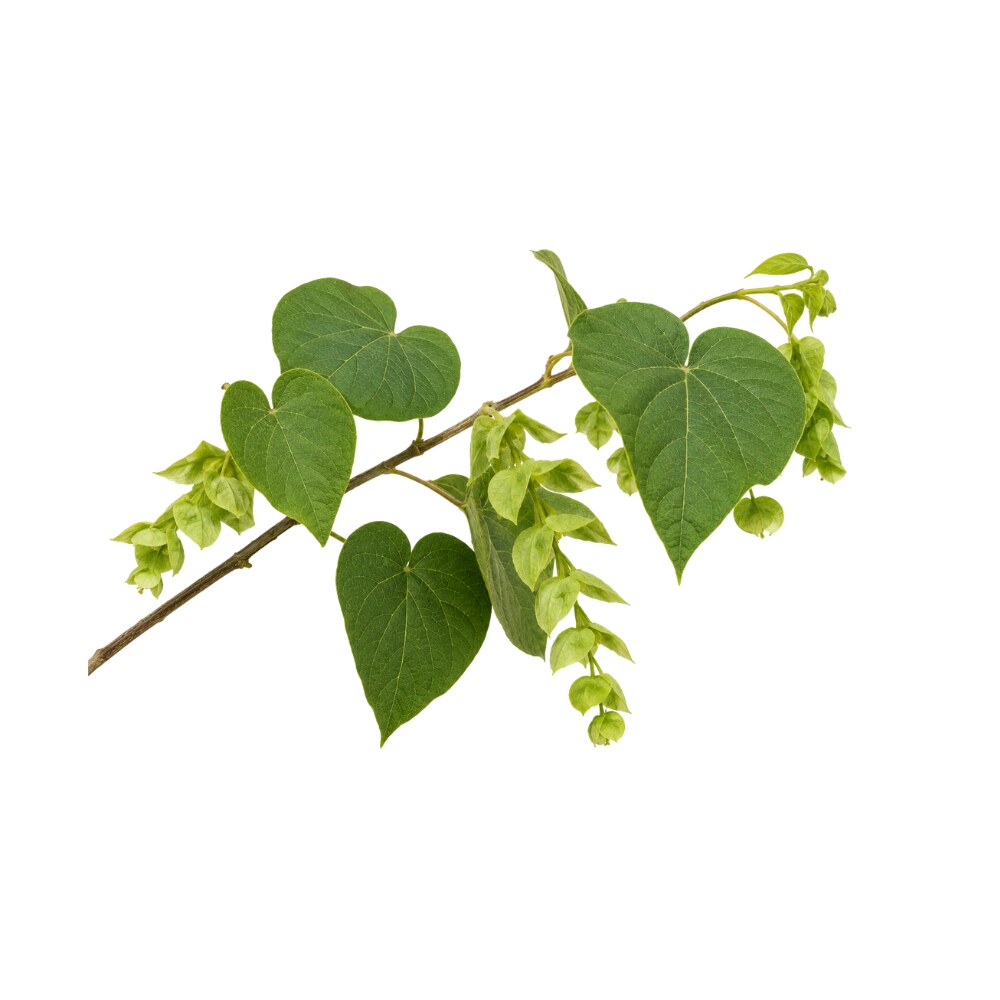
Cissampareine is a naturally occurring bisbenzylisoquinoline alkaloid, found in Abuta. Its toxicity is not yet characterized.
Concentration
Content by Source
Concentrations not reported. No percent-dry-weight or mg/g figures have been published for this compound in its source plants.
Cissampareine at a Glance
Cissampareine is a bisbenzylisoquinoline (bisBIQ) alkaloid of the root of Cissampelos pareira — the Menispermaceae vine this database covers as abuta. It was isolated and named in 1965 by S. Morris Kupchan’s group, as the sixth instalment of their long Tumor Inhibitors series, and reported as cytotoxic to cultured human nasopharyngeal carcinoma (KB) cells alongside four other bisBIQ alkaloids from menispermaceous plants 1Reference 1In vitroTumor inhibitorsView study →.
That is very nearly the whole story. A search of PubMed for the word “cissampareine” returns one record — that 1965 paper — and it has no indexed abstract, so even its own numbers cannot be read from the public record. Since then the molecule has been screened twice as an inventory compound (a 2012 bisBIQ structure–activity series and the NCI yeast anticancer panel) and otherwise ignored: no mechanism, no target, no animal study, no human study, no toxicology, no pharmacokinetics, no dose, no clinical trial.
This page exists to say that plainly, and to keep two much better-evidenced stories from leaking onto it: the curare pharmacology of Cissampelos’ famous relatives, and the modern anticancer literature of bisBIQ cousins like tetrandrine and berbamine. Neither belongs to cissampareine.
Chemical Identity
Unlike some orphan alkaloids, cissampareine is a real, registered, structurally defined compound — its chemistry is the part of the record that is actually settled. The deposited structure gives 4Reference 4National Library of MedicineView study →:
| Property | Value |
|---|---|
| Molecular formula | C₃₇H₃₈N₂O₆ |
| Molecular weight | 606.7 |
| CAS registry number | 32728-54-4 |
| PubChem CID | 254905 |
| InChIKey | CXLYPEWFHWCEFN-GDLZYMKVSA-N |
| NCI repository number | NSC 79640 |
Two features of that structure are worth naming, because they bear on everything below.
Three methoxyls, one free phenol, one N-methyl. The deposited systematic name places three methoxy groups and a single free phenolic hydroxyl on the aromatic rings, with one of the two nitrogens carrying a methyl group 4Reference 4National Library of MedicineView study →. That single free phenol is what makes cissampareine a distinct molecule from the fully-methylated bisBIQs it was screened against rather than a trivial variant of them.
Neither nitrogen is quaternary. One nitrogen is a methylated tertiary amine; the other sits in a carbon–nitrogen double bond — a cyclic imine, meaning one of the two isoquinoline units is not fully reduced 4Reference 4National Library of MedicineView study →. Most bisBIQ alkaloids of this family carry two fully reduced tetrahydroisoquinoline nitrogens, so this is an unusual feature. It also means the molecule carries no permanent positive charge, which is the structural point in the next section.
The 1966 follow-up in which the same group is credited with assigning the full structure and configuration is not indexed in PubMed or Europe PMC and could not be verified against a primary index here 2Reference 2The structure and configuration of cissampareine, a novel bisbenzylisoquinoline alkaloid — so the structural facts above are taken from the deposited chemical record, not from that paper.
Not a Curare Alkaloid
Cissampelos is one of the genera behind South American arrow poisons; a leading review of the genus is literally titled “From arrow poison to herbal medicine” 5Reference 5ReviewFrom arrow poison to herbal medicine — the ethnobotanical, phytochemical and pharmacological significance of Cissampelos (Menispermaceae) — reviewView study →. Its chemistry sits next door to d-tubocurarine, the curare alkaloid that gave anaesthesia its first neuromuscular blocker. The temptation to write “Menispermaceae bisbenzylisoquinoline → curare → muscle relaxant” onto cissampareine is obvious, and it should be resisted.
Nobody has ever measured neuromuscular activity for cissampareine. Not at a nerve–muscle preparation, not at a nicotinic acetylcholine receptor, not in an animal, not in a person. The molecule’s entire PubMed footprint is a single 1965 cytotoxicity paper 1Reference 1In vitroTumor inhibitorsView study →, so no combination search — neuromuscular, curare, nicotinic, paralysis — can return anything, because there is nothing else to return.
There is also a structural reason for caution rather than assumption. Tubocurarine’s block of the nicotinic receptor depends on a quaternary ammonium nitrogen, a permanently cationic head that binds the receptor’s anionic site. Cissampareine has no quaternary nitrogen: a tertiary N-methyl amine and an imine 4Reference 4National Library of MedicineView study →. By comparison, abuta’s actual curare-type chemistry is carried by its quaternary alkaloids — magnocurarine and the aporphinium magnoflorine — which is where the herb page’s neuromuscular caution properly belongs.
None of that is a measurement, and it is not a safety clearance. It is a reason to say unknown instead of guessing.
What It's Used For
Everything below is in vitro, on the isolated molecule, in cancer-cell or yeast screening formats. There is no animal or human pharmacology of any kind.
There is no evidence-by-application table here, and that is deliberate. Scoring a support bar requires an evidence base to weight. Cissampareine has two in-vitro data points, one of which cannot be read and the other of which is a weak result at the top of a screening range. A ranked table would manufacture the appearance of a finding out of an absence of one. The same handling was applied to mitraversine for the same reason.
1. Cytotoxicity Screening (in vitro, Isolate)
The molecule’s founding — and only substantive — claim. Kupchan, Patel and Fujita isolated cissampareine from Cissampelos pareira and reported that it, along with four other bisbenzylisoquinoline alkaloids from menispermaceous plants, showed significant and reproducible inhibitory activity against human carcinoma of the nasopharynx in cell culture (KB) 1Reference 1In vitroTumor inhibitorsView study →.
This was isolate work, not plant or extract work, and it belongs to the mid-century plant tumour-inhibitor screening era — a programme designed to find leads by testing thousands of purified natural products against a small panel of cell lines. A KB cytotoxicity hit was an entry ticket to further screening, not a demonstration that a compound treats a cancer, and cissampareine never advanced past it.
The paper carries no abstract in PubMed or Europe PMC 1Reference 1In vitroTumor inhibitorsView study →, so its ED₅₀/potency values, its isolation yield and the identity of the four comparator alkaloids cannot be stated here. Later screening is not encouraging: the compound entered the NCI repository as NSC 79640 and was recorded inactive across all six deposited strains of the NCI Yeast Anticancer Drug Screen 4,
Gap: the primary paper is unreadable in the public record, no potency figure can be quoted, no cell line beyond KB was ever tested against the isolate, no animal tumour model was ever run, and the finding has never been independently replicated in sixty years.
2. C/EBPα Induction Screen (in vitro, Isolate)
The only time cissampareine appears in the modern literature. Klausmeyer and colleagues at the NCI ran a high-throughput screen for compounds that raise C/EBPα expression — a myeloid differentiation transcription factor — and, having found the bisBIQ alkaloid pheanthine as the active principle of a Gyrocarpus jacquinii extract, tested 28 natural bisBIQ alkaloids to map the structure–activity relationship 3Reference 3In vitroDiscovery and preliminary SAR of bisbenzylisoquinoline alkaloids as inducers of C/EBPα — in vitroView study →.
Cissampareine was one of the 28, drawn from the compound repository.
It was not one of the winners. The deposited assay data give a minimum effective dose of 50 µM for C/EBPα induction in U937 cells and an IC₅₀ of 50 µM for straightforward cytotoxicity in the same cells over the same 24 hours 4Reference 4National Library of MedicineView study → — the two coincide, so what the assay recorded at the top of its range cannot be distinguished from cell death. The paper’s conclusion — that further natural and synthetic analogues are worth pursuing — belongs to the series, not to this member of it 3Reference 3In vitroDiscovery and preliminary SAR of bisbenzylisoquinoline alkaloids as inducers of C/EBPα — in vitroView study →.
Gap: cissampareine was an inventory compound in someone else’s structure–activity study, not the subject of one. No follow-up, no target engagement, no selectivity data, and the effect sits at a concentration no plant preparation could plausibly deliver.
Mechanisms
No molecular target has been identified for cissampareine. There is no reported receptor, enzyme, transporter, ion channel or signalling pathway for this molecule — nothing that would populate a mechanisms table.
What is sometimes asserted at class level should not be silently attached to it. The Menispermaceae bisBIQ alkaloids collectively carry a well-known pharmacology — voltage-gated calcium-channel blockade, NF-κB suppression, cytotoxicity, antiplasmodial target binding — but every one of those findings belongs to a named, separately tested member of the class: tetrandrine, berbamine, curine, hayatinine, cycleanine. Cissampareine has been in none of that work. It is absent from the modern alkaloid isolations from C. pareira 7Reference 7In vitroBioactive isoquinoline alkaloids from Cissampelos pareira — in vitroView study → and from the antimalarial docking study of the species’ bisBIQs, which modelled hayatinine and curine 8Reference 8Bisbenzylisoquinolines from Cissampelos pareira L. as antimalarial agents: molecular docking, pharmacokinetics analysis and molecular dynamic simulation studies — in silicoView study →.
Pharmacokinetics
Nothing. No absorption, distribution, metabolism or excretion data exist for cissampareine in any species — no oral bioavailability figure, no half-life, no plasma concentration, no metabolite identification, no protein binding, not even an in-vitro permeability estimate. It has never been administered to an animal.
The class-level expectation is that large dimeric bisBIQ alkaloids are poorly water-soluble with low and variable oral bioavailability, which is why the anticancer data of better-studied relatives stay preclinical. That expectation is worth holding, but it is an inference from cousins, not a measurement of this molecule.
Clinical Trials
None, at any phase, anywhere. A ClinicalTrials.gov API search for “cissampareine” returns zero registered studies 10Reference 10https://clinicaltrials.gov/View study →.
| Completed | Planned | Terminated | Preclinical |
|---|---|---|---|
| — | — | — | Two in-vitro screens (1965 KB cytotoxicity; 2012 C/EBPα/U937), both on the isolate 1, |
Last checked: July 2026.
The Evidence Base, Counted
Because “there is almost nothing” is a claim like any other, here is what was actually run, and when.
| Source | Query | Result |
|---|---|---|
| PubMed (NCBI E-utilities, all fields) | cissampareine | 1 record — Kupchan 1965 1Reference 1In vitroTumor inhibitorsView study →; no indexed abstract |
| Europe PMC REST (title field) | TITLE:"cissampareine" | 1 record — the same paper |
| Europe PMC REST (all fields, incl. full text) | cissampareine | 12 hits; the other 11 are Cissampelos, bisBIQ or ethnobotany papers that match in reference lists or passing constituent mentions, none reporting data on the molecule |
| ClinicalTrials.gov API v2 | cissampareine | 0 studies 10Reference 10https://clinicaltrials.gov/View study → |
| PubChem PUG-REST (BioAssay summary, CID 254905) | all deposited assays | 10 records from 2 sources — 6 NCI yeast strains (all inactive) and 4 rows from Klausmeyer 2012 4, |
| PubChem PUG-REST (compound) | name → CID | CID 254905; formula, CAS, InChIKey and NSC number all present 4Reference 4National Library of MedicineView study → |
All checks run 31 July 2026.
Two consequences follow. First, no combination query can turn up anything more: with a total PubMed footprint of one paper, adding “neuromuscular”, “antiplasmodial”, “pharmacokinetics” or any other term to the search can only return that same paper or nothing. Second, the absence is not an artefact of an obscure name — the compound has a CAS number, a PubChem CID, an NSC number and a ChEMBL entry, so it is findable. Nobody has looked.
Isolate vs. Plant Studies
Unusually for this database, the isolate/plant split is clean: both published data points are on the isolated molecule 1,
The transferability problem runs in the other direction. Abuta’s own research base — anti-inflammatory, antinociceptive, hepatoprotective, antiviral, cytotoxic — is whole-root and whole-extract work, and where the herb’s cytotoxicity literature has been resolved to molecules, it resolved to other molecules: pareirubrine A, hayatinine, cycleanine, and the C. pareira var. hirsuta pregnane glycosides and oleanane triterpenoids. Modern bioassay-guided isolation from the species has repeatedly gone looking and come back with a different cast — a 2019 study isolating one new and six known alkaloids, with hayatinine the cytotoxic standout, does not include cissampareine 7Reference 7In vitroBioactive isoquinoline alkaloids from Cissampelos pareira — in vitroView study →.
So there is nothing to transfer in either direction. The isolate’s data do not tell you anything about the herb, and the herb’s data do not tell you anything about the isolate.
Prevalence in Nature
Cissampareine is reported from a single species: Cissampelos pareira (Menispermaceae), the source Kupchan’s group isolated it from in 1965 1Reference 1In vitroTumor inhibitorsView study →, where it is described as a constituent of the root. The genus and species reviews list it among the plant’s isoquinoline alkaloids 5,
Its abundance has never been quantified. No percentage dry weight, no mg/g, no share of the total alkaloid fraction, for any plant part, in any collection. The herb monograph’s phytochemistry table records it as “No Data” for the same reason, and that is correct rather than incomplete.
Two cautions about reading its occurrence. First, C. pareira alkaloid content is strongly plant-part- and variety-specific, and much of the recent chemistry has been done on var. hirsuta rather than the species proper — so “found in abuta” is not the same as “found in the material in your cupboard”. Second, the compound is absent from modern isolation surveys of the species 7Reference 7In vitroBioactive isoquinoline alkaloids from Cissampelos pareira — in vitroView study →, which leaves an open question that cannot be settled: whether cissampareine is a genuinely minor constituent that modern methods overlook, a chemotype- or population-specific alkaloid, or a 1965 assignment that has simply never been re-examined.
Discovery & Synthesis
First isolation, 1965. Cissampareine was isolated from Cissampelos pareira and named by S. Morris Kupchan, A. C. Patel and Eiichi Fujita, publishing in the Journal of Pharmaceutical Sciences as part VI of their Tumor Inhibitors series 1Reference 1In vitroTumor inhibitorsView study →. The name is straightforwardly generic — the plant, plus the alkaloid suffix. The context matters: Kupchan’s laboratory was a central engine of the mid-century programme to screen plant extracts for antitumour leads, and cissampareine was one of hundreds of purified natural products that passed through it. Its assignment as NSC 79640 4Reference 4National Library of MedicineView study → records its entry into the National Cancer Institute’s compound repository, which is how it came to be re-screened decades later.
Structure determination. A follow-up paper attributed to the same group the next year is credited with establishing the structure and configuration of cissampareine as a novel bisbenzylisoquinoline alkaloid 2Reference 2The structure and configuration of cissampareine, a novel bisbenzylisoquinoline alkaloid. That paper is not indexed in PubMed or Europe PMC and could not be verified against a primary index from this environment; the structural description here therefore rests on the deposited chemical record instead 4Reference 4National Library of MedicineView study →.
Total synthesis: none found. No total or partial synthesis of cissampareine could be located, and no synthetic or semi-synthetic supply route is described anywhere. Manufacture today: none. The compound is not commercially produced; it is not offered as an analytical reference standard by the usual suppliers, which is itself part of why it has never been re-tested.
Patents: not yet researched.
Toxicity & Safety
No toxicology exists for isolated cissampareine. No acute study, no repeat-dose study, no genotoxicity, no reproductive or developmental data, no organ-toxicity signal, no interaction study, no LD₅₀ — in any species. The unknown flag here is the accurate one, and it should be read as nobody has looked, not as nothing was found.
- No toxicology exists for the isolate. Not one safety study of any kind has been published for cissampareine in any species. “Unknown” here means untested.
- Cytotoxic to cultured human cells. The only two published results are cell-killing findings — KB carcinoma cells 1Reference 1In vitroTumor inhibitorsView study → and U937 cells at an IC₅₀ of 50 µM 3,
4Reference 3In vitroDiscovery and preliminary SAR of bisbenzylisoquinoline alkaloids as inducers of C/EBPα — in vitroView study →Reference 4National Library of MedicineView study → . Cytotoxicity is not selective toxicity, and it is not a therapeutic property. - Do not assume curare-type neuromuscular activity — or its absence. Nothing has been measured. Abuta’s neuromuscular caution rests on its quaternary alkaloids, not on this molecule.
- No drug-interaction data. No CYP, P-gp or transporter work has been done. Nothing can be said about co-administration.
Full Safety Detail
The entire safety record for this molecule consists of the two in-vitro cytotoxicity observations described above, and cytotoxicity in a cancer-cell screen is a hazard observation in a dish, not a characterised toxicology.
What can honestly be said about class context. Bisbenzylisoquinoline alkaloids are not an innocuous class: berbamine and tetrandrine both carry moderate flags here for genuine cardioactivity — calcium-channel blockade, negative inotropy, hypotension, and in berbamine’s case hERG-current block. Those are measured properties of those molecules. It would be a mistake to import them here as findings, and an equal mistake to conclude from their absence that cissampareine is benign. The class context is a reason for caution about an untested member, nothing more.
Reproductive note (prose only). No reproductive or developmental toxicity data exist for cissampareine. Separately, abuta leaf preparations have a documented antifertility literature in rodents at the whole-extract level — that finding belongs to the herb monograph, where intake is decided, and has never been resolved to this or any other single molecule.
What is not known. Drug interactions, pregnancy and lactation, paediatric exposure, chronic exposure and organ-specific toxicity were not assessed for this compound because no data exist to assess. Silence in this section is absence of study, never evidence of safety.
Dosage
There is no dose. Cissampareine has never been administered to an animal or a person in any published study, has no pharmacokinetic data, is not sold as an isolated supplement, and is not available as a reference standard. No safe, effective or studied amount exists to report.
The two published concentrations — the 1965 KB cytotoxicity assay (values unreadable) and the 50 µM in-vitro figures from the 2012 screen 1,
References
- Kupchan SM, Patel AC, Fujita E (1965). Tumor inhibitors. VI. Cissampareine, new cytotoxic alkaloid from Cissampelos pareira. Cytotoxicity of bisbenzylisoquinoline alkaloids — in vitro. Journal of Pharmaceutical Sciences, 54(4), 580–583. https://pubmed.ncbi.nlm.nih.gov/5842344/
- Kupchan SM, et al. (1966). The structure and configuration of cissampareine, a novel bisbenzylisoquinoline alkaloid. Journal of the American Chemical Society, 88, 4212–4218. — not indexed in PubMed or Europe PMC; citation taken from secondary sources and not independently verified here.
- Klausmeyer P, McCloud TG, Scudiero DA, Currens MJ, Cardellina JH 2nd, Shoemaker RH (2012). Discovery and preliminary SAR of bisbenzylisoquinoline alkaloids as inducers of C/EBPα — in vitro. Bioorganic & Medicinal Chemistry, 20(15), 4646–4652. https://pubmed.ncbi.nlm.nih.gov/22766217/
- PubChem Compound Summary for CID 254905, Cissampareine — chemical database record (structure, formula, CAS 32728-54-4, NSC 79640, deposited bioassay data). National Library of Medicine. https://pubchem.ncbi.nlm.nih.gov/compound/254905
- Semwal DK, Semwal RB, Vermaak I, Viljoen A (2014). From arrow poison to herbal medicine — the ethnobotanical, phytochemical and pharmacological significance of Cissampelos (Menispermaceae) — review. Journal of Ethnopharmacology, 155(2), 1011–1028. https://pubmed.ncbi.nlm.nih.gov/24997389/
- Kumari S, Anmol, Bhatt V, Suresh PS, Sharma U (2021). Cissampelos pareira L.: a review of its traditional uses, phytochemistry, and pharmacology — review. Journal of Ethnopharmacology, 274, 113850. https://pubmed.ncbi.nlm.nih.gov/33485976/
- Bala M, Kumar S, Pratap K, Verma PK, Padwad Y, Singh B (2019). Bioactive isoquinoline alkaloids from Cissampelos pareira — in vitro. Natural Product Research, 33(5), 622–627. https://pubmed.ncbi.nlm.nih.gov/29126362/
- Suresh PS, Kesarwani V, Kumari S, Shankar R, Sharma U (2023). Bisbenzylisoquinolines from Cissampelos pareira L. as antimalarial agents: molecular docking, pharmacokinetics analysis and molecular dynamic simulation studies — in silico. Computational Biology and Chemistry, 103, 107826. https://pubmed.ncbi.nlm.nih.gov/36848855/
- NCI Yeast Anticancer Drug Screen — deposited screening data for CID 254905 (NSC 79640) across the rad50, mec2-1, sgs1 mgt1, cln2 rad14, bub3 and mlh1 rad18 strains; all outcomes inactive. National Cancer Institute, via PubChem BioAssay. https://pubchem.ncbi.nlm.nih.gov/compound/254905#section=BioAssay-Results
- ClinicalTrials.gov API v2, search term “cissampareine” — 0 registered studies (checked 31 July 2026). https://clinicaltrials.gov/



