
Compound Monograph
Citral
Citral is not one molecule but a roughly 1:1 mixture of two interconverting isomers — geranial (citral A, E) and neral (citral B, Z) — the lemon aroma of lemongrass, lemon balm, may chang and lemon myrtle. A GRAS flavour/fragrance material with genuine in-vitro antimicrobial and anticancer signals, but also an IFRA-restricted skin sensitizer with documented estrogenic and prostatic-hyperplasia activity in animals.

Sources · 8
Where Does It Come From?
Citral is a naturally occurring monoterpene aldehyde (e/z isomer mixture — geranial + neral), found in Lemongrass, Lemon balm / melissa, May chang and 5 other sources. It is flagged as moderately toxic.
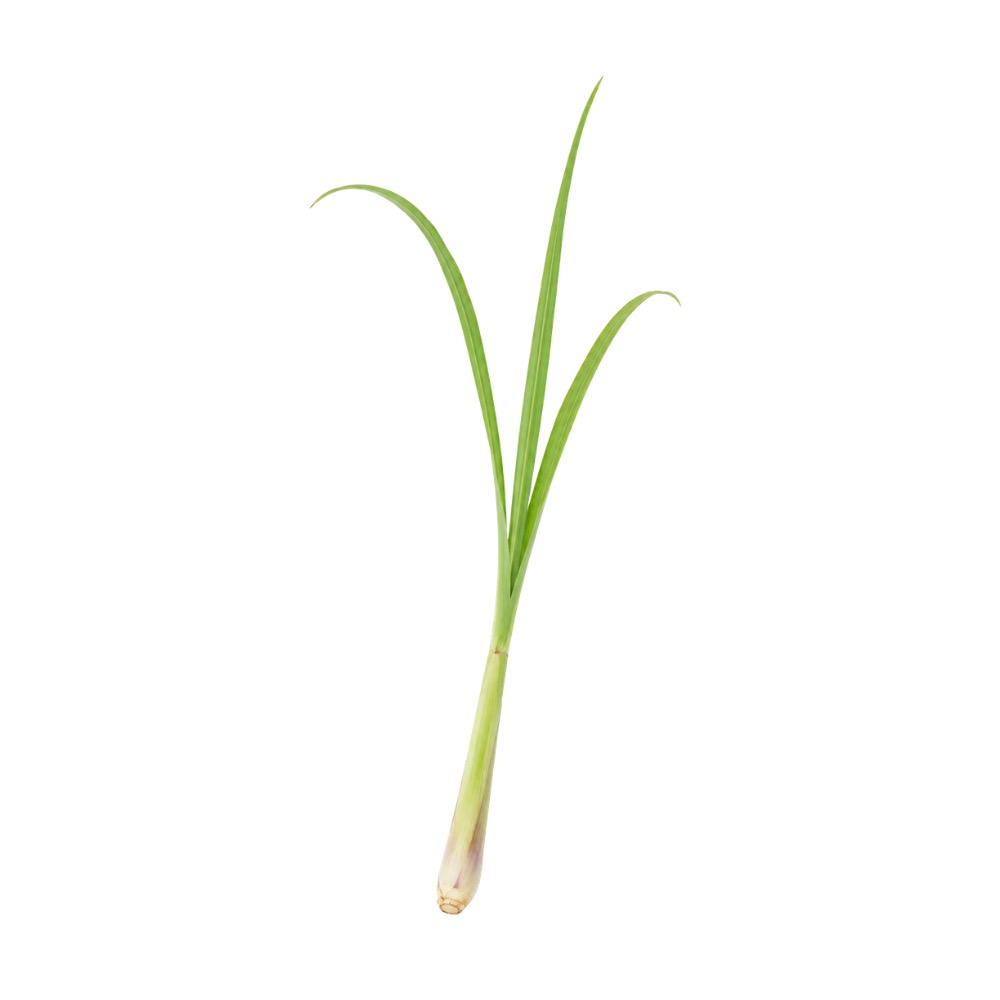 Principal source Lemongrass Cymbopogon citratus Herb monograph →
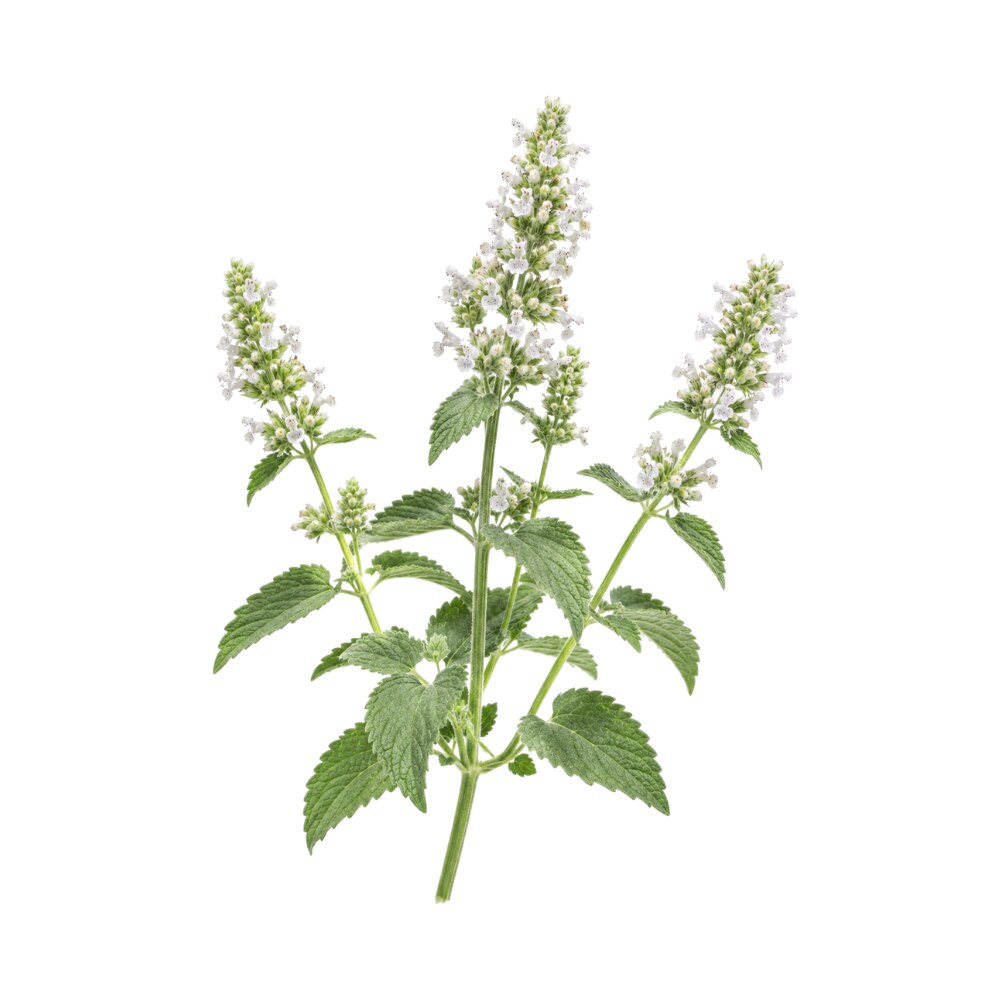 Source Catnip Nepeta cataria Herb monograph →
Concentration
Content by Source
Reported concentrations across the plants that contain citral — the bar marks the typical level, the line shows the reported range.
Literature figures for varying plant parts and preparations. Read them as a comparative guide, not exact assays.
Citral at a Glance
Citral is the compound behind the sharp lemon scent of lemongrass, lemon balm, may chang and lemon myrtle. Its single most important fact is structural: citral is not one molecule. It is a roughly 1:1 mixture of two geometric isomers — geranial (citral A, the E/trans form) and neral (citral B, the Z/cis form) — which interconvert and are, in practice, always found and sold together 1Reference 1Lemongrass Essential Oil Components with Antimicrobial and Anticancer ActivitiesView study →. Almost everything labelled “citral” is really this pair.
As a molecule it is a monoterpene aldehyde, and specifically an α,β-unsaturated aldehyde — a reactive electrophilic structure that turns out to explain both halves of its story. That reactivity drives genuine in-vitro activity (membrane-disrupting antimicrobial action, apoptosis induction in cancer cell lines) and makes citral a recognised skin sensitizer, restricted in fragrance use by IFRA 6,
Citral is GRAS for use as a flavouring and a high-volume aroma chemical, and it is the industrial starting point for vitamin A and the ionones. But it carries two honest cautions that set it apart from a plain aroma monoterpene: it is a notable contact allergen, and it has documented estrogenic and prostatic-hyperplasia effects in animal models 11,
Citral Is Two Isomers (Geranial + Neral)
The defining feature here is that the subject is a mixture, not a pure compound.
Geranial (citral A) is the E (trans) isomer; neral (citral B) is the Z (cis) isomer. They share the same molecular formula (C₁₀H₁₆O) and differ only in the geometry around one double bond, but that difference is enough to give them slightly different odours — geranial is the stronger, more intensely lemony note, neral the softer, sweeter one — and, importantly, to make some biological assays isomer-dependent 1Reference 1Lemongrass Essential Oil Components with Antimicrobial and Anticancer ActivitiesView study →. In lemongrass leaf oil the two run at roughly geranial ~36–45% and neral ~31–35%, i.e. citral totalling about 65–85% of the oil, with the exact ratio shifting by chemotype, leaf maturity, season and distillation 1,
Why isomer-specific data are tricky:
- They interconvert. Geranial and neral equilibrate into each other under heat, light and acid conditions, so a sample prepared as one isomer drifts toward the mixture. Purifying and keeping a single isomer is difficult, which is why most commercial “citral” and most of the literature works with the pair rather than a resolved isomer.
- Reporting is inconsistent. Papers variously report “citral”, “geranial”, “neral”, “citral A/B” or a lemongrass oil dominated by them, and the same GC peak set gets described several ways. Deduplicating claims across the geranial, neral and citral literature is a recurring hazard.
- The two are chemically all-but-inseparable in practice. Because they co-occur at ~1:1 and interconvert, an effect measured for “geranial” in one study and “citral” in another usually describes the same real-world exposure.
This page is the mixture / parent reference. Its two isomers have their own pages — geranial and neral — and citral sits alongside the related lemongrass monoterpenoids geraniol (the alcohol), citronellal, myrcene and limonene.
What It's Used For
Citral’s isolated-compound literature is real but almost entirely in-vitro and animal, and much of it is inseparable from its two isomers and from whole lemongrass oil. The reactive aldehyde does measurable things to microbial membranes and to cancer cells in a dish; what it does in people at achievable exposures is essentially uncharacterised.
Support is an experimental score — weighted by study type (human > animal > in vitro) and volume. A beta, not a validated metric. All citral efficacy data are in-vitro or animal on the isolate/mixture or on whole lemongrass oil, so scores stay modest by design.
Citral’s best-evidenced activity, and the one most cleanly tied to the isolated molecule. Against Cronobacter sakazakii, isolated citral damaged the cell membrane, caused membrane hyperpolarization, and reduced intracellular ATP and pH — a membrane-targeting bactericidal mechanism rather than a single enzyme target 6Reference 6Antimicrobial Activity and Possible Mechanism of Action of Citral against Cronobacter sakazakiiView study →.
This matches the broader account of citral as the membrane-disrupting antibacterial and antifungal actor of lemongrass oil 1Reference 1Lemongrass Essential Oil Components with Antimicrobial and Anticancer ActivitiesView study →.
Because geranial and neral co-occur, whole-oil antifungal/anti-inflammatory data — lemongrass oil against Candida and dermatophytes, and as an anti-inflammatory agent — are usually attributed largely to the citral pair 1,
Gap: in-vitro MIC-level work on the isolate and the oil; the inhibitory concentrations exceed anything achievable systemically, so this is a food-preservative / topical-relevant activity, not a systemic-antibiotic claim 6,
A mechanistically coherent but preclinical signal for the isolate. Citral was identified as a new inducer of caspase-3, triggering apoptosis and DNA fragmentation in several haematopoietic tumour cell lines at concentrations comparable to those in lemongrass tea 4Reference 4Citral is a new inducer of caspase-3 in tumor cell linesView study →.
Separately, citral inhibits ALDH1A3, a cancer-stem-cell marker: nanoparticle-encapsulated citral specifically reduced the growth of ALDH1A3-overexpressing breast-tumour cells in mice 5Reference 5Citral reduces breast tumor growth by inhibiting the cancer stem cell marker ALDH1A3View study →.
Two different lines — apoptosis and stem-cell-marker inhibition — point the same way.
Gap: all in-vitro or mouse, on the isolate; the breast-tumour result required a nanoparticle formulation to overcome citral’s volatility and rapid clearance, and there is no human oncology evidence 4,
Citral is the component of lemongrass oil that activates the nuclear receptors PPARα and PPARγ and suppresses COX-2 expression, a mechanism proposed to underlie the oil’s anti-inflammatory and anti-”lifestyle-disease” reputation 7Reference 7Citral, a component of lemongrass oil, activates PPARα and γ and suppresses COX-2 expressionView study →. This overlaps the whole-oil anti-inflammatory data reported for lemongrass 1Reference 1Lemongrass Essential Oil Components with Antimicrobial and Anticancer ActivitiesView study →.
Gap: cell/animal mechanistic work; the effect is demonstrated for the isolate and the oil at experimental concentrations, with no human anti-inflammatory trial of citral 7,
Mechanisms
| Target / pathway | Effect | Relevant to |
|---|---|---|
| Microbial cell membrane / membrane potential / ATP | permeabilisation, hyperpolarization, ATP and intracellular-pH loss → bactericidal | antimicrobial / antifungal |
| Caspase-3 / DNA fragmentation | apoptosis induction in tumour cell lines | anticancer |
| ALDH1A3 (cancer-stem-cell marker) | inhibition → reduced breast-tumour growth (mouse) | anticancer |
| PPARα / PPARγ; COX-2 | receptor activation with COX-2 suppression | anti-inflammatory |
| α,β-unsaturated aldehyde (Michael-acceptor electrophile) | protein/thiol adduction — the reactivity behind both bioactivity and sensitization | antimicrobial; skin sensitization |
| Estrogen signalling / androgen–estrogen balance | estrogenic action; induces prostatic hyperplasia in rats (dermal, high dose) | endocrine / toxicity |
The load-bearing point is that citral is an electrophilic α,β-unsaturated aldehyde. That single chemical property runs through the membrane and pro-apoptotic activity and the protein-adduction that makes it a contact allergen — the bioactivity and the safety concern share a root cause.
Pharmacokinetics
Citral’s disposition is characterised in rodents, not humans. In male Fischer rats, citral given orally, dermally or intravenously is rapidly and extensively metabolised: at least seven urinary metabolites were identified, arising from oxidation and hydrolysis of the molecule rather than nucleophilic addition across its double bonds, with evidence of possible self-induction of its own metabolism on repeated dosing 8Reference 8AnimalMetabolism of citral, an alpha,beta-unsaturated aldehyde, in male F344 ratsView study →. Practically, this means citral is cleared quickly and does not accumulate — one reason the anticancer work needed a nanoparticle formulation to sustain exposure 5Reference 5Citral reduces breast tumor growth by inhibiting the cancer stem cell marker ALDH1A3View study →. Human ADME — Cmax, half-life, oral bioavailability of the isolate — is not established; dietary human exposure is at trace flavour levels, and the higher-exposure route (essential oils) is where the safety data, not efficacy data, sit.
Clinical Trials
There are no controlled human efficacy trials of isolated citral. The human-facing evidence base is essentially the flavour/fragrance safety literature (sensitization thresholds) rather than therapeutic trials, and the bioactivity data are in-vitro and animal.
| Completed | Planned | Terminated | Preclinical |
|---|---|---|---|
| None(efficacy) | — | — | Antimicrobial, anticancer (apoptosis / ALDH1A3), anti-inflammatory (PPAR/COX-2) |
Last checked: July 2026.
Antimicrobial, Anticancer & the Skin-Sensitization Question
The most useful way to read citral is that its reactivity is a single trait with two faces.
Citral is an α,β-unsaturated aldehyde — a Michael acceptor that readily forms covalent adducts with nucleophiles such as protein thiols and amines. On a microbial membrane or inside a tumour cell, that electrophilicity is plausibly part of what disrupts membranes, drops ATP and trips apoptosis 6,
This is why the safety framing matters as much as the efficacy framing:
- The bioactivity is genuine but preclinical and high-dose. Antimicrobial and anticancer effects are reproducible in vitro, but at concentrations far above dietary intake and without human confirmation 6,
4, .5Reference 6Antimicrobial Activity and Possible Mechanism of Action of Citral against Cronobacter sakazakiiView study →Reference 4Citral is a new inducer of caspase-3 in tumor cell linesView study →Reference 5Citral reduces breast tumor growth by inhibiting the cancer stem cell marker ALDH1A3View study → - The sensitization is a real, quantified human hazard. Citral has a defined human No-Observed-Effect-Level for dermal sensitization (~1400 µg/cm²), which underpins fragrance-industry risk assessment and IFRA use limits; geranial is identified as the more sensitizing of the two isomers 9,
10Reference 9Citral: identifying a threshold for induction of dermal sensitizationView study →Reference 10Cross-reactivity between citral and geraniol - can it be attributed to oxidized geraniol? Contact Dermatitis. https://pubmed.ncbi.nlm.nih.gov/25209002/View study → . In practice, citral is usually quenched (co-formulated with materials that suppress sensitization) in fragrances. - Whole oil versus isolate. The therapeutic-sounding data belong to concentrated lemongrass essential oil and to isolated citral in cell/animal systems — not to drinking lemongrass tea, and not to any human clinical outcome 1Reference 1Lemongrass Essential Oil Components with Antimicrobial and Anticancer ActivitiesView study →.
So the honest reading is: citral is a useful reactive aroma chemical with real in-vitro pharmacology and a real, well-documented sensitization liability — and the case for the first should never be made without stating the second.
Isolate vs. Plant Studies
Citral sits in an unusual place because it is a mixture that is hard to separate from its own isomers and from its parent oil. The mechanistic work — the Cronobacter membrane study 6Reference 6Antimicrobial Activity and Possible Mechanism of Action of Citral against Cronobacter sakazakiiView study →, the caspase-3 apoptosis study 4Reference 4Citral is a new inducer of caspase-3 in tumor cell linesView study →, the ALDH1A3 breast-tumour model 5Reference 5Citral reduces breast tumor growth by inhibiting the cancer stem cell marker ALDH1A3View study →, the PPAR/COX-2 mechanism 7Reference 7Citral, a component of lemongrass oil, activates PPARα and γ and suppresses COX-2 expressionView study → — is genuinely on isolated citral (or a defined isomer), which is a strength. But because geranial and neral co-occur at ~1:1 and interconvert, “citral”, “geranial” and “lemongrass oil” results frequently describe overlapping realities, and whole-oil activity (e.g. lemongrass oil’s antifungal and anti-inflammatory action) is routinely attributed to the citral pair without isolating each isomer’s contribution 1,
Prevalence in Nature
Citral is a widespread lemon-scented monoterpene aldehyde, and the plants richest in it are the classic “lemon” aromatics. Lemongrass (Cymbopogon citratus) leaf oil is the reference source, with citral at roughly 65–85% of the essential oil — geranial ~36–45% plus neral ~31–35% — varying with cultivar, leaf maturity, season and distillation 1,
The consistent theme is that citral is an essential-oil constituent, concentrated in steam-distilled volatiles rather than delivered meaningfully by teas or whole-herb intake — the exposure that matters for both flavour and safety is the oil.
Discovery & Synthesis
The name “citral” was attached in nineteenth-century essential-oil chemistry to the principal aldehyde of lemongrass and citrus oils; the exact first isolation is not well documented, and the molecule was understood as a mixture of two isomers relatively early. Its industrial significance came later and is considerable: citral is a pivotal intermediate in the manufacture of the ionones (violet-scented aroma chemicals) and, through them, of vitamin A — the citral → pseudoionone → ionone route is a cornerstone of synthetic vitamin A and carotenoid production, which is why citral is made and traded at large scale.
Manufacture today is split. A large share of commercial citral is isolated from natural high-citral oils, chiefly Litsea cubeba (may chang) and lemongrass, while a substantial fraction is produced by total synthesis (industrial routes building citral from simpler terpene or isoprene-derived intermediates) to secure a consistent, high-purity supply for the vitamin-A and flavour/fragrance industries. Both the “natural” and “synthetic” citral on the market are the same geranial + neral pair.
Patents: not yet researched.
Toxicity & Safety
Citral carries a moderate flag — higher than a typical GRAS flavour monoterpene — for two specific, documented reasons: it is an IFRA-restricted skin sensitizer, and it has estrogenic and prostatic-hyperplasia activity in animal models. At dietary flavour levels it is regarded as safe; the cautions attach to concentrated essential-oil exposure.
Skin Sensitization (IFRA-Restricted)
Citral is a recognised contact allergen. Its dermal-sensitization potential has been quantified — a human No-Observed-Effect-Level of about 1400 µg/cm² — which is the basis for fragrance-industry quantitative risk assessment and IFRA use limits 9Reference 9Citral: identifying a threshold for induction of dermal sensitizationView study →. Of the two isomers, geranial is identified as the more potent sensitizer, and citral’s reactivity also explains cross-reactions with oxidized geraniol, whose autoxidation generates geranial/neral 10Reference 10Cross-reactivity between citral and geraniol - can it be attributed to oxidized geraniol? Contact Dermatitis. https://pubmed.ncbi.nlm.nih.gov/25209002/View study →. In fragrance formulation citral is commonly quenched with co-ingredients that suppress sensitization. This is the single most practically relevant hazard for anyone handling lemongrass, may chang or lemon myrtle oils.
Estrogenic & Prostatic Effects
Distinct from most aroma monoterpenes, citral has endocrine activity in animals. Repeated dermal application in rats induces benign prostatic hyperplasia-like changes, and the effect is attributed to an estrogenic action of citral (interfering with estrogen-receptor binding and the androgen–estrogen balance) rather than an androgenic one 11Reference 11Estrogenic action of commonly used fragrant agent citral induces prostatic hyperplasiaView study →; the change is potentiated by co-administered testosterone 12Reference 12AnimalCitral and testosterone interactions in inducing benign and atypical prostatic hyperplasia in ratsView study →. These are high-dose animal, mainly dermal findings, but they are consistent across studies and are a fair reason to treat concentrated citral oils with more caution than a plain flavouring — and to state the reproductive/hormonal signal honestly. Human reproductive and pregnancy decisions belong to the herb or product page where intake is decided, not to this molecule page; the finding here is the animal estrogenic/prostatic signal, not a human verdict.
Whole Oil vs. Isolate, and General Use
At the trace levels used as a flavouring, citral is GRAS and not a general safety concern. The exposures that carry the sensitization and endocrine cautions are essential oils and concentrates, where citral runs from a few per cent up to the majority of the oil. “Natural” does not mean “harmless” here: lemongrass, may chang and lemon myrtle oils are high-citral materials and should be diluted and handled accordingly. No comprehensive human systemic-toxicity dataset exists for the isolate beyond the sensitization and animal-endocrine work above.
- GRAS at flavour levels. Long dietary and fragrance history; low concern as a trace food flavouring.
- IFRA-restricted skin sensitizer. A quantified contact allergen (human NOEL ≈ 1400 µg/cm²), with geranial the more sensitizing isomer; concentrated citral oils warrant dilution and care 9,
10Reference 9Citral: identifying a threshold for induction of dermal sensitizationView study →Reference 10Cross-reactivity between citral and geraniol - can it be attributed to oxidized geraniol? Contact Dermatitis. https://pubmed.ncbi.nlm.nih.gov/25209002/View study → . - Estrogenic / prostatic-hyperplasia signal in animals. Repeated dermal citral induces prostatic hyperplasia in rats via an estrogenic mechanism — a real endocrine caveat for concentrated exposure 11,
12Reference 11Estrogenic action of commonly used fragrant agent citral induces prostatic hyperplasiaView study →Reference 12AnimalCitral and testosterone interactions in inducing benign and atypical prostatic hyperplasia in ratsView study → . - Reactive aldehyde. The α,β-unsaturated aldehyde chemistry behind citral’s bioactivity is also why it adducts skin proteins and sensitizes — bioactivity and hazard share a cause.
- Oils ≫ tea for exposure. Meaningful citral comes from essential oils, not whole-herb teas; the concentrated oil is a different exposure from the plant.
Dosage
There is no established or recommended human dose for citral. Human exposure comes in two very different forms:
| Exposure route | Typical level |
|---|---|
| Dietary flavouring (GRAS) | trace amounts |
| Lemongrass / may chang / lemon myrtle essential oil | citral a few % up to the majority of the oil |
| Herbal tea (lemongrass, lemon balm) | low — citral is oil-bound and largely not delivered by water infusion |
Cited efficacy concentrations in the research above are in-vitro or animal values — antimicrobial MICs and cell-culture apoptosis concentrations far exceeding anything reached from food — and are not convertible to human self-dosing. For topical essential-oil use, the practical constraint is the sensitization limit, not an efficacy dose. These are research and exposure figures, not a personal recommendation.
References
- Mukarram M, Choudhary S, Khan MA, et al. (2021). Lemongrass Essential Oil Components with Antimicrobial and Anticancer Activities. Antioxidants (Basel). https://pubmed.ncbi.nlm.nih.gov/35052524/
- Boukhatem MN, Ferhat MA, Kameli A, et al. (2014). Lemon grass (Cymbopogon citratus) essential oil as a potent anti-inflammatory and antifungal drugs. Libyan Journal of Medicine. https://pubmed.ncbi.nlm.nih.gov/25242268/
- Ekpenyong CE, Akpan E, Nyoh A (2015). Ethnopharmacology, phytochemistry, and biological activities of Cymbopogon citratus (DC.) Stapf extracts. Chinese Journal of Natural Medicine. https://pubmed.ncbi.nlm.nih.gov/25986281/
- Dudai N, Weinstein Y, Krup M, et al. (2005). Citral is a new inducer of caspase-3 in tumor cell lines. Planta Medica. https://pubmed.ncbi.nlm.nih.gov/15931590/
- Thomas ML, de Antueno R, Coyle KM, et al. (2016). Citral reduces breast tumor growth by inhibiting the cancer stem cell marker ALDH1A3. Molecular Oncology. https://pubmed.ncbi.nlm.nih.gov/27592281/
- Shi C, Song K, Zhang X, et al. (2016). Antimicrobial Activity and Possible Mechanism of Action of Citral against Cronobacter sakazakii. PLoS One. https://pubmed.ncbi.nlm.nih.gov/27415761/
- Katsukawa M, Nakata R, Takizawa Y, et al. (2010). Citral, a component of lemongrass oil, activates PPARα and γ and suppresses COX-2 expression. Biochimica et Biophysica Acta. https://pubmed.ncbi.nlm.nih.gov/20656057/
- Diliberto JJ, Usha G, Birnbaum LS (1990). Metabolism of citral, an alpha,beta-unsaturated aldehyde, in male F344 rats. Drug Metabolism and Disposition. https://pubmed.ncbi.nlm.nih.gov/1981530/
- Lalko J, Api AM (2008). Citral: identifying a threshold for induction of dermal sensitization. Regulatory Toxicology and Pharmacology. https://pubmed.ncbi.nlm.nih.gov/18353514/
- Hagvall L, Bråred Christensson J (2014). Cross-reactivity between citral and geraniol - can it be attributed to oxidized geraniol? Contact Dermatitis. https://pubmed.ncbi.nlm.nih.gov/25209002/
- Geldof AA, Engel C, Rao BR (1992). Estrogenic action of commonly used fragrant agent citral induces prostatic hyperplasia. Urological Research. https://pubmed.ncbi.nlm.nih.gov/1372772/
- Engelstein D, Shmueli J, Bruhis S, et al. (1996). Citral and testosterone interactions in inducing benign and atypical prostatic hyperplasia in rats. Comparative Biochemistry and Physiology C. https://pubmed.ncbi.nlm.nih.gov/9568365/



