
Compound Monograph
Deacetylasperulosidic Acid
Deacetylasperulosidic acid (DAA) is a Rubiaceae iridoid glycoside acid and the principal quantified iridoid of noni (Morinda citrifolia) fruit — the marker used to authenticate and standardise noni products, and the iridoid-fraction constituent credited with much of noni's antioxidant activity. Its human evidence is whole juice, not the isolate, and oral bioavailability of the polar glucoside acid is poor.

Sources · 7
Where Does It Come From?
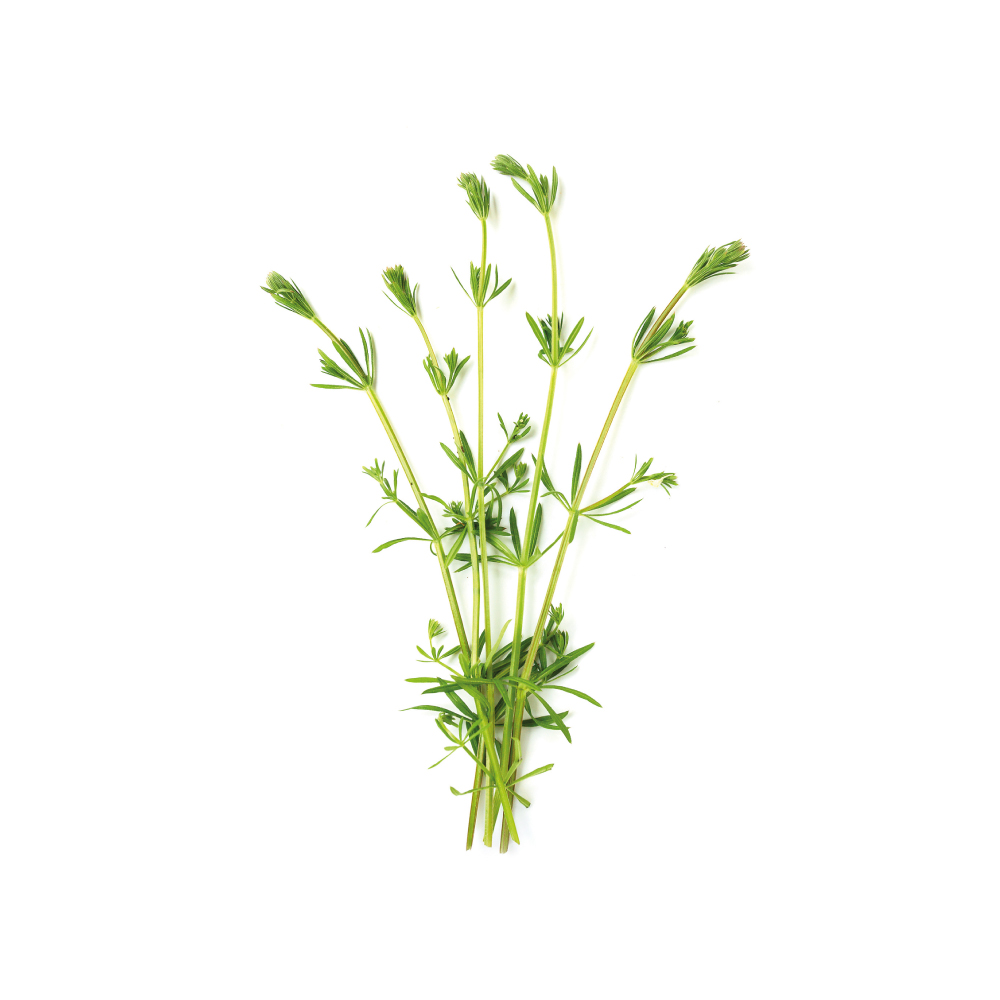
Deacetylasperulosidic Acid is a naturally occurring iridoid glycoside (monoterpene glucoside acid), found in Noni fruit — the principal quantified source, Cleavers, Indian mulberry root and 4 other sources. It is well tolerated orally (low toxicity).
Concentration
Content by Source
Reported concentrations across the plants that contain deacetylasperulosidic acid — the bar marks the typical level, the line shows the reported range.
Literature figures for varying plant parts and preparations. Read them as a comparative guide, not exact assays.
Deacetylasperulosidic Acid at a Glance
Deacetylasperulosidic acid (DAA) is an iridoid glycoside — a bitter monoterpene glucoside carrying a free carboxylic acid — from the coffee family, Rubiaceae. It is best known as the principal iridoid of noni (Morinda citrifolia) fruit, where it is both the most abundant single iridoid and the most abundant phytochemical, and it recurs across other Rubiaceae including cleavers (Galium aparine) and Morinda officinalis 1,
Its main practical role is as a marker molecule: because DAA is abundant, stable to pasteurisation and consistently present, it is used to authenticate and standardise commercial noni products 1,
DAA has low reported toxicity. As a polar glucoside acid, its oral bioavailability is poor, which is the load-bearing caveat when reading its in-vitro and isolate findings against what a serving of juice actually delivers 11Reference 11AnimalLC/MS/MS determination and pharmacokinetic study of iridoid glycosides monotropein and deacetylasperulosidic acid isomers in rat plasma after oral administration of Morinda officinalis extractView study →.
The Noni Iridoid Marker
The single most important fact about this molecule is that it is the principal quantified iridoid of noni. In a comparative survey of Morinda citrifolia, DAA was the major iridoid across the plant, with content ranked dried fruit > fruit juice > seed > flower > leaf > root, and DAA in methanolic fruit extracts from different tropical regions ran 13.8–42.9 mg/g (French Polynesian fruit highest, Dominican lowest) 1Reference 1Determination and comparative analysis of major iridoids in different parts and cultivation sources of Morinda citrifoliaView study →. Because it is abundant, geographically ubiquitous in genuine noni, and stable through pasteurisation, DAA — alongside asperulosidic acid — serves as an identity and quality-control marker for authentic noni fruit and leaf products, quantified by validated TLC and HPLC-MS methods 1,
DAA is also the constituent most frequently named as the driver of noni’s antioxidant activity, since it dominates the non-sugar iridoid fraction of the juice. This is where the compound-page discipline matters. The human antioxidant evidence is whole juice: in heavy smokers, daily noni juice lowered plasma superoxide anion and lipid-hydroperoxide levels 6Reference 6Antioxidant activity of noni juice in heavy smokersView study → and reduced lipid-peroxidation-derived DNA adducts by ~45–57% — an effect the authors tied to the juice’s iridoids, because the iridoid-free placebo did nothing 7Reference 7Noni juice reduces lipid peroxidation-derived DNA adducts in heavy smokersView study →. Isolated DAA has been tested only in animals: fed to rats at 15–60 mg/kg/day it produced a dose-dependent fall in malondialdehyde and rise in superoxide-dismutase activity, supporting a contributory role 5Reference 5AnimalIn vivo antioxidant activity of deacetylasperulosidic acid in noniView study →. But honesty cuts the other way too — when noni fruit constituents were fractionated and assayed directly, the potent isolated antioxidant was the neolignan americanin A, not an iridoid 4Reference 4Chemical constituents of the fruits of Morinda citrifolia (Noni) and their antioxidant activityView study →. The fair reading: DAA is a plausible and partly-demonstrated contributor to noni’s antioxidant effect, established in humans only as part of the whole juice.
Deacetylasperulosidic Acid in the Asperuloside Family
DAA sits inside a small, tidy family of Rubiaceae iridoids related by loss of acetyl groups. The parent asperuloside is a diacetate-type iridoid glucoside; hydrolysis of its ester gives asperulosidic acid (the free-acid form); removing the remaining acetyl group yields deacetylasperulosidic acid — the fully deacetylated congener. A close positional relative, 10-desacetylasperulosidic acid, differs in where the acetyl is lost and co-occurs with DAA in several Rubiaceae 12Reference 12In vitroPhytochemical profiles and in vitro immunomodulatory activity of ethanolic extracts from Galium aparine LView study →. DAA also travels with monotropein, another iridoid glucoside acid, in Morinda species 11Reference 11AnimalLC/MS/MS determination and pharmacokinetic study of iridoid glycosides monotropein and deacetylasperulosidic acid isomers in rat plasma after oral administration of Morinda officinalis extractView study →.
This family relationship is why DAA rarely appears alone. In noni it is quantified next to asperulosidic acid as a paired marker set 1,
What It's Used For
DAA’s evidence is modest, coherent and split by vehicle: the human data are whole noni juice, while the isolated-molecule data are all preclinical (rat and cell), spanning antioxidant, immune/anti-inflammatory and lipid-lowering signals 5,
Support is an experimental score — weighted by study type (human > animal > in vitro) and volume. A beta, not a validated metric. The human antioxidant data are whole juice; isolate scores stay modest because DAA itself has been tested only preclinically.
The best-evidenced application, and the reason DAA matters clinically at all — but the human signal is the juice, not the isolate. In two randomised, double-blind, placebo-controlled trials in heavy smokers, daily noni juice (29.5–118 mL) lowered plasma superoxide-anion and lipid-hydroperoxide levels 6Reference 6Antioxidant activity of noni juice in heavy smokersView study → and cut lipid-peroxidation-derived DNA adducts in blood lymphocytes by ~45–57%, with the authors attributing the effect to the juice’s iridoids because the iridoid-devoid placebo had no effect 7Reference 7Noni juice reduces lipid peroxidation-derived DNA adducts in heavy smokersView study →.
Isolated DAA reproduces the direction in rats — 15–60 mg/kg/day dose-dependently lowered malondialdehyde and raised superoxide-dismutase activity 5Reference 5AnimalIn vivo antioxidant activity of deacetylasperulosidic acid in noniView study →.
DAA is also reported to be anticlastogenic, blunting chemically-induced DNA damage, consistent with the juice’s genoprotective read-out 5Reference 5AnimalIn vivo antioxidant activity of deacetylasperulosidic acid in noniView study →.
Gap: every human result is whole juice, where DAA is one iridoid among several; the isolate has only animal antioxidant data, and the most potent isolated noni antioxidant characterised directly was a neolignan (americanin A), not DAA 4Reference 4Chemical constituents of the fruits of Morinda citrifolia (Noni) and their antioxidant activityView study →.
A coherent isolate signal in allergic inflammation. In DNCB-induced atopic-dermatitis mice, isolated DAA reduced pruritus, ear/epidermal thickening and inflammatory-cell infiltration, lowered serum IgE, histamine and the IgG1/IgG2a ratio, and rebalanced Th1/Th2 cytokines 8Reference 8AnimalDeacetylasperulosidic acid ameliorates pruritus, immune imbalance, and skin barrier dysfunction in 2,4-dinitrochlorobenzene-induced atopic dermatitis NC/Nga miceView study →; in cultured keratinocytes (HaCaT), mast cells (HMC-1) and eosinophils (EOL-1), DAA suppressed IL-1β, IL-6 and TNF-α, inhibited MAPK phosphorylation and NF-κB nuclear translocation (by preventing IκBα degradation), and raised skin-barrier proteins filaggrin and involucrin 9Reference 9Effects of deacetylasperulosidic acid on atopic dermatitis through modulating immune balance and skin barrier function in HaCaT, HMC-1, and EOL-1 cellsView study →.
This dovetails with older reports that DAA inhibits macrophage TNF-α release.
Gap: all isolate work is rodent and cell-based at applied concentrations; there is no human atopic-dermatitis or anti-inflammatory trial of DAA, and oral delivery of the polar acid to skin/tissue is unproven 8,
A single, clean isolate study. DAA purified from the seeds of Spermacoce hispida lowered lipid parameters in a high-fat-diet rat model, marking a metabolic/lipid-lowering activity for the isolated molecule outside the noni context 10Reference 10Antihyperlipidemic effect of iridoid glycoside deacetylasperulosidic acid isolated from the seeds of Spermacoce hispida LView study →.
Gap: one rodent study, one non-noni source; no replication, no dose-response beyond that report, and no human lipid data 10Reference 10Antihyperlipidemic effect of iridoid glycoside deacetylasperulosidic acid isolated from the seeds of Spermacoce hispida LView study →.
Mechanisms
| Target / pathway | Effect | Relevant to |
|---|---|---|
| Reactive oxygen species / lipid hydroperoxides | direct radical/hydroperoxide scavenging in the iridoid fraction | antioxidant (juice) |
| Superoxide dismutase / malondialdehyde | ↑ SOD activity, ↓ MDA in rats given the isolate | antioxidant (isolate) |
| Lipid-peroxidation-derived DNA adducts | ↓ adduct formation; anticlastogenic against chemically-induced DNA damage | DNA protection / genoprotection |
| NF-κB (via IκBα) & MAPK phosphorylation | suppressed → ↓ IL-1β, IL-6, TNF-α | anti-inflammatory / immune |
| IgE, histamine, Th1/Th2 cytokine balance | lowered / rebalanced in atopic-dermatitis models | immune modulation |
| Skin-barrier proteins (filaggrin, involucrin) | up-regulated in keratinocytes | barrier repair (topical relevance) |
The unifying theme is a redox-plus-NF-κB story: an antioxidant iridoid that also damps NF-κB/MAPK-driven inflammatory transcription. The antioxidant arm is the only one with human (whole-juice) support.
Pharmacokinetics
DAA is a highly polar iridoid glucoside acid, so — like its siblings aucubin and the wider iridoid class — its oral bioavailability is expected to be poor: the intact glycoside is hydrophilic and acid-/glycosidase-labile, and much of an oral dose is subject to gut-microbial hydrolysis of the sugar. It is nonetheless absorbable enough to be measured: a validated LC-MS/MS method detected DAA isomers (with monotropein) in rat plasma after oral Morinda officinalis extract, confirming systemic exposure as part of a whole-plant matrix 11Reference 11AnimalLC/MS/MS determination and pharmacokinetic study of iridoid glycosides monotropein and deacetylasperulosidic acid isomers in rat plasma after oral administration of Morinda officinalis extractView study →. No human ADME — Cmax, half-life or oral bioavailability of isolated DAA — has been characterised, and the plasma-level data that exist are for the extract, not the purified molecule 11Reference 11AnimalLC/MS/MS determination and pharmacokinetic study of iridoid glycosides monotropein and deacetylasperulosidic acid isomers in rat plasma after oral administration of Morinda officinalis extractView study →.
Clinical Trials
There are no controlled trials of isolated DAA. The human evidence is entirely whole noni juice — two randomised, double-blind, placebo-controlled antioxidant trials in heavy smokers 6,
| Completed | Planned | Terminated | Preclinical |
|---|---|---|---|
| Whole-juice antioxidant RCTs (smokers) 6, | — | — | Antioxidant, atopic-dermatitis/immune, antihyperlipidemic isolate models 5, |
Last checked: July 2026.
Isolate vs. Plant (Juice) Studies
This molecule is a clean case of the isolate-vs-plant split. The human efficacy evidence is a plant product — standardised noni juice, whose antioxidant and DNA-protective effects in smokers are juice results, with DAA present as its principal iridoid marker rather than the isolated test article 6,
Its Role in Plants
In the Rubiaceae, DAA and its asperuloside-series relatives are bitter iridoid glucosides — the class functions largely in chemical defence against herbivores and pathogens, the bitterness itself a deterrent, with the reactive iridoid aglycone (liberated when the sugar is cleaved on tissue damage) able to cross-link proteins. In cleavers these iridoids are described as the herb’s “bitter cooling principles” and are linked to measurable immunomodulatory activity in the plant extract 12Reference 12In vitroPhytochemical profiles and in vitro immunomodulatory activity of ethanolic extracts from Galium aparine LView study →. Iridoids like DAA arise from the monoterpene (secoiridoid/iridoid) pathway off geranyl diphosphate, shared across the iridoid-bearing families. These are plant-biology roles and should not be read as human pharmacology.
Prevalence in Nature
DAA is a Rubiaceae iridoid, most concentrated and best documented in noni (Morinda citrifolia), where it is the major iridoid of the fruit at ~13.8–42.9 mg/g of methanolic fruit extract and ranks dried fruit > juice > seed > flower > leaf > root 1Reference 1Determination and comparative analysis of major iridoids in different parts and cultivation sources of Morinda citrifoliaView study →. It occurs across the wider family: in cleavers (Galium aparine) aerial parts alongside asperulosidic acid, monotropein and 10-desacetylasperulosidic acid 12Reference 12In vitroPhytochemical profiles and in vitro immunomodulatory activity of ethanolic extracts from Galium aparine LView study →; in Indian mulberry (Morinda officinalis) root, where it co-occurs with monotropein 11Reference 11AnimalLC/MS/MS determination and pharmacokinetic study of iridoid glycosides monotropein and deacetylasperulosidic acid isomers in rat plasma after oral administration of Morinda officinalis extractView study →; and in the seeds of Spermacoce hispida 10Reference 10Antihyperlipidemic effect of iridoid glycoside deacetylasperulosidic acid isolated from the seeds of Spermacoce hispida LView study →. Broad reviews of Morinda citrifolia consistently list DAA among the plant’s defining iridoids 13Reference 13ReviewMorinda citrifolia L.: a comprehensive review on phytochemistry, pharmacological effects, and antioxidant potentialView study →. Absolute content outside noni fruit is rarely quantified as a clean percentage, and varies with species, plant part, provenance and processing 1Reference 1Determination and comparative analysis of major iridoids in different parts and cultivation sources of Morinda citrifoliaView study →.
Discovery & Synthesis
DAA was characterised as part of the iridoid chemistry of the Rubiaceae — the deacetylated congener of asperulosidic acid — and isolated from noni (Morinda citrifolia) fruit juice among the plant’s principal iridoid glucosides in phytochemical surveys of noni 3,
Patents: not yet researched.
Toxicity & Safety
DAA carries a low toxicity flag. It is a constituent of a widely-consumed food (noni juice), it is itself anticlastogenic (DNA-protective) rather than genotoxic in the assays reported 5Reference 5AnimalIn vivo antioxidant activity of deacetylasperulosidic acid in noniView study →, and its documented isolate effects are anti-inflammatory and antioxidant 8,
Whole noni juice has its own, separate safety literature (rare idiosyncratic hepatotoxicity reports, and a high potassium content relevant in renal impairment) — but those are properties of the whole product and its other constituents, not attributable to DAA, and belong to the noni product page rather than this molecule page.
No reproductive or developmental-toxicity dataset exists for isolated DAA. Pregnancy and lactation are a per-herb / per-product decision made where intake is decided (the noni product page), not adjudicated on this molecule page; no isolate-specific verdict is issued here.
- Low reported toxicity, and DNA-protective. A constituent of widely-consumed noni juice; isolated DAA is anticlastogenic and antioxidant in animal assays, not genotoxic 5Reference 5AnimalIn vivo antioxidant activity of deacetylasperulosidic acid in noniView study →.
- Human data are whole juice, not the isolate. Antioxidant/DNA-protective effects are demonstrated for noni juice (an iridoid mixture), so they cannot be attributed to DAA alone 6,
7Reference 6Antioxidant activity of noni juice in heavy smokersView study →Reference 7Noni juice reduces lipid peroxidation-derived DNA adducts in heavy smokersView study → . - Poor oral bioavailability. As a polar glucoside acid it is incompletely absorbed and glycosidase-/acid-labile, so in-vitro potency overreads real oral exposure 11Reference 11AnimalLC/MS/MS determination and pharmacokinetic study of iridoid glycosides monotropein and deacetylasperulosidic acid isomers in rat plasma after oral administration of Morinda officinalis extractView study →.
- No isolate safety package. No dedicated repeat-dose, reproductive or human toxicology exists for purified DAA; safety is inferred from the food source, not directly characterised.
Dosage
There is no established or recommended human dose for isolated DAA. The cited figures are preclinical research doses and do not convert to human self-dosing:
| Context | Model | Dose |
|---|---|---|
| Antioxidant | Rat (isolate) | 15–60 mg/kg/day, 7 days 5Reference 5AnimalIn vivo antioxidant activity of deacetylasperulosidic acid in noniView study → |
| Atopic dermatitis / immune | Mouse + cell (isolate) | low-mg/kg oral / applied concentrations 8, |
| Antihyperlipidemic | Rat (isolate) | isolate dosing from Spermacoce hispida 10Reference 10Antihyperlipidemic effect of iridoid glycoside deacetylasperulosidic acid isolated from the seeds of Spermacoce hispida LView study → |
| Human antioxidant | Adult smokers (whole juice) | 29.5–118 mL noni juice/day 6, |
Human exposure is realistically via whole noni juice, where DAA is one iridoid among many and intake is measured in millilitres of juice, not milligrams of purified compound. These are doses studied in research and are not a personal recommendation.
References
- Deng S, West BJ, Palu AK, Jensen CJ (2011). Determination and comparative analysis of major iridoids in different parts and cultivation sources of Morinda citrifolia. Phytochemical Analysis. https://pubmed.ncbi.nlm.nih.gov/20799271/
- Potterat O, von Felten R, Dalsgaard PW, Hamburger M (2007). Identification of TLC markers and quantification by HPLC-MS of various constituents in noni fruit powder and commercial noni-derived products. Journal of Agricultural and Food Chemistry. https://pubmed.ncbi.nlm.nih.gov/17696360/
- Samoylenko V, Zhao J, Dunbar DC, Khan IA, Rushing JW, Muhammad I (2006). New constituents from noni (Morinda citrifolia) fruit juice. Journal of Agricultural and Food Chemistry. https://pubmed.ncbi.nlm.nih.gov/16910736/
- Su BN, Pawlus AD, Jung HA, Keller WJ, McLaughlin JL, Kinghorn AD (2005). Chemical constituents of the fruits of Morinda citrifolia (Noni) and their antioxidant activity. Journal of Natural Products. https://pubmed.ncbi.nlm.nih.gov/15844957/
- Ma DL, Chen M, Su CX, West BJ (2013). In vivo antioxidant activity of deacetylasperulosidic acid in noni. Journal of Analytical Methods in Chemistry. https://pubmed.ncbi.nlm.nih.gov/24371540/
- Wang MY, Lutfiyya MN, Weidenbacher-Hoper V, Anderson G, Su CX, West BJ (2009). Antioxidant activity of noni juice in heavy smokers. Chemistry Central Journal. https://pubmed.ncbi.nlm.nih.gov/19807926/
- Wang MY, Peng L, Jensen CJ, Deng S, West BJ (2013). Noni juice reduces lipid peroxidation-derived DNA adducts in heavy smokers. Food Science & Nutrition. https://pubmed.ncbi.nlm.nih.gov/24804023/
- Oh JS, Seong GS, Kim YD, Choung SY (2021). Deacetylasperulosidic acid ameliorates pruritus, immune imbalance, and skin barrier dysfunction in 2,4-dinitrochlorobenzene-induced atopic dermatitis NC/Nga mice. International Journal of Molecular Sciences. https://pubmed.ncbi.nlm.nih.gov/35008651/
- Oh JS, Seong GS, Kim YD, Choung SY (2021). Effects of deacetylasperulosidic acid on atopic dermatitis through modulating immune balance and skin barrier function in HaCaT, HMC-1, and EOL-1 cells. Molecules. https://pubmed.ncbi.nlm.nih.gov/34070943/
- Esakkimuthu S, Nagulkumar S, Darvin SS, et al. (2019). Antihyperlipidemic effect of iridoid glycoside deacetylasperulosidic acid isolated from the seeds of Spermacoce hispida L. Journal of Ethnopharmacology. https://pubmed.ncbi.nlm.nih.gov/31434002/
- Li C, Dong J, Tian J, Deng Z, Song X (2016). LC/MS/MS determination and pharmacokinetic study of iridoid glycosides monotropein and deacetylasperulosidic acid isomers in rat plasma after oral administration of Morinda officinalis extract. Biomedical Chromatography. https://pubmed.ncbi.nlm.nih.gov/26053360/
- Ilina T, Kashpur N, Granica S, et al. (2019). Phytochemical profiles and in vitro immunomodulatory activity of ethanolic extracts from Galium aparine L. Plants (Basel). https://pubmed.ncbi.nlm.nih.gov/31775336/
- Hou S, Ma D, Wu S, Hui Q, Hao Z (2025). Morinda citrifolia L.: a comprehensive review on phytochemistry, pharmacological effects, and antioxidant potential. Antioxidants (Basel). https://pubmed.ncbi.nlm.nih.gov/40227265/



