
Compound Monograph
Geranyl Acetate
Geranyl acetate is a fruity-floral monoterpene ester — the acetate ester of geraniol — and a high-volume GRAS flavour and fragrance chemical. It is readily hydrolysed back to geraniol by esterases in plants and in the body, so much of its reported bioactivity (antimicrobial, antinociceptive) is really geraniol's; direct human isolate data are absent.

Sources · 8
Where Does It Come From?
Geranyl Acetate is a naturally occurring monoterpene ester (acetate ester of geraniol), found in Mexican tarragon, Ylang-ylang, Palmarosa and 5 other sources. It is well tolerated orally (low toxicity).
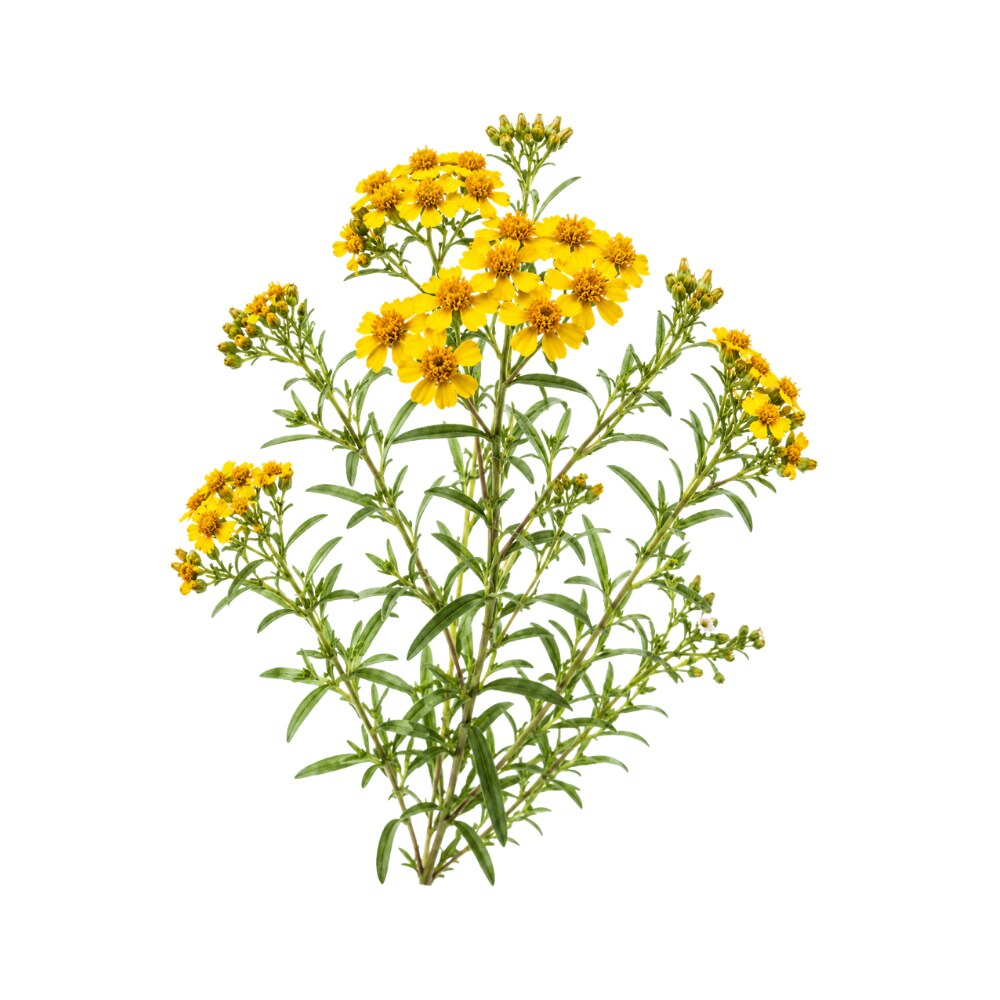 Principal source Mexican Tarragon Tagetes lucida Herb monograph →
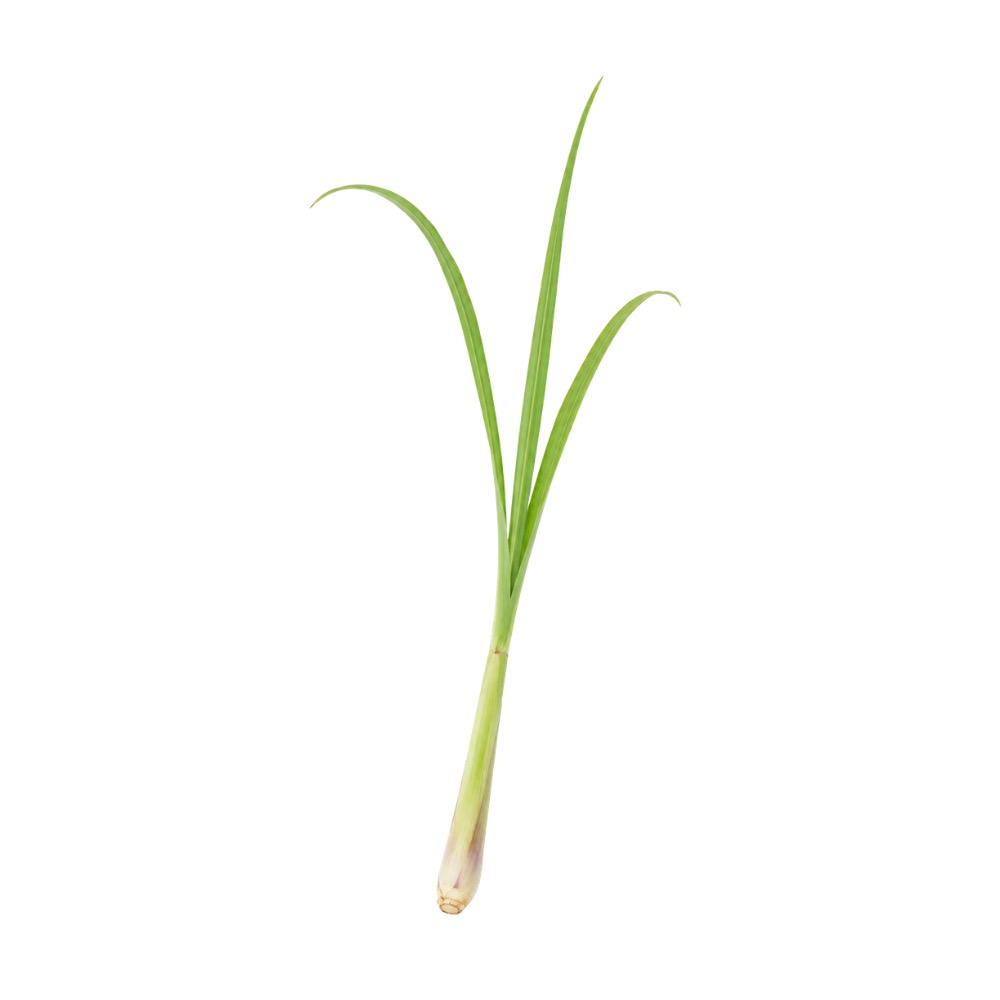 Source Lemongrass Cymbopogon citratus Herb monograph →
Photo coming soon
Source Ylang Ylang Cananga odorata Herb monograph →
Concentration
Content by Source
Reported concentrations across the plants that contain geranyl acetate — the bar marks the typical level, the line shows the reported range.
Literature figures for varying plant parts and preparations. Read them as a comparative guide, not exact assays.
Geranyl Acetate at a Glance
Geranyl acetate is an acyclic monoterpene ester — the acetate ester of the rose-scented alcohol geraniol — with a sweet, fruity-floral, faintly rose-and-lavender aroma. Its primary role, in nature and in commerce, is as a scent and flavour molecule: it is one of the higher-volume GRAS flavour and fragrance chemicals (FEMA 2509), lending rose, citrus, berry and tropical-fruit notes.
The single most important fact about the molecule is structural. Geranyl acetate is geraniol with an acetate group attached, and that bond is easily broken: esterases in plants and in the body hydrolyse it back to geraniol plus acetic acid 3,
Direct evidence for the isolated ester is thin: a modest rodent antinociceptive/antioxidant study 1Reference 1Antinociceptive activity and redox profile of the monoterpenes (+)-camphene, p-cymene, and geranyl acetate in experimental modelsView study → and an in-vitro anti-Candida signal as a geranium-oil constituent 2Reference 2Evaluation of anti-Candida potential of geranium oil constituents against clinical isolates of Candida albicans differentially sensitive to fluconazole: inhibition of growth, dimorphism and sensitizationView study →. There are no human trials of geranyl acetate. It has low systemic toxicity as a food-grade flavouring, and its main safety note is topical — as a fragrance material it is a mild skin sensitiser, and on hydrolysis it yields geraniol, itself an EU-labelled fragrance allergen 7Reference 7RIFM fragrance ingredient safety assessment, geranyl acetate, CAS registry number 105-87-3View study →.
Geranyl Acetate as Geraniol’s Ester
The defining feature of this molecule is that it is an ester precursor of geraniol, not an independent pharmacophore. Chemically it is the acetate of geraniol — the same C10 monoterpene skeleton, capped with an acetyl group in place of the free hydroxyl.
That cap does not survive contact with living tissue. Plants carry a dedicated geranyl acetate cleaving esterase (GAE) that hydrolyses the ester to free geraniol: in palmarosa inflorescence the enzyme converts geranyl acetate to geraniol as the flower matures, hydrolysing ~75% of substrate within 24 hours in vitro 3Reference 3Biotransformation of geranyl acetate to geraniol during palmarosa (Cymbopogon martinii, Roxb. wats. var. motia) inflorescence developmentView study →, and in a geraniol-rich lemongrass mutant GAE activity tracks a swing from 59% geranyl acetate down to 3% (with geraniol rising to ~91%) across leaf development 4Reference 4Geranyl acetate esterase controls and regulates the level of geraniol in lemongrass (Cymbopogon flexuosus Nees ex Steud.) mutant cvView study →. The same chemistry applies in animals: acetate esters of terpene alcohols are rapidly cleaved by carboxylesterases to the parent alcohol and acetic acid, both of which then enter ordinary metabolism.
Three consequences follow, and they frame everything below:
- Shared bioactivity. Where geranyl acetate shows antimicrobial or anti-inflammatory activity, the geraniol it releases is the more plausible actor — the isolate’s antifungal profile mirrors geraniol’s ergosterol/membrane mechanism 2Reference 2Evaluation of anti-Candida potential of geranium oil constituents against clinical isolates of Candida albicans differentially sensitive to fluconazole: inhibition of growth, dimorphism and sensitizationView study →, and geraniol has the far larger evidence base (one human IBS trial, defined antifungal mechanism, repellent use) [see geraniol].
- A distinct fragrance identity. As an intact ester it has its own softer, fruitier odour, which is why perfumery and flavour use the ester rather than the alcohol [FEMA 2509].
- The honest limit. No human data exist for the isolate itself, and the whole-oil effects of its source plants (Mexican tarragon, ylang-ylang, palmarosa) are the whole oils’, not this one molecule’s.
It sits in a family of closely related monoterpenoids worth keeping distinct: geraniol (the parent alcohol), nerol (the cis isomer of that alcohol), linalyl acetate (the analogous acetate of the tertiary alcohol linalool), citronellol (the saturated alcohol) and citral (the aldehyde).
What It's Used For
Isolated geranyl acetate has a small, preclinical evidence base, and its interpretation is dominated by the ester-to-geraniol relationship above. The two direct isolate studies are a rodent antinociception/redox screen and an in-vitro antifungal assay; both are modest, and neither is human.
Support is an experimental score — weighted by study type (human > animal > in vitro) and volume. A beta, not a validated metric. All evidence here is preclinical isolate or whole-oil, so scores stay low by design; each application links to its write-up.
The strongest isolate signal. Tested as a constituent of geranium oil, isolated geranyl acetate was fungicidal against Candida albicans — MIC 584 µg/mL (fungicidal at 0.064% v/v), killing 99.9% of the inoculum within 30 minutes, arresting cells in the G2–M phase at MIC50, and acting synergistically with fluconazole (a ~32-fold MIC reduction in a fluconazole-resistant strain); it was non-toxic to HeLa cells at its antifungal concentrations 2Reference 2Evaluation of anti-Candida potential of geranium oil constituents against clinical isolates of Candida albicans differentially sensitive to fluconazole: inhibition of growth, dimorphism and sensitizationView study →. Mechanistically this mirrors geraniol, whose defined ergosterol-biosynthesis inhibition plus membrane permeabilisation the ester’s hydrolysis product would deliver.
Gap: in-vitro only, at concentrations well above anything achievable systemically, and inseparable from geraniol’s own antifungal action — no in-vivo or human antifungal data for the ester 2Reference 2Evaluation of anti-Candida potential of geranium oil constituents against clinical isolates of Candida albicans differentially sensitive to fluconazole: inhibition of growth, dimorphism and sensitizationView study →.
The only direct isolate pharmacology in an animal. In mice, geranyl acetate produced a discrete, dose-related antinociception: significant effects in the acetic-acid writhing test at 100 and 200 mg/kg and in the second (inflammatory) phase of the formalin test at 200 mg/kg — but the authors judged it a weaker analgesic than co-tested p-cymene 1Reference 1Antinociceptive activity and redox profile of the monoterpenes (+)-camphene, p-cymene, and geranyl acetate in experimental modelsView study →. In the parent plant, whole Tagetes lucida (Mexican tarragon) oil is antinociceptive too, but that effect was assigned to β-caryophyllene acting on opioid/benzodiazepine/5-HT1A systems, not to the oil’s dominant geranyl acetate 5Reference 5Role of β-caryophyllene in the antinociceptive and anti-inflammatory effects of Tagetes lucida Cav. essential oilView study →.
Gap: a single rodent study at high (100–200 mg/kg) doses, no mechanism pinned to the ester itself, and no human analgesic data; the whole-oil signal is another molecule’s 1,
In the same rodent screen, geranyl acetate showed a mixed redox profile — antioxidant activity in TBARS and hydroxyl-radical-scavenging assays, but pro-oxidant behaviour in TRAP/TAR measurements and enhancement of superoxide-mediated oxidation, with no nitric-oxide scavenging 1Reference 1Antinociceptive activity and redox profile of the monoterpenes (+)-camphene, p-cymene, and geranyl acetate in experimental modelsView study →. This is a characteristically ambiguous in-vitro result, not a demonstrated antioxidant benefit.
Gap: contradictory in-vitro readouts (antioxidant in some assays, pro-oxidant in others), no cellular or in-vivo antioxidant endpoint, and no human data 1Reference 1Antinociceptive activity and redox profile of the monoterpenes (+)-camphene, p-cymene, and geranyl acetate in experimental modelsView study →.
Mechanisms
| Target / pathway | Effect | Relevant to |
|---|---|---|
| Carboxylesterases / geranyl acetate cleaving esterase (GAE) | hydrolysed to geraniol + acetic acid in plants and in vivo | pharmacokinetics — the master mechanism |
| Fungal membrane / cell cycle (Candida) | fungicidal, G2–M arrest, fluconazole synergy | antifungal |
| Ergosterol biosynthesis + membrane (via geraniol) | inhibition/permeabilisation, inherited from the hydrolysis product | antifungal |
| Nociceptive signalling (writhing, formalin phase 2) | modest antinociception at 100–200 mg/kg | analgesic |
| Redox balance (TBARS/•OH vs TRAP/superoxide) | mixed antioxidant / pro-oxidant | antioxidant (in-vitro) |
The load-bearing row is the first one: because the ester is cleaved to geraniol, the remaining rows are best read as geraniol’s pharmacology reached through a pro-drug-like precursor, plus the ester’s own intact fragrance identity.
Pharmacokinetics
No dedicated human ADME exists for isolated geranyl acetate, but its kinetics are dominated by ester hydrolysis. Acetate esters of terpene alcohols are rapidly cleaved by carboxylesterases to the parent alcohol and acetic acid; the plant enzymology makes the same point directly — a geranyl acetate cleaving esterase hydrolyses ~75% of the ester within 24 h in palmarosa 3Reference 3Biotransformation of geranyl acetate to geraniol during palmarosa (Cymbopogon martinii, Roxb. wats. var. motia) inflorescence developmentView study → and swings the geranyl-acetate/geraniol balance across lemongrass leaf development 4Reference 4Geranyl acetate esterase controls and regulates the level of geraniol in lemongrass (Cymbopogon flexuosus Nees ex Steud.) mutant cvView study →. Downstream, the liberated geraniol carries its own limiting kinetics — rapid allylic oxidation to geranic acid, short residence and high volatility [see geraniol]. The practical reading: geranyl acetate behaves largely as a volatile, quickly-hydrolysed geraniol precursor, so any systemic claim inherits geraniol’s poor sustained exposure rather than escaping it.
Clinical Trials
There are no clinical trials of isolated geranyl acetate. Human exposure is dietary (a GRAS flavour, FEMA 2509) and via fragrance/essential oils; the only human-relevant clinical evidence in this chemical family is geraniol’s single IBS trial, which used geraniol, not the ester.
| Completed | Planned | Terminated | Preclinical |
|---|---|---|---|
| — | — | — | Antifungal + antinociceptive (isolate); whole-oil pharmacology |
Last checked: July 2026.
Isolate vs. Plant Studies
The isolate-vs-plant line here is unusually clean, and it cuts against the molecule. The two direct isolate studies are preclinical and modest — an in-vitro anti-Candida assay of geranyl acetate isolated from geranium oil 2Reference 2Evaluation of anti-Candida potential of geranium oil constituents against clinical isolates of Candida albicans differentially sensitive to fluconazole: inhibition of growth, dimorphism and sensitizationView study → and a rodent antinociception/redox screen 1Reference 1Antinociceptive activity and redox profile of the monoterpenes (+)-camphene, p-cymene, and geranyl acetate in experimental modelsView study →. Where a whole source oil was tested, the active credit went elsewhere: Tagetes lucida (Mexican tarragon) oil is antinociceptive, but the effect was attributed to β-caryophyllene, with geranyl acetate simply the most abundant constituent along for the ride 5Reference 5Role of β-caryophyllene in the antinociceptive and anti-inflammatory effects of Tagetes lucida Cav. essential oilView study →. And because the ester hydrolyses to geraniol, even its own isolate activity is hard to separate from that of the alcohol it becomes. The correct framing: a fragrance/flavour ester with thin, preclinical isolate data, whose plausible medicinal actions are largely geraniol’s and whose source-oil effects are the oils’, not this molecule’s.
Prevalence in Nature
Geranyl acetate is a widespread but usually minor-to-moderate essential-oil ester, most abundant in a handful of aromatic species. Its standout occurrence is in a geranyl-acetate/geraniol chemotype of Mexican tarragon (Tagetes lucida), where it made up ~49.9% of the oil (with geraniol ~7.9% and β-caryophyllene ~6.3%) — a very different composition from the estragole/methyleugenol-dominant chemotype of the same species, so chemotype and provenance matter enormously 5Reference 5Role of β-caryophyllene in the antinociceptive and anti-inflammatory effects of Tagetes lucida Cav. essential oilView study →. It is a significant constituent of palmarosa (Cymbopogon martinii) oil, declining as the inflorescence matures and its GAE converts it to geraniol 3Reference 3Biotransformation of geranyl acetate to geraniol during palmarosa (Cymbopogon martinii, Roxb. wats. var. motia) inflorescence developmentView study →, and in a geraniol-rich lemongrass (Cymbopogon flexuosus, GRL-1) mutant it ranges from ~59% in young leaves down to ~3% in mature ones 4Reference 4Geranyl acetate esterase controls and regulates the level of geraniol in lemongrass (Cymbopogon flexuosus Nees ex Steud.) mutant cvView study →.
Beyond these it appears as a minor-to-moderate fraction of ylang-ylang (Cananga odorata) flower oil — richer in the ester-heavy early distillation grades, since grade and provenance reshape the oil’s composition 6Reference 6Radical scavenging activity and metabolomic profiling study of ylang-ylang essential oils based on high-performance thin-layer chromatography and multivariate statistical analysisView study → — and of citronella, rose geranium (Pelargonium), lavandin and petitgrain oils, usually alongside its parent geraniol and relatives such as citronellol and linalyl acetate.
Major Natural Sources
| Source | Plant part | Reported geranyl acetate content |
|---|---|---|
| Mexican tarragon (Tagetes lucida, GA chemotype) | essential oil | ~49.9% 5Reference 5Role of β-caryophyllene in the antinociceptive and anti-inflammatory effects of Tagetes lucida Cav. essential oilView study → |
| Lemongrass (Cymbopogon flexuosus, GRL-1 mutant) | young → mature leaf oil | ~59% → 3% 4Reference 4Geranyl acetate esterase controls and regulates the level of geraniol in lemongrass (Cymbopogon flexuosus Nees ex Steud.) mutant cvView study → |
| Palmarosa (Cymbopogon martinii) | inflorescence oil | major, falling with maturity 3Reference 3Biotransformation of geranyl acetate to geraniol during palmarosa (Cymbopogon martinii, Roxb. wats. var. motia) inflorescence developmentView study → |
| Ylang-ylang (Cananga odorata) | flower oil | minor-to-moderate (grade-dependent) 6Reference 6Radical scavenging activity and metabolomic profiling study of ylang-ylang essential oils based on high-performance thin-layer chromatography and multivariate statistical analysisView study → |
These are percentages of the essential oil, not of the whole plant, and shift markedly with chemotype, plant part, maturity and distillation grade 3,
Discovery & Synthesis
Geranyl acetate has no single “discovery” moment — it entered use as a classic aroma chemical, the acetate ester of the long-known fragrance alcohol geraniol, prized for a softer, fruitier rose note than geraniol itself and used across flavour (FEMA 2509) and perfumery. Manufacture today is straightforward esterification: geraniol reacted with acetic acid or acetic anhydride (chemically catalysed, or enzymatically with immobilised lipases in solvent-free systems), which is cheaper and more consistent than isolating the ester from oils. Botanical geranyl acetate — from Mexican tarragon, palmarosa, citronella and geranium oils — remains commercially relevant where a natural-source label or the whole-oil matrix is wanted.
Patents: not yet researched.
Toxicity & Safety
Geranyl acetate carries a low flag. As a food-grade flavouring (GRAS, FEMA 2509, JECFA-evaluated) its systemic-toxicity profile is favourable, and the industry fragrance-safety review found it not genotoxic, with a repeated-dose margin of exposure >100 and no photoirritation/photoallergenicity concern 7Reference 7RIFM fragrance ingredient safety assessment, geranyl acetate, CAS registry number 105-87-3View study →. Its main safety consideration is topical, and it tracks the same fragrance-allergen story as its parent alcohol.
- Food-grade flavour molecule. GRAS (FEMA 2509), JECFA-evaluated, not genotoxic, with an adequate repeated-dose margin of exposure at fragrance/flavour levels 7Reference 7RIFM fragrance ingredient safety assessment, geranyl acetate, CAS registry number 105-87-3View study →.
- A mild skin sensitiser that becomes a labelled allergen. As a fragrance material it is a weak sensitiser (NESIL ~5000 µg/cm²), and it hydrolyses to geraniol — one of the EU-labelled fragrance contact allergens — so concentrated oils warrant patch-test caution in sensitised people 7Reference 7RIFM fragrance ingredient safety assessment, geranyl acetate, CAS registry number 105-87-3View study →.
- Essential oils ≫ whole herbs. Meaningful exposure comes from concentrated oils (Mexican tarragon, palmarosa, ylang-ylang), not from the trace amounts in foods or whole plants; “natural” is not “harmless.”
- Human data are absent. No clinical trials of the isolate; safety rests on flavour/fragrance toxicology and read-across to geraniol, not on human therapeutic use.
No dedicated reproductive-toxicity dataset exists for isolated geranyl acetate beyond the fragrance-safety evaluation, which found the reproductive endpoint acceptable at fragrance-exposure levels 7Reference 7RIFM fragrance ingredient safety assessment, geranyl acetate, CAS registry number 105-87-3View study →. Pregnancy and lactation decisions belong to the herb or product page where intake is decided, not to this molecule page; no isolate-specific verdict is issued here.
Dosage
There is no established or recommended human dose for isolated geranyl acetate, and nothing here is a recommendation. The only quantified figures are preclinical rodent research doses — the antinociceptive study used 100–200 mg/kg in mice 1Reference 1Antinociceptive activity and redox profile of the monoterpenes (+)-camphene, p-cymene, and geranyl acetate in experimental modelsView study → — which do not convert to human self-dosing. Real-world human exposure is dietary, bounded by its GRAS flavour use (FEMA 2509), and via essential oils and fragrance. These are research and food-additive figures, not a personal recommendation.
References
- Quintans-Júnior L, et al. (2013). Antinociceptive activity and redox profile of the monoterpenes (+)-camphene, p-cymene, and geranyl acetate in experimental models. ISRN Toxicology. https://pubmed.ncbi.nlm.nih.gov/23724298/
- Zore GB, Thakre AD, Rathod V, Karuppayil SM (2011). Evaluation of anti-Candida potential of geranium oil constituents against clinical isolates of Candida albicans differentially sensitive to fluconazole: inhibition of growth, dimorphism and sensitization. Mycoses. https://pubmed.ncbi.nlm.nih.gov/20337938/
- Dubey VS, Luthra R (2001). Biotransformation of geranyl acetate to geraniol during palmarosa (Cymbopogon martinii, Roxb. wats. var. motia) inflorescence development. Phytochemistry. https://pubmed.ncbi.nlm.nih.gov/11397433/
- Ganjewala D, Luthra R (2009). Geranyl acetate esterase controls and regulates the level of geraniol in lemongrass (Cymbopogon flexuosus Nees ex Steud.) mutant cv. GRL-1 leaves. Zeitschrift für Naturforschung C. https://pubmed.ncbi.nlm.nih.gov/19526721/
- Hernandez-Leon A, et al. (2020). Role of β-caryophyllene in the antinociceptive and anti-inflammatory effects of Tagetes lucida Cav. essential oil. Molecules. https://pubmed.ncbi.nlm.nih.gov/32033302/
- Lebanov L, et al. (2021). Radical scavenging activity and metabolomic profiling study of ylang-ylang essential oils based on high-performance thin-layer chromatography and multivariate statistical analysis. Journal of Chromatography B. https://pubmed.ncbi.nlm.nih.gov/34339956/
- Api AM, et al. (2024). RIFM fragrance ingredient safety assessment, geranyl acetate, CAS registry number 105-87-3. Food and Chemical Toxicology. https://pubmed.ncbi.nlm.nih.gov/39236863/



