
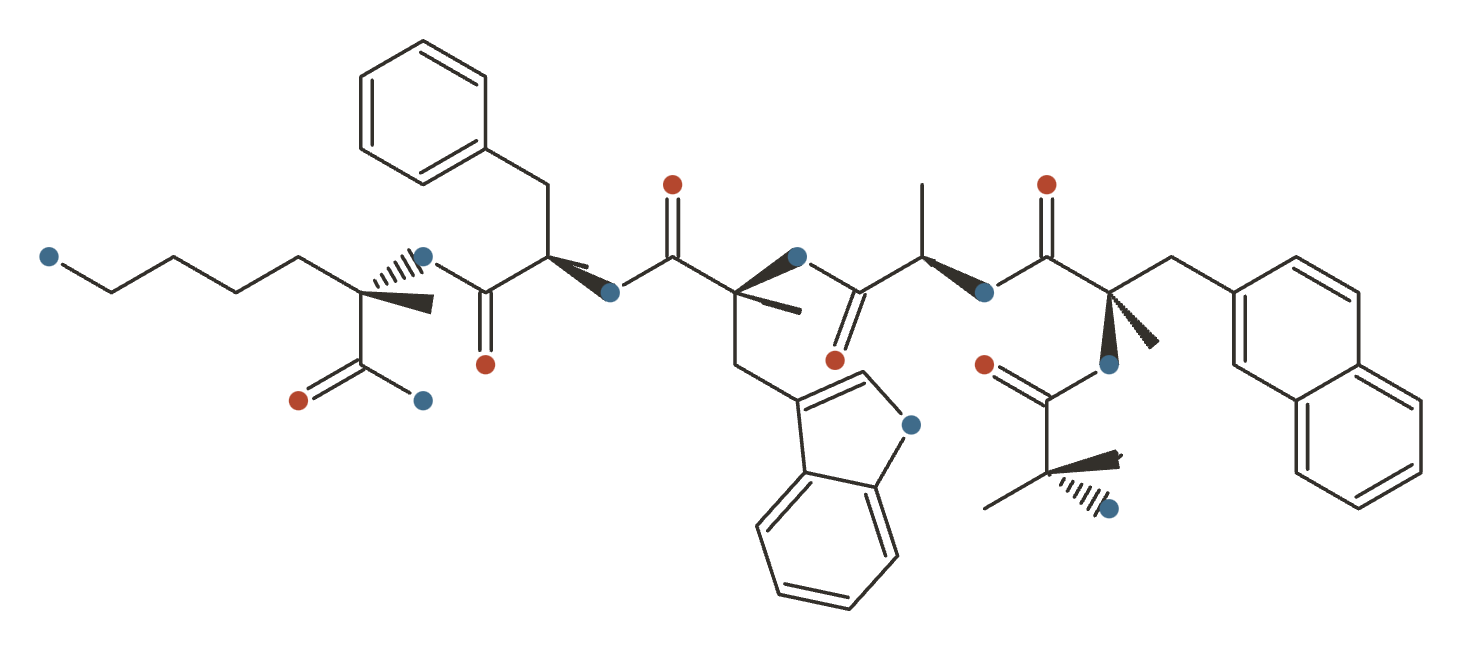
GHRP-2
A synthetic hexapeptide ghrelin-receptor agonist that provokes a sharp GH pulse — approved in Japan only as a diagnostic agent.

GHRP-2 at a Glance
GHRP-2 is a synthetic hexapeptide that activates the ghrelin receptor, producing a sharp, reliable pulse of growth hormone. It is potent enough to be used diagnostically — it is approved in Japan as a test agent for assessing pituitary GH reserve, which is an unusual level of regulatory recognition for a peptide in this category. Outside that single approval it is an unapproved research chemical. Along with the GH pulse it raises cortisol, prolactin and appetite, which distinguishes it from the more selective ipamorelin.
History & Development
GHRP-2 is one of very few compounds on this hub with an actual regulatory approval - and the approval is for a single diagnostic injection, not for anything it is sold to do.
| First described | Not established in the sources consulted for this section |
| Discovered / synthesised by | Not established in the sources consulted for this section |
| Institution | Not established in the sources consulted for this section |
| Origin | Synthetic hexapeptide; ghrelin-receptor (GHS-R1a) agonist |
| Key patent | Not established in the sources consulted for this section |
| Assignee | Not established in the sources consulted for this section |
| Development status | Approved in Japan as a single-dose diagnostic agent for growth-hormone deficiency; not approved in the US, EU, UK or Australia |
Discovery
GHRP-2 belongs to the growth-hormone-releasing peptide series - short synthetic peptides that activate the ghrelin receptor and provoke a sharp pituitary GH pulse. It predates the selective secretagogues, and it is not selective: alongside growth hormone it raises cortisol, prolactin and ACTH, which is precisely the profile that later compounds such as ipamorelin were designed to avoid.
That lack of selectivity is why it is a good diagnostic agent. A strong, reliable GH pulse is exactly what a provocation test needs.
Development & ownership
GHRP-2’s approval is Japanese, diagnostic, and single-dose: 100 µg intravenously in adults, or about 1 µg/kg in children, given once, to test whether the pituitary can release growth hormone. Transient flushing is the characteristic effect, and single doses have a long, well-documented tolerability record in that setting.
Nothing in that approval speaks to repeated use, which is the entire basis of the peptide market around it. The relevant finding is on the page below: five days of daily injection blunted the response - the pituitary stops answering as loudly. A diagnostic agent is optimised to work once.
How it reached the market
Outside Japan, GHRP-2 is an unapproved research chemical, sold for muscle gain, recovery and anti-ageing at daily subcutaneous doses. That regimen has no approval anywhere, and it is the one pattern of use its own literature suggests degrades over days.
What It's Used For
GHRP-2 — international nonproprietary name pralmorelin, development codes KP-102 and GPA-748 — is a synthetic hexapeptide (D-Ala-D-2-Nal-Ala-Trp-D-Phe-Lys-NH₂, ~818 Da) that agonizes the ghrelin / growth-hormone-secretagogue receptor GHS-R1a on pituitary somatotrophs and triggers a sharp pulse of growth hormone. It is a ghrelin mimetic, not a GHRH analogue: it does not act through the GHRH receptor at all 15Reference 15In vitroGrowth hormone-releasing peptide-2 (GHRP-2) does not act via the human growth hormone-releasing factor receptorView study →, which is the mechanistic line separating it from sermorelin, CJC-1295 and tesamorelin, and it is the same receptor targeted by ipamorelin, GHRP-6 and oral MK-677.
The status fact comes first, and it is narrower than it sounds. GHRP-2 is the only growth-hormone secretagogue any national regulator has ever approved — Kaken Pharmaceutical markets it in Japan as GHRP Kaken 100, approved in 2004 for use in adults and children over four. But it is approved as a diagnostic agent, not a treatment: one intravenous dose, to see whether the pituitary can release growth hormone. A diagnostic approval validates exactly the one thing about this compound that nobody disputes — that it provokes a measurable GH pulse. It says nothing about whether that pulse does anything useful, and it is not a Western approval. Everywhere outside that Japanese diagnostic niche, GHRP-2 is an unapproved research chemical, sold “not for human consumption” and prohibited in sport at all times.
Two further facts reframe the consumer use. First, GHRP-2 is not selective. Ipamorelin’s whole design premise was to release GH without raising ACTH, cortisol and prolactin — the off-target rise that GHRP-2 and GHRP-6 produce 14Reference 14Effects of GHRP-2 and hexarelin, two synthetic GH-releasing peptides, on GH, prolactin, ACTH and cortisol levels in manView study →.
GHRP-2 has the property ipamorelin was engineered to avoid, and here that is treated as a safety finding, not a footnote of pharmacology. Second, the acute GH spike does not straightforwardly become sustained anabolism. Five days of daily subcutaneous injection in healthy young men significantly attenuated the GH response and left IGF-1 completely unchanged 12Reference 12A five day treatment with daily subcutaneous injections of growth hormone-releasing peptide-2 causes response attenuation and does not stimulate insulin-like growth factor-I secretion in healthy young menView study →.
The human literature on GHRP-2 is almost entirely GH and IGF-1 pulse data in healthy volunteers, plus pediatric diagnostic work: it is a biomarker record, and there is no controlled human outcome trial for muscle, fat, strength, or aging.
Support is an experimental score I’m building — a composite weighted by study type (human > animal > in vitro > review) and study volume. It’s a beta: a fast way to rank strength of evidence at a glance, not a validated metric. Each application links down to its write-up.
Muscle gain, fat loss, body recomposition and “anti-aging” — the uses GHRP-2 is actually marketed for — are deliberately absent from this table. They rest on the acute GH spike plus vendor copy, not on any controlled human outcome trial, and they are not scored.
Note also that the 28% on the body-composition row is not simple absence of evidence. GHRP-2 was tested on the intermittent-injection schedule the community uses, and IGF-1 did not move 12Reference 12A five day treatment with daily subcutaneous injections of growth hormone-releasing peptide-2 causes response attenuation and does not stimulate insulin-like growth factor-I secretion in healthy young menView study →. That is a null result, not an untested question.
Human, and the approved indication. A single intravenous dose of GHRP-2 — 100 µg in adults, about 1 µg/kg in children — produces a GH peak within 60 minutes in essentially everyone with a functioning pituitary, and a markedly blunted one in GH-deficient patients. The validation study enrolled 77 healthy subjects and 58 adults with ITT-confirmed GH deficiency: peak GH was 84.6 µg/L in healthy controls versus 1.36 µg/L in patients, reproducibility on repeat testing was good, and a 15 µg/L cut-off corresponded to the conventional ITT threshold of 3 µg/L 2Reference 2A simple diagnostic test using GH-releasing peptide-2 in adult GH deficiencyView study →. Crucially, the response was only mildly affected by age and adiposity — the failure mode that degrades other provocative tests.
A three-way comparison in 71 pre-operative pituitary-tumor patients ran ITT, arginine and GHRP-2 in the same people: median peak GH was 28.9 µg/L with GHRP-2 versus 9.4 with ITT and 4.4 with arginine, and GHRP-2 achieved 85.5% sensitivity and 94.5% specificity against ITT for severe deficiency 3Reference 3The arginine and GHRP-2 tests as alternatives to the insulin tolerance test for the diagnosis of adult GH deficiency in Japanese patients: a comparisonView study →. That matters clinically because the insulin-tolerance test is contraindicated in patients with cardiac disease or seizure history, and GHRP-2 gives a comparable answer without inducing hypoglycemia.
The test has since been extended in Japanese practice. Because GHRP-2 releases ACTH as well as GH, measuring both during the same test screens for the secondary adrenal insufficiency that frequently accompanies GH deficiency — in 36 patients, an ACTH-response cut-off of 1.55-fold gave 83% sensitivity and 88% specificity, and combining it with peak cortisol reached 100% specificity 4Reference 4Clinical usefulness of the growth hormone-releasing peptide-2 test for hypothalamic-pituitary disorderView study →. Robust responses have been documented in adolescents 5Reference 5Robust growth hormone responses to GH-releasing peptide 2 in adolescentsView study →, and low GHRP-2-stimulated GH in obese patients was shown to normalize after sleeve gastrectomy — i.e. the blunted response was a consequence of obesity, not true deficiency 6Reference 6Laparoscopic sleeve gastrectomy resolves low GHRP-2-stimulated growth hormone levels in obese patientsView study →.
Gap: this validates GHRP-2 as a probe, not a treatment. The approval is Japanese only, covers a single diagnostic dose, and a positive test says nothing about therapeutic benefit for anything. There is also no equivalent Western regulatory review of the diagnostic dossier.
Human, and the one place GHRP-2 was actually given as a treatment. Fifteen children with short stature (half GH-deficient, half idiopathic) received intranasal GHRP-2 at 5–15 µg/kg, twice daily for three months and then three times daily; fifteen completed six months and six continued for 18–24 months. Height velocity rose from 3.7 ± 0.2 cm/year at baseline to 6.1 ± 0.3 cm/year at six months, sustained at 6.0 cm/year at 18–24 months, and the treatment was well tolerated 9Reference 9Treatment effects of intranasal growth hormone releasing peptide-2 in children with short statureView study →. Two findings inside that same study cut against the simple reading, and the page carries both: IGF-1 and IGFBP-3 did not change significantly, and the acute GH response to GHRP-2 did not attenuate over the treatment period even though the growth effect was modest.
The supporting human work is diagnostic and kinetic rather than therapeutic. An earlier study compared intravenous and intranasal GHRP-2 against conventional provocative agents in short-stature children 8Reference 8Diagnostic studies with intravenous and intranasal growth hormone-releasing peptide-2 in children of short statureView study →, and a phase I PK/PD study in 10 prepubertal children characterized single-dose IV kinetics and fitted the GH response to a sigmoid Emax model, giving the compound’s only proper human pharmacokinetic parameters 7Reference 7Pharmacokinetics and pharmacodynamics of growth hormone-releasing peptide-2: a phase I study in childrenView study →.
Development went no further. Pralmorelin entered Phase II in Japan for pituitary dwarfism as KP-102 LN, with a planned launch that never happened; the parallel US program under Wyeth for GH deficiency was discontinued 1Reference 1ReviewPralmorelin: GHRP 2, GPA 748, growth hormone-releasing peptide 2, KP-102 D, KP-102 LN — development, licensing and regulatory profileView study →. Recombinant human GH remained standard of care.
Gap: one open-label, uncontrolled series of 15 children at a single center, with no placebo or rhGH comparator and no final-height data. Height velocity improved while IGF-1 did not — a dissociation nobody followed up, because the program was abandoned. This is a real human treatment signal and a long way short of demonstrated efficacy.
One acute human study, and it is a clean one. GHRP-2 mimics ghrelin, whose two headline actions are GH release and meal initiation. Seven lean healthy men were infused subcutaneously with GHRP-2 (1 µg/kg/h) or saline for 270 minutes and then offered an ad-libitum buffet meal: they ate 35.9 ± 10.9% more on GHRP-2, and every single subject increased intake even when normalized per kilogram of body weight (p = 0.008), with no change in macronutrient composition 10Reference 10Growth hormone releasing peptide-2 (GHRP-2), like ghrelin, increases food intake in healthy menView study →. Serum GH rose as expected. It is a small acute crossover, but the effect is unambiguous and it is human.
The anti-wasting extension is rodent only. In rats with adjuvant arthritis — a cachexia model — GHRP-2 raised leptin and reduced arthritis severity and the associated inflammatory response 17Reference 17AnimalAnti-inflammatory effect of the ghrelin agonist growth hormone-releasing peptide-2 (GHRP-2) in arthritic ratsView study →. That is the basis for interest in cachexia, anorexia of aging and post-illness recovery, and it has not been tested in a person.
Gap: no controlled trial of GHRP-2 for any clinical appetite or cachexia outcome — the human evidence is a single 270-minute infusion in seven healthy men measuring one meal. Note the direction of the finding as well: for anyone using GHRP-2 for fat loss, appetite stimulation is an adverse effect.
This is the claim behind nearly all consumer use, and it is the row where the human data actively conflict — the conflict tracks the dosing schedule.
Continuous delivery worked, at the biomarker level. In healthy older men and women, 30 days of continuous subcutaneous GHRP-2 infusion (1 µg/kg/h, n=17) stimulated pulsatile GH secretion more than three-fold on day 1 and 1.8-fold on days 14 and 30, elevated IGF-1 to a stable plateau across all three timepoints, and raised IGFBP-3 and IGFBP-5; safety screening remained normal 11Reference 11Sustained elevation of pulsatile growth hormone secretion and IGF-I, IGFBP-3 and IGFBP-5 concentrations during 30-day continuous subcutaneous infusion of GH-releasing peptide-2 in older men and womenView study →. That is a genuine, sustained activation of the somatotropic axis in humans.
Intermittent injection did not. In nine healthy young men given 100 µg subcutaneously once daily for five days, peak GH fell from 83 to 51 µg/L across the study and analysis of variance confirmed significant response attenuation — and mean serum IGF-1 did not increase at all (22–25 nmol/l, flat across all six measurement days) 12Reference 12A five day treatment with daily subcutaneous injections of growth hormone-releasing peptide-2 causes response attenuation and does not stimulate insulin-like growth factor-I secretion in healthy young menView study →. Osteocalcin, a different marker of GH action in tissue, did rise significantly. That is the schedule gray-market use follows, and on that schedule the key downstream marker was null.
The remaining human data are confounded. A retrospective chart review of men on testosterone therapy found IGF-1 rose from 160 to 239 ng/mL over ~134 days — but only 14 of 105 men met the compliance criteria, there was no control group, and every patient received GHRP-2 and GHRP-6 and sermorelin together on top of testosterone 13Reference 13ReviewGrowth hormone secretagogue treatment in hypogonadal men raises serum insulin-like growth factor-1 levelsView study →, so nothing in it can be attributed to GHRP-2. The reviews that circulate on this topic are narrative, not systematic 20,
Gap: no study has ever measured lean mass, fat mass, strength or physical function in humans given GHRP-2 — not once, on any schedule. Even the positive 30-day result is an infusion pump, not an injection pen, and it stops at IGF-1. Tachyphylaxis on repeated bolus dosing is documented, so escalating the dose to chase the effect is exactly what the data argue against.
Rat models only, from essentially one laboratory. In rats with adjuvant-induced arthritis, GHRP-2 exerted an anti-inflammatory effect and raised leptin 17Reference 17AnimalAnti-inflammatory effect of the ghrelin agonist growth hormone-releasing peptide-2 (GHRP-2) in arthritic ratsView study →, and in the same model it prevented the arthritis-induced increase in MuRF1 and MAFbx — the two E3 ubiquitin ligases that drive skeletal-muscle atrophy 18Reference 18AnimalGhrelin receptor agonist GHRP-2 prevents arthritis-induced increase in E3 ubiquitin-ligating enzymes MuRF1 and MAFbx in skeletal muscleView study →. In endotoxemic rats it attenuated the hepatic inflammatory response and transaminase rise independently of food intake, which rules out the effect being purely secondary to eating more 19Reference 19AnimalGH-releasing peptide-2 administration prevents liver inflammatory response in endotoxemiaView study →. Mechanistically these are ghrelin-receptor anti-inflammatory and anti-catabolic actions and they are internally consistent.
Gap: entirely animal, single species, single research group, and never replicated independently. There is no human anti-inflammatory or muscle-preservation study of GHRP-2 of any kind. An animal result is not a human result.
Mechanisms
| Target / pathway | Effect | Relevant to |
|---|---|---|
| GHS-R1a (ghrelin receptor), pituitary somatotrophs | Agonist → rapid pulsatile GH release | Diagnostic testing; all downstream claims |
| GHRH receptor | Not engaged — GHRP-2 releases GH independently of the GHRH receptor 15Reference 15In vitroGrowth hormone-releasing peptide-2 (GHRP-2) does not act via the human growth hormone-releasing factor receptorView study → | Distinguishes it from sermorelin / CJC-1295 / tesamorelin |
| Intracellular signaling | Acts through a route separable from GHRH’s cAMP pathway; synergizes with GHRH rather than duplicating it 11, | Why the two classes are co-injected |
| Somatostatin tone | Functionally opposes the inhibitory brake on GH | Magnitude of the provoked pulse |
| GHS-R1a, hypothalamic appetite circuits | Agonist → increased hunger and food intake | Appetite; cachexia; unwanted for fat loss |
| Corticotroph / lactotroph axis | Off-target ACTH, cortisol and prolactin release 14Reference 14Effects of GHRP-2 and hexarelin, two synthetic GH-releasing peptides, on GH, prolactin, ACTH and cortisol levels in manView study → | Safety — the property ipamorelin was designed to avoid |
| Repeated dosing | Progressive attenuation of the GH response (tachyphylaxis) 12Reference 12A five day treatment with daily subcutaneous injections of growth hormone-releasing peptide-2 causes response attenuation and does not stimulate insulin-like growth factor-I secretion in healthy young menView study → | Why chronic bolus regimens under-deliver |
Pharmacokinetics
GHRP-2 has measured human pharmacokinetics, which is unusual on this hub. After a single 1 µg/kg intravenous dose in prepubertal children, disposition was biexponential with a terminal half-life of 0.55 ± 0.14 hours (~33 minutes), plasma clearance 0.66 L/h/kg, apparent volume of distribution 0.32 L/kg and Cmax 7.4 ng/mL; the GH response it drives peaks around 25 minutes and itself decays with a ~0.37-hour half-life 7Reference 7Pharmacokinetics and pharmacodynamics of growth hormone-releasing peptide-2: a phase I study in childrenView study →. So both the peptide and the pulse it triggers are gone within a few hours — the compound is a provocative stimulus, not a sustained hormone therapy, and that is the physical reason a once-daily injection schedule struggles to hold IGF-1 up while a continuous infusion can 11,
Route is load-bearing but less absolutely than for most peptides. The approved product is a single-dose intravenous diagnostic formulation; research and community use is subcutaneous; and GHRP-2 is one of the few GHRPs with documented intranasal activity — the pediatric treatment study dosed 5–15 µg/kg intranasally and achieved GH responses above 10 µg/L, against 1 µg/kg intravenously for the same effect size 8,
It is supplied as a lyophilized powder requiring reconstitution; dry powder is stored cold and protected from light, and reconstituted solution needs refrigeration and has a short shelf life. Stability figures for gray-market material are not independently documented.
Clinical & regulatory status
Approved — in Japan, as a diagnostic. Pralmorelin is marketed by Kaken Pharmaceutical as GHRP Kaken 100, approved by Japan’s PMDA in 2004 as a single-dose intravenous diagnostic agent for assessing growth-hormone deficiency in adults and children over four. It is the only GH secretagogue ever approved by any national regulator — and the approval is for detecting a deficiency, not treating one. The Adis development profile records the licensing chain: the compound came out of Cyril Bowers’ group at Tulane University with Polygen, Kaken acquired worldwide rights, and Kaken sublicensed the US and Canada to Wyeth; the Japanese diagnostic application (KP-102 D) was pending approval with a planned 2004 launch, the Japanese short-stature program (KP-102 LN) was in Phase II, and the US program under Wyeth was discontinued 1Reference 1ReviewPralmorelin: GHRP 2, GPA 748, growth hormone-releasing peptide 2, KP-102 D, KP-102 LN — development, licensing and regulatory profileView study →. Tulane holds US Patent 6,468,974 (October 2002) on the peptide series 1Reference 1ReviewPralmorelin: GHRP 2, GPA 748, growth hormone-releasing peptide 2, KP-102 D, KP-102 LN — development, licensing and regulatory profileView study →.
Not approved anywhere else. GHRP-2 has never been approved by the FDA, EMA, MHRA or TGA for any indication, and it is not a dietary supplement. It is prohibited by WADA at all times (class S2, peptide hormones/growth factors/mimetics), and it has been identified as an undeclared adulterant in a “nutritional supplement” sold to consumers 22Reference 22In vitroIdentification of the growth-hormone-releasing peptide-2 (GHRP-2) in a nutritional supplementView study → — evidence that the product circulating outside the regulated channel is not reliably what its label says.
Registered trials: none. A ClinicalTrials.gov API search this pass for GHRP-2, pralmorelin and KP-102 returns zero studies (the only hits on the spelled-out term are unrelated nutrition and microbiome trials). The entire substantive human record is Japanese diagnostic work, 1990s Tulane/Seattle pediatric studies, and small healthy-volunteer pharmacology — none of it in a modern trial registry.
| Completed | Ongoing | Terminated | Preclinical |
|---|---|---|---|
| 0registered (≈8 published human studies outside the registries; 1 approved diagnostic indication) | 0 | 0registered (the Japanese Phase II short-stature and US Wyeth programs were both discontinued without published results) | Modest — rat inflammation/cachexia models, in-vitro receptor work |
Last checked: July 2026.
Sourcing, Route & Legal Status
Regulatory status — hold both fences at once. GHRP-2 sits in a category almost nothing else on this hub occupies: it is a currently approved medicine, and that approval buys the consumer use nothing. The two limits are separate and both bind. First, the approval is Japanese, not Western — the FDA, EMA, MHRA and TGA have never approved it for anything, so there has been no Western regulatory review of its dossier. Second, and more important, the approval is diagnostic: one intravenous dose, in a clinic, to measure whether a pituitary works. It is not an approval to take GHRP-2 repeatedly for growth, muscle, leanness or aging, and the fact that it reliably provokes a GH pulse — the thing the approval certifies — is the one claim about this compound that was never in dispute. Marketing that leans on “approved in Japan” is borrowing a diagnostic credential for a therapeutic claim. Outside that niche GHRP-2 is an unapproved research chemical, sold “for research use only / not for human consumption,” and it is banned in sport at all times (WADA S2).
How it’s supplied and administered. The Japanese product is a single-dose vial for intravenous injection. Research-chemical GHRP-2 is a lyophilized powder requiring reconstitution — typically with bacteriostatic water — and is self-administered by subcutaneous injection; the intranasal route used in the pediatric studies requires roughly an order of magnitude more peptide for the same GH response 8,
Sourcing reality (this is a safety issue, not a footnote). Outside Japan, effectively all GHRP-2 reaches users through unregulated vendors with no manufacturing oversight, no pharmacopoeial quality control and no clinical accountability. The concrete risks are under- or over-concentrated product, peptide mislabeling or outright substitution, incomplete-synthesis by-products, and bacterial endotoxin — the last being serious specifically because this is an injected product. That these risks are real rather than theoretical is documented: GHRP-2 has been found as an undeclared ingredient in a consumer supplement 22Reference 22In vitroIdentification of the growth-hormone-releasing peptide-2 (GHRP-2) in a nutritional supplementView study →. A vendor’s own certificate of analysis is not independent verification and can be falsified. None of the human data here were generated with gray-market material — they came from pharmaceutical-grade peptide in hospitals. This page does not recommend or link vendors.
Safety
GHRP-2’s reassuring tolerability record belongs to single diagnostic doses given under medical supervision — which says nothing about months of self-injection. The headline liability is that it raises cortisol, ACTH and prolactin alongside growth hormone, and that off-target load does not fade even as the GH response does.
- Not a selective secretagogue. ACTH, cortisol and prolactin rise with GH — intrinsic to the molecule, not a dose artifact.
- Several groups should not use it. Active or previous malignancy, uncontrolled diabetes or glucose intolerance, and anyone under evaluation for adrenal or pituitary disease.
- It confounds the very tests it resembles. Using it distorts pituitary assessment.
- Tachyphylaxis is the real dose limit. Five days of daily injection blunted the GH response and produced no IGF-1 rise, while the off-target hormone load persisted.
- Appetite goes up, not down. A 36% acute increase in food intake in healthy men — unwanted for anyone using it for fat loss.
- Unregulated injected product. Injection-site reactions, abscess from non-sterile technique, and endotoxin risk.
Full Safety & Interactions Detail
The non-selectivity is the headline, and it belongs here rather than in the mechanism table. GHRP-2 raises ACTH, cortisol and prolactin alongside GH 14Reference 14Effects of GHRP-2 and hexarelin, two synthetic GH-releasing peptides, on GH, prolactin, ACTH and cortisol levels in manView study → — this is intrinsic to the molecule, not a contaminant or a dose artifact. It is worth being precise about the magnitude: in the head-to-head human comparison, GHRP-2 and hexarelin had a potent effect on GH and a slight stimulatory effect on prolactin, ACTH and cortisol at diagnostic doses 14Reference 14Effects of GHRP-2 and hexarelin, two synthetic GH-releasing peptides, on GH, prolactin, ACTH and cortisol levels in manView study →, so a single test dose is not a corticosteroid event. But the direction is fixed and the exposure scales with how often you dose. This is exactly the property ipamorelin was engineered to eliminate — ipamorelin’s selectivity claim is defined against GHRP-2 — so the two are not interchangeable, and stacking guides that treat them as equivalent GHRPs are wrong on the point that matters most for chronic use.
Documented adverse effects. Single diagnostic doses have a long human tolerability record in Japan and in the validation trials 2,
Dose-limiting reality. The practical ceiling is not a toxicity threshold — it is tachyphylaxis plus an unchanged off-target load. Five days of daily injection blunted the GH response and produced no IGF-1 rise 12Reference 12A five day treatment with daily subcutaneous injections of growth hormone-releasing peptide-2 causes response attenuation and does not stimulate insulin-like growth factor-I secretion in healthy young menView study →, while the ACTH/cortisol/prolactin effect has no reason to attenuate in parallel. Escalating dose to recover the fading GH effect therefore worsens one side of the ledger without a demonstrated benefit on the other.
Interactions. No formal human drug-interaction program exists. Mechanism-level cautions only, labeled as such: GH release is additive or synergistic with GHRH analogues — GHRP-2 combined with GHRH drove GH secretion significantly more than either alone in humans 11Reference 11Sustained elevation of pulsatile growth hormone secretion and IGF-I, IGFBP-3 and IGFBP-5 concentrations during 30-day continuous subcutaneous infusion of GH-releasing peptide-2 in older men and womenView study →, which is the pharmacological basis of the common GHRP + GHRH stack and is not evidence that the stack is safe or useful. Glucocorticoid signaling is relevant given the ACTH/cortisol rise. GH secretagogues affect insulin sensitivity and glucose handling as a class, so co-use with diabetes medication is a theoretical concern. None of these has been measured for GHRP-2.
Who should avoid it. Anyone with active or previous malignancy (GH/IGF-1 signaling is proliferative), uncontrolled diabetes or glucose intolerance, adrenal or pituitary disease under active evaluation — GHRP-2 will confound the exact tests used to assess it 4Reference 4Clinical usefulness of the growth hormone-releasing peptide-2 test for hypothalamic-pituitary disorderView study → — and competitive athletes, for whom it is a doping violation at all times. Anyone unwilling to accept an injected product of unverified identity and sterility should not use gray-market material at all.
Injection-specific risks. Reconstituted peptide from unregulated supply carries injection-site reactions, infection or abscess from non-sterile technique, and systemic risk from endotoxin-contaminated product. Sterile reconstitution, aseptic technique and single-use needles are harm reduction, not a safety guarantee, and they do nothing about what is actually in the vial.
Scope disclosure (honesty, not a claim):
- Human data? Yes, but narrow. Approval-grade only for diagnosing GH deficiency (Japan); plus measured human PK, one small open-label pediatric treatment series, and a handful of healthy-volunteer pharmacology studies. No controlled human outcome trial exists for muscle, fat loss, strength, performance or aging — and the one long-term human treatment result (height velocity in 15 children) was uncontrolled.
- Interactions assessed? No. The GHRH synergy is a measured pharmacodynamic effect, not an assessed safety interaction; everything else is class/mechanism reasoning.
- Pregnancy/lactation assessed? No.
- Long-term safety established? No. The reassuring tolerability record belongs to single diagnostic doses under medical supervision, which says nothing about months of self-injection. Repeated dosing attenuates the GH response while the cortisol/ACTH/prolactin effect persists, and no long-term human safety dataset exists. Absence of reported harm is not evidence of safety.
Not assessed / not established. There are no human pregnancy or lactation data, and no regulatory label addresses chronic exposure — the Japanese approval covers a single diagnostic dose. Given the GH-axis, appetite and HPA effects, avoid in pregnancy and breastfeeding.
Dosage
There is no established therapeutic dose for GHRP-2 anywhere in the world, and none is recommended here. The only approved regimen is diagnostic and single-use. Every figure below is research and regulatory data reported for context, not a protocol — no dose is recommended and GHRP-2 is not a supplement.
- Approved diagnostic dose (Japan): a single 100 µg intravenous dose in adults, with GH sampled over the following two hours; a peak below ~15 µg/L indicates severe GH deficiency 2Reference 2A simple diagnostic test using GH-releasing peptide-2 in adult GH deficiencyView study →. In children the equivalent is about 1 µg/kg intravenously 7,
8Reference 7Pharmacokinetics and pharmacodynamics of growth hormone-releasing peptide-2: a phase I study in childrenView study →Reference 8Diagnostic studies with intravenous and intranasal growth hormone-releasing peptide-2 in children of short statureView study → . - Continuous infusion (research): 1 µg/kg/h subcutaneously, the schedule that sustained GH and IGF-1 over 30 days in older adults 11Reference 11Sustained elevation of pulsatile growth hormone secretion and IGF-I, IGFBP-3 and IGFBP-5 concentrations during 30-day continuous subcutaneous infusion of GH-releasing peptide-2 in older men and womenView study → and that produced the acute appetite effect over 270 minutes 10Reference 10Growth hormone releasing peptide-2 (GHRP-2), like ghrelin, increases food intake in healthy menView study →. This requires a pump; it is not a regimen anyone self-administers.
- Daily injection (research): 100 µg subcutaneously once daily — the five-day schedule that attenuated the GH response and produced no IGF-1 increase in healthy young men 12Reference 12A five day treatment with daily subcutaneous injections of growth hormone-releasing peptide-2 causes response attenuation and does not stimulate insulin-like growth factor-I secretion in healthy young menView study →. This is the closest published analogue to community practice, and it is the one that did not work.
- Intranasal (research, pediatric): 5–15 µg/kg two to three times daily, the only regimen ever given for months as a treatment 9Reference 9Treatment effects of intranasal growth hormone releasing peptide-2 in children with short statureView study →. Roughly an order of magnitude more peptide than the IV dose for a comparable GH response.
Community injection regimens (typically ~100 µg one to three times daily, often stacked with a GHRH analogue) are not derived from any controlled human efficacy trial; where a comparable schedule was actually tested, the downstream marker did not move 12Reference 12A five day treatment with daily subcutaneous injections of growth hormone-releasing peptide-2 causes response attenuation and does not stimulate insulin-like growth factor-I secretion in healthy young menView study →. Vendor and forum figures are not dose-finding data and are not laundered into a recommendation here. This entry is informational only.
References
- Adis Editorial. (2004). Pralmorelin: GHRP 2, GPA 748, growth hormone-releasing peptide 2, KP-102 D, KP-102 LN — development, licensing and regulatory profile. Drugs R D. — review. https://pubmed.ncbi.nlm.nih.gov/15230633/
- Chihara K, et al. (2007). A simple diagnostic test using GH-releasing peptide-2 in adult GH deficiency. European Journal of Endocrinology. — human (validation study, 77 healthy + 58 GH-deficient). https://pubmed.ncbi.nlm.nih.gov/17609397/
- Kinoshita Y, et al. (2013). The arginine and GHRP-2 tests as alternatives to the insulin tolerance test for the diagnosis of adult GH deficiency in Japanese patients: a comparison. Endocrine Journal. — human (comparative, n=71). https://pubmed.ncbi.nlm.nih.gov/23079545/
- Suzuki S, et al. (2022). Clinical usefulness of the growth hormone-releasing peptide-2 test for hypothalamic-pituitary disorder. Journal of the Endocrine Society. — human (n=36). https://pubmed.ncbi.nlm.nih.gov/35795807/
- Onuki T, et al. (2024). Robust growth hormone responses to GH-releasing peptide 2 in adolescents. Journal of Pediatric Endocrinology and Metabolism. — human. https://pubmed.ncbi.nlm.nih.gov/38958228/
- Ohara E, et al. (2017). Laparoscopic sleeve gastrectomy resolves low GHRP-2-stimulated growth hormone levels in obese patients. Obesity Surgery. — human. https://pubmed.ncbi.nlm.nih.gov/28623445/
- Pihoker C, et al. (1998). Pharmacokinetics and pharmacodynamics of growth hormone-releasing peptide-2: a phase I study in children. Journal of Clinical Endocrinology and Metabolism. — human (phase I, n=10). https://pubmed.ncbi.nlm.nih.gov/9543135/
- Pihoker C, et al. (1995). Diagnostic studies with intravenous and intranasal growth hormone-releasing peptide-2 in children of short stature. Journal of Clinical Endocrinology and Metabolism. — human (children). https://pubmed.ncbi.nlm.nih.gov/7559885/
- Pihoker C, et al. (1997). Treatment effects of intranasal growth hormone releasing peptide-2 in children with short stature. Journal of Endocrinology. — human (open-label, uncontrolled, n=15). https://pubmed.ncbi.nlm.nih.gov/9390009/
- Laferrère B, et al. (2005). Growth hormone releasing peptide-2 (GHRP-2), like ghrelin, increases food intake in healthy men. Journal of Clinical Endocrinology and Metabolism. — human (acute crossover, n=7). https://pubmed.ncbi.nlm.nih.gov/15699539/
- Bowers CY, et al. (2004). Sustained elevation of pulsatile growth hormone secretion and IGF-I, IGFBP-3 and IGFBP-5 concentrations during 30-day continuous subcutaneous infusion of GH-releasing peptide-2 in older men and women. Journal of Clinical Endocrinology and Metabolism. — human (n=17). https://pubmed.ncbi.nlm.nih.gov/15126555/
- Nijland EA, et al. (1998). A five day treatment with daily subcutaneous injections of growth hormone-releasing peptide-2 causes response attenuation and does not stimulate insulin-like growth factor-I secretion in healthy young men. European Journal of Endocrinology. — human (n=9, null IGF-1 result). https://pubmed.ncbi.nlm.nih.gov/9820615/
- Sigalos JT, et al. (2017). Growth hormone secretagogue treatment in hypogonadal men raises serum insulin-like growth factor-1 levels. American Journal of Men’s Health. — human (retrospective chart review, n=14, combination therapy). https://pubmed.ncbi.nlm.nih.gov/28830317/
- Arvat E, et al. (1997). Effects of GHRP-2 and hexarelin, two synthetic GH-releasing peptides, on GH, prolactin, ACTH and cortisol levels in man. Peptides. — human (comparative). https://pubmed.ncbi.nlm.nih.gov/9285939/
- Chen C, et al. (1998). Growth hormone-releasing peptide-2 (GHRP-2) does not act via the human growth hormone-releasing factor receptor. Endocrine. — in vitro. https://pubmed.ncbi.nlm.nih.gov/9798733/
- Chen C, et al. (1998). Effect of growth hormone-releasing peptide-2 (GHRP-2) and GH-releasing hormone (GHRH) on the cAMP levels and GH release in cultured acromegalic tumours. Journal of Neuroendocrinology. — in vitro (human tumour cell culture). https://pubmed.ncbi.nlm.nih.gov/9688350/
- Granado M, et al. (2005). Anti-inflammatory effect of the ghrelin agonist growth hormone-releasing peptide-2 (GHRP-2) in arthritic rats. American Journal of Physiology — Endocrinology and Metabolism. — animal (rat). https://pubmed.ncbi.nlm.nih.gov/15507538/
- Granado M, et al. (2005). Ghrelin receptor agonist GHRP-2 prevents arthritis-induced increase in E3 ubiquitin-ligating enzymes MuRF1 and MAFbx in skeletal muscle. American Journal of Physiology — Endocrinology and Metabolism. — animal (rat). https://pubmed.ncbi.nlm.nih.gov/16030067/
- Granado M, et al. (2008). GH-releasing peptide-2 administration prevents liver inflammatory response in endotoxemia. American Journal of Physiology — Endocrinology and Metabolism. — animal (rat). https://pubmed.ncbi.nlm.nih.gov/17986630/
- Sinha DK, et al. (2020). Beyond the androgen receptor: the role of growth hormone secretagogues in the modern management of body composition in hypogonadal males. Translational Andrology and Urology. — review. https://pubmed.ncbi.nlm.nih.gov/32257855/
- Sigalos JT, Pastuszak AW. (2018). The safety and efficacy of growth hormone secretagogues. Sexual Medicine Reviews. — review. https://pubmed.ncbi.nlm.nih.gov/28400207/
- Thomas A, et al. (2010). Identification of the growth-hormone-releasing peptide-2 (GHRP-2) in a nutritional supplement. Drug Testing and Analysis. — in vitro (analytical detection). https://pubmed.ncbi.nlm.nih.gov/20878896/



