
Compound Monograph
Ginsenoside Rc
Ginsenoside Rc is one of the four major protopanaxadiol saponins of Asian ginseng — the group that also includes Rb1, Rb2 and Rd — set apart by a single arabinofuranose sugar. Despite being one of ginseng's most abundant molecules, it is comparatively under-studied as an isolate; the honest read is a handful of preclinical anti-inflammatory, anti-adipogenic and neuro-inflammation studies and, like its PPD siblings, very poor oral bioavailability with microbial conversion toward compound K.

Sources · 3
Where Does It Come From?
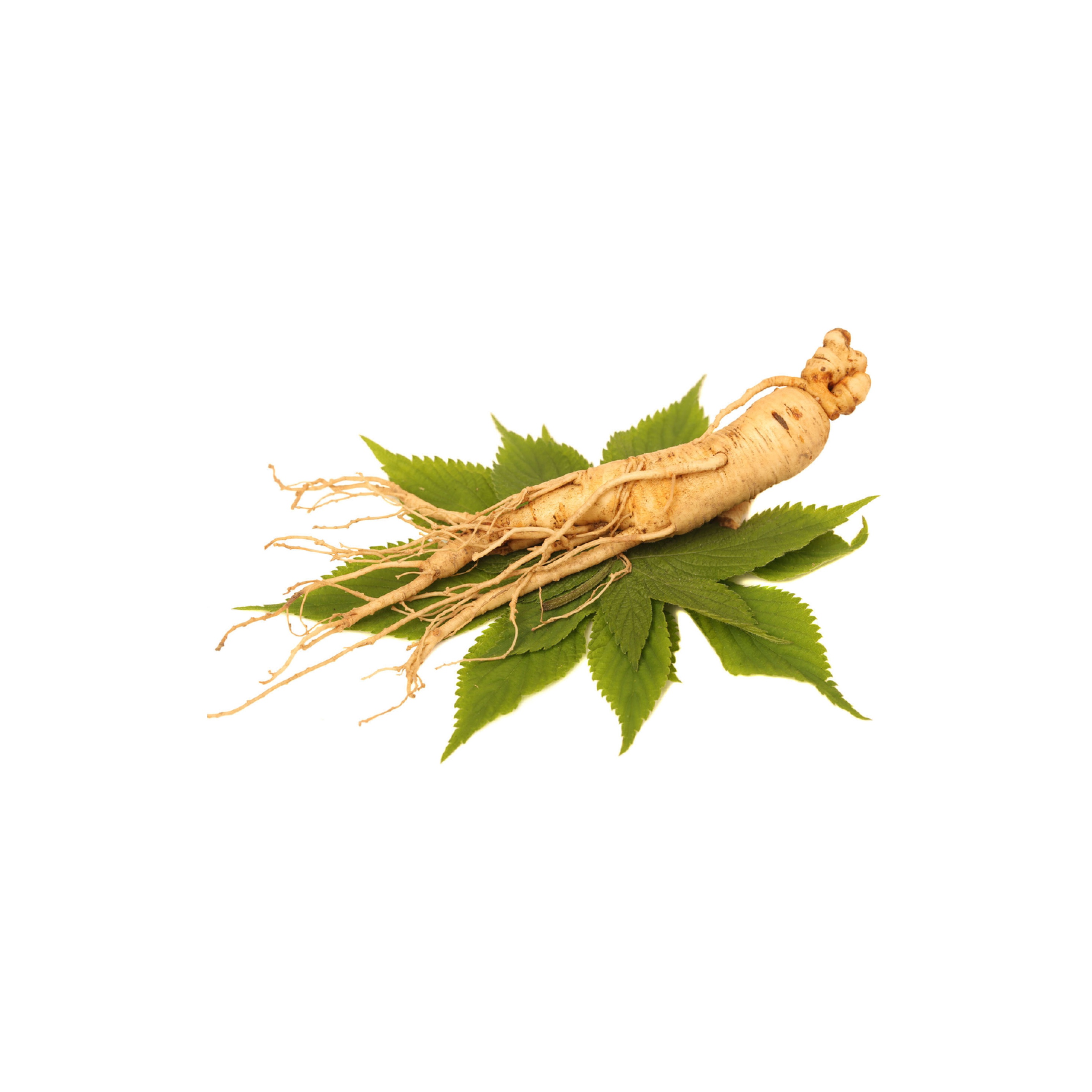
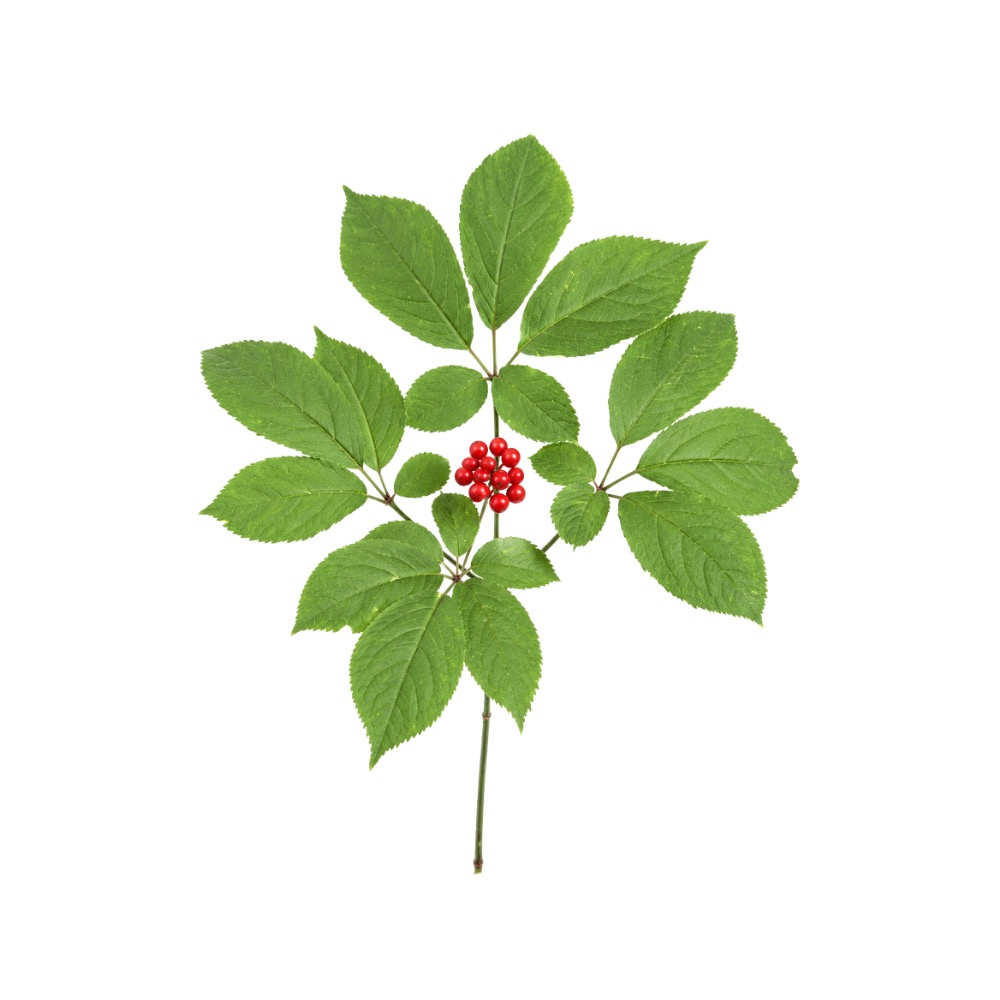
Ginsenoside Rc is a naturally occurring dammarane triterpenoid saponin (protopanaxadiol group), found in Asian ginseng and 2 other sources. It is well tolerated orally (low toxicity).

Concentration
Content by Source
Concentrations not reported. No percent-dry-weight or mg/g figures have been published for this compound in its source plants.
Ginsenoside Rc at a Glance
Ginsenoside Rc is one of the “big four” protopanaxadiol (PPD)-type saponins of Asian ginseng (Panax ginseng) — the quartet Rb1, Rb2, Rc and Rd that dominates the PPD side of the ginsenoside profile. Chemically it is a 20(S)-protopanaxadiol backbone carrying two glucose sugars at C-3 and, at C-20, the detail that defines it: a glucose plus an α-L-arabinofuranose 1Reference 1In vitroGinsenoside Rc promotes anti-adipogenic activity on 3T3-L1 adipocytes by down-regulating C/EBPα and PPARγ — in vitroView study →8Reference 8Studies on the saponins of ginsengView study →.
Despite that abundance, Rc has a comparatively thin dedicated pharmacology. Most “ginsenoside Rc” claims are really claims about whole ginseng or about the better-studied siblings ginsenoside Rb1 and ginsenoside Rg1. What genuine isolated-Rc signal exists is preclinical: anti-inflammatory activity in macrophages and mouse disease models, an anti-adipogenic effect on cultured fat cells, and a recent antidepressant/neuro-inflammation study in mice 1Reference 1In vitroGinsenoside Rc promotes anti-adipogenic activity on 3T3-L1 adipocytes by down-regulating C/EBPα and PPARγ — in vitroView study →2Reference 2In vitroGinsenoside Rc from Panax ginseng exerts anti-inflammatory activity by targeting TANK-binding kinase 1/interferon regulatory factor-3 and p38/ATF-2 — in vitro and mouseView study →3Reference 3In vitroGinsenoside Rc from Korean red ginseng (Panax ginseng C.AView study →5Reference 5AnimalAntidepressant effects of ginsenoside Rc on L-alpha-aminoadipic-acid-induced astrocytic ablation and neuroinflammation in mice — mouseView study →. As with every large PPD saponin, the load-bearing caveat is pharmacokinetic — Rc is barely absorbed intact by mouth and is progressively deglycosylated by gut bacteria toward compound K 6Reference 6AnimalPharmacokinetic study of ginsenoside Rc and simultaneous determination of its metabolites in rats using RRLC-Q-TOF-MS — rat pharmacokineticsView study →7Reference 7Clinical trialProof of the mysterious efficacy of ginseng: basic and clinical trials: metabolic activation of ginsenoside — deglycosylation by intestinal bacteria and esterification with fatty acid — reviewView study →. There are no human trials of isolated Rc.
One of Ginseng’s Four Major Saponins
Ginsenoside Rc earns its page less for a standout activity than for its place in ginseng’s chemistry. The dammarane ginsenosides split into two families by aglycone: the protopanaxadiol (PPD) group — Rb1, Rb2, Rc, Rd — and the protopanaxatriol (PPT) group — Rg1, Re, Rf. Rc sits firmly in the PPD camp, and within it the four majors differ only in the sugar hung at C-20: Rb1 carries a glucose-glucose chain, Rb2 an arabinopyranose, Rd a single glucose, and Rc its distinguishing arabinofuranose 1Reference 1In vitroGinsenoside Rc promotes anti-adipogenic activity on 3T3-L1 adipocytes by down-regulating C/EBPα and PPARγ — in vitroView study →8Reference 8Studies on the saponins of ginsengView study →. That one furanose ring is the whole identity of the molecule — remove it enzymatically and Rc becomes Rd.
For all that abundance, the dedicated Rc literature is genuinely thin. Where Rb1 has hundreds of neuroprotection and cardioprotection papers, isolated Rc has been the sole subject of only a handful of studies. The clearest is metabolic: in 3T3-L1 cells Rc was anti-adipogenic, cutting lipid accumulation and down-regulating the master fat-cell transcription factors PPARγ and C/EBPα while inducing lipolysis 1Reference 1In vitroGinsenoside Rc promotes anti-adipogenic activity on 3T3-L1 adipocytes by down-regulating C/EBPα and PPARγ — in vitroView study → — worth flagging because Rb1, by contrast, is reported to promote adipogenesis, so the PPD siblings are not interchangeable. A second, better-developed line is anti-inflammatory: isolated Rc suppresses the TBK1/IRF-3 and p38/ATF-2 signalling axes in activated macrophages and eased gastritis, hepatitis and arthritis in mice 2Reference 2In vitroGinsenoside Rc from Panax ginseng exerts anti-inflammatory activity by targeting TANK-binding kinase 1/interferon regulatory factor-3 and p38/ATF-2 — in vitro and mouseView study →3Reference 3In vitroGinsenoside Rc from Korean red ginseng (Panax ginseng C.AView study →. A 2024 study adds an antidepressant/neuro-inflammation signal in an astrocyte-ablation mouse model 5Reference 5AnimalAntidepressant effects of ginsenoside Rc on L-alpha-aminoadipic-acid-induced astrocytic ablation and neuroinflammation in mice — mouseView study →.
A word on the popular alcohol-metabolism / anti-hangover reputation of ginseng: that effect tracks to whole ginseng and to ginsenoside-free berry fractions acting on alcohol and aldehyde dehydrogenases — it is not an isolated-Rc property, and should not be credited to this molecule. The overall picture is a major structural component of ginseng with real but modest isolate signals, and no human data of its own.
What It's Used For
The isolated-Rc evidence is small and entirely preclinical — a few in-vitro and mouse studies. The section below ranks what exists honestly rather than inflating it.
Support is an experimental score — weighted by study type (human > animal > in vitro) and volume, tempered for isolate-vs-plant match and bioavailability. A beta, not a validated metric. Every row rests on isolated Rc in cells or mice (no human isolate data), so scores are capped low. Each application links to its write-up.
The most developed Rc-specific line, all on isolated Rc. In LPS-activated RAW264.7 macrophages and human synovial cells, Rc suppressed the TBK1/IKKε → IRF-3 and p38/ATF-2 signalling cascades that drive interferon- and cytokine-linked inflammation 2Reference 2In vitroGinsenoside Rc from Panax ginseng exerts anti-inflammatory activity by targeting TANK-binding kinase 1/interferon regulatory factor-3 and p38/ATF-2 — in vitro and mouseView study →.
In mice, Rc attenuated three separate inflammatory models — EtOH/HCl-induced gastritis, LPS/D-galactosamine-triggered hepatitis, and collagen-induced arthritis — lowering phosphorylated TBK1, IRF-3 and ATF-2 in joint and liver tissue 2Reference 2In vitroGinsenoside Rc from Panax ginseng exerts anti-inflammatory activity by targeting TANK-binding kinase 1/interferon regulatory factor-3 and p38/ATF-2 — in vitro and mouseView study →3Reference 3In vitroGinsenoside Rc from Korean red ginseng (Panax ginseng C.AView study →.
A related study found a Korean red ginseng saponin fraction rich in Rb1, Rc and Rb2 reduced collagen-induced arthritis severity, though there the effect is shared across the fraction, not isolated to Rc 4Reference 4AnimalKorean red ginseng saponin fraction rich in ginsenoside-Rb1, Rc and Rb2 attenuates the severity of mouse collagen-induced arthritis — mouseView study →.
Gap: in-vitro plus mouse models only; no human data, and the arthritis fraction work cannot separate Rc’s contribution from Rb1/Rb2. Poor oral uptake means the tissue exposures in these models may not be reachable by an oral human dose.
A single but clean in-vitro result. In 3T3-L1 pre-adipocytes, isolated Rc reduced proliferation and viability dose-dependently, cut the number of mature adipocytes and intracellular triglyceride, and down-regulated the adipogenic master switches PPARγ and C/EBPα while directly inducing lipolysis — all without overt cytotoxicity 1Reference 1In vitroGinsenoside Rc promotes anti-adipogenic activity on 3T3-L1 adipocytes by down-regulating C/EBPα and PPARγ — in vitroView study →.
This is the opposite direction to Rb1, which is reported to promote adipocyte differentiation, and is the metabolic signal most specific to Rc.
Gap: one cell-line study, no animal or human follow-up, no metabolic endpoint (body weight, glucose, lipids) in vivo; the anti-obesity framing is a hypothesis, not a demonstrated effect.
The newest signal. In a mouse model of depression driven by L-α-aminoadipic-acid-induced astrocytic ablation, isolated Rc produced antidepressant-like behavioural effects and dampened the accompanying neuro-inflammation — reducing microglial activation and pro-inflammatory cytokines (TNF-α, IL-6) linked to loss of astrocyte support 5Reference 5AnimalAntidepressant effects of ginsenoside Rc on L-alpha-aminoadipic-acid-induced astrocytic ablation and neuroinflammation in mice — mouseView study →. It fits the broader ginsenoside theme of neuro-inflammation modulation, but for Rc specifically it rests on this one 2024 study.
Gap: a single recent rodent model; no replication, no human data, and the astrocyte-ablation paradigm is a specialised model rather than a general depression readout.
Mechanisms
| Target / pathway | Effect | Relevant to |
|---|---|---|
| TBK1 / IKKε → IRF-3 | Suppresses phosphorylation; blunts interferon-regulatory signalling | Anti-inflammatory |
| p38 MAPK / ATF-2 | Suppresses phosphorylation; lowers cytokine transcription | Anti-inflammatory |
| PPARγ / C/EBPα | Down-regulation of adipogenic master transcription factors | Anti-adipogenic |
| Adipocyte lipolysis | Directly induced; lowers triglyceride storage | Anti-adipogenic |
| Microglial activation / TNF-α, IL-6 | Suppressed in astrocyte-ablation model | Antidepressant / neuro-inflammation |
| Gut microbiota (β-glucosidases / arabinofuranosidase) | Deglycosylation of Rc → Mc → compound K | Pharmacokinetics; bioactivation |
Pharmacokinetics
Bioavailability is the load-bearing fact, as for every large PPD saponin. Rc is a tetraglycosylated molecule — four sugars in total — which makes it poorly absorbed intact across the gut wall; in a rat study the extra sugar moieties slowed both absorption and elimination relative to smaller ginsenosides 6Reference 6AnimalPharmacokinetic study of ginsenoside Rc and simultaneous determination of its metabolites in rats using RRLC-Q-TOF-MS — rat pharmacokineticsView study →. What reaches tissue in quantity is largely its deglycosylation metabolites: after oral dosing in rats most of the Rc recovered in feces had been transformed into Mc and compound K, the stepwise-deglycosylated products generated by colonic bacteria stripping sugars (including the defining arabinofuranose) from the C-20 chain 6Reference 6AnimalPharmacokinetic study of ginsenoside Rc and simultaneous determination of its metabolites in rats using RRLC-Q-TOF-MS — rat pharmacokineticsView study →. Compound K is the more absorbable, often more potent active common to the PPD ginsenosides 7Reference 7Clinical trialProof of the mysterious efficacy of ginseng: basic and clinical trials: metabolic activation of ginsenoside — deglycosylation by intestinal bacteria and esterification with fatty acid — reviewView study →. This microbiota dependence — shared with Rb1 and Rd — means exposure to the “active” species varies between individuals and is blunted by antibiotics, and it reframes the in-vitro Rc data: an oral dose delivers little parent Rc to tissue 6Reference 6AnimalPharmacokinetic study of ginsenoside Rc and simultaneous determination of its metabolites in rats using RRLC-Q-TOF-MS — rat pharmacokineticsView study →7Reference 7Clinical trialProof of the mysterious efficacy of ginseng: basic and clinical trials: metabolic activation of ginsenoside — deglycosylation by intestinal bacteria and esterification with fatty acid — reviewView study →.
Clinical Trials
There are no registered clinical trials of isolated ginsenoside Rc. Human evidence associated with Rc comes only from whole Panax ginseng extracts standardized to total ginsenosides, where Rc is one of many saponins — benefits cannot be attributed to Rc specifically.
| Completed | Planned | Terminated | Preclinical |
|---|---|---|---|
| None(isolated Rc) | None known | None known | Limited |
Last checked: July 2026.
Isolate vs. Plant Studies
The Rc evidence base is unusual in being mostly isolated-molecule work — the 3T3-L1 adipogenesis study, the macrophage/mouse anti-inflammatory studies, and the 2024 antidepressant study all used purified Rc 1Reference 1In vitroGinsenoside Rc promotes anti-adipogenic activity on 3T3-L1 adipocytes by down-regulating C/EBPα and PPARγ — in vitroView study →2Reference 2In vitroGinsenoside Rc from Panax ginseng exerts anti-inflammatory activity by targeting TANK-binding kinase 1/interferon regulatory factor-3 and p38/ATF-2 — in vitro and mouseView study →3Reference 3In vitroGinsenoside Rc from Korean red ginseng (Panax ginseng C.AView study →5Reference 5AnimalAntidepressant effects of ginsenoside Rc on L-alpha-aminoadipic-acid-induced astrocytic ablation and neuroinflammation in mice — mouseView study →. That is a genuine strength for mechanistic attribution: unlike ginseng’s whole-extract clinical reputation, these effects can be pinned to the molecule. The weakness is the mirror image — none of it has been carried into humans, and the arthritis-fraction study deliberately used a Rb1/Rc/Rb2-rich fraction, so its benefit is a shared-fraction effect, not isolated Rc 4Reference 4AnimalKorean red ginseng saponin fraction rich in ginsenoside-Rb1, Rc and Rb2 attenuates the severity of mouse collagen-induced arthritis — mouseView study →. The pharmacokinetic gap widens the isolate-vs-plant gulf further: because oral Rc is largely converted to compound K before it acts, the concentrations that work on cells may never be reached in a person swallowing ginseng. The honest summary is that Rc has clean isolate mechanism data and zero isolate outcome data in humans.
Prevalence in Nature
Ginsenoside Rc is characteristic of the genus Panax. It is one of the routinely reported major saponins of Asian ginseng (Panax ginseng) root, and occurs across related species including American ginseng (Panax quinquefolius) and notoginseng (Panax notoginseng) 1Reference 1In vitroGinsenoside Rc promotes anti-adipogenic activity on 3T3-L1 adipocytes by down-regulating C/EBPα and PPARγ — in vitroView study →8Reference 8Studies on the saponins of ginsengView study →. Within P. ginseng it is one of the four dominant PPD saponins, generally present at a few milligrams per gram of dried root — below Rb1 but among the more abundant ginsenosides — though a tightly-cited species-by-species mg/g figure for Rc specifically is not well established in the primary literature (see the gaps tracker). As with all ginsenosides, content rises with root age and varies with cultivar, region, plant part and processing (red vs white ginseng). Rc is a PPD saponin of the storage root, not a volatile or a leaf constituent.
Discovery & Synthesis
Ginsenoside Rc was first isolated and structurally defined in 1974 by Syuichi Sanada, Junzo Shoji, Shoji Shibata and colleagues, in the opening paper of their landmark Studies on the Saponins of Ginseng series, which established the structures of ginsenosides Ro, Rb1, Rb2, Rc and Rd from Panax ginseng root 8Reference 8Studies on the saponins of ginsengView study →. The naming follows Shibata’s chromatographic convention — the “R” ginsenosides were lettered by their mobility on thin-layer chromatography (Ra, Rb, Rc … slowest-to-fastest), with Rc falling among the polar protopanaxadiol saponins.
Rc is obtained by extraction from ginseng root, not by synthesis — it is isolated from the total saponin fraction by chromatography, and there is no commercial total synthesis of the intact tetraglycoside. It is of interest mainly as a biotransformation substrate: microbial and enzymatic α-L-arabinofuranosidases selectively cleave Rc’s defining arabinofuranose to yield Rd, and further deglycosylation gives compound K, the route by which much research-grade compound K and Rd is produced from abundant Rc.
Patents: not yet researched.
Toxicity & Safety
Ginsenoside Rc is regarded as low in toxicity at the levels supplied by normal ginseng use, and the anti-inflammatory mouse studies reported no overt toxicity at the doses used 2Reference 2In vitroGinsenoside Rc from Panax ginseng exerts anti-inflammatory activity by targeting TANK-binding kinase 1/interferon regulatory factor-3 and p38/ATF-2 — in vitro and mouseView study →3Reference 3In vitroGinsenoside Rc from Korean red ginseng (Panax ginseng C.AView study →. It is one of ginseng’s ordinary dietary constituents, consumed for centuries as part of the whole root. The practical cautions attach to whole ginseng rather than to the isolated saponin: the general ginseng cautions around stimulation, blood-glucose effects, and anticoagulant/antiplatelet interactions are the reference point, since no dedicated human interaction studies of isolated Rc exist. No specific enzyme- or transporter-level drug-interaction data for isolated Rc has been characterized, and its heavy first-pass deglycosylation keeps systemic parent-molecule exposure low. Reproductive and developmental toxicity of isolated Rc has not been specifically assessed — pregnancy and lactation decisions belong on the ginseng herb page, where intake is decided, not at the molecule level. Never read safety from silence here: the isolate simply has not been studied in humans.
- A normal dietary constituent of ginseng root, regarded as low-toxicity at food/supplement levels 2Reference 2In vitroGinsenoside Rc from Panax ginseng exerts anti-inflammatory activity by targeting TANK-binding kinase 1/interferon regulatory factor-3 and p38/ATF-2 — in vitro and mouseView study →3Reference 3In vitroGinsenoside Rc from Korean red ginseng (Panax ginseng C.AView study →.
- No human safety, interaction, or reproductive-toxicity data for the isolated molecule — cautions default to whole-ginseng advice.
- Anti-inflammatory and metabolic mechanisms are in-vitro/mouse only; poor oral bioavailability makes translation to human effects uncertain 6Reference 6AnimalPharmacokinetic study of ginsenoside Rc and simultaneous determination of its metabolites in rats using RRLC-Q-TOF-MS — rat pharmacokineticsView study →.
Dosage
There is no established human dose of isolated ginsenoside Rc — it is a research compound, not a standardized supplement. For orientation only, the preclinical work used cell-culture concentrations (the 3T3-L1 adipogenesis study) and mouse dosing in the anti-inflammatory and antidepressant models 1Reference 1In vitroGinsenoside Rc promotes anti-adipogenic activity on 3T3-L1 adipocytes by down-regulating C/EBPα and PPARγ — in vitroView study →2Reference 2In vitroGinsenoside Rc from Panax ginseng exerts anti-inflammatory activity by targeting TANK-binding kinase 1/interferon regulatory factor-3 and p38/ATF-2 — in vitro and mouseView study →5Reference 5AnimalAntidepressant effects of ginsenoside Rc on L-alpha-aminoadipic-acid-induced astrocytic ablation and neuroinflammation in mice — mouseView study →; none of these translate to a human oral dose, and Rc’s poor oral absorption plus conversion to compound K means an oral milligram figure does not map cleanly onto delivered exposure 6Reference 6AnimalPharmacokinetic study of ginsenoside Rc and simultaneous determination of its metabolites in rats using RRLC-Q-TOF-MS — rat pharmacokineticsView study →. In practice, human intake of Rc happens through standardized whole-ginseng extracts, where it is one of many co-occurring saponins and its individual contribution is unknown.
These are doses studied in research and are not a personal recommendation.
References
- Yang JW, Kim SS (2015). Ginsenoside Rc promotes anti-adipogenic activity on 3T3-L1 adipocytes by down-regulating C/EBPα and PPARγ — in vitro. Molecules, 20(1), 1293–1303. https://pubmed.ncbi.nlm.nih.gov/25594343/
- Yu T, Yang Y, Kwak YS, Song GG, Kim MY, Rhee MH, Cho JY (2017). Ginsenoside Rc from Panax ginseng exerts anti-inflammatory activity by targeting TANK-binding kinase 1/interferon regulatory factor-3 and p38/ATF-2 — in vitro and mouse. Journal of Ginseng Research, 41(2), 127–133. https://pubmed.ncbi.nlm.nih.gov/28413316/
- Yu T, Rhee MH, Lee J, Kim SH, Yang Y, Kim HG, et al. (2016). Ginsenoside Rc from Korean red ginseng (Panax ginseng C.A. Meyer) attenuates inflammatory symptoms of gastritis, hepatitis and arthritis — in vitro and mouse models. The American Journal of Chinese Medicine, 44(3), 595–615. https://pubmed.ncbi.nlm.nih.gov/27109153/
- Endale M, Im EJ, Lee JY, Kim SD, Yayeh T, Song YB, et al. (2014). Korean red ginseng saponin fraction rich in ginsenoside-Rb1, Rc and Rb2 attenuates the severity of mouse collagen-induced arthritis — mouse. Mediators of Inflammation, 2014, 748964. https://pubmed.ncbi.nlm.nih.gov/24833816/
- Kwon D, Kim Y, Cho SH (2024). Antidepressant effects of ginsenoside Rc on L-alpha-aminoadipic-acid-induced astrocytic ablation and neuroinflammation in mice — mouse. International Journal of Molecular Sciences, 25(17), 9673. https://pubmed.ncbi.nlm.nih.gov/39273621/
- Sun J, Wu W, Guo Y, Qin Q, Liu S (2014). Pharmacokinetic study of ginsenoside Rc and simultaneous determination of its metabolites in rats using RRLC-Q-TOF-MS — rat pharmacokinetics. Journal of Pharmaceutical and Biomedical Analysis, 88, 491–498. https://pubmed.ncbi.nlm.nih.gov/24013032/
- Hasegawa H (2004). Proof of the mysterious efficacy of ginseng: basic and clinical trials: metabolic activation of ginsenoside — deglycosylation by intestinal bacteria and esterification with fatty acid — review. Journal of Pharmacological Sciences, 95(2), 153–157. https://pubmed.ncbi.nlm.nih.gov/15215638/
- Sanada S, Kondo N, Shoji J, Tanaka O, Shibata S (1974). Studies on the saponins of ginseng. I. Structures of ginsenoside-Ro, -Rb1, -Rb2, -Rc and -Rd — primary structural chemistry. Chemical and Pharmaceutical Bulletin, 22(2), 421–428. https://doi.org/10.1248/cpb.22.421



