
Compound Monograph
Ginsenoside Rh1
Ginsenoside Rh1 is a minor protopanaxatriol-type saponin of Asian ginseng — barely present in the raw root but enriched by steaming (red ginseng) and formed by deglycosylation of the abundant PPT saponins Re and Rg1. It is the PPT-side counterpart of Rh2, with an isolated-molecule signal for anti-allergic/anti-inflammatory and hepatoprotective activity. The catch is the usual one: the data are preclinical, oral bioavailability is poor, and there is no human trial of the isolated compound.

Sources · 3
Where Does It Come From?
Ginsenoside Rh1 is a naturally occurring dammarane triterpenoid saponin (protopanaxatriol group; monoglucoside), found in Asian ginseng, Korean red ginseng and 1 other source. It is well tolerated orally (low toxicity).
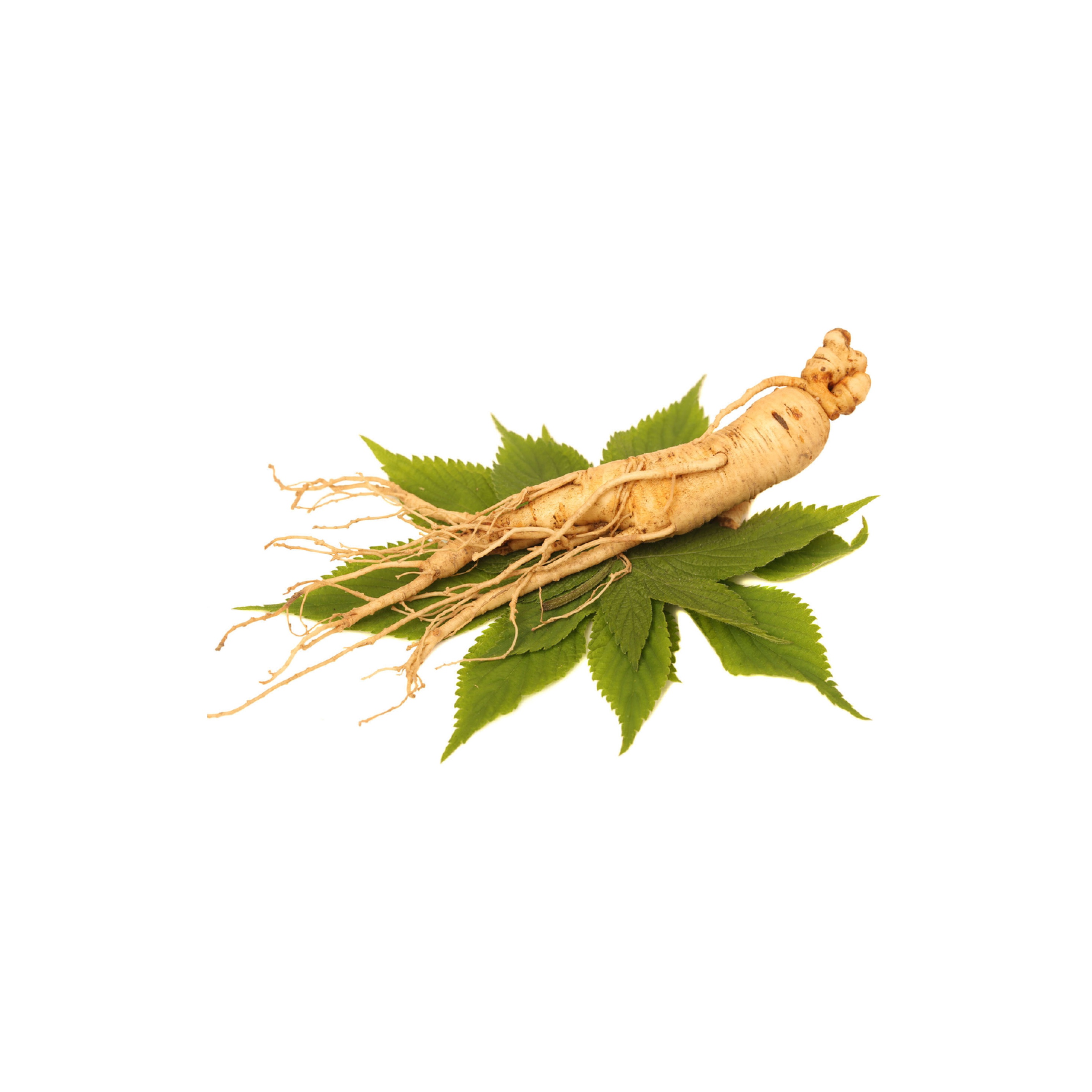 Principal source Asian Ginseng Panax ginseng Herb monograph →
 Source Notoginseng Panax notoginseng Herb monograph →
Concentration
Content by Source
Concentrations not reported. No percent-dry-weight or mg/g figures have been published for this compound in its source plants.
Ginsenoside Rh1 at a Glance
Ginsenoside Rh1 is a minor protopanaxatriol (PPT)-type saponin of Asian ginseng (Panax ginseng). It is only lightly present in the raw root but becomes more prominent in red (steamed) ginseng, where heat and time strip sugars from the abundant PPT saponins ginsenoside Rg1 and Re to leave the simpler monoglucoside Rh1 9Reference 9ReviewSaponins of ginseng products: a review of their transformation in processing — reviewView study →.
Structurally and biologically it is the PPT-side counterpart of ginsenoside Rh2 — where Rh2 is the steaming-enriched monoglucoside on the protopanaxadiol (PPD) side (and the molecule most studied in cancer models), Rh1 is its PPT-side twin, and its isolated-molecule literature points instead toward anti-allergic / anti-inflammatory and hepatoprotective activity 1,
The honest caveat runs through everything below. Every one of these signals comes from isolated Rh1 in cells or rodents; the molecule is poorly absorbed by mouth and is itself a deglycosylation intermediate that is metabolised onward, so it is essentially undetectable in human plasma after ginseng dosing 7Reference 7Detection of 13 ginsenosides (Rb1, Rb2, Rc, Rd, Re, Rf, Rg1, Rg3, Rh2, F1, compound K, 20(S)-protopanaxadiol, and 20(S)-protopanaxatriol) in human plasma and application of the analytical method to human pharmacokinetic studies following two week-repeated administration of red ginseng extract — human pharmacokineticsView study →. There is no clinical trial of isolated Rh1, and ginseng’s human reputation rests on whole extracts, not on this single saponin.
A Red-Ginseng PPT Metabolite
The most useful way to place Rh1 is as a product of ginseng processing and of gut metabolism — not as a molecule the plant stockpiles.
Ginsenosides split into two dammarane backbones. The protopanaxadiol (PPD) series (Rb1, Rb2, Rc, Rd) sheds sugars down toward compound K; the protopanaxatriol (PPT) series (Re, Rg1) sheds sugars down a different ladder — Re / Rg1 → Rh1 → [F1] → 20(S)-protopanaxatriol — and Rh1 is the first monoglucoside rung on that PPT ladder 7,
That framing matters for two reasons. First, it explains why the isolate signal is anti-inflammatory / anti-allergic and hepatoprotective rather than the neurotrophic/vascular story attached to its glycosylated parent Rg1 — losing sugars changes the pharmacology. Second, it is a caution, not a selling point: because Rh1 is itself an intermediate, an oral dose does not sit still. It is deglycosylated onward toward F1 and PPT, and PPT-type saponins are absorbed and cleared faster than the PPD side 7Reference 7Detection of 13 ginsenosides (Rb1, Rb2, Rc, Rd, Re, Rf, Rg1, Rg3, Rh2, F1, compound K, 20(S)-protopanaxadiol, and 20(S)-protopanaxatriol) in human plasma and application of the analytical method to human pharmacokinetic studies following two week-repeated administration of red ginseng extract — human pharmacokineticsView study →. So even the “red-ginseng metabolite” that reaches a person is a moving target, and the tidy in-vitro effects below have never been shown to reproduce from an oral dose in a human being.
What It's Used For
Rh1’s evidence is narrow, coherent, and entirely preclinical. It clusters in two areas — allergy/inflammation and liver — with a third, estrogenic, flagged mainly for safety. Read every row as isolated molecule, in cells or rodents.
Support is an experimental score — weighted by study type (human > animal > in vitro) and volume, tempered for isolate-vs-plant match and bioavailability. A beta, not a validated metric. Every row rests on isolated Rh1 in cells or rodents (no human isolate data), so scores are capped accordingly. Each application links to its write-up.
The deepest and most consistent Rh1-specific signal — all isolated molecule. In the foundational study, Rh1 potently inhibited histamine release from rat peritoneal mast cells and suppressed an IgE-mediated passive cutaneous anaphylaxis reaction (reported ~87% inhibition at 25 mg/kg, exceeding the reference antiallergic drug), an effect the authors attributed to a membrane-stabilising action plus suppression of iNOS, COX-2 and NF-κB 1Reference 1In vitroGinsenoside Rh1 possesses antiallergic and anti-inflammatory activities — in vitro and animal modelView study →.
Later isolate work extended this in vivo: in an OVA/LPS mouse model of allergic asthma, Rh1 (20 mg/kg) reduced airway immune-cell infiltration and pro-inflammatory cytokines (TNF-α, IL-1β, MCP-1) by inhibiting Akt, MAPK and NF-κB signalling 2Reference 2In vitroGinsenoside Rh1 ameliorates the asthma and allergic inflammation via inhibiting Akt, MAPK, and NF-κB signaling pathways in vitro and in vivo — in vitro and animal modelView study →; in a house-dust-mite model of allergic rhinitis, Rh1 restored Th1/Th2 balance, lowered IL-4, and eased nasal-mucosal inflammation by promoting mitochondrial autophagy via the AMPK/ULK1/FUNDC1 pathway while inhibiting the NLRP3 inflammasome 3Reference 3AnimalGinsenoside Rh1 alleviates allergic rhinitis by mediating mitochondrial autophagy via activation of the AMPK/ULK1/FUNDC1 pathway — animal modelView study →.
Gap: every study is isolated Rh1 in cells or rodents, several by injection or at doses well above what an oral dose delivers; there is no human trial, and Rh1’s poor oral bioavailability means the exposures that work in animals may not be reachable in people 7Reference 7Detection of 13 ginsenosides (Rb1, Rb2, Rc, Rd, Re, Rf, Rg1, Rg3, Rh2, F1, compound K, 20(S)-protopanaxadiol, and 20(S)-protopanaxatriol) in human plasma and application of the analytical method to human pharmacokinetic studies following two week-repeated administration of red ginseng extract — human pharmacokineticsView study →.
A smaller but coherent liver signal. In a high-fat-diet rat model of non-alcoholic fatty liver disease, isolated Rh1 (alone or combined with compound K) “dramatically ameliorated” liver-function impairment and reversed hepatocyte injury and fibrosis, and in hepatic stellate (HSC-T6) cells it induced apoptosis and suppressed fibrotic markers (TIMP-1, PC-I, PC-III) — i.e. an anti-fibrotic / hepatoprotective action 4Reference 4In vitroAmeliorative effects of Compound K and ginsenoside Rh1 on non-alcoholic fatty liver disease in rats — animal model and in vitroView study →. More recent work on black ginseng extract, in which Rh1 is an enriched active, reported reduced serum ALT/AST and protection against alcohol-induced liver injury using network-pharmacology, in-vitro and in-vivo analysis 5Reference 5In vitroHepatoprotective effects of black ginseng extract and ginsenoside Rh1 against alcohol-induced liver injury: mechanistic insights from network pharmacology, in vitro, and in vivo analysis — in vitro and animal modelView study →.
Gap: the NAFLD data are isolated Rh1 in rats and cells with no clinical endpoint, and the alcohol-liver work is largely at the whole black-ginseng-extract level, where Rh1 is one active among many — so the liver benefit cannot yet be pinned on the isolated molecule in humans 4,
A property worth naming even though it isn’t a therapeutic “application.” Isolated Rh1 behaves as a weak phytoestrogen: in human MCF-7 breast-carcinoma cells it activated an estrogen-responsive reporter gene at 50 µM and raised c-fos/pS2, an effect blocked by the estrogen-receptor antagonist ICI 182,780; notably it did not activate the glucocorticoid, androgen or retinoic-acid receptor, so the action appears estrogen-receptor-specific 6Reference 6In vitroA ginsenoside-Rh1, a component of ginseng saponin, activates estrogen receptor in human breast carcinoma MCF-7 cells — in vitroView study →.
Gap: a single in-vitro study at a high concentration in a cancer cell line, with no in-vivo confirmation. It is flagged mainly as a safety consideration in hormone-sensitive contexts (see Toxicity), not as a benefit 6Reference 6In vitroA ginsenoside-Rh1, a component of ginseng saponin, activates estrogen receptor in human breast carcinoma MCF-7 cells — in vitroView study →.
Mechanisms
| Target / pathway | Effect | Relevant to |
|---|---|---|
| Mast-cell membrane / histamine release | membrane-stabilising; inhibits degranulation and histamine release | anti-allergic |
| iNOS / COX-2 | suppressed expression → less NO / prostaglandin | anti-inflammatory |
| NF-κB (± Akt, MAPK) | inhibited activation → lower inflammatory transcription and cytokines | anti-allergicanti-inflammatory |
| AMPK / ULK1 / FUNDC1 (mitophagy) | promotes mitochondrial autophagy; clears damaged mitochondria | allergic rhinitis |
| NLRP3 inflammasome | inhibited activation; less mtROS-driven inflammation | allergic rhinitis |
| Th1/Th2 balance, IL-4 | restores balance; lowers IL-4 | allergy |
| Hepatic stellate cells; TIMP-1 / PC-I / PC-III | pro-apoptotic, anti-fibrotic | hepatoprotection |
| Estrogen receptor | weak, ICI-reversible activation (not GR/AR/RAR) | estrogenic activitysafety |
Pharmacokinetics
Poor oral bioavailability, and Rh1’s status as an intermediate, are the load-bearing facts. Rh1 is a PPT-type monoglucoside — smaller and less sugar-laden than its parent Rg1, but still a saponin that crosses the gut wall badly. More decisively, it sits mid-cascade: intestinal bacteria strip the parent PPT saponins down the ladder Re / Rg1 → Rh1 → F1 → 20(S)-protopanaxatriol, so Rh1 is both formed and consumed in the gut 7,
Clinical Trials
There are no registered clinical trials of isolated ginsenoside Rh1. All human ginseng data are at the whole-extract (white/red/black ginseng) level, so no benefit can be attributed to Rh1 specifically. The isolated-molecule literature is entirely preclinical.
| Completed | Planned | Terminated | Preclinical |
|---|---|---|---|
| None(isolated Rh1) | None identified | None | Anti-allergic/anti-inflammatory + hepatoprotective (cells + rodents) |
Last checked: July 2026.
Isolate vs. Plant Studies
Rh1’s evidence is mostly isolate, all preclinical. The anti-allergic/anti-inflammatory line — the strongest — is built almost entirely on purified Rh1 in mast cells and rodent asthma/rhinitis models 1,
Prevalence in Nature
Rh1 occurs in Asian ginseng (Panax ginseng) and its relative Panax notoginseng, but it is a minor constituent of the raw root — the plant mostly stores the fully glycosylated PPT saponins Re and Rg1, not their low-sugar derivatives. Its concentration is driven by processing: steaming to make red ginseng, and repeat-steaming to make black ginseng, deglycosylates Re/Rg1/Rd and raises the levels of the rarer saponins Rg2, Rh1 and Rg3, so processed products carry more Rh1 than white ginseng 9Reference 9ReviewSaponins of ginseng products: a review of their transformation in processing — reviewView study →. A reliable quantitative figure for Rh1 in the raw root (mg/g) is not well established in the material reviewed here — unlike its major siblings Rb1 (~5.8 mg/g) and Rg1 (~3.3 mg/g), Rh1 is reported qualitatively as a minor/processing-formed saponin rather than a headline marker.
Discovery & Synthesis
Ginsenoside Rh1 was isolated from Panax ginseng in the late 1970s during the intensive Japanese saponin-characterisation work on ginseng, and the 20(R) epimer was reported from red (steamed) ginseng by Kitagawa and colleagues in the early 1980s — one of several ginsenosides recognised as artefacts newly formed during steaming, by loss of sugar and epimerisation at C-20. That processing origin remains central to how the molecule is understood: red- and black-ginseng manufacture deliberately deglycosylates the abundant PPT saponins Re and Rg1 to enrich Rh1 and its neighbours 9Reference 9ReviewSaponins of ginseng products: a review of their transformation in processing — reviewView study →.
Because Rh1 is scarce in the raw plant, laboratory and industrial supply lean on enzymatic biotransformation rather than extraction: a recombinant β-glucosidase from the archaeon Pyrococcus furiosus hydrolyses the outer C-6 glycoside of PPT-type ginsenosides, completely converting ginsenoside Rf to Rh1 (and R1 to Rg1) at high productivity 8Reference 8Production of ginsenosides Rg1 and Rh1 by hydrolyzing the outer glycoside at the C-6 position in protopanaxatriol-type ginsenosides using β-glucosidase from Pyrococcus furiosus — enzymatic biotransformationView study →. This mirrors the steaming/gut chemistry — snipping one sugar off a larger PPT saponin — but in a controlled reactor. Total chemical synthesis of the intact glycoside is not the practical route; enzymatic conversion of cheaper major ginsenosides dominates.
Patents: not yet researched.
Toxicity & Safety
Isolated Rh1 carries a low toxicity flag, consistent with the ginsenoside class and with its poor systemic exposure — like its siblings, its heavy first-pass deglycosylation keeps parent-molecule levels low, limiting the chance of reaching toxic concentrations. No dedicated repeat-dose or genotoxicity package for the pure compound is characterised here, and no isolated-Rh1 human safety or drug-interaction data exist — so the practical cautions are borrowed from whole ginseng, not demonstrated for the isolate.
- Low apparent toxicity. A minor ginseng saponin with poor oral absorption; no isolate toxicity signal beyond the notes below.
- Weak phytoestrogen in vitro. Rh1 activates the estrogen receptor in breast-cancer cells (ICI-reversible); a theoretical concern in hormone-sensitive conditions, unconfirmed in vivo.
- No isolate human safety or interaction data. Whole-ginseng cautions (e.g. around anticoagulants/antiplatelets and stimulation) are the reference point, not isolate evidence.
- Pregnancy/lactation not assessed for the isolate. Decisions belong to the herb or product page where intake is decided, not to this molecule page.
Full Safety & Interactions Detail
Estrogenic activity (in vitro). The one specific isolated-Rh1 flag is its weak, estrogen-receptor-dependent activity: in MCF-7 cells Rh1 activated an estrogen-responsive reporter at 50 µM, blocked by the ER antagonist ICI 182,780, without touching the glucocorticoid, androgen or retinoic-acid receptors 6Reference 6In vitroA ginsenoside-Rh1, a component of ginseng saponin, activates estrogen receptor in human breast carcinoma MCF-7 cells — in vitroView study →. This is a single high-concentration cell-line result with no in-vivo confirmation, but it is worth naming as a caution in hormone-sensitive settings.
Interactions and populations. No dedicated interaction studies of isolated Rh1 in humans exist, so enzyme/transporter-level interaction claims (CYP isoforms, P-gp) cannot be made specifically for this molecule from the material reviewed. The general ginseng cautions — additive effects with anticoagulants/antiplatelets, and stimulation — are the conservative reference point. Reproductive/developmental toxicity of isolated Rh1 has not been characterised; pregnancy and lactation decisions belong to the herb/product page, not to this phytochemistry page.
Dosage
There is no established human dose of isolated ginsenoside Rh1 — it is a research compound, not a standardised supplement. For orientation only, the preclinical work cited above used rodent doses in the ~20–25 mg/kg range (e.g. the allergic-asthma model at 20 mg/kg 2Reference 2In vitroGinsenoside Rh1 ameliorates the asthma and allergic inflammation via inhibiting Akt, MAPK, and NF-κB signaling pathways in vitro and in vivo — in vitro and animal modelView study → and the mast-cell/anaphylaxis work referencing ~25 mg/kg 1Reference 1In vitroGinsenoside Rh1 possesses antiallergic and anti-inflammatory activities — in vitro and animal modelView study →), chosen for the experiment rather than validated for people, and often delivered to bypass poor oral absorption. Because oral Rh1 is poorly absorbed and is metabolised onward to F1/PPT before it can act as the parent molecule 7Reference 7Detection of 13 ginsenosides (Rb1, Rb2, Rc, Rd, Re, Rf, Rg1, Rg3, Rh2, F1, compound K, 20(S)-protopanaxadiol, and 20(S)-protopanaxatriol) in human plasma and application of the analytical method to human pharmacokinetic studies following two week-repeated administration of red ginseng extract — human pharmacokineticsView study →, a milligram figure does not map cleanly onto delivered exposure. In practice, human intake of Rh1 happens through red or black ginseng, where it is one of many saponins and its individual contribution is unknown.
These are doses studied in research and are not a personal recommendation.
References
- Park EK, Choo MK, Han MJ, Kim DH. (2004). Ginsenoside Rh1 possesses antiallergic and anti-inflammatory activities — in vitro and animal model. International Archives of Allergy and Immunology, 133(2), 113–120. https://pubmed.ncbi.nlm.nih.gov/14739579/
- Jin Y, Tangchang W, Kwon OS, Lee JY, Heo KS, Son HY. (2023). Ginsenoside Rh1 ameliorates the asthma and allergic inflammation via inhibiting Akt, MAPK, and NF-κB signaling pathways in vitro and in vivo — in vitro and animal model. Life Sciences, 321, 121607. https://pubmed.ncbi.nlm.nih.gov/36958436/
- Wang J, et al. (2025). Ginsenoside Rh1 alleviates allergic rhinitis by mediating mitochondrial autophagy via activation of the AMPK/ULK1/FUNDC1 pathway — animal model. Food Science & Nutrition. https://pubmed.ncbi.nlm.nih.gov/40535916/
- Chen XJ, Liu WJ, Wen ML, et al. (2017). Ameliorative effects of Compound K and ginsenoside Rh1 on non-alcoholic fatty liver disease in rats — animal model and in vitro. Scientific Reports, 7, 41144. https://pubmed.ncbi.nlm.nih.gov/28106137/
- Na HS, Hwang-Bo J, Shin WC, Jang JK, Choi BR, Lee DY. (2026). Hepatoprotective effects of black ginseng extract and ginsenoside Rh1 against alcohol-induced liver injury: mechanistic insights from network pharmacology, in vitro, and in vivo analysis — in vitro and animal model. Antioxidants (Basel), 15(4), 461. https://pubmed.ncbi.nlm.nih.gov/42072103/
- Lee Y, Jin Y, Lim W, et al. (2003). A ginsenoside-Rh1, a component of ginseng saponin, activates estrogen receptor in human breast carcinoma MCF-7 cells — in vitro. The Journal of Steroid Biochemistry and Molecular Biology, 84(4), 463–468. https://pubmed.ncbi.nlm.nih.gov/12732291/
- Jin S, Jeon JH, Lee S, et al. (2019). Detection of 13 ginsenosides (Rb1, Rb2, Rc, Rd, Re, Rf, Rg1, Rg3, Rh2, F1, compound K, 20(S)-protopanaxadiol, and 20(S)-protopanaxatriol) in human plasma and application of the analytical method to human pharmacokinetic studies following two week-repeated administration of red ginseng extract — human pharmacokinetics. Molecules, 24(14), 2618. https://pubmed.ncbi.nlm.nih.gov/31323835/
- Oh HJ, Shin KC, Oh DK. (2014). Production of ginsenosides Rg1 and Rh1 by hydrolyzing the outer glycoside at the C-6 position in protopanaxatriol-type ginsenosides using β-glucosidase from Pyrococcus furiosus — enzymatic biotransformation. Biotechnology Letters, 36(1), 113–119. https://pubmed.ncbi.nlm.nih.gov/24078126/
- Ye XW, Li CS, Zhang HX, et al. (2023). Saponins of ginseng products: a review of their transformation in processing — review. Frontiers in Pharmacology, 14, 1177819. https://pubmed.ncbi.nlm.nih.gov/37188270/
- Hasegawa H. (2004). Proof of the mysterious efficacy of ginseng: metabolic activation of ginsenoside — deglycosylation by intestinal bacteria and esterification with fatty acid — review. Journal of Pharmacological Sciences, 95(2), 153–157. https://pubmed.ncbi.nlm.nih.gov/15215638/
- Xu QF, Fang XL, Chen DF. (2003). Pharmacokinetics and bioavailability of ginsenoside Rb1 and Rg1 from Panax notoginseng in rats — animal model. Journal of Ethnopharmacology, 84(2–3), 187–192. https://pubmed.ncbi.nlm.nih.gov/12648814/



