
Compound Monograph
Gramine
Gramine is a simple indole alkaloid that grasses and reeds make as a chemical defence — the toxic principle behind livestock poisoning on Phalaris pasture, and, in two recent studies, an antifibrotic and CDK2-targeting molecule whose renal work was motivated by Arundo donax's Ayurvedic use for urinary complaints.

Sources · 7
Where Does It Come From?
Gramine is a naturally occurring indole alkaloid (3-(dimethylaminomethyl)indole), found in Giant river reed and 6 other sources. It is flagged as toxic.
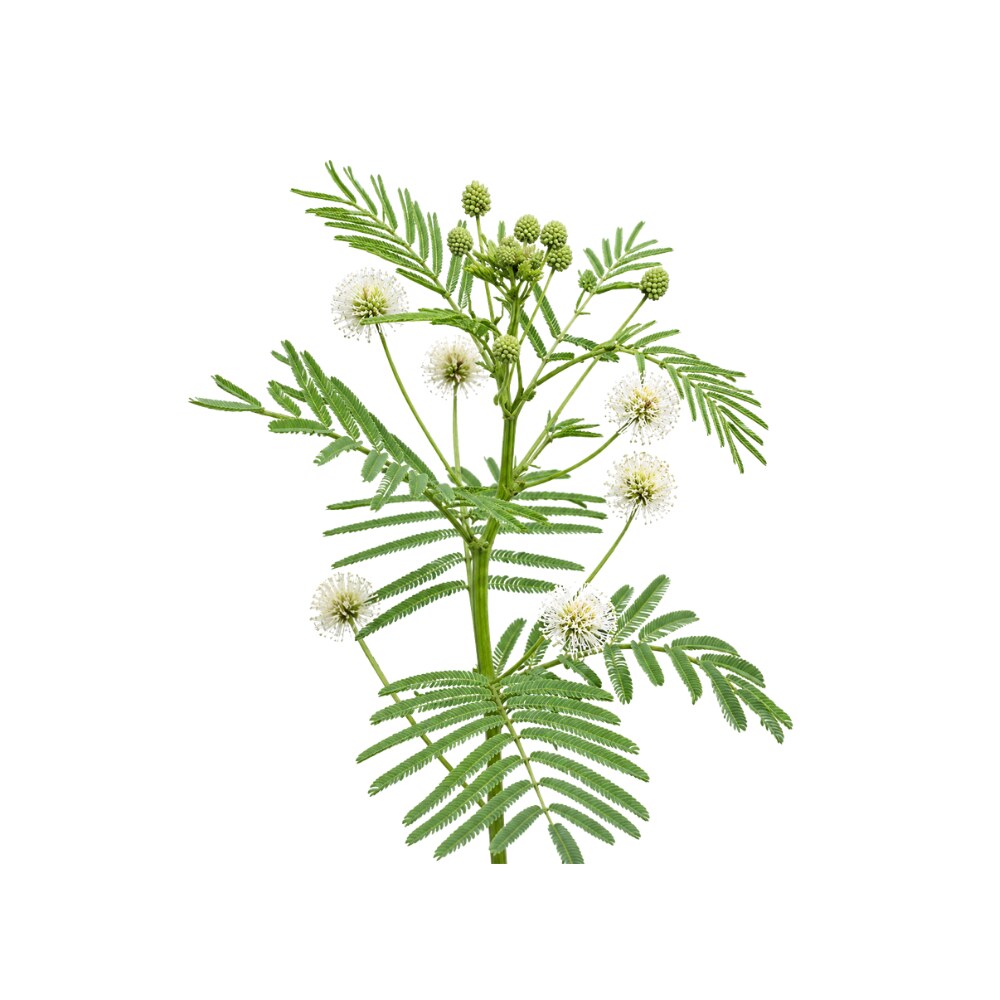 Source Bundleflower Desmanthus illinoensis Herb monograph →
Concentration
Content by Source
Concentrations not reported. No percent-dry-weight or mg/g figures have been published for this compound in its source plants.
Gramine at a Glance
Gramine — 3-(dimethylaminomethyl)indole, also called donaxine — is one of the simplest indole alkaloids a plant makes: tryptophan with its side chain cut back to a single carbon and the nitrogen twice methylated. Grasses and reeds make it as a chemical defence, and for most of its history that is all it has been known for.
It is the alkaloid behind livestock poisoning on Phalaris pasture, an aphid-deterrent in barley that plant breeders have selected out of modern cultivars, and an algicide potent enough to suppress a harmful alga 3,
The renal study is the more interesting of the two, and not only for its result. It was designed because of a traditional use — Arundo donax’s place in Ayurvedic practice for urinary disorders — which makes gramine an uncommonly clean example of ethnopharmacology pointing at a mechanism rather than the other way round 2Reference 2AnimalExploring the anti-fibrotic potential of gramine in a UUO-induced rat model of chronic kidney disease: a network pharmacology and molecular docking approach with experimental validation — animal modelView study →.
The Ayurvedic Loop
Most plant compounds acquire a traditional-use paragraph after the fact, as context for pharmacology that was found by screening. Gramine’s renal work runs the other way.
Arundo donax has a documented place in Ayurvedic practice for urinary complaints. The 2026 study states that relationship as its rationale — “ethnomedical insights encourage scientific exploration of gramine’s potential role in renal pathologies” — and then tested the plant’s principal alkaloid in a unilateral ureteral obstruction model of chronic kidney disease, the standard rodent model of progressive renal fibrosis 2Reference 2AnimalExploring the anti-fibrotic potential of gramine in a UUO-induced rat model of chronic kidney disease: a network pharmacology and molecular docking approach with experimental validation — animal modelView study →.
The result was positive and reasonably deep. Rats given gramine orally at 27.5 or 55 mg/kg for 21 days after UUO surgery had preserved kidney function and histology, with reduced extracellular-matrix deposition and epithelial–mesenchymal transition. At protein level, HDAC2, phosphorylated NF-κB, phosphorylated MAPK14 and TGF-β1 were all down while the antioxidant transcription factor Nrf2 was restored — and those targets were not fished out afterwards, but predicted in advance by docking against regulatory hubs overexpressed in human CKD tissue 2Reference 2AnimalExploring the anti-fibrotic potential of gramine in a UUO-induced rat model of chronic kidney disease: a network pharmacology and molecular docking approach with experimental validation — animal modelView study →.
Two cautions keep this in proportion. The tradition is about the plant, not the molecule — no traditional preparation was tested, and Arundo donax rhizome carries a lectin and a polysaccharide alongside its alkaloids. And the plant in question is a documented commercial counterfeit for Phragmitis rhizoma (lu gen, true reed), so tradition attaching to “reed” needs care about which reed.
What It's Used For
Gramine’s pharmacology divides cleanly into what it does to plants and insects — where it has been studied for decades — and what it might do in mammals, where two studies exist and neither has been replicated.
The strongest result gramine has. Predictive modelling identified 123 CKD-related protein targets, and docking found strong binding to three regulatory hubs overexpressed in human CKD tissue — HDAC2, NFKB1 and MAPK14. Rats then underwent unilateral ureteral obstruction and received gramine at 27.5 or 55 mg/kg orally for 21 days. Kidney function and histology were preserved, with reduced extracellular-matrix deposition and epithelial–mesenchymal transition; immunoblotting showed HDAC2, phosphorylated NF-κB, phosphorylated MAPK14 and TGF-β1 all reduced, and the antioxidant protein Nrf2 restored 2Reference 2AnimalExploring the anti-fibrotic potential of gramine in a UUO-induced rat model of chronic kidney disease: a network pharmacology and molecular docking approach with experimental validation — animal modelView study →.
The design is stronger than most single-study results because the targets were named before the experiment rather than after it, and the readouts span function, tissue and protein.
Gap: one study, one laboratory, one model. UUO is a surgical obstruction model — it produces fibrosis reliably but does not reproduce the metabolic or hypertensive causes of most human CKD — and no pharmacokinetics were reported, so it is unknown what plasma exposure 27.5 mg/kg produces or whether it is achievable another way 2Reference 2AnimalExploring the anti-fibrotic potential of gramine in a UUO-induced rat model of chronic kidney disease: a network pharmacology and molecular docking approach with experimental validation — animal modelView study →.
In HeLa cervical-cancer cells, gramine inhibited proliferation and migration, induced apoptosis and triggered G0/G1 cell-cycle arrest. Integrated multi-omics and network pharmacology identified CDK2 as the critical target, with both mRNA and protein markedly reduced after treatment; the proposed mechanism is indirect, through a competitive endogenous RNA axis in which two long non-coding RNAs sponge a microRNA that regulates CDK2 1Reference 1In vitroGramine suppresses cervical cancer by targeting CDK2: integrated omics-pharmacology and in vitro evidence — in vitroView study →.
G0/G1 arrest is what a CDK2 mechanism predicts, so the phenotype and the target agree.
Gap: one cell line and no animal work. The ceRNA axis is a computational inference layered on the expression data rather than a demonstrated mechanism, and no concentration–response relationship, selectivity against non-cancerous cells, or in-vivo tumour result has been reported 1Reference 1In vitroGramine suppresses cervical cancer by targeting CDK2: integrated omics-pharmacology and in vitro evidence — in vitroView study →.
One caution about the record itself: this study is circulated under a DOI that resolves to a retracted paper on an unrelated subject — a collision arising from the long non-coding RNA the two share. Reference 1Reference 1In vitroGramine suppresses cervical cancer by targeting CDK2: integrated omics-pharmacology and in vitro evidence — in vitroView study → is the correct source.
Gramine’s best-replicated activity, and it is environmental rather than medical. An extract of Arundo donax suppressed growth of and killed Prymnesium parvum, the golden alga responsible for toxic blooms and fish kills in inland waters — an application of interest precisely because Arundo is itself an invasive riparian plant 7Reference 7In vitroGrowth-suppressing and algicidal properties of an extract from Arundo donax, an invasive riparian plant, against Prymnesium parvum, an invasive harmful alga — in vitroView study →. Gramine also reshapes microbial communities: added to agricultural soil over 28 days it altered bacterial composition from phylum down to sequence-variant level, increasing the relative abundance of 33 taxa (mostly Proteobacteria) without reducing alpha diversity, and enriching Pseudomonas strains 8Reference 8Differential impact of plant secondary metabolites on the soil microbiotaView study →; applied to the rhizosphere of gramine-free elite barley cultivars, it modulated the assembly of individual microbiota members 6Reference 6Applications of the indole-alkaloid gramine modulate the assembly of individual members of the barley rhizosphere microbiotaView study →.
Gap: the algicidal work used a plant extract, not isolated gramine, so the activity cannot be assigned to this molecule alone 7Reference 7In vitroGrowth-suppressing and algicidal properties of an extract from Arundo donax, an invasive riparian plant, against Prymnesium parvum, an invasive harmful alga — in vitroView study →. And these are ecological findings — they say nothing about mammalian pharmacology, though they do explain why the plant makes the compound.
Mechanisms
| Target / pathway | Effect | Relevant to |
|---|---|---|
| HDAC2 | binding predicted by docking; protein reduced in fibrotic kidney | renal antifibrosis |
| NF-κB (NFKB1) | phosphorylated NF-κB reduced | renal antifibrosis · anti-inflammatory |
| MAPK14 (p38α) | phosphorylation reduced | renal antifibrosis |
| TGF-β1 | reduced, with less ECM deposition and EMT | renal antifibrosis |
| Nrf2 | restored | antioxidant arm of the renal effect |
| CDK2 | mRNA and protein reduced; G0/G1 arrest | cervical-cancer cell suppression |
| Insect chemoreception / feeding | antifeedant and aphid deterrent in barley | plant defence |
| Soil and rhizosphere bacterial assembly | community composition shifted; Pseudomonas enriched | plant ecology |
| Nicotinic and cholinergic signalling (inferred) | the nervous form of phalaris toxicity in sheep | livestock poisoning |
The top block is two studies old. The bottom block is what gramine has actually been known for.
Pharmacokinetics
No pharmacokinetic data exist for gramine in any species — no absorption figure, no bioavailability, no half-life, no metabolism, no tissue distribution. The rat study reported ADMET predictions from computational modelling, not measurements 2Reference 2AnimalExploring the anti-fibrotic potential of gramine in a UUO-induced rat model of chronic kidney disease: a network pharmacology and molecular docking approach with experimental validation — animal modelView study →.
One indirect observation is informative. In sheep, the dose of gramine needed to produce clinical signs was 10 mg/kg intravenously but 500 mg/kg orally — a fifty-fold gap that implies poor oral absorption, extensive first-pass metabolism, or both 3Reference 3AnimalExperimental evidence that tryptamine alkaloids do not cause Phalaris aquatica sudden death syndrome in sheep — animal modelView study →. That is the single most useful pharmacokinetic hint available, and it comes from a 1988 toxicology paper rather than from any study designed to answer the question.
Clinical Trials
None. Gramine has never been administered to a human being in a study of any kind, and no trial is registered or proposed.
| Completed | Planned | Terminated | Preclinical |
|---|---|---|---|
| — | — | — | Rat UUO renal fibrosis; HeLa CDK2; sheep toxicology; algicidal and soil-microbiota ecology; barley biosynthesis and aphid defence |
Last checked: September 2026.
Isolate vs. Plant Studies
Gramine’s evidence sits on both sides of the line, and the two rarely meet.
The mammalian pharmacology is isolate work. The rat kidney study dosed purified gramine orally 2Reference 2AnimalExploring the anti-fibrotic potential of gramine in a UUO-induced rat model of chronic kidney disease: a network pharmacology and molecular docking approach with experimental validation — animal modelView study →; the cervical-cancer study treated cell cultures with it 1Reference 1In vitroGramine suppresses cervical cancer by targeting CDK2: integrated omics-pharmacology and in vitro evidence — in vitroView study →; the sheep toxicology gave the pure alkaloid intravenously and orally 3Reference 3AnimalExperimental evidence that tryptamine alkaloids do not cause Phalaris aquatica sudden death syndrome in sheep — animal modelView study →. That is a strength for mechanism — nothing here is a whole-extract inference.
The ecological evidence is mostly extract work. The algicidal result belongs to an Arundo donax extract rather than to isolated gramine 7Reference 7In vitroGrowth-suppressing and algicidal properties of an extract from Arundo donax, an invasive riparian plant, against Prymnesium parvum, an invasive harmful alga — in vitroView study →, and Arundo rhizome carries a lectin (ADL) and a polysaccharide (ADLP) alongside the alkaloids — both macromolecules with their own documented activity, and neither of which could survive digestion as an oral mechanism.
And the traditional use is a plant claim. The Ayurvedic urinary tradition that motivated the renal study is a tradition about Arundo donax preparations, not about gramine, and no traditional preparation has been tested. The molecule vindicating a plant’s reputation in a rodent model is a lead, not a validation.
Its Role in Plants
Gramine is a defence compound, and the evidence for that is far older and deeper than anything on the pharmacology side.
Its clearest role is against aphids in barley. The final step of its biosynthesis is catalysed by an N-methyltransferase (HvNMT) that is induced by methyl jasmonate, the classic wound- and herbivory-signalling hormone 5Reference 5Differential regulation of 3-aminomethylindole/N-methyl-3-aminomethylindole N-methyltransferase and gramine in barley by both biotic and abiotic stress conditionsView study →. The relationship is more specific than “gramine goes up when aphids arrive”: feeding by Rhopalosiphum padi and Metopolophium dirhodum raised NMT transcript in a moderately resistant barley line without raising gramine itself, suggesting that aphid induction of gramine is specific to Schizaphis graminum, and that large transcript increases do not translate into enzyme or product 5Reference 5Differential regulation of 3-aminomethylindole/N-methyl-3-aminomethylindole N-methyltransferase and gramine in barley by both biotic and abiotic stress conditionsView study →.
Domestication has acted on it. Gramine occurs widely among wild barley genotypes but has been counter-selected in several modern cultivars — a striking case of breeding removing a plant’s chemical defence, and one with consequences below ground: applying gramine to the rhizosphere of gramine-free elite barley changed which microbiota members assembled there 6Reference 6Applications of the indole-alkaloid gramine modulate the assembly of individual members of the barley rhizosphere microbiotaView study →. Added directly to agricultural soil, gramine altered bacterial community composition from phylum to sequence-variant level, with a notably non-inhibitory profile — unlike benzoxazolinone, it did not reduce alpha diversity, and it increased the relative abundance of 33 taxa, mostly Proteobacteria 8Reference 8Differential impact of plant secondary metabolites on the soil microbiotaView study →.
In the reeds it serves the same purpose in a blunter way. In Arundo donax it is present regardless of provenance — unlike the plant’s tryptamines, which vary dramatically with geography — and it is the deterrent that makes the plant unpalatable and dangerous to grazing animals.
Prevalence in Nature
Gramine is a grass and reed alkaloid, concentrated in the Poaceae.
Its best-studied source is barley (Hordeum vulgare), particularly seedlings, where it is widespread in wild genotypes and absent from many modern cultivars 6Reference 6Applications of the indole-alkaloid gramine modulate the assembly of individual members of the barley rhizosphere microbiotaView study →. It occurs in reed canary grass (Phalaris arundinacea) and harding grass (Phalaris aquatica), alongside the tryptamines and hordenine that share responsibility for phalaris toxicity 3Reference 3AnimalExperimental evidence that tryptamine alkaloids do not cause Phalaris aquatica sudden death syndrome in sheep — animal modelView study →. And it is the workhorse alkaloid of giant reed (Arundo donax), present in the rhizome across all sampled provenances 9Reference 9Arundo donax L. (Graminae): phytochemical and pharmacological evaluationView study →.
The contrast within Arundo is worth stating, because it is the plant’s defining chemical fact. Its tryptamines are geographically unreliable — Indian rhizome material yields the full set (bufotenine around 0.026%, N,N-DMT around 0.0057%, 5-MeO-NMT around 0.0023% of dry weight), while most US-sourced samples yield little or none — whereas gramine is present regardless 9Reference 9Arundo donax L. (Graminae): phytochemical and pharmacological evaluationView study →. Beyond that, no reliable quantitative gramine content has been published for any standardised preparation of any of these plants.
Discovery & Synthesis
Gramine is a classical Gramineae alkaloid, known from barley and reed canary grass since the early twentieth century and named for the family; in Arundo donax it also carries the name donaxine. Structurally it is about as simple as an indole alkaloid gets — a skatole bearing a dimethylamino group — which is why it has long served as a model substrate in indole chemistry.
Its biosynthesis, by contrast, was only completed in 2024. The pathway shortens the tryptophan side chain by two carbons to give 3-(aminomethyl)indole (AMI), which is then twice methylated by an N-methyltransferase, HvNMT, to give gramine 5Reference 5Differential regulation of 3-aminomethylindole/N-methyl-3-aminomethylindole N-methyltransferase and gramine in barley by both biotic and abiotic stress conditionsView study →. The methyltransferase had been characterised for years; the enzyme performing the side-chain shortening had not. RNA-seq across gramine-producing and non-producing barley identified an uncharacterised cytochrome P450, CYP76M57, which when expressed heterologously in Pichia pastoris acted directly on tryptophan to produce AMI — with the tryptophan amino nitrogen retained through the rearrangement. Transgenic Arabidopsis and rice expressing CYP76M57 together with HvNMT accumulate AMI, N-methyl-AMI and gramine, completing the pathway 4Reference 4Hordeum vulgare CYP76M57 catalyzes C2 shortening of tryptophan side chain by C-N bond rearrangement in gramine biosynthesisView study →.
Manufacture is by chemical synthesis. Gramine is a cheap, widely available laboratory reagent — its Mannich-type synthesis from indole, formaldehyde and dimethylamine is a standard undergraduate preparation, and gramine is itself a common building block for making tryptophan and other 3-substituted indoles. It is not extracted commercially from plants.
Patents: not yet researched.
Toxicity & Safety
Gramine’s toxicology is veterinary, and the detail matters more than the headline.
It is one of the alkaloids implicated in phalaris toxicity in grazing livestock — but a controlled sheep study drew a specific line through the syndrome. Testing three Phalaris aquatica alkaloids by intravenous and oral administration, the lowest doses producing clinical signs were 0.1 mg/kg IV and 40 mg/kg oral for 5-methoxy-dimethyltryptamine, 10 mg/kg IV and 500 mg/kg oral for gramine, and 20 mg/kg IV and 800 mg/kg oral for hordenine. All three induced the signs of the nervous form of phalaris toxicity. None induced the cardiac, sudden-death syndrome 3Reference 3AnimalExperimental evidence that tryptamine alkaloids do not cause Phalaris aquatica sudden death syndrome in sheep — animal modelView study →.
So gramine is a real neurotoxin to grazing animals at high exposure, and it was experimentally ruled out as the cause of phalaris sudden death. Statements that gramine “causes phalaris staggers and sudden death” overstate what the one controlled experiment found.
- A livestock toxin. Produces the nervous form of phalaris toxicity in sheep at 10 mg/kg intravenously or 500 mg/kg orally; the reason gramine-bearing pasture and reed are hazardous to grazing animals.
- No human data of any kind. No trial, no case report, no pharmacokinetics, no toxicology in humans. Absence of findings is not evidence of safety.
- Not a psychoactive substitute. Gramine co-occurs with tryptamines in Phalaris and Arundo and is sometimes discussed alongside them; it is not a desirable psychoactive and is best treated as an unwanted contaminant of such material.
- The rat doses are high. 27.5–55 mg/kg orally for 21 days is a substantial exposure with no measured plasma level and no toxicology package behind it.
Full Safety & Interactions Detail
Grazing-animal toxicity. The clinical picture reproduced in sheep is the nervous form of phalaris toxicity — neurological signs from a compound that reaches the brain at sufficient exposure 3Reference 3AnimalExperimental evidence that tryptamine alkaloids do not cause Phalaris aquatica sudden death syndrome in sheep — animal modelView study →. The relevant practical exposure is not a dose of gramine but a quantity of pasture or reed, which makes it unpredictable: gramine content varies with species, growth stage and cultivar, and in barley it has been bred out of some lines entirely 6Reference 6Applications of the indole-alkaloid gramine modulate the assembly of individual members of the barley rhizosphere microbiotaView study →. In Arundo donax the plant part matters as well — the alkaloid toxicology of that species is largely flower-derived, involving curarimimetic quaternary indoles and bufotenidine, chemistry quite distinct from gramine.
The 50-fold oral-to-intravenous gap (500 versus 10 mg/kg in sheep) is the closest thing to a safety margin on record, and it implies that oral exposure is much less efficient than injection 3Reference 3AnimalExperimental evidence that tryptamine alkaloids do not cause Phalaris aquatica sudden death syndrome in sheep — animal modelView study →. It is not a basis for calling oral gramine safe — 500 mg/kg is still a dose that produces neurological signs.
No human toxicology. There is no reported human poisoning, no occupational exposure literature, and no genotoxicity, reproductive or repeat-dose data for this molecule. Nothing about the plants that carry it suggests deliberate human use of gramine, and there is no basis for estimating a human toxic dose.
Interactions. None studied. The rat renal study reported computational ADMET predictions only; no CYP substrate, inhibitor or inducer profile has been measured 2Reference 2AnimalExploring the anti-fibrotic potential of gramine in a UUO-induced rat model of chronic kidney disease: a network pharmacology and molecular docking approach with experimental validation — animal modelView study →.
Reproductive. No data.
Dosage
There is no human dose of gramine, and no basis on which to estimate one. Every figure on record is animal or in vitro:
| Setting | Route & dose | Outcome |
|---|---|---|
| Rat chronic kidney disease (UUO model) | 27.5 and 55 mg/kg orally, 21 days | Kidney function and histology preserved; HDAC2, p-NF-κB, p-MAPK14 and TGF-β1 down; Nrf2 restored 2Reference 2AnimalExploring the anti-fibrotic potential of gramine in a UUO-induced rat model of chronic kidney disease: a network pharmacology and molecular docking approach with experimental validation — animal modelView study → |
| Sheep toxicity threshold | 10 mg/kg intravenously | Lowest tested dose producing clinical signs (nervous form) 3Reference 3AnimalExperimental evidence that tryptamine alkaloids do not cause Phalaris aquatica sudden death syndrome in sheep — animal modelView study → |
| Sheep toxicity threshold | 500 mg/kg orally | Lowest tested oral dose producing clinical signs 3Reference 3AnimalExperimental evidence that tryptamine alkaloids do not cause Phalaris aquatica sudden death syndrome in sheep — animal modelView study → |
| HeLa cervical-cancer cells | in vitro | Proliferation and migration inhibited; G0/G1 arrest; CDK2 reduced 1Reference 1In vitroGramine suppresses cervical cancer by targeting CDK2: integrated omics-pharmacology and in vitro evidence — in vitroView study → |
The rat therapeutic dose and the sheep toxic dose are within about a ten-fold band of each other across different species and endpoints, which is a reason for caution rather than reassurance. These are research figures and are not a personal recommendation.
References
- Zhou Z, Li J, Zhao X, et al. (2026). Gramine suppresses cervical cancer by targeting CDK2: integrated omics-pharmacology and in vitro evidence — in vitro. Current Issues in Molecular Biology. https://pubmed.ncbi.nlm.nih.gov/41614894/
- Talati YK, Gaikwad AB (2026). Exploring the anti-fibrotic potential of gramine in a UUO-induced rat model of chronic kidney disease: a network pharmacology and molecular docking approach with experimental validation — animal model. Journal of Ethnopharmacology. https://pubmed.ncbi.nlm.nih.gov/41320114/
- Bourke CA, Carrigan MJ, Dixon RJ (1988). Experimental evidence that tryptamine alkaloids do not cause Phalaris aquatica sudden death syndrome in sheep — animal model. Australian Veterinary Journal. https://pubmed.ncbi.nlm.nih.gov/3421887/
- Ishikawa E, Kanai S, Shinozawa A, et al. (2024). Hordeum vulgare CYP76M57 catalyzes C2 shortening of tryptophan side chain by C-N bond rearrangement in gramine biosynthesis. The Plant Journal. https://pubmed.ncbi.nlm.nih.gov/38281119/
- Larsson KA, Saheed SA, Gradin T, et al. (2011). Differential regulation of 3-aminomethylindole/N-methyl-3-aminomethylindole N-methyltransferase and gramine in barley by both biotic and abiotic stress conditions. Plant Physiology and Biochemistry. https://pubmed.ncbi.nlm.nih.gov/21074448/
- Maver M, Escudero-Martinez C, Abbott J, et al. (2021). Applications of the indole-alkaloid gramine modulate the assembly of individual members of the barley rhizosphere microbiota. PeerJ. https://pubmed.ncbi.nlm.nih.gov/34900424/
- Patiño R, Rashel RH, Rubio A, et al. (2018). Growth-suppressing and algicidal properties of an extract from Arundo donax, an invasive riparian plant, against Prymnesium parvum, an invasive harmful alga — in vitro. Harmful Algae. https://pubmed.ncbi.nlm.nih.gov/29306391/
- Schütz V, Frindte K, Cui J, et al. (2021). Differential impact of plant secondary metabolites on the soil microbiota. Frontiers in Microbiology. https://pubmed.ncbi.nlm.nih.gov/34122379/
- Ghosal S, Dutta SK, Sanyal AK, Bhattacharya SK (1969). Arundo donax L. (Graminae): phytochemical and pharmacological evaluation. Journal of Medicinal Chemistry. https://pubmed.ncbi.nlm.nih.gov/5815188/



