
Compound Monograph
Hamamelitannin
2',5-di-O-galloyl-D-hamamelose is the signature gallotannin of witch hazel bark — a small hydrolysable tannin built on hamamelose, a branched sugar, rather than glucose. It is a strong radical scavenger, a 5-lipoxygenase inhibitor and, most distinctively, a non-peptide quorum-sensing inhibitor that disarms Staphylococcus aureus biofilms without killing them. The catch is commercial: the steam-distilled witch hazel water sold in pharmacies contains essentially none of it.

Sources · 4
Where Does It Come From?
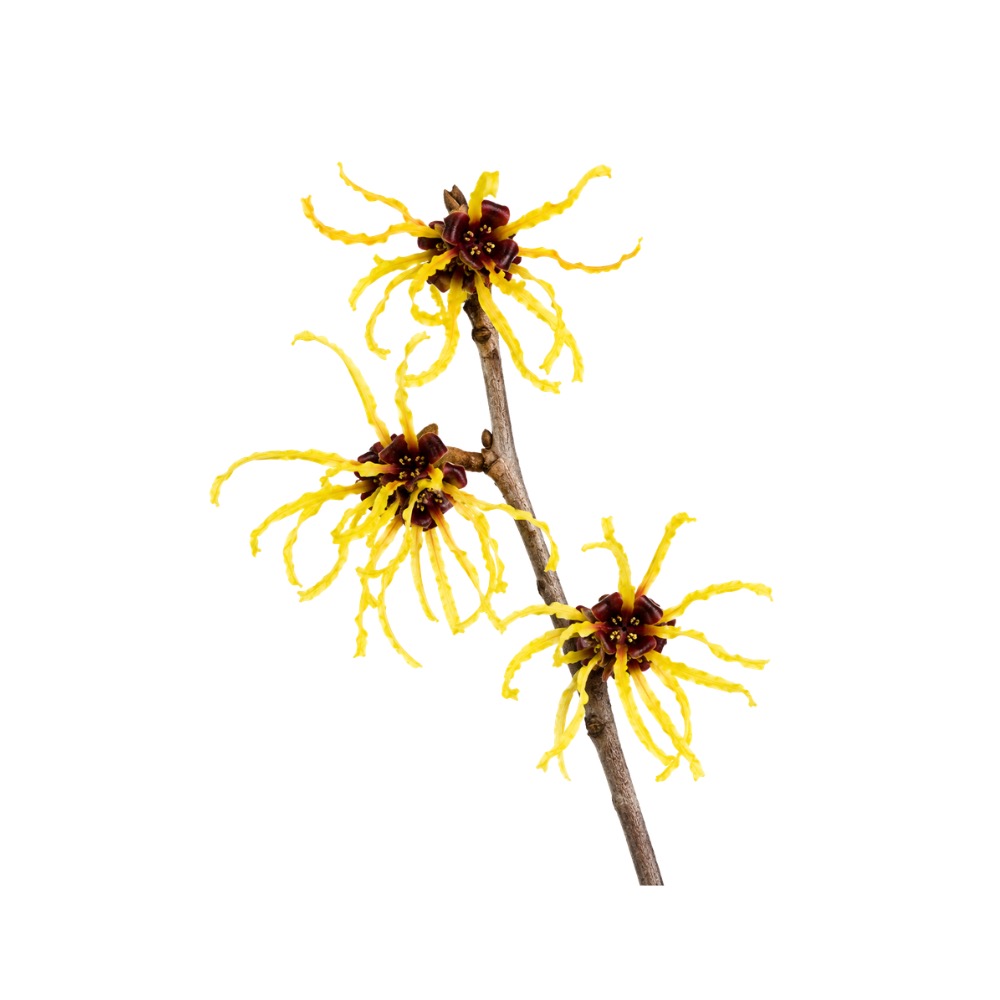
Hamamelitannin is a naturally occurring gallotannin (hydrolysable tannin; digalloyl ester of the branched sugar hamamelose), found in Witch hazel and 3 other sources. It is well tolerated orally (low toxicity).
Concentration
Content by Source
Reported concentrations across the plants that contain hamamelitannin — the bar marks the typical level, the line shows the reported range.
Literature figures for varying plant parts and preparations. Read them as a comparative guide, not exact assays.
Hamamelitannin at a Glance
Hamamelitannin — 2’,5-di-O-galloyl-D-hamamelose — is the characteristic hydrolysable tannin of
witch hazel bark, and the molecule most often credited with the herb’s
pharmacology. Structurally it is a small gallotannin: two gallic acid units
esterified not to glucose but to hamamelose, a branched-chain sugar named after the plant. At
roughly 484 Da it is at the small end of the hydrolysable-tannin class — a fraction of the size of
its glucose-cored relative pentagalloylglucose — and it makes up
1–7% of dried bark 7,
Its research profile has three genuinely interesting parts: a strong radical-scavenging and
cytoprotective action in skin cells 9,
Two caveats do most of the work here, and both are load-bearing. First, the product problem: the witch hazel almost everyone buys is a steam distillate that contains essentially no tannin, so it contains essentially no hamamelitannin. Second, the isolate problem: at least one careful study of witch hazel bark found the extract’s anti-inflammatory and antibacterial activity tracked the condensed tannins, with purified hamamelitannin inactive 7Reference 7In vitroAnti-inflammatory and anti-acne effects of Hamamelis virginiana bark in human keratinocytes — in vitroView study → — so the molecule should not be treated as a stand-in for the herb.
The Product Problem: Witch Hazel Water Has Almost None Of It
This belongs at the top because it reframes everything below it.
The witch hazel on pharmacy shelves is, overwhelmingly, Hamamelis Water — the steam distillate
of the USP monograph, made by macerating recently cut dormant twigs in water and distilling, then
adding alcohol to a final 14–15% ethanol as a preservative 27Reference 27ReviewWitch Hazel (Hamamelis Water) — official monographView study →. Steam distillation carries over
volatiles, not tannins. Hamamelitannin is a polar, non-volatile, thermally labile polyphenol; it
does not distil. Reviews and primary chemical work on the herb state it plainly: tannins are
almost entirely absent from distillates prepared from the same plant material 7,
The consequences are not cosmetic:
- The astringency people buy witch hazel for is a tannin effect, and the distillate is not a tannin preparation. Whatever the retail product does, it is not doing it by protein precipitation.
- The human trial record is mostly about the distillate, not this molecule. The controlled
dermatology studies — UV-erythema models and the atopic-eczema comparison against hydrocortisone —
tested standardised Hamamelis distillate 15,
29Reference 15ReviewHamamelis virginiana L. in skin care: a review of its pharmacological properties and cosmetological applications — reviewView study →Reference 29RCTComparative efficacy of hamamelis distillate and hydrocortisone cream in atopic eczema — double-blind randomised controlled trialView study → . None of them is evidence about hamamelitannin. - The preclinical record is mostly about the bark, where hamamelitannin actually lives 7,
14, .23Reference 7In vitroAnti-inflammatory and anti-acne effects of Hamamelis virginiana bark in human keratinocytes — in vitroView study →Reference 14In vitroChemical composition, skin microbiota metabolism, antimicrobial potential and anti-inflammatory properties of witch hazel bark (Hamamelis virginiana L.) — in vitro/ex vivoView study →Reference 23In vitroHighly galloylated tannin fractions from witch hazel (Hamamelis virginiana) bark: electron transfer capacity, in vitro antioxidant activity, and effects on skin-related cells — in vitroView study →
So the two literatures barely touch. The molecule with the pharmacology is concentrated in a preparation (bark decoction or hydroalcoholic bark extract) that few people use, and the preparation most people use is largely stripped of it. Any claim that runs “witch hazel does X because hamamelitannin does X” has to specify which preparation, or it is wrong by default.
The alcohol matters too: at 14–15% ethanol, commercial witch hazel water is itself mildly drying and antiseptic, which plausibly accounts for part of what users experience and is often mistaken for a tannin effect.
The Hamamelose Core
Hamamelitannin is a gallotannin with an unusual scaffold, and that scaffold is why it is a named molecule rather than an anonymous member of the tannin pool.
The sugar is branched. Hamamelose is 2-C-(hydroxymethyl)-D-ribose — a branched-chain sugar carrying an extra hydroxymethyl arm at C-2 13Reference 13ReviewFrom hamamelitannin synthesis to the study of enzymatic acylations of D-hamamelose — reviewView study →. Nearly every other hydrolysable tannin in common plants is built on ordinary D-glucose. Hamamelitannin carries two galloyl esters (at the 2’ and 5 positions) on that branched core, giving C20H20O14, MW ≈ 484.
Compared with pentagalloylglucose. The contrast with pentagalloylglucose (PGG, MW ≈ 940, five galloyls on glucose) is instructive and has a measured pharmacological consequence. PGG’s dense galloyl surface makes it a promiscuous protein binder — powerful, but indiscriminate. Hamamelitannin, with two galloyls on a different sugar, binds proteins less aggressively, and in the one head-to-head study of the two against colon-cancer cells that difference showed up as selectivity: at concentrations that halved HT29 tumour-cell growth, hamamelitannin left normal NCM460 colonocytes unharmed, while PGG inhibited both 4Reference 4In vitroHamamelitannin from witch hazel (Hamamelis virginiana) displays specific cytotoxic activity against colon cancer cells — in vitroView study →. Fewer galloyls is not simply “weaker” — here it reads as a cleaner window.
Where astringency actually comes from. Because it is small and only doubly galloylated,
hamamelitannin is a weaker protein-precipitant than the bark’s other major tannin fraction — the
polymeric proanthocyanidins (degree of polymerisation ~11–29, heavily galloylated) that make up the
condensed-tannin half of the bark 7,
A family, not a single compound. Hamamelis bark and leaf contain a set of related galloylhamameloses beyond hamamelitannin itself 28Reference 28Novel galloylhamameloses from Hamamelis virginiana — phytochemical analysisView study →, and modern LC-MS profiling of the leaf annotates 18 distinct gallotannins with hamamelitannin as one reference standard among them 26Reference 26Metabolomic fingerprint of Hamamelis virginiana L. gallotannins by suspect screening analysis with UHPLC-qToF and their semiquantitative evaluation — phytochemical analysisView study →. Analytical work that reports “hamamelitannin content” is usually resolving one peak out of that family.
Quorum Sensing: An Anti-Virulence Lead
The most consequential thing hamamelitannin does has nothing to do with astringency, antioxidants or skin.
Discovery. In 2008 a structure-based virtual screen looked for small molecules that mimic RNAIII-inhibiting peptide (RIP), a peptide known to block staphylococcal quorum sensing. The screen returned hamamelitannin. It behaves as RIP does: it inhibits the quorum-sensing regulator RNAIII and it has no effect on staphylococcal growth in vitro — it disarms the organism rather than killing it. In a rat graft model it prevented device-associated infection, including by MRSA and S. epidermidis 1Reference 1In vitroDiscovery of a quorum-sensing inhibitor of drug-resistant staphylococcal infections by structure-based virtual screening — in vitro/animal modelView study →.
Mechanism. Follow-up work localised the effect to the TraP receptor and showed what
downstream changes make biofilms vulnerable: hamamelitannin alters cell-wall (peptidoglycan)
synthesis and extracellular DNA release, and through that it increases the susceptibility of
S. aureus biofilms to several different classes of antibiotic — demonstrated in vitro, in
Caenorhabditis elegans, and in a mouse mammary-gland infection model 2Reference 2In vitroThe quorum sensing inhibitor hamamelitannin increases antibiotic susceptibility of Staphylococcus aureus biofilms by affecting peptidoglycan biosynthesis and eDNA release — in vitro/animal modelView study →. Independent work
found hamamelitannin at sub-inhibitory concentrations reduced bacterial metabolic activity without
inhibiting growth, and inhibited biofilms of all tested bacteria in vivo in a
catheter-related-infection model, where it was the most effective of the three agents compared
17,
What is hamamelitannin and what is not. This distinction matters and is often blurred:
| Finding | Compound actually tested |
|---|---|
| RIP-mimetic discovery; RNAIII inhibition; rat graft model 1Reference 1In vitroDiscovery of a quorum-sensing inhibitor of drug-resistant staphylococcal infections by structure-based virtual screening — in vitro/animal modelView study → | hamamelitannin itself |
| TraP receptor; peptidoglycan/eDNA mechanism; C. elegans + mouse mastitis 2Reference 2In vitroThe quorum sensing inhibitor hamamelitannin increases antibiotic susceptibility of Staphylococcus aureus biofilms by affecting peptidoglycan biosynthesis and eDNA release — in vitro/animal modelView study → | hamamelitannin itself |
| In-vivo catheter biofilm inhibition 17, | hamamelitannin itself |
| Cyclodextrin-complexed wound dressings 19Reference 19In vitroDressings loaded with cyclodextrin-hamamelitannin complexes increase Staphylococcus aureus susceptibility toward antibiotics both in single as well as in mixed biofilm communities — in vitroView study → | hamamelitannin, formulated |
| 58-compound analogue series; the potent antibiotic potentiator 3Reference 3In vitroHamamelitannin analogues that modulate quorum sensing as potentiators of antibiotics against Staphylococcus aureus — in vitro/animal modelView study → | synthetic analogues, not the natural product |
The 2016 medicinal-chemistry programme built 58 hamamelitannin analogues and identified one that raises S. aureus susceptibility to antibiotics in vitro, in C. elegans and in a mouse mammary-gland infection model without cytotoxicity 3Reference 3In vitroHamamelitannin analogues that modulate quorum sensing as potentiators of antibiotics against Staphylococcus aureus — in vitro/animal modelView study →. That is a genuinely promising anti-virulence lead — but it is a designed molecule, and its potency should not be back-attributed to the natural product, still less to witch hazel.
The honest ceiling. This is systemic/device pharmacology in animals. Nobody has shown that a topical witch hazel preparation delivers enough hamamelitannin to disarm a staphylococcal biofilm on human skin, and the one witch hazel bark study that looked specifically found the extract had no antibacterial or antibiofilm activity in its acne model 7Reference 7In vitroAnti-inflammatory and anti-acne effects of Hamamelis virginiana bark in human keratinocytes — in vitroView study →.
What It's Used For
Hamamelitannin is unusually well studied for a single plant tannin, but the evidence is entirely preclinical, and the two threads — skin-directed antioxidant/anti-inflammatory work and antimicrobial anti-virulence work — sit in different literatures.
Support is an experimental score — weighted by study type (human > animal > in vitro) and volume. A beta, not a validated metric. There are no human trials of this molecule, so every score is capped by design and reflects preclinical isolate evidence only.
The best-developed application, and the only one with repeated in-vivo support. Hamamelitannin was identified by virtual screening as a non-peptide mimic of RNAIII-inhibiting peptide; it inhibits the quorum-sensing regulator RNAIII, has no effect on staphylococcal growth, and prevented device-associated MRSA and S. epidermidis infection in a rat graft model 1Reference 1In vitroDiscovery of a quorum-sensing inhibitor of drug-resistant staphylococcal infections by structure-based virtual screening — in vitro/animal modelView study →.
Mechanistic follow-up placed the effect at the TraP receptor and showed it works by altering peptidoglycan synthesis and eDNA release, raising biofilm susceptibility to multiple antibiotic classes in vitro, in C. elegans and in a mouse mammary-gland infection model 2Reference 2In vitroThe quorum sensing inhibitor hamamelitannin increases antibiotic susceptibility of Staphylococcus aureus biofilms by affecting peptidoglycan biosynthesis and eDNA release — in vitro/animal modelView study →.
Independent in-vivo
catheter-biofilm work ranked it the most effective of three candidate inhibitors 17,
All of this is the isolated molecule, not the herb.
Gap: no human infection data; the most potent agents in this line are synthetic analogues, not hamamelitannin 3Reference 3In vitroHamamelitannin analogues that modulate quorum sensing as potentiators of antibiotics against Staphylococcus aureus — in vitro/animal modelView study →; and a witch hazel bark extract standardised on hamamelitannin showed no antibacterial or antibiofilm activity in a C. acnes model, so herb-level transfer is unproven 7Reference 7In vitroAnti-inflammatory and anti-acne effects of Hamamelis virginiana bark in human keratinocytes — in vitroView study →.
A well-quantified isolate story with a genuinely interesting twist. In chemical assays hamamelitannin and gallic acid are near-equivalent superoxide scavengers (IC50 1.31 µM vs 1.01 µM), yet in murine dermal fibroblasts hamamelitannin protected cells at 50 µM where gallic acid needed 100 µM 9Reference 9In vitroProtective activity of hamamelitannin on cell damage induced by superoxide anion radicals in murine dermal fibroblasts — in vitroView study →; under UVB, 200 µM hamamelitannin gave 72.6% cell survival against 35.5% for gallic acid, an effect the authors attributed to the sugar moiety anchoring the molecule at the cell surface rather than to UV absorption 10Reference 10In vitroProtective activity of hamamelitannin on cell damage of murine skin fibroblasts induced by UVB irradiation — in vitroView study →.
A 2025 isolate study reports scavenging across DPPH, ABTS, superoxide and H₂O₂ and induction of SOD, catalase and glutathione peroxidase 8Reference 8In vitroIn vitro and in silico evaluation of the antioxidant and anticancer potential of hamamelitannin from Hamamelis virginiana — in vitro/in silicoView study →.
At the fraction level, highly galloylated witch hazel bark tannins have high electron-transfer capacity and protect erythrocytes from radical haemolysis 23Reference 23In vitroHighly galloylated tannin fractions from witch hazel (Hamamelis virginiana) bark: electron transfer capacity, in vitro antioxidant activity, and effects on skin-related cells — in vitroView study →.
Gap: entirely in vitro; the µM concentrations are plausible in a topical film on skin but have never been measured in human tissue, and the Touriño fraction work shows the same galloylated tannins turn mildly pro-oxidant and cytotoxic to skin cells at higher concentrations 23Reference 23In vitroHighly galloylated tannin fractions from witch hazel (Hamamelis virginiana) bark: electron transfer capacity, in vitro antioxidant activity, and effects on skin-related cells — in vitroView study →.
The most contested application here, and worth reading carefully. The cleanest mechanism is enzymatic: hamamelitannin and galloylated proanthocyanidins from the bark inhibit 5-lipoxygenase with IC50s of 1.0–18.7 µM, though hamamelitannin was inactive against lyso-PAF:acetyl-CoA acetyltransferase 11Reference 11In vitroDual inhibitory activities of tannins from Hamamelis virginiana and related polyphenols on 5-lipoxygenase and lyso-PAF: acetyl-CoA acetyltransferase — in vitroView study →.
In keratinocytes driven with an atopic-eczema cytokine mix (TNF-α/IFN-γ/IL-4), the standardised bark extract suppressed IL-6, IL-17C, TSLP, CCL26 and MMP-9 (IC50 < 25 µg/mL) by impairing NF-κB-driven transcription; hamamelitannin, tested only at 0.5–5 µg/mL, was active on the narrower IL-4 pathway set (CCL26, K10, proliferation) 6Reference 6In vitroUnveiling the ability of witch hazel (Hamamelis virginiana L.) bark extract to impair keratinocyte inflammatory cascade typical of atopic eczema — in vitroView study →.
A 2025 study reported the extract and hamamelitannin as the most pronounced anti-inflammatory agents tested, and both supported keratinocyte wound healing 14Reference 14In vitroChemical composition, skin microbiota metabolism, antimicrobial potential and anti-inflammatory properties of witch hazel bark (Hamamelis virginiana L.) — in vitro/ex vivoView study →.
Against that, the same group’s acne study found hamamelitannin inactive, crediting the extract’s effect to proanthocyanidins 7Reference 7In vitroAnti-inflammatory and anti-acne effects of Hamamelis virginiana bark in human keratinocytes — in vitroView study →.
Gap: the NF-κB result belongs to the extract, not the molecule — a common mis-citation. The molecule’s own contribution is narrower, was tested at low concentrations, and is directly contradicted in one model 7Reference 7In vitroAnti-inflammatory and anti-acne effects of Hamamelis virginiana bark in human keratinocytes — in vitroView study → while supported in another 14Reference 14In vitroChemical composition, skin microbiota metabolism, antimicrobial potential and anti-inflammatory properties of witch hazel bark (Hamamelis virginiana L.) — in vitro/ex vivoView study →. No human data.
A single, clean study. In EAhy926 endothelial cells sensitised with actinomycin D, hamamelitannin inhibited TNF-induced DNA fragmentation and cytotoxicity dose-dependently over 1–100 µM, reaching 100% protection above 10 µM — comparable to epigallocatechin gallate, while gallic acid managed under 40% 5Reference 5In vitroHamamelitannin from Hamamelis virginiana inhibits the tumour necrosis factor-alpha (TNF)-induced endothelial cell death in vitro — in vitroView study →.
Importantly it did not block TNF-induced ICAM-1 expression or monocyte adhesion, so this is a cell-survival effect rather than broad anti-inflammatory signalling. Isolated molecule throughout.
Gap: one in-vitro study, one cell line, in a chemically sensitised model; never replicated, and no in-vivo vascular work followed.
Cell-culture only, but with a distinctive selectivity result. Against colon cancer, hamamelitannin was the most efficient of three witch hazel tannins tested at reducing HT29 viability and inducing apoptosis, and — the point of the paper — at concentrations that inhibited HT29 growth by 50% it did not harm normal NCM460 colonocytes, unlike pentagalloylglucose 4Reference 4In vitroHamamelitannin from witch hazel (Hamamelis virginiana) displays specific cytotoxic activity against colon cancer cells — in vitroView study →.
In HepG2 liver-cancer cells an isolate study reported reduced viability, increased LDH release and up-regulated Bax and caspases, supported by docking and molecular-dynamics simulations 8Reference 8In vitroIn vitro and in silico evaluation of the antioxidant and anticancer potential of hamamelitannin from Hamamelis virginiana — in vitro/in silicoView study →.
A review pairs hamamelitannin with ginnalin A as gallotannins with anti-carcinogenic potential 22Reference 22ReviewGinnalin A and hamamelitannin: the unique gallotannins with promising anti-carcinogenic potential — reviewView study →.
Gap: no animal tumour model, no human data, and the colon result — while the most plausible route, since a luminal gut exposure could actually reach these concentrations — has not been replicated in vivo. Docking is a hypothesis, not evidence of target engagement 8Reference 8In vitroIn vitro and in silico evaluation of the antioxidant and anticancer potential of hamamelitannin from Hamamelis virginiana — in vitro/in silicoView study →.
The thinnest line, and it rests on one group. Isolated hamamelitannin at 10–50 µM improved swimming behaviour and cognitive measures in zebrafish larvae exposed to H₂O₂, restoring antioxidant enzymes and reducing ROS and apoptosis 21Reference 21AnimalEvaluating the antioxidant-mediated neuroprotection of hamamelitannin against H2O2-induced oxidative damage — animal modelView study →.
A companion study reported it normalised antioxidant enzymes and down-regulated inflammatory mediators in ethanol-exposed larvae 20Reference 20AnimalHamamelitannin from Hamamelis virginiana attenuates ethanol-induced oxidative and inflammatory responses in Danio rerio larvae — animal modelView study →.
Both are whole-animal models, which is a step above cell culture, but both are best read as antioxidant capacity demonstrated in vivo rather than as evidence of neuro- or hepatoprotective indications.
Gap: single research group, one species, non-mammalian; no mechanism beyond redox, and no mammalian replication.
Mechanisms
| Target / pathway | Effect | Relevant to |
|---|---|---|
| TraP receptor → RNAIII (staphylococcal quorum sensing) | inhibition without growth inhibition → loss of virulence regulation | anti-virulence / antibiofilm |
| Peptidoglycan synthesis + extracellular DNA release | altered → biofilm becomes antibiotic-susceptible | antibiofilm potentiation |
| 5-Lipoxygenase | inhibition, IC50 1.0–18.7 µM | anti-inflammatory (leukotriene arm) |
| Lyso-PAF:acetyl-CoA acetyltransferase | no inhibition | negative result — narrows the mechanism |
| Superoxide, DPPH, ABTS, H₂O₂ | direct radical scavenging (superoxide IC50 ≈ 1.3 µM) | antioxidant |
| SOD / catalase / glutathione peroxidase | induction of endogenous antioxidant enzymes | antioxidant |
| Cell-surface anchoring via the hamamelose moiety | keeps the scavenger where the damage is | photoprotection |
| TNF-induced apoptotic signalling (endothelium) | blocked >10 µM; ICAM-1 and adhesion unaffected | cytoprotection |
| Bax / caspase-3, -9 | up-regulation → apoptosis in HepG2 | anticancer (in vitro) |
| IL-4 pathway (CCL26, K10, keratinocyte proliferation) | suppression | anti-inflammatory (skin) |
| Tannin–protein complexation | precipitation of surface proteins | astringency (modest; polymers dominate) |
The pattern is a molecule with two unrelated strengths: a redox/enzyme arm shared with the gallotannin class, and a receptor-specific anti-virulence arm that is genuinely its own. The quorum-sensing activity is the only one that would be hard to substitute with another polyphenol.
Pharmacokinetics
There are no pharmacokinetic data for hamamelitannin — none. No human or animal absorption, distribution or excretion study exists; the compound has never been dosed for a PK endpoint. What can be said rests on chemistry and on class behaviour, and should be read as inference:
- Size cuts both ways. At ~484 Da hamamelitannin is small for a hydrolysable tannin (roughly half of PGG), but it carries eight phenolic hydroxyls on a polar sugar — a profile that predicts poor passive absorption across the gut wall and across intact skin.
- It is an ester, so it hydrolyses. Gastric acid, intestinal esterases and gut microbiota would be expected to cleave the galloyl esters to gallic acid and free hamamelose. Note that hamamelitannin is a gallotannin, not an ellagitannin: the gallic-acid → pyrogallol / 4-O-methylgallic-acid route is the expected fate, not the ellagitannin → ellagic acid → urolithin pathway that dominates the pomegranate literature.
- One measured metabolic observation exists, and it is topical. When witch hazel bark extract was incubated with skin microbiota, the principal metabolite generated was ellagic acid, which itself stimulated inflammatory-mediator release from fibroblasts 14Reference 14In vitroChemical composition, skin microbiota metabolism, antimicrobial potential and anti-inflammatory properties of witch hazel bark (Hamamelis virginiana L.) — in vitro/ex vivoView study →. That is an extract-level result (the bark contains ellagitannins as well as hamamelitannin), but it is the only biotransformation data the herb has, and it points at a metabolite that may work against the parent’s anti-inflammatory effect.
The practical consequence. The in-vitro concentrations in this literature — 10–200 µM — are reachable in two compartments and essentially nowhere else: on the skin surface under a topical bark extract, and in the gut lumen after swallowing a tannin-rich preparation. That is exactly where the strongest results sit (fibroblast/keratinocyte protection, selective HT29 colonocyte cytotoxicity, surface biofilms). Plasma concentrations after any realistic exposure are unknown and almost certainly far lower, so any systemic reading of this data is unsupported.
Clinical Trials
There are no clinical trials of isolated hamamelitannin. The human trials associated with witch
hazel — UV-erythema models, the atopic-eczema comparison against hydrocortisone, antiseptic
formulations — all tested Hamamelis distillate, the preparation that contains essentially none
of this molecule 15,
| Completed | Planned | Terminated | Preclinical |
|---|---|---|---|
| —(none of the isolate) | — | — | Extensive: antibiofilm/anti-virulence (rat, mouse, C. elegans), skin-cell antioxidant/anti-inflammatory, in-vitro anticancer, zebrafish |
Last checked: August 2026.
Isolate vs. Plant Studies
Hamamelitannin is one of the better cases of a plant tannin studied as a pure compound: the
quorum-sensing work 1,
The transfer problem here is not “isolate vs extract” in the usual direction. It runs three ways:
- Isolate → herb fails at the preparation step. The molecule is in the bark; the commercial
product is the distillate. There is no route from a hamamelitannin result to a claim about witch
hazel water 7,
15Reference 7In vitroAnti-inflammatory and anti-acne effects of Hamamelis virginiana bark in human keratinocytes — in vitroView study →Reference 15ReviewHamamelis virginiana L. in skin care: a review of its pharmacological properties and cosmetological applications — reviewView study → . - Isolate → herb is directly contradicted in one model. In the C. acnes keratinocyte study, the bark extract was anti-inflammatory but purified hamamelitannin was inactive, and the authors attributed the effect to the proanthocyanidins 7Reference 7In vitroAnti-inflammatory and anti-acne effects of Hamamelis virginiana bark in human keratinocytes — in vitroView study →. A 2025 study reached the opposite conclusion, ranking hamamelitannin among the most active anti-inflammatory components 14Reference 14In vitroChemical composition, skin microbiota metabolism, antimicrobial potential and anti-inflammatory properties of witch hazel bark (Hamamelis virginiana L.) — in vitro/ex vivoView study →. Both are in vitro; the disagreement is unresolved and should be reported as such.
- Herb → isolate over-credits the molecule. Witch hazel bark is 8–12% total tannin, of which
hamamelitannin is 1–7% of dry weight and the polymeric proanthocyanidins (isolated at ~5% yield)
are the other major fraction 7,
23Reference 7In vitroAnti-inflammatory and anti-acne effects of Hamamelis virginiana bark in human keratinocytes — in vitroView study →Reference 23In vitroHighly galloylated tannin fractions from witch hazel (Hamamelis virginiana) bark: electron transfer capacity, in vitro antioxidant activity, and effects on skin-related cells — in vitroView study → . The astringency, and a good share of the antioxidant capacity, belong to that polymeric pool. The same pattern shows up in the herb’s antiviral work: when bark-extract fractions were tested against influenza A virus and human papillomavirus, the activity tracked the high-molecular-weight condensed tannins, not the gallotannins 24Reference 24In vitroTannins from Hamamelis virginiana bark extract: characterization and improvement of the antiviral efficacy against influenza A virus and human papillomavirus — in vitroView study →. Crediting hamamelitannin with witch hazel’s whole pharmacology is a habit of the secondary literature, not a finding.
The honest summary: strong, specific, isolate-level mechanism — especially the anti-virulence work — with no human data and a broken chain to the products people actually buy.
Its Role in Plants
Hamamelitannin is a defensive tannin and, unusually, a marker of a distinctive sugar metabolism.
Hydrolysable tannins deter herbivores and pathogens by precipitating dietary and salivary proteins and by binding microbial enzymes; in Hamamelis the tannin pool is concentrated in the bark, the tissue most exposed to browsing and infection, and drops sharply through leaf to stem 12Reference 12Tannins from Hamamelis virginiana: identification of proanthocyanidins and hamamelitannin quantification in leaf, bark, and stem extracts — phytochemical analysisView study →. The quorum-sensing inhibition described above is a plausible extension of that defensive role — a plant compound that disrupts bacterial coordination without imposing the selection pressure that a bactericide would.
Biosynthetically it is built from two familiar halves. Gallic acid comes from the shikimate pathway, as in every gallotannin. The other half is the oddity: hamamelose, a branched-chain sugar (2-C-hydroxymethyl-D-ribose) formed by a rearrangement in the carbohydrate pathway rather than by ordinary hexose metabolism 13Reference 13ReviewFrom hamamelitannin synthesis to the study of enzymatic acylations of D-hamamelose — reviewView study →. Galloylation of hamamelose produces hamamelitannin along with a set of related galloylhamameloses 28Reference 28Novel galloylhamameloses from Hamamelis virginiana — phytochemical analysisView study →. Tannin composition is also sensitive to processing: thermal treatment breaks larger gallotannins down into simpler ones and shifts the antioxidant profile 25Reference 25In vitroImpact of thermal processing on the activity of gallotannins and condensed tannins from Hamamelis virginiana used as functional ingredients in seafood — in vitroView study →.
Prevalence in Nature
Hamamelitannin is not the ubiquitous polyphenol that gallic acid or catechin is — it is essentially a Hamamelis compound with a small number of documented relatives elsewhere.
Witch hazel is the anchor. In Hamamelis virginiana the distribution across tissues is steep: one quantitative study found the bark extract 31× richer in hamamelitannin than the leaf extract and 87× richer than the stem 12Reference 12Tannins from Hamamelis virginiana: identification of proanthocyanidins and hamamelitannin quantification in leaf, bark, and stem extracts — phytochemical analysisView study →. The EMA/HMPC monograph assessment puts bark tannin content at 8–12% (leaf 3–10%) with hamamelitannin at 1–7% of the bark — the herb’s characteristic constituent 7Reference 7In vitroAnti-inflammatory and anti-acne effects of Hamamelis virginiana bark in human keratinocytes — in vitroView study →. In a glycolic bark extract the measured figure was 0.29% w/w hamamelitannin against 0.30% w/w condensed tannins, which shows how much extraction solvent and method move the number 7Reference 7In vitroAnti-inflammatory and anti-acne effects of Hamamelis virginiana bark in human keratinocytes — in vitroView study →.
Beyond Hamamelis. Galloylhamameloses have been isolated from the bark of several Fagaceae — Castanea crenata, Castanopsis cuspidata and Castanea sativa (sweet chestnut) — and hamamelitannin for commercial and research use is isolated from witch hazel or sweet chestnut 13Reference 13ReviewFrom hamamelitannin synthesis to the study of enzymatic acylations of D-hamamelose — reviewView study →. Two clarifications that the popular literature gets wrong:
- Hamamelose itself is not unique to Hamamelis. It was named for the plant it was first found in, but the branched sugar has since been detected across a wide range of vascular plants. What is characteristic of Hamamelis is the galloylated ester, not the sugar.
- PubMed attribution is clean but narrow. A search for
hamamelitannin AND "Hamamelis virginiana"returns 21 records, and the compound is documented in H. virginiana specifically. Searching hamamelitannin against H. japonica or H. mollis returns zero records — there is no published work assigning this molecule to the Asian witch hazels, so results from them should not be merged in.
Major Natural Sources
| Source | Plant part | Reported hamamelitannin level |
|---|---|---|
| Witch hazel (Hamamelis virginiana) | bark | 1–7% dry wt 7Reference 7In vitroAnti-inflammatory and anti-acne effects of Hamamelis virginiana bark in human keratinocytes — in vitroView study →; 31× the leaf, 87× the stem 12Reference 12Tannins from Hamamelis virginiana: identification of proanthocyanidins and hamamelitannin quantification in leaf, bark, and stem extracts — phytochemical analysisView study → |
| Witch hazel (Hamamelis virginiana) | leaf | present; a fraction of bark levels 12, |
| Witch hazel (Hamamelis virginiana) | stem | present; lowest of the three 12Reference 12Tannins from Hamamelis virginiana: identification of proanthocyanidins and hamamelitannin quantification in leaf, bark, and stem extracts — phytochemical analysisView study → |
| Witch hazel — steam distillate (“witch hazel water”) | — | essentially absent 7, |
| Sweet chestnut (Castanea sativa) | bark | present; a commercial isolation source 13Reference 13ReviewFrom hamamelitannin synthesis to the study of enzymatic acylations of D-hamamelose — reviewView study → |
| Japanese chestnut (Castanea crenata), Castanopsis cuspidata | bark | galloylhamameloses reported 13Reference 13ReviewFrom hamamelitannin synthesis to the study of enzymatic acylations of D-hamamelose — reviewView study → |
Discovery & Synthesis
Hamamelitannin belongs to the classical era of tannin chemistry. It has long been recognised as the characteristic tannin of Hamamelis bark — the name of the compound, of the sugar (hamamelose) and of the plant all share a root — and its structure was settled by Mayer and colleagues in 1965 13Reference 13ReviewFrom hamamelitannin synthesis to the study of enzymatic acylations of D-hamamelose — reviewView study →. Quantitative separation of hamamelitannin from the bark’s proanthocyanidins came later, with the 1988 HPLC work that established the bark/leaf/stem gradient 12Reference 12Tannins from Hamamelis virginiana: identification of proanthocyanidins and hamamelitannin quantification in leaf, bark, and stem extracts — phytochemical analysisView study →, and a family of additional galloylhamameloses was described in 1994 28Reference 28Novel galloylhamameloses from Hamamelis virginiana — phytochemical analysisView study →.
Total synthesis has been essentially a one-off. A single total synthesis was published in 1969, obtaining the target di-O-acyl glycoside in only 22% yield by conventional acylation — an overall yield in the low teens across the sequence — and no improved route has displaced it 13Reference 13ReviewFrom hamamelitannin synthesis to the study of enzymatic acylations of D-hamamelose — reviewView study →. Modern interest has shifted to enzymatic acylation of D-hamamelose as a cleaner, regioselective way to make hamamelitannin and its analogues 13Reference 13ReviewFrom hamamelitannin synthesis to the study of enzymatic acylations of D-hamamelose — reviewView study →, which is also how the medicinal-chemistry programme built its 58-member analogue library for the anti-virulence work 3Reference 3In vitroHamamelitannin analogues that modulate quorum sensing as potentiators of antibiotics against Staphylococcus aureus — in vitro/animal modelView study →.
Supply today is by extraction from plant material — witch hazel bark, or sweet chestnut — rather than synthesis 13Reference 13ReviewFrom hamamelitannin synthesis to the study of enzymatic acylations of D-hamamelose — reviewView study →. Research-grade hamamelitannin is a reference standard rather than a bulk commodity, and there is no standardised hamamelitannin-content consumer product.
Patents: not yet researched.
Toxicity & Safety
Hamamelitannin carries a low toxicity flag. It is a constituent of a herb with a long pharmacopoeial history of topical use, no reported organ toxicity, and no adverse-event signal of its own. Its cautions are those of the hydrolysable-tannin class, plus two specific in-vitro flags worth stating honestly.
The tannin-class cautions. Like other hydrolysable tannins it binds proteins and would be expected to reduce non-heme iron absorption and to cause astringency or gastric irritation if a concentrated bark preparation were swallowed. Oral use of tannin-rich witch hazel bark is uncommon and not well characterised.
The concentration-dependent flip. Highly galloylated witch hazel bark tannin fractions are potent antioxidants at low concentrations but become mildly pro-oxidant and cytotoxic to skin cells at higher ones 23Reference 23In vitroHighly galloylated tannin fractions from witch hazel (Hamamelis virginiana) bark: electron transfer capacity, in vitro antioxidant activity, and effects on skin-related cells — in vitroView study → — the standard polyphenol hormesis pattern, and a reason not to assume “more tannin is better” in a topical.
The genotoxicity signal. In metabolically competent human hepatoma (Hep G2) cells, hamamelitannin produced a two-fold increase in DNA migration in the comet assay at up to 166 µg/mL — a mild, dose-independent genotoxic signal shared with the high-molecular-weight proanthocyanidin fraction, while catechin and the low-MW fraction were near-inert 16Reference 16In vitroGenotoxic and antigenotoxic effects of catechin and tannins from the bark of Hamamelis virginiana L. in metabolically competent, human hepatoma cells (Hep G2) using single cell gel electrophoresis — in vitroView study →. The same study found hamamelitannin antigenotoxic against benzo(a)pyrene-induced damage, by scavenging the ultimate mutagen rather than by altering CYP or repair 16Reference 16In vitroGenotoxic and antigenotoxic effects of catechin and tannins from the bark of Hamamelis virginiana L. in metabolically competent, human hepatoma cells (Hep G2) using single cell gel electrophoresis — in vitroView study →. It is a mixed in-vitro result in a liver cell line at concentrations no topical exposure approaches — worth recording, not worth alarm.
- No toxicity signal in use. Hamamelitannin occurs in a herb accepted by European regulators for traditional topical use, with no reported organ toxicity and no adverse-event reports for the molecule itself 15Reference 15ReviewHamamelis virginiana L. in skin care: a review of its pharmacological properties and cosmetological applications — reviewView study →.
- Not the compound in your bottle. The steam-distilled witch hazel water of commerce contains
essentially no tannin — a safety point as much as an efficacy one, since the retail product’s
drying/antiseptic character comes largely from its 14–15% alcohol 7,
15, .27Reference 7In vitroAnti-inflammatory and anti-acne effects of Hamamelis virginiana bark in human keratinocytes — in vitroView study →Reference 15ReviewHamamelis virginiana L. in skin care: a review of its pharmacological properties and cosmetological applications — reviewView study →Reference 27ReviewWitch Hazel (Hamamelis Water) — official monographView study → - Tannin-class effects on iron and the gut. Concentrated tannin-rich bark preparations bind dietary protein and non-heme iron and can irritate the stomach; separate them from iron-rich meals, and treat oral bark use as uncharacterised.
- Antioxidant at low concentration, pro-oxidant at high. Galloylated witch hazel tannin fractions turn mildly cytotoxic to skin cells above the effective antioxidant range 23Reference 23In vitroHighly galloylated tannin fractions from witch hazel (Hamamelis virginiana) bark: electron transfer capacity, in vitro antioxidant activity, and effects on skin-related cells — in vitroView study →.
- A mild in-vitro genotoxicity flag. Two-fold comet-assay DNA migration in Hep G2 cells at up to 166 µg/mL, dose-independent, alongside a protective effect against benzo(a)pyrene 16Reference 16In vitroGenotoxic and antigenotoxic effects of catechin and tannins from the bark of Hamamelis virginiana L. in metabolically competent, human hepatoma cells (Hep G2) using single cell gel electrophoresis — in vitroView study →. In vitro, one cell line, at concentrations topical use does not reach.
- No human, pharmacokinetic or interaction data exist. Nothing has been measured in people; the safety framing above is inference from tannin-class behaviour and the parent herb, not measurement. Absence of reports is not evidence of safety.
Pregnancy and lactation are decided per-herb and per-product, not on a molecule page; no reproductive-toxicity dataset exists for isolated hamamelitannin, and no verdict is issued here.
Dosage
There is no established human dose for hamamelitannin, and no product is standardised to it. Every number in the literature is a research figure:
| Context | Figure | Source |
|---|---|---|
| Superoxide scavenging (chemical assay) | IC50 1.31 µM | 9Reference 9In vitroProtective activity of hamamelitannin on cell damage induced by superoxide anion radicals in murine dermal fibroblasts — in vitroView study → |
| Fibroblast protection vs superoxide | effective from 50 µM | 9Reference 9In vitroProtective activity of hamamelitannin on cell damage induced by superoxide anion radicals in murine dermal fibroblasts — in vitroView study → |
| UVB protection (fibroblasts) | 200 µM → 72.6% survival | 10Reference 10In vitroProtective activity of hamamelitannin on cell damage of murine skin fibroblasts induced by UVB irradiation — in vitroView study → |
| 5-Lipoxygenase inhibition | IC50 1.0–18.7 µM | 11Reference 11In vitroDual inhibitory activities of tannins from Hamamelis virginiana and related polyphenols on 5-lipoxygenase and lyso-PAF: acetyl-CoA acetyltransferase — in vitroView study → |
| TNF-induced endothelial death | full protection >10 µM | 5Reference 5In vitroHamamelitannin from Hamamelis virginiana inhibits the tumour necrosis factor-alpha (TNF)-induced endothelial cell death in vitro — in vitroView study → |
| Keratinocyte anti-inflammatory (isolate arm) | 0.5–5 µg/mL tested | 6Reference 6In vitroUnveiling the ability of witch hazel (Hamamelis virginiana L.) bark extract to impair keratinocyte inflammatory cascade typical of atopic eczema — in vitroView study → |
| Zebrafish larvae, oxidative stress | 10–50 µM | 21Reference 21AnimalEvaluating the antioxidant-mediated neuroprotection of hamamelitannin against H2O2-induced oxidative damage — animal modelView study → |
| Content in dried witch hazel bark | 1–7% dry wt | 7Reference 7In vitroAnti-inflammatory and anti-acne effects of Hamamelis virginiana bark in human keratinocytes — in vitroView study → |
None of these converts to a human dose. Two practical points instead:
- If you want the molecule, you want the bark — a bark decoction, or an aqueous/hydroalcoholic
bark extract — not the distilled witch hazel water, which contains essentially none of it 7,
15Reference 7In vitroAnti-inflammatory and anti-acne effects of Hamamelis virginiana bark in human keratinocytes — in vitroView study →Reference 15ReviewHamamelis virginiana L. in skin care: a review of its pharmacological properties and cosmetological applications — reviewView study → . - Topical and luminal exposure are the only plausible routes to the concentrations used in this research; nothing supports a systemic dose.
These are concentrations studied in research and are not a personal recommendation.
References
- Kiran MD, Adikesavan NV, Cirioni O, et al. (2008). Discovery of a quorum-sensing inhibitor of drug-resistant staphylococcal infections by structure-based virtual screening — in vitro/animal model. Mol Pharmacol. https://pubmed.ncbi.nlm.nih.gov/18314496/
- Brackman G, Breyne K, De Rycke R, et al. (2016). The quorum sensing inhibitor hamamelitannin increases antibiotic susceptibility of Staphylococcus aureus biofilms by affecting peptidoglycan biosynthesis and eDNA release — in vitro/animal model. Sci Rep. https://pubmed.ncbi.nlm.nih.gov/26828772/
- Vermote A, Brackman G, Risseeuw MDP, et al. (2016). Hamamelitannin analogues that modulate quorum sensing as potentiators of antibiotics against Staphylococcus aureus — in vitro/animal model. Angew Chem Int Ed Engl. https://pubmed.ncbi.nlm.nih.gov/27095479/
- Sánchez-Tena S, Fernández-Cachón ML, Carreras A, et al. (2012). Hamamelitannin from witch hazel (Hamamelis virginiana) displays specific cytotoxic activity against colon cancer cells — in vitro. J Nat Prod. https://pubmed.ncbi.nlm.nih.gov/22216935/
- Habtemariam S. (2002). Hamamelitannin from Hamamelis virginiana inhibits the tumour necrosis factor-alpha (TNF)-induced endothelial cell death in vitro — in vitro. Toxicon. https://pubmed.ncbi.nlm.nih.gov/11602283/
- Piazza S, Martinelli G, Magnavacca A, et al. (2022). Unveiling the ability of witch hazel (Hamamelis virginiana L.) bark extract to impair keratinocyte inflammatory cascade typical of atopic eczema — in vitro. Int J Mol Sci. https://pubmed.ncbi.nlm.nih.gov/36012541/
- Piazza S, Martinelli G, Vrhovsek U, et al. (2022). Anti-inflammatory and anti-acne effects of Hamamelis virginiana bark in human keratinocytes — in vitro. Antioxidants (Basel). https://pubmed.ncbi.nlm.nih.gov/35740016/
- Janarthanam VA, Issac PK, Guru A, et al. (2025). In vitro and in silico evaluation of the antioxidant and anticancer potential of hamamelitannin from Hamamelis virginiana — in vitro/in silico. Cell Biochem Biophys. https://pubmed.ncbi.nlm.nih.gov/40549288/
- Masaki H, Atsumi T, Sakurai H. (1995). Protective activity of hamamelitannin on cell damage induced by superoxide anion radicals in murine dermal fibroblasts — in vitro. Biol Pharm Bull. https://pubmed.ncbi.nlm.nih.gov/7735252/
- Masaki H, Atsumi T, Sakurai H. (1995). Protective activity of hamamelitannin on cell damage of murine skin fibroblasts induced by UVB irradiation — in vitro. J Dermatol Sci. https://pubmed.ncbi.nlm.nih.gov/7577835/
- Hartisch C, Kolodziej H, von Bruchhausen F. (1997). Dual inhibitory activities of tannins from Hamamelis virginiana and related polyphenols on 5-lipoxygenase and lyso-PAF: acetyl-CoA acetyltransferase — in vitro. Planta Med. https://pubmed.ncbi.nlm.nih.gov/9140221/
- Vennat B, Pourrat H, Pouget MP, et al. (1988). Tannins from Hamamelis virginiana: identification of proanthocyanidins and hamamelitannin quantification in leaf, bark, and stem extracts — phytochemical analysis. Planta Med. https://pubmed.ncbi.nlm.nih.gov/17265314/
- Mastihubová M, Mastihuba V. (2023). From hamamelitannin synthesis to the study of enzymatic acylations of D-hamamelose — review. Biomolecules. https://pubmed.ncbi.nlm.nih.gov/36979454/
- Skowrońska W, Granica S, Piwowarski JP, et al. (2025). Chemical composition, skin microbiota metabolism, antimicrobial potential and anti-inflammatory properties of witch hazel bark (Hamamelis virginiana L.) — in vitro/ex vivo. J Ethnopharmacol. https://pubmed.ncbi.nlm.nih.gov/40819781/
- Wójciak M, Pacuła W, Sowa I, et al. (2025). Hamamelis virginiana L. in skin care: a review of its pharmacological properties and cosmetological applications — review. Molecules. https://pubmed.ncbi.nlm.nih.gov/40649262/
- Dauer A, Hensel A, Lhoste E, et al. (2003). Genotoxic and antigenotoxic effects of catechin and tannins from the bark of Hamamelis virginiana L. in metabolically competent, human hepatoma cells (Hep G2) using single cell gel electrophoresis — in vitro. Phytochemistry. https://pubmed.ncbi.nlm.nih.gov/12711142/
- Cobrado L, Silva-Dias A, Azevedo MM, et al. (2013). In vivo antibiofilm effect of cerium, chitosan and hamamelitannin against usual agents of catheter-related bloodstream infections — animal model. J Antimicrob Chemother. https://pubmed.ncbi.nlm.nih.gov/22991425/
- Cobrado L, Azevedo MM, Silva-Dias A, et al. (2012). Cerium, chitosan and hamamelitannin as novel biofilm inhibitors? — in vitro. J Antimicrob Chemother. https://pubmed.ncbi.nlm.nih.gov/22316569/
- Brackman G, Garcia-Fernandez MJ, Lenoir J, et al. (2016). Dressings loaded with cyclodextrin-hamamelitannin complexes increase Staphylococcus aureus susceptibility toward antibiotics both in single as well as in mixed biofilm communities — in vitro. Macromol Biosci. https://pubmed.ncbi.nlm.nih.gov/26891369/
- Janarthanam VA, Issac PK, Guru A, et al. (2026). Hamamelitannin from Hamamelis virginiana attenuates ethanol-induced oxidative and inflammatory responses in Danio rerio larvae — animal model. Mol Biotechnol. https://pubmed.ncbi.nlm.nih.gov/40906322/
- Janarthanam VA, Issac PK, Guru A, et al. (2025). Evaluating the antioxidant-mediated neuroprotection of hamamelitannin against H2O2-induced oxidative damage — animal model. 3 Biotech. https://pubmed.ncbi.nlm.nih.gov/40556825/
- Rippin, Sharma AK, Beniwal V. (2023). Ginnalin A and hamamelitannin: the unique gallotannins with promising anti-carcinogenic potential — review. Explor Target Antitumor Ther. https://pubmed.ncbi.nlm.nih.gov/37205316/
- Touriño S, Lizárraga D, Carreras A, et al. (2008). Highly galloylated tannin fractions from witch hazel (Hamamelis virginiana) bark: electron transfer capacity, in vitro antioxidant activity, and effects on skin-related cells — in vitro. Chem Res Toxicol. https://pubmed.ncbi.nlm.nih.gov/18311930/
- Theisen LL, Erdelmeier CAJ, Spoden GA, et al. (2014). Tannins from Hamamelis virginiana bark extract: characterization and improvement of the antiviral efficacy against influenza A virus and human papillomavirus — in vitro. PLoS One. https://pubmed.ncbi.nlm.nih.gov/24498245/
- González MJ, Torres JL, Medina I. (2010). Impact of thermal processing on the activity of gallotannins and condensed tannins from Hamamelis virginiana used as functional ingredients in seafood — in vitro. J Agric Food Chem. https://pubmed.ncbi.nlm.nih.gov/20222659/
- Burico M, Fodaroni G, Flamini E, et al. (2022). Metabolomic fingerprint of Hamamelis virginiana L. gallotannins by suspect screening analysis with UHPLC-qToF and their semiquantitative evaluation — phytochemical analysis. J Mass Spectrom. https://pubmed.ncbi.nlm.nih.gov/36065819/
- United States Pharmacopeia. Witch Hazel (Hamamelis Water) — official monograph. Distillate of recently cut, partially dried dormant twigs of Hamamelis virginiana; alcohol added to a final content of 14.0–15.0%. USP 29–NF 24. http://www.pharmacopeia.cn/v29240/usp29nf24s0_m89070.html
- Haberland C, Kolodziej H. (1994). Novel galloylhamameloses from Hamamelis virginiana — phytochemical analysis. Planta Med. https://pubmed.ncbi.nlm.nih.gov/17236066/
- Korting HC, Schäfer-Korting M, Klövekorn W, et al. (1995). Comparative efficacy of hamamelis distillate and hydrocortisone cream in atopic eczema — double-blind randomised controlled trial. Eur J Clin Pharmacol. https://pubmed.ncbi.nlm.nih.gov/8582464/



