
Materia Medica
Witch Hazel
Hamamelis virginiana
Witch hazel is a North American shrub whose bark and leaves are rich in astringent tannins. It is the standard topical astringent of Western herbal medicine, used for hemorrhoids, bruises, insect bites and inflamed skin.
What Is Witch Hazel?
Witch hazel is a North American shrub whose bark and leaves are the standard topical astringent of Western herbal medicine. It is one of the few herbs with a continuous place in mainstream pharmacy, sold over the counter for hemorrhoids, bruising, insect bites and inflamed or weeping skin 1Reference 1ReviewHamamelis virginiana L. in skin care: a review of its pharmacological properties and cosmetological applications — reviewView study →.
Hamamelis virginiana grows in the woodlands of eastern North America, from Nova Scotia and Ontario south to Florida and Texas, and flowers in autumn 28Reference 28Hamamelis virginiana Linnaeus — species description, habitat, distribution and uses — floraView study →. Several Native American nations used it as a medicine, and early European settlers took up the same uses. Its twigs were used as divining rods for finding water, which gave the plant its common name 28Reference 28Hamamelis virginiana Linnaeus — species description, habitat, distribution and uses — floraView study →.
The bark is rich in tannins, above all hamamelitannin 27Reference 27In vitroAnti-Inflammatory and Anti-Acne Effects of Hamamelis virginiana Bark in Human Keratinocytes — in vitroView study →. Several small trials have tested the distilled water on inflamed skin, with modest results 2,
The “witch hazel” sold in pharmacies is usually a steam distillate of the twigs, leaves or bark, and it carries almost none of the plant’s tannins 27,
How Is Witch Hazel Used?
Witch hazel is used almost entirely on the skin.
- Distilled witch hazel water (Aqua Hamamelidis) — applied neat or in lotions, creams and pads. It is rich in volatile compounds but almost free of tannins 27Reference 27In vitroAnti-Inflammatory and Anti-Acne Effects of Hamamelis virginiana Bark in Human Keratinocytes — in vitroView study →.
- Bark or leaf decoctions and extracts — the tannin-rich preparations, used as washes, compresses, ointments and suppositories 1,
27Reference 1ReviewHamamelis virginiana L. in skin care: a review of its pharmacological properties and cosmetological applications — reviewView study →Reference 27In vitroAnti-Inflammatory and Anti-Acne Effects of Hamamelis virginiana Bark in Human Keratinocytes — in vitroView study → .
Oral use of the bark is uncommon in modern practice 1Reference 1ReviewHamamelis virginiana L. in skin care: a review of its pharmacological properties and cosmetological applications — reviewView study →.
The EMA’s Committee on Herbal Medicinal Products and the German Commission E both accept Hamamelis bark and leaf preparations for minor skin inflammation, hemorrhoids and minor injury under traditional-use provisions 25Reference 25ReviewCommunity herbal monograph on Hamamelis virginiana L., cortex / folium — regulatory monograph (traditional-use registration for minor skin inflammation, haemorrhoids and minor injury).
Distilled witch hazel water has held an uninterrupted place in Western pharmacy as an over-the-counter skin and hemorrhoid preparation 1Reference 1ReviewHamamelis virginiana L. in skin care: a review of its pharmacological properties and cosmetological applications — reviewView study →. It also goes into shaving lotions, mouthwashes, eye lotions and soaps 28Reference 28Hamamelis virginiana Linnaeus — species description, habitat, distribution and uses — floraView study →.
Hamamelis water has been used in postpartum perineal care, and it appears as a comparator in controlled trials of cooling treatments for perineal pain 26Reference 26Meta-analysisLocal cooling for relieving pain from perineal trauma sustained during childbirth — Cochrane systematic review/meta-analysisView study →.
Traditional Uses
Native American Medicine
Cherokee, Chippewa, Iroquois, Menominee, Mohegan and Potawatomi peoples used witch hazel as a remedy for colds and fever, for the skin and eyes, for the kidneys and in women’s health 28Reference 28Hamamelis virginiana Linnaeus — species description, habitat, distribution and uses — floraView study →. Leaves and bark were both used 27Reference 27In vitroAnti-Inflammatory and Anti-Acne Effects of Hamamelis virginiana Bark in Human Keratinocytes — in vitroView study →.
Western Herbal Medicine
Early European settlers used witch hazel in much the same ways as Native Americans, and a tea of the leaves was taken for a variety of complaints 28Reference 28Hamamelis virginiana Linnaeus — species description, habitat, distribution and uses — floraView study →.
In later Western herbal practice it became the main topical astringent, hemostatic and vulnerary. Its uses are local: hemorrhoids, varicose veins and venous congestion, weeping or inflamed skin, bruising, minor bleeding, insect bites, and inflamed mucous membranes that a wash or compress can reach 24,
The preparations are a decoction or tincture of the bark, or a distilled water, applied as a wash, compress or suppository.
Indications
- Hemorrhoids [bark and leaf; Western herbal medicine, EMA traditional use]
- Inflamed or weeping skin [bark, leaf and distillate; topical]
- Sunburn and redness after sun [distillate; topical] Caution: One trial found a 10% distillate lotion cut UV redness by about 20–27%, but a second found most distillates did little better than their base cream 3,
4 . - Atopic eczema [distillate cream; topical] Caution: In a double-blind trial in 72 patients, a distillate cream did no better than its drug-free base and less well than 0.5% hydrocortisone 5.
- Bruises and sprains [bark; topical]
- Minor wounds and minor bleeding [bark; topical]
- Varicose veins [bark; Western herbal medicine]
- Insect bites [distillate; topical]
- Diaper rash and minor skin injuries in children [ointment; topical]
- Perineal pain after childbirth [distillate; topical]
- Colds and fever [leaf and bark; Native American use]
Botany
Witch hazel is a deciduous shrub or small tree in the witch-hazel family (Hamamelidaceae) 28Reference 28Hamamelis virginiana Linnaeus — species description, habitat, distribution and uses — floraView study →. It usually grows to about 6 m, and the largest recorded specimen reached 10.6 m 28Reference 28Hamamelis virginiana Linnaeus — species description, habitat, distribution and uses — floraView study →. It suckers from the base and forms dense clumps 28Reference 28Hamamelis virginiana Linnaeus — species description, habitat, distribution and uses — floraView study →.
The bark is grey to grey-brown and smooth or slightly roughened 29Reference 29Hamamelis Linnaeus — genus description — floraView study →. The leaves are broadly oval to nearly round, 4–17 cm long, with a lopsided base and wavy edges, and they drop in winter 28,
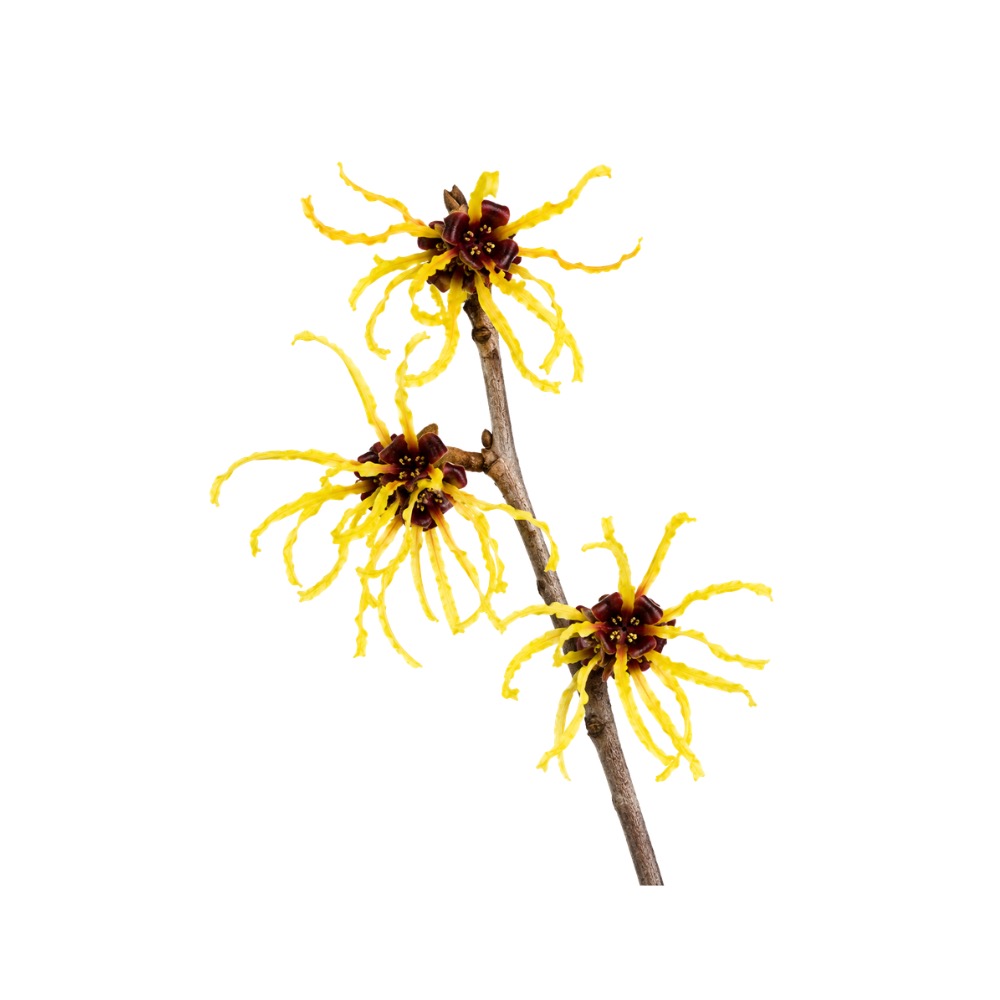
The flowers open in autumn, from October into November or December, and are faintly fragrant 28Reference 28Hamamelis virginiana Linnaeus — species description, habitat, distribution and uses — floraView study →. Each has four narrow, strap-like petals, pale to deep yellow and 10–20 mm long 28,
The fruit is a woody capsule 10–14 mm long that holds two shiny black seeds. When ripe it splits open explosively and can throw the seeds up to 10 m 28,
The Asian witch hazels, H. japonica and H. mollis, and their hybrid H. × intermedia are widely grown as garden plants 29Reference 29Hamamelis Linnaeus — genus description — floraView study →. The spring-flowering Ozark witch hazel (H. vernalis) grows alongside H. virginiana on the Ozark Plateau, where the two appear to hybridise 28Reference 28Hamamelis virginiana Linnaeus — species description, habitat, distribution and uses — floraView study →. The EMA monographs and the medicinal literature concern H. virginiana 1,
Distribution
Witch hazel grows across eastern North America. In Canada it reaches New Brunswick, Nova Scotia, Ontario and Quebec, and in the United States it ranges from Maine to Minnesota and south to Florida, Texas and Oklahoma 28Reference 28Hamamelis virginiana Linnaeus — species description, habitat, distribution and uses — floraView study →.
It grows on dry woodland slopes, in moist woods, on bluffs and in high hammocks, from sea level to about 1,500 m 28Reference 28Hamamelis virginiana Linnaeus — species description, habitat, distribution and uses — floraView study →. It is sometimes planted in gardens for its autumn flowers 28Reference 28Hamamelis virginiana Linnaeus — species description, habitat, distribution and uses — floraView study →.
Growing Conditions
Cultivation snapshot for Witch Hazel
HabitDeciduous shrub or small tree, usually to about 6 m.
Grow it yourself
Farm Wiki is our cultivation-focused sister site, also run by Justin Cooke.
Phytochemistry
The bark holds 8–12% tannins and the leaf 3–10%, and the bark carries 1–7% hamamelitannin, the plant’s characteristic gallotannin 27Reference 27In vitroAnti-Inflammatory and Anti-Acne Effects of Hamamelis virginiana Bark in Human Keratinocytes — in vitroView study →. Other hydrolysable tannins include galloylglucoses such as pentagalloylglucose, with free gallic acid as a breakdown product 11,
The bark also contains polymeric proanthocyanidins (condensed tannins), isolated at about 5% yield. Their chains are 11–29 units long, mostly 4→8-linked, and built from epicatechin and epigallocatechin units in a ratio of about 1.3:1, with galloyl groups on the extension units 23Reference 23Polymeric proanthocyanidins from the bark of Hamamelis virginiana — phytochemical analysisView study →.
Highly galloylated tannin fractions are strong antioxidants in vitro. At higher concentrations the same fractions became mildly pro-oxidant and toxic to skin cells 11Reference 11In vitroHighly galloylated tannin fractions from witch hazel (Hamamelis virginiana) bark: electron transfer capacity, in vitro antioxidant activity, and effects on skin-related cells — in vitroView study →.
Steam distillation leaves the tannins behind. The distilled water is rich in volatile compounds but almost free of tannins 27Reference 27In vitroAnti-Inflammatory and Anti-Acne Effects of Hamamelis virginiana Bark in Human Keratinocytes — in vitroView study →.
Constituent Summary
Figures are for the bark unless noted; the distillate is almost tannin-free 27Reference 27In vitroAnti-Inflammatory and Anti-Acne Effects of Hamamelis virginiana Bark in Human Keratinocytes — in vitroView study →.
Tannin2 compounds2 with data
Phenolic Acid1 compound1 with data
Flavanol4 compounds4 with data
Polymeric proanthocyanidins as a fraction were isolated from bark at ~5% yield 23Reference 23Polymeric proanthocyanidins from the bark of Hamamelis virginiana — phytochemical analysisView study →.
Pharmacology & Research
The human research on witch hazel is a small group of trials from the 1990s and 2000s, almost all testing distilled Hamamelis water on inflamed skin. Several showed that a distillate lotion reduces redness after UV exposure, but it did less well than low-dose hydrocortisone, and in atopic eczema it did no better than its own base cream 2,
A larger body of cell and animal work concerns the bark’s tannins, much of it on isolated hamamelitannin 11,
-
Best-supported: topical anti-inflammatory action on UV-irritated and minor inflammatory skin, from several small human trials — real but modest, and weaker than hydrocortisone 2,
3, ; the astringent and hemostatic action behind its pharmacopoeial use for hemorrhoids and weeping skin, grounded in tannin chemistry 1,4, 5Reference 2RCTAnti-inflammatory activity of hamamelis distillate applied topically to the skinView study →Reference 3RCTAnti-inflammatory effect of hamamelis lotion in a UVB erythema test — randomised controlled trialView study →Reference 4RCTAnti-inflammatory efficacy of topical preparations with 10% hamamelis distillate in a UV erythema test — randomised controlled trialView study →Reference 5RCTComparative efficacy of hamamelis distillate and hydrocortisone cream in atopic eczema — double-blind randomised controlled trialView study → 8Reference 1ReviewHamamelis virginiana L. in skin care: a review of its pharmacological properties and cosmetological applications — reviewView study →Reference 8In vitroChemical composition, skin microbiota metabolism, antimicrobial potential and anti-inflammatory properties of witch hazel bark (Hamamelis virginiana L.) — in vitro/ex vivoView study → . -
Emerging, worth watching: hamamelitannin as an antioxidant and NF-κB–modulating anti-inflammatory in keratinocyte models of eczema 6,
12, ; antimicrobial, antibiofilm and quorum-sensing effects of the bark and its tannins 8,13Reference 6In vitroWitch hazel (Hamamelis virginiana L.) bark extract impairs the keratinocyte inflammatory cascade typical of atopic eczema — in vitroView study →Reference 12In vitroComparative analysis of polyphenol-rich extracts from Hamamelis virginiana leaves and bark: ROS scavenging and anti-inflammatory effects on skin cells — in vitroView study →Reference 13In vitroHuman metabolites of Hamaforton™ (Hamamelis virginiana L. extract) modulate fibroblast extracellular-matrix components in response to UV-A irradiation — in vitroView study → 20, .21Reference 8In vitroChemical composition, skin microbiota metabolism, antimicrobial potential and anti-inflammatory properties of witch hazel bark (Hamamelis virginiana L.) — in vitro/ex vivoView study →Reference 20In vitroHamamelis virginiana L. extract presents antimicrobial and antibiofilm effects, absence of cytotoxicity, anti-inflammatory action, and potential to fight infections through nitric-oxide production by macrophages — in vitroView study →Reference 21In vitroHamamelitannin analogues that modulate quorum sensing as potentiators of antibiotics against Staphylococcus aureus — in vitro/animal modelView study → -
Mechanistically thin: anticancer and neuroprotective claims — in vitro and in silico only, on isolated hamamelitannin, at concentrations far from anything a topical or oral dose delivers 14,
15, .16, 17, 18Reference 14In vitroIn vitro and in silico evaluation of the antioxidant and anticancer potential of hamamelitannin from Hamamelis virginiana — in vitro/in silicoView study →Reference 15In vitroHamamelitannin from witch hazel (Hamamelis virginiana) displays specific cytotoxic activity against colon cancer cells — in vitroView study →Reference 16ReviewGinnalin A and hamamelitannin: the unique gallotannins with promising anti-carcinogenic potential — reviewView study →Reference 17In vitroHamamelitannin from Hamamelis virginiana inhibits the tumour necrosis factor-alpha (TNF)-induced endothelial cell death in vitro — in vitroView study →Reference 18In vitroEvaluating the antioxidant-mediated neuroprotection of hamamelitannin against H₂O₂-induced oxidative damage — in vitroView study → - The caveat: no standardised dose across studies, preparations vary widely (tannin-rich bark extract vs. tannin-free distillate), and the human data are small and old.
The distillate and the bark extract are different preparations. The human trials tested the distilled water, which carries almost no tannin, while most of the laboratory work used tannin-rich bark extracts or isolated hamamelitannin 1,
1. Anti-Inflammatory
In a UVB-erythema model in 30 volunteers, an after-sun lotion with 10% hamamelis distillate suppressed redness by roughly 20–27%, significantly more than its vehicle 3Reference 3RCTAnti-inflammatory effect of hamamelis lotion in a UVB erythema test — randomised controlled trialView study →. The distillate is essentially free of hamamelitannin and the other tannins.
A follow-up in 40 volunteers tested three distillate lotions. All reduced redness, but so did the vehicles, and only one lotion beat its vehicle, at one UV dose 4Reference 4RCTAnti-inflammatory efficacy of topical preparations with 10% hamamelis distillate in a UV erythema test — randomised controlled trialView study →.
An earlier controlled study showed a phosphatidylcholine-formulated distillate reduced UV- and tape-stripping-induced erythema, but hydrocortisone 1% was superior 2Reference 2RCTAnti-inflammatory activity of hamamelis distillate applied topically to the skinView study →.
In a double-blind randomised paired trial in 72 patients with atopic eczema, the distillate cream did no better than its drug-free vehicle and less well than 0.5% hydrocortisone 5Reference 5RCTComparative efficacy of hamamelis distillate and hydrocortisone cream in atopic eczema — double-blind randomised controlled trialView study →.
In keratinocytes driven with an eczema-like cytokine mix, standardised bark extract cut IL-6, IL-17C, TSLP and CCL26 release by impairing NF-κB signalling. Isolated hamamelitannin acted on the narrower IL-4 arm (CCL26, K10, proliferation) and did not reproduce the extract’s full effect 6Reference 6In vitroWitch hazel (Hamamelis virginiana L.) bark extract impairs the keratinocyte inflammatory cascade typical of atopic eczema — in vitroView study →.
Bark extract suppresses ROS and TNF-α/IL-8 in stimulated skin cells 8Reference 8In vitroChemical composition, skin microbiota metabolism, antimicrobial potential and anti-inflammatory properties of witch hazel bark (Hamamelis virginiana L.) — in vitro/ex vivoView study →.
Gap: the one high-quality eczema RCT was negative against vehicle; the positive human data are erythema-model surrogates, not disease outcomes, and all used distillate rather than tannin-rich bark.
2. Antioxidant
The antioxidant work is all preclinical. Highly galloylated bark tannin fractions are potent electron-transfer and radical-scavenging agents (ABTS, DPPH), protecting red blood cells from free-radical hemolysis in vitro 11Reference 11In vitroHighly galloylated tannin fractions from witch hazel (Hamamelis virginiana) bark: electron transfer capacity, in vitro antioxidant activity, and effects on skin-related cells — in vitroView study →.
Isolated hamamelitannin scavenges DPPH, ABTS, superoxide and hydrogen peroxide radicals and raises SOD, catalase and glutathione-peroxidase activity in cell models 14Reference 14In vitroIn vitro and in silico evaluation of the antioxidant and anticancer potential of hamamelitannin from Hamamelis virginiana — in vitro/in silicoView study →.
A 2025 comparison found both leaf and bark extracts scavenge ROS and calm inflammatory signalling in skin cells, with the tannin-dominated profiles driving the effect 12Reference 12In vitroComparative analysis of polyphenol-rich extracts from Hamamelis virginiana leaves and bark: ROS scavenging and anti-inflammatory effects on skin cells — in vitroView study →. Human metabolites of a Hamamelis extract modulated fibroblast extracellular-matrix components after UV-A exposure 13Reference 13In vitroHuman metabolites of Hamaforton™ (Hamamelis virginiana L. extract) modulate fibroblast extracellular-matrix components in response to UV-A irradiation — in vitroView study →.
There is no human antioxidant or clinical outcome data, and the pyrogallol-rich fractions responsible can be mildly pro-oxidant and cytotoxic to skin cells at higher concentrations 11Reference 11In vitroHighly galloylated tannin fractions from witch hazel (Hamamelis virginiana) bark: electron transfer capacity, in vitro antioxidant activity, and effects on skin-related cells — in vitroView study →.
3. Astringent & Hemostatic
Astringency is the basis of the herb’s pharmacopoeial and over-the-counter use for hemorrhoids, weeping skin and minor bleeding. It is a direct physical action: the bark’s hydrolysable and condensed tannins — hamamelitannin, gallotannins and high-molecular-weight proanthocyanidins built from epicatechin and epigallocatechin units — precipitate surface proteins, tightening tissue, reducing exudate and briefly constricting small vessels 23Reference 23Polymeric proanthocyanidins from the bark of Hamamelis virginiana — phytochemical analysisView study →.
Regulatory monographs (EMA/HMPC, Commission E) accept bark and leaf preparations as traditional astringents for minor skin inflammation, hemorrhoids and localised mucosal complaints 25Reference 25ReviewCommunity herbal monograph on Hamamelis virginiana L., cortex / folium — regulatory monograph (traditional-use registration for minor skin inflammation, haemorrhoids and minor injury).
Reviews of natural hemorrhoid therapy list witch hazel among the established astringent and venotonic options, and note that there are no dedicated modern trials 24Reference 24ReviewNatural products in hemorrhoid management: a comprehensive literature review of traditional herbal remedies and evidence-based therapies — reviewView study →.
Gap: almost no controlled efficacy data for the astringent/hemorrhoid indication itself; acceptance rests on tannin chemistry, long pharmacopoeial use, and the fact that steam-distilled “witch hazel water” — the commonest retail form — contains little of the tannin that produces astringency 1Reference 1ReviewHamamelis virginiana L. in skin care: a review of its pharmacological properties and cosmetological applications — reviewView study →.
4. Wound Healing & Skin Repair
The largest human dataset is an observational study of 309 children (aged 27 days to 11 years) with minor injuries, diaper rash or localised skin inflammation, in which hamamelis ointment produced statistically significant symptom reduction comparable to dexpanthenol, with excellent tolerability 9Reference 9ObservationalHamamelis in children with skin disorders and skin injuries: results of an observational study — observational/cohortView study →.
A systematic review of pediatric phytotherapy included these data and rated the underlying evidence low-quality 10Reference 10Systematic reviewPhytotherapy in paediatric skin disorders — a systematic literature review — systematic reviewView study →.
A Hamamelis-loaded nanofiber burn dressing achieved ~98% wound closure in rats over 21 days 22Reference 22AnimalSmart multilayer chitosan-based nanofibers for burn wounds: pH-responsive dual release of diclofenac sodium and Hamamelis virginiana extract — in vivo (rat)View study →, and bark-extract metabolites promote keratinocyte and fibroblast repair processes in skin-cell models 8,
Gap: the human evidence is a single uncontrolled observational study; the striking wound-closure figures come from an engineered rat dressing that also contained diclofenac, so the herb’s independent contribution is unclear.
5. Antimicrobial
Witch hazel has measurable but weak direct antimicrobial activity. Bark extract inhibited a broad panel of bacteria and Candida species and disrupted biofilms in vitro without cytotoxicity to macrophages, while also modulating cytokine and nitric-oxide responses 20Reference 20In vitroHamamelis virginiana L. extract presents antimicrobial and antibiofilm effects, absence of cytotoxicity, anti-inflammatory action, and potential to fight infections through nitric-oxide production by macrophages — in vitroView study →, and bark extract plus its skin-microbiota metabolites showed antibacterial effects on skin-relevant organisms 8Reference 8In vitroChemical composition, skin microbiota metabolism, antimicrobial potential and anti-inflammatory properties of witch hazel bark (Hamamelis virginiana L.) — in vitro/ex vivoView study →.
A clinical antiseptic formulation of hamamelis distillate with urea produced significant antimicrobial activity in volunteers and agar diffusion, which the authors judged relatively weak beside chlorhexidine 19Reference 19In vitroAntiseptic effect of a topical dermatological formulation that contains Hamamelis distillate and urea — clinical/in vitroView study →.
Hamamelitannin is also a quorum-sensing inhibitor, and synthetic analogues re-sensitised Staphylococcus aureus to antibiotics in vitro, in C. elegans and in a mouse mammary-infection model 21Reference 21In vitroHamamelitannin analogues that modulate quorum sensing as potentiators of antibiotics against Staphylococcus aureus — in vitro/animal modelView study →.
Direct potency is low, the analogue results use synthetic compounds rather than the herb, and no human infection outcome has been measured.
6. Anticancer
The anticancer work is on the isolated molecule in cell culture. Hamamelitannin selectively reduced viability and induced apoptosis, necrosis and S-phase arrest in HT29 colon-cancer cells while sparing normal colonocytes, and was more selective than pentagalloylglucose 15Reference 15In vitroHamamelitannin from witch hazel (Hamamelis virginiana) displays specific cytotoxic activity against colon cancer cells — in vitroView study →.
In liver-cancer (HepG2) cells it lowered viability and raised pro-apoptotic Bax and caspase-3/9, backed by in silico docking 14Reference 14In vitroIn vitro and in silico evaluation of the antioxidant and anticancer potential of hamamelitannin from Hamamelis virginiana — in vitro/in silicoView study →.
Reviews highlight hamamelitannin and the related gallotannin ginnalin A as gallotannins with anti-carcinogenic potential, and mechanistic work shows it blocks TNF-α–induced endothelial-cell death in vitro 16,
All of it is in vitro or in silico on the isolated molecule at micromolar concentrations, with no animal efficacy and no whole-herb data.
7. Neuroprotective
Hamamelitannin protected cells against hydrogen-peroxide–induced oxidative damage in a neuroprotection assay 18Reference 18In vitroEvaluating the antioxidant-mediated neuroprotection of hamamelitannin against H₂O₂-induced oxidative damage — in vitroView study →, and a hamamelitannin–zinc-oxide nanoparticle formulation reduced ROS and rescued antioxidant-gene expression in a zebrafish larval neurotoxicity model 14Reference 14In vitroIn vitro and in silico evaluation of the antioxidant and anticancer potential of hamamelitannin from Hamamelis virginiana — in vitro/in silicoView study →.
There is no mammalian in vivo data and no behavioural or disease endpoint, and the zebrafish result used a nanoparticle formulation rather than the herb.
Mechanisms
The bark’s tannins bind and precipitate surface proteins, which tightens tissue and reduces weeping and minor bleeding. This physical action needs no absorption, and it is the basis of the hemorrhoid, skin and wound uses 23Reference 23Polymeric proanthocyanidins from the bark of Hamamelis virginiana — phytochemical analysisView study →.
Isolated hamamelitannin has been studied in cells for NF-κB suppression, radical scavenging, antibiofilm activity and apoptosis, at concentrations a skin application is not known to reach 6,
| Mechanism | Drives | Key compounds |
|---|---|---|
| Tannin–protein precipitation, tissue constriction | astringenthemostatichemorrhoid & wound | hamamelitannin; proanthocyanidins, gallotannins |
| NF-κB ↓, IL-6 / IL-17C / TSLP / CCL26 ↓ | anti-inflammatoryatopic eczema | hamamelitannin |
| Radical scavenging (DPPH/ABTS/superoxide), ↑ SOD/CAT/GPx | antioxidantafter-sun | hamamelitannin, gallic acid; gallotannins |
| Antibacterial / antibiofilm, quorum-sensing inhibition | antimicrobial | hamamelitannin |
| Pro-apoptotic (Bax, caspase-3/9 ↑), S-phase arrest | anticancer (in vitro) | hamamelitannin, pentagalloylglucose |
Clinical Trials
The completed studies are the small topical and observational studies above. One registered trial names witch hazel, as a comparator arm rather than the object of study (NCT06699303, diaper dermatitis).
| Completed | Planned | Terminated | Preclinical |
|---|---|---|---|
| ~5(small topical/observational) | 0 | 0 | ~20+ |
Last checked: July 2026.
Dosage
Every human trial used a steam distillate or a finished product, so the research doses cannot be converted to a weight of dried bark or leaf.
Research Doses
| Indication | Preparation | Dose | Est. dried-herb equivalent | Source |
|---|---|---|---|---|
| Anti-inflammatory (atopic eczema) | Distillate cream, 5.35 g distillate + 0.64 mg hamamelis ketone / 100 g | Topical, twice daily × 14 days | — | 5Reference 5RCTComparative efficacy of hamamelis distillate and hydrocortisone cream in atopic eczema — double-blind randomised controlled trialView study → |
| Anti-inflammatory (UV erythema) | Lotion with 10% hamamelis distillate | Topical, applied post-irradiation | — | 3, |
| Skin injury / diaper rash / inflammation (children) | Hamamelis ointment | Topical, applied to affected area | — | 9Reference 9ObservationalHamamelis in children with skin disorders and skin injuries: results of an observational study — observational/cohortView study → |
| Antiseptic (skin) | Formulation with 90% hamamelis distillate + 5% urea | Topical, occlusive | — | 19Reference 19In vitroAntiseptic effect of a topical dermatological formulation that contains Hamamelis distillate and urea — clinical/in vitroView study → |
Traditional Dosage
| System | Preparation | Dose |
|---|---|---|
| Western herbal medicine | Liquid extract 1:2 | 20–40 mL/week (≈ 3–6 mL/day) |
| Western herbal medicine | Tincture 1:5 (leaf/bark) | 2–4 mL, up to 3× daily |
| Western herbal medicine (topical) | Bark decoction / distillate | Applied neat or as a compress to affected skin, hemorrhoids or minor wounds |
| Regulatory (EMA/HMPC, Commission E) | Semisolid preparations; aqueous or aqueous-alcoholic bark/leaf extracts | Topical, per traditional-use monograph indications (skin inflammation, hemorrhoids, minor injury) 25Reference 25ReviewCommunity herbal monograph on Hamamelis virginiana L., cortex / folium — regulatory monograph (traditional-use registration for minor skin inflammation, haemorrhoids and minor injury) |
Safety & Pregnancy
Witch hazel is very well tolerated on the skin. Contact allergy is possible, and oral use of the bark has not been studied.
- Very well tolerated on the skin. In the eczema, UV-erythema and children’s studies, side effects were very rare, and skin reactions in the eczema trial were confined to the vehicle-treated areas 2,
5, .9Reference 2RCTAnti-inflammatory activity of hamamelis distillate applied topically to the skinView study →Reference 5RCTComparative efficacy of hamamelis distillate and hydrocortisone cream in atopic eczema — double-blind randomised controlled trialView study →Reference 9ObservationalHamamelis in children with skin disorders and skin injuries: results of an observational study — observational/cohortView study → - Contact allergy. A Hamamelis tincture sensitised some people in patch testing, and witch hazel is common in cosmetics 1,
30Reference 1ReviewHamamelis virginiana L. in skin care: a review of its pharmacological properties and cosmetological applications — reviewView study →Reference 30Cosmetics and herbal remedies with Compositae plant extracts — are they tolerated by Compositae-allergic patients? — patch-test studyView study → . - Oral use not studied. Tannin-rich bark preparations taken by mouth can irritate the stomach.
- Pregnancy not studied. Topical use after childbirth is long-standing practice but has not been formally evaluated 25,
26Reference 25ReviewCommunity herbal monograph on Hamamelis virginiana L., cortex / folium — regulatory monograph (traditional-use registration for minor skin inflammation, haemorrhoids and minor injury)Reference 26Meta-analysisLocal cooling for relieving pain from perineal trauma sustained during childbirth — Cochrane systematic review/meta-analysisView study → .
Full Safety & Interactions Detail
On the skin. Across the human trials in atopic eczema, UV erythema and children’s skin conditions, preparations were well tolerated 2,
Contact allergy. In a patch-testing study of people with plant allergies, Hamamelis virginiana tincture was found to be a sensitiser 30Reference 30Cosmetics and herbal remedies with Compositae plant extracts — are they tolerated by Compositae-allergic patients? — patch-test studyView study →.
Oral bark. The bark’s high tannin content can irritate the stomach when taken by mouth. The distilled water contains almost no tannin 27Reference 27In vitroAnti-Inflammatory and Anti-Acne Effects of Hamamelis virginiana Bark in Human Keratinocytes — in vitroView study →. Tannins can reduce the absorption of medicines and minerals taken at the same time, though this has not been shown for witch hazel itself. No drug-interaction or CYP450 study has been done.
Not studied; topical use is low concern by long practice. Witch hazel is widely used on the skin after childbirth, including on perineal trauma, where hamamelis water has served as a comparator in controlled cooling trials 26Reference 26Meta-analysisLocal cooling for relieving pain from perineal trauma sustained during childbirth — Cochrane systematic review/meta-analysisView study →. No safety signal has emerged from topical use, but use in pregnancy and breastfeeding has not been formally studied.
The regulatory monographs cover defined topical uses and do not establish safety in pregnancy 25Reference 25ReviewCommunity herbal monograph on Hamamelis virginiana L., cortex / folium — regulatory monograph (traditional-use registration for minor skin inflammation, haemorrhoids and minor injury). Oral bark preparations are best avoided in pregnancy and while breastfeeding.
References
- Wójciak M, Pacuła W, Sowa I, Feldo M, Graczyk F, Załuski D. (2025). Hamamelis virginiana L. in skin care: a review of its pharmacological properties and cosmetological applications — review. Molecules. https://pubmed.ncbi.nlm.nih.gov/40649262/
- Korting HC, Schäfer-Korting M, Hart H, et al. (1993). Anti-inflammatory activity of hamamelis distillate applied topically to the skin. Influence of vehicle and dose — randomised controlled trial. Eur J Clin Pharmacol. https://pubmed.ncbi.nlm.nih.gov/8513841/
- Hughes-Formella BJ, Bohnsack K, Rippke F, et al. (1998). Anti-inflammatory effect of hamamelis lotion in a UVB erythema test — randomised controlled trial. Dermatology. https://pubmed.ncbi.nlm.nih.gov/9621139/
- Hughes-Formella BJ, Filbry A, Gassmueller J, Rippke F. (2002). Anti-inflammatory efficacy of topical preparations with 10% hamamelis distillate in a UV erythema test — randomised controlled trial. Skin Pharmacol Appl Skin Physiol. https://pubmed.ncbi.nlm.nih.gov/11867970/
- Korting HC, Schäfer-Korting M, Klövekorn W, et al. (1995). Comparative efficacy of hamamelis distillate and hydrocortisone cream in atopic eczema — double-blind randomised controlled trial. Eur J Clin Pharmacol. https://pubmed.ncbi.nlm.nih.gov/8582464/
- Piazza S, Martinelli G, Magnavacca A, et al. (2022). Witch hazel (Hamamelis virginiana L.) bark extract impairs the keratinocyte inflammatory cascade typical of atopic eczema — in vitro. Int J Mol Sci. https://pubmed.ncbi.nlm.nih.gov/36012541/
- Hörmann HP, Korting HC. (1994). Evidence for the efficacy and safety of topical herbal drugs in dermatology: Part I: anti-inflammatory agents — review. Phytomedicine. https://pubmed.ncbi.nlm.nih.gov/23195891/
- Skowrońska W, Granica S, Piwowarski JP, et al. (2025). Chemical composition, skin microbiota metabolism, antimicrobial potential and anti-inflammatory properties of witch hazel bark (Hamamelis virginiana L.) — in vitro/ex vivo. J Ethnopharmacol. https://pubmed.ncbi.nlm.nih.gov/40819781/
- Wolff HH, Kieser M. (2007). Hamamelis in children with skin disorders and skin injuries: results of an observational study — observational/cohort. Eur J Pediatr. https://pubmed.ncbi.nlm.nih.gov/17177071/
- Kloter E, Albanese F, Schweighoffer R, et al. (2023). Phytotherapy in paediatric skin disorders — a systematic literature review — systematic review. Complement Ther Med. https://pubmed.ncbi.nlm.nih.gov/36958415/
- Touriño S, Lizárraga D, Carreras A, et al. (2008). Highly galloylated tannin fractions from witch hazel (Hamamelis virginiana) bark: electron transfer capacity, in vitro antioxidant activity, and effects on skin-related cells — in vitro. Chem Res Toxicol. https://pubmed.ncbi.nlm.nih.gov/18311930/
- Wójciak M, Ziemlewska A, Zagórska-Dziok M, et al. (2025). Comparative analysis of polyphenol-rich extracts from Hamamelis virginiana leaves and bark: ROS scavenging and anti-inflammatory effects on skin cells — in vitro. Molecules. https://pubmed.ncbi.nlm.nih.gov/40942097/
- Natella F, Guantario B, Ambra R, et al. (2021). Human metabolites of Hamaforton™ (Hamamelis virginiana L. extract) modulate fibroblast extracellular-matrix components in response to UV-A irradiation — in vitro. Front Pharmacol. https://pubmed.ncbi.nlm.nih.gov/34975471/
- Janarthanam VA, et al. (2025). In vitro and in silico evaluation of the antioxidant and anticancer potential of hamamelitannin from Hamamelis virginiana — in vitro/in silico. Cell Biochem Biophys. https://pubmed.ncbi.nlm.nih.gov/40549288/
- Sánchez-Tena S, Fernández-Cachón ML, Carreras A, et al. (2012). Hamamelitannin from witch hazel (Hamamelis virginiana) displays specific cytotoxic activity against colon cancer cells — in vitro. J Nat Prod. https://pubmed.ncbi.nlm.nih.gov/22216935/
- Rippin, et al. (2023). Ginnalin A and hamamelitannin: the unique gallotannins with promising anti-carcinogenic potential — review. Explor Target Antitumor Ther. https://pubmed.ncbi.nlm.nih.gov/37205316/
- Habtemariam S. (2002). Hamamelitannin from Hamamelis virginiana inhibits the tumour necrosis factor-alpha (TNF)-induced endothelial cell death in vitro — in vitro. Toxicon. https://pubmed.ncbi.nlm.nih.gov/11602283/
- Janarthanam VA, et al. (2025). Evaluating the antioxidant-mediated neuroprotection of hamamelitannin against H₂O₂-induced oxidative damage — in vitro. 3 Biotech. https://pubmed.ncbi.nlm.nih.gov/40556825/
- Gloor M, Reichling J, Wasik B, Holzgang HE. (2002). Antiseptic effect of a topical dermatological formulation that contains Hamamelis distillate and urea — clinical/in vitro. Forsch Komplementarmed Klass Naturheilkd. https://pubmed.ncbi.nlm.nih.gov/12119511/
- Amêndola I, Viegas DJ, Freitas ET, et al. (2024). Hamamelis virginiana L. extract presents antimicrobial and antibiofilm effects, absence of cytotoxicity, anti-inflammatory action, and potential to fight infections through nitric-oxide production by macrophages — in vitro. An Acad Bras Cienc. https://pubmed.ncbi.nlm.nih.gov/38359287/
- Vermote A, Brackman G, Risseeuw MDP, et al. (2016). Hamamelitannin analogues that modulate quorum sensing as potentiators of antibiotics against Staphylococcus aureus — in vitro/animal model. Angew Chem Int Ed Engl. https://pubmed.ncbi.nlm.nih.gov/27095479/
- Mousavi-Ejarestaghi N, et al. (2025). Smart multilayer chitosan-based nanofibers for burn wounds: pH-responsive dual release of diclofenac sodium and Hamamelis virginiana extract — in vivo (rat). Int J Biol Macromol. https://pubmed.ncbi.nlm.nih.gov/40645245/
- Dauer A, Rimpler H, Hensel A (2003). Polymeric proanthocyanidins from the bark of Hamamelis virginiana — phytochemical analysis. Planta Med. https://pubmed.ncbi.nlm.nih.gov/12567291/
- Admuthe NB, et al. (2025). Natural products in hemorrhoid management: a comprehensive literature review of traditional herbal remedies and evidence-based therapies — review. Cureus. https://pubmed.ncbi.nlm.nih.gov/40458338/
- European Medicines Agency, Committee on Herbal Medicinal Products (HMPC). Community herbal monograph on Hamamelis virginiana L., cortex / folium — regulatory monograph (traditional-use registration for minor skin inflammation, haemorrhoids and minor injury). Available via the EMA herbal medicinal products portal (ema.europa.eu). Regulatory status also summarised in ref [1].
- East CE, Begg L, Henshall NE, et al. (2012). Local cooling for relieving pain from perineal trauma sustained during childbirth — Cochrane systematic review/meta-analysis. Cochrane Database Syst Rev. https://pubmed.ncbi.nlm.nih.gov/22592710/
- Piazza S, Martinelli G, Vrhovsek U, Masuero D, Fumagalli M, Magnavacca A, Pozzoli C, Canilli L, Terno M, Angarano M, Dell’Agli M, & Sangiovanni E (2022). Anti-Inflammatory and Anti-Acne Effects of Hamamelis virginiana Bark in Human Keratinocytes — in vitro. Antioxidants (Basel), 11(6), 1119. https://pubmed.ncbi.nlm.nih.gov/35740016/
- Meyer, F. G. (1997). Hamamelis virginiana Linnaeus — species description, habitat, distribution and uses — flora. In Flora of North America Editorial Committee (eds.), Flora of North America North of Mexico, Vol. 3 (Hamamelidaceae). http://www.efloras.org/florataxon.aspx?flora_id=1&taxon_id=220006023
- Meyer, F. G. (1997). Hamamelis Linnaeus — genus description — flora. In Flora of North America Editorial Committee (eds.), Flora of North America North of Mexico, Vol. 3 (Hamamelidaceae). http://www.efloras.org/florataxon.aspx?flora_id=1&taxon_id=114541
- Paulsen E, Christensen LP, & Andersen KE (2008). Cosmetics and herbal remedies with Compositae plant extracts — are they tolerated by Compositae-allergic patients? — patch-test study. Contact Dermatitis, 58(1), 15-23. https://pubmed.ncbi.nlm.nih.gov/18154553/



