
Compound Monograph
Hydrastine
Goldenseal's second major alkaloid — a phthalideisoquinoline structurally akin to the opium alkaloid noscapine, historically the source of the hemostatic drug hydrastinine, and today notable as a potent goldenseal CYP3A4 inhibitor and a laboratory GABA-A antagonist.

Sources · 2
Where Does It Come From?
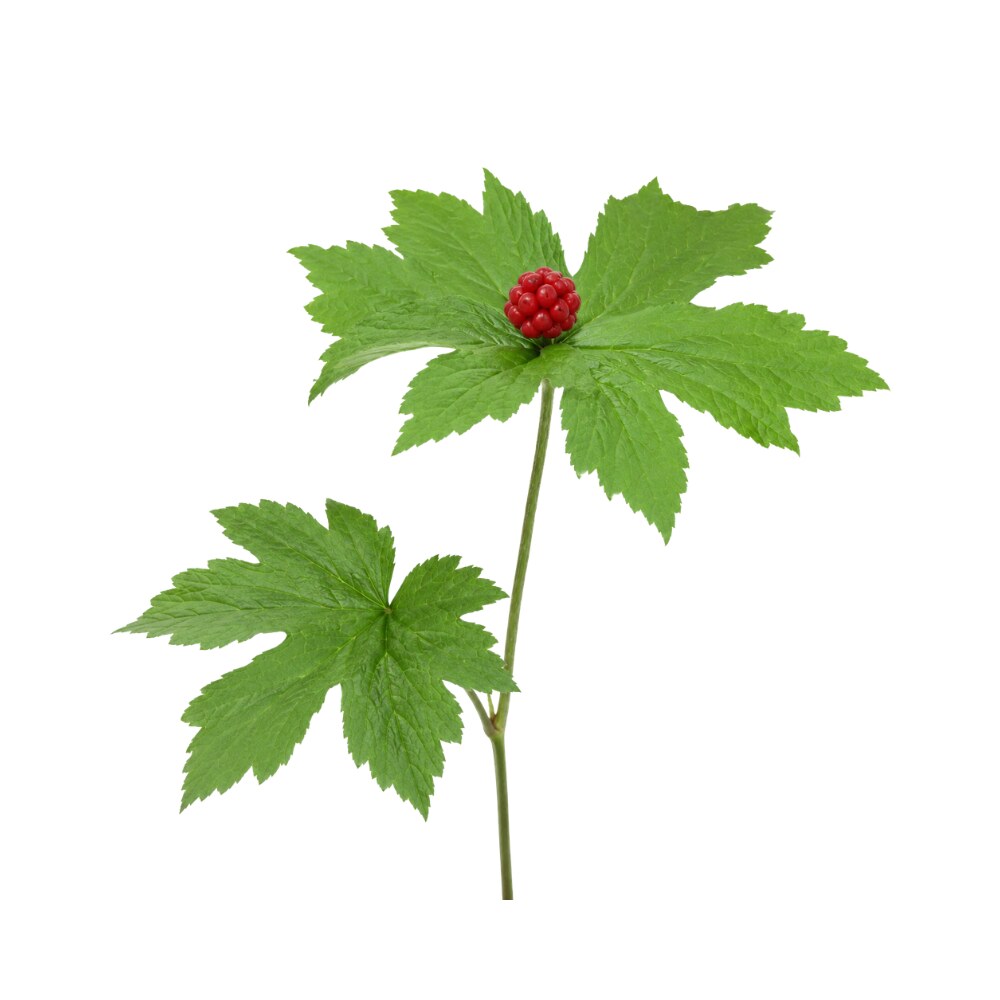
Hydrastine is a naturally occurring phthalideisoquinoline alkaloid (isoquinoline alkaloid), found in Goldenseal and 1 other source. It is flagged as moderately toxic.
Concentration
Content by Source
Reported concentrations across the plants that contain hydrastine — the bar marks the typical level, the line shows the reported range.
Literature figures for varying plant parts and preparations. Read them as a comparative guide, not exact assays.
Hydrastine at a Glance
Hydrastine (β-hydrastine) is the second of goldenseal’s two headline alkaloids. Where berberine is a bright-yellow protoberberine, hydrastine is a colourless phthalideisoquinoline — a different subclass of the benzylisoquinoline family, and the same structural class as the opium-poppy cough alkaloid noscapine. Together berberine and hydrastine are the two markers by which goldenseal root is quantified and sold.
Almost everything with a therapeutic reputation belongs to the plant, or to hydrastine’s chemical descendant rather than to the parent molecule. Nineteenth-century Eclectic physicians used goldenseal for uterine and mucous-membrane bleeding, and that tradition led chemists to oxidise hydrastine into hydrastinine, a smaller, more stable vasoconstrictor that Bayer marketed as a hemostatic. The best-characterised property of hydrastine itself is unwelcome: it is one of the two goldenseal alkaloids responsible for the herb’s real, human-confirmed inhibition of drug-metabolising CYP enzymes, and in animals the (+)-enantiomer is a potent convulsant. Modern controlled human evidence for hydrastine as a remedy is essentially absent.
Goldenseal’s Other Alkaloid
Goldenseal root is standardised on two alkaloids, not one. Commercial and pharmacopoeial quality control quantifies both berberine (typically ~2–4.5% of dry root) and hydrastine (~2–4%, with a USP minimum of 2%), because the two together fingerprint authentic Hydrastis canadensis and flag adulteration 6Reference 6Chemical comparison of goldenseal (Hydrastis canadensis L.) root powder from three commercial suppliers — analytical (HPLC quantification of berberine, hydrastine, canadine)View study →. That pairing is why hydrastine matters even though it has almost no standalone evidence: it is a defining chemical marker of the herb.
The two are chemically distinct. Berberine is a planar, quaternary, fully aromatic protoberberine; hydrastine is a non-planar phthalideisoquinoline carrying a lactone (phthalide) ring fused to a tetrahydroisoquinoline, with two stereocentres. Its closest well-known relative is noscapine, the phthalideisoquinoline of opium poppy — the same scaffold and, historically, the same reason for interest (both are non-narcotic alkaloids with smooth-muscle and, for noscapine, antitussive activity). Unlike berberine, which is made by plants across at least five families, hydrastine is effectively unique to goldenseal, which is part of why it is such a reliable authentication marker 6Reference 6Chemical comparison of goldenseal (Hydrastis canadensis L.) root powder from three commercial suppliers — analytical (HPLC quantification of berberine, hydrastine, canadine)View study →.
The Hemostatic Tradition & Hydrastinine
Hydrastine’s real historical footprint is as a chemical starting material. In the Eclectic and early pharmaceutical era goldenseal was valued for “passive” haemorrhage — uterine bleeding (metrorrhagia, menorrhagia) and mucous-membrane oozing — an astringent, vasoconstrictor reputation. Chemists found that oxidising hydrastine (by nitric acid) cleaves it into hydrastinine, a much smaller tetrahydroisoquinoline that is a more consistent vasoconstrictor and uterine stimulant. Hydrastinine, not the parent alkaloid, became the marketed drug: Bayer patented it as a hemostatic in the 1910s and it was used into the twentieth century for uterine haemorrhage, said to act on the small vessels of the mucosa rather than, as ergot does, on the muscular wall.
Two caveats keep this historical, not clinical. First, the therapeutic agent was the semisynthetic derivative, so it is weak evidence that dietary hydrastine does anything comparable. Second, hydrastine’s own cardiovascular pharmacology in the old literature is mixed and dose-dependent — reports of a pressor (blood-pressure–raising) effect sit alongside its principal modern finding, that at higher exposures the (+)-isomer is a central convulsant (see Toxicity & Safety). The uterine reputation is a genuine reason goldenseal is traditionally avoided in pregnancy, but it rests on the plant and on hydrastinine, not on controlled trials of hydrastine.
What It's Used For
Hydrastine has a thin evidence base compared with its sibling berberine: no modern controlled human trials of the isolated molecule, a handful of in-vitro and ex-vivo studies, and one property — CYP inhibition — that is well enough characterised to matter clinically. Its one genuinely modern, human-flavoured value-add is pharmacokinetic: unlike berberine, hydrastine is measurably absorbed after an oral goldenseal dose 3Reference 3Hydrastine pharmacokinetics and metabolism after a single oral dose of goldenseal (Hydrastis canadensis) to humans — human pharmacokinetic study (n=11)View study →.
Support is an experimental score I’m building — a composite weighted by study type (human > animal > in vitro > review) and study volume, tempered for isolate-vs-plant match and bioavailability. It’s a beta: a fast way to rank strength of evidence at a glance, not a validated metric, and I’ll keep honing it. Each application links down to its write-up.
This is hydrastine’s most solid and clinically relevant pharmacology — and it is an interaction risk, not a therapy. Hydrastine carries a methylenedioxyphenyl group that lets it form a metabolic-intermediate (MI) complex with cytochrome P450, i.e. mechanism-based (“suicide”) inhibition. In human liver microsomes hydrastine formed MI complexes with CYP2C9, CYP2D6 and CYP3A4, and inhibited CYP3A4-mediated testosterone 6β-hydroxylation with IC50 values of ~25 µM for the (+)-isomer and ~30 µM for the (−)-isomer 2Reference 2In vitroHuman cytochrome P450 inhibition and metabolic-intermediate complex formation by goldenseal extract and its methylenedioxyphenyl components — in vitroView study →.
It is the stronger CYP3A4-inhibiting of goldenseal’s two markers, and controlled human studies confirm that whole goldenseal inhibits CYP3A4 and CYP2D6 in people 8Reference 8RCTClinical assessment of CYP2D6-mediated herb-drug interactions in humans: effects of milk thistle, black cohosh, goldenseal, kava kava, StView study →.
All data are isolate (enzyme/microsome) or whole-plant human — none is a hydrastine human trial.
Gap: the enzyme IC50s come from in-vitro microsomes and the human interaction data are for the whole herb, so hydrastine’s individual contribution in vivo is inferred rather than directly measured 2,
When goldenseal’s major alkaloids were isolated and tested individually, β-hydrastine was one of the four (with berberine, canadine and canadaline) showing direct antibacterial activity against a panel of six strains including Staphylococcus aureus, Streptococcus and Escherichia coli 4Reference 4In vitroAntibacterial activity of Hydrastis canadensis extract and its major isolated alkaloids — in vitroView study →. Hydrastine is a contributor rather than the lead — berberine and the whole-extract flavonoid synergists carry most of goldenseal’s antibacterial reputation — and everything here is isolated-compound in vitro.
Gap: laboratory MICs against cultured bacteria only; no bioavailability data supporting systemic antibacterial use and no clinical confirmation 4Reference 4In vitroAntibacterial activity of Hydrastis canadensis extract and its major isolated alkaloids — in vitroView study →.
In an ex-vivo study on carbachol-pre-contracted guinea-pig trachea, β-hydrastine relaxed the tissue with an EC50 of about 72.8 µg/mL — weaker than berberine (34.2 µg/mL) and much weaker than canadaline (2.4 µg/mL), but a measurable contributor to the whole-extract effect that offers a mechanistic rationale for goldenseal’s traditional use in catarrhal/respiratory complaints 5Reference 5Relaxant effects of Hydrastis canadensis L. and its major alkaloids on guinea pig isolated trachea — ex vivo animalView study →.
Gap: one isolated-tissue animal study; no whole-organism or human confirmation, and the tissue-bath concentrations are not relatable to oral intake 5Reference 5Relaxant effects of Hydrastis canadensis L. and its major alkaloids on guinea pig isolated trachea — ex vivo animalView study →.
Goldenseal’s nineteenth-century reputation for uterine and mucous-membrane bleeding drove the development of hydrastinine, the oxidation product of hydrastine, which was marketed as a vasoconstrictor hemostatic for uterine haemorrhage (see The Hemostatic Tradition & Hydrastinine). The activity attributed to the tradition is best documented for that semisynthetic derivative and for the whole plant, not for isolated hydrastine.
Gap: the evidence is historical and pharmacological, centred on the derivative hydrastinine; there are no modern controlled trials of hydrastine for bleeding, and the reputation is a reason goldenseal is avoided in pregnancy rather than a validated indication.
Mechanisms
| Target / pathway | Effect | Relevant to |
|---|---|---|
| GABA-A receptor (bicuculline-sensitive site) | competitive antagonism; (+)-hydrastine IC50 ~0.4 µM, ~180× the (−)-isomer — convulsant in animals | CNS toxicology |
| CYP3A4 / CYP2C9 / CYP2D6 | mechanism-based inhibition via methylenedioxyphenyl metabolic-intermediate complex (CYP3A4 IC50 ~25–30 µM) | drug interactions |
| Vascular & uterine smooth muscle | vasoconstriction / uterine stimulation — chiefly via the oxidation product hydrastinine | historical hemostatic use |
| Bacterial growth | bactericidal/bacteriostatic contributor within the alkaloid fraction | antibacterial |
Pharmacokinetics
Hydrastine’s pharmacokinetics are the page’s genuinely modern value-add, and they contrast sharply with berberine’s. In 11 healthy adults given a single 2.7 g goldenseal dose containing 78 mg hydrastine, the alkaloid was measurably and fairly rapidly absorbed — Cmax ~225 ng/mL, Tmax ~1.5 h, elimination half-life ~4.8 h 3Reference 3Hydrastine pharmacokinetics and metabolism after a single oral dose of goldenseal (Hydrastis canadensis) to humans — human pharmacokinetic study (n=11)View study →. That is a real systemic exposure, unlike berberine’s sub-1% bioavailability, so hydrastine actually reaches the circulation where it can act on CYP enzymes. It then undergoes rapid, extensive phase I and II metabolism — reduction, O- and N-demethylation, hydroxylation, aromatisation, lactone (phthalide) hydrolysis and conjugation 3Reference 3Hydrastine pharmacokinetics and metabolism after a single oral dose of goldenseal (Hydrastis canadensis) to humans — human pharmacokinetic study (n=11)View study →.
Clinical Trials
There are no registered clinical trials of isolated hydrastine; the human data come from goldenseal pharmacokinetic and drug-interaction studies in which hydrastine is measured as a marker alkaloid.
| Completed | Planned | Terminated | Preclinical |
|---|---|---|---|
| Human goldenseal PK/interaction studies only | — | — | In vitro + animal |
Last checked: July 2026.
Isolate vs. Plant Studies
Hydrastine sits at the opposite pole from berberine on the isolate-vs-plant question. Berberine’s clinical literature is almost all on the purified molecule; hydrastine’s is almost all on the plant. The antibacterial and airway-relaxation studies used isolated β-hydrastine but only in vitro / ex vivo 4,
Prevalence in Nature
Hydrastine is, for practical purposes, a goldenseal-specific alkaloid. It accumulates in the root and rhizome of Hydrastis canadensis (Ranunculaceae) at roughly 2–4% of dry weight — comparable to or slightly below berberine — and USP-grade goldenseal is standardised to a minimum of 2% hydrastine precisely because the pairing of berberine and hydrastine authenticates the herb and exposes adulteration with cheaper alkaloid sources 6Reference 6Chemical comparison of goldenseal (Hydrastis canadensis L.) root powder from three commercial suppliers — analytical (HPLC quantification of berberine, hydrastine, canadine)View study →. Unlike berberine, which is biosynthesised across at least five plant families, hydrastine is essentially confined to Hydrastis, with only trace reports elsewhere. It is a benzylisoquinoline alkaloid, built (like berberine) from two tyrosine-derived units through the (S)-reticuline branch point, but routed into the phthalideisoquinoline subclass it shares with noscapine rather than the protoberberine subclass.
Discovery & Synthesis
Hydrastine was first isolated in 1851 by Alfred P. Durand, making it one of the earlier plant alkaloids characterised and, chronologically, isolated before berberine’s role in the same root was fully appreciated. Its most consequential chemistry came soon after: oxidative cleavage of hydrastine yields hydrastinine, the smaller tetrahydroisoquinoline that became a marketed hemostatic — an early example of a botanical alkaloid serving as the semisynthetic scaffold for a pharmaceutical (Bayer, 1910s). Today hydrastine is not manufactured as a commodity: it is obtained by extraction from goldenseal root when needed as an analytical reference standard, and there is no commercial total-synthesis route because there is no bulk demand for the isolated parent alkaloid. Its structural cousin noscapine, by contrast, is produced at scale from opium poppy.
Patents: not yet researched (future patent-loop pass).
Toxicity & Safety
Hydrastine earns a moderate rating on two independent grounds: a real, human-confirmed drug-interaction mechanism, and a striking neurotoxic signal in animals. Neither makes dietary goldenseal acutely dangerous at normal use, but both are more than the “low” rating a benign marker alkaloid would get.
- Not acutely toxic at dietary intake. Hydrastine is consumed only as a minor fraction of goldenseal root; there are no reports of poisoning from ordinary culinary or supplemental use of the herb.
- Drug-interaction risk (CYP3A4/2D6). Hydrastine is the stronger CYP3A4-inhibiting of goldenseal’s markers and is measurably absorbed, so goldenseal can raise the blood levels of many prescription drugs — treat as a genuine interaction hazard.
- Convulsant in animals. (+)-Hydrastine is a potent GABA-A antagonist (roughly twice as potent as bicuculline as a convulsant in mice); high isolated doses are proconvulsant.
- Avoid in pregnancy. Goldenseal is traditionally contraindicated in pregnancy — hydrastine/hydrastinine carry a uterine-stimulant reputation, and the co-occurring berberine crosses the placenta and can displace bilirubin, raising neonatal kernicterus risk.
- Product identity is not guaranteed. Marketplace goldenseal is frequently adulterated, so actual hydrastine content (and thus interaction potential) varies by product.
Full Safety & Interactions Detail
Drug interactions are the practically important risk. Hydrastine forms mechanism-based metabolic-intermediate complexes with CYP2C9, CYP2D6 and CYP3A4 and is the more potent CYP3A4 inhibitor of goldenseal’s two marker alkaloids (IC50 ~25–30 µM in microsomes) 2Reference 2In vitroHuman cytochrome P450 inhibition and metabolic-intermediate complex formation by goldenseal extract and its methylenedioxyphenyl components — in vitroView study →; because it is genuinely absorbed after oral goldenseal (Cmax ~225 ng/mL) 3Reference 3Hydrastine pharmacokinetics and metabolism after a single oral dose of goldenseal (Hydrastis canadensis) to humans — human pharmacokinetic study (n=11)View study →, it can contribute to the herb’s documented human inhibition of CYP3A4 and CYP2D6 — enzymes handling a large share of prescription drugs 8Reference 8RCTClinical assessment of CYP2D6-mediated herb-drug interactions in humans: effects of milk thistle, black cohosh, goldenseal, kava kava, StView study →. A human crossover study nonetheless found no significant change in indinavir pharmacokinetics, so the interaction is substrate-specific rather than universal 9Reference 9Influence of goldenseal root on the pharmacokinetics of indinavir — human crossover studyView study →. Neurotoxicity: the (+)-enantiomer is a potent competitive antagonist at bicuculline-sensitive GABA-A receptors and a convulsant in mice roughly twice as potent as bicuculline, with the (−)-enantiomer ~180× weaker — a toxicological property of isolated high-dose hydrastine, not a hazard of ordinary herbal exposure 1Reference 1In vitroHuang JH, Johnston GA. (1990). (+)-Hydrastine, a potent competitive antagonist at mammalian GABAA receptors — in vitro / animal. British Journal of Pharmacology, 99(4), 727–730. https://pubmed.ncbi.nlm.nih.gov/2163278/View study →. Pregnancy (stated as a cited finding, not a verdict block): goldenseal is traditionally avoided in pregnancy, consistent with hydrastine’s/hydrastinine’s uterine-stimulant history and with berberine’s placental transfer and bilirubin-displacement (kernicterus) risk in neonates. Product quality: untargeted-metabolomics work shows goldenseal supplements are frequently adulterated, so hydrastine content — and therefore both efficacy claims and interaction risk — cannot be assumed from the label 10Reference 10Detection of adulteration in Hydrastis canadensis (goldenseal) dietary supplements via untargeted metabolomics — analyticalView study →. Reviews of goldenseal’s alkaloids also flag possible neurotoxic, hepatotoxic and phototoxic activities of the whole extract, reinforcing the traditional restriction to short-term use 7Reference 7ReviewGoldenseal (Hydrastis canadensis L.) and its active constituents: a critical review of their efficacy and toxicological issues — reviewView study →. No dedicated reproductive-toxicology or interaction study of isolated hydrastine exists; these cautions are inferred from goldenseal-level and mechanistic data.
Dosage
Hydrastine is not dosed as an isolated compound. It is consumed only as one of the alkaloids in goldenseal root preparations (tinctures, capsules), where pharmacopoeial quality control sets a minimum of 2% hydrastine (alongside ~2.5% berberine) for authentic material 6Reference 6Chemical comparison of goldenseal (Hydrastis canadensis L.) root powder from three commercial suppliers — analytical (HPLC quantification of berberine, hydrastine, canadine)View study →. The only quantified human exposure comes from a pharmacokinetic study in which a 2.7 g goldenseal dose delivered about 78 mg of hydrastine 3Reference 3Hydrastine pharmacokinetics and metabolism after a single oral dose of goldenseal (Hydrastis canadensis) to humans — human pharmacokinetic study (n=11)View study → — a research dose, not a recommendation. Its historical therapeutic use was as the derivative hydrastinine, which is a separate (and obsolete) drug, not the parent alkaloid.
These are figures documented in research and quality standards, not a personal recommendation — goldenseal’s drug-interaction and pregnancy cautions above apply to any intake.
References
- Huang JH, Johnston GA. (1990). (+)-Hydrastine, a potent competitive antagonist at mammalian GABAA receptors — in vitro / animal. British Journal of Pharmacology, 99(4), 727–730. https://pubmed.ncbi.nlm.nih.gov/2163278/
- Chatterjee P, Franklin MR. (2003). Human cytochrome P450 inhibition and metabolic-intermediate complex formation by goldenseal extract and its methylenedioxyphenyl components — in vitro. Drug Metabolism and Disposition, 31(11), 1391–1397. https://pubmed.ncbi.nlm.nih.gov/14570772/
- Gupta PK, Barone G, Gurley BJ, Fifer EK, Hendrickson HP. (2015). Hydrastine pharmacokinetics and metabolism after a single oral dose of goldenseal (Hydrastis canadensis) to humans — human pharmacokinetic study (n=11). Drug Metabolism and Disposition, 43(4), 534–552. https://pubmed.ncbi.nlm.nih.gov/25609220/
- Scazzocchio F, Cometa MF, Tomassini L, Palmery M. (2001). Antibacterial activity of Hydrastis canadensis extract and its major isolated alkaloids — in vitro. Planta Medica, 67(6), 561–564. https://pubmed.ncbi.nlm.nih.gov/11509983/
- Abdel-Haq H, Cometa MF, Palmery M, Leone MG, Silvestrini B, Saso L. (2000). Relaxant effects of Hydrastis canadensis L. and its major alkaloids on guinea pig isolated trachea — ex vivo animal. Pharmacology & Toxicology, 87(5), 218–222. https://pubmed.ncbi.nlm.nih.gov/11129501/
- Weber HA, Zart MK, Hodges AE, Molloy HM, O’Brien BM, Moody LA, et al. (2003). Chemical comparison of goldenseal (Hydrastis canadensis L.) root powder from three commercial suppliers — analytical (HPLC quantification of berberine, hydrastine, canadine). Journal of Agricultural and Food Chemistry, 51(25), 7352–7358. https://pubmed.ncbi.nlm.nih.gov/14640583/
- Mandal SK, Maji AK, Mishra SK, Ishfaq PM, Devkota HP, Silva AS, Das N. (2020). Goldenseal (Hydrastis canadensis L.) and its active constituents: a critical review of their efficacy and toxicological issues — review. Pharmacological Research, 160, 105085. https://pubmed.ncbi.nlm.nih.gov/32683037/
- Gurley BJ, Swain A, Hubbard MA, Williams DK, Barone G, Hartsfield F, et al. (2008). Clinical assessment of CYP2D6-mediated herb-drug interactions in humans: effects of milk thistle, black cohosh, goldenseal, kava kava, St. John’s wort, and Echinacea — randomised human study. Molecular Nutrition & Food Research, 52(7), 755–763. https://pubmed.ncbi.nlm.nih.gov/18214849/
- Sandhu RS, Prescilla RP, Simonelli TM, Edwards DJ. (2003). Influence of goldenseal root on the pharmacokinetics of indinavir — human crossover study. Journal of Clinical Pharmacology, 43(11), 1283–1288. https://pubmed.ncbi.nlm.nih.gov/14551183/
- Wallace ED, Oberlies NH, Cech NB, Kellogg JJ (2018). Detection of adulteration in Hydrastis canadensis (goldenseal) dietary supplements via untargeted metabolomics — analytical. Food and Chemical Toxicology, 120, 439–447. https://pubmed.ncbi.nlm.nih.gov/30031041/



