
Compound Monograph
Isocupressic Acid
Isocupressic acid is a labdane diterpene acid in the needles of ponderosa and lodgepole pine, common juniper and Monterey cypress. It is the identified cause of late-gestation abortion in cattle grazing pine needles — a complete veterinary toxicology story with no human data attached to it at all.

Sources · 6
Where Does It Come From?
Isocupressic Acid is a naturally occurring labdane diterpene acid, found in Lodgepole pine, Pine and 4 other sources. It is flagged as moderately toxic.
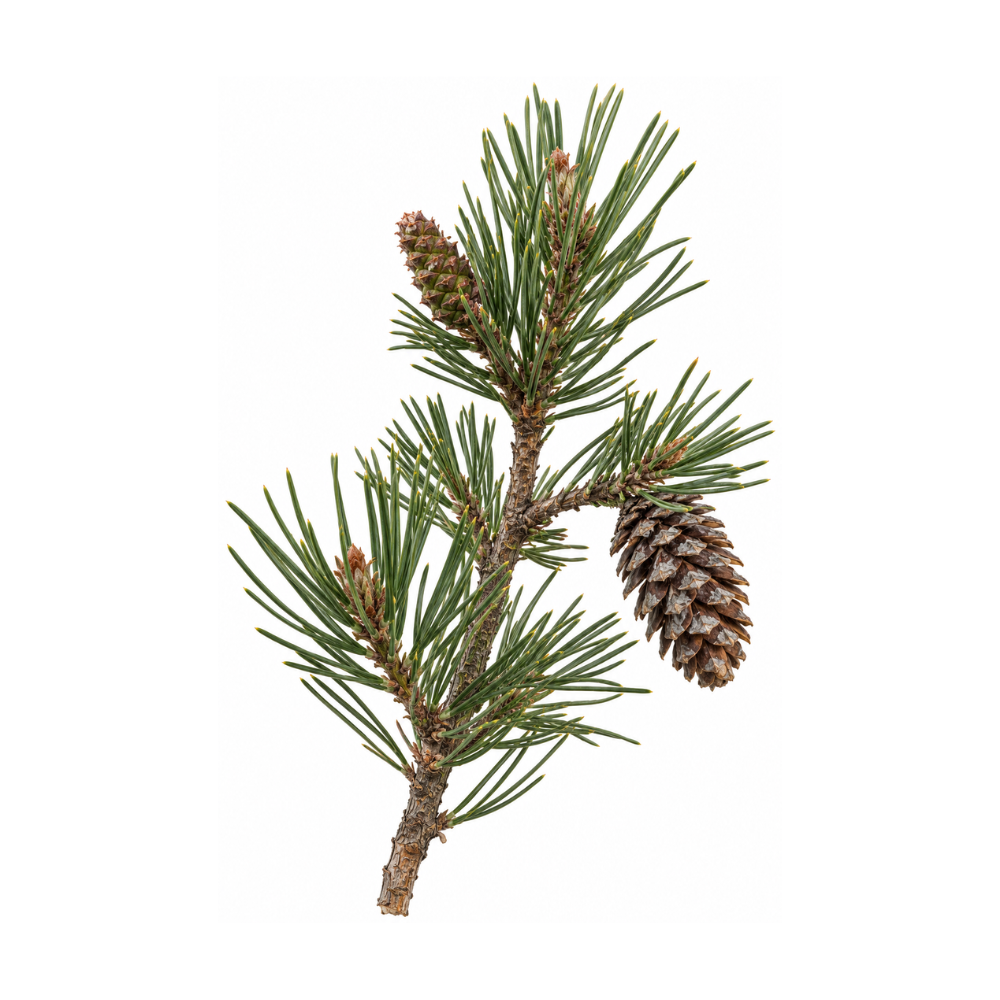 Principal source Lodgepole Pine Pinus contorta Herb monograph →
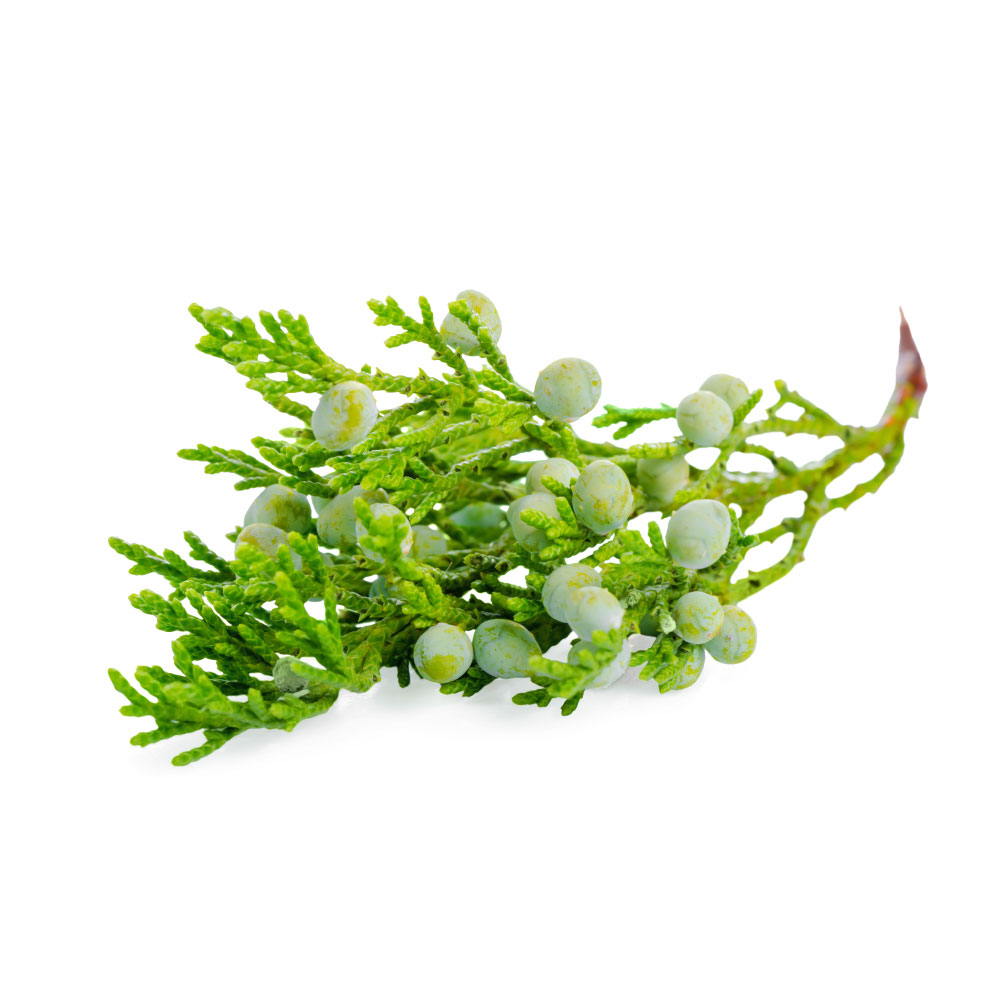 Source Juniper Juniperus communis Herb monograph →
 Source Pine Pinus sylvestris Herb monograph →
Concentration
Content by Source
Concentrations not reported. No percent-dry-weight or mg/g figures have been published for this compound in its source plants.
Isocupressic Acid at a Glance
Isocupressic acid is a labdane diterpene acid — 15-hydroxylabda-8(17),13E-dien-19-oic acid — found in the needles of several conifers at around one to two percent of dry weight. It is the reason cattle that graze pine needles in late pregnancy abort.
That sounds like folklore and is not. Ranchers in the western United States reported the association for most of the twentieth century; the USDA Poisonous Plant Research Laboratory reproduced it experimentally, isolated the compound responsible, measured its content in each implicated species, worked out how it is metabolised, and built a serum assay to diagnose affected animals 1,
What it does not have is any human data. Nobody has studied isocupressic acid in people, and the question “is pine needle tea safe in pregnancy?” cannot be answered from this literature. What the literature does give is something more useful than a verdict: it says exactly which species carry the compound, at what levels, and what happened to the one species that has been tested.
The Cattle Story, Precisely
The experimental work is unusually specific, so it is worth stating in its own terms rather than in summary.
Late-pregnant cows were fed ground needles by gavage from around day 250 of gestation. Needles from lodgepole pine contained 0.8% isocupressic acid by dry weight and delivered 62–78 mg/kg body weight daily; those cows aborted after 8 and 10 days. Needles and plant material from common juniper ran higher, at 2.0%, delivering 190–245 mg/kg daily; those cows aborted after 3 and 4 days. All retained fetal membranes and showed the classical clinical picture of pine-needle abortion 2Reference 2AnimalAbortifacient effects of lodgepole pine (Pinus contorta) and common juniper (Juniperus communis) on cattle — animal modelView study →.
Content in the other implicated species has been measured on the same basis: ponderosa pine needles from Oregon at 1.70%, and Monterey cypress from New Zealand at 0.89–1.24% — the New Zealand measurement made to test a local anecdotal association, which it supported 3Reference 3AnimalIsocupressic acid, an abortifacient component of Cupressus macrocarpa — animal modelView study →. Cases are still reported where the plants and the cattle overlap, including a recent series from Argentina 15Reference 15Case reportPine needle abortions in cattle due to consumption of Pinus ponderosa in Argentina: case reports — case reportView study →.
Two details do a lot of work here, and both cut against reading this as a general warning about conifers.
The dose is agricultural. These are cows eating kilograms of needles a day for days on end. The exposure is not comparable to a cup of tea, and no threshold below which the effect disappears has been established in any species.
Isocupressic acid causes abortion and almost nothing else. When ponderosa pine tips, rosin gum and dehydroabietic acid were compared head to head in pregnant cattle, the pine tips both aborted and poisoned; rosin gum and dehydroabietic acid poisoned without aborting — anorexia, rumen acidosis, dyspnoea, progressive paresis, nephrosis, myonecrosis — while isocupressic acid at abortifacient doses caused no other toxicosis 4Reference 4AnimalThe toxic and abortifacient effects of ponderosa pine — animal modelView study →. The abortion belongs to the labdane; the general toxicosis belongs to the abietane resin acids. They are separate hazards in the same tree, and conflating them makes both harder to understand.
What It's Used For
The mechanistic work is small, consistent, and mostly about steroid production. It also contains one result that runs against the intuition the rest of the story creates.
The core finding, and the only one at the whole-animal level. Feeding trials in late-gestation cows established the effect for ponderosa pine, lodgepole pine, common juniper and Monterey cypress, with isocupressic acid identified as the primary abortifacient across all four and its content measured in each 1,
Abortion follows within days at agricultural intakes, with retained fetal membranes as a consistent feature 2Reference 2AnimalAbortifacient effects of lodgepole pine (Pinus contorta) and common juniper (Juniperus communis) on cattle — animal modelView study →.
Importantly, the co-occurring vasoactive lipids of ponderosa pine — myristate and laurate esters of long-chain diols, once proposed as the abortifacient — were shown not to be required: lodgepole material caused abortion at similar rates while Monterey cypress contained none of them at all 2Reference 2AnimalAbortifacient effects of lodgepole pine (Pinus contorta) and common juniper (Juniperus communis) on cattle — animal modelView study →.
Metabolism differs between cattle habituated to eating needles and naive animals, which is one reason field incidence varies 16Reference 16AnimalA comparison of the metabolism of the abortifacient compounds from Ponderosa pine needles in conditioned versus naive cattle — animal modelView study →.
Gap: the entire whole-animal record is cattle, at grazing-scale doses. No other species has been tested at any dose, and the literature is a veterinary toxicology one throughout 17Reference 17ReviewSome phytotoxins causing reproductive alterations in ruminants — reviewView study →.
The proposed mechanism. In cultured bovine luteal cells, isocupressic acid — extracted here from the root of Taiwan cypress (Juniperus formosana) — significantly inhibited progesterone production at every concentration from 1 to 1000 ng/mL, under basal conditions, under ovine LH stimulation, and under 8-Br-cAMP stimulation. That the block survives direct cAMP stimulation places the site of action downstream of cAMP 7Reference 7In vitroIsocupressic acid blocks progesterone production from bovine luteal cells — in vitroView study →.
A separate group found a comparable suppression of steroidogenesis in MA-10 Leydig tumour cells, suggesting the effect is on steroidogenic machinery generally rather than on luteal cells specifically 8Reference 8In vitroMolecular mechanism of isocupressic acid supresses MA-10 cell steroidogenesis — in vitroView study →.
Gap: cell culture only, and progesterone withdrawal is a plausible route to late-gestation abortion rather than a demonstrated one — the in-vivo link between the luteal effect and the abortion has not been closed directly.
The result that complicates the picture, and the one worth stating carefully because it is easy to get backwards. Isocupressic acid was added to bovine in-vitro maturation and in-vitro culture media at 1.3 and 2.6 µg/mL. It did not inhibit oocyte maturation and did not adversely affect preimplantation embryo development; embryo development was in fact enhanced dose-dependently. Day-8 blastocysts cultured at the higher concentration were transferred to recipient heifers and produced normal pregnancies, with all but two births normal on postnatal veterinary examination 9Reference 9AnimalEffects of the pine needle abortifacient, isocupressic acid, on bovine oocyte maturation and preimplantation embryo development — animal modelView study →.
Gap: this is a specific and limited claim. It says the molecule is not toxic to the early embryo in culture; it says nothing about the late-gestation effect, which is maternal and vascular rather than embryonic. Both results are real and they are about different stages.
A non-medical finding, included because it is where new work on the molecule is actually happening. Bio-guided fractionation of Pinus pinea needle extract identified (+)-isocupressic acid as the principal phytotoxin, inhibiting root growth of Portulaca oleracea by 83 ± 4% at 1000 µM and outperforming the other isolated compounds; the authors frame it as a bioherbicide lead 14Reference 14In vitroMetabolite screening from Pinus pinea needles reveals (+)-isocupressic acid as a key phytotoxin for weed management — in vitroView study →.
Gap: allelopathy, not pharmacology. Its relevance here is that it extends the documented species list to stone pine, a pine most people know as the source of pine nuts.
Mechanisms
| Target / pathway | Effect | Relevant to |
|---|---|---|
| Bovine luteal progesterone synthesis | inhibited at all tested concentrations, including under direct cAMP stimulation — a post-cAMP block | abortifacient mechanism |
| Leydig-cell steroidogenesis (MA-10) | suppressed, indicating a general steroidogenic rather than luteal-specific action | abortifacient mechanism |
| Rumen and hepatic metabolism | rapid conversion to agathic → dihydroagathic → tetrahydroagathic acid | pharmacokineticsdiagnosis |
| Plant root elongation | strongly inhibited — allelopathic defence | ecology |
| Bovine oocyte maturation and preimplantation embryo | not impaired; embryo development enhanced in culture | what the molecule does not do |
Pharmacokinetics
Characterised in cattle, and nowhere else. Isocupressic acid is rapidly and extensively metabolised — rumen preparations convert it in vitro to agathic acid and dihydroagathic acid 10Reference 10In vitroIn vitro biotransformations of isocupressic acid by cow rumen preparations: formation of agathic and dihydroagathic acids — in vitroView study →, and in the intact animal the sequence continues to tetrahydroagathic acid, which is what actually circulates 11,
No absorption, distribution or elimination data exist for any non-ruminant species, and none for humans.
Clinical Trials
None, and none should be expected — this is a poisonous-plant research programme, not a drug programme. The entire animal literature is livestock toxicology, and the entire human literature is empty.
| Completed | Planned | Terminated | Preclinical |
|---|---|---|---|
| None in humans | — | — | Cattle feeding trials, bovine luteal and Leydig cell work, embryo culture, rumen metabolism |
Last checked: September 2026.
Isolate vs. Plant Studies
Both, and they agree — which is rare enough to be worth saying. The whole plant was tested first: ground needles fed to pregnant cattle, with abortion as the endpoint and content measured in the material actually fed 2,
The transferability caveat is about species, not about isolate-versus-plant. Everything at the organism level is cattle. Sheep, horses and humans have not been tested, and the ruminant metabolism that dominates the pharmacokinetics does not exist in a person.
Its Role in Plants
Isocupressic acid is a labdane, formed from geranylgeranyl diphosphate by a different branch of conifer diterpene metabolism than the abietane resin acids of the oleoresin — which is why it concentrates in needles rather than in pitch, and why the two hazards separate so cleanly by plant part.
Its function appears to be allelopathic. In Pinus pinea, bio-guided fractionation identified it as the needle extract’s principal phytotoxin, strongly inhibiting root growth in competing weeds 14Reference 14In vitroMetabolite screening from Pinus pinea needles reveals (+)-isocupressic acid as a key phytotoxin for weed management — in vitroView study →. Pine needle litter is famously inhibitory to understorey germination, and this is one of the molecules behind it. That it also interferes with mammalian steroidogenesis is incidental — a defence compound with an off-target effect in an animal that eats it.
Prevalence in Nature
Isocupressic acid is documented in a specific, short list of conifers, and the list matters more than the general family:
| Species | Part | Content (% dry weight) |
|---|---|---|
| Common juniper (Juniperus communis) | needles / plant material | ~2.0% 2Reference 2AnimalAbortifacient effects of lodgepole pine (Pinus contorta) and common juniper (Juniperus communis) on cattle — animal modelView study → |
| Ponderosa pine (Pinus ponderosa) | needles | ~1.70% (Oregon material) 3Reference 3AnimalIsocupressic acid, an abortifacient component of Cupressus macrocarpa — animal modelView study → |
| Monterey cypress (Cupressus macrocarpa) | foliage | 0.89–1.24% (New Zealand material) 3Reference 3AnimalIsocupressic acid, an abortifacient component of Cupressus macrocarpa — animal modelView study → |
| Lodgepole pine (Pinus contorta) | needles | ~0.8% 2Reference 2AnimalAbortifacient effects of lodgepole pine (Pinus contorta) and common juniper (Juniperus communis) on cattle — animal modelView study → |
| Stone pine (Pinus pinea) | needles | present; isolated as the principal phytotoxin, not quantified as % dry weight 14Reference 14In vitroMetabolite screening from Pinus pinea needles reveals (+)-isocupressic acid as a key phytotoxin for weed management — in vitroView study → |
| Taiwan cypress (Juniperus formosana) | root | present; the source used for the luteal-cell work 7Reference 7In vitroIsocupressic acid blocks progesterone production from bovine luteal cells — in vitroView study → |
The compound is named as an isomer of cupressic acid, first characterised from Cupressus — which is why a molecule best known from pines carries a cypress name.
What is not known is as important as what is. The genus Pinus has not been systematically surveyed for isocupressic acid, and the species most commonly used for needle tea — Scots pine (P. sylvestris) and eastern white pine (P. strobus) — do not appear in this literature either as positives or as negatives. An absence of reports is not a measurement of zero. Content also varies with season, tissue and population, as it does for every conifer diterpene.
Discovery & Synthesis
The abortion came first and the chemistry followed, over about seventy years. Field reports of cattle aborting after grazing ponderosa pine were recorded from early in the twentieth century; the USDA Poisonous Plant Research Laboratory reproduced the abortions experimentally through the 1970s and early 1980s, and a 1989 review of that decade of work concluded that the abortifacient principle varied markedly between years and collection sites — a strong hint that a specific, variable compound was responsible rather than the needles as such 5Reference 5ReviewPine needle abortion in cattle: a review and report of 1973-1984 research — reviewView study →. Isocupressic acid was identified as that compound in the early 1990s, and by the mid-1990s it was being quantified across species and tested as a purified isolate 3,
There is no manufacturing route and no reason for one. The compound is isolated from plant material for research use; the only synthetic chemistry associated with it is the preparation of its metabolite tetrahydroagathic acid as an analytical standard for the diagnostic assays 12Reference 12Preparation of tetrahydroagathic acid: a serum metabolite of isocupressic acid, a cattle abortifacient in ponderosa pineView study →, and microbial transformation studies used to generate related structures.
Patents: not yet researched.
Toxicity & Safety
The toxicology here is precise about cattle and silent about everything else. Both halves of that need saying.
- A proven abortifacient in cattle at grazing-scale intakes, in the last trimester, from four documented plant species 2,
3Reference 2AnimalAbortifacient effects of lodgepole pine (Pinus contorta) and common juniper (Juniperus communis) on cattle — animal modelView study →Reference 3AnimalIsocupressic acid, an abortifacient component of Cupressus macrocarpa — animal modelView study → . - No human data of any kind. No exposure study, no case report, no pharmacokinetics. The absence is not reassurance; it is an absence.
- Species and part are what determine exposure. The compound is in needles and foliage of specific conifers, not in resin or pitch — and the pine species used for needle tea have not been assayed either way.
- It is not a general poison. At abortifacient doses in cattle it produced no other toxicosis, and it did not harm oocytes or early embryos in culture 4,
9Reference 4AnimalThe toxic and abortifacient effects of ponderosa pine — animal modelView study →Reference 9AnimalEffects of the pine needle abortifacient, isocupressic acid, on bovine oocyte maturation and preimplantation embryo development — animal modelView study → .
Full Safety & Interactions Detail
What is established. Late-gestation abortion in cattle, reproduced experimentally, with the compound identified, its content in each source plant measured, its metabolism mapped and a diagnostic assay validated 1,
What is not established, and matters. There is no human exposure literature. There is no study in any non-ruminant. There is no threshold dose in any species. The proposed mechanism — suppression of luteal progesterone production, plausibly reducing uterine support in late gestation — is supported by cell work 7,
The practical question. Pine needle tea is a real traditional preparation, and this is the compound behind the question of whether it is appropriate in pregnancy. The honest answer from this literature is a sourcing one: the species with documented isocupressic acid content are ponderosa pine, lodgepole pine, common juniper, Monterey cypress and stone pine, and juniper and ponderosa carry the most. Those are worth avoiding in pregnancy on the evidence available. The species usually sold for needle tea have not been assayed, which means the question is open rather than answered, and an open question in pregnancy is normally decided conservatively.
Interactions. None characterised. No CYP, transporter or drug-interaction work exists for this molecule.
Other reproductive findings. In the one direct test, isocupressic acid did not impair bovine oocyte maturation or preimplantation embryo development, and embryos cultured with it went on to normal pregnancies and normal calves 9Reference 9AnimalEffects of the pine needle abortifacient, isocupressic acid, on bovine oocyte maturation and preimplantation embryo development — animal modelView study →. The reproductive hazard documented for this compound is specifically late-gestation and maternal, not embryotoxic.
Dosage
There is no dose, and there should not be one. Isocupressic acid is a livestock-poisoning agent. The figures below are the feeding-trial exposures and plant contents that define the hazard.
| Context | Form | Figure reported |
|---|---|---|
| Lodgepole pine feeding trial | 4.5–5.5 kg/day ground dry needles, from gestation day 250 | 62–78 mg ICA/kg body weight/day → abortion at 8 and 10 days 2Reference 2AnimalAbortifacient effects of lodgepole pine (Pinus contorta) and common juniper (Juniperus communis) on cattle — animal modelView study → |
| Common juniper feeding trial | same protocol | 190–245 mg ICA/kg body weight/day → abortion at 3 and 4 days 2Reference 2AnimalAbortifacient effects of lodgepole pine (Pinus contorta) and common juniper (Juniperus communis) on cattle — animal modelView study → |
| Bovine luteal cell culture | isolated compound | 1–1000 ng/mL, progesterone inhibited across the whole range 7Reference 7In vitroIsocupressic acid blocks progesterone production from bovine luteal cells — in vitroView study → |
| Bovine embryo culture | isolated compound | 1.3 and 2.6 µg/mL, no adverse effect on maturation or development 9Reference 9AnimalEffects of the pine needle abortifacient, isocupressic acid, on bovine oocyte maturation and preimplantation embryo development — animal modelView study → |
These are animal research exposures, not doses for anyone to take, and no human intake of isocupressic acid has been characterised.
References
- Lee ST, Gardner DR, Garrosian M, et al. (2003). Development of enzyme-linked immunosorbent assays for isocupressic acid and serum metabolites of isocupressic acid — animal model. J Agric Food Chem. https://pubmed.ncbi.nlm.nih.gov/12744647/
- Gardner DR, Panter KE, James LF, et al. (1998). Abortifacient effects of lodgepole pine (Pinus contorta) and common juniper (Juniperus communis) on cattle — animal model. Vet Hum Toxicol. https://pubmed.ncbi.nlm.nih.gov/9778758/
- Parton K, Gardner D, Williamson NB (1996). Isocupressic acid, an abortifacient component of Cupressus macrocarpa — animal model. N Z Vet J. https://pubmed.ncbi.nlm.nih.gov/16031906/
- Stegelmeier BL, Gardner DR, James LF, et al. (1996). The toxic and abortifacient effects of ponderosa pine — animal model. Vet Pathol. https://pubmed.ncbi.nlm.nih.gov/8826003/
- James LF, Short RE, Panter KE, et al. (1989). Pine needle abortion in cattle: a review and report of 1973-1984 research — review. Cornell Vet. https://pubmed.ncbi.nlm.nih.gov/2643502/
- Gardner DR, James LF, Panter KE, et al. (1999). Ponderosa pine and broom snakeweed: poisonous plants that affect livestock — review. J Nat Toxins. https://pubmed.ncbi.nlm.nih.gov/10091125/
- Wu LS, Chen JC, Sheu SY, et al. (2002). Isocupressic acid blocks progesterone production from bovine luteal cells — in vitro. Am J Chin Med. https://pubmed.ncbi.nlm.nih.gov/12568280/
- Tsui KH, Wang JY, Wu LS, et al. (2012). Molecular mechanism of isocupressic acid supresses MA-10 cell steroidogenesis — in vitro. Evid Based Complement Alternat Med. https://pubmed.ncbi.nlm.nih.gov/22666287/
- Wang S, Panter KE, Gardner DR, et al. (2004). Effects of the pine needle abortifacient, isocupressic acid, on bovine oocyte maturation and preimplantation embryo development — animal model. Anim Reprod Sci. https://pubmed.ncbi.nlm.nih.gov/14998650/
- Lin SJ, Short RE, Ford SP, et al. (1998). In vitro biotransformations of isocupressic acid by cow rumen preparations: formation of agathic and dihydroagathic acids — in vitro. J Nat Prod. https://pubmed.ncbi.nlm.nih.gov/9461652/
- Gardner DR, Panter KE, James LF (1999). Pine needle abortion in cattle: metabolism of isocupressic acid — animal model. J Agric Food Chem. https://pubmed.ncbi.nlm.nih.gov/10552582/
- Garrossian M, Gardner DR, Panter KE, et al. (2002). Preparation of tetrahydroagathic acid: a serum metabolite of isocupressic acid, a cattle abortifacient in ponderosa pine. J Agric Food Chem. https://pubmed.ncbi.nlm.nih.gov/11929277/
- Snider DB, Gardner DR, Janke BH, et al. (2015). Pine needle abortion biomarker detected in bovine fetal fluids — animal model. J Vet Diagn Invest. https://pubmed.ncbi.nlm.nih.gov/25428187/
- Hlaili H, Zorrilla JG, Salvatore MM, et al. (2025). Metabolite screening from Pinus pinea needles reveals (+)-isocupressic acid as a key phytotoxin for weed management — in vitro. Phytochem Anal. https://pubmed.ncbi.nlm.nih.gov/40448335/
- Martinez A, Apostolo R, Herrera R, et al. (2024). Pine needle abortions in cattle due to consumption of Pinus ponderosa in Argentina: case reports — case report. Toxicon. https://pubmed.ncbi.nlm.nih.gov/38614243/
- Welch KD, Gardner DR, Pfister JA, et al. (2012). A comparison of the metabolism of the abortifacient compounds from Ponderosa pine needles in conditioned versus naive cattle — animal model. J Anim Sci. https://pubmed.ncbi.nlm.nih.gov/22696617/
- Coy D, Cruz-Carrillo A, Lizarazo-Cely S (2024). Some phytotoxins causing reproductive alterations in ruminants — review. Toxicon. https://pubmed.ncbi.nlm.nih.gov/38795851/



