L-Citrulline (malate)
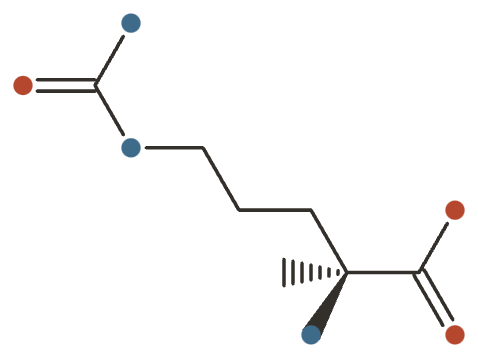
L-Citrulline is a non-proteinogenic amino acid that raises plasma arginine and nitric oxide, taken as a pre-workout for pump and endurance.

L-Citrulline (malate) at a Glance
L-Citrulline is a non-proteinogenic amino acid and a nitric-oxide precursor — and its whole reason for existing as a supplement is a piece of metabolic routing. Oral L-arginine is largely destroyed by arginase in the gut and liver before it reaches circulation. Citrulline is not an arginase substrate, so it survives that first pass, gets converted to arginine in the kidney, and ends up raising plasma arginine more effectively, gram for gram, than arginine itself.
The evidence base is active and genuinely mixed, and it splits along a clean line: the further upstream the endpoint, the more consistent the effect. Plasma arginine, NO synthesis and flow-mediated dilation move reliably. Endurance times and one-rep max mostly do not.
Much of the vascular benefit is also population-dependent — largest in older, hypertensive, post-menopausal or diabetic people with pre-existing endothelial dysfunction, and smaller or absent in young healthy adults.
One marketing point worth deflating: “citrulline malate” has no demonstrated advantage over plain L-citrulline at a matched citrulline dose. A head-to-head trial found neither improved neuromuscular performance. Since malate is part of the labelled weight, compare products on grams of L-citrulline, not total powder.
What It’s Used For
- Endothelial function & arterial stiffness — the strongest signal, concentrated in at-risk groups.
- Blood pressure — real but conditional on age, dose and co-supplementation.
- Muscle soreness & perceived exertion — modest, from small acute trials.
- Resistance-training performance — small effect on reps to failure, none on strength.
- Erectile dysfunction — pilot-scale, and usually as a combination product.
- Heart failure (vascular function) — surrogate endpoints only, with a negative blood-flow study against it.
- Pregnancy hypertension — the one dedicated RCT was null.
The honest miss is the most-marketed use. A dedicated meta-analysis found no significant benefit for endurance performance in young healthy adults.
How It Works
Nitric oxide is made by endothelial NO synthase from arginine. Two things limit how much arginine reaches that enzyme, and citrulline addresses both.
First-pass loss. Arginase in the gut wall and liver degrades much of an oral arginine dose. Citrulline isn’t a substrate for it, so it passes through intact and is converted to arginine by the kidney’s argininosuccinate synthase and lyase — delivering arginine to circulation by the back door.
ADMA competition. Asymmetric dimethylarginine is an endogenous eNOS inhibitor that competes with arginine. What matters for NO output is the arginine/ADMA ratio, not arginine alone, and citrulline raises that ratio 1Reference 1RCTPharmacokinetic and pharmacodynamic properties of oral L-citrulline and L-arginine: impact on nitric oxide metabolism — randomized controlled trialView study →.
The pathway is saturable and there is no storage pool, so plasma citrulline peaks around an hour after a dose and the vascular effects come from repeated daily dosing rather than a long half-life. Ceiling effects apply too: acute doses as high as 10 g raise NO synthesis without always increasing blood flow, particularly in older adults 20Reference 20Acute ingestion of citrulline stimulates nitric oxide synthesis but does not increase blood flow in healthy young and older adults with heart failureView study →.
The proposed fatigue and soreness mechanism — ammonia buffering via the urea cycle — is plausible but unconfirmed.
The full trial record is in Pharmacology & Research below.
Pharmacology & Research
L-Citrulline is a non-proteinogenic amino acid and a nitric-oxide (NO) precursor: absorbed intact, it escapes the intestinal and hepatic arginase that degrade oral L-arginine, is converted to L-arginine in the kidney, and so raises plasma arginine more effectively — gram for gram — than arginine itself 1Reference 1RCTPharmacokinetic and pharmacodynamic properties of oral L-citrulline and L-arginine: impact on nitric oxide metabolism — randomized controlled trialView study →.
The evidence base is active but genuinely mixed, and it splits along a clear line: the further “upstream” the endpoint (plasma arginine, NO synthesis, flow-mediated dilation), the more consistent the effect; the further “downstream” and performance-related (endurance times, one-rep max), the thinner it gets. Much of the vascular benefit is also population-dependent — largest in older, hypertensive, post-menopausal, or diabetic groups with pre-existing endothelial dysfunction, and smaller or absent in young, healthy people. Form matters less than marketing implies: “citrulline malate” (citrulline bound to malic acid, the common pre-workout form) has not been shown to beat plain L-citrulline milligram-for-milligram of citrulline 14Reference 14RCTMalate or not? Acute effects of L-citrulline versus citrulline malate on neuromuscular performance in young, trained adults — randomized controlled trialView study →.
Support is an experimental score I’m building — a composite weighted by study type (human > animal > in vitro > review) and study volume. It’s a beta: a fast way to rank strength of evidence at a glance, not a validated metric. Each application links down to its write-up.
This is citrulline’s strongest signal. A 2025 systematic review and meta-analysis of 8 RCTs (176 middle-aged and older adults) found L-citrulline significantly improved flow-mediated dilation (FMD +1.81%, 95% CI 0.76–2.85), with a non-significant trend toward reduced arterial stiffness (pulse-wave velocity) 5Reference 5Meta-analysisEffects of L-citrulline supplementation and watermelon intake on arterial stiffness and endothelial function in middle-aged and older adults — systematic review and meta-analysis of RCTsView study →.
Individual RCTs are consistent. 10 g/day for 4 weeks improved FMD and lowered aortic diastolic pressure in hypertensive post-menopausal women 6Reference 6RCTEffects of L-citrulline supplementation on endothelial function and blood pressure in hypertensive postmenopausal women — randomized controlled trialView study →.
6 g/day for 4 weeks improved FMD, arterial stiffness and fasting glucose in type-2 diabetics 8Reference 8RCTEffects of L-citrulline supplementation on endothelial function, arterial stiffness, and blood glucose in the fasted and acute hyperglycemic states in middle-aged and older adults with type 2 diabetes — randomized controlled trialView study →.
A 15-day crossover in coronary-artery-disease patients raised the FMD/NMD ratio (P<0.001) 7Reference 7RCTThe assessment of short-term effect of L-citrulline on endothelial function via FMD to NMD ratio in known CAD patients — randomized cross-over clinical trialView study →.
The mechanism is well mapped — citrulline raises the plasma L-arginine/ADMA ratio, increasing NO-mediated vasodilation 1Reference 1RCTPharmacokinetic and pharmacodynamic properties of oral L-citrulline and L-arginine: impact on nitric oxide metabolism — randomized controlled trialView study →.
Gap: benefits cluster in populations with pre-existing endothelial dysfunction (older, hypertensive, diabetic); trials are small and short (2–4 weeks), and hard outcomes are untested.
Genuinely conflicting. An earlier meta-analysis of 5 trials found no significant effect on brachial or aortic systolic and diastolic pressure 3Reference 3Meta-analysisEffect of L-citrulline supplementation on blood pressure: a systematic review and meta-analysis of clinical trials — meta-analysisView study →, and a separate pooled analysis found only a borderline systolic reduction (−4.1 mmHg) with diastolic benefit confined to doses ≥6 g/day 2Reference 2Meta-analysisEffects of L-citrulline supplementation on blood pressure: a systematic review and meta-analysis — meta-analysisView study →.
A 2025 meta-analysis restricted to middle-aged and older adults (15 RCTs, 24 datasets) found significant reductions in both systolic (−4.0 mmHg) and diastolic (−2.5 mmHg) pressure — with a much larger effect when citrulline was combined with L-arginine (systolic −10.4 mmHg) 4Reference 4Meta-analysisDoes l-citrulline supplementation and watermelon intake reduce blood pressure in middle-aged and older adults? A systematic review and meta-analysis of RCTs — meta-analysisView study →.
An unrelated 2019 blood-pressure meta-analysis was retracted and is excluded here.
Gap: the effect depends on age, baseline pressure, dose (≥6 g), and co-supplementation with arginine — it is not a reliable general antihypertensive, and effect sizes are modest.
A 2020 systematic review and meta-analysis (13 RCTs, 206 participants; most using 8 g citrulline malate) found citrulline significantly reduced post-exercise rating of perceived exertion and muscle soreness at 24 and 48 hours, with no clear effect on blood lactate 15Reference 15Meta-analysisEffect of citrulline on post-exercise rating of perceived exertion, muscle soreness, and blood lactate levels: a systematic review and meta-analysis — meta-analysisView study →. This traces back to an early crossover trial reporting roughly 40% less soreness and more bench-press repetitions with 8 g citrulline malate 16Reference 16RCTCitrulline malate enhances athletic anaerobic performance and relieves muscle soreness — randomized controlled trialView study → — a large effect that later, better-controlled trials have not reproduced cleanly.
Gap: the trials are small, acute, heterogeneous in protocol, and dominated by the citrulline-malate form, so the malate contribution cannot be separated from citrulline’s.
The popular “more reps to failure” claim rests on small effects. A 2021 meta-analysis (8 studies, 137 participants) found 6–8 g citrulline malate 40–60 min pre-exercise increased repetitions to failure by about 6.4% — statistically significant but a small standardised effect (SMD 0.20) 11Reference 11Meta-analysisAcute effect of citrulline malate on repetition performance during strength training: a systematic review and meta-analysis — meta-analysisView study →.
A separate 2022 meta-analysis of muscle-strength outcomes in resistance-trained adults found no significant effect (SMD 0.13, CI crossing zero) 12Reference 12Meta-analysisEffects of citrulline malate supplementation on muscle strength in resistance-trained adults: a systematic review and meta-analysis of RCTs — meta-analysisView study →, and a 2026 three-level meta-analysis of 30 RCTs found only a small overall performance effect (Hedges’ g 0.16) with wide prediction intervals and no effect on perceived exertion 13Reference 13Meta-analysisEffects of citrulline malate supplementation on exercise performance: a systematic review and three-level meta-analysis — meta-analysisView study →.
A well-controlled 2025 crossover directly comparing L-citrulline against citrulline malate found neither improved maximal or strength-endurance performance 14Reference 14RCTMalate or not? Acute effects of L-citrulline versus citrulline malate on neuromuscular performance in young, trained adults — randomized controlled trialView study →.
Gap: effects are small, inconsistent, and driven by repetition-to-failure endpoints rather than strength or hypertrophy; the malate form confers no demonstrated advantage over plain citrulline.
Evidence is limited to small pilots, usually of combination products. A double-blind crossover in 20 men with ED unresponsive to PDE5 inhibitors reported that L-citrulline (800 mg/day) plus trans-resveratrol improved erectile scores as an add-on 18Reference 18RCTOral L-citrulline and trans-resveratrol supplementation improves erectile function in men with phosphodiesterase 5 inhibitors — randomized controlled trialView study →. Because citrulline was co-administered with other actives and the samples are tiny, the isolated citrulline contribution is unclear.
Gap: no adequately powered monotherapy trial; existing data are pilot-scale combination products, so effect size and citrulline’s independent role are unknown.
Small studies show surrogate-endpoint improvements. A 7-day open-label pilot in 14 HFpEF patients (6 g/day) improved FMD, reactive hyperaemia and 6-minute-walk distance 17Reference 17Clinical trialImproved vascular function and functional capacity following l-citrulline administration in patients with heart failure with preserved ejection fraction — single-arm, open-label, prospective pilot studyView study →, and an earlier randomised study in systolic heart failure (3 g/day, 4 months) reported improved ejection fraction and functional class 19Reference 19RCTImprovement of ventricular function in systolic heart failure patients with oral L-citrulline supplementation — randomized controlled trialView study →.
Against this, an acute mechanistic study found that although citrulline stimulated NO synthesis in older adults with heart failure, it did not increase forearm blood flow 20Reference 20Acute ingestion of citrulline stimulates nitric oxide synthesis but does not increase blood flow in healthy young and older adults with heart failureView study →.
Gap: studies are small, several are open-label or use surrogate endpoints, and the acute vascular-flow data are negative — no outcome trials exist.
Most of the obstetric evidence is for L-arginine, not citrulline. A 2025 systematic review found L-arginine reduced pre-eclampsia risk, but the citrulline-specific data are sparse and low-certainty 21Reference 21Meta-analysisL-Arginine and L-citrulline for prevention and treatment of pre-eclampsia: a systematic review and meta-analysis — meta-analysisView study →. The dedicated CHERRY feasibility RCT (3 g twice daily in pregnant women with chronic hypertension) raised plasma arginine but had no effect on blood pressure or uterine-artery Doppler — though it was underpowered to detect changes smaller than about 9 mmHg 22Reference 22RCTCHronic hypERtension and L-citRulline studY (CHERRY): an early-phase randomised controlled trial in pregnancy — randomized controlled trialView study →.
Gap: citrulline’s own effect in pregnancy is unproven; the one RCT was null and underpowered, and most positive data belong to arginine. Supplementation in pregnancy should be a clinician’s decision.
Mechanisms
| Target / pathway | Effect | Relevant to |
|---|---|---|
| Intestinal/hepatic arginase (first pass) | Bypassed — citrulline is not a substrate | Higher arginine yield than oral arginine |
| Renal argininosuccinate synthase/lyase | Citrulline → L-arginine | Raises systemic arginine |
| Endothelial NO synthase (eNOS) | ↑ substrate → ↑ NO | Endothelial functionblood pressure |
| Plasma L-arginine / ADMA ratio | ↑ | Endothelial function; less eNOS inhibition |
| Ammonia handling (urea cycle) | Buffering | Proposed fatigue and soreness reduction (unconfirmed) |
Pharmacokinetics
Oral L-citrulline is absorbed largely intact and dose-dependently raises plasma L-arginine — more effectively than an equivalent dose of L-arginine, because it escapes the arginase-mediated first-pass metabolism that limits arginine 1Reference 1RCTPharmacokinetic and pharmacodynamic properties of oral L-citrulline and L-arginine: impact on nitric oxide metabolism — randomized controlled trialView study →. In healthy volunteers, 3 g twice daily raised the trough plasma arginine level and improved the arginine/ADMA ratio 1Reference 1RCTPharmacokinetic and pharmacodynamic properties of oral L-citrulline and L-arginine: impact on nitric oxide metabolism — randomized controlled trialView study →.
Peak plasma citrulline occurs roughly an hour post-dose. The pathway is saturable, so co-ingesting citrulline with arginine, or splitting doses, raises arginine faster than either alone 1Reference 1RCTPharmacokinetic and pharmacodynamic properties of oral L-citrulline and L-arginine: impact on nitric oxide metabolism — randomized controlled trialView study →. Ceiling effects apply — acute doses as high as 10 g raise NO synthesis but do not always translate into increased blood flow, especially in older adults 20Reference 20Acute ingestion of citrulline stimulates nitric oxide synthesis but does not increase blood flow in healthy young and older adults with heart failureView study →. There is no meaningful storage pool, so effects are driven by repeated dosing rather than a long half-life.
Clinical trials
Citrulline is an off-patent amino acid, so most trials are small, investigator-initiated and academically funded rather than large industry programmes. Filtering ClinicalTrials.gov to supplementation, exercise and vascular contexts — excluding the genetic disease citrullinemia and rheumatology’s citrullinated peptides — returns on the order of 160 registered studies.
| Completed | Planned | Terminated | Preclinical |
|---|---|---|---|
| ~110 | ~18 | ~11 | Many(in vitro / animal NO-pathway work) |
Last checked: August 2026.
Dietary Sources
L-Citrulline is not an essential dietary nutrient — the body makes it in the urea cycle — but the richest food source by far is watermelon (Citrullus lanatus, from which the compound takes its name). Cucurbits generally — melons, cucumber, squash, gourds — are the main dietary contributors; it is scarce in most other foods. Absorption of dietary and supplemental citrulline is efficient, and unlike arginine it is not degraded on first pass through the gut and liver 1Reference 1RCTPharmacokinetic and pharmacodynamic properties of oral L-citrulline and L-arginine: impact on nitric oxide metabolism — randomized controlled trialView study →.
| Food | Approx. citrulline | Notes |
|---|---|---|
| Watermelon rind | Higher than the flesh | Usually discarded |
| Watermelon flesh | ~1.6–3.5 mg/g (≈150–250 mg per 100 g) | Varies by cultivar and ripeness; higher nearer the rind |
| Other melons, cucumber, squash | Lower | Cucurbitaceae family |
Reaching a supplemental dose of 3–6 g from food is impractical — roughly 1–3 kg of watermelon flesh — which is why concentrated citrulline or citrulline malate is used when a pharmacological dose is the goal. Supplemental L-citrulline is produced by fermentation or synthesis, not extracted from watermelon.
Intake & Dosage
These are doses studied in research, not a personal recommendation.
There is no RDA, AI, or Tolerable Upper Intake Level for L-citrulline — it is a non-essential, non-proteinogenic amino acid the body synthesises, so reference intakes do not apply.
- Vascular and blood-pressure studies: typically 3–10 g/day of L-citrulline for 4 weeks or
longer. Blood-pressure benefit is more consistent at ≥6 g/day and in older adults 2,
4, .6Reference 2Meta-analysisEffects of L-citrulline supplementation on blood pressure: a systematic review and meta-analysis — meta-analysisView study →Reference 4Meta-analysisDoes l-citrulline supplementation and watermelon intake reduce blood pressure in middle-aged and older adults? A systematic review and meta-analysis of RCTs — meta-analysisView study →Reference 6RCTEffects of L-citrulline supplementation on endothelial function and blood pressure in hypertensive postmenopausal women — randomized controlled trialView study → - Exercise studies: commonly 6–8 g of citrulline malate — roughly 3–4 g of actual
L-citrulline — taken 40–60 minutes pre-exercise 11,
15Reference 11Meta-analysisAcute effect of citrulline malate on repetition performance during strength training: a systematic review and meta-analysis — meta-analysisView study →Reference 15Meta-analysisEffect of citrulline on post-exercise rating of perceived exertion, muscle soreness, and blood lactate levels: a systematic review and meta-analysis — meta-analysisView study → . - Read the label as grams of citrulline. “Citrulline malate” is a salt, part citrulline and part malic acid, often at a 1.1:1 or 2:1 ratio — so 8 g of citrulline malate delivers roughly 3–5 g of citrulline. Trials show the malate adds no ergogenic benefit over plain L-citrulline at a matched citrulline dose 14Reference 14RCTMalate or not? Acute effects of L-citrulline versus citrulline malate on neuromuscular performance in young, trained adults — randomized controlled trialView study →.
- Timing: peak plasma arginine occurs about an hour post-dose, but for vascular endpoints daily dosing over weeks matters more than acute timing.
Safety
L-Citrulline is well tolerated in clinical trials, with few adverse effects reported even at doses up to about 10 g/day. Its toxicity appears low and no Tolerable Upper Intake Level has been set.
- Well tolerated up to ~10 g/day across clinical trials; mild gastrointestinal discomfort is the most common complaint.
- Additive hypotension. Citrulline raises NO, so blood-pressure lowering can stack with antihypertensives, nitrates and PDE5 inhibitors (sildenafil, tadalafil) — several ED studies deliberately combined the two 18Reference 18RCTOral L-citrulline and trans-resveratrol supplementation improves erectile function in men with phosphodiesterase 5 inhibitors — randomized controlled trialView study →.
- Low baseline blood pressure. Worth monitoring rather than assuming a benign effect.
- Not established in pregnancy. The one dedicated RCT was null and underpowered — see the box below.
- No upper limit is set. Absence of a UL does not imply unlimited intake is safe.
Full Safety & Interactions Detail
Few adverse effects have been reported in trials even at doses up to roughly 10 g/day, and the most common complaint is mild gastrointestinal discomfort.
The main pharmacologically relevant caution is blood-pressure lowering. Because citrulline raises nitric oxide, additive hypotensive effects are plausible with antihypertensive drugs, nitrates, and PDE5 inhibitors such as sildenafil and tadalafil — indeed several ED studies deliberately combined citrulline with a PDE5 inhibitor 18Reference 18RCTOral L-citrulline and trans-resveratrol supplementation improves erectile function in men with phosphodiesterase 5 inhibitors — randomized controlled trialView study →.
People on these medications, or with low baseline blood pressure, should be cautious and monitor. There are no established interactions requiring avoidance, but the drug-interaction profile has not been comprehensively studied.
Scope disclosure. Interactions were assessed partially — NO-mediated additive hypotension with antihypertensives, nitrates and PDE5 inhibitors is plausible and noted; a comprehensive drug-interaction review was not performed. Pregnancy and lactation were assessed: one underpowered RCT (null on blood pressure) plus arginine-dominant meta-analytic data, so citrulline-specific safety in pregnancy is not established. No Upper Limit has been set; doses up to ~10 g/day were tolerated in trials, but absence of a UL does not imply unlimited intake is safe. Long-term safety at high doses has not been exhaustively studied, and absence of reported harm is not evidence of safety.
Not established — do not self-supplement without clinical supervision. The one dedicated RCT in pregnant women with chronic hypertension (CHERRY, 3 g twice daily) found citrulline acceptable and able to raise plasma arginine, but showed no blood-pressure benefit and was underpowered 22Reference 22RCTCHronic hypERtension and L-citRulline studY (CHERRY): an early-phase randomised controlled trial in pregnancy — randomized controlled trialView study →. Most obstetric evidence concerns L-arginine rather than citrulline, and is low-certainty 21Reference 21Meta-analysisL-Arginine and L-citrulline for prevention and treatment of pre-eclampsia: a systematic review and meta-analysis — meta-analysisView study →. Supplementation during pregnancy or breastfeeding should be a decision made with a qualified healthcare professional.
References
- Schwedhelm E, Maas R, Freese R, et al. (2008). Pharmacokinetic and pharmacodynamic properties of oral L-citrulline and L-arginine: impact on nitric oxide metabolism — randomized controlled trial. British Journal of Clinical Pharmacology. https://pubmed.ncbi.nlm.nih.gov/17662090/
- Barkhidarian B, Khorshidi M, Shab-Bidar S, Hashemi B (2019). Effects of L-citrulline supplementation on blood pressure: a systematic review and meta-analysis — meta-analysis. Avicenna Journal of Phytomedicine. https://pubmed.ncbi.nlm.nih.gov/30788274/
- Mirenayat MS, Moradi S, Mohammadi H, Rouhani MH (2018). Effect of L-citrulline supplementation on blood pressure: a systematic review and meta-analysis of clinical trials — meta-analysis. Current Hypertension Reports. https://pubmed.ncbi.nlm.nih.gov/30284051/
- Luo P, Chen J, Liu K, et al. (2025). Does l-citrulline supplementation and watermelon intake reduce blood pressure in middle-aged and older adults? A systematic review and meta-analysis of RCTs — meta-analysis. Clinical Nutrition ESPEN. https://pubmed.ncbi.nlm.nih.gov/40789388/
- Luo P, Li Z, Liu K, et al. (2025). Effects of L-citrulline supplementation and watermelon intake on arterial stiffness and endothelial function in middle-aged and older adults — systematic review and meta-analysis of RCTs. Frontiers in Nutrition. https://pubmed.ncbi.nlm.nih.gov/41323997/
- Maharaj A, Fischer SM, Dillon KN, et al. (2022). Effects of L-citrulline supplementation on endothelial function and blood pressure in hypertensive postmenopausal women — randomized controlled trial. Nutrients. https://pubmed.ncbi.nlm.nih.gov/36297080/
- Safi M, Mahjoob MP, Nateghi S, et al. (2017). The assessment of short-term effect of L-citrulline on endothelial function via FMD to NMD ratio in known CAD patients — randomized cross-over clinical trial. Romanian Journal of Internal Medicine. https://pubmed.ncbi.nlm.nih.gov/27648629/
- Kang Y, Dillon KN, Levitt DE, et al. (2025). Effects of L-citrulline supplementation on endothelial function, arterial stiffness, and blood glucose in the fasted and acute hyperglycemic states in middle-aged and older adults with type 2 diabetes — randomized controlled trial. Nutrients. https://pubmed.ncbi.nlm.nih.gov/41374029/
- Figueroa A, Dillon KN, Levitt DE, et al. (2025). Citrulline supplementation improves microvascular function and muscle strength in middle-aged and older adults with type 2 diabetes — randomized controlled trial. Nutrients. https://pubmed.ncbi.nlm.nih.gov/40944179/
- Harnden CS, Agu J, Gascoyne T (2023). Effects of citrulline on endurance performance in young healthy adults: a systematic review and meta-analysis — meta-analysis. Journal of the International Society of Sports Nutrition. https://pubmed.ncbi.nlm.nih.gov/37155582/
- Vårvik FT, Bjørnsen T, Gonzalez AM (2021). Acute effect of citrulline malate on repetition performance during strength training: a systematic review and meta-analysis — meta-analysis. International Journal of Sport Nutrition and Exercise Metabolism. https://pubmed.ncbi.nlm.nih.gov/34010809/
- Aguiar AF, Casonatto J (2022). Effects of citrulline malate supplementation on muscle strength in resistance-trained adults: a systematic review and meta-analysis of RCTs — meta-analysis. Journal of Dietary Supplements. https://pubmed.ncbi.nlm.nih.gov/34176406/
- Wang X, Fan X, Chang J, et al. (2026). Effects of citrulline malate supplementation on exercise performance: a systematic review and three-level meta-analysis — meta-analysis. Nutrients. https://pubmed.ncbi.nlm.nih.gov/42356270/
- Martín-Olmedo JJ, Miras-Moreno S, Cuadra-Montes K, et al. (2025). Malate or not? Acute effects of L-citrulline versus citrulline malate on neuromuscular performance in young, trained adults — randomized controlled trial. International Journal of Sport Nutrition and Exercise Metabolism. https://pubmed.ncbi.nlm.nih.gov/39662304/
- Rhim HC, Kim SJ, Park J, et al. (2020). Effect of citrulline on post-exercise rating of perceived exertion, muscle soreness, and blood lactate levels: a systematic review and meta-analysis — meta-analysis. Journal of Sport and Health Science. https://pubmed.ncbi.nlm.nih.gov/33308806/
- Pérez-Guisado J, Jakeman PM (2010). Citrulline malate enhances athletic anaerobic performance and relieves muscle soreness — randomized controlled trial. Journal of Strength and Conditioning Research. https://pubmed.ncbi.nlm.nih.gov/20386132/
- Ratchford SM, Bunsawat K, Alpenglow JK, et al. (2023). Improved vascular function and functional capacity following l-citrulline administration in patients with heart failure with preserved ejection fraction — single-arm, open-label, prospective pilot study. Journal of Applied Physiology. https://pubmed.ncbi.nlm.nih.gov/36476159/
- Shirai M, Hiramatsu I, Aoki Y, et al. (2018). Oral L-citrulline and trans-resveratrol supplementation improves erectile function in men with phosphodiesterase 5 inhibitors — randomized controlled trial. Sexual Medicine. https://pubmed.ncbi.nlm.nih.gov/30150102/
- Balderas-Munoz K, Castillo-Martínez L, Orea-Tejeda A, et al. (2012). Improvement of ventricular function in systolic heart failure patients with oral L-citrulline supplementation — randomized controlled trial. Cardiology Journal. https://pubmed.ncbi.nlm.nih.gov/23224924/
- Kim IY, Schutzler SE, Schrader A, et al. (2015). Acute ingestion of citrulline stimulates nitric oxide synthesis but does not increase blood flow in healthy young and older adults with heart failure. American Journal of Physiology: Endocrinology and Metabolism. https://pubmed.ncbi.nlm.nih.gov/26442881/
- Makama M, McDougall ARA, Cao J, et al. (2025). L-Arginine and L-citrulline for prevention and treatment of pre-eclampsia: a systematic review and meta-analysis — meta-analysis. BJOG. https://pubmed.ncbi.nlm.nih.gov/39800868/
- Ormesher L, Worton SA, Best A, et al. (2024). CHronic hypERtension and L-citRulline studY (CHERRY): an early-phase randomised controlled trial in pregnancy — randomized controlled trial. Reproductive Sciences. https://pubmed.ncbi.nlm.nih.gov/37789125/