
Compound Monograph
Lactucin-8-Sulfate
Lactucin-8-sulfate is a sulfate ester of the bitter lettuce guaianolide lactucin and one of the major sesquiterpene lactones of Lactuca latex. It was the first sesquiterpene sulfate ever reported from a plant, and a quarter-century later it has still never been tested for a biological effect of its own — the sulfation is the whole story.

Sources · 4
Where Does It Come From?
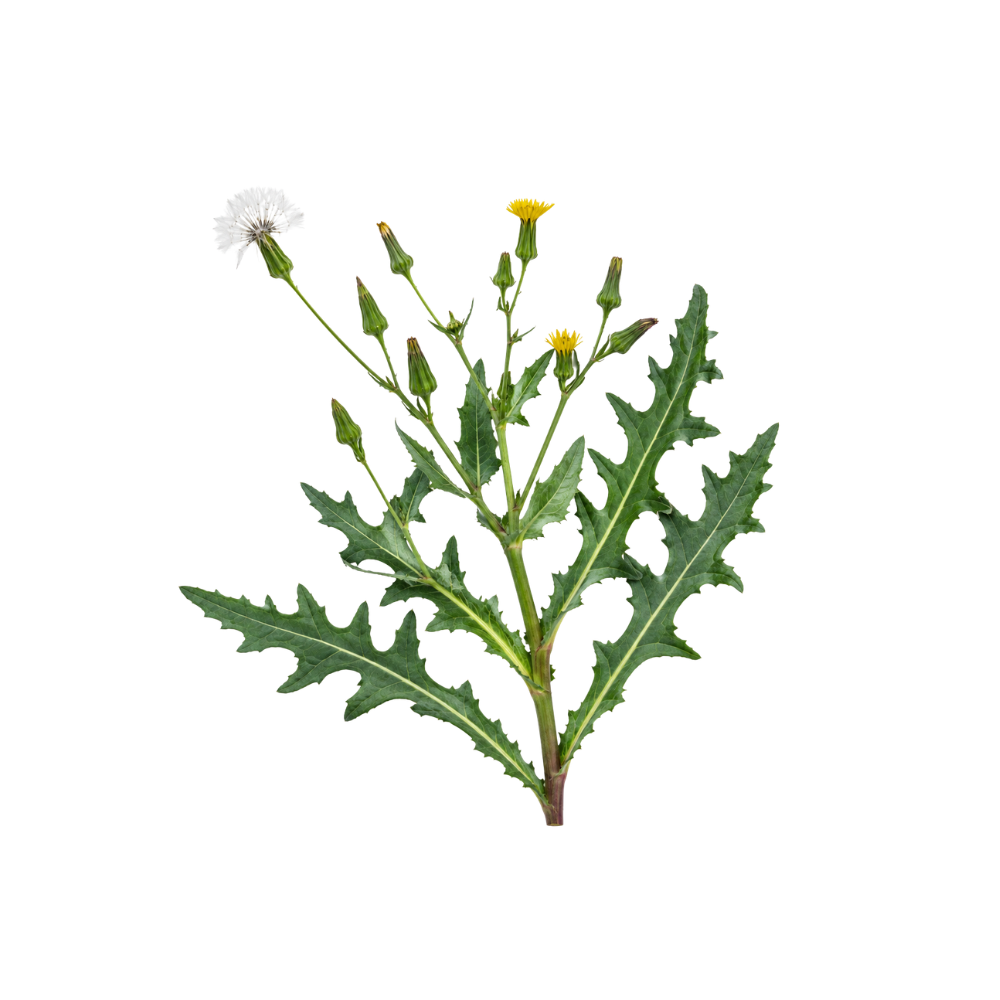
Lactucin-8-Sulfate is a naturally occurring sesquiterpene lactone (guaianolide; c-8 sulfate ester of lactucin), found in Wild lettuce, Garden lettuce and 2 other sources. It is well tolerated orally (low toxicity).
Concentration
Content by Source
Concentrations not reported. No percent-dry-weight or mg/g figures have been published for this compound in its source plants.
Lactucin-8-Sulfate at a Glance
Lactucin-8-sulfate is a sulfate ester of lactucin — the bitter guaianolide sesquiterpene lactone that gives lettuce, chicory and their relatives their characteristic taste. A sulfate group is attached to the hydroxyl at carbon 8 of the seven-membered ring, converting a neutral, moderately water-soluble lactone into a permanently charged anion.
It matters for two reasons. First, it is not a trace constituent: in the milky latex of Lactuca species, the 8-sulfate and 15-oxalate conjugates — not the free lactones — are the major sesquiterpene lactone forms present 1Reference 1Metabolite profiling of sesquiterpene lactones from Lactuca speciesView study →. If you cut a lettuce stem, most of the guaianolide in the drop that beads out is conjugated. Second, when Sessa and colleagues described these compounds in 2000 they were the first sesquiterpene sulfate esters ever reported from a plant 1Reference 1Metabolite profiling of sesquiterpene lactones from Lactuca speciesView study →.
And that is very nearly the end of what is known. A quarter of a century later, it has never been tested for a biological effect of its own — no assay, no animal, no IC₅₀, no toxicology, no pharmacokinetics. What exists instead is a genuinely interesting chemical and botanical question: what is the sulfate for? The answer is not the obvious one, and the evidence that bears on it is worth setting out properly.
The Sulfate Group — Where It Sits & What It Changes
Lactucin is C₁₅H₁₆O₅ (MW 276.28), a guaianolide with three functionally distinct oxygens: a cyclopentenone, a primary alcohol at C-15, and a secondary alcohol at C-8 on the seven-membered ring. Fused to that skeleton is the α-methylene-γ-lactone — the exocyclic C-11/C-13 double bond conjugated to the lactone carbonyl that defines most of this chemical class. (Its existence in lactucin is confirmed by the fact that the reduced analogue is separately named and separately studied: 11β,13-dihydrolactucin 14Reference 14AnimalAnalgesic and sedative activities of lactucin and some lactucin-like guaianolides in mice — [animal; mice]View study →.)
Sulfation at C-8 is therefore regiochemically informative. Two things follow, and they pull in opposite directions.
The reactive group survives. The sulfate lands on a ring hydroxyl a long way from C-11/C-13. The α-methylene-γ-lactone is untouched, so on paper lactucin-8-sulfate is still a Michael acceptor — still capable of alkylating cysteine thiols, which is the chemistry behind nearly all sesquiterpene-lactone pharmacology. That fact is much less useful than it sounds, and it is the main trap here: almost every α-methylene sesquiterpene lactone does this. It predicts reactivity, not selectivity, potency or relevance.
But the molecule stops being able to get anywhere. A sulfate monoester is a strong acid; at any physiological or cytosolic pH it is fully ionised. The neutral, membrane-permeant lactucin becomes an organic anion that cannot cross a lipid bilayer by passive diffusion and would require an anion transporter to enter a cell at all. A Michael acceptor that cannot reach an intracellular thiol is, functionally, not a Michael acceptor. This is the central pharmacological point, and it is a chemical prediction, not a measurement — no permeability, uptake or transporter study of lactucin-8-sulfate has been done.
Lettuce also makes a second, more thorough version of the same disarming: 11β,13-dihydrolactucin-8-O-sulfate (jaquinelin-8-O-sulfate), structurally elucidated and identified in plants for the first time in iceberg lettuce by Mai and Glomb, alongside 8-deacetylmatricarin-8-O-sulfate and cichorioside B 3Reference 3Structural and sensory characterization of novel sesquiterpene lactones from iceberg lettuce — [phytochemistry; sensory]View study →. That molecule is both sulfated and has the exocyclic methylene reduced away — the warhead removed as well as the delivery blocked.
Is It A Storage Form, A Transport Form, Or An Active Principle?
This is the question the molecule exists to raise, and the honest answer is that the plant-biology evidence points at storage/transport and away from the tidy “hydrolyses back on wounding” story that would be easiest to tell.
The obvious hypothesis fails on stability. Lactuca latex contains two conjugate families: 15-oxalates and 8-sulfates. Sessa and colleagues found that the oxalates were unstable, reverting to the parent sesquiterpene lactone on hydrolysis, but that the sulfates were stable 1Reference 1Metabolite profiling of sesquiterpene lactones from Lactuca speciesView study →. If the plant were storing an inert precursor to be unmasked into free bitter lactone the moment a herbivore bit, the oxalate is the compound doing that job. The sulfate does not spontaneously give lactucin back. No sulfatase acting on it has been described, in the plant or anywhere else.
The cell-biology fits a solubilisation-and-trafficking role. Lettuce does not make these lactones where it stores them. Germacrene A synthase — the first committed step of the pathway — is expressed in the vascular parenchyma cells neighbouring the laticifers, not in the laticifers themselves, while the finished metabolites accumulate in the laticifers; the authors infer active metabolite trafficking from parenchyma into latex 5Reference 5Germacrene A synthases for sesquiterpene lactone biosynthesis are expressed in vascular parenchyma cells neighboring laticifers in lettuce — [plant molecular biology]View study →. Conjugating a lipophilic lactone to a permanent anion is exactly what a plant does to a metabolite it needs to move across a membrane and park at high concentration in an aqueous compartment. Latex is that compartment. Anionic conjugation would also protect the plant’s own cells from a reactive electrophile it is manufacturing in bulk — self-protection, which is the standard reading of glucosinolate and cyanogenic-glycoside storage.
The detoxification framing is defensible; the “prodrug” framing is not. Nothing in the literature shows the plant reactivating it. And on the consumption side the picture is, if anything, more discouraging for a prodrug reading: human gut microbiota do not unmask these lactones, they hydrogenate the C11–C13 double bond and dehydroxylate them, so the reactive methylene is removed rather than revealed before anything is absorbed 11Reference 11Clinical trialHuman gut microbiota metabolism of dietary sesquiterpene lactones: untargeted metabolomics study of lactucopicrin and lactucin conversion in vitro and in vivo — [human volunteers; in vitro fermentation]View study →. Free sesquiterpene lactones from chicory are then poorly bioavailable in any case — 7.03% of an ingested dose recovered in blood, 1.13% in urine, 43.76% in faeces 10Reference 10Clinical trialLow oral bioavailability and partial gut microbiotic and phase II metabolism of Brussels/witloof chicory sesquiterpene lactones in healthy humans — [clinical study; single-dose pharmacokinetics]View study →.
A caution about the word “sulfate” in the human data. Human urine after chicory or escarole contains sulfate and glucuronide conjugates of lactucin-type lactones 10,
Sulfation & Bitterness — The Lettuce-Breeding Angle
The one place where an 8-sulfate has a documented functional property is taste, and the finding is a clean structure–activity contrast that turns on where the sulfate sits.
Working across a Lactuca sativa × L. serriola mapping population with a trained sensory panel, Chadwick and colleagues found that 8-deoxylactucin-15-sulphate contributed most strongly to bitterness perception, while 15-p-hydroxyphenylacetyllactucin-8-sulphate did not contribute to bitter taste at all 2Reference 2Perception of bitterness, sweetness and liking of different genotypes of lettuce — [human sensory panel]View study →. A 15-sulfate is bitter; an 8-sulfate is not. The same group later mapped a QTL for the non-bitter 8-sulfate to linkage group 5 and described it as a breeding target precisely because it combines low bitterness with retained anti-herbivory field effects 4Reference 4Mapping taste and flavour traits to genetic markers in lettuce Lactuca sativa — [plant breeding; QTL mapping]View study → — a compound the plant can keep for defence without the crop tasting of it.
Two caveats hold this in place. The compound in both studies is an acylated relative of lactucin-8-sulfate, not lactucin-8-sulfate itself, and the bitterness assignments are correlations between measured compound abundance and panel scores across genotypes, not thresholds measured on purified compounds. Bitter perception of lettuce lactones runs mainly through the receptor TAS2R46 — 11β,13-dihydrolactucopicrin activates it with an EC₅₀ of 2.0 ± 0.6 µM, and the response is suppressed by shifting pH from neutral to weakly acidic 16Reference 16In vitroCharacterization of the human bitter taste receptor response to sesquiterpene lactones from edible Asteraceae species and suppression of bitterness through pH control — [in vitro; receptor assay]View study →. Neither lactucin-8-sulfate nor any other 8-sulfate has been run against that receptor.
Still, the direction is consistent with the chemistry above: a bulky anion at C-8 appears to interfere with the interaction that makes these molecules taste bitter, without abolishing whatever the plant gets out of them in the field.
One Paper Describes This Molecule
Sessa’s 2000 discovery paper is the only study of lactucin-8-sulfate, and it is a phytochemistry paper — a structure and an occurrence, not a pharmacology.
One further record appears to name it and does not. Shulha 2020 6Reference 6In vitroSesquiterpene lactones from Sonchus palustris L. (Asteraceae, Cichorieae) — [in vitro; phytochemistry]View study → contains the phrase only as a fragment of a longer compound name, 15-p-hydroxyphenylacetyllactucin-8-sulfate, and the activities that paper reports belong to the non-sulfated analogues. Full-text searching adds a dozen more records, every one an occurrence list, an analytical-chemistry paper or a plant-breeding study.
The molecule does not even resolve to a PubChem compound record under either spelling. Nothing has been published on its pharmacokinetics, its toxicity, or any dose.
What It's Used For
There is none. The nearest the record comes is set out below.
Nothing here is scoreable, so there is no Evidence-by-Application table. The site’s support score weights study type and volume; both are zero. A row reading “0%” would imply this molecule was tested and failed. It has not been tested.
1. Present in Sedative Lactuca Latex — but Never the Thing Measured
The strongest circumstantial case for this molecule mattering, and the clearest illustration of why the case cannot be closed. Plant work. Ilgün and colleagues collected latex from five Lactuca species, showed genuine sedative activity in mouse behavioural tests — L. saligna strongest, L. serriola and L. viminea significant at 100 mg/kg — and then characterised the latex by HPLC 13Reference 13AnimalSedative effects of latexes obtained from some Lactuca L. species growing in Turkey — [animal; mice]View study →.
What they quantified was lactucin, lactucopicrin and the two 11,13β-dihydro analogues: the free lactones. Lactucin was identified as the main component. The 8-sulfates, which Sessa had shown to be major components of Lactuca latex 1Reference 1Metabolite profiling of sesquiterpene lactones from Lactuca speciesView study →, do not appear in the analysis at all. The same pattern holds in the dedicated study of lettuce latex against the caterpillar Spodoptera litura, where six compounds were isolated and assayed — 2,5-dihydroxybenzaldehyde was the effective anti-feedant at 52.4% inhibition of weight gain — and again no sulfate was among them 12Reference 12In vitroStudy on active components and mechanism of lettuce latex against Spodoptera litura — [in vitro; insect bioassay]View study →.
Gap: whole-latex activity cannot be assigned to a constituent that the activity study did not measure. Until a latex fraction is assayed with its sulfate content quantified, or the purified sulfate is put into the same behavioural model, “present in an active preparation” is all that can be said.
2. The One Screen an 8-Sulfate Has Ever Entered — with No Result Attributed to It
Isolate work, on an analogue. Shulha and colleagues isolated twelve compounds from Sonchus palustris roots, among them the known 15-p-hydroxyphenylacetyllactucin-8-sulfate and a newly described 15-p-methoxyphenylacetyllactucin-8-sulfate, and ran the isolates against CEM and BJ cell lines and an anti-inflammatory assay 6Reference 6In vitroSesquiterpene lactones from Sonchus palustris L. (Asteraceae, Cichorieae) — [in vitro; phytochemistry]View study →. The compounds singled out for significant cytotoxicity (IC₅₀ 3.9–9.8 µM) were 15-p-hydroxyphenylacetyllactucin and 15-p-methoxyphenylacetyllactucin — the two non-sulfated alcohols. Their 8-sulfate counterparts were in the same experiment and are not named among the active compounds.
Gap: absence from a list of actives in an abstract is suggestive, not proof of inactivity — the per-compound table is in the full text, which is paywalled. This is nonetheless the closest thing in existence to a bioactivity comparison of a lactucin 8-sulfate against its free parent, and it points the way the chemistry predicts.
Mechanisms
There is no mechanism table, because no mechanism has been demonstrated. The structural position is set out in full under The Sulfate Group above: the α-methylene-γ-lactone Michael acceptor is retained, and the C-8 sulfate is predicted to prevent it reaching intracellular cysteine thiols. Neither half of that has been tested. Whatever is claimed for lactucin or lactucopicrin — GABA-A binding, NF-κB suppression, analgesia — belongs to those molecules and must not be read onto this one.
Pharmacokinetics
Nothing exists for this compound. A PubMed search pairing it with pharmacokinetics, toxicity or dose returns zero records. No absorption, permeability, transporter, distribution, metabolism, half-life or plasma-concentration datum has been published, in any species or system.
What can be said comes from the free lactones and is not reassuring for the sulfate. Chicory sesquiterpene lactones are poorly bioavailable in humans: after 150 g of chicory juice supplying 48.77 µmol of lactones, total serum lactones peaked at 284.46 nmol/L and recovery was 7.03% in blood, 1.13% in urine and 43.76% in faeces 10Reference 10Clinical trialLow oral bioavailability and partial gut microbiotic and phase II metabolism of Brussels/witloof chicory sesquiterpene lactones in healthy humans — [clinical study; single-dose pharmacokinetics]View study →. Before absorption, gut microbiota hydrogenate and dehydroxylate these molecules extensively, with large inter-individual variation 11Reference 11Clinical trialHuman gut microbiota metabolism of dietary sesquiterpene lactones: untargeted metabolomics study of lactucopicrin and lactucin conversion in vitro and in vivo — [human volunteers; in vitro fermentation]View study →. A permanently anionic ester of the same skeleton should be less absorbable than the neutral parent, not more — but that is an inference from physical chemistry, not a measurement.
Clinical Trials
There are none, in any indication. No trial of lactucin-8-sulfate has been conducted, registered or proposed. Human data exist only for whole foods containing its free relatives 10,
| Completed | Planned | Terminated | Preclinical |
|---|---|---|---|
| 0 | 0 | 0 | 0for the isolate (phytochemical and analytical work only) |
Last checked: July 2026.
Isolate vs. Plant Studies
The split cannot be drawn, because there is no isolate side.
Every biological result in this molecule’s neighbourhood is plant work or free-lactone work. Latex from five Lactuca species is sedative in mice 13Reference 13AnimalSedative effects of latexes obtained from some Lactuca L. species growing in Turkey — [animal; mice]View study →; lettuce latex deters caterpillars 12Reference 12In vitroStudy on active components and mechanism of lettuce latex against Spodoptera litura — [in vitro; insect bioassay]View study →; purified lactucin, lactucopicrin and 11β,13-dihydrolactucin are analgesic in mice at 15–30 mg/kg, with lactucopicrin most potent and the 11β,13-dihydro compound sedatively inactive 14Reference 14AnimalAnalgesic and sedative activities of lactucin and some lactucin-like guaianolides in mice — [animal; mice]View study →. Not one of these studies used, measured or mentions the sulfate.
The sulfate’s own literature is entirely analytical. It is identified, structurally characterised, correlated with cultivar, growing method and harvest stage — soil-grown leaf lettuce carries more 15-deoxylactucin-8-sulfate and lactucopicrin-15-oxalate than hydroponic 9Reference 9Metabolomic evaluation of the quality of leaf lettuce grown in practical plant factory to capture metabolite signature — [analytical; metabolomics]View study →; sulfur nutrition shifts the lettuce metabolite profile 17Reference 17In vitroComparative metabolite profile, biological activity and overall quality of three lettuce (Lactuca sativa L., Asteraceae) cultivars in response to sulfur nutrition — [in vitro; plant nutrition]View study → — but never assayed.
The inheritance risk here is specific. Wild lettuce carries a heavy folk reputation (“lettuce opium”) and its free lactones have a real, if preclinical, sedative and analgesic record 13,
Prevalence in Nature
Lactucin-8-sulfate is a latex molecule of the genus Lactuca, within the tribe Cichorieae of the Asteraceae. It has never been quantified in absolute terms in any species — no % dry weight, no mg/g.
Garden lettuce (Lactuca sativa) is the documented source. Sessa and colleagues profiled latex from cv. Diana and found the 15-oxalyl and 8-sulfate conjugates of lactucin, deoxylactucin and lactucopicrin to be the major components, with significant qualitative and quantitative variation between lettuce varieties and other Lactuca species, and shifting proportions across developmental stages 1Reference 1Metabolite profiling of sesquiterpene lactones from Lactuca speciesView study →. Related 8-sulfates recur through the crop literature: 11β,13-dihydrolactucin-8-O-sulfate and 8-deacetylmatricarin-8-O-sulfate in iceberg lettuce, both accumulating preferentially in the butt end rather than the leaves across five Cichorieae 3Reference 3Structural and sensory characterization of novel sesquiterpene lactones from iceberg lettuce — [phytochemistry; sensory]View study →; 15-deoxylactucin-8-sulfate as a discriminator between soil- and hydroponically-grown leaf lettuce 9Reference 9Metabolomic evaluation of the quality of leaf lettuce grown in practical plant factory to capture metabolite signature — [analytical; metabolomics]View study →; 15-p-hydroxyphenylacetyllactucin-8-sulfate as a mapped, breedable trait in a L. sativa × L. serriola population 4Reference 4Mapping taste and flavour traits to genetic markers in lettuce Lactuca sativa — [plant breeding; QTL mapping]View study →.
Chicory makes the oxalates but not the sulfates. Sessa’s survey found the 15-oxalyl conjugates present in Cichorium but the 8-sulfate conjugates notably absent 1Reference 1Metabolite profiling of sesquiterpene lactones from Lactuca speciesView study → — a genus-level chemotaxonomic split, and the reason chicory-based human studies say nothing about this molecule.
Wild lettuce (Lactuca virosa) is where most readers will meet it, and the attribution deserves a plain caveat: lactucin-8-sulfate is listed among L. virosa’s constituents on the strength of the genus-level latex chemistry, not a verified primary report quantifying it in that species. No L. virosa-specific measurement was found. Reported sesquiterpene-lactone figures for L. virosa are for the free lactones 13,
Beyond Lactuca, sulfated guaianolides are a recurring Cichorieae motif rather than a one-off: 8-sulfate esters of acylated lactucins in Sonchus palustris roots 6Reference 6In vitroSesquiterpene lactones from Sonchus palustris L. (Asteraceae, Cichorieae) — [in vitro; phytochemistry]View study →, a sulfated sesquiterpene lactone in Scorzonera austriaca 7Reference 7In vitroSesquiterpene lactones from Scorzonera austriaca — [phytochemistry; in vitro]View study →, and 8-deoxy-15-(3′-hydroxy-2′-methylpropanoyl)-lactucin-3′-sulfate in the Algerian Launaea arborescens 8Reference 8Chemical characterisation of the terpenoid constituents of the Algerian plant Launaea arborescens — [phytochemistry]View study →. At least one of the three iceberg-lettuce sulfates was found in nine further Asteraceae species 3Reference 3Structural and sensory characterization of novel sesquiterpene lactones from iceberg lettuce — [phytochemistry; sensory]View study →.
Discovery & Synthesis
First described, 2000. R. A. Sessa, M. H. Bennett, M. J. Lewis, J. W. Mansfield and M. H. Beale, working at Wye College, University of London, profiled the latex exuded from wounded Lactuca sativa cv. Diana and found its major sesquiterpene lactone components to be novel 15-oxalyl and 8-sulfate conjugates of lactucin, deoxylactucin and lactucopicrin. Their paper states plainly that the sulfates “are the first reported sesquiterpene sulfates from plants” 1Reference 1Metabolite profiling of sesquiterpene lactones from Lactuca speciesView study →. The name is purely descriptive: the 8-sulfate of lactucin.
Biosynthesis is only partly mapped. The pathway’s committed first step — cyclisation of farnesyl diphosphate to germacrene A — is catalysed in lettuce by two germacrene A synthases, LTC1 and LTC2, cloned in 2002 15Reference 15Cloning and expression of sesquiterpene synthase genes from lettuce (Lactuca sativa L.) — [plant molecular biology]View study →, and these are expressed in vascular parenchyma adjacent to the laticifers rather than in the laticifers themselves 5Reference 5Germacrene A synthases for sesquiterpene lactone biosynthesis are expressed in vascular parenchyma cells neighboring laticifers in lettuce — [plant molecular biology]View study →. The sulfotransferase that installs the C-8 sulfate has not been identified, in lettuce or anywhere else. That is the single largest hole in this molecule’s biology: without the enzyme there is no way to knock it out, and no way to test the storage hypothesis directly.
No total synthesis exists, and none has been attempted as far as the literature shows. All material ever studied has been obtained by extraction and chromatographic isolation from lettuce latex or plant tissue. There is no commercial production and no analytical standard in general circulation, which is itself part of why the pharmacology is empty.
Toxicity & Safety
No toxicology exists for the isolate. There is no LD₅₀, no repeat-dose study, no genotoxicity or reproductive assay, no cytotoxicity screen for lactucin-8-sulfate in any species or system.
The low flag reflects an unusual situation rather than a clean safety record: this is a major constituent of the latex of ordinary edible lettuce, eaten raw and at scale worldwide with no harm attributed to it, and its C-8 sulfation is predicted to reduce rather than increase cellular access. That is a reason not to flag it higher — it is not evidence of safety, and the absence of findings here is absence of study.
- Ubiquitous dietary constituent. A principal sesquiterpene lactone of everyday lettuce latex, consumed routinely with no adverse effect attributed to it.
- No toxicology package whatsoever. No LD₅₀, repeat-dose, genotoxicity, reproductive or cytotoxicity data. Nothing has been measured on this molecule.
- It still carries the α-methylene-γ-lactone. The Michael acceptor that drives sesquiterpene-lactone cytotoxicity and contact sensitisation is retained; the C-8 sulfate is only predicted to keep it out of cells, and that prediction is untested.
- Asteraceae contact dermatitis is a plant-level caution. Lettuce-sensitised patients are a recognised group within Compositae allergy, but the standard sesquiterpene-lactone patch-test mix is only dehydrocostus lactone, alantolactone and costunolide — so it neither implicates nor exonerates this molecule 18Reference 18ObservationalSensitization and cross-reaction patterns in Danish Compositae-allergic patients — [observational; patch-test series]View study →.
- Interactions entirely unstudied. No CYP, transporter, protein-binding or pharmacokinetic-interaction data of any kind.
Full Safety & Interactions Detail
The class hazard, and why its status here is unusual. Sesquiterpene-lactone toxicity and allergenicity are attributed chiefly to the α-methylene-γ-lactone Michael acceptor reacting with cysteine thiols. Lactucin-8-sulfate retains that group. What makes this molecule different from most of its class is that the C-8 sulfate is expected to leave it fully ionised and membrane-impermeant, so the reactive centre may never reach an intracellular target. Lettuce independently produces a version with the methylene reduced away as well — 11β,13-dihydrolactucin-8-O-sulfate 3Reference 3Structural and sensory characterization of novel sesquiterpene lactones from iceberg lettuce — [phytochemistry; sensory]View study → — and human gut microbiota hydrogenate the C11–C13 double bond of ingested lactones of this family before absorption 11Reference 11Clinical trialHuman gut microbiota metabolism of dietary sesquiterpene lactones: untargeted metabolomics study of lactucopicrin and lactucin conversion in vitro and in vivo — [human volunteers; in vitro fermentation]View study →. Several routes therefore converge on the warhead being neutralised in practice. All of this is inference from chemistry and from work on relatives; none of it has been demonstrated for this compound.
Asteraceae contact dermatitis. This is the one safety caution that matters, because it attaches to the plants that deliver the molecule. In a large series of Compositae-allergic patients, most lettuce-sensitised individuals reacted to the Compositae mix; the sesquiterpene-lactone screening mix itself contains only dehydrocostus lactone, alantolactone and costunolide, with dehydrocostus lactone the most frequent elicitor 18Reference 18ObservationalSensitization and cross-reaction patterns in Danish Compositae-allergic patients — [observational; patch-test series]View study →. That reagent therefore tests none of the Lactuca guaianolides, and lactucin-8-sulfate has never been evaluated as an individual allergen. It can be neither implicated nor cleared. In practical terms the caution belongs to handling lettuce and wild-lettuce latex, not to this molecule specifically.
Whole-latex cautions belong to the plant. Wild lettuce latex in quantity is documented to cause nausea, dizziness and sedation, and the free lactones are sedative and analgesic in mice at 15–30 mg/kg 13,
Interactions. Nothing is known. No enzyme- or transporter-level data exist for lactucin-8-sulfate.
Reproductive note (prose only). No reproductive or developmental study of this compound exists. Pregnancy and lactation decisions belong to the herb or product page where intake is decided, not to a molecule page.
Dosage
There is no dose. Lactucin-8-sulfate has never been given to a human or an animal at any amount, and no in-vitro concentration has been published for it. There is nothing to report and nothing to recommend.
Exposure is dietary and incidental. It comes from the latex of Lactuca — mainly ordinary lettuce, and, for anyone using it, wild lettuce. Neither is standardised to it, no preparation carries a content figure for it, and because it has never been quantified in absolute terms in any species 1,
References
- Sessa, R. A., Bennett, M. H., Lewis, M. J., Mansfield, J. W., & Beale, M. H. (2000). Metabolite profiling of sesquiterpene lactones from Lactuca species. Major latex components are novel oxalate and sulfate conjugates of lactucin and its derivatives — [phytochemistry; first description]. Journal of Biological Chemistry. https://pubmed.ncbi.nlm.nih.gov/10858433/
- Chadwick, M., Gawthrop, F., Michelmore, R. W., Wagstaff, C., & Methven, L. (2016). Perception of bitterness, sweetness and liking of different genotypes of lettuce — [human sensory panel]. Food Chemistry. https://pubmed.ncbi.nlm.nih.gov/26616925/
- Mai, F., & Glomb, M. A. (2016). Structural and sensory characterization of novel sesquiterpene lactones from iceberg lettuce — [phytochemistry; sensory]. Journal of Agricultural and Food Chemistry. https://pubmed.ncbi.nlm.nih.gov/26727458/
- Chadwick, M., Swann, J. R., Gawthrop, F., Michelmore, R., Scaglione, D., Jose-Truco, M., & Wagstaff, C. (2024). Mapping taste and flavour traits to genetic markers in lettuce Lactuca sativa — [plant breeding; QTL mapping]. Food Chemistry: Molecular Sciences. https://pubmed.ncbi.nlm.nih.gov/39281292/
- Kwon, M., Hodgins, C. L., Haslam, T. M., Roth, S. A., Nguyen, T. D., Yeung, E. C., & Ro, D. K. (2022). Germacrene A synthases for sesquiterpene lactone biosynthesis are expressed in vascular parenchyma cells neighboring laticifers in lettuce — [plant molecular biology]. Plants (Basel). https://pubmed.ncbi.nlm.nih.gov/35567193/
- Shulha, O., Çiçek, S. S., Piccolella, S., Rárová, L., Strnad, M., Sönnichsen, F., Pacifico, S., & Zidorn, C. (2020). Sesquiterpene lactones from Sonchus palustris L. (Asteraceae, Cichorieae) — [in vitro; phytochemistry]. Phytochemistry. https://pubmed.ncbi.nlm.nih.gov/31731238/
- Zhu, Y., Hu, P. Z., He, Z. W., Wu, Q. X., Li, J., & Wu, W. S. (2010). Sesquiterpene lactones from Scorzonera austriaca — [phytochemistry; in vitro]. Journal of Natural Products. https://pubmed.ncbi.nlm.nih.gov/20148526/
- Bitam, F., Ciavatta, M. L., Manzo, E., Dibi, A., & Gavagnin, M. (2008). Chemical characterisation of the terpenoid constituents of the Algerian plant Launaea arborescens — [phytochemistry]. Phytochemistry. https://pubmed.ncbi.nlm.nih.gov/19007948/
- Tamura, Y., Mori, T., Nakabayashi, R., Kobayashi, M., Saito, K., Okazaki, S., Wang, N., & Kusano, M. (2018). Metabolomic evaluation of the quality of leaf lettuce grown in practical plant factory to capture metabolite signature — [analytical; metabolomics]. Frontiers in Plant Science. https://pubmed.ncbi.nlm.nih.gov/29997631/
- Weng, H., He, L., Zheng, J., Li, Q., Liu, X., & Wang, D. (2020). Low oral bioavailability and partial gut microbiotic and phase II metabolism of Brussels/witloof chicory sesquiterpene lactones in healthy humans — [clinical study; single-dose pharmacokinetics]. Nutrients. https://pubmed.ncbi.nlm.nih.gov/33260567/
- García, C. J., Beltrán, D., & Tomás-Barberán, F. A. (2020). Human gut microbiota metabolism of dietary sesquiterpene lactones: untargeted metabolomics study of lactucopicrin and lactucin conversion in vitro and in vivo — [human volunteers; in vitro fermentation]. Molecular Nutrition & Food Research. https://pubmed.ncbi.nlm.nih.gov/32970341/
- Gu, C., Zeng, B., Wang, M., Zhang, Y., Yan, C., Lin, Y., Khan, A., Zeng, R., & Song, Y. (2024). Study on active components and mechanism of lettuce latex against Spodoptera litura — [in vitro; insect bioassay]. Chemistry & Biodiversity. https://pubmed.ncbi.nlm.nih.gov/39136195/
- Ilgün, S., Küpeli Akkol, E., Ilhan, M., Çiçek Polat, D., Baldemir Kılıç, A., Coşkun, M., & Sobarzo-Sánchez, E. (2020). Sedative effects of latexes obtained from some Lactuca L. species growing in Turkey — [animal; mice]. Molecules. https://pubmed.ncbi.nlm.nih.gov/32235622/
- Wesołowska, A., Nikiforuk, A., Michalska, K., Kisiel, W., & Chojnacka-Wójcik, E. (2006). Analgesic and sedative activities of lactucin and some lactucin-like guaianolides in mice — [animal; mice]. Journal of Ethnopharmacology. https://pubmed.ncbi.nlm.nih.gov/16621374/
- Bennett, M. H., Mansfield, J. W., Lewis, M. J., & Beale, M. H. (2002). Cloning and expression of sesquiterpene synthase genes from lettuce (Lactuca sativa L.) — [plant molecular biology]. Phytochemistry. https://pubmed.ncbi.nlm.nih.gov/12031443/
- Yanagisawa, T., & Misaka, T. (2021). Characterization of the human bitter taste receptor response to sesquiterpene lactones from edible Asteraceae species and suppression of bitterness through pH control — [in vitro; receptor assay]. ACS Omega. https://pubmed.ncbi.nlm.nih.gov/33644553/
- Abdalla, M. A., Li, F., Wenzel-Storjohann, A., Sulieman, S., Tasdemir, D., & Mühling, K. H. (2021). Comparative metabolite profile, biological activity and overall quality of three lettuce (Lactuca sativa L., Asteraceae) cultivars in response to sulfur nutrition — [in vitro; plant nutrition]. Pharmaceutics. https://pubmed.ncbi.nlm.nih.gov/34068285/
- Paulsen, E., Andersen, K. E., & Hausen, B. M. (2001). Sensitization and cross-reaction patterns in Danish Compositae-allergic patients — [observational; patch-test series]. Contact Dermatitis. https://pubmed.ncbi.nlm.nih.gov/11683829/



