
Compound Monograph
Leonuride
Leonuride (ajugol) is a bitter catalpol-type iridoid glucoside — a marker constituent of motherwort (Leonurus) that also occurs in Rehmannia and Ajuga. Its evidence is entirely preclinical: a coherent isolate signal in rodent models of asthma, fatty liver, osteoarthritis and neuroinflammation, converging on TFEB-driven autophagy and NF-κB suppression. Motherwort's cardiovascular and uterine reputation belongs to the whole herb and its alkaloids, not to this iridoid, and oral bioavailability is low.

Sources · 4
Where Does It Come From?
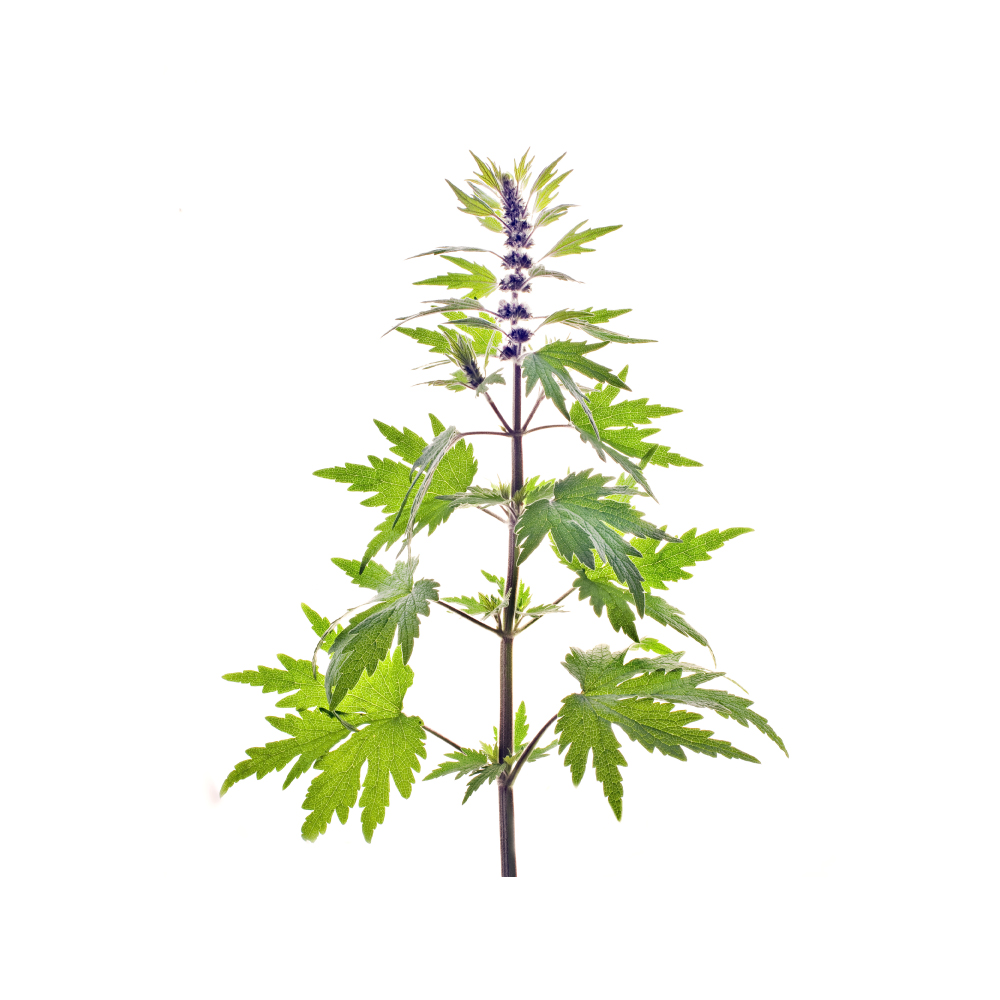
Leonuride is a naturally occurring iridoid glycoside (catalpol-type), found in Motherwort, Chinese motherwort, Rehmannia — root and 1 other source. It is well tolerated orally (low toxicity).
Concentration
Content by Source
Concentrations not reported. No percent-dry-weight or mg/g figures have been published for this compound in its source plants.
Leonuride at a Glance
Leonuride is a bitter iridoid glucoside of the catalpol type, better known in the pharmacology literature by its synonym ajugol. It is a marker constituent of motherwort (Leonurus cardiaca and the TCM species L. japonicus) and is also one of the more abundant iridoids in the roots of rehmannia (Rehmannia glutinosa), with further occurrence across the genus Ajuga, from which it takes its name.
For most of its history leonuride was treated as a minor, largely inert marker — the bitter principle contributing to motherwort’s flavour and part of the traditional case for the herb as a calming, “heart-easing” bitter 1Reference 1ReviewLeonurus cardiaca L. (motherwort): a review of its phytochemistry and pharmacologyView study →. Since 2021, however, a small but internally consistent run of isolated-ajugol studies has given it a genuine preclinical profile: rodent models of asthma, non-alcoholic fatty liver disease, osteoarthritis and Alzheimer-type neuroinflammation, converging on two recurring mechanisms — TFEB-driven autophagy/lysosomal biogenesis and suppression of NF-κB/inflammasome inflammatory signalling 2,
Two honest caveats frame everything below. There are no human trials of the isolate, and — importantly — motherwort’s cardiovascular and uterine reputation belongs to the whole herb and its alkaloids (leonurine, stachydrine), not to this iridoid 1Reference 1ReviewLeonurus cardiaca L. (motherwort): a review of its phytochemistry and pharmacologyView study →. As a poorly-absorbed glucoside, leonuride’s in-vitro and high-dose rodent potency also overreads what an oral dose plausibly delivers 6,
Leonuride (Ajugol), a Motherwort Iridoid
The single most useful framing for this molecule is that leonuride and ajugol are the same compound — a catalpol-type iridoid glucoside — appearing under two names because it was characterised independently in different plant genera. The name ajugol derives from the genus Ajuga (bugleweed); leonuride flags its role as an iridoid marker of Leonurus (motherwort). Structurally it sits in the catalpol family of iridoid glucosides, alongside aucubin and catalpol, and it co-occurs with these compounds in Rehmannia root 7,
In motherwort, leonuride is the herb’s characteristic iridoid, and the bitter iridoid fraction is part of what earns Leonurus its traditional reputation as a calming, mildly hypotensive bitter 1Reference 1ReviewLeonurus cardiaca L. (motherwort): a review of its phytochemistry and pharmacologyView study →. This is exactly where the isolate-vs-whole-herb discipline matters most:
- Motherwort’s cardiac and hypotensive functional data rest on refined whole-extract preparations, and its uterotonic (“mother’s herb”) reputation is attributed to the herb’s alkaloids — the guanidine alkaloid leonurine (a L. japonicus marker) and the betaine stachydrine — not to leonuride 1Reference 1ReviewLeonurus cardiaca L. (motherwort): a review of its phytochemistry and pharmacologyView study →. Do not read motherwort’s uterine or cardiovascular action onto this iridoid.
- The real isolate signal for ajugol is something different and more recent: anti-inflammatory and cytoprotective activity in models of asthma, fatty liver, osteoarthritis and neuroinflammation, driven largely from Rehmannia- and Leonurus-sourced material 2,
3, .4, 5Reference 2AnimalA novel iridoid glycoside leonuride (ajugol) attenuates airway inflammation and remodeling through inhibiting type-2 high cytokine/chemokine activity in OVA-induced asthmatic miceView study →Reference 3Ajugol enhances TFEB-mediated lysosome biogenesis and lipophagy to alleviate non-alcoholic fatty liver diseaseView study →Reference 4AnimalAjugol’s upregulation of TFEB-mediated autophagy alleviates endoplasmic reticulum stress in chondrocytes and retards osteoarthritis progression in a mouse modelView study →Reference 5Systems pharmacology identifies ajugol-mediated NF-κB/caspase-3 inhibition and isoacteoside-driven p62/mTOR-mediated autophagy as key mechanisms of Rehmanniae Radix and its processed form in Alzheimer’s treatmentView study →
So the accurate one-line reading is: leonuride is a genuine, chemically-defined motherwort/Rehmannia iridoid with a coherent preclinical anti-inflammatory/pro-autophagy dossier — but its headline “motherwort” actions (uterine, cardiovascular) are the whole herb’s, and no human has been given the pure molecule.
What It's Used For
The evidence is entirely preclinical but unusually coherent for a compound this obscure: four independent rodent/cell studies since 2021, each in a different disease model, keep landing on the same two levers — TFEB-mediated autophagy and NF-κB/inflammasome suppression.
Support is an experimental score — weighted by study type (human > animal > in vitro) and volume. A beta, not a validated metric. Every application here rests on a single isolate study in rodents/cells, so scores stay modest by design.
The strongest single strand, and the one study built around the isolated molecule. In chronic OVA-induced asthmatic mice, oral leonuride (15 or 30 mg/kg) lowered airway hyperresponsiveness and suppressed airway inflammation — fewer inflammatory cells and lower type-2 mediators (OVA-specific IgE, IL-4, IL-5, IL-13) in bronchoalveolar lavage — and slowed airway remodeling (weaker goblet-cell metaplasia and subepithelial fibrosis, lower TGF-β1). Transcriptomics pointed to reversal of a type-2-high cytokine/chemokine gene set (Il13, Il33, Ccl-family chemokines) 2Reference 2AnimalA novel iridoid glycoside leonuride (ajugol) attenuates airway inflammation and remodeling through inhibiting type-2 high cytokine/chemokine activity in OVA-induced asthmatic miceView study →.
Gap: a single rodent study of an isolate at supratherapeutic mg/kg doses; no replication, no human data, and no confirmation the effect survives leonuride’s poor oral bioavailability 2,
Ajugol improved high-fat-diet-induced hepatic steatosis in mice and inhibited palmitate-induced lipid accumulation in hepatocytes. The mechanism was lipophagy — ajugol enhanced TFEB-mediated lysosome biogenesis, restoring autophagic flux so that lipid droplets are cleared by the lysosome; the anti-steatotic effect tracked the recovery of this lysosomal-autophagic pathway 3Reference 3Ajugol enhances TFEB-mediated lysosome biogenesis and lipophagy to alleviate non-alcoholic fatty liver diseaseView study →.
Gap: one isolate study in mice and cell culture on a single target axis (TFEB/lipophagy); no dose-ranging in humans, no replication, and translation is limited by the compound’s absorption 3,
In a mouse osteoarthritis model and in cultured chondrocytes, ajugol (≈50 µM in vitro) upregulated TFEB-mediated autophagy and lysosomal biogenesis, which in turn alleviated endoplasmic-reticulum (ER) stress, reducing ER-stress-induced chondrocyte apoptosis and extracellular-matrix degradation and slowing cartilage loss 4Reference 4AnimalAjugol’s upregulation of TFEB-mediated autophagy alleviates endoplasmic reticulum stress in chondrocytes and retards osteoarthritis progression in a mouse modelView study →. This is the same TFEB/autophagy lever as the liver study, in a different tissue.
Gap: a single group’s isolate study (mouse + chondrocyte), no independent replication and no human data; the µM in-vitro potency does not map to an achievable oral exposure 4,
A 2025 systems-pharmacology study of Rehmanniae Radix identified ajugol as a key anti-Alzheimer bioactive: in microglial cells and model animals it suppressed neuroinflammation via the TLR/NF-κB/NLRP3 inflammasome pathway and reduced neuronal apoptosis by rebalancing the BCL-2/BAX/cytochrome-C/caspase-3 axis (↑BCL-2/BAX, ↓caspase-3), lowering IL-1β and protecting against amyloid-β toxicity 5Reference 5Systems pharmacology identifies ajugol-mediated NF-κB/caspase-3 inhibition and isoacteoside-driven p62/mTOR-mediated autophagy as key mechanisms of Rehmanniae Radix and its processed form in Alzheimer’s treatmentView study →.
Gap: ajugol here is one node in a Rehmannia network-pharmacology analysis rather than a stand-alone isolate trial; the effect is attributed to the compound but embedded in whole-extract modelling, with no human data 5Reference 5Systems pharmacology identifies ajugol-mediated NF-κB/caspase-3 inhibition and isoacteoside-driven p62/mTOR-mediated autophagy as key mechanisms of Rehmanniae Radix and its processed form in Alzheimer’s treatmentView study →.
Mechanisms
| Target / pathway | Effect | Relevant to |
|---|---|---|
| TFEB → lysosomal biogenesis & autophagy/lipophagy | activated | hepatic steatosis (NAFLD); osteoarthritis |
| Endoplasmic-reticulum (ER) stress → chondrocyte apoptosis, ECM degradation | alleviated (via restored autophagy) | osteoarthritis |
| Type-2 cytokines/chemokines (IgE, IL-4, IL-5, IL-13) & TGF-β1 | suppressed | airway inflammation / remodeling |
| TLR / NF-κB / NLRP3 inflammasome; IL-1β | suppressed | asthma; neuroinflammation |
| BCL-2 / BAX / cytochrome-C / caspase-3 apoptosis axis | rebalanced (↑BCL-2/BAX, ↓caspase-3) | neuroprotection (Alzheimer model) |
| β-glucosidase → aglycone release | class behaviour of iridoid glucosides | pharmacokinetics / bioavailability caveat |
The load-bearing observation is convergence: two of the four models (liver, cartilage) run through TFEB-driven autophagy, and two (asthma, brain) through NF-κB/inflammasome suppression — a single antioxidant/anti-inflammatory, pro-autophagy theme surfacing as organ protection in different tissues, rather than four unrelated activities. It is a coherent story, but built entirely from single studies.
Pharmacokinetics
Leonuride behaves as a typical poorly-absorbed iridoid glucoside. A validated rat LC-ESI-MS/MS study measured ajugol alongside aucubin and catalpol, finding measurable plasma exposure and wide tissue distribution; notably, aucubin and catalpol reached brain tissue, consistent with limited central penetration for this class 7Reference 7AnimalPharmacokinetics and tissue distribution of aucubin, ajugol and catalpol in rats using a validated simultaneous LC-ESI-MS/MS assayView study →. The iridoid-class reviews describe the same pattern generally — hydrophilic glucosides with low oral bioavailability, extensive gut/hepatic first-pass handling and β-glucosidase-mediated cleavage to an aglycone 6Reference 6Iridoids: research advances in their phytochemistry, biological activities, and pharmacokineticsView study →. A precise oral-bioavailability figure and half-life for ajugol specifically are not well documented, which is exactly why the in-vitro (µM) and high-dose rodent (mg/kg) potencies above should be read cautiously.
Clinical Trials
There are no clinical trials of isolated leonuride/ajugol — it has never been administered to humans as a therapeutic isolate. Human exposure is incidental, through whole motherwort and rehmannia preparations, whose own clinical footprints belong to the whole herb, not this iridoid 1Reference 1ReviewLeonurus cardiaca L. (motherwort): a review of its phytochemistry and pharmacologyView study →.
| Completed | Planned | Terminated | Preclinical |
|---|---|---|---|
| —(none; isolate never trialled in humans) | — | — | Moderate(4 rodent/cell isolate studies: asthma, NAFLD, OA, neuroinflammation) |
Last checked: July 2026.
Isolate vs. Plant Studies
The split is clean and, unusually, favours the isolate on attribution. The anti-inflammatory / pro-autophagy dossier — asthma, NAFLD, osteoarthritis, Alzheimer-model neuroinflammation — was generated with ajugol as the isolated compound in rodents and cell lines 2,
Prevalence in Nature
Leonuride is a widely distributed Lamiales iridoid glucoside. It is a characteristic iridoid of motherwort — both European Leonurus cardiaca (Ph.Eur. species) and the TCM L. japonicus / Yi Mu Cao — where it belongs to the herb’s bitter iridoid fraction 1Reference 1ReviewLeonurus cardiaca L. (motherwort): a review of its phytochemistry and pharmacologyView study →. It is also one of the more abundant iridoid glucosides in the roots of Rehmannia glutinosa (di huang), where it co-occurs with catalpol and other iridoids and is the source material for most of the pharmacology above 7,
Discovery & Synthesis
Leonuride entered the literature as an iridoid glucoside characterised from Lamiales plants, and the name ajugol was coined for the molecule after the genus Ajuga. Its structure was subsequently revised (in tandem with the closely related iridoid myoporoside), a reminder that the early 13C-NMR assignments of these bitter glucosides needed correction — a common episode in mid-to-late-20th-century iridoid chemistry. Total synthesis of leonuride/ajugol is not well documented and is not the practical route to the compound: like other abundant iridoid glucosides, research supply is by extraction from rich natural sources — chiefly Rehmannia glutinosa root, and Leonurus and Ajuga aerial parts — because the molecule is plentiful in nature and its polar, glucoside chemistry makes isolation more attractive than synthesis.
Patents: not yet researched.
Toxicity & Safety
Leonuride reads as a low-toxicity, food-and-medicine-adjacent iridoid: it is a natural constituent of long-used herbs (motherwort, Rehmannia), and the rodent efficacy studies report no acute toxicity signal at the doses used 2,
- A constituent of long-used herbs. Present in motherwort and Rehmannia, both with extensive traditional use; no acute toxicity signal at the doses used in rodent efficacy studies 2,
3, .4Reference 2AnimalA novel iridoid glycoside leonuride (ajugol) attenuates airway inflammation and remodeling through inhibiting type-2 high cytokine/chemokine activity in OVA-induced asthmatic miceView study →Reference 3Ajugol enhances TFEB-mediated lysosome biogenesis and lipophagy to alleviate non-alcoholic fatty liver diseaseView study →Reference 4AnimalAjugol’s upregulation of TFEB-mediated autophagy alleviates endoplasmic reticulum stress in chondrocytes and retards osteoarthritis progression in a mouse modelView study → - Real-world exposure is small and indirect. Intake occurs only through whole herbs, not as an isolate; poor oral bioavailability further limits systemic exposure 6,
7Reference 6Iridoids: research advances in their phytochemistry, biological activities, and pharmacokineticsView study →Reference 7AnimalPharmacokinetics and tissue distribution of aucubin, ajugol and catalpol in rats using a validated simultaneous LC-ESI-MS/MS assayView study → . - Motherwort’s cautions are not leonuride’s. The herb’s uterine/cardiovascular actions — and any pregnancy caution around motherwort — belong to the whole herb and its alkaloids, and are decided on the herb page, not here 1Reference 1ReviewLeonurus cardiaca L. (motherwort): a review of its phytochemistry and pharmacologyView study →.
- No comprehensive isolate toxicology. No definitive LD50, genotoxicity, reproductive or repeat-dose package for pure leonuride; interactions have not been characterised.
Reproductive note (prose only). No dedicated reproductive-toxicity dataset exists for isolated leonuride. Motherwort itself is traditionally cautioned in pregnancy because of its whole-herb uterotonic reputation, which is attributed to the herb’s alkaloids (leonurine, stachydrine) rather than to this iridoid 1Reference 1ReviewLeonurus cardiaca L. (motherwort): a review of its phytochemistry and pharmacologyView study →. Any pregnancy or lactation decision therefore belongs to the motherwort or Rehmannia herb page, where intake is decided — not to this molecule-level page.
Dosage
There is no established or recommended human dose for isolated leonuride — it has never been given to people as an isolate for therapy. The only human-relevant framing is indirect, through whole motherwort or rehmannia preparations, whose dosing is the herb’s, not the molecule’s.
| Context | Basis | Figure |
|---|---|---|
| Asthma (mouse, oral) | Efficacy study 2Reference 2AnimalA novel iridoid glycoside leonuride (ajugol) attenuates airway inflammation and remodeling through inhibiting type-2 high cytokine/chemokine activity in OVA-induced asthmatic miceView study → | 15–30 mg/kg |
| Osteoarthritis (chondrocytes, in vitro) | Efficacy study 4Reference 4AnimalAjugol’s upregulation of TFEB-mediated autophagy alleviates endoplasmic reticulum stress in chondrocytes and retards osteoarthritis progression in a mouse modelView study → | ~50 µM |
| Human isolate dose | — | None established |
These are preclinical research doses, not recommendations, and they do not translate to humans given the poor oral bioavailability of iridoid glucosides 6,
References
- Wojtyniak K, Szymański M, Matławska I. (2013). Leonurus cardiaca L. (motherwort): a review of its phytochemistry and pharmacology. Phytotherapy Research. https://pubmed.ncbi.nlm.nih.gov/23042598/
- Yi L, et al. (2022). A novel iridoid glycoside leonuride (ajugol) attenuates airway inflammation and remodeling through inhibiting type-2 high cytokine/chemokine activity in OVA-induced asthmatic mice. Phytomedicine. https://pubmed.ncbi.nlm.nih.gov/35905568/
- Zhang H, et al. (2021). Ajugol enhances TFEB-mediated lysosome biogenesis and lipophagy to alleviate non-alcoholic fatty liver disease. Pharmacological Research. https://pubmed.ncbi.nlm.nih.gov/34732369/
- Wu J, et al. (2023). Ajugol’s upregulation of TFEB-mediated autophagy alleviates endoplasmic reticulum stress in chondrocytes and retards osteoarthritis progression in a mouse model. Chinese Medicine. https://pubmed.ncbi.nlm.nih.gov/37679844/
- Han X, et al. (2025). Systems pharmacology identifies ajugol-mediated NF-κB/caspase-3 inhibition and isoacteoside-driven p62/mTOR-mediated autophagy as key mechanisms of Rehmanniae Radix and its processed form in Alzheimer’s treatment. Frontiers in Pharmacology. https://pubmed.ncbi.nlm.nih.gov/40949132/
- Wang C, et al. (2020). Iridoids: research advances in their phytochemistry, biological activities, and pharmacokinetics. Molecules. https://pubmed.ncbi.nlm.nih.gov/31936853/
- Xue B, et al. (2015). Pharmacokinetics and tissue distribution of aucubin, ajugol and catalpol in rats using a validated simultaneous LC-ESI-MS/MS assay. Journal of Chromatography B. https://pubmed.ncbi.nlm.nih.gov/26342167/
- Liu YF, et al. (2024). Four new iridoid glycosides from the roots of Rehmannia glutinosa. Journal of Asian Natural Products Research. https://pubmed.ncbi.nlm.nih.gov/37162445/



