
Compound Monograph
Licarin A
Licarin A is a benzofuran neolignan of nutmeg MACE — not the seed — flagged as a cancer-chemopreventive candidate for reducing NF-κB p65 activation in prostate cancer cells with low toxicity in zebrafish.

Sources · 2
Where Does It Come From?
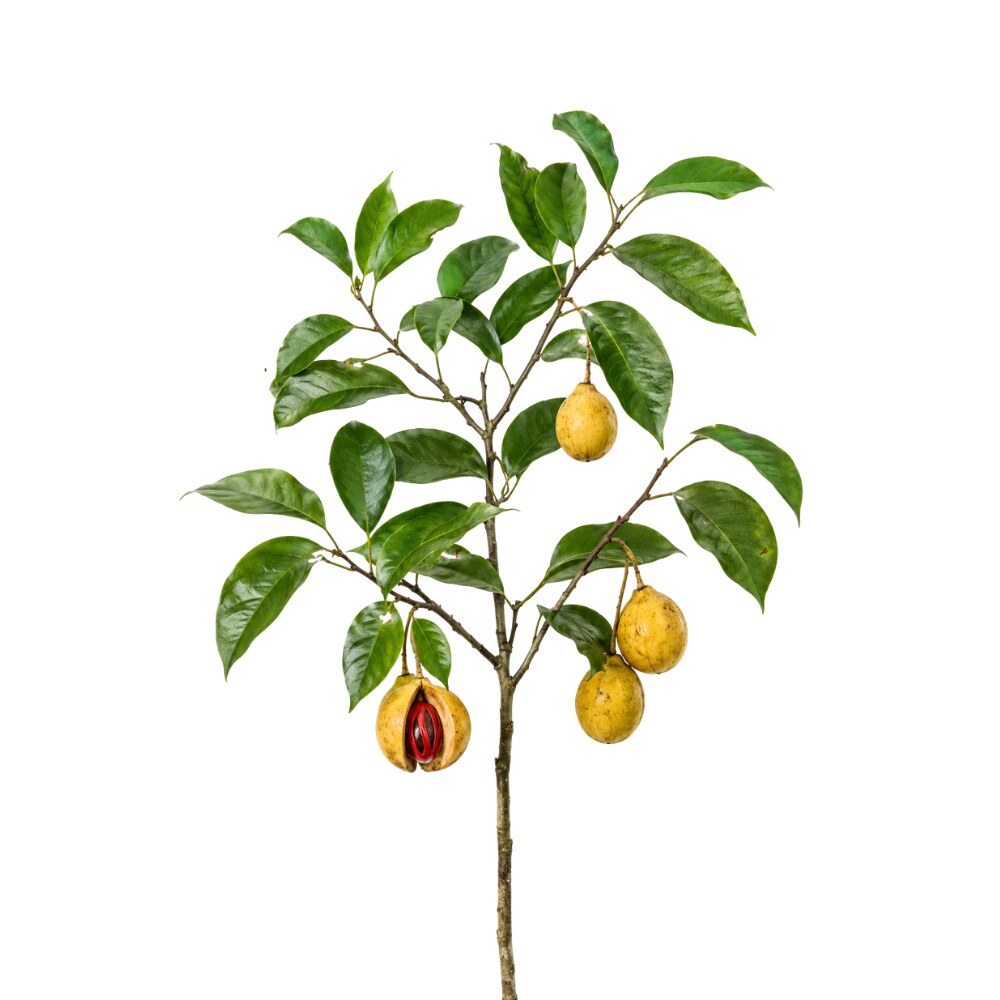
Licarin A is a naturally occurring neolignan (benzofuran-type), found in Nutmeg — mace , not the seed and 1 other source. Its toxicity is not yet characterized.
Concentration
Content by Source
Concentrations not reported. No percent-dry-weight or mg/g figures have been published for this compound in its source plants.
Research & Evidence
Licarin A is a benzofuran neolignan of nutmeg, and the plant part matters: it is reported from the mace — the red aril that sheathes the seed — rather than from the nutmeg kernel itself. Mace and nutmeg are two different spices from one fruit, with overlapping but non-identical chemistry, and most of the seed’s lignan research does not transfer to it.
Its one developed line of evidence is chemopreventive. A 2024 study combining molecular networking, docking and biological evaluation flagged licarin A from Myristica fragrans as a cancer-chemopreventive candidate, reporting reduced NF-κB p65 activation in prostate cancer cells alongside low toxicity in a zebrafish model 1Reference 1Molecular networking, docking and biological evaluation of licarin A from Myristica fragrans as a potential cancer chemopreventive agentView study →. That combination — activity in a cell model with a tolerability signal in a whole organism — is why it was singled out, but it remains preclinical: there are no animal efficacy studies of the isolated molecule and no human data.
It belongs to the neolignan fraction that carries essentially all of nutmeg’s therapeutic preclinical activity, alongside macelignan, malabaricone C and dehydrodiisoeugenol — as distinct from myristicin, the phenylpropene that drives the herb’s toxicity and its reputation.
Toxicity & Safety
The zebrafish work above is the only tolerability data located, and it describes the isolated molecule in a screening model rather than any human exposure. Nothing here supports use of nutmeg or mace on chemopreventive grounds — nutmeg’s therapeutic window is narrow and its toxic principle is one of its “actives”.
References
- Blanco Carcache, Castro-Dionicio, Mirtallo Ezzone, et al. (2024). Molecular networking, docking and biological evaluation of licarin A from Myristica fragrans as a potential cancer chemopreventive agent. Molecules. https://doi.org/10.3390/molecules29204919



