
Compound Monograph
Macelignan
Macelignan — also catalogued as anwuligan and (+)-anwulignan — is a dibenzylbutane lignan from nutmeg (and, in trace amounts, Schisandra). Preclinical work reports strong anti-cariogenic, antioxidant, anti-inflammatory, hepatoprotective and PPAR-mediated antidiabetic activity; there are no human trials, and its clearest practical flag is that it inactivates the drug-metabolising enzyme CYP2C19.

Sources · 3
Where Does It Come From?
Macelignan is a naturally occurring dibenzylbutane lignan, found in Nutmeg — mace & seed and 2 other sources. It is well tolerated orally (low toxicity).
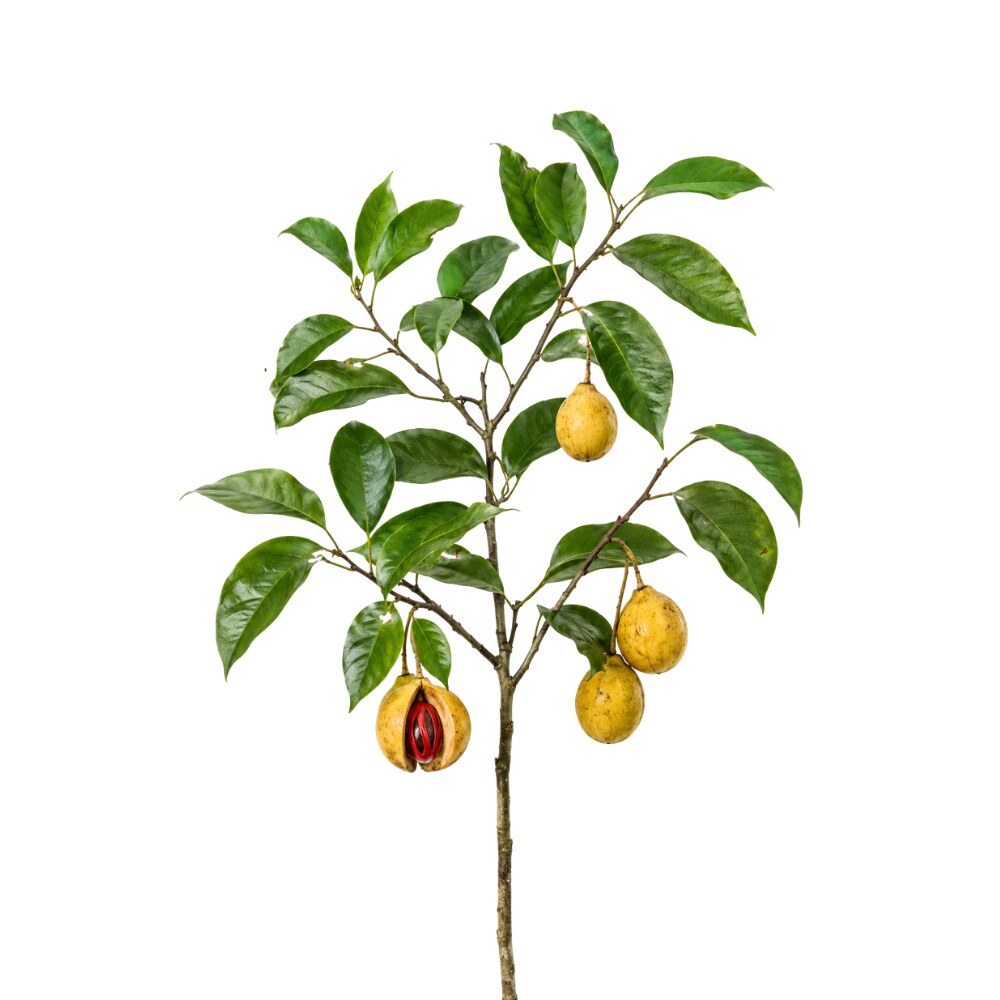 Source Nutmeg Myristica fragrans Herb monograph →
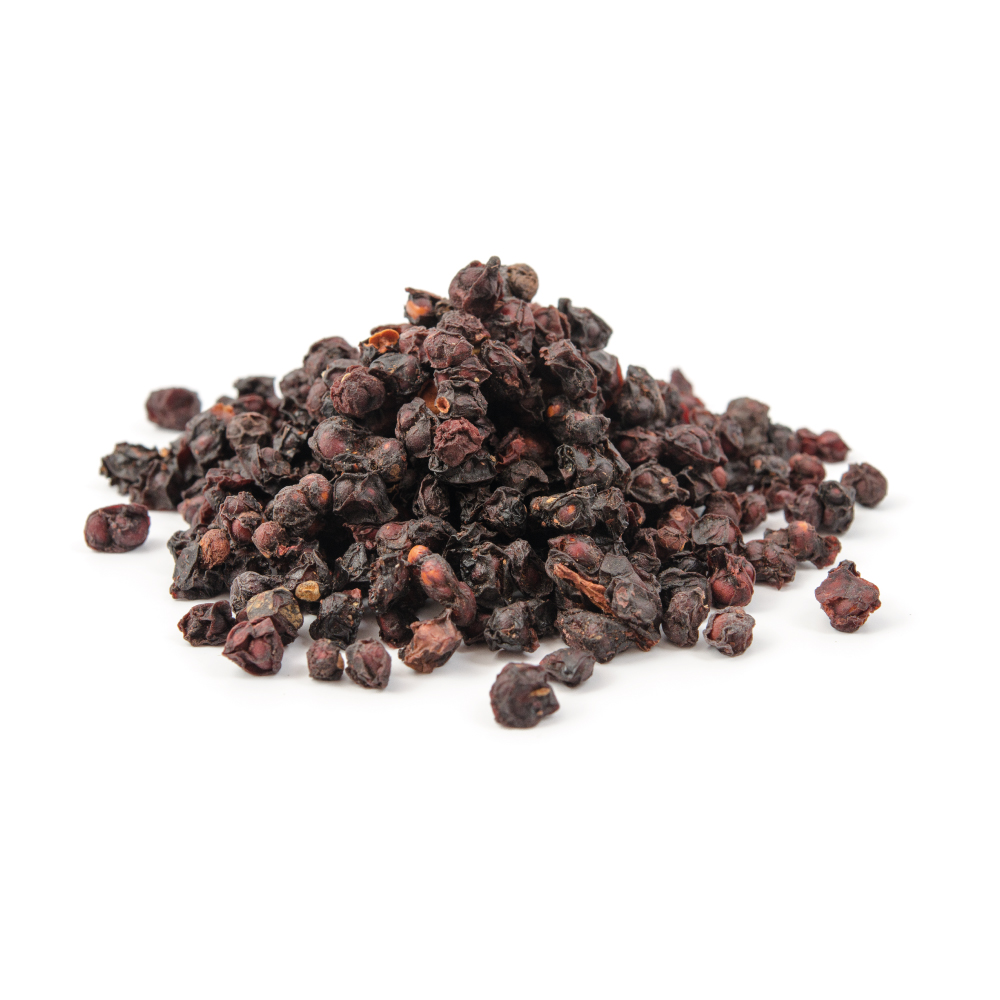 Source Schisandra Schisandra chinensis Herb monograph →
Concentration
Content by Source
Concentrations not reported. No percent-dry-weight or mg/g figures have been published for this compound in its source plants.
Macelignan at a Glance
Macelignan is a dibenzylbutane lignan that also appears in databases and in recent pharmacokinetic work under the name anwuligan (and (+)-anwulignan). All three denote the same molecule (CAS 107534-93-0, PubChem CID 10404245), and the great bulk of the published research uses “macelignan.” It is chiefly a constituent of nutmeg — the mace and seed of Myristica fragrans — and is also reported, in much smaller amounts, in Schisandra chinensis 7,
Because “macelignan” dominates the literature, that is where its pharmacology has been documented: a broad preclinical profile spanning anti-cariogenic / antibacterial, antioxidant, anti-inflammatory, hepatoprotective, neuroprotective and PPAR-mediated antidiabetic activity 7Reference 7Multiple biological properties of macelignan and its pharmacological implicationsView study →. Almost all of this is cell-culture and rodent work; there are no human clinical trials of the isolated molecule.
The single most practically relevant finding is not a benefit but an interaction: macelignan is a mechanism-based (irreversible) inactivator of the drug-metabolising enzyme CYP2C19, and in animals it measurably raised exposure to the CYP2C19 substrate amitriptyline 8Reference 8Mechanism-based inactivation of CYP2C19 by anwuligan resulting in changes in pharmacokinetic properties of amitriptylineView study →. That makes its enzyme behaviour, rather than any proven therapeutic use, the headline for anyone thinking about nutmeg-derived lignan intake alongside medication.
Macelignan, Anwuligan and (+)-Anwulignan Are One Molecule
The naming is the first thing to get straight, because it changes what evidence applies. “Anwuligan,” ”(+)-anwulignan” and “macelignan” all denote the same dibenzylbutane lignan — identical CAS number (107534-93-0), identical PubChem entry (CID 10404245), molecular formula C20H24O4 7Reference 7Multiple biological properties of macelignan and its pharmacological implicationsView study →. “Macelignan” is the name under which the compound was first characterised as the anti-cariogenic principle of nutmeg mace, and it remains the dominant literature name 1,
The practical consequence, and the reason it is filed under macelignan: that is where the evidence is. Searching “anwuligan” returns a handful of recent papers and misses the anti-cariogenic, metabolic and neuroprotective literature entirely. Every application below is drawn from the macelignan literature and cross-checked to the same compound. Anwuligan is the same compound under an older name.
What It's Used For
Macelignan has a wide but shallow evidence base — many reported activities, essentially all preclinical (isolated compound in cells, or in rodents), with no human trials. The evidence is strongest where the isolate was tested directly and quantitatively, weakest where it rests on a single study or a narrative review.
Support is an experimental score — weighted by study type (human > animal > in vitro) and volume. A beta, not a validated metric. Every row here is preclinical, so scores stay low; read the per-row basis for what kind of study each rests on.
The application where the isolated molecule was tested directly and the numbers are strongest. Macelignan isolated from nutmeg mace inhibited Streptococcus mutans — the principal cariogenic organism — with a minimum inhibitory concentration of 3.9 µg/mL, substantially lower (more potent) than a panel of established natural anti-cariogenic agents assayed alongside it (sanguinarine 15.6, eucalyptol 250, menthol and thymol 500, methyl salicylate 1000 µg/mL); it also inactivated S. mutans rapidly at higher concentrations and showed activity against related oral streptococci and lactobacilli 1Reference 1Anticariogenic activity of macelignan isolated from Myristica fragrans (nutmeg) against Streptococcus mutansView study →.
Gap: this is in-vitro isolate data only — MIC in culture, no plaque, animal-caries or human oral-health outcome, and no formulation/exposure work to show macelignan reaches or persists at these concentrations in the mouth 1Reference 1Anticariogenic activity of macelignan isolated from Myristica fragrans (nutmeg) against Streptococcus mutansView study →.
The best-developed whole-animal story. Macelignan behaves as a dual agonist of PPARα and PPARγ — the nuclear receptors targeted by fibrate and glitazone drugs. In diabetic db/db mice, oral macelignan reduced serum glucose, insulin, triglycerides and free fatty acids and triglyceride content in muscle and liver, improved glucose and insulin tolerance, lowered body weight without cutting food intake, increased adiponectin, and reduced endoplasmic-reticulum stress and JNK activation in liver and adipose tissue 2Reference 2Therapeutic potential of peroxisome proliferators-activated receptor-alpha/gamma dual agonist with alleviation of endoplasmic reticulum stress for the treatment of diabetesView study →.
Mechanistically the PPARα arm favours fat oxidation and the PPARγ arm improves insulin sensitivity 2,
Gap: the strongest data are in a single genetic-diabetes mouse model 2Reference 2Therapeutic potential of peroxisome proliferators-activated receptor-alpha/gamma dual agonist with alleviation of endoplasmic reticulum stress for the treatment of diabetesView study →; there is no human trial, no long-term safety in the metabolic setting, and PPARγ agonism as a class carries fluid-retention/weight concerns that have not been characterised for this isolate.
A cluster of cell-based studies. In a murine hippocampal line and primary rat microglia, macelignan reduced reactive-oxygen species and suppressed COX-2, iNOS, nitric oxide, TNF-α and IL-6 3Reference 3AnimalAnti-oxidant and anti-inflammatory activities of macelignan in murine hippocampal cell line and primary culture of rat microglial cellsView study →.
In microglial models it dampened the inflammatory response and protected neurons via PI3K/Akt signalling 4Reference 4Macelignan inhibits the inflammatory response of microglia and regulates neuronal survivalView study →, and in Alzheimer’s-disease cell models it reduced tau phosphorylation (at Thr231, Ser396, Ser404) and suppressed amyloid-β (Aβ) deposition by inhibiting BACE1, with a role for PPARγ in the anti-inflammatory effect 5Reference 5Inhibitory effects of macelignan on tau phosphorylation and Aβ aggregation in the cell model of Alzheimer’s diseaseView study →.
The 2013 review groups these under a documented neuroprotective profile 7Reference 7Multiple biological properties of macelignan and its pharmacological implicationsView study →.
Gap: entirely in-vitro / ex-vivo; no in-vivo cognitive or disease-model outcome for the isolate in these reports, and macelignan’s brain penetration and achievable CNS concentrations are uncharacterised 3,
Macelignan protected against cisplatin-induced hepatotoxicity in a dose-dependent manner, an effect linked to suppression of JNK and ERK (MAPK) phosphorylation 6Reference 6Protective effects of macelignan on cisplatin-induced hepatotoxicity is associated with JNK activationView study →; the 2013 review lists hepatoprotective (and gastroprotective/dermoprotective) activity among its documented properties 7Reference 7Multiple biological properties of macelignan and its pharmacological implicationsView study →. This sits within the same nutmeg-lignan tradition as the hepatoprotective Schisandra lignans, though those are different molecules.
Gap: rests on essentially one primary study plus a narrative review 6,
Mechanisms
| Target / pathway | Effect | Relevant to |
|---|---|---|
| Streptococcus mutans growth | bactericidal/bacteriostatic at low MIC (3.9 µg/mL) | anti-cariogenic |
| PPARα / PPARγ | dual agonism → fat oxidation + insulin sensitisation; ↑ adiponectin | antidiabetic / metabolic |
| ER stress & JNK (metabolic tissue) | reduced ER stress and JNK activation in liver/adipose | antidiabetic; hepatoprotective |
| COX-2, iNOS, NO, TNF-α, IL-6 | suppressed in activated glia | anti-inflammatory / neuroprotective |
| PI3K / Akt | pro-survival signalling in neurons | neuroprotective |
| Tau phosphorylation; BACE1 → Aβ | reduced tau-P and Aβ deposition in AD cell models | neuroprotective (Alzheimer’s) |
| JNK / ERK (MAPK) | suppression underlies protection from cisplatin liver injury | hepatoprotective |
| CYP2C19 | mechanism-based (irreversible) inactivation | drug interactions |
The mechanisms cluster around two hubs — PPAR/ER-stress in metabolism and NF-κB-adjacent inflammatory suppression in glia — but the CYP2C19 line is the one with a directly demonstrated in-vivo pharmacokinetic consequence 8Reference 8Mechanism-based inactivation of CYP2C19 by anwuligan resulting in changes in pharmacokinetic properties of amitriptylineView study →.
Pharmacokinetics
Macelignan is a small, lipophilic lignan (C20H24O4, MW 328.4), and its metabolic-tissue and CNS-model effects imply it is absorbed and distributed enough to act in oral rodent studies 2Reference 2Therapeutic potential of peroxisome proliferators-activated receptor-alpha/gamma dual agonist with alleviation of endoplasmic reticulum stress for the treatment of diabetesView study →. Its best-characterised pharmacokinetic property is at the enzyme end: anwuligan is a mechanism-based inactivator of CYP2C19 — it is metabolised to a reactive intermediate that irreversibly disables the enzyme — and in animals, pretreatment raised the peak concentration of the CYP2C19 substrate amitriptyline ~1.4-fold and its overall exposure by ~30%, while lowering the active metabolite nortriptyline 8Reference 8Mechanism-based inactivation of CYP2C19 by anwuligan resulting in changes in pharmacokinetic properties of amitriptylineView study →. Beyond this, quantitative human pharmacokinetics — oral bioavailability, half-life, protein binding, its own clearance route — are not established.
Clinical Trials
There are no human clinical trials of isolated macelignan for any indication. The entire evidence base is preclinical (isolated-compound in-vitro and rodent studies) plus one narrative review 7Reference 7Multiple biological properties of macelignan and its pharmacological implicationsView study →.
| Completed | Planned | Terminated | Preclinical |
|---|---|---|---|
| — | — | — | Anti-cariogenic, antidiabetic (PPAR), anti-inflammatory/neuroprotective, hepatoprotective; CYP2C19-interaction PK |
Last checked: July 2026.
Isolate vs. Plant Studies
This molecule’s evidence is unusually isolate-heavy, which cuts both ways. On the plus side, the marquee findings — the anti-cariogenic MIC 1Reference 1Anticariogenic activity of macelignan isolated from Myristica fragrans (nutmeg) against Streptococcus mutansView study →, the db/db metabolic study 2Reference 2Therapeutic potential of peroxisome proliferators-activated receptor-alpha/gamma dual agonist with alleviation of endoplasmic reticulum stress for the treatment of diabetesView study →, the glial/neuronal and Alzheimer’s models 3,
Prevalence in Nature
Macelignan is primarily a nutmeg compound. It was isolated and structurally identified from the methanol extract of Myristica fragrans mace (and seed), where it occurs alongside related dibenzyl/neolignans (including nectandrin B, and built on the same C6–C3 units as eugenol); it is the lignan behind nutmeg’s reported anti-cariogenic activity 1,
No quantified concentration figures (percent dry weight, mace vs. seed vs. Schisandra fruit) are established for macelignan in either source — a gap logged for a later pass. Reported occurrence should be read as “present in nutmeg, minor in Schisandra,” not as a measured abundance.
Discovery & Synthesis
Macelignan entered the literature under that name, as the constituent isolated from nutmeg (Myristica fragrans) mace by repeated silica-gel chromatography and characterised by 1D/2D-NMR and EI-MS as the anti-cariogenic principle of the spice, with the landmark Phytomedicine report in 2006 1Reference 1Anticariogenic activity of macelignan isolated from Myristica fragrans (nutmeg) against Streptococcus mutansView study →. The names “anwuligan” and ”(+)-anwulignan” denote the same dibenzylbutane lignan (CAS 107534-93-0) and are used interchangeably with “macelignan” in the chemical and pharmacological literature 7Reference 7Multiple biological properties of macelignan and its pharmacological implicationsView study →. The bulk of the pharmacology (anti-diabetic PPAR work, neuroprotection, hepatoprotection) accumulated over 2005–2013 under the macelignan name 2,
Patents: not yet researched.
Toxicity & Safety
Macelignan carries a low intrinsic-toxicity flag. Across the preclinical record it was tolerated in the doses used — oral dosing in diabetic mice actually improved metabolic and liver markers 2Reference 2Therapeutic potential of peroxisome proliferators-activated receptor-alpha/gamma dual agonist with alleviation of endoplasmic reticulum stress for the treatment of diabetesView study →, and it was protective against chemical liver injury 6Reference 6Protective effects of macelignan on cisplatin-induced hepatotoxicity is associated with JNK activationView study → — and no isolate-specific acute toxicity, genotoxicity or organ-toxicity signal is reported. Importantly, nutmeg’s well-known toxic and deliriant effects at high doses are attributed to myristicin and related volatile constituents, not to this lignan, so anwuligan should not inherit nutmeg’s toxicity badge.
The real safety consideration is a drug-interaction one rather than direct harm:
- No isolate-specific toxicity reported. Tolerated in the cell and rodent studies conducted to date; several endpoints were protective (liver, metabolic) 2,
6, .7Reference 2Therapeutic potential of peroxisome proliferators-activated receptor-alpha/gamma dual agonist with alleviation of endoplasmic reticulum stress for the treatment of diabetesView study →Reference 6Protective effects of macelignan on cisplatin-induced hepatotoxicity is associated with JNK activationView study →Reference 7Multiple biological properties of macelignan and its pharmacological implicationsView study → - CYP2C19 mechanism-based inactivation. Macelignan irreversibly disables CYP2C19 and raised amitriptyline exposure ~30% in animals — a plausible route to interactions with CYP2C19-metabolised drugs (some antidepressants, PPIs, clopidogrel activation, diazepam) 8Reference 8Mechanism-based inactivation of CYP2C19 by anwuligan resulting in changes in pharmacokinetic properties of amitriptylineView study →.
- No human safety data. All evidence is preclinical; oral bioavailability, chronic-dosing safety and reproductive/developmental data for the isolate are uncharacterised.
- Don’t read across from whole nutmeg. Nutmeg’s toxicity is driven by other constituents (myristicin); conversely, the lignan’s clean preclinical profile does not license high-dose nutmeg use.
A reproductive/developmental-toxicity dataset for isolated macelignan does not exist; any pregnancy or lactation decision belongs to the herb or product page where intake is actually decided, not to this molecule page.
Dosage
There is no established human dose for macelignan — it is a research compound, not a marketed supplement. The figures that exist are experimental: the in-vitro anti-cariogenic MIC of 3.9 µg/mL against S. mutans 1Reference 1Anticariogenic activity of macelignan isolated from Myristica fragrans (nutmeg) against Streptococcus mutansView study →, and oral doses used in rodent metabolic and hepatoprotective studies 2,
References
- Chung JY, Choo JH, Lee MH, Hwang JK (2006). Anticariogenic activity of macelignan isolated from Myristica fragrans (nutmeg) against Streptococcus mutans. Phytomedicine. https://pubmed.ncbi.nlm.nih.gov/16492529/
- Han KL, Choi JS, Lee JY, Song J, Joe MK, Jung MH, Hwang JK (2008). Therapeutic potential of peroxisome proliferators-activated receptor-alpha/gamma dual agonist with alleviation of endoplasmic reticulum stress for the treatment of diabetes. Diabetes. https://pubmed.ncbi.nlm.nih.gov/18065517/
- Jin DQ, Lim CS, Hwang JK, Ha I, Han JS (2005). Anti-oxidant and anti-inflammatory activities of macelignan in murine hippocampal cell line and primary culture of rat microglial cells. Biochemical and Biophysical Research Communications. https://pubmed.ncbi.nlm.nih.gov/15883012/
- Zong K, Liu X, Sun Z, et al. (2020). Macelignan inhibits the inflammatory response of microglia and regulates neuronal survival. Journal of Neuroimmunology. https://pubmed.ncbi.nlm.nih.gov/31838278/
- Gu L, Cai N, Li M, et al. (2022). Inhibitory effects of macelignan on tau phosphorylation and Aβ aggregation in the cell model of Alzheimer’s disease. Frontiers in Nutrition. https://pubmed.ncbi.nlm.nih.gov/35662922/
- Sohn JH, Han KL, Kim JH, Rukayadi Y, Hwang JK (2008). Protective effects of macelignan on cisplatin-induced hepatotoxicity is associated with JNK activation. Biological & Pharmaceutical Bulletin. https://pubmed.ncbi.nlm.nih.gov/18239286/
- Paul S, Hwang JK, Kim HY, Jeon WK, Chung C, Han JS (2013). Multiple biological properties of macelignan and its pharmacological implications. Archives of Pharmacal Research. https://pubmed.ncbi.nlm.nih.gov/23435944/
- Cheng X, Cheng Z, Dai J, Yang D, Zhang Q, Tang H, Peng Y, Li W, Zheng J (2026). Mechanism-based inactivation of CYP2C19 by anwuligan resulting in changes in pharmacokinetic properties of amitriptyline. Chemical Research in Toxicology. https://pubmed.ncbi.nlm.nih.gov/41968488/



