
Compound Monograph
Loganic Acid
Loganic acid is a bitter iridoid glucoside of cornelian cherry, bogbean and snowberry — best understood as the immediate biosynthetic precursor of loganin, one methyl group short of it. Loganic acid O-methyltransferase (LAMT) converts it to loganin en route to secologanin and the great iridoid/alkaloid lineage. As a therapeutic isolate its data are thin and entirely preclinical (antioxidant and anti-atherosclerotic rodent work), with poor oral bioavailability (~3-6% in rats) and no human trials.

Sources · 7
Where Does It Come From?
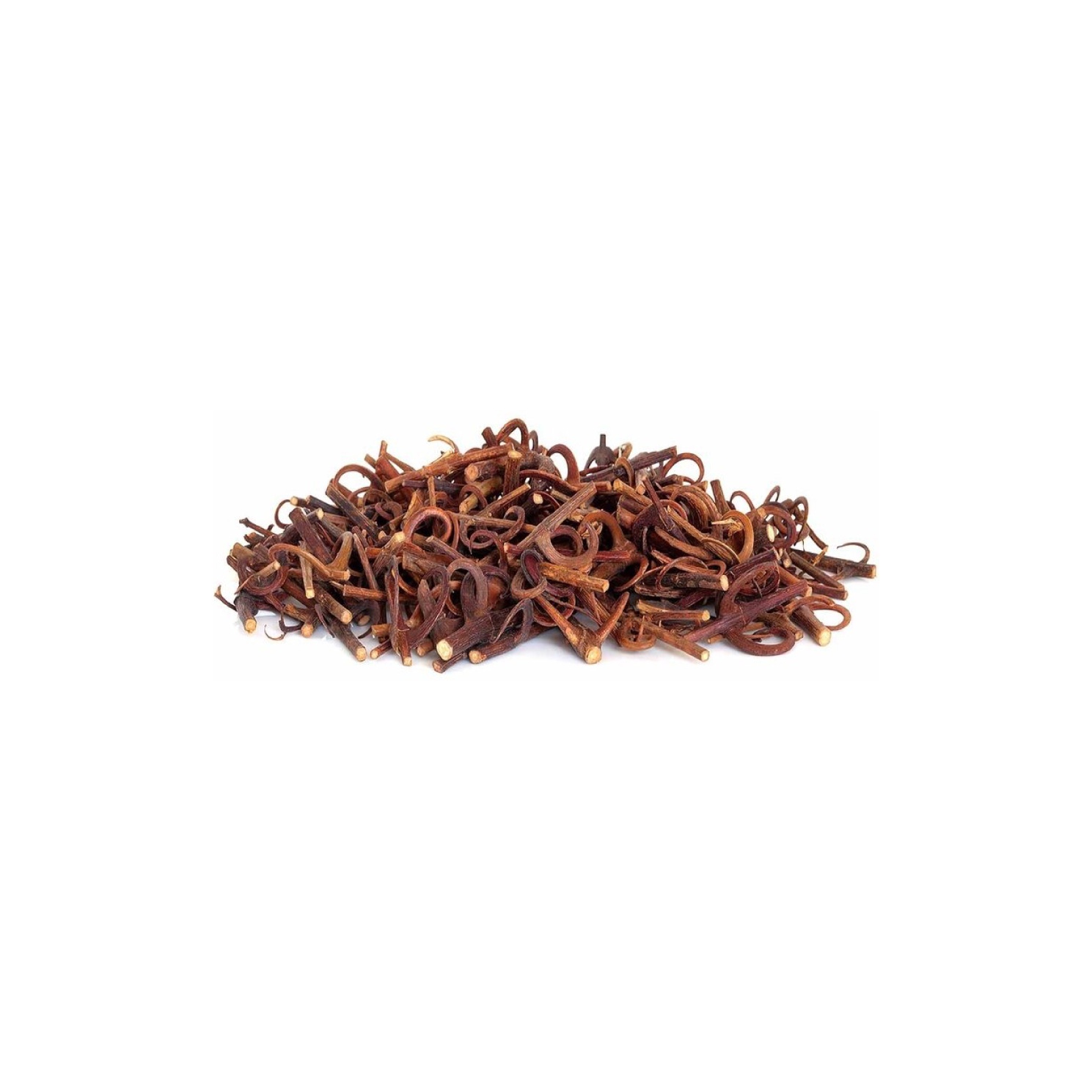
Loganic Acid is a naturally occurring iridoid glucoside (monoterpenoid; carboxylic-acid precursor of loganin), found in Cornelian cherry fruit, Cornelian cherry fruit — shan zhu yu, Bogbean and 4 other sources. It is well tolerated orally (low toxicity).
Concentration
Content by Source
Concentrations not reported. No percent-dry-weight or mg/g figures have been published for this compound in its source plants.
Loganic Acid at a Glance
Loganic acid is a bitter iridoid glucoside — a small, water-soluble monoterpenoid found in cornelian cherry, bogbean, snowberry and other iridoid-bearing plants. Chemically it is one methyl group short of loganin: loganin is simply the methyl ester of loganic acid’s carboxylic-acid group.
That relationship is the whole point of the molecule. Loganic acid’s significance is overwhelmingly biosynthetic — it is the immediate precursor that the enzyme loganic acid O-methyltransferase (LAMT) converts to loganin, the last common intermediate before the pathway branches toward the monoterpene indole alkaloids and the secoiridoids 1Reference 1The reaction mechanism of loganic acid methyltransferase: a molecular dynamics simulation and quantum mechanics studyView study →.
As a therapeutic isolate in its own right, loganic acid is data-thin and entirely preclinical. A small cluster of antioxidant and anti-atherosclerotic studies — mostly on cornelian-cherry-derived loganic acid in rodents — is the extent of the direct pharmacology; there are no human trials of the isolate, and its oral bioavailability is poor (roughly 3-6% in rats), which limits how far cell and high-dose findings translate 6Reference 6AnimalA simple and sensitive LC-MS/MS method for the determination of loganic acid in rat plasma and its pharmacokinetic analysisView study →. This page stays deliberately short and states plainly where the evidence stops.
Loganic Acid, Precursor of Loganin
The reason to have a page on loganic acid at all is its position one step upstream of loganin in the iridoid pathway. The route runs geraniol → … → loganic acid → loganin → secologanin, and the loganic-acid → loganin step is a single, well-characterised methylation.
Loganic acid O-methyltransferase (LAMT) transfers a methyl group from S-adenosyl-methionine (SAM) to the C-11 carboxyl group of loganic acid, producing the methyl ester — loganin — and SAH 1Reference 1The reaction mechanism of loganic acid methyltransferase: a molecular dynamics simulation and quantum mechanics studyView study →. Loganin is then cleaved by secologanin synthase (a cytochrome P450) to give secologanin, the hinge from which two enormous families of natural products diverge: the monoterpene indole alkaloids (strychnine, quinine, the Catharanthus anticancer dimers) and the secoiridoids (gentiopicroside and, further on, oleuropein). Loganic acid sits immediately before that machinery — it is the substrate LAMT acts on, the point at which the free acid becomes the methyl ester that the rest of the pathway consumes.
This is why loganic acid is interesting out of proportion to its own pharmacology: like its sibling loganin, most of the biological “activity” of this skeleton in nature is expressed only after it has been transformed into something else. In cornelian cherry and other sources loganic acid also simply accumulates as a bitter iridoid glucoside alongside loganin and morroniside, contributing to the fruit’s bitter, astringent character. Its own measured pharmacology — the antioxidant and anti-atherosclerotic signal below — is real but modest, and human data are absent.
What It's Used For
Loganic acid’s direct evidence base is small, consistent and entirely preclinical. The load-bearing caveats are the compound-page discipline: no human trials of the isolate, and poor oral bioavailability means in-vitro and high-dose rodent potency overstate what an oral dose delivers 6Reference 6AnimalA simple and sensitive LC-MS/MS method for the determination of loganic acid in rat plasma and its pharmacokinetic analysisView study →.
Support is an experimental score — weighted by study type (human > animal > in vitro) and volume. A beta, not a validated metric. There are no human isolate data, so scores stay low by design.
Loganic acid’s clearest own-molecule signal, and squarely isolate work. Loganic acid isolated from cornelian cherry (Cornus mas) restored the balance between the antioxidant defence system and oxidative stress in the leukocytes of streptozotocin-diabetic rats — raising reduced glutathione and catalase, glutathione-peroxidase and glutathione-reductase activity while lowering intracellular ROS and lipid-peroxidation products — without changing blood glucose 2Reference 2AnimalLoganic acid, an iridoid glycoside extracted from Cornus mas L. fruits, reduces carbonyl/oxidative stress biomarkers in plasma and restores antioxidant balance in leukocytes of rats with streptozotocin-induced diabetes mellitusView study →.
Separately, loganic acid isolated from Strychnos potatorum seeds showed DPPH, superoxide and hydroxyl-radical scavenging and protected peripheral blood mononuclear cells against heavy-metal-induced oxidative toxicity in vitro 5Reference 5Antioxidant and cytoprotective properties of loganic acid isolated from seeds of Strychnos potatorum L. against heavy metal induced toxicity in PBMC modelView study →.
Gap: rodent and in-vitro isolate assays only; no human antioxidant outcome rests on loganic acid, and the effective in-vitro concentrations sit well above what poor oral absorption achieves 2,
A small but internally consistent rabbit dataset, testing loganic acid as an isolate (20 mg/kg orally, alongside a comparator anthocyanin fraction). Over 60 days of a cholesterol-rich diet, loganic acid modestly improved dyslipidaemia, increased PPARα expression, and — unlike the anthocyanins — lowered TNFα and IL-6, with a smaller reduction in aortic intima thickness 3Reference 3Iridoid-loganic acid versus anthocyanins from the Cornus mas fruits (cornelian cherry): common and different effects on diet-induced atherosclerosis, PPARs expression and inflammationView study →.
In a companion high-cholesterol rabbit study it raised the L-arginine/ADMA ratio and lowered ADMA, increased DDAH1 and aortic eNOS mRNA, and restored blood glutathione — an endothelial/nitric-oxide-supportive profile 4Reference 4The iridoid loganic acid and anthocyanins from the cornelian cherry (Cornus mas L.) fruit increase the plasma L-arginine/ADMA ratio and decrease levels of ADMA in rabbits fed a high-cholesterol dietView study →.
Gap: two rabbit studies from one group, with the isolate consistently less potent than the co-tested anthocyanins; no replication in other models and no human data 3,
A single recent model. In diabetic mice and high-glucose-treated AC16 cardiomyocytes, loganic acid reduced oxidative stress (lower MDA, higher GSH), lowered IL-1β/IL-6/TNFα and cardiomyocyte apoptosis, and did so by suppressing TLR4 signalling and p38 MAPK phosphorylation 7Reference 7Loganic acid ameliorates diabetic cardiomyopathy via suppressing TLR4/p38 MAPK signaling-mediated oxidative stress and inflammationView study →. It fits the same antioxidant/anti-inflammatory theme as the diabetes and atherosclerosis work.
Gap: one study, one injury model, no replication and no human data 7Reference 7Loganic acid ameliorates diabetic cardiomyopathy via suppressing TLR4/p38 MAPK signaling-mediated oxidative stress and inflammationView study →.
Mechanisms
| Target / pathway | Effect | Relevant to |
|---|---|---|
| Catalase, glutathione peroxidase/reductase; GSH; ROS & lipid peroxidation | antioxidant enzymes and GSH ↑; ROS/LPO ↓ (diabetic-rat leukocytes) | antioxidant / redox |
| DPPH, superoxide, hydroxyl radicals | direct scavenging; cytoprotection in PBMCs | antioxidant (in vitro) |
| PPARα | expression increased | anti-atherosclerotic / lipid |
| TNFα, IL-6 (and IL-1β) | pro-inflammatory cytokines decreased | anti-inflammatory |
| DDAH1 / ADMA; eNOS | ADMA ↓, L-arg/ADMA ratio ↑, aortic eNOS mRNA ↑ | endothelial / nitric oxide |
| TLR4 / p38 MAPK | suppressed | diabetic cardiomyopathy |
| Loganic acid O-methyltransferase (LAMT) → loganin | C-11 carboxyl O-methylation (in planta) | the precursor role — not human pharmacology |
The reproduced core is an antioxidant/anti-inflammatory program shared with its sibling loganin. The LAMT row is plant biochemistry — the reason the molecule matters — but off the human-pharmacology axis.
Pharmacokinetics
Loganic acid is a hydrophilic iridoid glucoside with poor oral bioavailability. A validated LC-MS/MS pharmacokinetic study in rats reported an absolute oral bioavailability of only ~2.71-5.58% across a 50-150 mg/kg oral dose range (against a 2 mg/kg intravenous reference) 6Reference 6AnimalA simple and sensitive LC-MS/MS method for the determination of loganic acid in rat plasma and its pharmacokinetic analysisView study →. This is the standard iridoid-glucoside caveat and mirrors its sibling loganin: micromolar in-vitro potency and high rodent doses substantially overstate what an oral human exposure would deliver, and the molecule is better read as a poorly-absorbed marker of a whole-fruit effect than as a stand-alone oral drug 6Reference 6AnimalA simple and sensitive LC-MS/MS method for the determination of loganic acid in rat plasma and its pharmacokinetic analysisView study →.
Clinical Trials
There are no controlled trials of isolated loganic acid. Any human footprint is entirely indirect, through the whole cornelian-cherry fruit and other iridoid-bearing plants, where loganic acid is one iridoid among many rather than the tested agent.
| Completed | Planned | Terminated | Preclinical |
|---|---|---|---|
| —(none, isolate) | — | — | Small(antioxidant-led; anti-atherosclerotic, diabetic-cardiomyopathy) |
Last checked: July 2026.
Isolate vs. Plant Studies
Unusually for a data-thin molecule, loganic acid’s small pharmacology is mostly isolate work — the diabetic-rat antioxidant study used loganic acid purified from Cornus mas 2Reference 2AnimalLoganic acid, an iridoid glycoside extracted from Cornus mas L. fruits, reduces carbonyl/oxidative stress biomarkers in plasma and restores antioxidant balance in leukocytes of rats with streptozotocin-induced diabetes mellitusView study →, the atherosclerosis and ADMA studies dosed the isolated acid against an anthocyanin comparator 3,
Prevalence in Nature
Loganic acid is a widespread but usually minor iridoid glucoside across iridoid-bearing lineages. Its best-characterised source is cornelian cherry — both European cornelian cherry (Cornus mas), the subject of most of the isolate pharmacology 2,
Absolute content is rarely reported as a clean % dry weight and varies with species, plant part and ripeness, so a reliable cross-source concentration ranking does not exist here and is tracked as a gap rather than asserted.
Major Natural Sources
| Source (Botanical) | Part | Notes |
|---|---|---|
| Cornelian cherry (Cornus mas) | Fruit | Source for most of the isolate pharmacology 2, |
| Cornelian cherry (Cornus officinalis) | Fruit (shan zhu yu) | Co-occurs with loganin and morroniside |
| Bogbean (Menyanthes trifoliata) | Leaf | A bitter iridoid of the herb |
| Snowberry (Symphoricarpos spp.) | Fruit/plant | Reported iridoid constituent |
| Cat’s claw (Uncaria tomentosa) | Bark/vine | One of the iridoid constituents |
| Clearing-nut (Strychnos potatorum) | Seed | Isolation source for the antioxidant study 5Reference 5Antioxidant and cytoprotective properties of loganic acid isolated from seeds of Strychnos potatorum L. against heavy metal induced toxicity in PBMC modelView study → |
Discovery & Synthesis
Loganic acid is an iridoid of the loganin pathway, and its identity is bound to that of loganin itself — the name traces through loganin to the Loganiaceae, the plant family named after the botanist James Logan. It was recognised as the immediate carboxylic-acid precursor of loganin (loganin being its C-11 methyl ester) through the mid-twentieth-century natural-product and radiotracer chemistry that mapped the geraniol → loganic acid → loganin → secologanin route; the enzyme responsible for the methylation step, loganic acid O-methyltransferase (LAMT), has since been characterised in strictosidine-producing plants and studied down to its reaction mechanism 1Reference 1The reaction mechanism of loganic acid methyltransferase: a molecular dynamics simulation and quantum mechanics studyView study →. Total synthesis of the loganin/iridoid skeleton has been reported in the natural-product literature, but synthesis is not the supply route: research-grade loganic acid is obtained by extraction from iridoid-rich plants, chiefly cornelian-cherry fruit, where its glucoside chemistry makes isolation more practical than total synthesis.
Patents: not yet researched.
Toxicity & Safety
Loganic acid reads as a low-toxicity iridoid glucoside. It is a natural constituent of cornelian cherry, an edible fruit eaten and used medicinally for centuries, and preclinical studies report no acute-toxicity signal at the doses used 2,
- A constituent of an edible fruit. Loganic acid occurs in cornelian cherry, long eaten and used medicinally, with no acute-toxicity signal in the rodent/rabbit studies 2,
3Reference 2AnimalLoganic acid, an iridoid glycoside extracted from Cornus mas L. fruits, reduces carbonyl/oxidative stress biomarkers in plasma and restores antioxidant balance in leukocytes of rats with streptozotocin-induced diabetes mellitusView study →Reference 3Iridoid-loganic acid versus anthocyanins from the Cornus mas fruits (cornelian cherry): common and different effects on diet-induced atherosclerosis, PPARs expression and inflammationView study → . - Real-world exposure is whole-plant and low. People meet loganic acid as a fruit/herb constituent, not as a concentrated isolate, and its oral absorption is poor (~3-6% in rats) 6Reference 6AnimalA simple and sensitive LC-MS/MS method for the determination of loganic acid in rat plasma and its pharmacokinetic analysisView study →.
- No comprehensive isolate toxicology. No definitive LD50, genotoxicity or repeat-dose package for the pure compound; safety is inferred from the whole fruit, not established for the molecule.
- In-vitro potency overreads oral exposure. Poor bioavailability limits how far cell/high-dose findings translate, and interaction data are uncharacterised rather than absent 6Reference 6AnimalA simple and sensitive LC-MS/MS method for the determination of loganic acid in rat plasma and its pharmacokinetic analysisView study →.
Reproductive note (prose only). No dedicated reproductive- or developmental-toxicity dataset exists for isolated loganic acid. Any pregnancy or lactation caution around loganic-acid-containing plants (cornelian cherry, bogbean, cat’s claw and the alkaloid-associated Strychnos) belongs to the source herb and its actives, and is a decision made on the herb or product page where intake is decided — not on this molecule page.
Dosage
There is no established or recommended human dose for isolated loganic acid — it has never been given to people as an isolate for therapy. Cited figures are preclinical research doses: micromolar concentrations in vitro, and roughly tens of mg/kg in rodents (e.g. 20 mg/kg orally in the rabbit atherosclerosis work 3Reference 3Iridoid-loganic acid versus anthocyanins from the Cornus mas fruits (cornelian cherry): common and different effects on diet-induced atherosclerosis, PPARs expression and inflammationView study →), typically above what an oral dose delivers given poor oral bioavailability (~2.71-5.58% in rats) 6Reference 6AnimalA simple and sensitive LC-MS/MS method for the determination of loganic acid in rat plasma and its pharmacokinetic analysisView study →. Human intake is indirect, through the whole cornelian-cherry fruit and other iridoid-bearing plants, where loganic acid is one iridoid among many rather than a dosed drug. These are doses studied in research and are not a personal recommendation.
References
- Jędrzejewski M, et al. (2023). The reaction mechanism of loganic acid methyltransferase: a molecular dynamics simulation and quantum mechanics study. Molecules. https://pubmed.ncbi.nlm.nih.gov/37570737/
- Dzydzan O, et al. (2020). Loganic acid, an iridoid glycoside extracted from Cornus mas L. fruits, reduces carbonyl/oxidative stress biomarkers in plasma and restores antioxidant balance in leukocytes of rats with streptozotocin-induced diabetes mellitus. Life (Basel). https://pubmed.ncbi.nlm.nih.gov/33333730/
- Sozański T, et al. (2016). Iridoid-loganic acid versus anthocyanins from the Cornus mas fruits (cornelian cherry): common and different effects on diet-induced atherosclerosis, PPARs expression and inflammation. Atherosclerosis. https://pubmed.ncbi.nlm.nih.gov/27744131/
- Sozański T, et al. (2019). The iridoid loganic acid and anthocyanins from the cornelian cherry (Cornus mas L.) fruit increase the plasma L-arginine/ADMA ratio and decrease levels of ADMA in rabbits fed a high-cholesterol diet. Phytomedicine. https://pubmed.ncbi.nlm.nih.gov/30599888/
- Abirami A, et al. (2022). Antioxidant and cytoprotective properties of loganic acid isolated from seeds of Strychnos potatorum L. against heavy metal induced toxicity in PBMC model. Drug and Chemical Toxicology. https://pubmed.ncbi.nlm.nih.gov/31645139/
- Wang P, et al. (2024). A simple and sensitive LC-MS/MS method for the determination of loganic acid in rat plasma and its pharmacokinetic analysis. Biomedical Chromatography. https://pubmed.ncbi.nlm.nih.gov/38956830/
- Ding X, et al. (2025). Loganic acid ameliorates diabetic cardiomyopathy via suppressing TLR4/p38 MAPK signaling-mediated oxidative stress and inflammation. Journal of Clinical Biochemistry and Nutrition. https://pubmed.ncbi.nlm.nih.gov/41312011/



