
Compound Monograph
Loganin
Loganin is the pivotal iridoid glucoside of the plant kingdom — the immediate precursor of secologanin, the branch point that feeds BOTH the monoterpene indole alkaloids (strychnine, vinblastine, quinine) and the secoiridoids (gentiopicroside, oleuropein). It is also the quality-control marker of cornelian cherry (Cornus officinalis / shan zhu yu), with a broad but entirely preclinical anti-diabetic and neuroprotective profile; there are no isolate human trials, human evidence belongs to the whole herb and its formulas, and oral bioavailability is very low (~5% in rats).

Sources · 8
Where Does It Come From?
Loganin is a naturally occurring iridoid glucoside (secoiridoid / monoterpene-indole-alkaloid precursor), found in Cornelian cherry fruit — shan zhu yu; the principal source and QC marker, Gentian, Strychnos and 5 other sources. It is well tolerated orally (low toxicity).
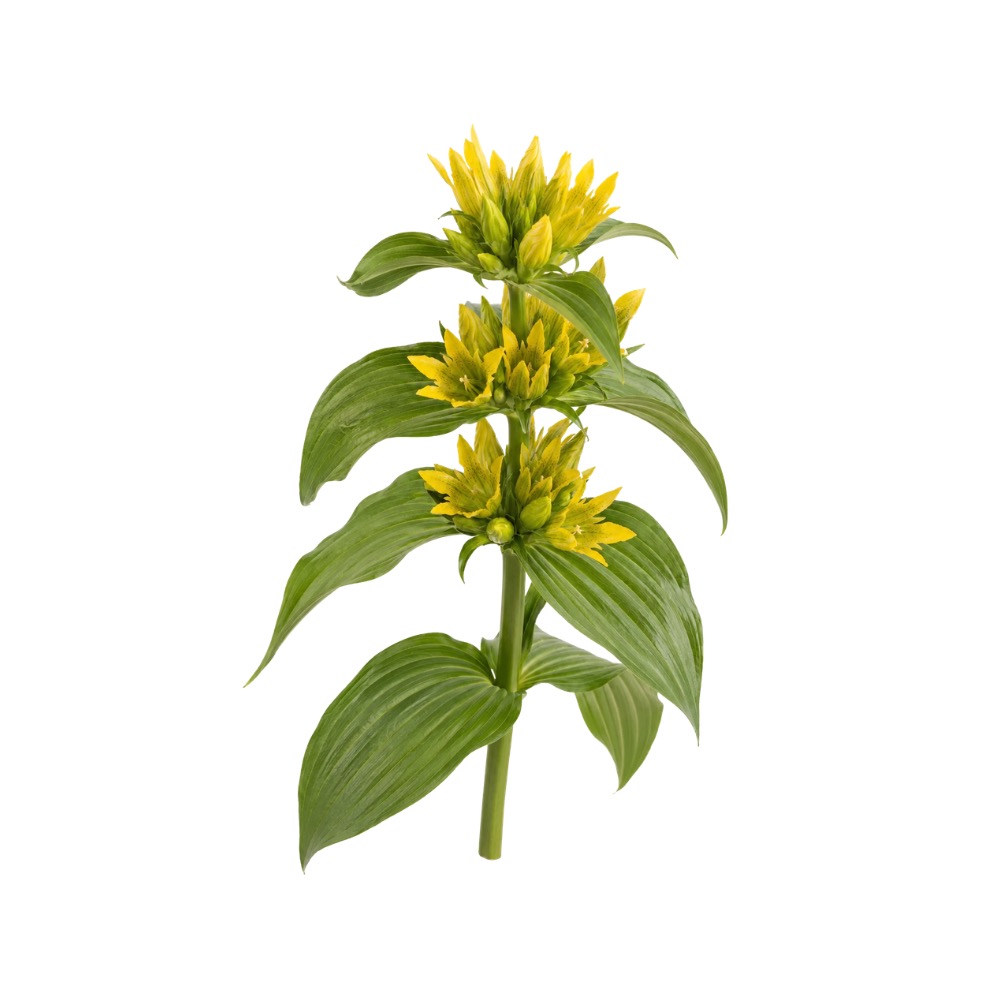 Source Gentian Gentiana lutea Herb monograph →
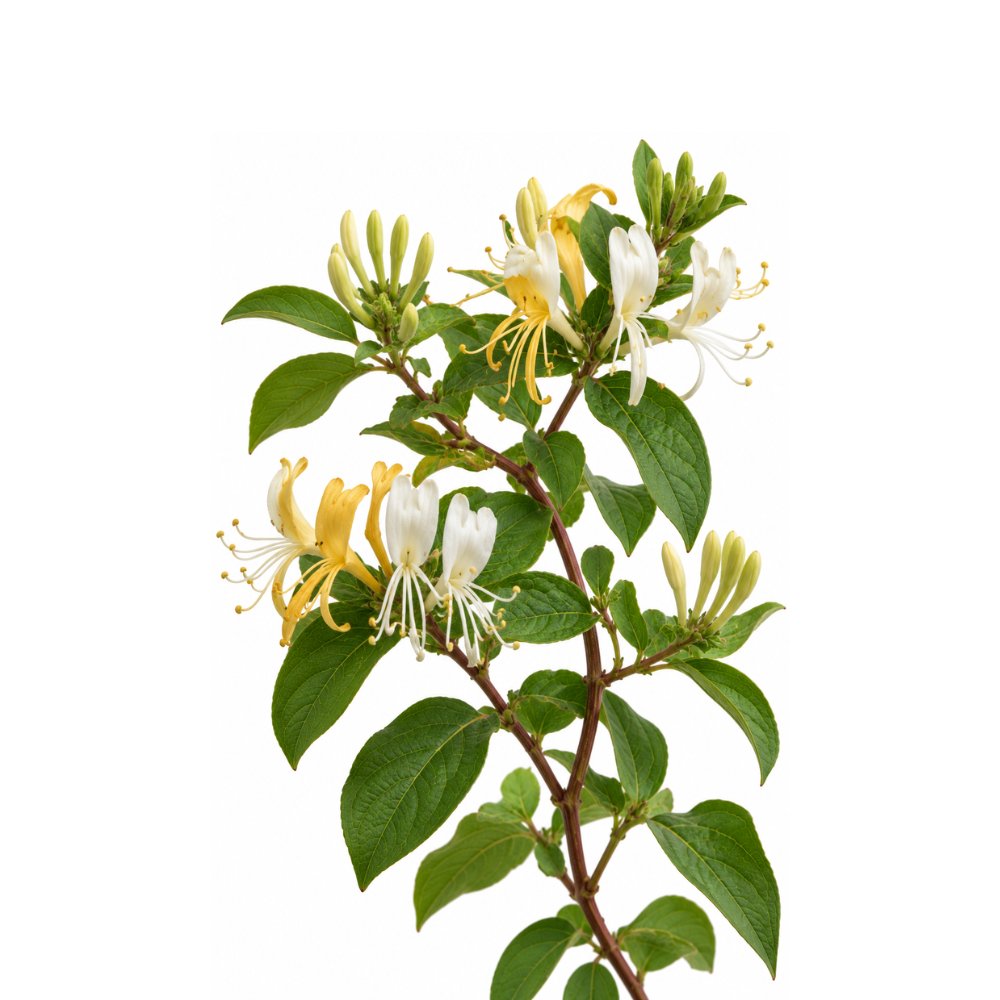 Source Honeysuckle Lonicera japonica Herb monograph →
Concentration
Content by Source
Concentrations not reported. No percent-dry-weight or mg/g figures have been published for this compound in its source plants.
Loganin at a Glance
Loganin is an iridoid glucoside and one of the most consequential small molecules in plant biochemistry — not for what it does in people, but for what it becomes in the plant. It is the immediate precursor of secologanin, and that single conversion is the branch point from which two enormous classes of natural products diverge: the monoterpene indole alkaloids (strychnine, the Catharanthus anticancer alkaloids vinblastine and vincristine, quinine, camptothecin) and the secoiridoids (gentiopicroside, oleuropein and the bitter principles of gentian) 2Reference 2Indole alkaloid biosynthesis in Catharanthus roseus: new enzyme activities and identification of cytochrome P450 CYP72A1 as secologanin synthaseView study →.
As a molecule in its own right, loganin is best known as the quality-control marker of cornelian cherry (Cornus officinalis, shan zhu yu), a staple of traditional Chinese medicine 13Reference 13Quality evaluation based on color grading: quality discrimination of the Chinese medicine Corni Fructus by an E-eyeView study →. Around that marker role sits a broad but entirely preclinical pharmacology — anti-diabetic, neuroprotective, anti-inflammatory, cardioprotective and anti-osteoporotic effects, almost all in cell and rodent models 1,
Two honesty caveats run through the whole page. There are no clinical trials of isolated loganin: the human evidence for its source is for the whole herb and its formulas, not the purified molecule. And loganin has very low oral bioavailability — around 5% in rats, limited almost entirely by intestinal first-pass metabolism — which undercuts how much in-vitro potency can translate to an oral dose 14Reference 14AnimalDose-independent pharmacokinetics of loganin in rats: effect of intestinal first-pass metabolism on bioavailabilityView study →.
The Central Iridoid Precursor
The reason loganin matters biochemically is that it sits at a metabolic crossroads unmatched by most plant constituents. It is the last common iridoid glucoside before the pathway splits toward two of the most important alkaloid and glycoside families in medicine.
The route runs: geraniol → … → loganic acid → loganin → secologanin. Loganic acid is methylated to loganin by loganic acid O-methyltransferase (LAMT); loganin is then cleaved by secologanin synthase (CYP72A1) — a cytochrome P450 that performs an unusual oxidative opening of loganin’s cyclopentane ring — to give secologanin 2Reference 2Indole alkaloid biosynthesis in Catharanthus roseus: new enzyme activities and identification of cytochrome P450 CYP72A1 as secologanin synthaseView study →. Secologanin is then the hinge:
- Toward the monoterpene indole alkaloids. Secologanin condenses with tryptamine (from tryptophan) via strictosidine synthase to form strictosidine, the universal precursor from which thousands of monoterpene indole alkaloids are built — including strychnine, ajmalicine, quinine, camptothecin, and the Catharanthus roseus dimers vinblastine and vincristine 2Reference 2Indole alkaloid biosynthesis in Catharanthus roseus: new enzyme activities and identification of cytochrome P450 CYP72A1 as secologanin synthaseView study →.
- Toward the secoiridoids. Secologanin also feeds the secoiridoid branch — gentiopicroside, sweroside, swertiamarin and, further on, oleuropein — the intensely bitter constituents of gentian, Swertia, olive and other Gentianales.
So loganin is genuinely a hub molecule: a single iridoid glucoside standing immediately upstream of both the great alkaloid lineage of pharmacognosy and the bitter secoiridoid lineage. This is what makes it interesting far out of proportion to its own (modest, preclinical) pharmacology — most of the “activity” attributable to the loganin skeleton in nature is expressed after it has been transformed into something else.
Loganin in Diabetes & Neuroprotection
Loganin’s own pharmacology — as opposed to its biosynthetic descendants’ — clusters in two areas, both dominated by cornelian-cherry-derived research and both preclinical.
Diabetes and its complications are the largest strand. Loganin inhibits aldose reductase, the first enzyme of the polyol pathway implicated in diabetic complications, acting as a mixed-type inhibitor in kinetic and docking studies of Corni Fructus constituents 4Reference 4Kinetic and molecular docking studies of loganin and 7-O-galloyl-D-sedoheptulose from Corni Fructus as therapeutic agents for diabetic complications through inhibition of aldose reductaseView study →. In rodent models it improves several diabetic complications rather than glycaemia alone: it ameliorated painful diabetic neuropathy in streptozotocin–nicotinamide diabetic rats by improving oxidative stress, inflammation and insulin sensitivity 5Reference 5AnimalLoganin ameliorates painful diabetic neuropathy by modulating oxidative stress, inflammation and insulin sensitivity in streptozotocin-nicotinamide-induced diabetic ratsView study →, and protected Schwann cells from high-glucose injury by blocking ROS generation and NLRP3 inflammasome-driven pyroptosis 6Reference 6Loganin attenuates high glucose-induced Schwann cells pyroptosis by inhibiting ROS generation and NLRP3 inflammasome activationView study →. Its recurrent appearance in Cornus officinalis diabetic-nephropathy research (alongside its sibling morroniside) reflects the same anti-glycation, anti-inflammatory, aldose-reductase-inhibiting theme 3Reference 3ReviewLoganin and morroniside: therapeutic effects and molecular mechanisms in diabetes mellitus and its complications — a reviewView study →.
Neuroprotection is the second strand, and here the signal is unusually specific. Loganin inhibits acetylcholinesterase and reversed scopolamine-induced learning and memory deficits in mice — improving passive-avoidance, Y-maze and Morris-water-maze performance with measured AChE inhibition in the hippocampus and cortex 7,
The honest frame: this is a coherent preclinical dossier, mostly on the isolated molecule in rodents — a genuine attributional strength — but with no human isolate data and a poor-oral-bioavailability caveat that limits how far cell and high-dose findings translate 1,
What It's Used For
Loganin’s evidence base is broad, internally consistent and entirely preclinical. The load-bearing caveat is the compound-page discipline: no human trials of the isolate, and its very low oral bioavailability means in-vitro and high-dose rodent potency overreads what an oral dose delivers 1,
Support is an experimental score — weighted by study type (human > animal > in vitro) and volume. A beta, not a validated metric. There are no human isolate data, so scores stay modest by design.
Loganin’s largest strand, and squarely isolate work. It inhibits aldose reductase — the rate-limiting polyol-pathway enzyme in diabetic complications — as a mixed-type inhibitor in kinetic/docking studies of Corni Fructus constituents 4Reference 4Kinetic and molecular docking studies of loganin and 7-O-galloyl-D-sedoheptulose from Corni Fructus as therapeutic agents for diabetic complications through inhibition of aldose reductaseView study →.
In vivo (all rodent), the isolated compound ameliorated painful diabetic neuropathy in streptozotocin–nicotinamide diabetic rats via reduced oxidative stress and inflammation and improved insulin sensitivity 5Reference 5AnimalLoganin ameliorates painful diabetic neuropathy by modulating oxidative stress, inflammation and insulin sensitivity in streptozotocin-nicotinamide-induced diabetic ratsView study →, and protected Schwann cells from high-glucose pyroptosis by suppressing ROS and NLRP3 inflammasome activation 6Reference 6Loganin attenuates high glucose-induced Schwann cells pyroptosis by inhibiting ROS generation and NLRP3 inflammasome activationView study →; the Cornus officinalis diabetic-nephropathy literature repeatedly names loganin and morroniside as the active iridoids 3Reference 3ReviewLoganin and morroniside: therapeutic effects and molecular mechanisms in diabetes mellitus and its complications — a reviewView study →.
Gap: all rodent/cell, no human isolate trials; the human anti-diabetic evidence for its source is the whole herb / formula, and poor oral bioavailability limits achievable exposure 1,
A mechanistically tight isolate signal. Loganin inhibits acetylcholinesterase in the hippocampus and frontal cortex and reversed scopolamine-induced deficits across passive-avoidance, Y-maze and Morris-water-maze tests in mice 7,
Gap: rodent only, largely acute scopolamine-challenge paradigms; no human data, and central exposure of an orally poorly-absorbed glucoside is unquantified 7,
The shared engine under the rest rather than a standalone use. In LPS-stimulated RAW264.7 macrophages, loganin cut nitric oxide, PGE₂ and pro-inflammatory cytokines and activated Nrf2/HO-1 while abolishing ROS 10Reference 10Loganin inhibits lipopolysaccharide-induced inflammation and oxidative response through the activation of the Nrf2/HO-1 signaling pathway in RAW264.7 macrophagesView study →; the same antioxidant/anti-inflammatory core (Nrf2, NF-κB) surfaces in its diabetic, cardiac and bone models 1Reference 1ReviewPhytochemistry, synthesis, analytical methods, pharmacological activity, and pharmacokinetics of loganin: a comprehensive reviewView study →.
Gap: in-vitro/rodent signaling readouts, not a validated human antioxidant effect; effect sizes depend on concentrations well above what oral loganin achieves 1,
A single but coherent model. Loganin inhibited angiotensin-II-induced cardiac hypertrophy in H9C2 cardiomyocytes and in mice, attenuating fibrosis and pro-inflammatory cytokines by suppressing phosphorylation of JAK2/STAT3 and the NF-κB axis (p65, IκBα) 11Reference 11Loganin inhibits angiotensin II-induced cardiac hypertrophy through the JAK2/STAT3 and NF-κB signaling pathwaysView study →.
Gap: one study, one injury model, no replication and no human data 11Reference 11Loganin inhibits angiotensin II-induced cardiac hypertrophy through the JAK2/STAT3 and NF-κB signaling pathwaysView study →.
A small bone thread that fits cornelian cherry’s traditional “kidney-tonic” use. Loganin promoted osteoblast differentiation and suppressed osteoclast differentiation, raised the serum OPG/RANKL ratio, and prevented ovariectomy-induced loss of bone mineral density and microarchitecture in mice 12Reference 12In vitroEffects of loganin on bone formation and resorption in vitro and in vivoView study →.
Gap: rodent/cell only, single-program evidence, no human data 12Reference 12In vitroEffects of loganin on bone formation and resorption in vitro and in vivoView study →.
Mechanisms
| Target / pathway | Effect | Relevant to |
|---|---|---|
| Aldose reductase (polyol pathway) | mixed-type inhibition | anti-diabetic complications |
| NLRP3 inflammasome; ROS | suppressed → less pyroptosis | diabetic neuropathy (Schwann cells) |
| Acetylcholinesterase | inhibited (hippocampus, cortex) | neuroprotective / anti-amnesic |
| Hippocampal long-term potentiation | restored under cholinergic blockade | memory / synaptic plasticity |
| Nrf2 / HO-1 | activated (antioxidant/cytoprotective) | anti-inflammatory; cardio; bone |
| NF-κB (p65/IκBα); JAK2/STAT3 | suppressed | anti-inflammatory; cardioprotective |
| OPG/RANKL ratio; osteoblast vs osteoclast differentiation | OPG/RANKL ↑; osteogenesis favoured | anti-osteoporotic |
| LAMT → loganin → secologanin synthase (CYP72A1) | biosynthetic conversion (in planta) | the precursor role — not human pharmacology |
The reproduced core is an antioxidant/anti-inflammatory program (Nrf2, NF-κB) plus two specific enzyme actions — aldose-reductase and acetylcholinesterase inhibition — that give the diabetic-complication and anti-amnesic strands their identity. The biosynthetic row is plant biochemistry, off the human-pharmacology axis.
Pharmacokinetics
Loganin is a hydrophilic iridoid glucoside with very low oral bioavailability. A dedicated rat study reports an absolute oral bioavailability of only ~4.87% across a 20–200 mg/kg dose range (dose-independent AUC), and pins the cause almost entirely on intestinal first-pass metabolism — the AUC fell ~90.6% between intraportal and intraduodenal dosing, while the hepatic first-pass contribution was small 14Reference 14AnimalDose-independent pharmacokinetics of loganin in rats: effect of intestinal first-pass metabolism on bioavailabilityView study →. The comprehensive review reaches the same conclusion: poor absorption and extensive first-pass handling are the defining PK feature, and formulation is an active research problem 1Reference 1ReviewPhytochemistry, synthesis, analytical methods, pharmacological activity, and pharmacokinetics of loganin: a comprehensive reviewView study →. The practical consequence is the standard iridoid-glucoside caveat — micromolar in-vitro potency and high rodent doses substantially overstate what an oral human exposure would deliver, and the molecule is better understood as the water-soluble, poorly-absorbed marker of a whole-herb effect than as a stand-alone oral drug 1,
Clinical Trials
There are no controlled trials of isolated loganin. Its human footprint is entirely indirect, through the whole cornelian-cherry fruit (shan zhu yu) and multi-herb formulas — most famously Liu Wei Di Huang Wan — where loganin is one of several actives and serves as a standardization marker, not the tested agent 1,
| Completed | Planned | Terminated | Preclinical |
|---|---|---|---|
| —(none, isolate; human data belong to whole Cornus officinalis / formulas) | — | — | Broad(anti-diabetic-led; neuroprotective, anti-inflammatory, cardio, bone) |
Last checked: July 2026.
Isolate vs. Plant Studies
The split is clean and, on the mechanism side, favourable. Loganin’s pharmacology is overwhelmingly the isolated molecule — aldose-reductase kinetics 4Reference 4Kinetic and molecular docking studies of loganin and 7-O-galloyl-D-sedoheptulose from Corni Fructus as therapeutic agents for diabetic complications through inhibition of aldose reductaseView study →, the diabetic-neuropathy and Schwann-cell studies 5,
The human evidence inverts this: it belongs to the whole herb. Cornelian cherry (shan zhu yu) is used clinically as a fruit and inside formulas such as Liu Wei Di Huang Wan, where loganin is a quality marker quantified for batch consistency rather than the demonstrated active 1,
Its Role in Plants
In the plant, loganin plays two roles at once. As an iridoid glucoside it belongs to a class of bitter, deterrent compounds whose ecological function is chemical defence — stored inert as the glucoside and mobilised on tissue damage. But loganin’s distinctive role is biosynthetic: it is the committed intermediate on the route from geraniol to secologanin, and hence the gateway to the plant’s monoterpene indole alkaloids and secoiridoids (see The Central Iridoid Precursor) 2Reference 2Indole alkaloid biosynthesis in Catharanthus roseus: new enzyme activities and identification of cytochrome P450 CYP72A1 as secologanin synthaseView study →. In alkaloid-producing species such as Catharanthus roseus, the enzymes that make and consume loganin (LAMT and the secologanin synthase CYP72A1) are localised to specific leaf tissues, part of the tightly compartmentalised machinery of alkaloid production 2Reference 2Indole alkaloid biosynthesis in Catharanthus roseus: new enzyme activities and identification of cytochrome P450 CYP72A1 as secologanin synthaseView study →.
As always, a molecule’s role in plant metabolism is plant biology, not human pharmacology, and does not predict what it does as a medicine.
Prevalence in Nature
Loganin is a widespread iridoid glucoside across the Gentianales and neighbouring lineages, but its headline source is cornelian cherry (Cornus officinalis, Cornaceae) — the fruit Corni Fructus / shan zhu yu, in which loganin is the principal iridoid and the pharmacopoeial quality-control marker used to authenticate and standardize the herb 13Reference 13Quality evaluation based on color grading: quality discrimination of the Chinese medicine Corni Fructus by an E-eyeView study →. Beyond Cornus it occurs in Strychnos (the nux-vomica lineage, from whose family — Loganiaceae — loganin takes its name), gentian (Gentiana spp.) and other Gentianaceae, honeysuckle (Lonicera) flower (Flos Lonicerae), bogbean (Menyanthes trifoliata), and alkaloid-producing genera such as Uncaria and Catharanthus, where it is consumed as a biosynthetic intermediate 1,
Absolute content is rarely reported as a clean % dry weight and varies widely with species, plant part, ripeness and (for cornelian cherry) processing — raw versus wine-steamed Corni Fructus differ measurably in iridoid content 13Reference 13Quality evaluation based on color grading: quality discrimination of the Chinese medicine Corni Fructus by an E-eyeView study →. A reliable cross-source concentration ranking therefore does not exist here and is tracked as a gap rather than asserted.
Discovery & Synthesis
Loganin is a nineteenth-century iridoid whose name traces to the Loganiaceae — the plant family named after the botanist and colonial administrator James Logan — reflecting its early isolation from Strychnos/Logania relatives. Its structure, and its pivotal position in monoterpenoid and alkaloid biosynthesis, were settled through mid-twentieth-century natural-product chemistry and radiotracer (isotopic labelling) studies that traced the geraniol → loganin → secologanin → strictosidine route to the indole alkaloids 2Reference 2Indole alkaloid biosynthesis in Catharanthus roseus: new enzyme activities and identification of cytochrome P450 CYP72A1 as secologanin synthaseView study →. Total synthesis of loganin has been reported in the natural-product literature (the loganin/iridoid skeleton has been a recurring synthetic target since the 1970s), but synthesis is not the supply route: research-grade loganin is obtained by extraction from loganin-rich plants, chiefly Cornus officinalis fruit, because the molecule is relatively abundant there and its glucoside chemistry makes isolation far more practical than total synthesis.
Patents: not yet researched.
Toxicity & Safety
Loganin reads as a low-toxicity iridoid glucoside — it is the marker constituent of a fruit (shan zhu yu) eaten and decocted for centuries and taken inside widely-used formulas, and preclinical studies report no acute toxicity signal at the doses used, including a cardiac-hypertrophy study that noted no significant toxicity to normal cells or organs 1,
- A long-used dietary/medicinal-plant iridoid. The quality marker of cornelian cherry (shan zhu yu) and a constituent of long-used TCM formulas, with no acute toxicity signal in rodent studies 1,
13Reference 1ReviewPhytochemistry, synthesis, analytical methods, pharmacological activity, and pharmacokinetics of loganin: a comprehensive reviewView study →Reference 13Quality evaluation based on color grading: quality discrimination of the Chinese medicine Corni Fructus by an E-eyeView study → . - Real-world exposure is whole-herb and low. People meet loganin as a fruit/formula constituent, not as a concentrated isolate, and its oral absorption is poor (~5% in rats) 14Reference 14AnimalDose-independent pharmacokinetics of loganin in rats: effect of intestinal first-pass metabolism on bioavailabilityView study →.
- No comprehensive isolate toxicology. No definitive LD50, genotoxicity or repeat-dose package for the pure compound; safety is inferred from the whole herb, not established for the molecule 1Reference 1ReviewPhytochemistry, synthesis, analytical methods, pharmacological activity, and pharmacokinetics of loganin: a comprehensive reviewView study →.
- In-vitro potency overreads oral exposure. Very low bioavailability and heavy intestinal first-pass metabolism limit how far cell/high-dose findings translate 14Reference 14AnimalDose-independent pharmacokinetics of loganin in rats: effect of intestinal first-pass metabolism on bioavailabilityView study →.
Full Safety & Interactions Detail
Loganin carries a low flag. It is the principal iridoid and pharmacopoeial marker of cornelian cherry (Cornus officinalis, shan zhu yu), a fruit with a long dietary and medicinal history, and it is a constituent of extensively-used multi-herb formulas such as Liu Wei Di Huang Wan; rodent efficacy studies report no acute toxicity signal at the doses used, and at least one in-vivo study explicitly noted no significant organ toxicity 1,
The caveats are evidentiary rather than observed harms. First, there is no comprehensive isolate toxicology — no definitive LD50, genotoxicity or repeat-dose organ-toxicity dataset for pure loganin — so its safety is inferred from the whole herb, not demonstrated for the molecule 1Reference 1ReviewPhytochemistry, synthesis, analytical methods, pharmacological activity, and pharmacokinetics of loganin: a comprehensive reviewView study →.
Second, formal drug-interaction data are sparse: no specific CYP-inhibition or transporter-interaction profile is established for loganin here, so interaction potential is uncharacterised rather than absent, and a scope note is warranted. Third, very low oral bioavailability (~4.87% in rats, dominated by intestinal first-pass metabolism) both limits real-world isolate exposure and means high-dose or parenteral preclinical findings do not transfer cleanly to oral use 14Reference 14AnimalDose-independent pharmacokinetics of loganin in rats: effect of intestinal first-pass metabolism on bioavailabilityView study →.
Reproductive note (prose only). No dedicated reproductive- or developmental-toxicity dataset exists for isolated loganin. Any pregnancy/lactation caution around loganin-containing herbs (cornelian cherry, gentian, honeysuckle, and especially the alkaloid-rich Strychnos) belongs to the source herb and its actives, and is a decision made on the herb or product page where intake is decided — not on this molecule page.
Dosage
There is no established or recommended human dose for isolated loganin — it has never been given to people as an isolate for therapy. Cited figures are preclinical research doses: micromolar concentrations in vitro, and roughly tens to ~100 mg/kg in rodents (often above achievable oral exposure given ~4.87% oral bioavailability) 5,
References
- Zhang F, et al. (2022). Phytochemistry, synthesis, analytical methods, pharmacological activity, and pharmacokinetics of loganin: a comprehensive review. Phytotherapy Research. https://pubmed.ncbi.nlm.nih.gov/35583806/
- Irmler S, et al. (2000). Indole alkaloid biosynthesis in Catharanthus roseus: new enzyme activities and identification of cytochrome P450 CYP72A1 as secologanin synthase. The Plant Journal. https://pubmed.ncbi.nlm.nih.gov/11135113/
- Jiang W, et al. (2025). Loganin and morroniside: therapeutic effects and molecular mechanisms in diabetes mellitus and its complications — a review. European Journal of Pharmacology. https://pubmed.ncbi.nlm.nih.gov/40714074/
- Lee CM, et al. (2015). Kinetic and molecular docking studies of loganin and 7-O-galloyl-D-sedoheptulose from Corni Fructus as therapeutic agents for diabetic complications through inhibition of aldose reductase. Archives of Pharmacal Research. https://pubmed.ncbi.nlm.nih.gov/25315636/
- Cheng YC, et al. (2021). Loganin ameliorates painful diabetic neuropathy by modulating oxidative stress, inflammation and insulin sensitivity in streptozotocin-nicotinamide-induced diabetic rats. Cells. https://pubmed.ncbi.nlm.nih.gov/34685668/
- Cheng YC, et al. (2020). Loganin attenuates high glucose-induced Schwann cells pyroptosis by inhibiting ROS generation and NLRP3 inflammasome activation. Cells. https://pubmed.ncbi.nlm.nih.gov/32842536/
- Kwon SH, et al. (2009). Loganin improves learning and memory impairments induced by scopolamine in mice. European Journal of Pharmacology. https://pubmed.ncbi.nlm.nih.gov/19666019/
- Lee KY, et al. (2009). Cognitive-enhancing activity of loganin isolated from Cornus officinalis in scopolamine-induced amnesic mice. Archives of Pharmacal Research. https://pubmed.ncbi.nlm.nih.gov/19471881/
- Hwang ES, et al. (2017). Loganin enhances long-term potentiation and recovers scopolamine-induced learning and memory impairments. Physiology & Behavior. https://pubmed.ncbi.nlm.nih.gov/28069458/
- Park C, et al. (2021). Loganin inhibits lipopolysaccharide-induced inflammation and oxidative response through the activation of the Nrf2/HO-1 signaling pathway in RAW264.7 macrophages. Biological & Pharmaceutical Bulletin. https://pubmed.ncbi.nlm.nih.gov/34078820/
- Xu JJ, et al. (2021). Loganin inhibits angiotensin II-induced cardiac hypertrophy through the JAK2/STAT3 and NF-κB signaling pathways. Frontiers in Pharmacology. https://pubmed.ncbi.nlm.nih.gov/34194329/
- Lee CG, et al. (2022). Effects of loganin on bone formation and resorption in vitro and in vivo. International Journal of Molecular Sciences. https://pubmed.ncbi.nlm.nih.gov/36430605/
- Cui YX, et al. (2019). Quality evaluation based on color grading: quality discrimination of the Chinese medicine Corni Fructus by an E-eye. Scientific Reports. https://pubmed.ncbi.nlm.nih.gov/31740693/
- Park HJ, Bae SH, Kim SH (2021). Dose-independent pharmacokinetics of loganin in rats: effect of intestinal first-pass metabolism on bioavailability. Journal of Pharmaceutical Investigation. https://doi.org/10.1007/s40005-021-00546-8



