
Materia Medica
Gentian
Gentiana lutea
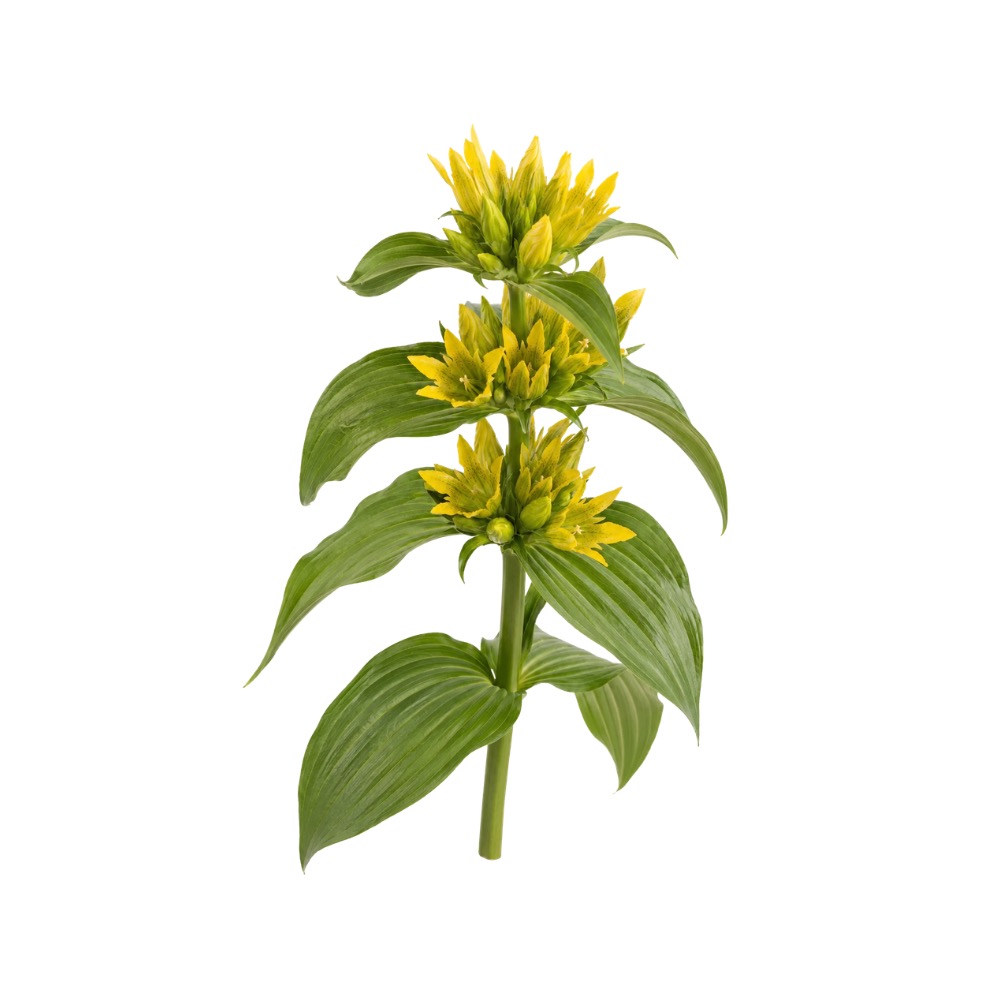
Gentian is a tall yellow-flowered mountain plant of central and southern Europe whose root is the classic bitter of Western herbal medicine. The root's bitter compounds, gentiopicroside and amarogentin, are taken before meals to stimulate appetite and digestion.
What Is Gentian?
Gentian is the root of Gentiana lutea, the classic bitter of Western herbal medicine. It is taken before meals to stimulate appetite and ease indigestion, and it gives many European aperitifs and liqueurs their bitterness 38,
The plant is a long-lived perennial of the mountains of central and southern Europe, growing in alpine and subalpine pastures 39,
The root’s bitterness comes from secoiridoid glycosides, chiefly gentiopicroside and the intensely bitter amarogentin 39Reference 39ReviewAssessment report on Gentiana lutea L., radix, Revision 1 (EMA/HMPC/607863/2017) — regulatory review. https://www.ema.europa.eu/en/documents/herbal-report/assessment-report-gentiana-lutea-l-radix-revision-1_en.pdfView study →. Laboratory and animal studies have explored anti-inflammatory, liver-protective and antioxidant effects, but no controlled trial has tested gentian on its own for digestion 39Reference 39ReviewAssessment report on Gentiana lutea L., radix, Revision 1 (EMA/HMPC/607863/2017) — regulatory review. https://www.ema.europa.eu/en/documents/herbal-report/assessment-report-gentiana-lutea-l-radix-revision-1_en.pdfView study →.
Gentian can be mistaken for white hellebore (Veratrum album), a poisonous plant that grows in the same pastures. Gentian’s leaves grow in opposite pairs, while white hellebore’s are alternate 39Reference 39ReviewAssessment report on Gentiana lutea L., radix, Revision 1 (EMA/HMPC/607863/2017) — regulatory review. https://www.ema.europa.eu/en/documents/herbal-report/assessment-report-gentiana-lutea-l-radix-revision-1_en.pdfView study →.
How Is Gentian Used?
Gentian is used as the dried root, taken shortly before a meal.
- Root tea — the chopped root infused in boiling water.
- Tincture and liquid extract — taken about half an hour before eating 38Reference 38ReviewEuropean Union herbal monograph on Gentiana lutea L., radix, Revision 1 (EMA/HMPC/607861/2017) — regulatory monograph. https://www.ema.europa.eu/en/documents/herbal-monograph/european-herbal-monograph-gentiana-lutea-l-radix-revision-1_en.pdfView study →.
- Dry extract in capsules or tablets — taken about an hour before eating 38Reference 38ReviewEuropean Union herbal monograph on Gentiana lutea L., radix, Revision 1 (EMA/HMPC/607861/2017) — regulatory monograph. https://www.ema.europa.eu/en/documents/herbal-monograph/european-herbal-monograph-gentiana-lutea-l-radix-revision-1_en.pdfView study →.
- Aperitifs and bitters — the root is a flavouring of European liqueurs and bitter drinks 6,
41Reference 6Phytochemical profiling and anti-inflammatory activity of Gentiana lutea roots — ex vivoView study →Reference 41Gentiana lutea LView study → .
For more on how bitters are taken, see Bitter Herbs: What Are They & How Do I Use Them?.
Traditional Uses
Western Herbal Medicine
Gentian root is the standard bitter tonic of European herbal medicine. It is given for poor appetite, indigestion, flatulence and bloating 39Reference 39ReviewAssessment report on Gentiana lutea L., radix, Revision 1 (EMA/HMPC/607863/2017) — regulatory review. https://www.ema.europa.eu/en/documents/herbal-report/assessment-report-gentiana-lutea-l-radix-revision-1_en.pdfView study →.
It is taken before meals, as a tea, tincture or extract 38Reference 38ReviewEuropean Union herbal monograph on Gentiana lutea L., radix, Revision 1 (EMA/HMPC/607861/2017) — regulatory monograph. https://www.ema.europa.eu/en/documents/herbal-monograph/european-herbal-monograph-gentiana-lutea-l-radix-revision-1_en.pdfView study →. The same root flavours regional aperitifs and liqueurs, especially in central Italy 6Reference 6Phytochemical profiling and anti-inflammatory activity of Gentiana lutea roots — ex vivoView study →.
It is also used as a tonic for the liver and bile flow.
The leaves have a separate folk use: they were smoked for angina pectoris 35Reference 35In vitroSmoking of Gentiana lutea leaves: validation of its traditional use — in vitroView study →. The root has a little-known traditional use for respiratory complaints 7Reference 7In vitroSafety and anti-inflammatory activity of Gentiana lutea L. in human bronchial epithelial cells — in vitroView study →.
Indications
- Loss of appetite [root; European traditional use]
- Indigestion and mild stomach complaints [root; European traditional use] Caution: No controlled trial has tested gentian on its own. The one clinical study was open and uncontrolled: 205 people with indigestion took a dry root extract for 15 days and most reported improvement 39.
- Flatulence and bloating [root; European traditional use]
- Sluggish bile flow [root; Western herbal medicine]
- Dry skin [root extract, applied to the skin]
Botany
Gentian is a robust herbaceous perennial in the gentian family (Gentianaceae). It usually grows 60–90 cm tall and occasionally reaches 1.8 m, from a single stout, upright stem 41Reference 41Gentiana lutea LView study →.
The leaves are broad, lance-shaped to elliptical, and 10–30 cm long by 4–12 cm wide. They grow in opposite pairs 39Reference 39ReviewAssessment report on Gentiana lutea L., radix, Revision 1 (EMA/HMPC/607863/2017) — regulatory review. https://www.ema.europa.eu/en/documents/herbal-report/assessment-report-gentiana-lutea-l-radix-revision-1_en.pdfView study →.
The flowers are yellow. Each corolla is split almost to the base into five to seven narrow lobes 39Reference 39ReviewAssessment report on Gentiana lutea L., radix, Revision 1 (EMA/HMPC/607863/2017) — regulatory review. https://www.ema.europa.eu/en/documents/herbal-report/assessment-report-gentiana-lutea-l-radix-revision-1_en.pdfView study →.
The main root is thick and can grow more than 1 m long and weigh up to 7 kg fresh 39Reference 39ReviewAssessment report on Gentiana lutea L., radix, Revision 1 (EMA/HMPC/607863/2017) — regulatory review. https://www.ema.europa.eu/en/documents/herbal-report/assessment-report-gentiana-lutea-l-radix-revision-1_en.pdfView study →. This root is the part harvested for medicine.
Distribution
Gentian grows in the mountains of central and southern Europe, east to Turkey 41Reference 41Gentiana lutea LView study →. It grows wild in France, Spain and the Balkan mountains, among other ranges 39Reference 39ReviewAssessment report on Gentiana lutea L., radix, Revision 1 (EMA/HMPC/607863/2017) — regulatory review. https://www.ema.europa.eu/en/documents/herbal-report/assessment-report-gentiana-lutea-l-radix-revision-1_en.pdfView study →.
It favours grassy alpine and subalpine pastures, marshy ground and stony places, usually on limestone soils, at elevations up to about 2,500 m 39,
Wild gentian has long been dug for its root, for both liqueurs and medicines 41Reference 41Gentiana lutea LView study →. It is assessed as Least Concern on the IUCN Red List for Europe as a whole, but it is listed as threatened on several national red lists, and over-harvesting of the root is the main threat 41Reference 41Gentiana lutea LView study →. The species is listed in Annex V of the EU Habitats Directive, which regulates collection from the wild 42Reference 42Predicting the consequences of global warming on Gentiana lutea germination at the edge of its distributional and ecological range — seed biologyView study →.
Because the wild plant is protected, most medicinal gentian root is cultivated, mainly in Germany and France 39Reference 39ReviewAssessment report on Gentiana lutea L., radix, Revision 1 (EMA/HMPC/607863/2017) — regulatory review. https://www.ema.europa.eu/en/documents/herbal-report/assessment-report-gentiana-lutea-l-radix-revision-1_en.pdfView study →. The root takes several years to reach a useful size. When buying gentian root, it is worth checking that it comes from cultivated plants.
Growing Conditions
Cultivation snapshot for Gentian
Grow it yourself
Farm Wiki is our cultivation-focused sister site, also run by Justin Cooke.
Pharmacology & Research
Gentian’s use for loss of appetite and indigestion rests on long traditional use. The European Medicines Agency found no controlled clinical trials; its assessment drew on one open observational study and on animal and laboratory work 39Reference 39ReviewAssessment report on Gentiana lutea L., radix, Revision 1 (EMA/HMPC/607863/2017) — regulatory review. https://www.ema.europa.eu/en/documents/herbal-report/assessment-report-gentiana-lutea-l-radix-revision-1_en.pdfView study →.
The accepted mechanism is reflexive. Bitter compounds stimulate the taste nerves of the mouth, which increases the secretion of gastric juice and bile. The European assessment also noted evidence for a direct local effect in the stomach 39Reference 39ReviewAssessment report on Gentiana lutea L., radix, Revision 1 (EMA/HMPC/607863/2017) — regulatory review. https://www.ema.europa.eu/en/documents/herbal-report/assessment-report-gentiana-lutea-l-radix-revision-1_en.pdfView study →.
Beyond digestion, cell and animal studies report anti-inflammatory, liver-protective, antioxidant and metabolic effects. Much of this work used isolated gentiopicroside, and some of it used material from Asian Gentiana species 10,
-
Best-supported: stimulation of appetite and digestion, recognised by the European Medicines Agency on traditional use, with a mapped bitter-taste mechanism and one open study in 205 patients 38,
39Reference 38ReviewEuropean Union herbal monograph on Gentiana lutea L., radix, Revision 1 (EMA/HMPC/607861/2017) — regulatory monograph. https://www.ema.europa.eu/en/documents/herbal-monograph/european-herbal-monograph-gentiana-lutea-l-radix-revision-1_en.pdfView study →Reference 39ReviewAssessment report on Gentiana lutea L., radix, Revision 1 (EMA/HMPC/607863/2017) — regulatory review. https://www.ema.europa.eu/en/documents/herbal-report/assessment-report-gentiana-lutea-l-radix-revision-1_en.pdfView study → ; anti-inflammatory activity of the root extract and of gentiopicroside across cell and animal models 6,7, .11, 14Reference 6Phytochemical profiling and anti-inflammatory activity of Gentiana lutea roots — ex vivoView study →Reference 7In vitroSafety and anti-inflammatory activity of Gentiana lutea L. in human bronchial epithelial cells — in vitroView study →Reference 11AnimalTherapeutic effects of gentiopicroside on adjuvant-induced arthritis in rats — animal modelView study →Reference 14AnimalGentiopicroside ameliorates sepsis-induced acute lung injury — animal modelView study → -
Emerging, worth watching: gentiopicroside in fatty-liver disease and liver fibrosis models 17,
18, ; topical root extract for skin barrier lipids, tested in two small human studies 30,19Reference 17AnimalGentiopicroside improves NASH and liver fibrosis by suppressing TLR4 and NLRP3 — animal modelView study →Reference 18AnimalGentiopicroside improves high-fat-diet NAFLD via serum metabolome and gut microbiome in mice — animal modelView study →Reference 19AnimalGentiopicroside improves non-alcoholic steatohepatitis by activating PPARα and suppressing HIF1 — animal modelView study → 32Reference 30In vitroThe herbal bitter drug Gentiana lutea modulates lipid synthesis in human keratinocytes in vitro and in vivoView study →Reference 32In vitroIn vitro, ex vivo and clinical approaches to evaluate the effect of Gentiana lutea extract on skin — clinicalView study → . -
Mechanistically thin: antimicrobial (flower and leaf extracts, in vitro only) 33Reference 33In vitroAntimicrobial activity of Gentiana lutea L. extracts — in vitroView study → and antidiabetic or anti-obesity effects (animal and cell studies) 27,
28Reference 27AnimalAntiobesity effects of Gentiana lutea extract on 3T3-L1 preadipocytes and high-fat-diet mice — animal modelView study →Reference 28In vitroInhibition of aldose reductase by Gentiana lutea extracts — in vitroView study → . - The caveat: no controlled trial has tested gentian on its own, and much of the liver and arthritis work used isolated gentiopicroside, sometimes from other Gentiana species.
Most of the non-digestive research uses isolated gentiopicroside rather than gentian root. Several of these studies took the compound from Gentiana scabra or G. macrophylla, and the doses given to animals are far above what a bitters dose of the root provides 12,
1. Digestive Stimulant (Bitter Secretagogue)
This is gentian’s defining action. Amarogentin has a bitterness value of 58 million, which makes it the most bitter substance known. The more abundant gentiopicroside has a bitterness value of 12,000 39Reference 39ReviewAssessment report on Gentiana lutea L., radix, Revision 1 (EMA/HMPC/607863/2017) — regulatory review. https://www.ema.europa.eu/en/documents/herbal-report/assessment-report-gentiana-lutea-l-radix-revision-1_en.pdfView study →.
Bitter compounds stimulate the taste nerves in the mouth, which increases the secretion of gastric juice and bile. The European assessment also found evidence of a direct effect in the stomach, which supports taking gentian as a capsule or tablet 39Reference 39ReviewAssessment report on Gentiana lutea L., radix, Revision 1 (EMA/HMPC/607863/2017) — regulatory review. https://www.ema.europa.eu/en/documents/herbal-report/assessment-report-gentiana-lutea-l-radix-revision-1_en.pdfView study →.
In animals, decoctions of four Siberian gentian species (not G. lutea) stimulated gastric acid, enzyme and mucus secretion 3Reference 3In vitroIridoids and flavonoids of four Siberian gentians: chemical profile and gastric stimulatory effect — animal/in vitroView study →.
A Brazilian combination product of chamomile, fennel and gentian reduced cisplatin-induced vomiting and relaxed the duodenum in rodents, but it did not change gastric secretion volume or acidity 4Reference 4AnimalGastrointestinal effects of a standardized Brazilian phytomedicine containing Gentiana lutea — animal modelView study →.
In an open, uncontrolled study, 205 patients with indigestion took a dry gentian root extract (about 576 mg a day, equivalent to 2.9 g of root) for 15 days. Symptoms improved by an average of 68%, and doctors rated the result excellent or good in 86% of patients 39Reference 39ReviewAssessment report on Gentiana lutea L., radix, Revision 1 (EMA/HMPC/607863/2017) — regulatory review. https://www.ema.europa.eu/en/documents/herbal-report/assessment-report-gentiana-lutea-l-radix-revision-1_en.pdfView study →.
Gap: no randomised controlled trial of gentian on its own for appetite loss or indigestion. The European Medicines Agency’s recognition rests on traditional use 38,
2. Anti-Inflammatory
Anti-inflammatory activity appears in both whole-root extracts and the main constituent.
A hydroalcoholic root extract made to mimic traditional Italian gentian liqueur lowered IL-6 and TNF-α and raised IL-10 in inflamed mouse colon tissue 6Reference 6Phytochemical profiling and anti-inflammatory activity of Gentiana lutea roots — ex vivoView study →.
An aqueous root extract lowered IL-6 and IL-8 in human Calu-3 bronchial epithelial cells without harming the cells 7Reference 7In vitroSafety and anti-inflammatory activity of Gentiana lutea L. in human bronchial epithelial cells — in vitroView study →.
In mice with experimental osteoarthritis, a mixture of Prunella vulgaris and gentian extracts in an 8:2 ratio protected joint cartilage. Gentian extract on its own was tested only in cells, where it lowered COX-2 expression 8Reference 8In vitroAnti-osteoarthritic effects of Prunella vulgaris and Gentiana lutea in vitro and in vivo — animal modelView study →.
Gentiopicroside has been studied as a lead COX-2 inhibitor 13Reference 13In vitroSynthesis and anti-inflammatory activities of gentiopicroside derivatives (COX-2) — in vitro/animalView study →. It reduced arthritis severity in rats with adjuvant arthritis 11Reference 11AnimalTherapeutic effects of gentiopicroside on adjuvant-induced arthritis in rats — animal modelView study →, eased collagen-induced arthritis in mice through the CD147/p38/NF-κB pathway, using gentiopicroside from G. macrophylla 12Reference 12AnimalGentiopicroside attenuates collagen-induced arthritis in mice via CD147/p38/NF-κB — animal modelView study →, and reduced sepsis-induced lung injury in rats 14Reference 14AnimalGentiopicroside ameliorates sepsis-induced acute lung injury — animal modelView study →.
Gap: entirely preclinical. The strongest arthritis and lung data are for isolated gentiopicroside, at doses far above a bitters dose of the root.
3. Hepatoprotective
Gentian is used traditionally as a liver tonic.
In rats with liver injury from carbon tetrachloride, three days of an ethanolic extract of G. lutea subsp. symphyandra root restored the reduced bile flow. A single dose had no effect 2Reference 2AnimalCholeretic activity of Gentiana lutea ssp. symphyandra in rats — animal modelView study →.
The stronger data are for gentiopicroside. Given orally to mice, it reduced liver enzymes, lipid peroxidation and TNF-α in D-galactosamine/LPS liver failure 15Reference 15AnimalAnti-apoptotic activity of gentiopicroside in D-galactosamine/LPS-induced murine fulminant hepatic failure — animal modelView study →.
In diet-induced fatty liver disease in mice, it improved steatohepatitis and fibrosis by suppressing TLR4 and NLRP3 signalling 17Reference 17AnimalGentiopicroside improves NASH and liver fibrosis by suppressing TLR4 and NLRP3 — animal modelView study →, reduced weight gain, liver enzymes and triglycerides while changing the gut microbiome 18Reference 18AnimalGentiopicroside improves high-fat-diet NAFLD via serum metabolome and gut microbiome in mice — animal modelView study →, and acted through PPARα and HIF-1α 19Reference 19AnimalGentiopicroside improves non-alcoholic steatohepatitis by activating PPARα and suppressing HIF1 — animal modelView study →. The last of these studies used gentiopicroside from Gentiana scabra 19Reference 19AnimalGentiopicroside improves non-alcoholic steatohepatitis by activating PPARα and suppressing HIF1 — animal modelView study →.
In rats, the oral bioavailability of gentiopicroside was about 10% 16Reference 16AnimalGentiopicroside from Gentianae Radix and its pharmacokinetics in liver ischemia/reperfusion rats — animal modelView study →.
Gap: no human liver data. The fatty-liver and fibrosis results are for isolated gentiopicroside.
4. Antioxidant & Genoprotective
The root extract scavenges free radicals in DPPH and TEAC assays and slowed lipid oxidation in an oil-in-water emulsion 20Reference 20In vitroScreening of antioxidant activity of Gentiana lutea root in oil-in-water emulsions — in vitroView study →. Extracts also inhibited myeloperoxidase, an enzyme behind neutrophil-driven oxidative damage; among the isolated constituents, gentiopicroside was the strongest inhibitor 21Reference 21In vitroInhibition of myeloperoxidase and antioxidative activity of Gentiana lutea extracts — in vitroView study →.
G. lutea extracts also protect DNA. Root and leaf extracts reduced DNA damage from cooked-meat mutagens in HepG2 cells while supporting Nrf2 and glutathione 22Reference 22In vitroAntigenotoxic activity of Gentiana lutea extracts against food-borne mutagens — in vitroView study →. Extracts of laboratory-grown root and shoot limited UV-induced DNA damage 23Reference 23In vitroThe role of Gentiana lutea extracts in reducing UV-induced DNA damage — in vitroView study →.
Root extract also protected human blood mononuclear cells against gamma radiation 24Reference 24In vitroGentiana lutea root extract attenuates radiation-induced damage in human PBMCs — in vitroView study → and against the chemotherapy drug hydroxyurea 25Reference 25In vitroGentiana lutea root aqueous extract mitigates hydroxyurea-induced genotoxicity in human PBMCs — in vitroView study →.
All of this work is in vitro or in isolated human cells. None measured antioxidant effects after gentian was taken by mouth.
5. Metabolic (Antidiabetic / Antiobesity)
A G. lutea extract suppressed fat-cell formation in 3T3-L1 cells. In mice on a high-fat diet, 100 or 200 mg/kg a day for 12 weeks prevented weight gain and fatty liver 27Reference 27AnimalAntiobesity effects of Gentiana lutea extract on 3T3-L1 preadipocytes and high-fat-diet mice — animal modelView study →.
Root extracts inhibited aldose reductase, the enzyme behind several diabetic complications, and reduced sorbitol build-up in human red blood cells in high glucose. Docking studies point to amarogentin as a likely inhibitor 28Reference 28In vitroInhibition of aldose reductase by Gentiana lutea extracts — in vitroView study →.
In diabetic rats, a diet with 2% gentian root powder lowered blood cholesterol and reduced fat deposits and thickening in the aortic wall 9Reference 9AnimalGentiana lutea prevents endothelial inflammation and smooth-muscle migration in diabetic rats — animal modelView study →.
Two reviews collect the obesity, diabetes and vascular findings 26,
Gap: animal and cell studies only. No human trial has tested gentian for weight or blood sugar.
6. GI Antispasmodic
In a 2024 study, 50% hydroethanolic G. lutea root extracts relaxed isolated rat ileum and reduced both spontaneous and drug-induced contractions 5Reference 5AnimalSpasmolytic activity of Gentiana lutea L. root extracts on rat ileum — animal/ex vivoView study →.
The effect ran mainly through several types of potassium channel, including calcium-activated, ATP-sensitive and voltage-sensitive channels, together with effects on calcium channels 5Reference 5AnimalSpasmolytic activity of Gentiana lutea L. root extracts on rat ileum — animal/ex vivoView study →.
Gap: a single study on isolated rat tissue, with no whole-animal or human confirmation.
7. Dermatologic (Topical Skin Barrier)
Applied to the skin, gentian works through a different route from the digestive bitter. G. lutea extract increased lipid synthesis in human keratinocytes, and amarogentin binds the keratinocyte bitter receptors TAS2R1 and TAS2R38 30Reference 30In vitroThe herbal bitter drug Gentiana lutea modulates lipid synthesis in human keratinocytes in vitro and in vivoView study →. The extract also raised ceramide synthase 3 expression, including in psoriasis-like keratinocytes 31Reference 31In vitroGentiana lutea extract modulates ceramide synthesis in primary and psoriasis-like keratinocytes — in vitroView study →.
In a half-side comparison on the forearms of 33 volunteers, gentian extract increased skin lipid content compared with placebo 30Reference 30In vitroThe herbal bitter drug Gentiana lutea modulates lipid synthesis in human keratinocytes in vitro and in vivoView study →.
In 22 people, a cream with a gentiopicroside-rich extract (65% gentiopicroside) applied around the eyes twice daily for 14 days reduced upper-eyelid roughness and the redness of dark circles compared with placebo 32Reference 32In vitroIn vitro, ex vivo and clinical approaches to evaluate the effect of Gentiana lutea extract on skin — clinicalView study →.
Gap: two small, short topical studies, neither independently replicated.
8. Antimicrobial
Methanolic extracts of G. lutea flowers and leaves, and the isolated compounds mangiferin, isogentisin and gentiopicroside, inhibited a range of Gram-positive and Gram-negative bacteria and Candida albicans, with MIC values of 0.12–0.31 mg/mL. The authors attributed the effect to synergy among the compounds 33Reference 33In vitroAntimicrobial activity of Gentiana lutea L. extracts — in vitroView study →.
The tested material was flower and leaf, not root.
Gap: a single in-vitro study, with no animal or clinical data.
Mechanisms
Gentian’s secoiridoid glycosides, above all amarogentin, are among the most bitter compounds known. They act on bitter-taste receptors and taste nerves in the mouth, which increases gastric juice and bile secretion, and the same receptors occur on skin cells 30,
Gentiopicroside, the most abundant secoiridoid, has been studied for anti-inflammatory and liver-protective activity in cells and animals. Root extracts also show antioxidant and smooth-muscle-relaxing activity 5,
| Mechanism | Drives | Key compounds |
|---|---|---|
| Bitter-taste receptor activation → reflex secretion | digestive secretionappetiteskin-barrier lipids | amarogentin, gentiopicroside |
| NF-κB ↓, p38 MAPK ↓, COX-2 ↓ | anti-inflammatory | gentiopicroside |
| TLR4/NLRP3 ↓, PPARα ↑ | hepatoprotective (fatty liverfibrosis) | gentiopicroside |
| Free-radical scavenging, Nrf2 ↑, myeloperoxidase ↓ | antioxidantgenoprotective | gentiopicroside, mangiferin, root extract |
| Potassium-channel opening, calcium-channel effects | GI antispasmodic | root extract |
| Aldose-reductase inhibition, fat-cell formation ↓ | metabolic | amarogentin (docking), root extract |
Clinical Trials
No randomised controlled trial has tested gentian on its own for digestion. The published human data are an open observational study of 205 patients with indigestion 39Reference 39ReviewAssessment report on Gentiana lutea L., radix, Revision 1 (EMA/HMPC/607863/2017) — regulatory review. https://www.ema.europa.eu/en/documents/herbal-report/assessment-report-gentiana-lutea-l-radix-revision-1_en.pdfView study → and two small topical studies of the skin 30,
| Completed | Planned | Terminated | Preclinical |
|---|---|---|---|
| 2 | 1 | 0 | ~45 |
Last checked: July 2026.
Phytochemistry
Gentian root contains 2–8% bitter constituents, mostly in the outer cortex of the root. They are secoiridoid glycosides, led by gentiopicroside, with a smaller amount of amarogentin (0.025–0.4%). Swertiamarin and sweroside have also been reported 39Reference 39ReviewAssessment report on Gentiana lutea L., radix, Revision 1 (EMA/HMPC/607863/2017) — regulatory review. https://www.ema.europa.eu/en/documents/herbal-report/assessment-report-gentiana-lutea-l-radix-revision-1_en.pdfView study →.
Amarogentin has a bitterness value of 58 million, against 12,000 for gentiopicroside, so the small amount of amarogentin carries most of the taste 39Reference 39ReviewAssessment report on Gentiana lutea L., radix, Revision 1 (EMA/HMPC/607863/2017) — regulatory review. https://www.ema.europa.eu/en/documents/herbal-report/assessment-report-gentiana-lutea-l-radix-revision-1_en.pdfView study →. Loganin and secologanin are the precursors from which secoiridoids are built.
The root also contains up to 1% xanthones, including gentisin, isogentisin and gentioside, which give the root its yellow colour. Carbohydrates make up 30–55% of the dried root, among them the bitter sugar gentiobiose, and there is 0.1–0.2% volatile oil, which matters mainly for flavouring liqueurs 39Reference 39ReviewAssessment report on Gentiana lutea L., radix, Revision 1 (EMA/HMPC/607863/2017) — regulatory review. https://www.ema.europa.eu/en/documents/herbal-report/assessment-report-gentiana-lutea-l-radix-revision-1_en.pdfView study →. The flavone isovitexin 9Reference 9AnimalGentiana lutea prevents endothelial inflammation and smooth-muscle migration in diabetic rats — animal modelView study → and the alkaloid gentianine are also present.
The content changes with the season. Bitter compounds peak in spring and fall as sugars rise to a July maximum, and bitter content also increases with altitude 39Reference 39ReviewAssessment report on Gentiana lutea L., radix, Revision 1 (EMA/HMPC/607863/2017) — regulatory review. https://www.ema.europa.eu/en/documents/herbal-report/assessment-report-gentiana-lutea-l-radix-revision-1_en.pdfView study →.
The leaves carry the same bitter secoiridoids 37Reference 37In vitroLeaves of yellow gentian (Gentiana lutea) as an alternative source of bitter secoiridoids — in vitroView study →. In one comparison, the root extract was dominated by gentiopicroside and sweroside, and the leaf extract by homoorientin and isovitexin 22Reference 22In vitroAntigenotoxic activity of Gentiana lutea extracts against food-borne mutagens — in vitroView study →.
Gentiopicroside also occurs in the Asian gentians used in Chinese medicine, including G. scabra and G. macrophylla, and studies of the compound from those species should be read separately from studies of G. lutea root 12,
Constituent Summary
Amounts are for the dried root unless noted.
Secoiridoid4 compounds4 with data
Xanthone4 compounds3 with data
Flavonoid1 compoundno data
Alkaloid1 compoundno data
Phenolic Acid1 compoundno data
Carbohydrate1 compound1 with data
Dosage
Gentian is taken in small doses before meals: liquid preparations about half an hour before eating, and solid forms about an hour before 38Reference 38ReviewEuropean Union herbal monograph on Gentiana lutea L., radix, Revision 1 (EMA/HMPC/607861/2017) — regulatory monograph. https://www.ema.europa.eu/en/documents/herbal-monograph/european-herbal-monograph-gentiana-lutea-l-radix-revision-1_en.pdfView study →.
Research Doses
| Indication | Preparation | Dose | Est. dried-herb equivalent | Source |
|---|---|---|---|---|
| Indigestion (human, open study) | Dry root extract (4.4–5.5:1), 120 mg capsules | Average 576 mg a day for 15 days | ~2.9 g root a day | 39Reference 39ReviewAssessment report on Gentiana lutea L., radix, Revision 1 (EMA/HMPC/607863/2017) — regulatory review. https://www.ema.europa.eu/en/documents/herbal-report/assessment-report-gentiana-lutea-l-radix-revision-1_en.pdfView study → |
| Liver failure model (mouse) | Isolated gentiopicroside, oral | 40–80 mg/kg | — | 15Reference 15AnimalAnti-apoptotic activity of gentiopicroside in D-galactosamine/LPS-induced murine fulminant hepatic failure — animal modelView study → |
| Adjuvant arthritis (rat) | Isolated gentiopicroside | 30–90 mg/kg | — | 11Reference 11AnimalTherapeutic effects of gentiopicroside on adjuvant-induced arthritis in rats — animal modelView study → |
| Bile flow (rat) | Ethanolic root extract (ssp. symphyandra), intraduodenal | 500 mg/kg | — | 2Reference 2AnimalCholeretic activity of Gentiana lutea ssp. symphyandra in rats — animal modelView study → |
Traditional Dosage
These are the European Medicines Agency’s doses for adults 38Reference 38ReviewEuropean Union herbal monograph on Gentiana lutea L., radix, Revision 1 (EMA/HMPC/607861/2017) — regulatory monograph. https://www.ema.europa.eu/en/documents/herbal-monograph/european-herbal-monograph-gentiana-lutea-l-radix-revision-1_en.pdfView study →.
| System | Preparation | Dose |
|---|---|---|
| European traditional use | Chopped root as tea (0.6–2 g in 150 mL boiling water) | 1–3 times a day; 0.6–6 g root a day |
| European traditional use | Dry extract (4.5–5.5:1, 53% ethanol) | 240 mg, 2–3 times a day |
| European traditional use | Liquid extract (1:1, 45% ethanol) | 1 g, 2–4 times a day |
| European traditional use | Tincture (1:5, 70% ethanol) | 1 mL, 1–3 times a day |
Safety & Pregnancy
Gentian root has a long record of use as a digestive bitter. The European Medicines Agency’s 2018 monograph lists no known side effects and no reported interactions 38Reference 38ReviewEuropean Union herbal monograph on Gentiana lutea L., radix, Revision 1 (EMA/HMPC/607861/2017) — regulatory monograph. https://www.ema.europa.eu/en/documents/herbal-monograph/european-herbal-monograph-gentiana-lutea-l-radix-revision-1_en.pdfView study →.
- Long record of use. The 2018 European monograph lists no known side effects and no reported interactions 38Reference 38ReviewEuropean Union herbal monograph on Gentiana lutea L., radix, Revision 1 (EMA/HMPC/607861/2017) — regulatory monograph. https://www.ema.europa.eu/en/documents/herbal-monograph/european-herbal-monograph-gentiana-lutea-l-radix-revision-1_en.pdfView study →.
- Peptic ulcer. Gentian stimulates stomach acid. The 2009 European monograph ruled it out with a peptic ulcer; the 2018 revision no longer does 38,
40Reference 38ReviewEuropean Union herbal monograph on Gentiana lutea L., radix, Revision 1 (EMA/HMPC/607861/2017) — regulatory monograph. https://www.ema.europa.eu/en/documents/herbal-monograph/european-herbal-monograph-gentiana-lutea-l-radix-revision-1_en.pdfView study →Reference 40ReviewCommunity herbal monograph on Gentiana lutea L., radix, first version (EMEA/HMPC/578324/2008) — regulatory monograph (superseded). https://www.ema.europa.eu/en/documents/herbal-monograph/superseded-community-herbal-monograph-gentiana-lutea-l-radix-first-version_en.pdfView study → . - Gallstones and blocked bile ducts. Gentian increases bile flow, so it is usually avoided with gallstones or a blocked bile duct 2Reference 2AnimalCholeretic activity of Gentiana lutea ssp. symphyandra in rats — animal modelView study →.
- Not for children, pregnancy or breastfeeding. Safety has not been established 38Reference 38ReviewEuropean Union herbal monograph on Gentiana lutea L., radix, Revision 1 (EMA/HMPC/607861/2017) — regulatory monograph. https://www.ema.europa.eu/en/documents/herbal-monograph/european-herbal-monograph-gentiana-lutea-l-radix-revision-1_en.pdfView study →.
- A poisonous lookalike. Most recorded poisonings attributed to gentian were caused by white hellebore (Veratrum album) collected by mistake 39Reference 39ReviewAssessment report on Gentiana lutea L., radix, Revision 1 (EMA/HMPC/607863/2017) — regulatory review. https://www.ema.europa.eu/en/documents/herbal-report/assessment-report-gentiana-lutea-l-radix-revision-1_en.pdfView study →.
Full Safety & Interactions Detail
Side effects. In the 205-patient open study, 2.4% of patients reported an adverse event: flatulence, soft stools, stomach cramps, nausea and headache, each in a single patient 39Reference 39ReviewAssessment report on Gentiana lutea L., radix, Revision 1 (EMA/HMPC/607863/2017) — regulatory review. https://www.ema.europa.eu/en/documents/herbal-report/assessment-report-gentiana-lutea-l-radix-revision-1_en.pdfView study →. The 2009 European monograph listed headache as a possible side effect 40Reference 40ReviewCommunity herbal monograph on Gentiana lutea L., radix, first version (EMEA/HMPC/578324/2008) — regulatory monograph (superseded). https://www.ema.europa.eu/en/documents/herbal-monograph/superseded-community-herbal-monograph-gentiana-lutea-l-radix-first-version_en.pdfView study →.
Stomach acid and bile. Gentian works by raising gastric acid and bile secretion. The 2009 European monograph listed peptic ulcer as a contraindication 40Reference 40ReviewCommunity herbal monograph on Gentiana lutea L., radix, first version (EMEA/HMPC/578324/2008) — regulatory monograph (superseded). https://www.ema.europa.eu/en/documents/herbal-monograph/superseded-community-herbal-monograph-gentiana-lutea-l-radix-first-version_en.pdfView study →, and gentian is usually avoided with reflux or hyperacidity and with gallstones or a blocked bile duct. The 2018 revision lists only hypersensitivity to gentian root 38Reference 38ReviewEuropean Union herbal monograph on Gentiana lutea L., radix, Revision 1 (EMA/HMPC/607861/2017) — regulatory monograph. https://www.ema.europa.eu/en/documents/herbal-monograph/european-herbal-monograph-gentiana-lutea-l-radix-revision-1_en.pdfView study →.
Lookalike. White hellebore (Veratrum album) grows in the same mountain pastures and has caused most of the poisonings recorded under gentian. Its leaves are alternate, while gentian’s grow in opposite pairs 39Reference 39ReviewAssessment report on Gentiana lutea L., radix, Revision 1 (EMA/HMPC/607863/2017) — regulatory review. https://www.ema.europa.eu/en/documents/herbal-report/assessment-report-gentiana-lutea-l-radix-revision-1_en.pdfView study →.
Genotoxicity. Reproductive, genotoxicity and carcinogenicity tests have not been done on gentian root, and some of its xanthones tested positive in the Ames test 38Reference 38ReviewEuropean Union herbal monograph on Gentiana lutea L., radix, Revision 1 (EMA/HMPC/607861/2017) — regulatory monograph. https://www.ema.europa.eu/en/documents/herbal-monograph/european-herbal-monograph-gentiana-lutea-l-radix-revision-1_en.pdfView study →. Assessing gentian tincture as an animal-feed additive, EFSA found no concern for consumers or short-lived animals, but it could not conclude on long-lived and breeding animals because of the in-vitro genotoxicity of xanthones and gentiopicroside 36Reference 36ReviewSafety of a feed additive consisting of a tincture from the roots of Gentiana lutea — reviewView study →.
Interactions. None have been reported 38Reference 38ReviewEuropean Union herbal monograph on Gentiana lutea L., radix, Revision 1 (EMA/HMPC/607861/2017) — regulatory monograph. https://www.ema.europa.eu/en/documents/herbal-monograph/european-herbal-monograph-gentiana-lutea-l-radix-revision-1_en.pdfView study →. Because gentian raises stomach acid, it would in principle work against acid-suppressing medicines, though no such interaction has been measured.
Drug metabolism. In laboratory tests, gentiopicroside inhibited CYP2A6 but not CYP1A2, CYP2C9, CYP2D6 or CYP3A4, and did not induce drug-metabolising enzymes in human liver cells 43Reference 43In vitroIn vitro inhibition and induction of human liver cytochrome P450 enzymes by gentiopicroside: potent effect on CYP2A6 — in vitroView study →. In a liver cell line, amarogentin raised CYP3A4 expression 44Reference 44In vitroHepatoprotective activity of iridoids, seco-iridoids and analog glycosides from Gentianaceae on HepG2 cells via CYP3A4 induction and mitochondrial pathway — in vitroView study →. Neither finding has been tested in animals or people.
Children. Use under 18 is not recommended, for lack of data 38Reference 38ReviewEuropean Union herbal monograph on Gentiana lutea L., radix, Revision 1 (EMA/HMPC/607861/2017) — regulatory monograph. https://www.ema.europa.eu/en/documents/herbal-monograph/european-herbal-monograph-gentiana-lutea-l-radix-revision-1_en.pdfView study →.
Not recommended at medicinal doses. Safety in pregnancy and breastfeeding has not been established, and the European Medicines Agency advises against use during both 38Reference 38ReviewEuropean Union herbal monograph on Gentiana lutea L., radix, Revision 1 (EMA/HMPC/607861/2017) — regulatory monograph. https://www.ema.europa.eu/en/documents/herbal-monograph/european-herbal-monograph-gentiana-lutea-l-radix-revision-1_en.pdfView study →.
No reproductive toxicity or fertility studies have been done 38Reference 38ReviewEuropean Union herbal monograph on Gentiana lutea L., radix, Revision 1 (EMA/HMPC/607861/2017) — regulatory monograph. https://www.ema.europa.eu/en/documents/herbal-monograph/european-herbal-monograph-gentiana-lutea-l-radix-revision-1_en.pdfView study →.
References
- Ponticelli M, et al. (2023). The healing bitterness of Gentiana lutea L., phytochemistry and biological activities — a systematic review. Phytochemistry. https://pubmed.ncbi.nlm.nih.gov/36423749/
- Öztürk N, et al. (1998). Choleretic activity of Gentiana lutea ssp. symphyandra in rats — animal model. Phytomedicine. https://pubmed.ncbi.nlm.nih.gov/23195900/
- Olennikov DN, et al. (2015). Iridoids and flavonoids of four Siberian gentians: chemical profile and gastric stimulatory effect — animal/in vitro. Molecules. https://pubmed.ncbi.nlm.nih.gov/26506331/
- Silveira ES, et al. (2019). Gastrointestinal effects of a standardized Brazilian phytomedicine containing Gentiana lutea — animal model. Pathophysiology. https://pubmed.ncbi.nlm.nih.gov/31668916/
- Kitić N, et al. (2024). Spasmolytic activity of Gentiana lutea L. root extracts on rat ileum — animal/ex vivo. Plants (Basel). https://pubmed.ncbi.nlm.nih.gov/38337986/
- Falcone G, et al. (2025). Phytochemical profiling and anti-inflammatory activity of Gentiana lutea roots — ex vivo. J Ethnopharmacol. https://pubmed.ncbi.nlm.nih.gov/40818521/
- Wildhaber J, et al. (2026). Safety and anti-inflammatory activity of Gentiana lutea L. in human bronchial epithelial cells — in vitro. J Ethnopharmacol. https://pubmed.ncbi.nlm.nih.gov/41580168/
- Kim J, et al. (2022). Anti-osteoarthritic effects of Prunella vulgaris and Gentiana lutea in vitro and in vivo — animal model. Antioxidants (Basel). https://pubmed.ncbi.nlm.nih.gov/36670908/
- Kesavan R, et al. (2016). Gentiana lutea prevents endothelial inflammation and smooth-muscle migration in diabetic rats — animal model. Nutr Metab Cardiovasc Dis. https://pubmed.ncbi.nlm.nih.gov/26868432/
- Liu B, et al. (2024). Regulatory mechanisms of gentiopicroside on human diseases — review. Naunyn Schmiedebergs Arch Pharmacol. https://pubmed.ncbi.nlm.nih.gov/37632552/
- Xie X, et al. (2019). Therapeutic effects of gentiopicroside on adjuvant-induced arthritis in rats — animal model. Int Immunopharmacol. https://pubmed.ncbi.nlm.nih.gov/31487614/
- Jia N, et al. (2022). Gentiopicroside attenuates collagen-induced arthritis in mice via CD147/p38/NF-κB — animal model. Int Immunopharmacol. https://pubmed.ncbi.nlm.nih.gov/35598398/
- Zhang QL, et al. (2022). Synthesis and anti-inflammatory activities of gentiopicroside derivatives (COX-2) — in vitro/animal. Chin J Nat Med. https://pubmed.ncbi.nlm.nih.gov/35487601/
- Hu M, et al. (2024). Gentiopicroside ameliorates sepsis-induced acute lung injury — animal model. Can Respir J. https://pubmed.ncbi.nlm.nih.gov/39268525/
- Lian LH, et al. (2010). Anti-apoptotic activity of gentiopicroside in D-galactosamine/LPS-induced murine fulminant hepatic failure — animal model. Chem Biol Interact. https://pubmed.ncbi.nlm.nih.gov/20558151/
- Chang-Liao WL, et al. (2012). Gentiopicroside from Gentianae Radix and its pharmacokinetics in liver ischemia/reperfusion rats — animal model. J Ethnopharmacol. https://pubmed.ncbi.nlm.nih.gov/21855624/
- Yong Q, et al. (2024). Gentiopicroside improves NASH and liver fibrosis by suppressing TLR4 and NLRP3 — animal model. Biomed Pharmacother. https://pubmed.ncbi.nlm.nih.gov/38917754/
- Wang L, et al. (2023). Gentiopicroside improves high-fat-diet NAFLD via serum metabolome and gut microbiome in mice — animal model. Front Microbiol. https://pubmed.ncbi.nlm.nih.gov/37614606/
- Huang C, et al. (2024). Gentiopicroside improves non-alcoholic steatohepatitis by activating PPARα and suppressing HIF1 — animal model. Front Pharmacol. https://pubmed.ncbi.nlm.nih.gov/38515850/
- Azman NA, et al. (2014). Screening of antioxidant activity of Gentiana lutea root in oil-in-water emulsions — in vitro. Antioxidants (Basel). https://pubmed.ncbi.nlm.nih.gov/26784881/
- Nastasijević B, et al. (2012). Inhibition of myeloperoxidase and antioxidative activity of Gentiana lutea extracts — in vitro. J Pharm Biomed Anal. https://pubmed.ncbi.nlm.nih.gov/22521634/
- Cvetković S, et al. (2020). Antigenotoxic activity of Gentiana lutea extracts against food-borne mutagens — in vitro. Mutat Res Genet Toxicol Environ Mutagen. https://pubmed.ncbi.nlm.nih.gov/33198932/
- Cvetković S, et al. (2023). The role of Gentiana lutea extracts in reducing UV-induced DNA damage — in vitro. Mutagenesis. https://pubmed.ncbi.nlm.nih.gov/35253882/
- Kostić M, et al. (2026). Gentiana lutea root extract attenuates radiation-induced damage in human PBMCs — in vitro. Dose Response. https://pubmed.ncbi.nlm.nih.gov/41884402/
- Radošević K, et al. (2025). Gentiana lutea root aqueous extract mitigates hydroxyurea-induced genotoxicity in human PBMCs — in vitro. Arh Hig Rada Toksikol. https://pubmed.ncbi.nlm.nih.gov/41491976/
- Joksić G, et al. (2019). Potential of Gentiana lutea for the treatment of obesity-associated diseases — review. Curr Pharm Des. https://pubmed.ncbi.nlm.nih.gov/31538881/
- Park E, et al. (2020). Antiobesity effects of Gentiana lutea extract on 3T3-L1 preadipocytes and high-fat-diet mice — animal model. Molecules. https://pubmed.ncbi.nlm.nih.gov/32466183/
- Akileshwari C, et al. (2012). Inhibition of aldose reductase by Gentiana lutea extracts — in vitro. Exp Diabetes Res. https://pubmed.ncbi.nlm.nih.gov/22844269/
- Joksić G, et al. (2021). Effects of Gentiana lutea root on vascular diseases — review. Curr Vasc Pharmacol. https://pubmed.ncbi.nlm.nih.gov/32469702/
- Wölfle U, et al. (2017). The herbal bitter drug Gentiana lutea modulates lipid synthesis in human keratinocytes in vitro and in vivo. Int J Mol Sci. https://pubmed.ncbi.nlm.nih.gov/28829355/
- Gendrisch F, et al. (2020). Gentiana lutea extract modulates ceramide synthesis in primary and psoriasis-like keratinocytes — in vitro. Molecules. https://pubmed.ncbi.nlm.nih.gov/32316273/
- Berthon JY, et al. (2023). In vitro, ex vivo and clinical approaches to evaluate the effect of Gentiana lutea extract on skin — clinical. Int J Cosmet Sci. https://pubmed.ncbi.nlm.nih.gov/37365865/
- Šavikin K, et al. (2009). Antimicrobial activity of Gentiana lutea L. extracts — in vitro. Z Naturforsch C. https://pubmed.ncbi.nlm.nih.gov/19678535/
- Saha P, et al. (2006). Amarogentin reduces hyperproliferation via COX-II downregulation and apoptosis in a mouse skin carcinogenesis model — animal model. Cancer Lett. https://pubmed.ncbi.nlm.nih.gov/16517061/
- Janković T, et al. (2025). Smoking of Gentiana lutea leaves: validation of its traditional use — in vitro. J Pharm Biomed Anal. https://pubmed.ncbi.nlm.nih.gov/40378530/
- EFSA Panel (FEEDAP) (2023). Safety of a feed additive consisting of a tincture from the roots of Gentiana lutea — review. EFSA J. https://pubmed.ncbi.nlm.nih.gov/36846385/
- Fiorito S, et al. (2022). Leaves of yellow gentian (Gentiana lutea) as an alternative source of bitter secoiridoids — in vitro. J Nat Prod. https://pubmed.ncbi.nlm.nih.gov/36001997/
- European Medicines Agency, Committee on Herbal Medicinal Products (2018). European Union herbal monograph on Gentiana lutea L., radix, Revision 1 (EMA/HMPC/607861/2017) — regulatory monograph. https://www.ema.europa.eu/en/documents/herbal-monograph/european-herbal-monograph-gentiana-lutea-l-radix-revision-1_en.pdf
- European Medicines Agency, Committee on Herbal Medicinal Products (2018). Assessment report on Gentiana lutea L., radix, Revision 1 (EMA/HMPC/607863/2017) — regulatory review. https://www.ema.europa.eu/en/documents/herbal-report/assessment-report-gentiana-lutea-l-radix-revision-1_en.pdf
- European Medicines Agency, Committee on Herbal Medicinal Products (2009). Community herbal monograph on Gentiana lutea L., radix, first version (EMEA/HMPC/578324/2008) — regulatory monograph (superseded). https://www.ema.europa.eu/en/documents/herbal-monograph/superseded-community-herbal-monograph-gentiana-lutea-l-radix-first-version_en.pdf
- Useful Temperate Plants. Gentiana lutea L. — species database entry (habit, range, habitat, conservation). https://temperate.theferns.info/plant/Gentiana+lutea
- Cuena-Lombraña, A., Porceddu, M., Dettori, C. A., & Bacchetta, G. (2020). Predicting the consequences of global warming on Gentiana lutea germination at the edge of its distributional and ecological range — seed biology. PeerJ, 8, e8894. https://pubmed.ncbi.nlm.nih.gov/32411511/
- Deng Y, Wang L, Yang Y, et al. (2013). In vitro inhibition and induction of human liver cytochrome P450 enzymes by gentiopicroside: potent effect on CYP2A6 — in vitro. Drug Metab Pharmacokinet. https://pubmed.ncbi.nlm.nih.gov/23419353/
- Dai K, Yi XJ, Huang XJ, et al. (2018). Hepatoprotective activity of iridoids, seco-iridoids and analog glycosides from Gentianaceae on HepG2 cells via CYP3A4 induction and mitochondrial pathway — in vitro. Food Funct. https://pubmed.ncbi.nlm.nih.gov/29675530/



