
Compound Monograph
Mesembranol
Mesembranol is the fully reduced mesembrine-type alkaloid of kanna (Sceletium tortuosum) and one of the four alkaloids that define the standardised Zembrin® extract — but it is the least characterised of them. Its own pharmacology amounts to two isolate experiments: an anxiolytic-like effect in zebrafish, and a distinctive attenuation of AMPA-receptor transmission in rat hippocampal slices.

Sources · 5
Where Does It Come From?
Mesembranol is a naturally occurring mesembrine-type alkaloid (cis-3a-aryl-octahydroindole; the fully reduced c6 alcohol), found in Kanna, Ice plants and 3 other sources. It is well tolerated orally (low toxicity).
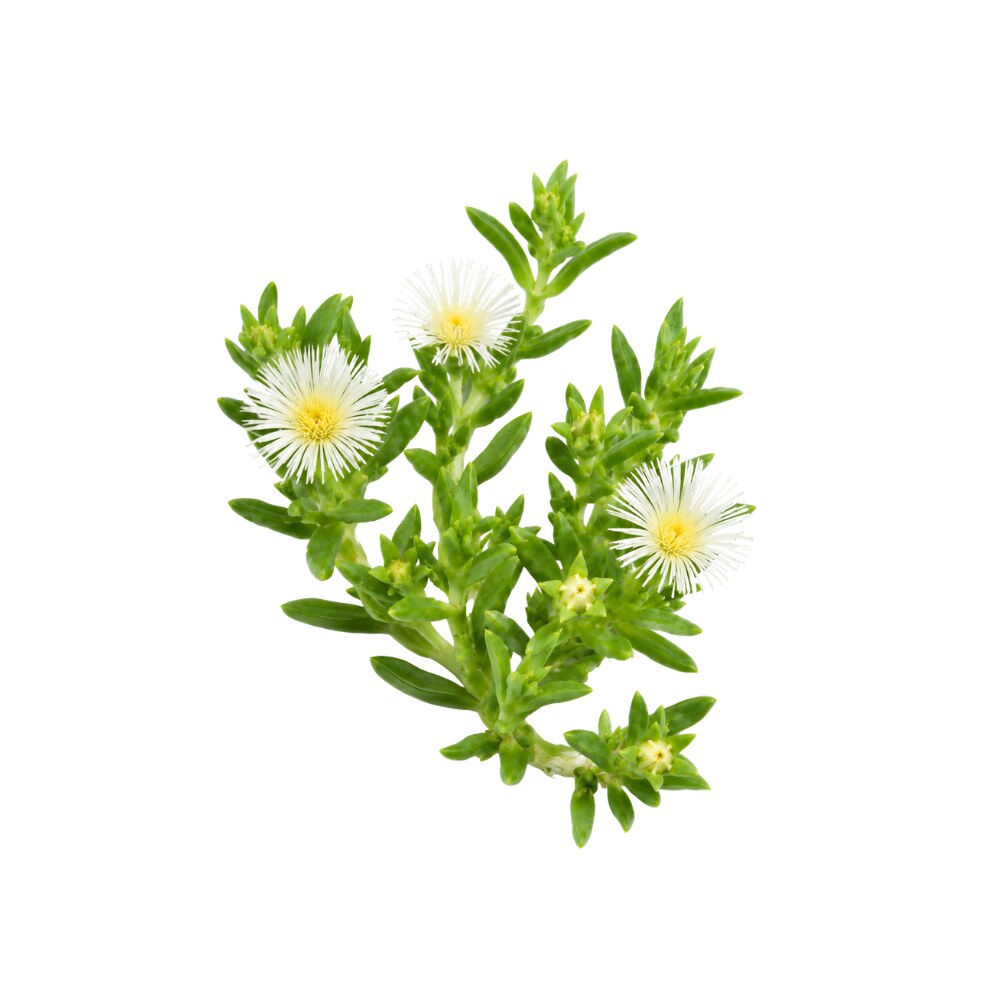 Principal source Kanna Mesembryanthemum tortuosum Herb monograph →
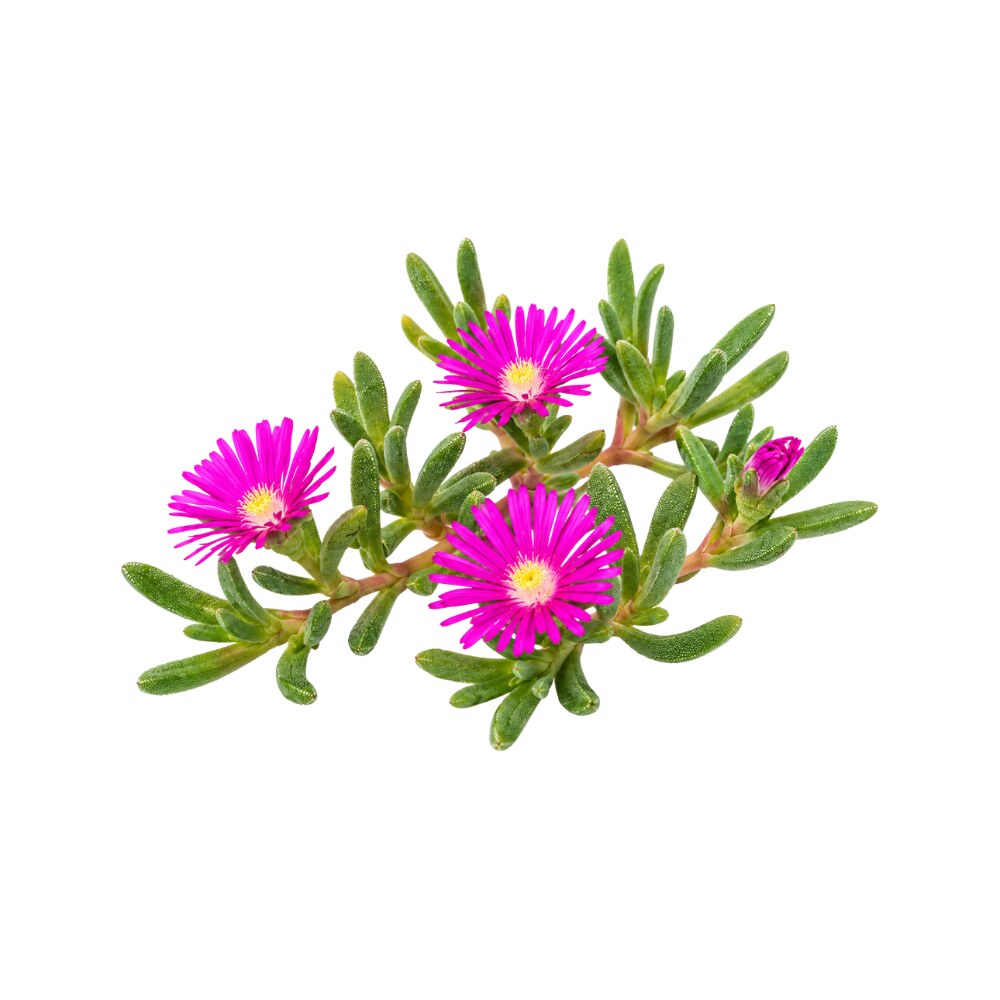 Source Ice Plant Delosperma spp. Herb monograph →
Concentration
Content by Source
Reported concentrations across the plants that contain mesembranol — the bar marks the typical level, the line shows the reported range.
Literature figures for varying plant parts and preparations. Read them as a comparative guide, not exact assays.
Mesembranol at a Glance
Mesembranol is a mesembrine-type alkaloid of kanna (Sceletium tortuosum, recently reclassified as Mesembryanthemum tortuosum) and one of the four alkaloids that define the standardised extract Zembrin® — the preparation behind almost every human study of the plant 4Reference 4AnimalAn acute dose-ranging evaluation of the antidepressant properties of Sceletium tortuosum (Zembrin®) versus escitalopram in the Flinders Sensitive Line ratView study →.
Structurally it is the fully reduced member of the set: the same cis-3a-(3,4-dimethoxyphenyl)octahydroindole core as mesembrine, but with the C6 ketone reduced to an alcohol and no double bond left in the carbocyclic ring (C17H25NO3, 291.4 g/mol). That makes it the saturated counterpart of mesembrenol and the C6-reduced counterpart of mesembrine.
Its individual pharmacology is thin, and that is the finding. Mesembranol was never on the receptor/enzyme panel that established mesembrine’s serotonin-transporter potency and mesembrenone’s PDE4 inhibition 5Reference 5Pharmacological actions of the South African medicinal and functional food plant Sceletium tortuosum and its principal alkaloidsView study →, so the two mechanisms kanna is famous for have never been measured for this molecule. What it does have is two isolate experiments of its own — an anxiolytic-like effect in zebrafish 2Reference 2Mesembryanthemum tortuosum L. alkaloids modify anxiety-like behaviour in a zebrafish modelView study →, and a distinctive attenuation of AMPA-receptor-mediated transmission in rat hippocampal slices that the C6-ketone alkaloids did not produce 1Reference 1AnimalEffect of Zembrin® and four of its alkaloid constituents on electric excitability of the rat hippocampusView study →. Everything else attached to kanna belongs to the whole extract, or to its siblings.
Saturation, Oxidation State & Activity Across The Four Alkaloids
The four Zembrin® alkaloids are near-identical scaffolds that differ at exactly two positions: whether C6 carries a ketone or an alcohol, and whether the carbocyclic ring holds a C4–C5 double bond or is saturated. Mesembranol sits at the fully reduced corner of that two-by-two.
| Alkaloid | C6 | Ring C4–C5 | Share of Zembrin® total alkaloids 4Reference 4AnimalAn acute dose-ranging evaluation of the antidepressant properties of Sceletium tortuosum (Zembrin®) versus escitalopram in the Flinders Sensitive Line ratView study → |
|---|---|---|---|
| Mesembrenone | ketone (enone) | unsaturated | 47.9% |
| Mesembrenol | alcohol | unsaturated | 32.0% |
| Mesembrine | ketone | saturated | 13.2% |
| Mesembranol | alcohol | saturated | 6.8% |
Two structure–activity readings run through this table, and they point in different directions — which is why “the reduced congeners are the weak ones” is only half true.
On the monoamine/PDE4 axis, reduction costs activity. The enone, mesembrenone, carries the potent phosphodiesterase-4 inhibition (IC50 <1 µM) alongside serotonin-transporter activity, and the C6 ketone of mesembrine gives the tightest SERT binding in the set (Ki 1.4 nM) 5Reference 5Pharmacological actions of the South African medicinal and functional food plant Sceletium tortuosum and its principal alkaloidsView study →. Both of those depend on an intact C6 carbonyl. Mesembranol, which has neither the carbonyl nor the alkene, is the natural candidate for “least active” here — but it must be said plainly that it was not tested on that panel at all 5Reference 5Pharmacological actions of the South African medicinal and functional food plant Sceletium tortuosum and its principal alkaloidsView study →. Its weakness on SERT and PDE4 is an inference from structure, not a measurement, and it should not be reported as a number.
On the glutamatergic axis, reduction is what confers the activity. In rat hippocampal slices, all four alkaloids damped the population spike — but only mesembranol and mesembrenol, the two carrying a C6 hydroxyl rather than a carbonyl, did so by attenuating AMPA-receptor-mediated transmission, and that was the mechanism the whole extract reproduced. The authors described this explicitly as a newly discovered structure–activity relationship for the Sceletium alkaloids, and proposed the two alcohols as chemical leads for epilepsy 1Reference 1AnimalEffect of Zembrin® and four of its alkaloid constituents on electric excitability of the rat hippocampusView study →.
So the honest summary is not that mesembranol is a degraded mesembrine. It is that the oxidation state at C6 selects which target the scaffold engages — and mesembranol sits on the side of that switch that has been studied least.
What It's Used For
Two experiments in the entire literature used isolated mesembranol as the test article. Everything below is scaled to that.
Support is an experimental score — weighted by study type (human > animal > in vitro) and volume. A beta, not a validated metric. Both rows are single-study, single-laboratory findings with the isolated molecule and no human data behind them, which is why neither clears 25%. Purely computational work (molecular docking) is not scored — see Mechanisms.
The only behavioural data mesembranol has of its own, and it used the isolated alkaloid, not the plant. In 5-day-post-fertilisation zebrafish larvae subjected to alternating light–dark challenges, all four pure Mesembryanthemum tortuosum alkaloids reduced anxiety-related behaviour on locomotor and thigmotaxis measures, with significantly more time spent in the central arena during the dark phase; mesembranol and mesembrenone produced the greater anxiolytic-like effect of the four tested 2Reference 2Mesembryanthemum tortuosum L. alkaloids modify anxiety-like behaviour in a zebrafish modelView study →.
The same paper docked the alkaloids against the serotonin transporter and reported high-affinity predicted interactions — but that arm is in silico, and no binding constant for mesembranol was measured 2Reference 2Mesembryanthemum tortuosum L. alkaloids modify anxiety-like behaviour in a zebrafish modelView study →.
Gap: a single zebrafish study from one laboratory, with no rodent replication, no dose–response in a mammal, and no measured target engagement to explain the effect. The SERT rationale imported to explain it was established for mesembrine and mesembrenone, not for this molecule 5Reference 5Pharmacological actions of the South African medicinal and functional food plant Sceletium tortuosum and its principal alkaloidsView study →.
Mesembranol’s most distinctive result, and again an isolate experiment. Zembrin® was given orally to rats for a week and tested ex vivo in the hippocampal slice; the four alkaloids were tested directly in vitro in the same preparation. All of them, and the extract, attenuated the amplitude of the population spike under both single-shock and theta-burst stimulation. The discriminating finding was mechanistic: only mesembranol and mesembrenol — the C6-hydroxyl pair — acted by attenuating AMPA-receptor-mediated transmission, the mode of action the whole extract displayed. The authors framed this as a new structure–activity relationship for the Sceletium alkaloids and, because AMPA attenuation is a recognised adjunctive anti-epileptic mechanism, nominated the two alcohols as chemical leads for epilepsy drug development 1Reference 1AnimalEffect of Zembrin® and four of its alkaloid constituents on electric excitability of the rat hippocampusView study →.
Gap: an electrophysiological finding in slices, with no seizure model, no behavioural endpoint, and no follow-up study in the eight years since. The extract doses used (5 and 10 mg/kg) were chosen to correspond to a 50 mg human dose 1Reference 1AnimalEffect of Zembrin® and four of its alkaloid constituents on electric excitability of the rat hippocampusView study →, but no one has established what free mesembranol concentration that produces at a hippocampal synapse — or whether the molecule crosses into brain at all.
Mechanisms
| Target / pathway | Effect | Relevant to |
|---|---|---|
| AMPA-type glutamate receptors (rat hippocampal slice) | attenuation of AMPA-mediated transmission — shared with mesembrenol and reproduced by the whole extract; absent for the C6-ketone alkaloids 1Reference 1AnimalEffect of Zembrin® and four of its alkaloid constituents on electric excitability of the rat hippocampusView study → | hippocampal excitability; the epilepsy-lead hypothesis |
| Population-spike amplitude, hippocampal slice (single shock + theta burst) | reduced amplitude in vitro — a class effect shared by all four alkaloids 1Reference 1AnimalEffect of Zembrin® and four of its alkaloid constituents on electric excitability of the rat hippocampusView study → | neuronal excitability |
| Serotonin transporter (SERT) | not measured for this molecule. High-affinity binding predicted by molecular docking 2Reference 2Mesembryanthemum tortuosum L. alkaloids modify anxiety-like behaviour in a zebrafish modelView study →; the measured panel (Ki 1.4 nM for mesembrine) tested mesembrine, mesembrenone and mesembrenol only 5Reference 5Pharmacological actions of the South African medicinal and functional food plant Sceletium tortuosum and its principal alkaloidsView study → | anxiolytic-like activity (hypothesis) |
| Phosphodiesterase-4 (PDE4) | not measured for this molecule. The class’s PDE4 inhibition belongs to mesembrenone (IC50 <1 µM) 5, | cognition rationale — mesembrenone’snot mesembranol’s |
| Monoamine oxidase B and dopamine transporter (DAT) | computational only. In docking plus MM/GBSA, mesembranol gave the most favourable predicted binding free energy of the four alkaloids against both MAO-B (−38.8 kcal/mol) and DAT (−53.6 kcal/mol); no enzyme-inhibition or uptake assay was run on the isolate 7Reference 7AnimalZembrin® mitigates reserpine-induced motor dysfunction and oxidative stress in Parkinson’s disease: in vivo and in silico analysesView study → | Parkinson’s-disease hypothesis (in silico) |
The load-bearing line here is the third and fourth rows: the two mechanisms that make kanna interesting have never been assayed for mesembranol. Docking scores are not affinities, and should not be reported as though they were.
Pharmacokinetics
There is no plasma pharmacokinetic dataset for mesembranol — in humans or in any animal. No oral bioavailability figure, no half-life, no volume of distribution, no metabolite identification, and no evidence that it crosses the blood–brain barrier. Reviews of the plant say this plainly, listing “too few bioavailability studies” among the field’s central gaps 13,
The one real absorption datum is ex vivo permeability. Across excised porcine tissue, mesembranol’s intestinal permeability was similar to that of caffeine, the high-permeability positive control — better than mesembrenol and mesembrenone, though below mesembrine, which exceeded caffeine. Permeability across buccal and sublingual tissue was lower than intestinal for all four alkaloids, but high enough relative to the reference compounds that oral-cavity absorption may contribute meaningfully when the plant is chewed and held in the mouth, as traditional practice does 3Reference 3In vitroIn vitro permeation of mesembrine alkaloids from Sceletium tortuosum across porcine buccal, sublingual, and intestinal mucosaView study →.
That is a statement about membrane crossing in isolated tissue, not about systemic exposure. It does not tell you what a swallowed dose produces in blood, how much survives first-pass metabolism, or what fraction reaches the brain — the three numbers that would actually let the hippocampal-slice result be interpreted.
Clinical Trials
No clinical trial has ever used isolated mesembranol. Every human study in this chemical space tested the whole standardised extract — Zembrin® at 8 and 25 mg/day for safety and tolerability over three months 15Reference 15RCTA randomized, double-blind, parallel-group, placebo-controlled trial of extract Sceletium tortuosum (Zembrin) in healthy adultsView study →, and 25 mg/day for cognition and anxiety endpoints. Mesembranol’s presence in those trials is as a 6.8% share of the extract’s alkaloid fraction 4Reference 4AnimalAn acute dose-ranging evaluation of the antidepressant properties of Sceletium tortuosum (Zembrin®) versus escitalopram in the Flinders Sensitive Line ratView study →, not as an intervention.
| Completed | Planned | Terminated | Preclinical |
|---|---|---|---|
| 0(isolate); extract-level only 15Reference 15RCTA randomized, double-blind, parallel-group, placebo-controlled trial of extract Sceletium tortuosum (Zembrin) in healthy adultsView study → | 0 | 0 | 2isolate studies 1, |
Last checked: July 2026.
Isolate Vs. Plant Studies
This molecule sits at an unusual midpoint. The two studies that exist did use the pure compound — zebrafish behaviour 2Reference 2Mesembryanthemum tortuosum L. alkaloids modify anxiety-like behaviour in a zebrafish modelView study → and hippocampal-slice electrophysiology 1Reference 1AnimalEffect of Zembrin® and four of its alkaloid constituents on electric excitability of the rat hippocampusView study → both tested isolated mesembranol alongside its three siblings, which is a genuine methodological strength and rules out the usual “it was only ever the extract” objection.
Everything with human weight, however, is extract-level. The safety and tolerability record, the amygdala-reactivity and cognition findings, the antidepressant-like rodent work — all belong to Zembrin® or to whole Sceletium preparations 4,
The related ornamental succulents in the same family carry these alkaloids only at trace or below-detection levels, so nothing shown for Sceletium transfers to them either — see ice plant.
Prevalence In Nature
Mesembranol is a consistent but minor constituent of the Sceletium alkaloid pool. Analytical surveys detect it across S. tortuosum, S. strictum, S. crassicaule and S. expansum, where it serves alongside mesembrine, mesembrenone and mesembrenol as a chemotaxonomic biomarker used to tell wild-harvested chemotypes apart; the so-called ‘emarcidum’ group lacks these alkaloids entirely 13Reference 13Skeletons in the closet? Using a bibliometric lens to visualise phytochemical and pharmacological activities linked to Sceletium, a mood enhancerView study →. It appears as a named analyte in the validated HPLC and ESI-MS/MS methods developed for Sceletium quality control, usually reported together with its C6 epimer epimesembranol 10,
Quantitatively, the only clean figure is for a manufactured preparation: in the standardised Zembrin® extract, chromatographic fingerprinting put mesembranol at 6.8% of total alkaloids, behind mesembrenone (47.9%), mesembrenol (32.0%) and mesembrine (13.2%) 4Reference 4AnimalAn acute dose-ranging evaluation of the antidepressant properties of Sceletium tortuosum (Zembrin®) versus escitalopram in the Flinders Sensitive Line ratView study →. A later profiling study likewise listed mesembranol among the four major compounds of Zembrin®, while an acid–base extract of the raw plant was dominated instead by Δ7-mesembrenone and mesembrine 8Reference 8Neuroprotective and neurorestorative properties of Mesembryanthemum tortuosum in a Parkinson’s disease zebrafish larvae modelView study →.
In wild material, no per-compound mesembranol figure is established, because the plant’s alkaloid chemistry is dominated by chemotype and geography rather than by species. Total alkaloid yields in S. tortuosum from the Northern Cape averaged 4,938–9,377 mg/kg dry weight, against 16.4–4,143 mg/kg for Western Cape material — an order of magnitude of variation before the individual alkaloid split is even considered 19Reference 19Zhao J, Khan IA, Combrinck S, Sandasi M, Chen W, Viljoen AM (2018). ¹H-NMR and UPLC-MS metabolomics: functional tools for exploring chemotypic variation in Sceletium tortuosum from two provinces in South Africa. Phytochemistry. https://pubmed.ncbi.nlm.nih.gov/29783186/View study →. Traditional fermentation into kougoed shifts the profile again 20Reference 20ReviewPsychoactive constituents of the genus Sceletium N.E.Br. and other Mesembryanthemaceae: a reviewView study →.
Outside the Aizoaceae, mesembrane-type alkaloids turn up unexpectedly in daffodils: they are biosynthesised by Narcissus cv. Hawera and by wild taxa of Narcissus sect. Ganymedes 12,
Discovery & Synthesis
Mesembranol’s first isolation is not cleanly attributed in the accessible literature. Kanna’s alkaloid chemistry runs from the isolation of mesembrine in the early twentieth century through the German and South African work of the 1950s–60s and the systematic Sceletium alkaloid programme of the 1970s–80s, and mesembranol enters the record inside that body of work rather than through a single landmark paper — a point the field’s own bibliometric review makes when it notes how much of the structural work predates modern reporting standards 13Reference 13Skeletons in the closet? Using a bibliometric lens to visualise phytochemical and pharmacological activities linked to Sceletium, a mood enhancerView study →. Older German-language sources render the name mesembrinol. It is sometimes described informally as a dihydro-mesembrenol; strictly, it is mesembrenol reduced at the C4–C5 alkene, and equivalently mesembrine with its C6 ketone reduced to an alcohol.
The synthetic record is much better documented, because the cis-3a-aryloctahydroindole core is a long-standing test problem in methodology. Jeffs, Cortese and Wolfram published the first racemic total synthesis of (±)-mesembranol in 1982, as Part 12 of the Sceletium alkaloids series, using an aza-ring expansion of cis-bicyclo[4.2.0]octanones 16Reference 16Sceletium alkaloidsView study →. A formal synthesis of (±)-mesembrine and (±)-mesembranol followed in 2012 18Reference 18Formal synthesis of Sceletium alkaloids, (±)-mesembrine and (±)-mesembranolView study →, and in 2013 an enantioselective route to (+)-mesembranol was completed from the monoterpene (S)-(−)-perillyl alcohol via an intramolecular Heck reaction and a double reduction of the resulting cyclic sulfonamide 17Reference 17Double reduction of cyclic aromatic sulfonamides: synthesis of (+)-mesembrine and (+)-mesembranolView study →.
Manufacture today is not really a question, because there is no commercial demand for the isolate: mesembranol reaches people only as a minor constituent of Sceletium plant material and standardised extracts, and is prepared as a purified reference standard for analytical and research use rather than produced at scale 10,
Patents: not yet researched.
Toxicity & Safety
No toxicology exists for isolated mesembranol. There is no acute or repeat-dose study, no genotoxicity package, no reproductive or developmental dataset, and no case report involving the pure compound. The low flag here is therefore inherited from the class and the extract, not established for the molecule — and that distinction should be held rather than smoothed over.
What is documented belongs to the whole preparation. A standardised Sceletium extract (Zembrin®, 0.35–0.45% total alkaloids) produced no mortality and no treatment-related adverse effects in 14-day and 90-day repeated oral toxicity studies in rats, with a no-observed-adverse-effect level of 600 mg/kg body weight per day — the highest dose tested in the subchronic study 14Reference 14AnimalA toxicological safety assessment of a standardized extract of Sceletium tortuosum (Zembrin®) in ratsView study →. In people, 8 mg and 25 mg daily for three months in 37 healthy adults was well tolerated across vital signs, ECG, haematology and biochemistry 15Reference 15RCTA randomized, double-blind, parallel-group, placebo-controlled trial of extract Sceletium tortuosum (Zembrin) in healthy adultsView study →. Kanna itself has no record of fatal overdose 20Reference 20ReviewPsychoactive constituents of the genus Sceletium N.E.Br. and other Mesembryanthemaceae: a reviewView study →.
- No signal of harm at the extract level. Rat NOAEL 600 mg/kg/day over 90 days, and three months of daily dosing in healthy adults was well tolerated 14,
15Reference 14AnimalA toxicological safety assessment of a standardized extract of Sceletium tortuosum (Zembrin®) in ratsView study →Reference 15RCTA randomized, double-blind, parallel-group, placebo-controlled trial of extract Sceletium tortuosum (Zembrin) in healthy adultsView study → . - The isolate has never been tested. No acute, repeat-dose, genotoxicity or reproductive toxicology exists for pure mesembranol; the low badge is class-inherited.
- Serotonergic combinations (class-level). Kanna preparations inhibit serotonin reuptake and are cautioned against SSRIs, SNRIs, MAOIs and triptans. Mesembranol’s own SERT activity has never been measured, so its contribution to that risk is unquantified — treat the caution as applying to the plant you actually take.
- No interaction data. No cytochrome-P450 or transporter interaction has been demonstrated or excluded for this molecule; absence of reported problems is not evidence of safety.
Full Safety & Interactions Detail
What is not known. This section deliberately separates three layers that are routinely conflated. (1) Mesembranol the isolate — untested. (2) The mesembrine alkaloid class — serotonergic, hence the antidepressant-interaction caution. (3) Standardised Zembrin® extract — the only thing with a real toxicology and human tolerability dataset 14,
Interactions. No drug interaction has been studied for mesembranol. At the plant level, the pharmacodynamic concern is additive serotonergic load with SSRIs, SNRIs, MAOIs and triptans, arising from the serotonin-transporter blockade demonstrated for mesembrine and mesembrenone 5Reference 5Pharmacological actions of the South African medicinal and functional food plant Sceletium tortuosum and its principal alkaloidsView study →; because mesembranol’s SERT activity is unmeasured, it can be neither implicated nor exonerated. Kanna’s PDE4-mediated vasodilation — the basis of its caution alongside erectile-dysfunction and blood-pressure medication — is mesembrenone’s pharmacology, not this molecule’s 5,
Reproductive note (prose only). No reproductive or developmental toxicity data exist for isolated mesembranol, and none of the Sceletium extract toxicology addressed reproductive endpoints 14Reference 14AnimalA toxicological safety assessment of a standardized extract of Sceletium tortuosum (Zembrin®) in ratsView study →. Pregnancy and lactation decisions belong to the kanna monograph, where intake is actually decided, not to a molecule page.
Plant-level footnote. Sceletium material carries oxalates, which traditional fermentation into kougoed reduces 20Reference 20ReviewPsychoactive constituents of the genus Sceletium N.E.Br. and other Mesembryanthemaceae: a reviewView study →; that is a property of the plant matrix, not of this alkaloid.
Dosage
There is no dose for mesembranol. It has never been administered to a person as an isolate, and no isolate dose-ranging study exists in any species. The figures below are research exposures, recorded so the scale is clear — they are not a recommendation, and none of them is a mesembranol dose.
| Setting | Preparation | Amount |
|---|---|---|
| Human safety/tolerability RCT 15Reference 15RCTA randomized, double-blind, parallel-group, placebo-controlled trial of extract Sceletium tortuosum (Zembrin) in healthy adultsView study → | Zembrin® standardised extract | 8 or 25 mg/day for 3 months |
| Rat hippocampal-excitability study, oral arm 1Reference 1AnimalEffect of Zembrin® and four of its alkaloid constituents on electric excitability of the rat hippocampusView study → | Zembrin® standardised extract | 5 and 10 mg/kg/day for 1 week |
| Rat subchronic toxicology, NOAEL 14Reference 14AnimalA toxicological safety assessment of a standardized extract of Sceletium tortuosum (Zembrin®) in ratsView study → | Zembrin® standardised extract | 600 mg/kg/day, 90 days |
| Isolate studies 1, | Pure mesembranol | In-vitro / immersion exposure only — no systemic dose |
One piece of arithmetic is worth doing, because it sets the scale of everything above. Zembrin® is standardised to 0.35–0.45% total alkaloids 14Reference 14AnimalA toxicological safety assessment of a standardized extract of Sceletium tortuosum (Zembrin®) in ratsView study →, of which mesembranol is 6.8% 4Reference 4AnimalAn acute dose-ranging evaluation of the antidepressant properties of Sceletium tortuosum (Zembrin®) versus escitalopram in the Flinders Sensitive Line ratView study →. A 25 mg capsule therefore delivers roughly 6–8 µg of mesembranol — single-digit micrograms. That is a calculation from two cited figures, not a measured dose, and it is offered only to make the point that no human has knowingly taken a pharmacologically meaningful quantity of this molecule on its own.
These are doses studied in research and are not a personal recommendation.
References
- Dimpfel W, Franklin R, Gericke N, Schombert L (2018). Effect of Zembrin® and four of its alkaloid constituents on electric excitability of the rat hippocampus. Journal of Ethnopharmacology. https://pubmed.ncbi.nlm.nih.gov/29758341/
- Maphanga VB, Skalicka-Wozniak K, Budzynska B, Skiba A, Chen W, Agoni C, Enslin GM, Viljoen AM (2022). Mesembryanthemum tortuosum L. alkaloids modify anxiety-like behaviour in a zebrafish model. Journal of Ethnopharmacology. https://pubmed.ncbi.nlm.nih.gov/35134486/
- Shikanga EA, Hamman JH, Chen W, Combrinck S, Gericke N, Viljoen AM (2012). In vitro permeation of mesembrine alkaloids from Sceletium tortuosum across porcine buccal, sublingual, and intestinal mucosa. Planta Medica. https://pubmed.ncbi.nlm.nih.gov/22105579/
- Gericke J, Lekhooa M, Steyn SF, Viljoen AM, Harvey BH (2022). An acute dose-ranging evaluation of the antidepressant properties of Sceletium tortuosum (Zembrin®) versus escitalopram in the Flinders Sensitive Line rat. Journal of Ethnopharmacology. https://pubmed.ncbi.nlm.nih.gov/34454055/
- Harvey AL, Young LC, Viljoen AM, Gericke NP (2011). Pharmacological actions of the South African medicinal and functional food plant Sceletium tortuosum and its principal alkaloids. Journal of Ethnopharmacology. https://pubmed.ncbi.nlm.nih.gov/21798331/
- Krstenansky JL (2017). Mesembrine alkaloids: review of their occurrence, chemistry, and pharmacology. Journal of Ethnopharmacology. https://pubmed.ncbi.nlm.nih.gov/27939420/
- Lepule K, Sandasi M, Salifu E, Viljoen A (2026). Zembrin® mitigates reserpine-induced motor dysfunction and oxidative stress in Parkinson’s disease: in vivo and in silico analyses. Molecules. https://pubmed.ncbi.nlm.nih.gov/42451736/
- Lepule K, Sandasi M, Chen W, Viljoen A (2025). Neuroprotective and neurorestorative properties of Mesembryanthemum tortuosum in a Parkinson’s disease zebrafish larvae model. Journal of Ethnopharmacology. https://pubmed.ncbi.nlm.nih.gov/40691887/
- Gericke J, Harvey BH, Pretorius L, Ollewagen T, Benecke RM, Smith C (2024). Sceletium tortuosum-derived mesembrine significantly contributes to the anxiolytic effect of Zembrin®, but its anti-depressant effect may require synergy of multiple plant constituents. Journal of Ethnopharmacology. https://pubmed.ncbi.nlm.nih.gov/37660956/
- Patnala S, Kanfer I (2010). HPLC analysis of mesembrine-type alkaloids in Sceletium plant material used as an African traditional medicine. Journal of Pharmacy & Pharmaceutical Sciences. https://pubmed.ncbi.nlm.nih.gov/21486531/
- Patnala S, Kanfer I (2015). Medicinal use of Sceletium: characterization of phytochemical components of Sceletium plant species using HPLC with UV and electrospray ionization–tandem mass spectroscopy. Journal of Pharmacy & Pharmaceutical Sciences. https://pubmed.ncbi.nlm.nih.gov/26626243/
- Berkov S, Pechlivanova D, Denev R, Nikolova M, Georgieva L, Sidjimova B, Bakalov D, Tafradjiiska R, Stoynev A, Momekov G, Bastida J (2021). GC-MS analysis of Amaryllidaceae and Sceletium-type alkaloids in bioactive fractions from Narcissus cv. Hawera. Rapid Communications in Mass Spectrometry. https://pubmed.ncbi.nlm.nih.gov/33928691/
- Reddy K, Stafford GI, Makunga NP (2024). Skeletons in the closet? Using a bibliometric lens to visualise phytochemical and pharmacological activities linked to Sceletium, a mood enhancer. Frontiers in Plant Science. https://pubmed.ncbi.nlm.nih.gov/38576783/
- Murbach TS, Hirka G, Szakonyiné IP, Gericke N, Endres JR (2014). A toxicological safety assessment of a standardized extract of Sceletium tortuosum (Zembrin®) in rats. Food and Chemical Toxicology. https://pubmed.ncbi.nlm.nih.gov/25301237/
- Nell H, Siebert M, Chellan P, Gericke N (2013). A randomized, double-blind, parallel-group, placebo-controlled trial of extract Sceletium tortuosum (Zembrin) in healthy adults. Journal of Alternative and Complementary Medicine. https://pubmed.ncbi.nlm.nih.gov/23441963/
- Jeffs PW, Cortese NA, Wolfram J (1982). Sceletium alkaloids. Part 12. Synthesis of (±)-mesembranol and (±)-O-methyljoubertiamine. Aza-ring expansion of cis-bicyclo[4.2.0]octanones. The Journal of Organic Chemistry, 47, 3881–3886. https://doi.org/10.1021/jo00141a015
- Geoghegan K, Evans P (2013). Double reduction of cyclic aromatic sulfonamides: synthesis of (+)-mesembrine and (+)-mesembranol. The Journal of Organic Chemistry. https://pubmed.ncbi.nlm.nih.gov/23496752/
- Honda T, Arai H, Yamamoto N, Takahashi K (2012). Formal synthesis of Sceletium alkaloids, (±)-mesembrine and (±)-mesembranol. Heterocycles, 84, 327. https://doi.org/10.3987/COM-11-S(P)39
- Zhao J, Khan IA, Combrinck S, Sandasi M, Chen W, Viljoen AM (2018). ¹H-NMR and UPLC-MS metabolomics: functional tools for exploring chemotypic variation in Sceletium tortuosum from two provinces in South Africa. Phytochemistry. https://pubmed.ncbi.nlm.nih.gov/29783186/
- Smith MT, Crouch NR, Gericke N, Hirst M (1996). Psychoactive constituents of the genus Sceletium N.E.Br. and other Mesembryanthemaceae: a review. Journal of Ethnopharmacology. https://pubmed.ncbi.nlm.nih.gov/8691846/
- Olatunji TL, Siebert F, Adetunji AE, Harvey BH, Gericke J, Hamman JH, Van der Kooy F (2022). Sceletium tortuosum: a review on its phytochemistry, pharmacokinetics, biological, pre-clinical and clinical activities. Journal of Ethnopharmacology. https://pubmed.ncbi.nlm.nih.gov/34758918/
- Pigni NB, Ríos-Ruiz S, Luque FJ, Viladomat F, Codina C, Bastida J (2013). Wild daffodils of the section Ganymedes from the Iberian Peninsula as a source of mesembrane alkaloids. Phytochemistry. https://pubmed.ncbi.nlm.nih.gov/23932506/



