
Compound Monograph
Pseudoginsenoside F11
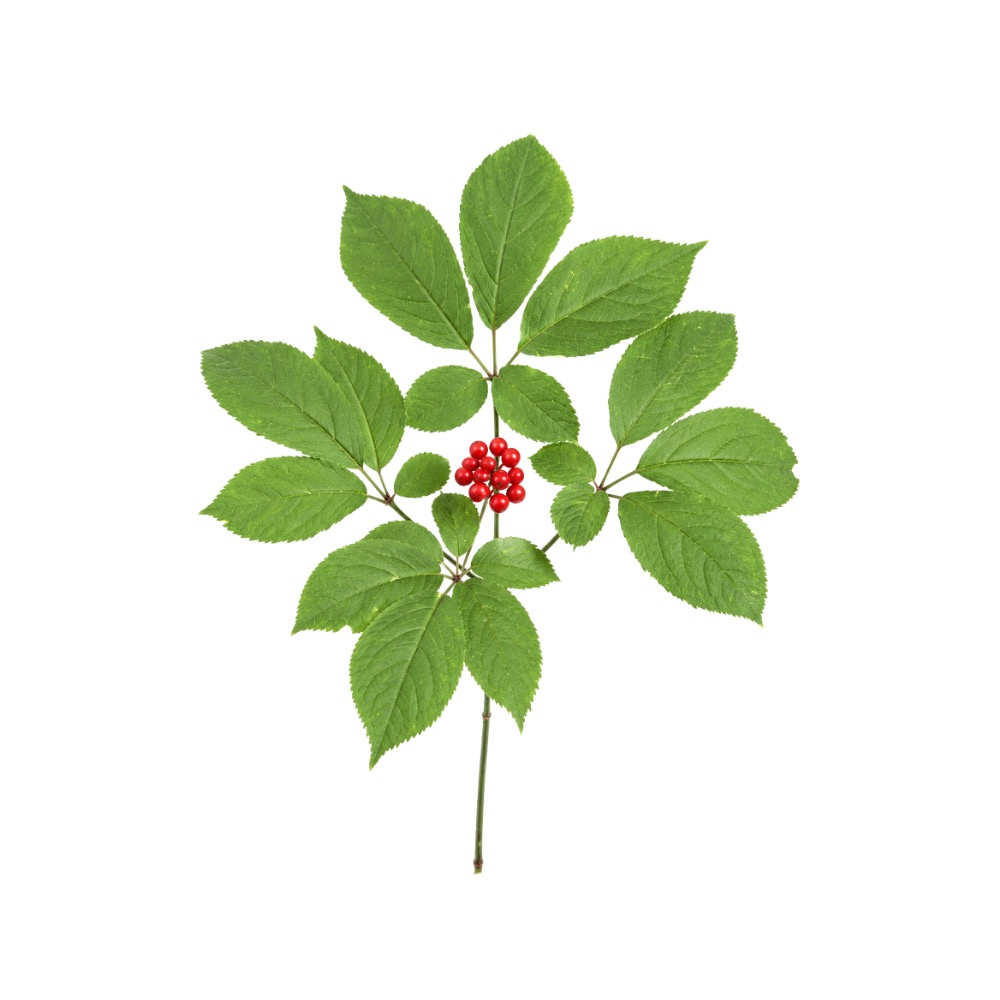
Pseudoginsenoside F11 (PF11) is an ocotillol-type dammarane saponin that is abundant in American ginseng (Panax quinquefolius) and essentially absent from Asian ginseng (Panax ginseng) — which makes it the standard chemical marker for telling the two species apart and for spotting adulteration. Its distinctive pharmacology is neuroprotective: in rodents it blunts methamphetamine and morphine actions, eases scopolamine amnesia, and limits cerebral-ischemia damage. All of that is preclinical, and the isolate is very poorly absorbed by mouth.

Sources · 2
Where Does It Come From?
Pseudoginsenoside F11 is a naturally occurring dammarane triterpenoid saponin (ocotillol type), found in American ginseng and 1 other source. It is well tolerated orally (low toxicity).
Concentration
Content by Source
Reported concentrations across the plants that contain pseudoginsenoside F11 — the bar marks the typical level, the line shows the reported range.
Literature figures for varying plant parts and preparations. Read them as a comparative guide, not exact assays.
Pseudoginsenoside F11 at a Glance
Pseudoginsenoside F11 (PF11) is a triterpenoid saponin of American ginseng (Panax quinquefolius). It belongs to the ocotillol structural class — a side-chain variant of the dammarane saponins that gives it a distinctive five-membered epoxide (tetrahydrofuran) ring, setting it apart from the protopanaxadiol and protopanaxatriol ginsenosides that dominate Asian ginseng 1Reference 1Use of high-performance liquid chromatography-tandem mass spectrometry to distinguish Panax ginseng CView study →.
Its single most useful property has nothing to do with the body: PF11 is abundant in American ginseng and essentially absent in Asian ginseng, so it is the standard chemical marker used to tell the two species apart and to detect adulteration of American-ginseng products 1,
Its pharmacology, where it exists, is neuroprotective and centred on the brain’s reward and memory circuits: in rodents PF11 blunts the behavioural and neurochemical effects of methamphetamine and morphine, reverses scopolamine-induced amnesia, and reduces damage in models of cerebral ischemia and neurodegeneration 3,
An Ocotillol-Type Saponin
Ginsenosides are usually sorted into two dammarane families by the shape of their side chain: protopanaxadiol (PPD) saponins (such as ginsenoside Rb1) and protopanaxatriol (PPT) saponins (such as ginsenoside Rg1). PF11 belongs to neither — it is an ocotillol-type saponin, a third structural class defined by a 20,24-epoxy bridge that closes part of the side chain into a rigid five-membered tetrahydrofuran ring, with a hydroxyl at C-25 1Reference 1Use of high-performance liquid chromatography-tandem mass spectrometry to distinguish Panax ginseng CView study →.
That epoxide ring is the whole distinction. Where PPD and PPT saponins carry an open side chain, ocotillol saponins carry the closed ring, and this is what makes PF11 both chemically recognisable (a clean analytical signature) and biologically distinct from the more-studied Rb1/Rg1 pair. Its molecular formula is C₄₂H₇₂O₁₄ (about 801 g/mol) and it occurs as the 24(R) epimer in American ginseng 1Reference 1Use of high-performance liquid chromatography-tandem mass spectrometry to distinguish Panax ginseng CView study →.
The class matters botanically too: ocotillol-type saponins are a chemotype feature of American ginseng and its relatives, not of Panax ginseng. That is the biochemical reason PF11 works as a species marker — the two plants build different saponin skeletons.
The American Ginseng Marker
The defining fact about PF11 is a presence/absence contrast between two species. It is found in quantity in American ginseng (Panax quinquefolius) root — reported in excess of 0.1% (w/w) of the dried root — and is not detected in Asian ginseng (Panax ginseng) 1Reference 1Use of high-performance liquid chromatography-tandem mass spectrometry to distinguish Panax ginseng CView study →. That binary makes it the cleanest available fingerprint for distinguishing the two.
Species identity is a real commercial problem. American and Asian ginseng command different prices and are used for different traditional purposes, so substitution and adulteration are common, and the dried, powdered or extracted root cannot be told apart by eye. Analytical chemists resolved this by watching a small panel of diagnostic saponins: 24(R)-pseudoginsenoside F11 flags American ginseng, while ginsenoside Rf (present in Asian ginseng, absent in American) flags the other direction 1,
Two foundational HPLC/mass-spectrometry studies established the approach around 2000: one used HPLC–tandem MS to separate Panax ginseng from Panax quinquefolius and quantified PF11 as the American-ginseng signal 1Reference 1Use of high-performance liquid chromatography-tandem mass spectrometry to distinguish Panax ginseng CView study →; the other built an LC/MS authentication method applied to raw roots and commercial ginseng products 2Reference 2Differentiation and authentication of Panax ginseng, Panax quinquefolius, and ginseng products by using HPLC/MSView study →. The strategy has since become routine, extended with newer analytical platforms, but the logic is unchanged: no PF11 means it is not American ginseng. A third species in the group, notoginseng (Panax notoginseng), is separated by its own marker (notoginsenoside R1) rather than by PF11.
This authentication role is, in practical terms, PF11’s most established and human-relevant use — not as a medicine, but as a quality-control tool.
Pseudoginsenoside F11 & Neuroprotection
Where PF11 has a pharmacological identity, it is a neuroprotective molecule with an unusual focus on drugs of abuse and on memory. It is the ginsenoside most consistently reported to antagonise the actions of psychoactive drugs, and separately to limit ischemic and neurodegenerative brain injury. All of the work below is in cells or rodents, on the isolated molecule.
Psychostimulant and opioid antagonism. This is PF11’s signature. Against methamphetamine, oral PF11 partially reversed the drug’s depletion of striatal dopamine and its metabolites (DOPAC, HVA) and of the serotonin metabolite 5-HIAA, and eased methamphetamine-induced anxiety- and depression-like behaviour — i.e. it protected against methamphetamine neurotoxicity 3Reference 3AnimalProtective effects of pseudoginsenoside-F11 on methamphetamine-induced neurotoxicity in miceView study →. In a dependence model it inhibited methamphetamine-induced behaviours by normalising dopamine and GABA signalling in the nucleus accumbens, the core reward hub 4Reference 4Pseudoginsenoside-F11 inhibits methamphetamine-induced behaviors by regulating dopaminergic and GABAergic neurons in the nucleus accumbensView study →. Against morphine, PF11 antagonised the behavioural actions of the opioid in mice 5Reference 5AnimalAntagonistic effect of pseudoginsenoside-F11 on the behavioral actions of morphine in miceView study →, and in receptor-expressing cells it competitively inhibited morphine binding and reversed morphine’s suppression of cyclic AMP 6Reference 6Pseudoginsenoside-F11 attenuates morphine-induced signalling in Chinese hamster ovary-μ cellsView study →; it also reduced morphine behavioural sensitisation while lowering glutamate release in the medial prefrontal cortex 7Reference 7AnimalPseudoginsenoside-F11 decreases morphine-induced behavioral sensitization and extracellular glutamate levels in the medial prefrontal cortex in miceView study →. This anti-addiction profile — dampening drug reward without being an opioid itself — is what most distinguishes PF11 from the mainstream Rb1/Rg1 ginsenosides.
Memory. In one of the earliest PF11 studies, it reversed scopolamine-induced memory impairment in mice and rats, an anticholinergic amnesia model 8Reference 8AnimalProtective effects of pseudoginsenoside-F11 on scopolamine-induced memory impairment in mice and ratsView study →. Later work extended this to Alzheimer’s-type models: PF11 was anti-amnesic in two mouse AD paradigms 13Reference 13AnimalAnti-amnesic effect of pseudoginsenoside-F11 in two mouse models of Alzheimer’s diseaseView study →, reduced cognitive deficits and AD-type pathology in senescence-accelerated (SAMP8) mice while normalising tau phosphorylation via protein-phosphatase-2A 14Reference 14AnimalPseudoginsenoside-F11 alleviates cognitive deficits and Alzheimer’s disease-type pathologies in SAMP8 miceView study →, and attenuated cognitive dysfunction and tau phosphorylation in a sporadic Alzheimer’s rat model 15Reference 15AnimalPseudoginsenoside-F11 attenuates cognitive dysfunction and tau phosphorylation in sporadic Alzheimer’s disease rat modelView study →.
Ischemia and neurodegeneration. In stroke models PF11 repeatedly limits damage, working through several routes: repressing neuronal calcium overload and calpain activity in transient cerebral ischemia 9Reference 9AnimalPseudoginsenoside-F11 protects against transient cerebral ischemia injury in rats involving repressing calcium overloadView study →; restoring the autophagy–lysosomal pathway that ischemia derails 11Reference 11Pseudoginsenoside-F11 attenuates cerebral ischemic injury by alleviating autophagic/lysosomal defectsView study →; shifting microglia toward a repair phenotype and promoting neurogenesis for lasting functional recovery 10Reference 10AnimalPseudoginsenoside-F11 improves long-term neurological function and promotes neurogenesis after transient cerebral ischemia in miceView study →; and reducing thromboinflammation in thromboembolic stroke 12Reference 12AnimalPseudoginsenoside-F11 ameliorates thromboembolic stroke injury in rats by reducing thromboinflammationView study →. In Parkinson’s disease (6-hydroxydopamine-lesioned rats) it improved motor function and dopaminergic markers while lowering free-radical formation 16Reference 16AnimalNeuroprotective effect of pseudoginsenoside-F11 on a rat model of Parkinson’s disease induced by 6-hydroxydopamineView study →.
The throughline across these effects is a broad neuroprotective action — antioxidant, calcium-stabilising, anti-neuroinflammatory, autophagy-restoring — applied to reward circuitry, cholinergic memory systems, and ischemic tissue alike.
What It's Used For
The evidence base is deep in animals and empty in humans. Every application below rests on isolated PF11 in rodents or cells, and the load-bearing caveat is pharmacokinetic: oral bioavailability of the isolate is around 1.2% in rats, so the doses that work in animals may not be reachable by an oral human dose 19Reference 19ReviewPseudoginsenoside-F11: a comprehensive review of chemical structure, pharmacological activities, pharmacokinetics, and therapeutic potentialView study →.
Support is an experimental score — weighted by study type (human > animal > in vitro) and volume, tempered for isolate-vs-plant match and bioavailability. A beta, not a validated metric. Every row rests on isolated PF11 in animals or cells (no human data), so scores are capped accordingly. Each application links to its write-up.
The deepest body of PF11-specific work. In rat transient cerebral ischemia, PF11 protected neurons by repressing calcium overload and downstream calpain activation 9Reference 9AnimalPseudoginsenoside-F11 protects against transient cerebral ischemia injury in rats involving repressing calcium overloadView study →; it rescued the autophagy–lysosomal pathway that ischemia impairs 11Reference 11Pseudoginsenoside-F11 attenuates cerebral ischemic injury by alleviating autophagic/lysosomal defectsView study →; in mice it improved long-term neurological function and promoted neurogenesis, with benefits sustained for weeks 10Reference 10AnimalPseudoginsenoside-F11 improves long-term neurological function and promotes neurogenesis after transient cerebral ischemia in miceView study →; and in thromboembolic stroke it reduced thromboinflammation 12Reference 12AnimalPseudoginsenoside-F11 ameliorates thromboembolic stroke injury in rats by reducing thromboinflammationView study →.
Consistent protection across independent models and mechanisms is the strength here. All use isolated PF11, frequently by injection or oral dosing at 3–32 mg/kg.
Gap: every study is rodent, on the isolate, with no human trials; how much protection survives the isolate’s very poor oral bioavailability in a person is unknown 19Reference 19ReviewPseudoginsenoside-F11: a comprehensive review of chemical structure, pharmacological activities, pharmacokinetics, and therapeutic potentialView study →.
PF11’s most distinctive line, and the reason it stands apart from other ginsenosides. Against methamphetamine, PF11 partially reversed the drug’s depletion of dopamine/DOPAC/HVA and 5-HIAA and eased methamphetamine-induced affective behaviour — protection against neurotoxicity 3Reference 3AnimalProtective effects of pseudoginsenoside-F11 on methamphetamine-induced neurotoxicity in miceView study → — and in a dependence model it curbed methamphetamine behaviours by regulating dopamine and GABA in the nucleus accumbens 4Reference 4Pseudoginsenoside-F11 inhibits methamphetamine-induced behaviors by regulating dopaminergic and GABAergic neurons in the nucleus accumbensView study →.
Against morphine, it antagonised opioid behaviours in mice 5Reference 5AnimalAntagonistic effect of pseudoginsenoside-F11 on the behavioral actions of morphine in miceView study →, competitively inhibited morphine binding and reversed morphine’s cyclic-AMP suppression in μ-opioid-receptor cells 6Reference 6Pseudoginsenoside-F11 attenuates morphine-induced signalling in Chinese hamster ovary-μ cellsView study →, and lowered morphine sensitisation and prefrontal glutamate 7Reference 7AnimalPseudoginsenoside-F11 decreases morphine-induced behavioral sensitization and extracellular glutamate levels in the medial prefrontal cortex in miceView study →.
It does this without being an opioid agonist itself.
Gap: all mouse/cell work on the isolate; no human data, and no controlled test of PF11 as an anti-addiction agent in people 4,
A coherent memory-protective thread. PF11 reversed scopolamine-induced amnesia in early rodent work 8Reference 8AnimalProtective effects of pseudoginsenoside-F11 on scopolamine-induced memory impairment in mice and ratsView study →, was anti-amnesic in two mouse Alzheimer’s models 13Reference 13AnimalAnti-amnesic effect of pseudoginsenoside-F11 in two mouse models of Alzheimer’s diseaseView study →, and in disease-type models reduced cognitive decline while lowering tau phosphorylation — via protein-phosphatase-2A regulation in SAMP8 mice 14Reference 14AnimalPseudoginsenoside-F11 alleviates cognitive deficits and Alzheimer’s disease-type pathologies in SAMP8 miceView study → and in a sporadic-Alzheimer’s rat model 15Reference 15AnimalPseudoginsenoside-F11 attenuates cognitive dysfunction and tau phosphorylation in sporadic Alzheimer’s disease rat modelView study →.
The tau/PP2A mechanism gives the cognitive claim a defined molecular handle rather than a vague “nootropic” label.
Gap: rodent isolate studies only; no human cognitive trials, and the poor oral bioavailability again clouds translation 15,
A single but mechanistically tidy study: in 6-hydroxydopamine-lesioned rats, oral PF11 improved locomotor activity, motor balance and coordination and reduced apomorphine-induced rotations, alongside higher tyrosine-hydroxylase and dopamine and reduced hydroxyl-radical formation — i.e. an antioxidant, dopaminergic-sparing effect 16Reference 16AnimalNeuroprotective effect of pseudoginsenoside-F11 on a rat model of Parkinson’s disease induced by 6-hydroxydopamineView study →.
Gap: one rat model, isolated PF11, no replication or human data 16Reference 16AnimalNeuroprotective effect of pseudoginsenoside-F11 on a rat model of Parkinson’s disease induced by 6-hydroxydopamineView study →.
A distinct, non-neurological property worth naming. In 3T3-L1 adipocytes, PF11 acted as a novel partial PPARγ agonist, promoting adiponectin oligomerization and secretion — a mechanism associated with improved insulin sensitivity 17Reference 17Pseudoginsenoside F11, a novel partial PPARγ agonist, promotes adiponectin oligomerization and secretion in 3T3-L1 adipocytesView study →. This links PF11 to the metabolic-modulator reputation of ginseng generally.
Gap: in-vitro adipocyte data only, with no in-vivo metabolic endpoint for the isolate and no human confirmation 17Reference 17Pseudoginsenoside F11, a novel partial PPARγ agonist, promotes adiponectin oligomerization and secretion in 3T3-L1 adipocytesView study →.
Mechanisms
| Target / pathway | Effect | Relevant to |
|---|---|---|
| Dopamine & GABA in nucleus accumbens | normalises drug-driven dopaminergic hyperfunction; restores GABA | anti-addiction (methamphetamine) |
| Striatal dopamine / DOPAC / HVA / 5-HIAA | attenuates methamphetamine-induced monoamine depletion | anti-addictionneuroprotection |
| μ-opioid receptor / cyclic AMP | competitively inhibits morphine binding; reverses cAMP suppression | anti-addiction (morphine) |
| Neuronal Ca²⁺ overload / calpain | represses calcium influx and calpain activation | ischemic neuroprotection |
| Autophagy–lysosomal pathway | restores impaired autophagic flux | ischemianeurodegeneration |
| Microglial polarization / neurogenesis | shifts microglia to repair phenotype; promotes neurogenesis | long-term stroke recovery |
| Protein phosphatase 2A / tau | reduces tau hyperphosphorylation | anti-Alzheimer’s |
| Reactive oxygen / hydroxyl radicals | antioxidant; lowers free-radical load | Parkinson’sgeneral neuroprotection |
| PPARγ (partial agonist) | promotes adiponectin oligomerization/secretion | metabolic |
| Macrophage function (anti-inflammatory) | tempers LPS-driven inflammatory injury | anti-inflammatory (kidney) |
The unifying read is a broad neuroprotective molecule — calcium-stabilising, antioxidant, autophagy-restoring and anti-neuroinflammatory — with a distinctive extra talent for damping the dopaminergic/opioidergic drive of drug reward 3,
Pharmacokinetics
Poor oral bioavailability is the load-bearing fact. As a large, glycosylated saponin (~801 g/mol), PF11 crosses the gut wall badly: absolute oral bioavailability is around 1.2% in rats, so systemic exposure after an oral dose is small 19Reference 19ReviewPseudoginsenoside-F11: a comprehensive review of chemical structure, pharmacological activities, pharmacokinetics, and therapeutic potentialView study →. Like other ginsenosides, it undergoes extensive first-pass and gut-microbial metabolism — intestinal bacteria progressively strip its sugars (deglycosylation), and phase-II conjugation modifies parent and metabolites — so much of what an oral dose delivers is secondary metabolites, not intact PF11 19Reference 19ReviewPseudoginsenoside-F11: a comprehensive review of chemical structure, pharmacological activities, pharmacokinetics, and therapeutic potentialView study →. The paradox the compound presents is that pronounced neuroprotective effects are seen after oral dosing at 3–32 mg/kg in rodents despite this poor absorption, which the isolate’s own pharmacology does not fully explain and which quantitative brain-penetration studies have not yet resolved 19Reference 19ReviewPseudoginsenoside-F11: a comprehensive review of chemical structure, pharmacological activities, pharmacokinetics, and therapeutic potentialView study →. Robust human ADME — Cmax, half-life, oral bioavailability of the isolate — is not established.
Clinical Trials
There are no clinical trials of isolated PF11. All human ginseng data are at the whole-extract level (standardised American-ginseng products), where PF11 is one of many saponins and its individual contribution is unknown. The isolated-molecule literature is entirely preclinical.
| Completed | Planned | Terminated | Preclinical |
|---|---|---|---|
| None(isolated PF11) | None identified | None | Extensive |
Last checked: July 2026.
Isolate vs. Plant Studies
The two evidence bases point in different directions. Nearly all of PF11’s pharmacology is the isolated molecule in rodents — the methamphetamine and morphine antagonism 3,
The human evidence, by contrast, does not exist for the isolate. People who take American ginseng consume it as whole standardised root or extract, where PF11 sits alongside protopanaxadiol saponins like ginsenoside Rb1, processed ginsenosides such as ginsenoside Rg3, and the immunoactive polysaccharide fraction — and the herb’s clinical reputation (cognition, immune support) rests on those whole-extract trials, not on isolated PF11. So the correct framing is: strong isolate mechanism in animals, no human isolate data, and a real bioavailability gap between the two 19Reference 19ReviewPseudoginsenoside-F11: a comprehensive review of chemical structure, pharmacological activities, pharmacokinetics, and therapeutic potentialView study →. PF11’s one firmly human-relevant role — as a species marker — is analytical, not therapeutic 1,
Prevalence in Nature
PF11 is characteristically a constituent of American ginseng (Panax quinquefolius), where it occurs in the root in excess of 0.1% (w/w) of the dried material and is one of the plant’s diagnostic saponins 1Reference 1Use of high-performance liquid chromatography-tandem mass spectrometry to distinguish Panax ginseng CView study →. It is not detected in Asian ginseng (Panax ginseng) — the presence/absence contrast that underpins its use as a marker 1,
Reported PF11 content varies with plant part, cultivation age, provenance and processing — leaves and berries of American ginseng can carry different saponin profiles from the root, which is the article of commerce. The occurrence figure above is a floor (“>0.1%”) from an analytical authentication study rather than a measured population average; quantitative concentration ranges across sources and plant parts are not yet well pinned down and are tracked in this compound’s gaps note.
Discovery & Synthesis
First isolation is not well documented in the indexed literature. The compound’s name is a clue to its history: “pseudoginsenoside” reflects that ocotillol-type saponins of this kind were first characterised in Panax pseudoginseng-group material, and the “F11” designation places it in an early saponin-numbering series — but a single primary isolation report with a firm date is not readily verifiable, so the origin is left deliberately soft here.
What is well documented is PF11’s arrival as an analytical marker. Around 2000, two Analytical Chemistry studies established it as the signal for American ginseng: an HPLC–tandem-MS method that distinguished Panax ginseng from Panax quinquefolius and quantified 24(R)-pseudoginsenoside F11 in the American root 1Reference 1Use of high-performance liquid chromatography-tandem mass spectrometry to distinguish Panax ginseng CView study →, and an LC/MS authentication method applied to roots and commercial products 2Reference 2Differentiation and authentication of Panax ginseng, Panax quinquefolius, and ginseng products by using HPLC/MSView study →. Those papers turned a structural curiosity into a routine quality-control tool.
Manufacture today is by extraction and purification from American ginseng (root, leaf or berry biomass), typically as the 24(R) epimer; PF11 is sold as an isolated reference/research compound (CAS 69884-00-0) rather than being produced by total synthesis. Because it is a minor saponin even in its richest natural source, obtaining gram quantities of the pure isolate is non-trivial — a practical constraint on any future development.
Patents: not yet researched.
Toxicity & Safety
PF11 carries a low toxicity flag, but this rests more on the long dietary history of American ginseng than on dedicated study of the isolate. American ginseng root has been consumed for centuries with a good general safety record, and PF11’s own preclinical work reports therapeutic, neuroprotective effects rather than toxicity at the doses used 3,
The honest caveat is that formal safety characterisation of the isolate is largely missing. Comprehensive acute/chronic toxicity, genotoxicity and reproductive-toxicity studies of purified PF11 have not been reported, and the concentrated doses that would be needed for a therapeutic effect in humans — given the ~1.2% bioavailability — have never been tested for safety 19Reference 19ReviewPseudoginsenoside-F11: a comprehensive review of chemical structure, pharmacological activities, pharmacokinetics, and therapeutic potentialView study →. No specific drug-interaction studies of isolated PF11 (CYP isoforms, P-glycoprotein) exist; the practical reference point is the general American-ginseng cautions (e.g. possible effects on blood glucose and theoretical additive effects with anticoagulant/antiplatelet or stimulant drugs), applied to the whole herb rather than to this molecule. Reproductive and developmental safety of the isolate is uncharacterised; because ginsenosides as a class have shown developmental effects in some in-vitro embryo models, this is a gap rather than a clean bill of health. Pregnancy and lactation decisions belong to the herb or product page where intake is decided, not to this molecule page.
- Long dietary history of the source plant. American ginseng, in which PF11 occurs, has centuries of traditional food/medicinal use with a generally good safety record.
- No toxicity signal in the preclinical record. PF11’s animal studies report neuroprotective effects at 3–32 mg/kg, not harm.
- The isolate is essentially uncharacterised for safety. No formal acute/chronic, genotoxicity or reproductive-toxicity studies of purified PF11 exist, and the high doses a human effect would require are untested.
- Interactions unstudied for the molecule. No CYP/P-gp or clinical interaction data for isolated PF11; apply the whole-herb ginseng cautions (blood glucose, anticoagulant/stimulant additivity) instead.
- Very poor oral bioavailability (~1.2% in rats) makes both efficacy and exposure hard to predict in people.
Dosage
There is no established human dose of isolated PF11 — it is a research compound, not a standardized supplement. For orientation only, the neuroprotective effects above were produced in rodents at roughly 3–32 mg/kg orally (for example, methamphetamine and morphine studies at single-digit mg/kg, ischemia and Alzheimer’s studies up to ~16–32 mg/kg) 3,
In practice, human intake of PF11 happens only through whole American-ginseng root or standardized extract, where it is one of many saponins and its individual dose is neither controlled nor known. These are doses studied in research and are not a personal recommendation.
References
- Li W, Gu C, Zhang H, et al. (2000). Use of high-performance liquid chromatography-tandem mass spectrometry to distinguish Panax ginseng C. A. Meyer (Asian ginseng) and Panax quinquefolius L. (North American ginseng). Analytical Chemistry. https://pubmed.ncbi.nlm.nih.gov/11080895/
- Chan TW, But PP, Cheng SW, et al. (2000). Differentiation and authentication of Panax ginseng, Panax quinquefolius, and ginseng products by using HPLC/MS. Analytical Chemistry. https://pubmed.ncbi.nlm.nih.gov/10740871/
- Wu CF, Liu YL, Song M, et al. (2003). Protective effects of pseudoginsenoside-F11 on methamphetamine-induced neurotoxicity in mice. Pharmacology Biochemistry and Behavior. https://pubmed.ncbi.nlm.nih.gov/13679222/
- Fu K, Lin H, Miyamoto Y, et al. (2016). Pseudoginsenoside-F11 inhibits methamphetamine-induced behaviors by regulating dopaminergic and GABAergic neurons in the nucleus accumbens. Psychopharmacology (Berl). https://pubmed.ncbi.nlm.nih.gov/26621348/
- Li Z, Wu CF, Pei G, Xu NJ (2000). Antagonistic effect of pseudoginsenoside-F11 on the behavioral actions of morphine in mice. Pharmacology Biochemistry and Behavior. https://pubmed.ncbi.nlm.nih.gov/10899376/
- Li Z, Xu NJ, Wu CF, et al. (2001). Pseudoginsenoside-F11 attenuates morphine-induced signalling in Chinese hamster ovary-μ cells. Neuroreport. https://pubmed.ncbi.nlm.nih.gov/11388428/
- Hao Y, Yang JY, Wu CF, Wu MF (2007). Pseudoginsenoside-F11 decreases morphine-induced behavioral sensitization and extracellular glutamate levels in the medial prefrontal cortex in mice. Pharmacology Biochemistry and Behavior. https://pubmed.ncbi.nlm.nih.gov/17368734/
- Li Z, Guo YY, Wu CF, et al. (1999). Protective effects of pseudoginsenoside-F11 on scopolamine-induced memory impairment in mice and rats. Journal of Pharmacy and Pharmacology. https://pubmed.ncbi.nlm.nih.gov/10385216/
- Zhang T, Wu C, Yang X, et al. (2019). Pseudoginsenoside-F11 protects against transient cerebral ischemia injury in rats involving repressing calcium overload. Neuroscience. https://pubmed.ncbi.nlm.nih.gov/31129202/
- Yuan L, Sun S, Pan X, et al. (2020). Pseudoginsenoside-F11 improves long-term neurological function and promotes neurogenesis after transient cerebral ischemia in mice. Neurochemistry International. https://pubmed.ncbi.nlm.nih.gov/31756514/
- Liu YY, Zhang TY, Xue X, et al. (2017). Pseudoginsenoside-F11 attenuates cerebral ischemic injury by alleviating autophagic/lysosomal defects. CNS Neuroscience & Therapeutics. https://pubmed.ncbi.nlm.nih.gov/28485547/
- Gao Y, Liu Y, Yang X, et al. (2021). Pseudoginsenoside-F11 ameliorates thromboembolic stroke injury in rats by reducing thromboinflammation. Neurochemistry International. https://pubmed.ncbi.nlm.nih.gov/34175350/
- Wang CM, Liu MY, Wang F, et al. (2013). Anti-amnesic effect of pseudoginsenoside-F11 in two mouse models of Alzheimer’s disease. Pharmacology Biochemistry and Behavior. https://pubmed.ncbi.nlm.nih.gov/23541491/
- Zhang Z, Yang J, Liu C, et al. (2019). Pseudoginsenoside-F11 alleviates cognitive deficits and Alzheimer’s disease-type pathologies in SAMP8 mice. Pharmacological Research. https://pubmed.ncbi.nlm.nih.gov/30394318/
- Zhu L, Hou XJ, Che XH, et al. (2021). Pseudoginsenoside-F11 attenuates cognitive dysfunction and tau phosphorylation in sporadic Alzheimer’s disease rat model. Acta Pharmacologica Sinica. https://pubmed.ncbi.nlm.nih.gov/33277592/
- Wang JY, Yang JY, Wang F, et al. (2013). Neuroprotective effect of pseudoginsenoside-F11 on a rat model of Parkinson’s disease induced by 6-hydroxydopamine. Evidence-Based Complementary and Alternative Medicine. https://pubmed.ncbi.nlm.nih.gov/24386001/
- Wu G, Yi J, Liu L, et al. (2013). Pseudoginsenoside F11, a novel partial PPARγ agonist, promotes adiponectin oligomerization and secretion in 3T3-L1 adipocytes. PPAR Research. https://pubmed.ncbi.nlm.nih.gov/24454336/
- Wang Y, Li Y, Wang C, et al. (2024). Ocotillol-type pseudoginsenoside-F11 alleviates lipopolysaccharide-induced acute kidney injury through regulation of macrophage function. Journal of Agricultural and Food Chemistry. https://pubmed.ncbi.nlm.nih.gov/39239930/
- Wu C, et al. (2026). Pseudoginsenoside-F11: a comprehensive review of chemical structure, pharmacological activities, pharmacokinetics, and therapeutic potential. Frontiers in Pharmacology. https://pubmed.ncbi.nlm.nih.gov/42292823/



