
Compound Monograph
Rehmannioside A
Rehmannioside A is a catalpol-type iridoid glycoside and one of the characteristic rehmannioside A–D markers of rehmannia (Rehmannia glutinosa / di huang) root. Its isolate evidence is thin and entirely preclinical — a single rodent/cell study of post-ischemic cognition and anti-ferroptosis (PI3K/AKT/Nrf2, SLC7A11/GPX4) — while rehmannia's actual human use is the whole decoction, not the isolated iridoid.

Sources · 3
Where Does It Come From?
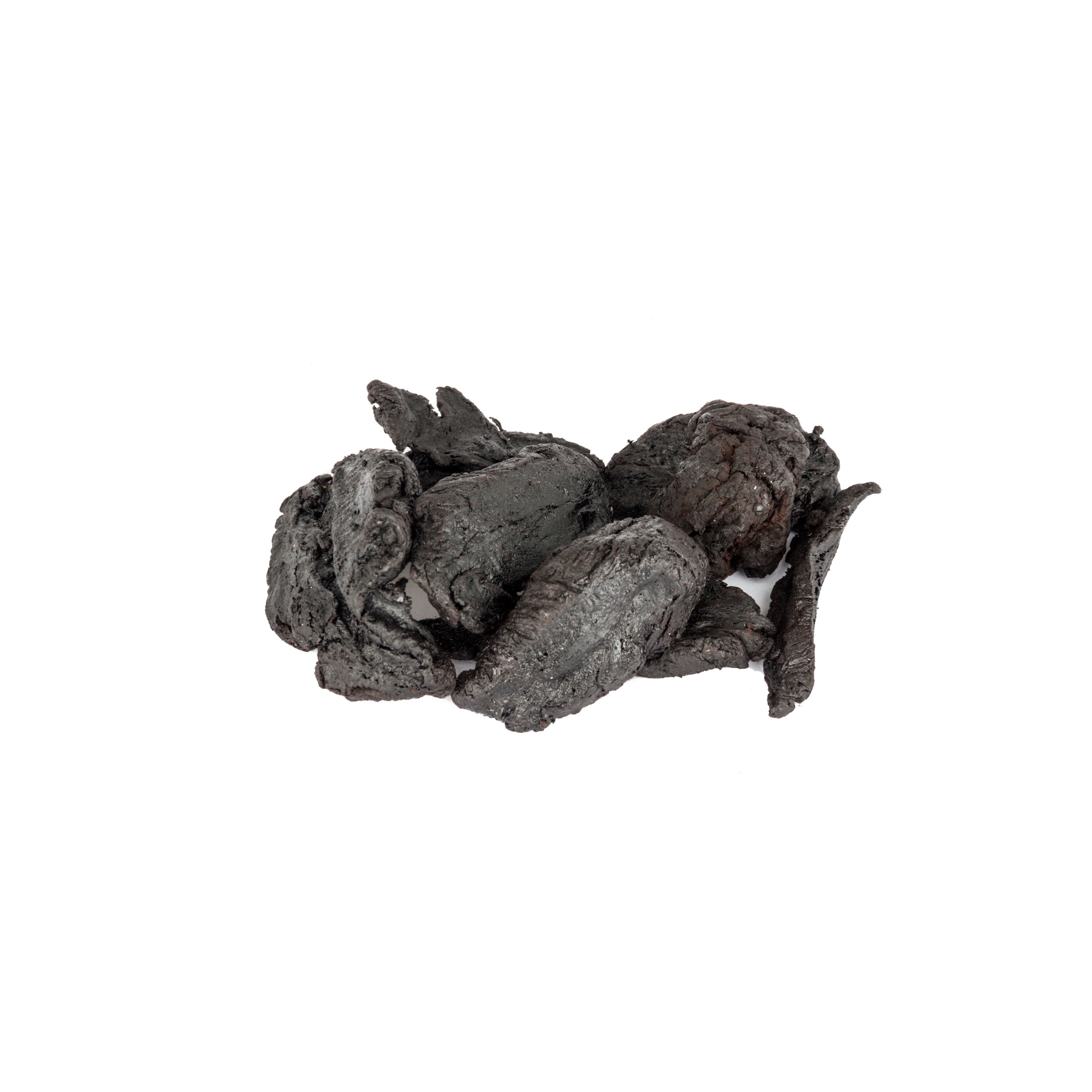
Rehmannioside A is a naturally occurring iridoid glycoside (catalpol-related / bis-glucoside), found in Rehmannia — root and 2 other sources. It is well tolerated orally (low toxicity).
Concentration
Content by Source
Concentrations not reported. No percent-dry-weight or mg/g figures have been published for this compound in its source plants.
Rehmannioside A at a Glance
Rehmannioside A is a catalpol-type iridoid glycoside — one of the bitter iridoids that give rehmannia (Rehmannia glutinosa, di huang) root its characteristic chemistry. Together with rehmanniosides B, C and D it forms the rehmannioside A–D set that, alongside catalpol, is used to fingerprint and grade the herb 2,
As an isolated molecule its evidence is thin and entirely preclinical. The one dedicated study reports that rehmannioside A improved cognition and suppressed ferroptosis in a rat stroke model and in neuronal cells 1Reference 1Rehmannioside A improves cognitive impairment and alleviates ferroptosis via activating PI3K/AKT/Nrf2 and SLC7A11/GPX4 signaling pathway after ischemiaView study →; there are no human trials of the isolate. Rehmannia’s real human footprint is the whole root decoction, a complex mix of iridoids, phenylethanoid glycosides and polysaccharides — not any single rehmannioside 3Reference 3ReviewRehmannia glutinosa: review of botany, chemistry and pharmacologyView study →.
Read it as a marker-and-mechanism story with one preclinical signal, held honestly. Where the herb is genuinely used, the tested agent is the decoction; rehmannioside A is a constituent and a quality marker within it.
A Rehmannia Iridoid Marker
The most useful framing for rehmannioside A is taxonomic and analytical rather than pharmacological. It is a Rehmannia-characteristic iridoid, structurally in the catalpol family, and it is one of the compounds laboratories quantify to confirm identity and grade of di huang 2,
Among the rehmanniosides A–D. Rehmannia root carries a small suite of related iridoid glycosides — rehmannioside A, B, C and D — that co-occur with catalpol (the herb’s principal and most-studied iridoid) and leonuride/aucubin-type iridoids 2Reference 2Four new iridoid glycosides from the roots of Rehmannia glutinosaView study →. Rehmannioside D is usually the most abundant of the set and, with catalpol, is the marker most often written into pharmacopoeial assays; rehmannioside A is the lower-abundance sibling measured alongside it. New iridoid glycosides are still being isolated from the root, so the family is not closed 2Reference 2Four new iridoid glycosides from the roots of Rehmannia glutinosaView study →, and the root’s iridoid fraction as a whole has its own reported activity — for example hepatoprotective iridoid glycosides isolated from rehmannia root — which is a property of the fraction, not evidence for rehmannioside A specifically 5Reference 5Hepatoprotective iridoid glycosides from the roots of Rehmannia glutinosaView study →.
Relationship to catalpol. Rehmannioside A is a catalpol-related iridoid — a glycosylated congener of the same catalpol scaffold that dominates rehmannia’s iridoid pharmacology. That kinship is why the isolate’s one reported mechanism (a Nrf2-anchored antioxidant/neuroprotective effect) echoes the far larger catalpol literature. But kinship is not equivalence: catalpol has been tested across dozens of models, whereas rehmannioside A has essentially one, so the herb’s iridoid pharmacology should be read as catalpol’s, with rehmannioside A a minor, structurally-similar contributor.
A quality marker that tracks processing. Rehmannia is used in two forms with materially different chemistry — fresh/uncured Sheng Di Huang and steamed/prepared Shu Di Huang. The bitter iridoids degrade on steaming: catalpol falls sharply, and rehmannioside A also shows a declining trend with steaming time, though its bis-glycoside structure makes it somewhat more stable than the monoglycoside catalpol 6Reference 6Changes in the chemical components of processed Rehmanniae Radix distillate during different steaming timesView study →. So a rehmannioside A figure is partly a statement about preparation, and any claim about the compound has to be pinned to the form actually analysed.
What It's Used For
Beyond its role as a marker, rehmannioside A’s own pharmacology rests on a single preclinical study. The section below states that plainly rather than inflating it — there is no isolate human data, and the herb’s clinical evidence belongs to the whole root.
Support is an experimental score — weighted by study type (human > animal > in vitro) and volume. A beta, not a validated metric. Rehmannioside A has essentially one isolate application in the literature, so the table is deliberately short and the score stays modest by design.
The only application with dedicated isolate data. In a rat MCAO/reperfusion stroke model (rehmannioside A 80 mg/kg intraperitoneally) and in H₂O₂-injured SH-SY5Y neuronal cells (80 µM), rehmannioside A improved post-ischemic cognitive performance and alleviated ferroptosis — increasing the cystine transporter SLC7A11 and the anti-ferroptotic enzyme GPX4, and raising p-PI3K, p-AKT, nuclear Nrf2 and HO-1 versus model animals 1Reference 1Rehmannioside A improves cognitive impairment and alleviates ferroptosis via activating PI3K/AKT/Nrf2 and SLC7A11/GPX4 signaling pathway after ischemiaView study →.
Mechanistically this is the same antioxidant/anti-ferroptosis axis that recurs across the rehmannia iridoids, and it is consistent with the traditional use of rehmannia for age-related cerebrovascular decline — but it is one study, in the isolate, dosed parenterally.
Gap: a single rodent/cell study with no independent replication and no human data; the intraperitoneal route bypasses the poor oral absorption expected of a polar iridoid glycoside, so the effect does not translate to an achievable oral human exposure 1Reference 1Rehmannioside A improves cognitive impairment and alleviates ferroptosis via activating PI3K/AKT/Nrf2 and SLC7A11/GPX4 signaling pathway after ischemiaView study →.
Mechanisms
| Target / pathway | Effect | Relevant to |
|---|---|---|
| PI3K / AKT signalling | activated (↑ p-PI3K, ↑ p-AKT) | neuroprotection (post-ischemic) |
| Nrf2 / HO-1 | activated (↑ nuclear Nrf2, ↑ HO-1) | antioxidant / neuroprotective core |
| SLC7A11 / GPX4 (system xc⁻ → glutathione) | upregulated → ferroptosis suppressed | anti-ferroptosis (ischemic neurons) |
| Iridoid class (catalpol-type) | shared antioxidant/anti-inflammatory scaffold behaviour | why the isolate echoes catalpol’s neuroprotection |
The load-bearing point is that all of the above comes from a single study 1Reference 1Rehmannioside A improves cognitive impairment and alleviates ferroptosis via activating PI3K/AKT/Nrf2 and SLC7A11/GPX4 signaling pathway after ischemiaView study →. The mechanism is plausible and class-consistent, but it has not been reproduced, and the compound’s own pharmacology should not be read as the equal of the much larger catalpol literature it resembles.
Pharmacokinetics
There is no dedicated pharmacokinetic study of isolated rehmannioside A. As a polar iridoid bis-glucoside, it would be expected to behave like other iridoid glucosides here — aucubin and its relatives — which are poorly absorbed orally, are susceptible to gastric/intestinal degradation and gut β-glucosidase cleavage of the sugar, and show short half-lives. Consistent with that expectation, the one efficacy study delivered rehmannioside A by intraperitoneal injection rather than by mouth 1Reference 1Rehmannioside A improves cognitive impairment and alleviates ferroptosis via activating PI3K/AKT/Nrf2 and SLC7A11/GPX4 signaling pathway after ischemiaView study →, which sidesteps the absorption question. Its comparative stability on steaming — greater than monoglycoside catalpol but still declining 6Reference 6Changes in the chemical components of processed Rehmanniae Radix distillate during different steaming timesView study → — is a formulation property, not an in-vivo disposition figure. Quantitative oral bioavailability, metabolism and half-life for the isolate are unmeasured and tracked as gaps.
Clinical Trials
There are no clinical trials of isolated rehmannioside A, and none registered. Human evidence in this area belongs to whole rehmannia root and rehmannia-containing formulas, where rehmannioside A is one constituent among many and is not the tested agent 3,
| Completed | Planned | Terminated | Preclinical |
|---|---|---|---|
| —(none, isolate) | — | — | Minimal(one rat MCAO + cell neuroprotection study 1Reference 1Rehmannioside A improves cognitive impairment and alleviates ferroptosis via activating PI3K/AKT/Nrf2 and SLC7A11/GPX4 signaling pathway after ischemiaView study →) |
Last checked: July 2026.
Isolate vs. Plant Studies
The split here is stark and worth stating directly. The isolate literature is a single preclinical study — rehmannioside A given by injection to rats and applied to a neuronal cell line 1Reference 1Rehmannioside A improves cognitive impairment and alleviates ferroptosis via activating PI3K/AKT/Nrf2 and SLC7A11/GPX4 signaling pathway after ischemiaView study →. Everything else about rehmannia’s activity comes from the whole plant: fresh or prepared root decoctions and multi-herb formulas whose effects are attributed to the combined iridoid, phenylethanoid-glycoside (e.g. verbascoside) and polysaccharide fractions, not to any one rehmannioside 3Reference 3ReviewRehmannia glutinosa: review of botany, chemistry and pharmacologyView study →. Where rehmannioside A appears in analytical work, it is almost always as a standardisation marker — a way to confirm what the root is and how it was processed 2,
Prevalence in Nature
Rehmannioside A is, for practical purposes, a Rehmannia-genus iridoid. It is found in the root of Rehmannia glutinosa (di huang), the source that matters medicinally, as one of the rehmannioside A–D glycosides that co-occur there with catalpol, leonuride and other iridoids and with phenylethanoid glycosides such as verbascoside (acteoside) 2,
Absolute content is not reliably established as % dry weight for rehmannioside A specifically, and any figure is confounded by preparation: the iridoids degrade on steaming, so prepared Shu Di Huang carries less than fresh Sheng Di Huang 6Reference 6Changes in the chemical components of processed Rehmanniae Radix distillate during different steaming timesView study →. (Reported per-gram figures for the herb often quote the more abundant markers — catalpol and rehmannioside D — rather than rehmannioside A, and one widely-cited “rehmaionoside A” value refers to a different, ionone-type glycoside, not this iridoid.) A dependable isolate concentration ranking is a gap tracked for a later pass rather than asserted here.
As always, a constituent’s occurrence in a medicinal root is botany, not human pharmacology, and does not by itself predict what the isolated molecule does as a medicine.
Discovery & Synthesis
Rehmannioside A was characterised from Rehmannia glutinosa root as part of the late-20th-century phytochemical effort to catalogue the herb’s bitter iridoid glycosides — the same body of natural-product chemistry that named catalpol and the other rehmanniosides; a precise first-isolation date and author are not well documented here and are left for a later verification pass. The molecule takes its name directly from the genus Rehmannia.
Total synthesis of rehmannioside A is not a documented or practical route, and it is not a manufactured compound: research-grade material is obtained by extraction and chromatographic isolation from rehmannia root, where the iridoids are abundant enough to make isolation the obvious source. Its chemistry — a polar, acid- and steam-labile bis-glucoside — makes synthesis unattractive versus extraction, mirroring the other iridoid glucosides here.
Patents: not yet researched.
Toxicity & Safety
Rehmannioside A carries a low flag — the default for a bitter iridoid glucoside of a long-used food-and-medicine root, with no acute toxicity signal reported at the dose used in the one animal study 1Reference 1Rehmannioside A improves cognitive impairment and alleviates ferroptosis via activating PI3K/AKT/Nrf2 and SLC7A11/GPX4 signaling pathway after ischemiaView study →. The rating stays at “low” rather than “none” because there is no isolate toxicology package and the iridoid-class chemistry (β-glucosidase release of a reactive aglycone, as documented for related iridoids) warrants ordinary caution at high or aglycone exposure.
- A constituent of a long-used medicinal root. Rehmannia root has a low-toxicity, well-tolerated record in customary decoction use; no acute toxicity was reported for rehmannioside A at the studied dose 1,
3Reference 1Rehmannioside A improves cognitive impairment and alleviates ferroptosis via activating PI3K/AKT/Nrf2 and SLC7A11/GPX4 signaling pathway after ischemiaView study →Reference 3ReviewRehmannia glutinosa: review of botany, chemistry and pharmacologyView study → . - Real-world exposure is small and indirect. As one iridoid marker within a whole-root decoction, incidental intake of rehmannioside A is low.
- Iridoid-class chemistry. Like other iridoid glucosides, gut β-glucosidase can cleave the sugar to a reactive aglycone — a general class caveat for high-dose or aglycone exposure rather than an observed harm for this compound.
- No isolate toxicology. No LD50, genotoxicity, repeat-dose or reproductive-safety dataset exists for pure rehmannioside A; safety is inferred from the parent herb, not established for the molecule.
Full Safety & Interactions Detail
Rehmannioside A has not been characterised for safety as an isolated compound. Its low flag is inherited from the parent herb: rehmannia root is a widely-used TCM material with a low-toxicity, well-tolerated profile in decoction, and the single efficacy study reported no acute toxicity at 80 mg/kg in rats 1,
The caveats are evidentiary and chemical rather than observed harms. First, as an iridoid glucoside, rehmannioside A belongs to a class in which gut and tissue β-glucosidase can liberate an aglycone; for the related iridoid aucubin the aglycone is reactive, which is the class basis for treating high-dose or aglycone exposure cautiously (see aucubin). Second, there is no comprehensive isolate toxicology — no definitive LD50, genotoxicity or repeat-dose organ-toxicity data, and no reproductive or developmental-toxicity dataset for pure rehmannioside A. Any pregnancy or lactation caution around rehmannia use is a decision about the whole herb and belongs on the rehmannia monograph, where intake is decided, not on this molecule page. No isolate-specific drug-interaction data (CYP/transporter) exist for rehmannioside A; the CYP-inhibition signal reported for rehmannia is a constituent-level, in-vitro finding tied to catalpol, not to this compound.
Dosage
There is no established or recommended human dose for isolated rehmannioside A — it has never been given to people as an isolate for therapy. The only figures in the literature are preclinical research doses: rehmannioside A 80 mg/kg intraperitoneally in rats and 80 µM in neuronal cells in the single neuroprotection study 1Reference 1Rehmannioside A improves cognitive impairment and alleviates ferroptosis via activating PI3K/AKT/Nrf2 and SLC7A11/GPX4 signaling pathway after ischemiaView study →. Because these were dosed by injection or in vitro, and because the polar glucoside is expected to be poorly absorbed by mouth, they do not translate to an oral human dose.
Real-world human exposure is indirect, through rehmannia root preparations — traditionally Sheng Di Huang (fresh/uncured) and Shu Di Huang (steamed/prepared) at roughly 9–15 g/day in decoction — within which rehmannioside A is one iridoid among many and its content varies with processing 3,
References
- Fu C, et al. (2022). Rehmannioside A improves cognitive impairment and alleviates ferroptosis via activating PI3K/AKT/Nrf2 and SLC7A11/GPX4 signaling pathway after ischemia. Journal of Ethnopharmacology. https://pubmed.ncbi.nlm.nih.gov/35091012/
- Liu YF, et al. (2024). Four new iridoid glycosides from the roots of Rehmannia glutinosa. Journal of Asian Natural Products Research. https://pubmed.ncbi.nlm.nih.gov/37162445/
- Zhang RX, et al. (2008). Rehmannia glutinosa: review of botany, chemistry and pharmacology. Journal of Ethnopharmacology. https://pubmed.ncbi.nlm.nih.gov/18407446/
- Jia J, et al. (2023). Progress of research into the pharmacological effect and clinical application of the traditional Chinese medicine Rehmanniae Radix. Biomedicine & Pharmacotherapy. https://pubmed.ncbi.nlm.nih.gov/37907043/
- Liu YF, et al. (2012). Hepatoprotective iridoid glycosides from the roots of Rehmannia glutinosa. Journal of Natural Products. https://pubmed.ncbi.nlm.nih.gov/22916954/
- Xue S, et al. (2022). Changes in the chemical components of processed Rehmanniae Radix distillate during different steaming times. Evidence-Based Complementary and Alternative Medicine. https://pubmed.ncbi.nlm.nih.gov/35222668/



