
Compound Monograph
Rhynchophylline
Rhynchophylline is the marker tetracyclic oxindole alkaloid of the Chinese Uncaria (gou teng, U. rhynchophylla; also cat's claw). Its best-characterized actions are cardiovascular (L-type calcium-channel-blocking vasodilation, studied even in human artery) and neurological (a non-competitive NMDA-receptor antagonist behind neuroprotective and anti-addiction signals). All evidence is preclinical, and it is only a minor, variable alkaloid of kratom — the activity is Uncaria-studied, not a kratom effect.

Sources · 4
Where Does It Come From?
Rhynchophylline is a naturally occurring alkaloid (tetracyclic oxindole alkaloid), found in Uncaria rhynchophylla, Cat's Claw, Kratom and 1 other source. It is well tolerated orally (low toxicity).
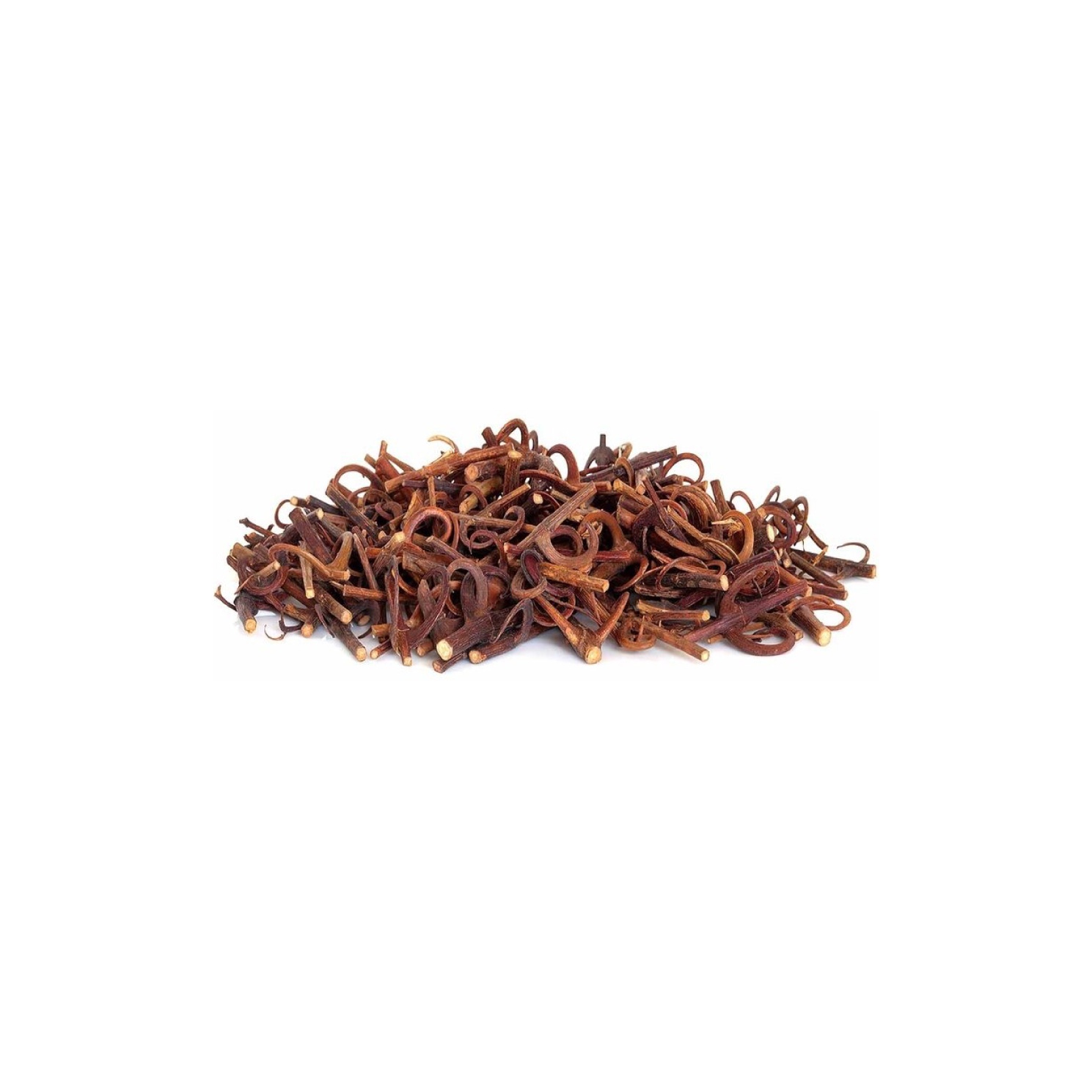 Source Cat's Claw Uncaria tomentosa Herb monograph →
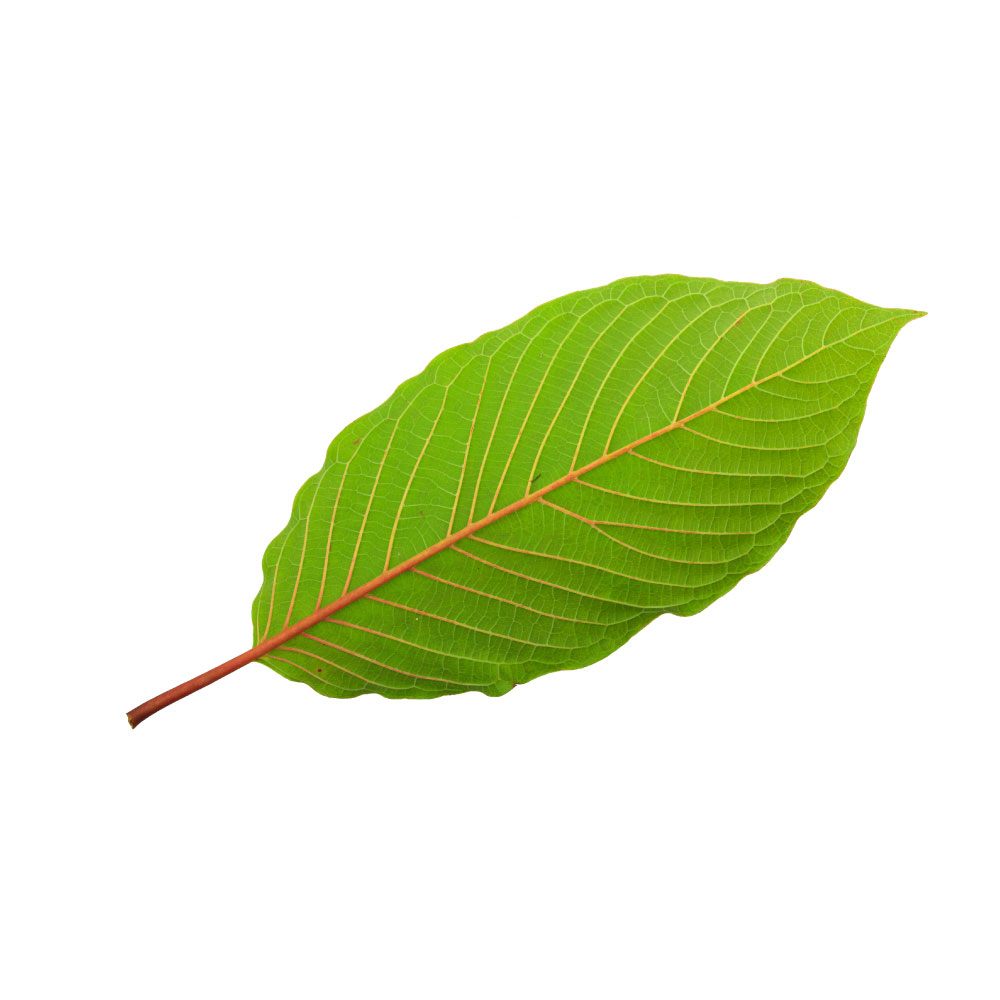 Source Kratom Mitragyna speciosa Herb monograph →
Concentration
Content by Source
Concentrations not reported. No percent-dry-weight or mg/g figures have been published for this compound in its source plants.
Rhynchophylline at a Glance
Rhynchophylline is the marker tetracyclic oxindole alkaloid of the Chinese Uncaria — chiefly U. rhynchophylla, the hooked vine known in Chinese medicine as gou teng — and is also present in Amazonian cat’s claw (U. tomentosa). It is the molecule most often invoked to explain gou teng’s traditional use for hypertension, dizziness, convulsions and “wind” disorders.
Its two best-characterized activities are cardiovascular — an endothelium-independent vasodilator that blocks L-type calcium channels, demonstrated even in isolated human artery — and neurological, where it behaves as a non-competitive NMDA-receptor antagonist 4,
Two honest caveats frame everything below. First, all of this is preclinical — isolated tissue, cell culture and rodents; there is no human trial of the isolate. Second, although rhynchophylline is a shared Uncaria/Mitragyna oxindole alkaloid, it is only a minor and highly variable alkaloid of kratom — the pharmacology was worked out in Uncaria, and reading it onto a cup of kratom is not supported. A marker alkaloid is not the whole plant.
Rhynchophylline vs. the Uncaria Alkaloids
Uncaria carries two chemically distinct alkaloid families, and keeping them straight is the point.
- Oxindole alkaloids — a spiro-oxindole core, split into tetracyclic and pentacyclic ring systems. Rhynchophylline is the marquee tetracyclic oxindole; its co-alkaloid mitraphylline is the marquee pentacyclic oxindole (an anti-inflammatory signal). Rhynchophylline’s own stereoisomer, isorhynchophylline, differs only in configuration at the spiro-centre yet is routinely studied alongside it — the two share NMDA antagonism and vasodilation, and interconvert on heating 4,
5Reference 4Rhynchophylline and isorhynchophylline inhibit NMDA receptors expressed in Xenopus oocytesView study →Reference 5AnimalRhynchophylline protects cultured rat neurons against methamphetamine cytotoxicityView study → . - Indole alkaloids — the non-oxindole scaffold, represented by hirsutine (the calcium-channel-blocking, antiviral corynanthe-indole).
So gou teng’s cardiovascular story is really two molecules from two families pointing the same way: the tetracyclic oxindole rhynchophylline and the corynanthe-indole hirsutine both block calcium channels and relax vessels 1,
Do not confuse rhynchophylline with kratom’s mitragynine. Mitragynine is a corynanthe indole alkaloid and a µ-opioid partial agonist — a different scaffold with a different receptor. Rhynchophylline is an oxindole with no opioid activity; the molecules co-occur in the Rubiaceae but are not pharmacological substitutes.
Not a Kratom Effect
Rhynchophylline appears on kratom pages because Mitragyna speciosa and Uncaria both sit in the Rubiaceae and share several oxindole alkaloids. But in kratom it is a minor, strain- and season-variable component, dwarfed by mitragynine — itself the dominant alkaloid (up to ~5% of dry leaf and highly season/provenance-dependent) — and its potent metabolite 7-hydroxymitragynine, the alkaloids that actually drive kratom’s opioid, stimulant and sedative profile 15Reference 15Seasonal and geographic variation in alkaloid content of kratom (Mitragyna speciosa (Korth.) Havil.) from ThailandView study →.
Every cardiovascular, NMDA and neuroprotective finding below was generated in Uncaria material — isolated alkaloid, gou teng extract, or the pure compound in cell/animal models — not from kratom ingestion. The honest reading: rhynchophylline is a real, interesting molecule, but its documented pharmacology belongs to Uncaria, and it should not be used to infer what kratom does.
What It's Used For
Rhynchophylline’s literature is coherent and mechanistically specific — an L-type calcium-channel blocker with NMDA-antagonist neuroactivity — but entirely preclinical.
Support is an experimental score — weighted by study type (human > animal > in vitro) and volume. A beta, not a validated metric. No human isolate data, so scores stay low by design; the cardiovascular row edges up only because some work used human vascular tissue.
Rhynchophylline’s oldest and best-characterized signal, and the rationale for gou teng’s traditional antihypertensive use 1Reference 1Hypotensive principles of Uncaria hooksView study →.
In isolated vessels it is an endothelium-independent vasodilator acting mainly by blocking L-type (voltage-gated) Ca²⁺ channels: in rat mesenteric and renal arteries it relaxes KCl- and agonist-induced contraction, with lesser effects on other Ca²⁺-handling pathways 2Reference 2In vitroIn vitro vasodilator mechanisms of the indole alkaloids rhynchophylline and isorhynchophylline, isolated from the hook of Uncaria rhynchophylla (Miquel)View study →, and — unusually for this class of data — the same L-type-channel mechanism was confirmed in freshly isolated human mesenteric-artery smooth muscle by patch clamp 3Reference 3Rhynchophylline-induced vasodilation in human mesenteric artery is mainly due to blockage of L-type calcium channels in vascular smooth muscle cellsView study →.
The broader review literature adds central sympatholytic and antiarrhythmic components to the antihypertensive picture 12Reference 12Properties, pharmacology and pharmacokinetics of active indole and oxindole alkaloids in Uncaria hookView study →.
Gap: all isolated-tissue/animal (with human tissue, not a human dosed trial); potency sits in the µM range and there is no clinical blood-pressure or arrhythmia study of the isolate 2,
The thread that makes rhynchophylline distinctive. It is a non-competitive NMDA-receptor antagonist (IC50 ~43.2 µM in Xenopus oocytes, voltage-independent), a mechanism shared with its isomer isorhynchophylline 4Reference 4Rhynchophylline and isorhynchophylline inhibit NMDA receptors expressed in Xenopus oocytesView study → — and excess NMDA/glutamate signalling and Ca²⁺ influx drive excitotoxic neuronal death. Downstream, rhynchophylline protected primary cortical neurons from methamphetamine toxicity by blunting the intracellular Ca²⁺ overload MA triggers 5Reference 5AnimalRhynchophylline protects cultured rat neurons against methamphetamine cytotoxicityView study →, protected cerebellar neurons against the Parkinsonian toxin MPP⁺ by activating a PI3-K/Akt/GSK3β/MEF2D survival pathway 6Reference 6Neuroprotection against MPP⁺-induced cytotoxicity through the activation of PI3-K/Akt/GSK3β/MEF2D signaling pathway by rhynchophylline, the major tetracyclic oxindole alkaloid isolated from Uncaria rhynchophyllaView study →, and shows anti-excitotoxic/anti-ischemic activity across the review literature 8Reference 8Antihypertensive and neuroprotective activities of rhynchophylline: the role of rhynchophylline in neurotransmission and ion channel activityView study →.
Gap: cell-culture and rodent models only, at µM concentrations, with no human neurological data on the isolate — and the equally-studied isomer isorhynchophylline carries much of this class signal, so it is a genus story, not a rhynchophylline-only one 4,
A consistent secondary signal in neuroinflammation models. In LPS-activated microglia (both the N9 line and primary microglia) rhynchophylline — and isorhynchophylline — cut nitric oxide, TNF-α, IL-1β and other mediators by down-regulating iNOS and suppressing NF-κB together with ERK/p38 MAPK signalling 9,
Gap: in-vitro/cell-based, mostly microglial lines, with no in-vivo anti-inflammatory efficacy or human data for the isolate 9,
A small but real and mechanistically-linked thread flowing from the NMDA action. The NMDA-receptor NR2B subunit is important to psychostimulant reward, and rhynchophylline reversed amphetamine-induced increases in NR2B mRNA/protein in the medial prefrontal cortex and hippocampal CA1 of rats showing conditioned place preference — i.e. it blunted a behavioural marker of drug reward 7Reference 7AnimalRhynchophylline down-regulates NR2B expression in cortex and hippocampal CA1 area of amphetamine-induced conditioned place preference ratView study →, consistent with the methamphetamine-neuroprotection finding 5Reference 5AnimalRhynchophylline protects cultured rat neurons against methamphetamine cytotoxicityView study →.
Gap: a handful of rodent behavioural/expression studies, no human data, and the effect is inferential from NR2B/place-preference rather than a demonstrated addiction-treatment outcome 7Reference 7AnimalRhynchophylline down-regulates NR2B expression in cortex and hippocampal CA1 area of amphetamine-induced conditioned place preference ratView study →.
Mechanisms
| Target / pathway | Effect | Relevant to |
|---|---|---|
| L-type (voltage-gated) Ca²⁺ channel (vascular smooth muscle) | blocked → endothelium-independent vasorelaxation | antihypertensive / vasodilatory |
| Central vasomotor tone / sympathetic outflow | reduced (reflex + central) | antihypertensive |
| Cardiac ion handling | negative chronotropy / antiarrhythmic (review-level) | antiarrhythmic |
| NMDA receptor | non-competitive antagonism (IC50 ~43 µM), voltage-independent | neuroprotection; anti-excitotoxicity |
| Neuronal intracellular Ca²⁺ overload | attenuated (methamphetamine model) | neuroprotection; anti-addiction |
| PI3-K/Akt → GSK3β inhibition → MEF2D | survival pathway activated (MPP⁺ model) | Parkinsonian neuroprotection |
| iNOS / NF-κB / ERK–p38 MAPK (microglia) | suppressed → lower NO, TNF-α, IL-1β | anti-inflammatory |
| NMDA-receptor NR2B subunit (cortex/hippocampus) | expression down-regulated | anti-addiction (preclinical) |
The load-bearing point is that one molecule reaches two systems through calcium: it blocks L-type Ca²⁺ channels in blood vessels (vasodilation) and, separately, antagonizes the Ca²⁺-permeable NMDA receptor in neurons (neuroprotection). Different channels, same theme.
Pharmacokinetics
Rhynchophylline’s pharmacokinetics are characterized only in rodents. After oral dosing in mice its oral bioavailability was ~49% with a rapid clearance (terminal half-life within a 0.6–4.4 h range across the six co-measured Uncaria alkaloids) 13Reference 13AnimalSimultaneous determination of six Uncaria alkaloids in mouse blood by UPLC-MS/MS and its application in pharmacokinetics and bioavailabilityView study →; in rats it and its isomer isorhynchophylline undergo extensive phase-I biotransformation (oxidation/hydroxylation and related metabolites) 14Reference 14AnimalBiotransformation and pharmacokinetic studies of four alkaloids from Uncaria rhynchophylla in rat plasma by ultra-performance liquid chromatography with tandem mass spectrometryView study →, and a Uncaria-hook review notes CYP-mediated metabolism, measurable brain distribution consistent with its central actions, and generally modest, variable oral exposure typical of the alkaloid class 12Reference 12Properties, pharmacology and pharmacokinetics of active indole and oxindole alkaloids in Uncaria hookView study →. There is no validated human pharmacokinetic data.
Clinical Trials
There are no human trials of isolated rhynchophylline. All cardiovascular, NMDA/neuroprotective, anti-inflammatory and anti-addiction data are in-vitro (including human vascular tissue) or animal; human Uncaria/gou teng use is traditional and extract-based, not attributable to this single molecule.
| Completed | Planned | Terminated | Preclinical |
|---|---|---|---|
| —(none, isolate) | — | — | Modest(cardiovascular + neuro-led) |
Last checked: July 2026.
Isolate vs. Plant Studies
The evidence is unusually isolate-forward for a botanical alkaloid: rhynchophylline (and its isomer isorhynchophylline) have been purified and tested directly in vessels, oocytes, neurons and microglia 2,
Prevalence in Nature
Rhynchophylline is a hook/stem alkaloid of the genus Uncaria (Rubiaceae). Its richest and best-studied source is the Chinese gou teng, Uncaria rhynchophylla — the hooked branchlets used in Chinese medicine — where it and isorhynchophylline are the marker tetracyclic oxindoles; it also occurs in U. sinensis, U. macrophylla and Amazonian cat’s claw (U. tomentosa) 17Reference 17Ethnobotany, phytochemistry and pharmacology of Uncaria (Rubiaceae)View study →. Total oxindole-alkaloid content in Uncaria is low — on the order of tenths of a percent of dry material — and varies widely with species, plant part, chemotype and season 17Reference 17Ethnobotany, phytochemistry and pharmacology of Uncaria (Rubiaceae)View study →.
Beyond Uncaria, rhynchophylline is one of several oxindole alkaloids shared with kratom (Mitragyna speciosa), but there it is a minor and highly variable constituent, not a defining one 15Reference 15Seasonal and geographic variation in alkaloid content of kratom (Mitragyna speciosa (Korth.) Havil.) from ThailandView study →. Quantitative per-source figures for the free alkaloid are sparse in the accessible literature; the specific ranges are logged as a gap to chase rather than guessed at here.
Discovery & Synthesis
Rhynchophylline was isolated from Uncaria rhynchophylla by mid-20th-century natural-product chemists working on the traditional Chinese “gou teng” hook; the exact first-isolation date and worker are not cleanly documented in the accessible literature, and the compound is named directly for its source species (rhynchophylla). Its structure is a spiro-oxindole with a tetracyclic ring system, and it exists in equilibrium with its C-7 epimer isorhynchophylline, the two interconverting under heat — a fact that complicates both isolation and any “single-alkaloid” quantitation 4,
Because Uncaria alkaloids are structurally intricate spiro-oxindoles and are present at low natural abundance, practical supply is still overwhelmingly by extraction from gou teng, and rhynchophylline functions in practice as a standardization/quality marker for the herb rather than a manufactured drug substance. A first total synthesis and a modern preparative route are not well documented here.
Patents: not yet researched.
Toxicity & Safety
Rhynchophylline carries a low flag on the available preclinical data — no LD50 or dedicated toxicology package for the isolate was located, and its active concentrations sit in the µM range. As with its sibling hirsutine, the honest qualifier is pharmacology, not documented harm: rhynchophylline is genuinely cardioactive (an L-type calcium-channel blocker with review-level antiarrhythmic activity) and centrally active (NMDA antagonism, sedative effects in the traditional literature), so its plausible risks follow from those mechanisms.
- Not mitragynine, not an opioid. A distinct oxindole scaffold; kratom’s opioid and dependence pharmacology does not apply.
- Cardioactive at pharmacological exposures. As an L-type Ca²⁺-channel blocker it is plausibly hypotensive/bradycardic and antiarrhythmic — the same properties that make it interesting make it something to respect.
- Additive with cardiovascular drugs. Plausibly additive with calcium-channel blockers, antihypertensives and antiarrhythmics.
- Central activity. NMDA antagonism and sedative/anticonvulsant signals mean additive CNS effects are conceivable with sedatives.
- No human safety data or LD50. No genotoxicity or repeat-dose toxicology for the isolate was located; cardioactivity is inferred pharmacology, not a measured harm.
Full Safety & Interactions Detail
Rhynchophylline has a low verdict on the available preclinical data — no LD50, genotoxicity or repeat-dose study for the isolate was located, and its documented activity (vasodilation, NMDA antagonism, microglial anti-inflammation) sits at µM concentrations 2,
The load-bearing caution is pharmacology, not toxicity signal: it is a genuine L-type calcium-channel blocker and is described with antiarrhythmic and central (NMDA-antagonist, sedative/anticonvulsant) activity in the review literature 11,
Reproductive note (prose only). No dedicated reproductive-toxicity dataset exists for isolated rhynchophylline, and Uncaria species are traditionally cautioned in pregnancy; pregnancy/lactation decisions belong on the herb or product page where intake is decided, not on this molecule page.
Dosage
There is no established human dose for isolated rhynchophylline, and it is not a standalone supplement — it functions as a standardization marker for gou teng (Uncaria rhynchophylla) extracts, not a dosed ingredient. The evidence exists only as in-vitro concentrations (µM-range vasodilation and NMDA antagonism; ~43 µM NMDA IC50) 4Reference 4Rhynchophylline and isorhynchophylline inhibit NMDA receptors expressed in Xenopus oocytesView study → and animal doses (oral rodent pharmacokinetic and behavioural studies) 7,
References
- Endo K, Oshima Y, Kikuchi H, Koshihara Y, Hikino H (1983). Hypotensive principles of Uncaria hooks. Planta Medica. https://pubmed.ncbi.nlm.nih.gov/6657789/
- Zhang WB, Chen CX, Sim SM, Kwan CY (2004). In vitro vasodilator mechanisms of the indole alkaloids rhynchophylline and isorhynchophylline, isolated from the hook of Uncaria rhynchophylla (Miquel). Naunyn-Schmiedeberg’s Archives of Pharmacology. https://pubmed.ncbi.nlm.nih.gov/14668978/
- Li PY, Zeng XR, Cheng J, Wen J, Inoue I, Yang Y (2013). Rhynchophylline-induced vasodilation in human mesenteric artery is mainly due to blockage of L-type calcium channels in vascular smooth muscle cells. Naunyn-Schmiedeberg’s Archives of Pharmacology. https://pubmed.ncbi.nlm.nih.gov/23812676/
- Kang TH, Murakami Y, Matsumoto K, Takayama H, Kitajima M, Aimi N, Watanabe H (2002). Rhynchophylline and isorhynchophylline inhibit NMDA receptors expressed in Xenopus oocytes. European Journal of Pharmacology. https://pubmed.ncbi.nlm.nih.gov/12433591/
- Xu DD, Hoeven R, Rong R, Cho WC (2012). Rhynchophylline protects cultured rat neurons against methamphetamine cytotoxicity. Evidence-Based Complementary and Alternative Medicine. https://pubmed.ncbi.nlm.nih.gov/22619690/
- Hu S, Mak S, Zuo X, Li H, Wang Y, Han Y (2018). Neuroprotection against MPP⁺-induced cytotoxicity through the activation of PI3-K/Akt/GSK3β/MEF2D signaling pathway by rhynchophylline, the major tetracyclic oxindole alkaloid isolated from Uncaria rhynchophylla. Frontiers in Pharmacology. https://pubmed.ncbi.nlm.nih.gov/30072894/
- Zhou JY, Mo ZX, Zhou SW (2010). Rhynchophylline down-regulates NR2B expression in cortex and hippocampal CA1 area of amphetamine-induced conditioned place preference rat. Archives of Pharmacal Research. https://pubmed.ncbi.nlm.nih.gov/20422365/
- Zhou J, Zhou S (2010). Antihypertensive and neuroprotective activities of rhynchophylline: the role of rhynchophylline in neurotransmission and ion channel activity. Journal of Ethnopharmacology. https://pubmed.ncbi.nlm.nih.gov/20736055/
- Yuan D, Ma B, Yang JY, Xie YY, Wang L, Zhang LJ, Kano Y, Wu CF (2009). Anti-inflammatory effects of rhynchophylline and isorhynchophylline in mouse N9 microglial cells and the molecular mechanism. International Immunopharmacology. https://pubmed.ncbi.nlm.nih.gov/19781666/
- Song Y, Qu R, Zhu S, Zhang R, Ma S (2012). Rhynchophylline attenuates LPS-induced pro-inflammatory responses through down-regulation of MAPK/NF-κB signaling pathways in primary microglia. Phytotherapy Research. https://pubmed.ncbi.nlm.nih.gov/22322985/
- Geetha RG, Ramachandran S (2021). Recent advances in the anti-inflammatory activity of plant-derived alkaloid rhynchophylline in neurological and cardiovascular diseases. Pharmaceutics. https://pubmed.ncbi.nlm.nih.gov/34452133/
- Kushida H, Matsumoto T, Ikarashi Y (2021). Properties, pharmacology and pharmacokinetics of active indole and oxindole alkaloids in Uncaria hook. Frontiers in Pharmacology. https://pubmed.ncbi.nlm.nih.gov/34335255/
- Chen L, Ma J, Wang X, Zhang M (2020). Simultaneous determination of six Uncaria alkaloids in mouse blood by UPLC-MS/MS and its application in pharmacokinetics and bioavailability. BioMed Research International. https://pubmed.ncbi.nlm.nih.gov/32879877/
- Jiang S, Yang X, Wang Z, Gan C, Huang J, Sun J, Peng H, Wei F, Wang Z, Yang C (2022). Biotransformation and pharmacokinetic studies of four alkaloids from Uncaria rhynchophylla in rat plasma by ultra-performance liquid chromatography with tandem mass spectrometry. Journal of Pharmaceutical and Biomedical Analysis. https://pubmed.ncbi.nlm.nih.gov/35691093/
- Sengnon N, Vonghirundecha P, Chaichan W, Juengwatanatrakul T, Onthong J, Kitprasong P, Sriwiriyajan S, Chittrakarn S, Limsuwanchote S, Wungsintaweekul J (2023). Seasonal and geographic variation in alkaloid content of kratom (Mitragyna speciosa (Korth.) Havil.) from Thailand. Plants (Basel). https://pubmed.ncbi.nlm.nih.gov/36840297/
- Loh YC, Ch’ng YS, Tan CS, Ahmad M, Asmawi MZ, Yam MF (2017). Mechanisms of action of Uncaria rhynchophylla ethanolic extract for its vasodilatory effects. Journal of Medical Food. https://pubmed.ncbi.nlm.nih.gov/28771084/
- Heitzman ME, Neto CC, Winiarz E, Vaisberg AJ, Hammond GB (2005). Ethnobotany, phytochemistry and pharmacology of Uncaria (Rubiaceae). Phytochemistry. https://pubmed.ncbi.nlm.nih.gov/15649507/



