
Compound Monograph
Mitragynine
Mitragynine is the dominant alkaloid of kratom (Mitragyna speciosa) — a corynanthe-type indole alkaloid, structurally unrelated to morphine, that behaves as a low-efficacy, G-protein-biased partial agonist at the mu-opioid receptor and is converted by CYP3A4 into the far more potent metabolite 7-hydroxymitragynine. This page is a scholarly pharmacology, toxicology, forensic and legal-status reference.

Sources · 3
Where Does It Come From?
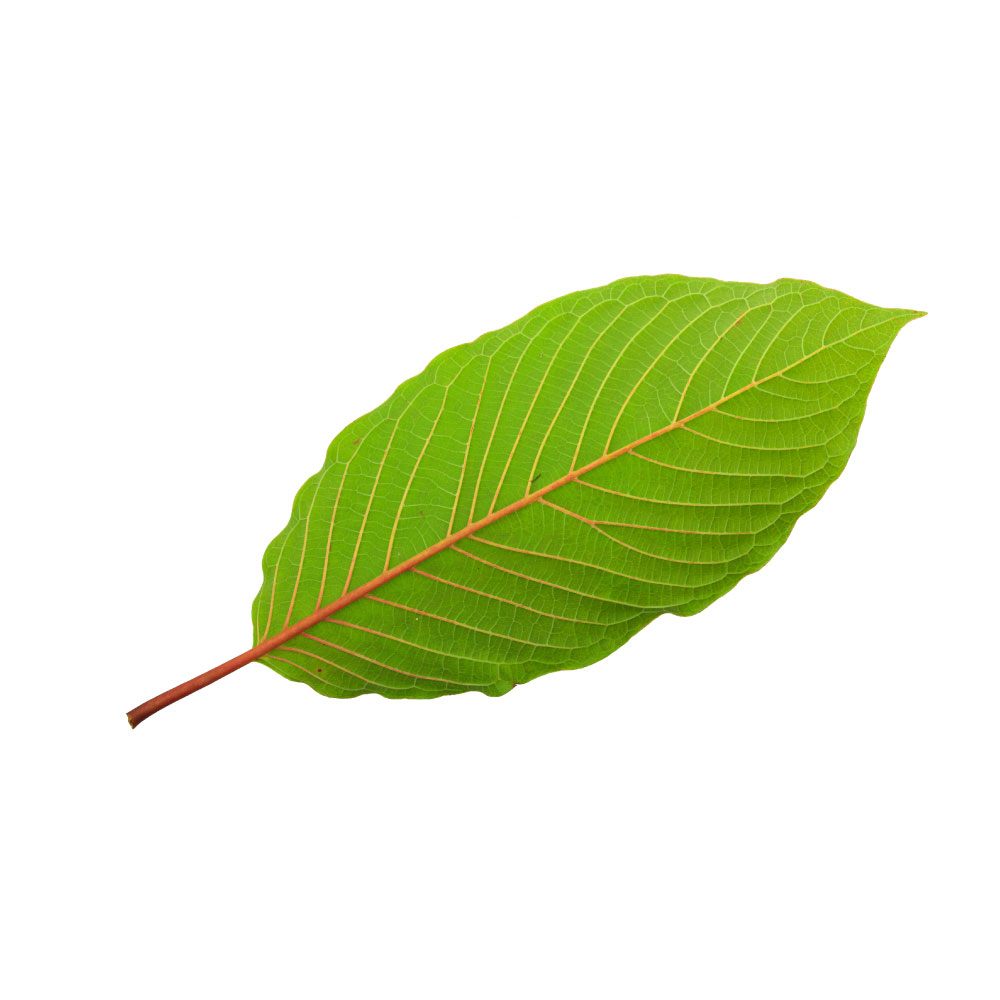
Mitragynine is a naturally occurring corynanthe-type monoterpene indole alkaloid, found in Kratom and 2 other sources. It is flagged as toxic.
Concentration
Content by Source
Reported concentrations across the plants that contain mitragynine — the bar marks the typical level, the line shows the reported range.
Literature figures for varying plant parts and preparations. Read them as a comparative guide, not exact assays.
Mitragynine at a Glance
Mitragynine is the principal alkaloid of kratom (Mitragyna speciosa), a Southeast Asian tree in the coffee family. It makes up roughly two-thirds of the leaf’s total alkaloid fraction and between about 0.7% and 4.9% of dry leaf weight, varying several-fold with genotype, season and provenance 42,
Structurally it is a corynanthe-type monoterpene indole alkaloid (systematically 9-methoxycorynantheidine), built on a tryptamine-derived skeleton. It has no structural relationship to morphine: it is not a morphinan, and molecular docking suggests it adopts a binding pose at the mu-opioid receptor that differs from that of classical opioids 1Reference 1Synthetic and Receptor Signaling Explorations of the Mitragyna Alkaloids: Mitragynine as an Atypical Molecular Framework for Opioid Receptor ModulatorsView study →. Functionally it behaves as a low-efficacy, G-protein-biased partial agonist at the human mu-opioid receptor with little or no β-arrestin recruitment, alongside meaningful non-opioid activity at adrenergic and serotonergic targets 1,
The single most important fact about mitragynine is metabolic. It is oxidised by CYP3A4 to 7-hydroxymitragynine, a far more potent and more efficacious mu-agonist, and there is a serious, well-evidenced argument that much of mitragynine’s opioid effect in vivo is really its metabolite’s — that mitragynine functions partly as a prodrug 3,
This is a scholarly pharmacology, toxicology, forensic and legal-status reference. It gives no dose for effect, no preparation, extraction or potentiation guidance, and no advice about use. It states the dependence liability, the hepatotoxicity signal and the forensic mortality data plainly, and is equally plain about how heavily confounded the harm data are.
The Biased-Agonism Argument, and Its Limits
The mechanistic story that made mitragynine famous runs like this. Classical opioid agonists activate the mu-opioid receptor through two downstream arms: G-protein signalling (associated with analgesia) and β-arrestin recruitment (historically associated with respiratory depression, constipation and tolerance). In the first receptor-level functional characterisation of the Mitragyna alkaloids at the human mu-, kappa- and delta-opioid receptors, Kruegel and colleagues found that mitragynine and 7-hydroxymitragynine are partial agonists at mu, competitive antagonists at kappa and delta, and G-protein-biased — they do not recruit β-arrestin following receptor activation 1Reference 1Synthetic and Receptor Signaling Explorations of the Mitragyna Alkaloids: Mitragynine as an Atypical Molecular Framework for Opioid Receptor ModulatorsView study →. If β-arrestin drives respiratory depression, a G-protein-biased mu-agonist should in principle deliver analgesia with a wider safety margin.
Three things should be held against that story.
1. The β-arrestin hypothesis itself has weakened badly. The foundational claim was tested directly in mice engineered without β-arrestin2 signalling at the mu receptor, and morphine-induced respiratory depression persisted — the effect is not β-arrestin-dependent 49Reference 49AnimalMorphine-induced respiratory depression is independent of β-arrestin2 signalling — mouse genetic modelView study →. A competing explanation emerged: what looks like “bias” in many biased-agonist candidates is better explained by low intrinsic efficacy for G-protein activation, which shifts the whole dose–response for every mu-mediated effect rather than separating good effects from bad 47Reference 47Low intrinsic efficacy for G protein activation can explain the improved side effect profiles of new opioid agonistsView study →. That reframing has itself been contested — a subsequent analysis argued low intrinsic efficacy alone cannot account for the improved side-effect profiles reported for these agonists 48Reference 48Low Intrinsic Efficacy Alone Cannot Explain the Improved Side Effect Profiles of New Opioid AgonistsView study →. The honest position is that biased agonism is an unsettled field, and the “safer opioid” inference drawn from it has not held up well.
2. Mitragynine’s own mu efficacy is disputed at the bench. A careful side-by-side comparison using [³⁵S]GTPγS stimulation at the mu receptor found mitragynine behaving as an antagonist, not an agonist, while 7-hydroxymitragynine was a partial agonist with an Emax of about 41% 2Reference 2In vitroPharmacological Comparison of Mitragynine and 7-Hydroxymitragynine: In Vitro Affinity and Efficacy for μ-Opioid Receptor and Opioid-Like Behavioral Effects in RatsView study →. In the same study 7-hydroxymitragynine had roughly nine-fold higher mu affinity than mitragynine, produced antinociception where mitragynine did not, and mitragynine actually decreased morphine antinociception while increasing the potency of morphine’s discriminative-stimulus effects 2Reference 2In vitroPharmacological Comparison of Mitragynine and 7-Hydroxymitragynine: In Vitro Affinity and Efficacy for μ-Opioid Receptor and Opioid-Like Behavioral Effects in RatsView study →. (The paper carries a published erratum affecting its reported binding constants, so the numerical affinities should be read from the corrected version; the qualitative direction — 7-hydroxymitragynine substantially higher in both affinity and efficacy — is not in dispute.) The reasonable synthesis is that mitragynine is a very low-efficacy mu ligand whose behaviour flips between “weak partial agonist” and “antagonist” depending on assay, receptor reserve and system.
3. Whatever bias exists may be moot if the metabolite is doing the work. See the next section.
What is robust is the observation that respiratory depression by mitragynine hits a ceiling. In freely moving mice, oral mitragynine produced no further respiratory depression above about 10 mg/kg, whereas 7-hydroxymitragynine was dose-dependent throughout; inhibiting CYP3A reduced mitragynine’s respiratory depression and antinociception without touching 7-hydroxymitragynine’s 4Reference 4AnimalThe respiratory depressant effects of mitragynine are limited by its conversion to 7-OH mitragynine — mouse in vivoView study →. The authors attribute the ceiling not to receptor bias but to metabolic saturation — a rate limit on how fast mitragynine can be converted to its active metabolite 4Reference 4AnimalThe respiratory depressant effects of mitragynine are limited by its conversion to 7-OH mitragynine — mouse in vivoView study →. That is a mechanistically different, and better-supported, explanation for the same clinical impression.
The Metabolite Question: Is Mitragynine a Prodrug?
This is the central unresolved issue in mitragynine pharmacology, and it is worth stating both sides.
The prodrug case. Mitragynine is converted, in both mouse and human liver preparations, to the much more potent mu-agonist 7-hydroxymitragynine, and the conversion is mediated by CYP3A isoforms 3,
The case against a simple prodrug reading. Mitragynine has substantial pharmacology that 7-hydroxymitragynine cannot account for. It binds adrenergic receptors and, unlike its metabolite, produces effects that are only partly naltrexone-reversible — in drug-discrimination work, naltrexone antagonised mitragynine’s discriminative-stimulus effects but not its rate-decreasing effects 2,
Where that leaves it. The defensible statement is that mitragynine’s mu-opioid effects are largely metabolite-mediated, but mitragynine is not merely a prodrug — it is a parent molecule with its own non-opioid pharmacology whose oxidative metabolites collectively, not singly, produce the observed profile 5Reference 5Oxidative Metabolism as a Modulator of Kratom’s Biological ActionsView study →. Two practical consequences follow. First, CYP3A activity becomes a determinant of effect: anything that induces or inhibits CYP3A shifts the balance between parent and metabolite. Second, commercial products that add concentrated or semi-synthetic 7-hydroxymitragynine are not “stronger kratom” — they deliver a pharmacologically different, more efficacious and more reinforcing agonist, bypassing the metabolic rate limit that produces the ceiling effect 40,
Non-Opioid Pharmacology
Framing mitragynine as “an opioid” understates it. The molecule is genuinely polypharmacological, and the non-opioid targets are what shape kratom’s atypical reported profile — stimulant-like at low exposure, sedative and analgesic at higher exposure.
Adrenergic. Mitragynine binds α-adrenergic receptors, though with lower affinity than at opioid receptors — the reverse of its sibling corynantheidine, which favours adrenergic over opioid targets 11Reference 11Investigation of the Adrenergic and Opioid Binding Affinities, Metabolic Stability, Plasma Protein Binding Properties, and Functional Effects of Selected Indole-Based Kratom AlkaloidsView study →. α₂-adrenergic activity is mechanistically interesting because α₂-agonists (clonidine, lofexidine) are established treatments for opioid-withdrawal symptoms, which offers a non-opioid route by which kratom alkaloids might blunt withdrawal 11,
Serotonergic. Mitragynine suppresses the 5-methoxy-N,N-dimethyltryptamine-induced head-twitch response in mice, a classic 5-HT2A-mediated behaviour — evidence of 5-HT2A antagonism 14Reference 14AnimalSuppressive effect of mitragynine on the 5-methoxy-N,N-dimethyltryptamine-induced head-twitch response in mice — animal modelView study →. Serotonergic activity is repeatedly invoked to explain the mood-related effects reported by users, but the receptor-level work behind it is thin and mostly old.
Supraspinal opioid action. The earliest mechanistic animal work established that mitragynine’s antinociception involves supraspinal opioid receptors, with subsequent work identifying the receptor subtypes engaged 12,
The biphasic framing. The “stimulant at low exposure, sedative and analgesic at higher exposure” description entered the modern literature through early pharmacology reviews and has been carried forward largely on the strength of user report rather than controlled dose–response work 57Reference 57ReviewPharmacology of kratom: an emerging botanical agent with stimulant, analgesic and opioid-like effects — reviewView study →. It remains the standard clinical-pharmacology summary of the leaf 55Reference 55ReviewClinical Pharmacology of the Dietary Supplement Kratom (Mitragyna speciosa) — reviewView study →.
The polypharmacology argument. Reviews synthesising the last decade of work conclude that kratom is more accurately described as a substance with diverse and complex pharmacology than as a simple opioid, and that the popular framing as “an opioid” drives both regulatory and clinical misjudgements 37,
What It's Used For
The evidence base is lopsided: extensive receptor pharmacology and rodent work on the isolated molecule, a large observational and survey literature on the whole leaf, and a very small number of controlled human studies — none of which tested isolated mitragynine.
Support is an experimental score — weighted by study type (human > animal > in vitro) and volume — and here it reflects how well characterised an action is, not an endorsement or a recommendation. No isolated mitragynine has been tested for efficacy in a human trial; every human row rests on whole-leaf preparations.
The best-supported action, and the one where the isolate-vs-plant distinction bites hardest. The only controlled human evidence is a randomised, placebo-controlled, double-blind trial in regular users showing that a kratom decoction — not isolated mitragynine — significantly increased pain tolerance 20Reference 20RCTKratom and Pain Tolerance: A Randomized, Placebo-Controlled, Double-Blind Study — randomised controlled trialView study →.
Animal antinociception with the isolated alkaloid is extensive and reproducible, but the mechanism is now understood to run mainly through the CYP3A-derived metabolite: brain 7-hydroxymitragynine concentrations after mitragynine dosing are sufficient to account for most or all of the opioid-mediated analgesia, and CYP3A inhibition abolishes it 3,
In one direct comparison, 7-hydroxymitragynine produced antinociception and mitragynine did not 2Reference 2In vitroPharmacological Comparison of Mitragynine and 7-Hydroxymitragynine: In Vitro Affinity and Efficacy for μ-Opioid Receptor and Opioid-Like Behavioral Effects in RatsView study →.
Gap: no human trial has ever tested isolated mitragynine for analgesia, so the human evidence is entirely whole-leaf; and because the active species is a metabolite whose formation depends on CYP3A, inter-individual variation and CYP3A-interacting co-medications should be expected to shift the response substantially 3,
The leading real-world reason people use kratom, and the weakest-evidenced. Survey and observational data from both Southeast Asia and the United States consistently report use to blunt opioid withdrawal, and rodent work shows kratom alkaloids ameliorate opioid withdrawal signs while producing less physical dependence than classical agonists 17,
Two plausible mechanisms exist: low-efficacy mu agonism (a buprenorphine-like logic) and α₂-adrenergic activity of the kind exploited by clonidine and lofexidine 11Reference 11Investigation of the Adrenergic and Opioid Binding Affinities, Metabolic Stability, Plasma Protein Binding Properties, and Functional Effects of Selected Indole-Based Kratom AlkaloidsView study →.
All of this is whole-leaf or isolate-in-rodents; there is no controlled human efficacy trial.
Gap: kratom use itself produces tolerance, dependence and withdrawal in long-term users 26,
The traditional Southeast Asian use — as a work stimulant — is consistently reported in modern user surveys as a low-exposure effect, shading into sedation at higher exposure 22,
Mechanistically this fits mitragynine’s adrenergic binding alongside low-efficacy mu agonism 11Reference 11Investigation of the Adrenergic and Opioid Binding Affinities, Metabolic Stability, Plasma Protein Binding Properties, and Functional Effects of Selected Indole-Based Kratom AlkaloidsView study →.
The best controlled human data come from a randomised, double-blind, placebo-controlled abuse-potential study in 116 kratom-naive healthy adults given single or 15 consecutive daily oral doses of dried leaf powder: subjective drug effects were dose-related but modest, statistically separating from placebo only at the highest single dose, and decreased with repeated dosing 21Reference 21RCTAssessment of Abuse Potential-Related Effects of Oral Dried Kratom Leaf Powder in Healthy Normal Participants Following Single and Multiple Daily Doses — randomised placebo-controlled trialView study →.
Gap: every human datapoint is whole leaf, not isolated mitragynine; the stimulant/sedative “biphasic” framing is drawn overwhelmingly from self-report rather than controlled dose–response work; and the abuse-potential trial that best characterises it was industry-sponsored (see below) 21Reference 21RCTAssessment of Abuse Potential-Related Effects of Oral Dried Kratom Leaf Powder in Healthy Normal Participants Following Single and Multiple Daily Doses — randomised placebo-controlled trialView study →.
Traditional Southeast Asian use of the leaf included cough and diarrhoea, and both are the expected consequences of mu-opioid activity 6,
Gap: no controlled human data at all for either indication, with either the leaf or the isolate; and constipation from GI-transit inhibition is a side effect in the modern-use context rather than a therapeutic target.
Mechanisms
| Target / pathway | Effect | Relevant to |
|---|---|---|
| Mu-opioid receptor (human) | low-efficacy partial agonism (antagonist in some assays); binding pose distinct from morphinans | analgesiasedationGI transitdependence liability |
| Mu-opioid receptor — β-arrestin arm | no β-arrestin recruitment (G-protein-biased) | the contested “safer opioid” argument |
| Kappa- and delta-opioid receptors | competitive antagonism | atypical profile vs classical opioids |
| CYP3A4 (metabolic activation) | oxidation → 7-hydroxymitragynine, a far more potent mu agonist | the prodrug relationship; the respiratory ceiling |
| CYP3A4 (rearrangement) | skeletal rearrangement → mitragynine-pseudoindoxyl (mu agonist / delta–kappa antagonist) | additional active metabolite |
| Non-CYP oxidation | → 3-dehydromitragynine, flagged as potentially toxic | unquantified toxicological contribution |
| α-adrenergic receptors | binding, lower affinity than at opioid receptors | stimulant-like effects; withdrawal-symptom relief |
| 5-HT2A receptor | antagonism (suppresses 5-MeO-DMT head-twitch in mice) | mood-related and serotonergic effects |
| CYP2D6 | potent competitive inhibition in vitro (IC50 ~2.2 µM; Ki ~1.1 µM) | drug-interaction risk with CYP2D6 substrates |
| CYP3A (intestinal) | time-dependent inhibition (KI ~4 µM, kinact ~0.07 min⁻¹) | clinically demonstrated interaction with CYP3A substrates |
| P-glycoprotein | interaction assessed in vitro | absorption/distribution behaviour |
The load-bearing point: the receptor pharmacology and the metabolic pharmacology are inseparable here. Mitragynine’s mu effects depend on a CYP3A step, and CYP3A is simultaneously the enzyme mitragynine inhibits — so exposure, effect and interaction risk are all coupled 3,
Pharmacokinetics
Mitragynine is a lipophilic base with fast absorption and a long tail. The only human pharmacokinetic study — nine chronic users given controlled kratom tea after a seven-day steady-state run-in — found a Tmax of 0.83 ± 0.35 h, a terminal half-life of 23.2 ± 16.1 h (about a day, with wide inter-individual spread), and an apparent volume of distribution of 38.0 ± 24.3 L/kg, indicating extensive tissue distribution; pharmacokinetics were linear and fitted an oral two-compartment model 9Reference 9Pharmacokinetics of mitragynine in manView study →. Only 0.14% of the dose was excreted unchanged in urine, so clearance is essentially all metabolic 9Reference 9Pharmacokinetics of mitragynine in manView study →.
Metabolism is dominated by CYP3A4. Human liver microsome and S9 work identified thirteen metabolites, with four oxidative products and a 9-O-demethylated product as the majors; CYP3A4 predominates, with minor CYP2D6 and CYP2C9 contributions, and CYP3A4 specifically catalyses formation of 7-hydroxymitragynine 6Reference 6Metabolite profiling and identification of enzymes responsible for the metabolism of mitragynine, the major alkaloid of Mitragyna speciosa (kratom)View study →. Further oxidative chemistry yields mitragynine-pseudoindoxyl (CYP3A-mediated rearrangement) and 3-dehydromitragynine (non-CYP) 5Reference 5Oxidative Metabolism as a Modulator of Kratom’s Biological ActionsView study →.
Two absorption details matter. Mitragynine is unstable in simulated gastric fluid (~26% degradation) but stable in simulated intestinal fluid; 7-hydroxymitragynine degrades ~27% in gastric fluid, with a substantial fraction (~23%) converting back to mitragynine — so the parent/metabolite ratio delivered is partly a function of gastric conditions 10Reference 10In vitroEvaluation of in vitro absorption, distribution, metabolism, and excretion (ADME) properties of mitragynine, 7-hydroxymitragynine, and mitraphyllineView study →. P-glycoprotein interaction was also characterised in the same in-vitro ADME work 10Reference 10In vitroEvaluation of in vitro absorption, distribution, metabolism, and excretion (ADME) properties of mitragynine, 7-hydroxymitragynine, and mitraphyllineView study →.
For forensic purposes, mitragynine shows modest postmortem redistribution (mean heart-to-femoral blood ratio 1.37) and is far more abundant than its metabolite in blood — mean mitragynine:7-hydroxymitragynine ratios of about 31 in femoral blood and 32 in heart blood, versus ~15–17 in vitreous humour and urine 34Reference 34Postmortem distribution of mitragynine and 7-hydroxymitragynine in 51 cases — forensic analyticalView study →.
Clinical Trials
There are no trials of isolated mitragynine for any indication. The controlled human literature uses whole-leaf preparations: one randomised, placebo-controlled, double-blind pain-tolerance study in regular users 20Reference 20RCTKratom and Pain Tolerance: A Randomized, Placebo-Controlled, Double-Blind Study — randomised controlled trialView study →; one randomised, placebo-controlled abuse-potential study of dried leaf powder in 116 kratom-naive adults 21Reference 21RCTAssessment of Abuse Potential-Related Effects of Oral Dried Kratom Leaf Powder in Healthy Normal Participants Following Single and Multiple Daily Doses — randomised placebo-controlled trialView study →; and one clinical pharmacokinetic drug-interaction study with a CYP3A and CYP2D6 probe cocktail 8Reference 8RCTClinical Assessment of the Drug Interaction Potential of the Psychotropic Natural Product Kratom — randomised clinical pharmacokinetic studyView study →. Research priorities identified in the regulatory-science literature include standardised products, dose–response characterisation and controlled withdrawal-treatment trials 37Reference 37ReviewKratom safety and toxicology in the public health context: research needs to better inform regulation — review (author conflicts of interest declared)View study →.
| Completed | Planned | Terminated | Preclinical |
|---|---|---|---|
| Human PK 9Reference 9Pharmacokinetics of mitragynine in manView study →; kratom-decoction analgesia RCT 20Reference 20RCTKratom and Pain Tolerance: A Randomized, Placebo-Controlled, Double-Blind Study — randomised controlled trialView study →; abuse-potential RCT 21Reference 21RCTAssessment of Abuse Potential-Related Effects of Oral Dried Kratom Leaf Powder in Healthy Normal Participants Following Single and Multiple Daily Doses — randomised placebo-controlled trialView study →; clinical CYP3A/CYP2D6 interaction study 8Reference 8RCTClinical Assessment of the Drug Interaction Potential of the Psychotropic Natural Product Kratom — randomised clinical pharmacokinetic studyView study → | Standardised-product and withdrawal-treatment trials called for but not established 37Reference 37ReviewKratom safety and toxicology in the public health context: research needs to better inform regulation — review (author conflicts of interest declared)View study → | None identified | Extensive: receptor functional pharmacology 1, |
Last checked: July 2026.
Isolate vs. Plant Studies
The split here is unusually clean, and it cuts against the isolate.
All the mechanism is isolate work. Receptor binding and functional assays, the metabolite discovery, the CYP inhibition profiling, the respiratory-ceiling experiments and the self-administration studies were all done with purified mitragynine (and purified 7-hydroxymitragynine) 1,
All the human evidence is whole leaf. The pain-tolerance RCT used a kratom decoction, the abuse-potential trial used dried leaf powder, the pharmacokinetic study used kratom tea, and the drug-interaction study used 2 g of tea 8,
The transfer between the two is worse than usual, for three reasons. First, alkaloid content varies several-fold between leaf samples by genotype, season and provenance, so “grams of leaf” is a poor proxy for “milligrams of alkaloid” 42,
Who Funds the Kratom Literature
This deserves stating because it is unusual in a phytochemistry page, and because it changes how the safety literature should be read.
The kratom evidence base is substantially populated by authors with declared commercial or litigation ties on both sides of the argument. The most-cited recent regulatory-science synthesis was written by authors who consult, through a scientific-affairs firm, for kratom trade bodies and product sponsors, and several are paid expert witnesses in kratom litigation 37Reference 37ReviewKratom safety and toxicology in the public health context: research needs to better inform regulation — review (author conflicts of interest declared)View study →. The randomised abuse-potential trial was sponsored by a kratom product company whose consultants are among the authors 21Reference 21RCTAssessment of Abuse Potential-Related Effects of Oral Dried Kratom Leaf Powder in Healthy Normal Participants Following Single and Multiple Daily Doses — randomised placebo-controlled trialView study →. Conversely, the systematic evaluation arguing that case reports are too confounded to attribute harm to kratom was produced by a consultancy whose scientific group has been engaged by kratom processors and distributors in litigation and advisory roles 36Reference 36Systematic reviewThe acute adverse health effects of kratom: an evaluation of case reports — systematic review of case reports (author conflicts of interest declared)View study →.
None of this makes any of those papers wrong — they are peer-reviewed, their conflict statements are complete and explicit, and the underlying data are real. But it means the two loudest interpretive positions in the field (“kratom is a mischaracterised botanical” and “kratom deaths are polydrug artefacts”) both come predominantly from commercially engaged sources. The independent-source spine is deliberately the academic pharmacology 1,
Drug Interactions: CYP2D6 & CYP3A4
Mitragynine has one of the more concrete interaction profiles of any plant alkaloid here, because it has been characterised both in vitro and in a controlled human study.
CYP2D6 — potent inhibition in vitro. Screening major kratom alkaloids against human liver microsomes, mitragynine and corynantheidine were potent CYP2D6 inhibitors (IC50 2.2 and 4.2 µM), both competitive, with Ki values of 1.1 and 2.8 µM; speciogynine and paynantheine showed moderate CYP2D6 inhibition 7Reference 7Exploration of cytochrome P450 inhibition mediated drug-drug interaction potential of kratom alkaloidsView study →. Since CYP2D6 handles a large share of psychiatric, cardiovascular and analgesic drugs — and converts codeine and tramadol to their active metabolites — this is a plausible route to clinically significant interactions 7Reference 7Exploration of cytochrome P450 inhibition mediated drug-drug interaction potential of kratom alkaloidsView study →.
CYP3A — time-dependent inhibition, demonstrated in humans. In 12 healthy adults, a single low dose of kratom tea (2 g) increased midazolam AUC 1.39-fold and Cmax 1.50-fold while leaving the half-life unchanged, a pattern indicating inhibition of intestinal rather than hepatic CYP3A 8Reference 8RCTClinical Assessment of the Drug Interaction Potential of the Psychotropic Natural Product Kratom — randomised clinical pharmacokinetic studyView study →. A physiologically based pharmacokinetic model reproduced the effect using mitragynine as a time-dependent CYP3A inhibitor (KI ~4 µM, kinact ~0.07 min⁻¹) 8Reference 8RCTClinical Assessment of the Drug Interaction Potential of the Psychotropic Natural Product Kratom — randomised clinical pharmacokinetic studyView study →. Isoform work adds a wrinkle: CYP3A4/5 inhibition by mitragynine and its siblings was substrate-dependent — visible with midazolam but not with testosterone as probe 7Reference 7Exploration of cytochrome P450 inhibition mediated drug-drug interaction potential of kratom alkaloidsView study →.
The unresolved discrepancy. In the same clinical study, the CYP2D6 probe dextromethorphan was unaffected (AUC ratio 0.99) despite mitragynine’s potent in vitro CYP2D6 inhibition 7,
The reflexive interaction. Because mitragynine’s own activation to 7-hydroxymitragynine is CYP3A-mediated, CYP3A inhibitors should reduce its opioid effect and CYP3A inducers should increase the parent/metabolite ratio — a prediction directly confirmed in mice, where ketoconazole reduced mitragynine-induced antinociception and respiratory depression 4Reference 4AnimalThe respiratory depressant effects of mitragynine are limited by its conversion to 7-OH mitragynine — mouse in vivoView study →. Mitragynine therefore modulates the enzyme that activates it.
Dependence & Withdrawal
Physical dependence on kratom is not in serious doubt. A cohort study of regular long-term users in Malaysia documented tolerance, a withdrawal syndrome and craving, and a follow-up characterised the severity of the psychological withdrawal symptoms specifically 26,
The alkaloid-level picture is more nuanced, and it is the metabolite that carries the reinforcement. In rat self-administration, 7-hydroxymitragynine is self-administered and reinforcing, while mitragynine is not — mitragynine showed limited abuse liability and actually reduced heroin self-administration 18,
How to reconcile those. The cohort evidence describes people using leaf, often for years, at exposures far above anything a 15-day trial administers; the trial describes short-term, controlled, low exposure in naive subjects. Both can be true. Clinical reviews describe kratom use disorder as a real presentation whose assessment, diagnostic criteria and treatment remain genuinely contested 29Reference 29ReviewControversies in Assessment, Diagnosis, and Treatment of Kratom Use Disorder — reviewView study →, and note that dependence and toxicity vary sharply with product type — concentrated extracts and 7-hydroxymitragynine-enriched products behaving very differently from traditional leaf 52Reference 52ReviewThe Impact of Diverse Kratom Products on Use Patterns, Dependence, and Toxicity — reviewView study →.
Toxicology & the Death-Data Problem
Hepatotoxicity. The clearest organ signal. The US Drug-Induced Liver Injury Network prospectively identified kratom-associated liver injury, typically with a cholestatic or mixed pattern, presenting within weeks of starting use 30Reference 30ObservationalLiver injury associated with kratom, a popular opioid-like product: Experience from the U.S. drug induced liver injury network — observational cohortView study →; individual case reports describe the same picture with conservative recovery on withdrawal 31Reference 31Case reportKratom-Induced Cholestatic Liver Injury and Its Conservative Management — case reportView study →. The incidence is unknown and the mechanism is uncharacterised — it is not known whether mitragynine, a metabolite, another alkaloid, or a product contaminant is responsible.
Seizures. Kratom-induced seizures are documented in case reports, including in users without other identified precipitants 32Reference 32Case reportA Case of Kratom-induced Seizures — case reportView study →. Numbers are small and confounding is common, but the signal recurs across reviews of acute adverse effects 36,
Scale of exposure. The 2019 National Survey on Drug Use and Health estimated 0.7% past-year kratom use among US residents aged 12 and over, rising to 10.4% among people with a past-year proxy diagnosis of prescription opioid use disorder — so exposure is concentrated in exactly the population most vulnerable to opioid harm, and is heavily co-occurring with other drug use 23Reference 23ObservationalPast-Year Kratom Use in the U.S.: Estimates From a Nationally Representative Sample — observationalView study →.
Poison-centre and surveillance data. US poison centres logged 1,807 kratom exposures between 2011 and 2017, with 65% occurring in 2016–2017 alone; 31.8% resulted in healthcare-facility admission and 51.9% in a serious medical outcome 24Reference 24ObservationalKratom exposures reported to United States poison control centers: 2011-2017 — observational surveillanceView study →. Critically, multiple-substance exposures roughly tripled the odds of both admission (OR 2.80) and a serious outcome (OR 2.25) versus kratom-only exposures 24Reference 24ObservationalKratom exposures reported to United States poison control centers: 2011-2017 — observational surveillanceView study →. Agitation/irritability (22.9%) and tachycardia (21.4%) were the commonest effects; there were 11 deaths, two of them after kratom-only exposure, and seven neonatal exposures of which five involved withdrawal 24Reference 24ObservationalKratom exposures reported to United States poison control centers: 2011-2017 — observational surveillanceView study →. Post-legalisation Thai poison-centre data show a 2.5-fold increase in kratom-related calls and a significant rise in hospital admissions, with ~60% of cases involving co-ingestion 39Reference 39ObservationalFrequency of kratom-related poison center calls before and after kratom legalization in Thailand: current trends — observational surveillanceView study →.
Mortality — and the confounding. The CDC identified kratom detection in unintentional overdose deaths across 27 states in 2016–2017 25Reference 25Notes from the Field: Unintentional Drug Overdose Deaths with Kratom Detected — 27 States, July 2016–December 2017View study →. The interpretive problem is that mitragynine detection is not causation. A Florida case-control study separated 38 deaths where mitragynine was certified as a cause from 111 where it was merely detected: every one of the 111 “associated” deaths involved co-exposures — fentanyl (n=84), cocaine (n=49), ethanol (n=29) — whereas the 38 “induced” deaths had no toxic levels of any other substance and showed higher rates of pulmonary oedema, hepatomegaly and cardiomegaly 35Reference 35ObservationalCase-control study of mitragynine deaths in Florida — case-controlView study →. Mean blood mitragynine was 2,486 µg/L in induced fatalities versus 179 µg/L in associated deaths, a concentration-dependent pattern 35Reference 35ObservationalCase-control study of mitragynine deaths in Florida — case-controlView study →. Two independently reported single-drug fatal intoxications had postmortem blood concentrations of 2,325 and 3,809 ng/mL 33Reference 33Case reportTwo Single-Drug Fatal Intoxications by Mitragynine — case reportView study →. A systematic evaluation of 95 published case reports found confounding substances in 32 of 35 deceased cases and 7 of 20 living cases, alongside a pattern of weak toxicology and incomplete medical history, and concluded the case literature is insufficient to establish that kratom alone causes severe acute harm 36Reference 36Systematic reviewThe acute adverse health effects of kratom: an evaluation of case reports — systematic review of case reports (author conflicts of interest declared)View study →.
The defensible reading. Most kratom-detected deaths are polysubstance deaths in which mitragynine is a bystander or a contributor, not the agent. But the case-control and single-drug data establish that fatal mitragynine-only intoxication does occur, apparently at blood concentrations an order of magnitude above those seen in living users 33,
Reproductive and neonatal reports. Neonatal abstinence syndrome following maternal kratom use is reported in the clinical literature, requiring opioid-directed management in the newborn 58Reference 58Case reportNeonatal Abstinence Syndrome Due to Maternal Kratom Use — case reportView study →, and poison-centre data recorded neonatal withdrawal among reported exposures 24Reference 24ObservationalKratom exposures reported to United States poison control centers: 2011-2017 — observational surveillanceView study →. Mitragynine is an opioid-active alkaloid with a long terminal half-life and extensive tissue distribution 9Reference 9Pharmacokinetics of mitragynine in manView study →, so placental transfer and passage into milk should be assumed rather than excluded. There is no controlled human reproductive-safety data. The intake decision belongs on the kratom monograph, not on a molecule page.
Product quality as a toxicological variable. Analysis of commercially available US kratom products by UPLC-MS/MS found substantial variability in alkaloid composition across tablets, films and liquid shots, with frequent mismatches between labelled and actual contents — unreported alkaloids present, listed ones absent, and pharmacologically or toxicologically active species including 7-hydroxymitragynine and 3-dehydromitragynine turning up unannounced 40Reference 40Mislabeling and Status of Semisynthetic Kratom-Derived Products in the US Market — analyticalView study →. The semi-synthetic mu-agonist MGM-15 has separately entered the market 41Reference 41ReviewFrom Kratom to Semi-Synthetic Opioids: The Rise and Risks of MGM-15 — analytical reviewView study →. Much of what is attributed to “kratom” in harm data is therefore attributable to an uncontrolled, unstandardised product category rather than to the leaf or to mitragynine as such 52Reference 52ReviewThe Impact of Diverse Kratom Products on Use Patterns, Dependence, and Toxicity — reviewView study →.
Analytical & Forensic Detection
Mitragynine is not detected by standard opiate immunoassays — it is structurally unrelated to the morphinans those assays target — so it is missed on routine drug screens unless specifically sought. Confirmation is by liquid chromatography–tandem mass spectrometry, which is the method used in the human pharmacokinetic study, in the postmortem distribution work, and in commercial product analysis 9,
For medical-examiner casework, several parameters are established. Mitragynine shows modest postmortem redistribution (mean heart:femoral blood ratio 1.37; 1.08 for 7-hydroxymitragynine), so specimen source matters but does not dominate 34Reference 34Postmortem distribution of mitragynine and 7-hydroxymitragynine in 51 cases — forensic analyticalView study →. Blood mitragynine:7-hydroxymitragynine ratios are large — roughly 31:1 femoral, 32:1 heart, but only ~15:1 in vitreous humour and ~17:1 in urine — a compartment difference relevant to interpreting a single specimen 34Reference 34Postmortem distribution of mitragynine and 7-hydroxymitragynine in 51 cases — forensic analyticalView study →. Stability is a practical constraint: refrigerated at 4 °C, mitragynine is stable to 30 days but 7-hydroxymitragynine only to 7 days, and after 60 days the metabolite has lost over half its concentration; methanolic preparations at −20 °C are stable for at least three months 34Reference 34Postmortem distribution of mitragynine and 7-hydroxymitragynine in 51 cases — forensic analyticalView study →.
Reported concentration ranges give a rough orientation: living users in the case-report literature spanned 5–340 ng/mL, decedents 3.5–7,500 ng/mL 36Reference 36Systematic reviewThe acute adverse health effects of kratom: an evaluation of case reports — systematic review of case reports (author conflicts of interest declared)View study →; single-drug fatalities have been reported at 2,325 and 3,809 ng/mL 33Reference 33Case reportTwo Single-Drug Fatal Intoxications by Mitragynine — case reportView study →; and medicolegal series continue to accumulate reference distributions 35,
Its Role in the Plant
Mitragynine is a monoterpene indole alkaloid, built by the pathway that also produces the Rauvolfia, Catharanthus and Uncaria alkaloids: tryptamine (from tryptophan) condenses with the iridoid secologanin to give strictosidine, the universal precursor, which is elaborated through the corynanthe branch to the Mitragyna skeleton 45Reference 45ReviewChemical, pharmacological properties and biosynthesis of opioid mitragynine in Mitragyna speciosa (kratom) — reviewView study →. The pathway is tryptamine-limited in M. speciosa — precursor availability, not downstream enzyme capacity, caps mitragynine accumulation in the plant, which is why elicitors that raise flux into tryptamine also raise mitragynine yield in shoot culture 45Reference 45ReviewChemical, pharmacological properties and biosynthesis of opioid mitragynine in Mitragyna speciosa (kratom) — reviewView study →.
Enzyme identification has advanced quickly. Pathway steps have been reconstructed by expressing candidate M. speciosa enzymes in yeast, and de novo production of kratom monoterpene indole alkaloids in engineered yeast has been achieved 46Reference 46Metabolic engineering of yeast for de novo production of kratom monoterpene indole alkaloidsView study →. Comparative work across Thai M. speciosa accessions shows the alkaloid profile is genotype-associated, not merely environmental — different plants make characteristically different alkaloid mixes 44Reference 44Comparative analysis of monoterpene indole alkaloid composition and genotypic variation in Thai Mitragyna speciosa — analyticalView study →.
Functionally, the alkaloids are best understood as chemical defence: nitrogenous, bitter, receptor-active secondary metabolites concentrated in the leaf, the tissue most exposed to herbivory. The specific ecological pressures selecting for the corynanthe series in Mitragyna have not been characterised.
Prevalence in Nature
Mitragynine is, for practical purposes, confined to Mitragyna speciosa. It is not a widely distributed plant metabolite; it is a genus- (arguably species-) specific marker, which is why its detection in a biological sample is treated as evidence of kratom exposure 34Reference 34Postmortem distribution of mitragynine and 7-hydroxymitragynine in 51 cases — forensic analyticalView study →.
Within the leaf it is the dominant alkaloid, accounting for roughly two-thirds of the total alkaloid fraction in Thai material and between about 0.7% and 4.9% of dry leaf weight — a nearly seven-fold range 42Reference 42Seasonal and Geographic Variation in Alkaloid Content of Kratom (Mitragyna speciosa (Korth.) Havil.) from Thailand — analyticalView study →. That range is not noise. Content varies systematically with season, geographic provenance, altitude and harvest timing, and additionally with genotype: comparative analysis of Thai accessions found genotype-linked differences in the whole monoterpene indole alkaloid profile, not just in mitragynine 42,
The remaining alkaloid fraction is dominated by close relatives: paynantheine (~8% of alkaloids) and speciogynine (~7%), with 7-hydroxymitragynine typically under 2% of alkaloids and around 0.02–0.04% of leaf despite its outsized pharmacological weight 42,
Discovery & Synthesis
Mitragynine was isolated from Mitragyna speciosa leaf and named by Field in 1921, in the same period that yielded mitraversine from a related Mitragyna species. Its full structure — the corynanthe skeleton bearing a 9-methoxy group, making it formally 9-methoxycorynantheidine — was not settled until X-ray crystallographic work in the mid-1960s. The chemistry and pharmacology of the series, including the structural assignments and the analgesic-alkaloid programme that followed, are reviewed comprehensively by Takayama, whose group carried out much of the modern synthetic work 15Reference 15ReviewChemistry and pharmacology of analgesic indole alkaloids from the rubiaceous plant, Mitragyna speciosa — reviewView study →.
Total synthesis. Takayama and co-workers reported synthetic routes to mitragynine and its relatives from the 1990s. The most consequential modern synthesis is the enantioselective total synthesis of both (−)-mitragynine and its unnatural enantiomer (+)-mitragynine reported by Kruegel and colleagues, built on a proline-catalysed Mannich–Michael sequence 1Reference 1Synthetic and Receptor Signaling Explorations of the Mitragyna Alkaloids: Mitragynine as an Atypical Molecular Framework for Opioid Receptor ModulatorsView study →. It matters pharmacologically as well as chemically: (+)-mitragynine proved much weaker at opioid receptors, establishing that the activity is stereospecific, and the synthetic intermediates enabled the structure–activity work behind the atypical-binding-pose hypothesis 1Reference 1Synthetic and Receptor Signaling Explorations of the Mitragyna Alkaloids: Mitragynine as an Atypical Molecular Framework for Opioid Receptor ModulatorsView study →. No synthetic route or procedure is described here.
Production today is entirely by extraction from kratom leaf; no synthetic route is commercially competitive with a plant that makes the molecule at several percent of dry weight. The relevant frontier is biological rather than chemical: de novo production of kratom monoterpene indole alkaloids in engineered yeast has been demonstrated, which would in principle allow controlled, standardised supply of individual alkaloids for research 46Reference 46Metabolic engineering of yeast for de novo production of kratom monoterpene indole alkaloidsView study →.
Patents: not yet researched.
Legal Status
Mitragynine’s legal status is genuinely in flux and varies by jurisdiction. What follows is the position as of mid-2026 and should be checked against current notices before being relied on.
United States — federal. Kratom, mitragynine and 7-hydroxymitragynine are not federally scheduled controlled substances. The DEA published a notice of intent to place mitragynine and 7-hydroxymitragynine in Schedule I in August 2016, then withdrew it in October 2016 after unusually large public comment and congressional pushback — an episode analysed in the policy literature as a case of selective use of the available data by both sides 38Reference 38The Scheduling of Kratom and Selective Use of Data — policy analysisView study →. The FDA has not approved kratom for any use, treats kratom-containing products as unapproved and adulterated, has issued import alerts and warning letters, and advises against consumption. Federal attention has since shifted toward concentrated and semi-synthetic 7-hydroxymitragynine products, which are pharmacologically distinct from leaf kratom and have been the subject of active regulatory movement; the status of those specific products is the part most likely to have changed 40,
United States — state and local. Status is patchwork. A small number of states (commonly including Alabama, Arkansas, Indiana, Rhode Island, Vermont and Wisconsin) prohibit kratom or its alkaloids outright, while a larger and growing number have enacted Kratom Consumer Protection Acts setting labelling, purity, adulteration and minimum-age requirements. Some counties and municipalities ban locally within otherwise-permissive states. Research has examined whether these differing state policy environments track differences in actual use 59Reference 59ObservationalAssociations Between Kratom-Related State Policy Environments and Kratom Use in a Nationally Representative Population — observationalView study →, and the policy-gap literature identifies the inconsistency itself as a public-health problem 37Reference 37ReviewKratom safety and toxicology in the public health context: research needs to better inform regulation — review (author conflicts of interest declared)View study →.
Thailand. Kratom was banned in 1943 and remained illegal for nearly eight decades. It was removed from Thailand’s narcotics list on 24 August 2021, effectively legalising use, and is now a significant agricultural crop. Post-legalisation surveillance found kratom-related poison-centre calls increased 2.5-fold, with a significant rise in hospital admissions, though the clinical presentation profile was unchanged 39Reference 39ObservationalFrequency of kratom-related poison center calls before and after kratom legalization in Thailand: current trends — observational surveillanceView study →.
Elsewhere. Malaysia controls kratom under poisons legislation. Australia, and a number of European and Asian countries, prohibit kratom or mitragynine outright. Neither kratom nor mitragynine is scheduled under the 1961 or 1971 UN drug conventions, so international control is entirely a matter of national law — which is the main reason the map is so uneven.
Toxicity & Safety
Mitragynine carries a toxic flag here. The justification is the combination of a documented dependence and withdrawal syndrome in long-term users, a prospectively identified hepatotoxicity signal, seizure reports, and confirmed single-substance fatal intoxications — set against the genuine mitigating facts that its respiratory depression has a metabolic ceiling and that the large majority of kratom-detected deaths are polysubstance 4,
Dependence, Withdrawal & Use Disorder
Tolerance, physical dependence, craving and an opioid-like withdrawal syndrome are documented in cohorts of regular long-term users 26,
Hepatotoxicity
The US Drug-Induced Liver Injury Network prospectively captured kratom-associated liver injury, typically cholestatic or mixed, presenting within weeks of initiation 30Reference 30ObservationalLiver injury associated with kratom, a popular opioid-like product: Experience from the U.S. drug induced liver injury network — observational cohortView study →; case reports describe the same pattern with recovery on cessation and conservative management 31Reference 31Case reportKratom-Induced Cholestatic Liver Injury and Its Conservative Management — case reportView study →. Incidence and mechanism are both unknown.
Neurological & Cardiovascular Effects
Seizures are reported in case reports of kratom users 32Reference 32Case reportA Case of Kratom-induced Seizures — case reportView study →, and reviews of acute adverse effects describe pulmonary, cardiovascular, hepatic, renal, gastrointestinal and neurological presentations across the case literature — heavily confounded by co-exposures 36,
Drug Interactions
Mitragynine is a potent competitive CYP2D6 inhibitor in vitro (Ki ~1.1 µM) and a time-dependent CYP3A inhibitor shown clinically to inhibit intestinal CYP3A 7,
Reproductive & Neonatal
Neonatal abstinence syndrome after maternal kratom use is documented 58Reference 58Case reportNeonatal Abstinence Syndrome Due to Maternal Kratom Use — case reportView study →, and neonatal withdrawal appears in poison-centre records 24Reference 24ObservationalKratom exposures reported to United States poison control centers: 2011-2017 — observational surveillanceView study →. There is no controlled human reproductive-safety data for kratom or for mitragynine.
Product Integrity
Commercial products show substantial alkaloid variability and frequent labelling inaccuracy, sometimes containing unreported 7-hydroxymitragynine, 3-dehydromitragynine or the semi-synthetic MGM-15 40,
- The molecular pharmacology is unusually well characterised for a plant alkaloid — receptor function, metabolic activation route, CYP interaction constants and forensic distribution are all defined in the isolate 1,
3, .7, 34Reference 1Synthetic and Receptor Signaling Explorations of the Mitragyna Alkaloids: Mitragynine as an Atypical Molecular Framework for Opioid Receptor ModulatorsView study →Reference 3Kruegel AC, et al. (2019). 7-Hydroxymitragynine Is an Active Metabolite of Mitragynine and a Key Mediator of Its Analgesic Effects. ACS Central Science. https://pubmed.ncbi.nlm.nih.gov/31263758/View study →Reference 7Exploration of cytochrome P450 inhibition mediated drug-drug interaction potential of kratom alkaloidsView study →Reference 34Postmortem distribution of mitragynine and 7-hydroxymitragynine in 51 cases — forensic analyticalView study → - Genuine dependence and withdrawal. Tolerance, craving and an opioid-like withdrawal syndrome are documented in long-term users; kratom use disorder is a recognised, if contested, clinical presentation 26,
27, .29Reference 26ObservationalKratom (Mitragyna speciosa) dependence, withdrawal symptoms and craving in regular users — observational cohortView study →Reference 27ObservationalSeverity of Kratom (Mitragyna speciosa Korth.) Psychological Withdrawal Symptoms — observationalView study →Reference 29ReviewControversies in Assessment, Diagnosis, and Treatment of Kratom Use Disorder — reviewView study → - Hepatotoxicity signal. Prospectively identified cholestatic/mixed liver injury within weeks of starting use; incidence and mechanism unknown 30,
31Reference 30ObservationalLiver injury associated with kratom, a popular opioid-like product: Experience from the U.S. drug induced liver injury network — observational cohortView study →Reference 31Case reportKratom-Induced Cholestatic Liver Injury and Its Conservative Management — case reportView study → . - Fatal single-substance intoxications are documented at blood concentrations roughly an order of magnitude above those in living users — even though most kratom-detected deaths are polysubstance 33,
35, .36Reference 33Case reportTwo Single-Drug Fatal Intoxications by Mitragynine — case reportView study →Reference 35ObservationalCase-control study of mitragynine deaths in Florida — case-controlView study →Reference 36Systematic reviewThe acute adverse health effects of kratom: an evaluation of case reports — systematic review of case reports (author conflicts of interest declared)View study → - Real drug-interaction surface. Potent in-vitro CYP2D6 inhibition and clinically demonstrated intestinal CYP3A inhibition; co-use with CYP3A-cleared drugs, opioids, benzodiazepines or alcohol is the main hazard 7,
8, .24Reference 7Exploration of cytochrome P450 inhibition mediated drug-drug interaction potential of kratom alkaloidsView study →Reference 8RCTClinical Assessment of the Drug Interaction Potential of the Psychotropic Natural Product Kratom — randomised clinical pharmacokinetic studyView study →Reference 24ObservationalKratom exposures reported to United States poison control centers: 2011-2017 — observational surveillanceView study → - The “safer opioid” argument is not settled. G-protein bias is real in the assay, but the β-arrestin hypothesis it rests on has weakened, and the respiratory ceiling is better explained by metabolic saturation than by bias 4,
47, .48, 49Reference 4AnimalThe respiratory depressant effects of mitragynine are limited by its conversion to 7-OH mitragynine — mouse in vivoView study →Reference 47Low intrinsic efficacy for G protein activation can explain the improved side effect profiles of new opioid agonistsView study →Reference 48Low Intrinsic Efficacy Alone Cannot Explain the Improved Side Effect Profiles of New Opioid AgonistsView study →Reference 49AnimalMorphine-induced respiratory depression is independent of β-arrestin2 signalling — mouse genetic modelView study → - Seizures reported in case reports, with small numbers and frequent confounding 32,
36Reference 32Case reportA Case of Kratom-induced Seizures — case reportView study →Reference 36Systematic reviewThe acute adverse health effects of kratom: an evaluation of case reports — systematic review of case reports (author conflicts of interest declared)View study → . - Product content is unreliable. Frequent mislabelling, variable alkaloid load, and undisclosed 7-hydroxymitragynine or semi-synthetic agonists in some commercial products 40,
41Reference 40Mislabeling and Status of Semisynthetic Kratom-Derived Products in the US Market — analyticalView study →Reference 41ReviewFrom Kratom to Semi-Synthetic Opioids: The Rise and Risks of MGM-15 — analytical reviewView study → . - Neonatal withdrawal reported after maternal use; no controlled reproductive-safety data exists 24,
58Reference 24ObservationalKratom exposures reported to United States poison control centers: 2011-2017 — observational surveillanceView study →Reference 58Case reportNeonatal Abstinence Syndrome Due to Maternal Kratom Use — case reportView study → .
Dosage
No dose for effect is given here, and none should be inferred from the figures below. Mitragynine is not an approved medicine anywhere, has never been administered to humans as an isolate in a published controlled trial, and is legally restricted in many jurisdictions. What follows are research and forensic reference parameters, recorded so the pharmacology above can be read in context.
| Context | Preparation | Reported figure |
|---|---|---|
| Human pharmacokinetic study 9Reference 9Pharmacokinetics of mitragynine in manView study → | Kratom tea, controlled, after 7-day steady-state run-in in chronic users | Tmax 0.83 h; terminal t½ 23.2 h; apparent Vd 38.0 L/kg; 0.14% excreted unchanged |
| Clinical drug-interaction study 8Reference 8RCTClinical Assessment of the Drug Interaction Potential of the Psychotropic Natural Product Kratom — randomised clinical pharmacokinetic studyView study → | Single kratom tea dose | 2 g leaf; midazolam AUC ×1.39, Cmax ×1.50; dextromethorphan unchanged |
| Randomised abuse-potential trial 21Reference 21RCTAssessment of Abuse Potential-Related Effects of Oral Dried Kratom Leaf Powder in Healthy Normal Participants Following Single and Multiple Daily Doses — randomised placebo-controlled trialView study → | Dried leaf powder capsules, single dose or 15 daily doses | 500–4,000 mg leaf (≈6.65–53.2 mg mitragynine) across four cohorts |
| Analgesia RCT 20Reference 20RCTKratom and Pain Tolerance: A Randomized, Placebo-Controlled, Double-Blind Study — randomised controlled trialView study → | Kratom decoction in regular users | Increased pain tolerance vs placebo |
| Forensic — living cases 36Reference 36Systematic reviewThe acute adverse health effects of kratom: an evaluation of case reports — systematic review of case reports (author conflicts of interest declared)View study → | Whole blood | 5–340 ng/mL |
| Forensic — decedents 36Reference 36Systematic reviewThe acute adverse health effects of kratom: an evaluation of case reports — systematic review of case reports (author conflicts of interest declared)View study → | Whole blood | 3.5–7,500 ng/mL |
| Forensic — single-drug fatalities 33Reference 33Case reportTwo Single-Drug Fatal Intoxications by Mitragynine — case reportView study → | Postmortem blood | 2,325 and 3,809 ng/mL |
| Forensic — case-control 35Reference 35ObservationalCase-control study of mitragynine deaths in Florida — case-controlView study → | Blood, Florida series | Mean 2,486 µg/L (mitragynine-induced) vs 179 µg/L (associated) |
Two caveats make any leaf figure a poor proxy for alkaloid exposure. Leaf mitragynine content spans roughly 0.7–4.9% of dry weight across genotype, season and provenance 42,
These are research and forensic reference figures, not a personal recommendation.
References
- Kruegel AC, Gassaway MM, Kapoor A, Váradi A, Majumdar S, Filizola M, Javitch JA, Sames D (2016). Synthetic and Receptor Signaling Explorations of the Mitragyna Alkaloids: Mitragynine as an Atypical Molecular Framework for Opioid Receptor Modulators. Journal of the American Chemical Society. https://pubmed.ncbi.nlm.nih.gov/27192616/
- Obeng S, et al. (2021). Pharmacological Comparison of Mitragynine and 7-Hydroxymitragynine: In Vitro Affinity and Efficacy for μ-Opioid Receptor and Opioid-Like Behavioral Effects in Rats. Journal of Pharmacology and Experimental Therapeutics. https://pubmed.ncbi.nlm.nih.gov/33384303/
- Kruegel AC, et al. (2019). 7-Hydroxymitragynine Is an Active Metabolite of Mitragynine and a Key Mediator of Its Analgesic Effects. ACS Central Science. https://pubmed.ncbi.nlm.nih.gov/31263758/
- Hill R, Kruegel AC, Javitch JA, Lane JR, Canals M (2022). The respiratory depressant effects of mitragynine are limited by its conversion to 7-OH mitragynine — mouse in vivo. British Journal of Pharmacology. https://pubmed.ncbi.nlm.nih.gov/35297034/
- Chakraborty S, et al. (2021). Oxidative Metabolism as a Modulator of Kratom’s Biological Actions. Journal of Medicinal Chemistry. https://pubmed.ncbi.nlm.nih.gov/34783240/
- Kamble SH, Sharma A, King TI, León F, McCurdy CR, Avery BA (2019). Metabolite profiling and identification of enzymes responsible for the metabolism of mitragynine, the major alkaloid of Mitragyna speciosa (kratom). Xenobiotica. https://pubmed.ncbi.nlm.nih.gov/30547698/
- Kamble SH, et al. (2020). Exploration of cytochrome P450 inhibition mediated drug-drug interaction potential of kratom alkaloids. Toxicology Letters. https://pubmed.ncbi.nlm.nih.gov/31707106/
- Tanna RS, et al. (2023). Clinical Assessment of the Drug Interaction Potential of the Psychotropic Natural Product Kratom — randomised clinical pharmacokinetic study. Clinical Pharmacology and Therapeutics. https://pubmed.ncbi.nlm.nih.gov/36924284/
- Trakulsrichai S, et al. (2015). Pharmacokinetics of mitragynine in man. Drug Design, Development and Therapy. https://pubmed.ncbi.nlm.nih.gov/25995615/
- Manda VK, Avula B, Ali Z, Khan IA, Walker LA, Khan SI (2014). Evaluation of in vitro absorption, distribution, metabolism, and excretion (ADME) properties of mitragynine, 7-hydroxymitragynine, and mitraphylline. Planta Medica. https://pubmed.ncbi.nlm.nih.gov/24841968/
- Obeng S, et al. (2020). Investigation of the Adrenergic and Opioid Binding Affinities, Metabolic Stability, Plasma Protein Binding Properties, and Functional Effects of Selected Indole-Based Kratom Alkaloids. Journal of Medicinal Chemistry. https://pubmed.ncbi.nlm.nih.gov/31834797/
- Matsumoto K, et al. (1996). Antinociceptive action of mitragynine in mice: evidence for the involvement of supraspinal opioid receptors — animal model. Life Sciences. https://pubmed.ncbi.nlm.nih.gov/8831802/
- Thongpradichote S, et al. (1998). Identification of opioid receptor subtypes in antinociceptive actions of supraspinally-administered mitragynine in mice — animal model. Life Sciences. https://pubmed.ncbi.nlm.nih.gov/9585164/
- Matsumoto K, et al. (1997). Suppressive effect of mitragynine on the 5-methoxy-N,N-dimethyltryptamine-induced head-twitch response in mice — animal model. Pharmacology, Biochemistry and Behavior. https://pubmed.ncbi.nlm.nih.gov/9164589/
- Takayama H (2004). Chemistry and pharmacology of analgesic indole alkaloids from the rubiaceous plant, Mitragyna speciosa — review. Chemical and Pharmaceutical Bulletin. https://pubmed.ncbi.nlm.nih.gov/15304982/
- Váradi A, et al. (2016). Mitragynine/Corynantheidine Pseudoindoxyls As Opioid Analgesics with Mu Agonism and Delta Antagonism — in vitro / mouse. Journal of Medicinal Chemistry. https://pubmed.ncbi.nlm.nih.gov/27556704/
- Wilson LL, et al. (2021). Kratom Alkaloids, Natural and Semi-Synthetic, Show Less Physical Dependence and Ameliorate Opioid Withdrawal — mouse animal model. Cellular and Molecular Neurobiology. https://pubmed.ncbi.nlm.nih.gov/33433723/
- Yue K, Kopajtic TA, Katz JL (2018). Abuse liability of mitragynine assessed with a self-administration procedure in rats — animal model. Psychopharmacology. https://pubmed.ncbi.nlm.nih.gov/30039246/
- Hemby SE, et al. (2019). Abuse liability and therapeutic potential of the Mitragyna speciosa (kratom) alkaloids mitragynine and 7-hydroxymitragynine — rat self-administration. Addiction Biology. https://pubmed.ncbi.nlm.nih.gov/29949228/
- Vicknasingam B, et al. (2020). Kratom and Pain Tolerance: A Randomized, Placebo-Controlled, Double-Blind Study — randomised controlled trial. Yale Journal of Biology and Medicine. https://pubmed.ncbi.nlm.nih.gov/32607084/
- Coe M, et al. (2026). Assessment of Abuse Potential-Related Effects of Oral Dried Kratom Leaf Powder in Healthy Normal Participants Following Single and Multiple Daily Doses — randomised placebo-controlled trial. Drug Testing and Analysis. https://pubmed.ncbi.nlm.nih.gov/42144893/
- Grundmann O (2017). Patterns of Kratom use and health impact in the US — Results from an online survey — observational. Drug and Alcohol Dependence. https://pubmed.ncbi.nlm.nih.gov/28521200/
- Palamar JJ (2021). Past-Year Kratom Use in the U.S.: Estimates From a Nationally Representative Sample — observational. American Journal of Preventive Medicine. https://pubmed.ncbi.nlm.nih.gov/34027890/
- Post S, Spiller HA, Chounthirath T, Smith GA (2019). Kratom exposures reported to United States poison control centers: 2011-2017 — observational surveillance. Clinical Toxicology. https://pubmed.ncbi.nlm.nih.gov/30786220/
- Olsen EO, O’Donnell J, Mattson CL, Schier JG, Wilson N (2019). Notes from the Field: Unintentional Drug Overdose Deaths with Kratom Detected — 27 States, July 2016–December 2017. MMWR Morbidity and Mortality Weekly Report. https://pubmed.ncbi.nlm.nih.gov/30973850/
- Singh D, Müller CP, Vicknasingam BK (2014). Kratom (Mitragyna speciosa) dependence, withdrawal symptoms and craving in regular users — observational cohort. Drug and Alcohol Dependence. https://pubmed.ncbi.nlm.nih.gov/24698080/
- Singh D, et al. (2018). Severity of Kratom (Mitragyna speciosa Korth.) Psychological Withdrawal Symptoms — observational. Journal of Psychoactive Drugs. https://pubmed.ncbi.nlm.nih.gov/30152738/
- Singh D, et al. (2019). Long-Term Cognitive Effects of Kratom (Mitragyna speciosa Korth.) Use — observational. Journal of Psychoactive Drugs. https://pubmed.ncbi.nlm.nih.gov/30556488/
- Smith KE, et al. (2024). Controversies in Assessment, Diagnosis, and Treatment of Kratom Use Disorder — review. Current Psychiatry Reports. https://pubmed.ncbi.nlm.nih.gov/39134892/
- Ahmad J, et al. (2021). Liver injury associated with kratom, a popular opioid-like product: Experience from the U.S. drug induced liver injury network — observational cohort. Drug and Alcohol Dependence. https://pubmed.ncbi.nlm.nih.gov/33257199/
- Fernandes CT, et al. (2019). Kratom-Induced Cholestatic Liver Injury and Its Conservative Management — case report. Journal of Investigative Medicine High Impact Case Reports. https://pubmed.ncbi.nlm.nih.gov/30920318/
- Afzal H, et al. (2020). A Case of Kratom-induced Seizures — case report. Cureus. https://pubmed.ncbi.nlm.nih.gov/32051800/
- Behonick GS, Vu C, Czarnecki L, El-Ters M, Shanks KG (2022). Two Single-Drug Fatal Intoxications by Mitragynine — case report. Journal of Analytical Toxicology. https://pubmed.ncbi.nlm.nih.gov/35285475/
- Osawa KA, Johnson RD (2025). Postmortem distribution of mitragynine and 7-hydroxymitragynine in 51 cases — forensic analytical. Journal of Analytical Toxicology. https://pubmed.ncbi.nlm.nih.gov/39777518/
- Iuteri CM, Sawyers RJ, Byrne CM, Trojano M, Thundiyil J (2026). Case-control study of mitragynine deaths in Florida — case-control. Journal of Analytical Toxicology. https://pubmed.ncbi.nlm.nih.gov/41837384/
- Smallets S, Litvin S, Abele G, Kirsh S, Paustenbach D (2025). The acute adverse health effects of kratom: an evaluation of case reports — systematic review of case reports (author conflicts of interest declared). Frontiers in Pharmacology. https://pubmed.ncbi.nlm.nih.gov/40949154/
- Henningfield JE, Grundmann O, Huestis MA, Smith KE (2024). Kratom safety and toxicology in the public health context: research needs to better inform regulation — review (author conflicts of interest declared). Frontiers in Pharmacology. https://pubmed.ncbi.nlm.nih.gov/38887550/
- Griffin OH, Webb ME (2018). The Scheduling of Kratom and Selective Use of Data — policy analysis. Journal of Psychoactive Drugs. https://pubmed.ncbi.nlm.nih.gov/28937941/
- Tansuwannarat P, Tongpoo A, Pathumarak J, Chansela P, Trakulsrichai S (2026). Frequency of kratom-related poison center calls before and after kratom legalization in Thailand: current trends — observational surveillance. Clinical Toxicology. https://pubmed.ncbi.nlm.nih.gov/42306904/
- Gour A, et al. (2026). Mislabeling and Status of Semisynthetic Kratom-Derived Products in the US Market — analytical. Drug Testing and Analysis. https://pubmed.ncbi.nlm.nih.gov/42448619/
- Gour A, et al. (2025). From Kratom to Semi-Synthetic Opioids: The Rise and Risks of MGM-15 — analytical review. Drug Testing and Analysis. https://pubmed.ncbi.nlm.nih.gov/40936282/
- Sengnon N, et al. (2023). Seasonal and Geographic Variation in Alkaloid Content of Kratom (Mitragyna speciosa (Korth.) Havil.) from Thailand — analytical. Plants (Basel). https://pubmed.ncbi.nlm.nih.gov/36840297/
- León F, Habib E, Adkins JE, Furr EB, McCurdy CR, Cutler SJ (2009). Phytochemical characterization of the leaves of Mitragyna speciosa grown in U.S.A. — analytical. Natural Product Communications. https://pubmed.ncbi.nlm.nih.gov/19731590/
- Ransden KE, et al. (2026). Comparative analysis of monoterpene indole alkaloid composition and genotypic variation in Thai Mitragyna speciosa — analytical. Frontiers in Plant Science. https://pubmed.ncbi.nlm.nih.gov/42158609/
- Garza-Garcia JJO, et al. (2024). Chemical, pharmacological properties and biosynthesis of opioid mitragynine in Mitragyna speciosa (kratom) — review. Current Opinion in Plant Biology. https://pubmed.ncbi.nlm.nih.gov/39002353/
- Holtz M, et al. (2024). Metabolic engineering of yeast for de novo production of kratom monoterpene indole alkaloids. Metabolic Engineering. https://pubmed.ncbi.nlm.nih.gov/39366478/
- Gillis A, et al. (2020). Low intrinsic efficacy for G protein activation can explain the improved side effect profiles of new opioid agonists. Science Signaling. https://pubmed.ncbi.nlm.nih.gov/32234959/
- Stahl EL, Bohn LM (2022). Low Intrinsic Efficacy Alone Cannot Explain the Improved Side Effect Profiles of New Opioid Agonists. Biochemistry. https://pubmed.ncbi.nlm.nih.gov/34468132/
- Kliewer A, et al. (2020). Morphine-induced respiratory depression is independent of β-arrestin2 signalling — mouse genetic model. British Journal of Pharmacology. https://pubmed.ncbi.nlm.nih.gov/32052419/
- Hiranita T, et al. (2022). In vitro and in vivo pharmacology of kratom — review. Advances in Pharmacology. https://pubmed.ncbi.nlm.nih.gov/35341571/
- Kamble SH, et al. (2022). Metabolism of Speciociliatine, an Overlooked Kratom Alkaloid for its Potential Pharmacological Effects. AAPS Journal. https://pubmed.ncbi.nlm.nih.gov/35854066/
- Vadiei N, Evoy KE, Grundmann O (2025). The Impact of Diverse Kratom Products on Use Patterns, Dependence, and Toxicity — review. Current Psychiatry Reports. https://pubmed.ncbi.nlm.nih.gov/40762659/
- Kliewer RS, et al. (2026). Determination of mitragynine concentrations in medicolegal death investigations at the Oklahoma Office of the Chief Medical Examiner — forensic analytical. Journal of Forensic Sciences. https://pubmed.ncbi.nlm.nih.gov/42210044/
- Begum T, et al. (2024). Mitragyna speciosa Korth toxicity: Experimental findings and future prospects — review. Journal of Taibah University Medical Sciences. https://pubmed.ncbi.nlm.nih.gov/39802218/
- Hartley C 2nd, et al. (2022). Clinical Pharmacology of the Dietary Supplement Kratom (Mitragyna speciosa) — review. Journal of Clinical Pharmacology. https://pubmed.ncbi.nlm.nih.gov/34775626/
- Kruegel AC, Grundmann O (2018). The medicinal chemistry and neuropharmacology of kratom: A preliminary discussion of a promising medicinal plant and analysis of its potential for abuse — review. Neuropharmacology. https://pubmed.ncbi.nlm.nih.gov/28830758/
- Prozialeck WC, Jivan JK, Andurkar SV (2012). Pharmacology of kratom: an emerging botanical agent with stimulant, analgesic and opioid-like effects — review. Journal of the American Osteopathic Association. https://pubmed.ncbi.nlm.nih.gov/23212430/
- Eldridge WB, Foster C, Wyble L (2018). Neonatal Abstinence Syndrome Due to Maternal Kratom Use — case report. Pediatrics. https://pubmed.ncbi.nlm.nih.gov/30404789/
- Ellis MS, et al. (2024). Associations Between Kratom-Related State Policy Environments and Kratom Use in a Nationally Representative Population — observational. Journal of Psychoactive Drugs. https://pubmed.ncbi.nlm.nih.gov/37306164/



