
Compound Monograph
Schisandrol B
Schisandrol B is a dibenzocyclooctadiene lignan of schisandra berries — the same molecule as gomisin A — best known for hepatoprotection (activating NRF2/ARE and the pregnane X receptor to defend the liver against paracetamol and cholestatic injury) and for a concrete CYP3A/P-glycoprotein drug-interaction profile. The evidence is preclinical.

Sources · 3
Where Does It Come From?
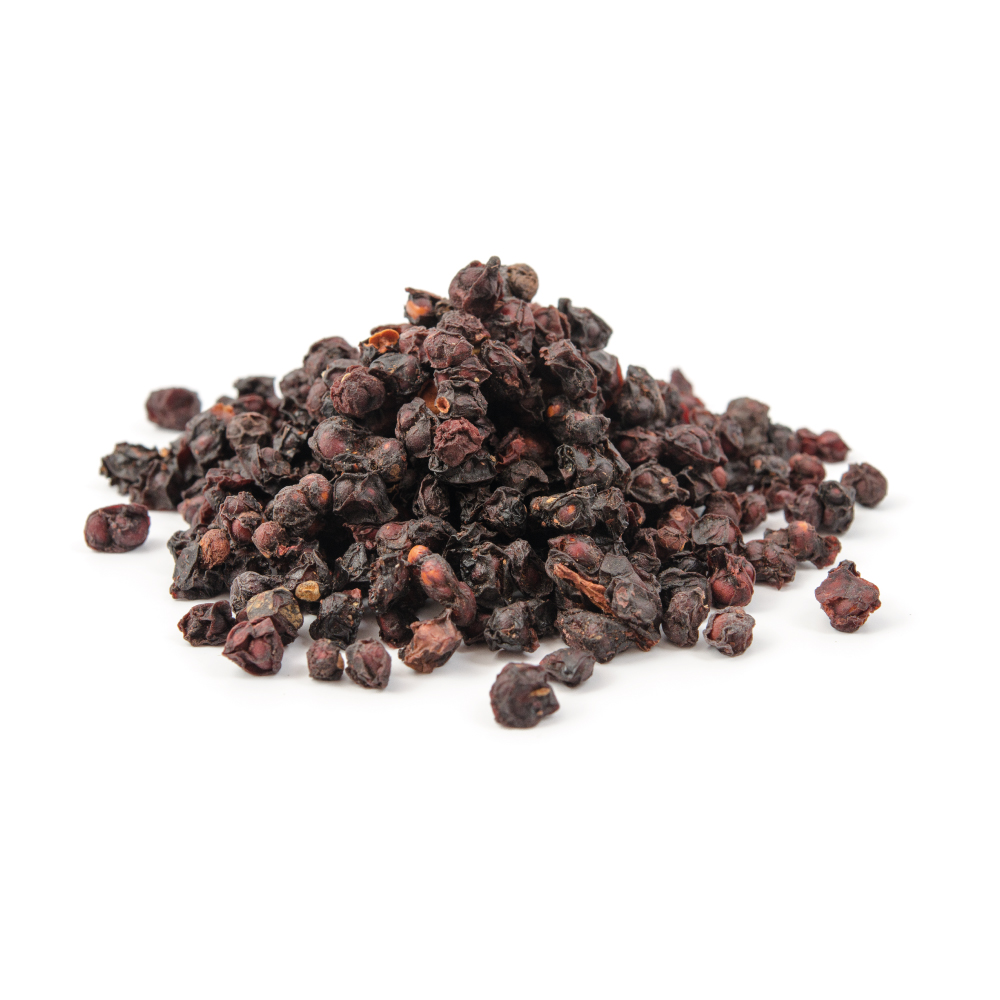
Schisandrol B is a naturally occurring lignan (dibenzocyclooctadiene), found in Schisandra / five-flavor berry and 2 other sources. It is well tolerated orally (low toxicity).
Concentration
Content by Source
Concentrations not reported. No percent-dry-weight or mg/g figures have been published for this compound in its source plants.
Schisandrol B at a Glance
Schisandrol B is a dibenzocyclooctadiene lignan of the schisandra berry (Schisandra chinensis, wuweizi), the “five-flavour berry” prized in traditional Chinese medicine as an adaptogen and liver tonic. It sits in the same structural family as the more abundant schisandrin (schisandrol A) and schisandrin A, but carries its own hydroxyl substitution pattern — and, importantly, its own second name: it is identical to gomisin A 1,
The most developed line of research on the isolated molecule is hepatoprotection. In rodent models it defends the liver against paracetamol (acetaminophen) overdose, carbon-tetrachloride injury, endotoxin-driven fulminant failure and bile-acid (cholestatic) damage, working through the NRF2/ARE antioxidant programme, the pregnane X receptor (PXR) bile-acid pathway, and restoration of mitochondrial biogenesis 1,
The other concrete, real-world angle is not an efficacy claim but a drug interaction: schisandrol B is a mechanism-based inhibitor of CYP3A and a modulator of P-glycoprotein, reliable enough at CYP3A4 that pharmacologists have used it as a selective isoform probe 7,
Schisandrol B and Gomisin A Are the Same Molecule
The single most important thing to settle about this compound is a naming one. Schisandrol B and gomisin A are two names for one molecule — not two related lignans.
- They share one PubChem record (CID 634470), which lists schisandrol B, gomisin A, (+)-gomisin A and wuweizi alcohol B as synonyms of the same structure 4Reference 4The constituents of Schizandra chinensis BaillView study →.
- They share the same molecular formula (C₂₃H₂₈O₇), the same canonical structure, and the same CAS registry number (58546-54-6); chemical suppliers list the material as “Schisandrol B (Gomisin A)” 4Reference 4The constituents of Schizandra chinensis BaillView study →.
- The two names are historical: gomisin A is the name Ikeya and colleagues gave the molecule in 1979 when they characterised the schisandra dibenzocyclooctadiene lignans; schisandrol B is the parallel schisandrol/schisandrin naming used in much of the later pharmacology literature 4Reference 4The constituents of Schizandra chinensis BaillView study →.
This matters because the two literatures have grown up in parallel: hepatoprotection and CYP3A work is often published under “schisandrol B,” while the antihypertensive, P-glycoprotein and older acetaminophen studies are published under “gomisin A.” They describe the same compound, and both are merged here.
Not to be confused with gomisin B, C, D, J, N etc. — those are distinct lignans. Only gomisin A equals schisandrol B.
Schisandrol B vs. Schisandrol A
A second, near-inevitable confusion is with schisandrol A, which is a different molecule:
- Schisandrol A = schisandrin (unqualified “schisandrin”/“schizandrin”) — the most abundant single lignan of the berry.
- Schisandrol B (this one) = gomisin A — a distinct, less abundant lignan differing in its methylenedioxy/methoxy substitution.
The “A/B” pairing refers to the two schisandrols; it is not the same axis as the schisandrin A (deoxyschisandrin) / schisandrin B (wuweizisu B) pairing, which is a separate set of lignans again. Berry chemistry is crowded with near-homonyms, so claims should always be pinned to a CAS number or structure, not a name alone.
What It's Used For
The evidence machinery is preclinical and clusters around the liver, with a well-characterised drug-metabolism angle and thinner cardiovascular and oncology threads.
Support is an experimental score — weighted by study type (human > animal > in vitro) and volume. A beta, not a validated metric. Every row here rests on isolated-compound preclinical work; there is no human isolate trial, so read each row’s basis.
The best-developed use, entirely in isolated-compound animal models. Pre-treating mice with schisandrol B markedly reduced paracetamol (acetaminophen)-induced liver injury — lower transaminases and oxidative-stress markers — by driving nuclear NRF2 accumulation and NRF2/ARE downstream detoxifying enzymes 1Reference 1AnimalSchisandrol B protects against acetaminophen-induced acute hepatotoxicity in mice via activation of the NRF2/ARE signaling pathwayView study →.
The same molecule under its older name gomisin A was hepatoprotective against acetaminophen in rats decades earlier 4Reference 4The constituents of Schizandra chinensis BaillView study →, against carbon-tetrachloride hepatic and renal injury 5Reference 5Protective effects of gomisin A isolated from Schisandra chinensis against CCl₄-induced hepatic and renal injuryView study →, and against D-galactosamine/LPS fulminant hepatic failure via anti-apoptotic action 6Reference 6AnimalAnti-apoptotic and hepatoprotective effects of gomisin A on fulminant hepatic failure induced by D-galactosamine and lipopolysaccharide in miceView study →.
Against cholestatic (bile-acid) injury it activates the pregnane X receptor (PXR) to accelerate bile-acid metabolism and normalise the bile-acid profile and gut microbiome 2Reference 2Schisandrol B protects against cholestatic liver injury through pregnane X receptorsView study →, and 2026 mouse work attributes its protection against lithocholic-acid cholestasis to restored mitochondrial biogenesis 3Reference 3AnimalSchisandrol B protects against lithocholic acid-induced cholestatic liver injury in mice through mitochondrial biogenesisView study →.
Gap: every result is rodent, using the purified molecule at researcher-chosen doses; there is no human hepatoprotection trial of isolated schisandrol B, and translating a paracetamol-pretreatment model to human liver protection is a large leap.
The most concrete, reproducible property — and a double-edged one. Schisandrol B is a selective substrate and inhibitor of CYP3A4: it is 8-hydroxylated overwhelmingly by CYP3A4 (≈13-fold more than CYP3A5), reliable enough that it has been developed as an isoform-specific CYP3A4 probe in human liver microsomes and living cells 7Reference 7Gomisin A is a novel isoform-specific probe for the selective sensing of human cytochrome P450 3A4 in liver microsomes and living cellsView study →.
As gomisin A it is a time- and NADPH-dependent (mechanism-based) CYP3A inhibitor, and in rats it blocked CYP3A-mediated metabolism of the anticancer prodrug cyclophosphamide, altering its pharmacokinetics much as whole schisandra extract does 8Reference 8AnimalTime- and NADPH-dependent inhibition on CYP3A by gomisin A and the pharmacokinetic interactions between gomisin A and cyclophosphamide in ratsView study →.
Separately it inhibits the P-glycoprotein efflux pump 10Reference 10Gomisin A alters substrate interaction and reverses P-glycoprotein-mediated multidrug resistance in HepG2-DR cellsView study →.
Gap: these are in-vitro and rat findings; the human-relevant reading is interaction risk (raising exposure to CYP3A/P-gp-substrate drugs), not a therapeutic benefit — and the magnitude in people, where schisandrol B is only one of many berry lignans, is uncharacterised.
A single, mechanistically clean mouse study: gomisin A dose-dependently reversed angiotensin-II-induced hypertension by preserving vascular nitric-oxide bioavailability — inhibiting vascular ROS production and protecting endothelial nitric-oxide synthase (eNOS) phosphorylation 9Reference 9Antihypertensive effect of gomisin A from Schisandra chinensis on angiotensin II-induced hypertension via preservation of nitric oxide bioavailabilityView study →. It relaxes isolated rat aorta in both endothelium-dependent and -independent ways.
Gap: one animal model of one hypertension mechanism; no dose-finding, chronic-safety or human data, and a related lignan (gomisin J) was reported as more potent — so this is a preliminary vascular signal, not an established antihypertensive.
Not a direct cytotoxic story but a chemo-sensitising one. Schisandrol B/gomisin A reverses P-glycoprotein-mediated multidrug resistance in doxorubicin-resistant HepG2-DR hepatoma cells by altering Pgp–substrate interaction and reducing drug efflux 10Reference 10Gomisin A alters substrate interaction and reverses P-glycoprotein-mediated multidrug resistance in HepG2-DR cellsView study →; in ovarian-cancer models it enhanced the antitumour effect of paclitaxel by suppressing oxidative stress (acting as a ROS inhibitor) 11Reference 11Gomisin A enhances the antitumor effect of paclitaxel by suppressing oxidative stress in ovarian cancerView study →.
Gap: in-vitro and mouse only, and the mechanism (blunting ROS, inhibiting efflux) is context-specific — ROS suppression could help or hinder depending on the drug — so this is a preclinical adjuvant hypothesis, not a treatment.
Mechanisms
| Target / pathway | Effect | Relevant to |
|---|---|---|
| NRF2 / ARE | nuclear NRF2 accumulation → antioxidant & detoxifying enzyme induction | hepatoprotection (paracetamol) |
| Pregnane X receptor (PXR) | activation → accelerated bile-acid metabolism, normalised bile-acid profile/microbiome | hepatoprotection (cholestasis) |
| Mitochondrial biogenesis | restored (mitophagy-independent) → improved mitochondrial function | hepatoprotection (lithocholic-acid cholestasis) |
| Apoptosis (D-GalN/LPS) | anti-apoptotic → reduced hepatocyte death in fulminant failure | hepatoprotection (endotoxin) |
| CYP3A4 / CYP3A | mechanism-based (time- & NADPH-dependent) inhibition; itself a CYP3A4 probe substrate | drug interactions |
| P-glycoprotein (ABCB1) | efflux inhibition; altered Pgp–substrate interaction | drug interactions; MDR reversal |
| eNOS / vascular ROS | preserved NO bioavailability, ROS suppression, eNOS protection | antihypertensive |
The load-bearing dual point: the same NRF2/PXR/mitochondrial machinery that makes schisandrol B hepatoprotective in rodents sits alongside a CYP3A/P-gp inhibition that makes it a drug-interaction risk — the two are the molecule’s most reproducible findings, and both are mechanistic rather than clinically proven.
Pharmacokinetics
Systematic human pharmacokinetics for isolated schisandrol B are not established; most exposure data come from whole-berry or lignan-extract dosing, where schisandrol B is a minor lignan relative to schisandrol A. As a lipophilic dibenzocyclooctadiene it is absorbed orally and metabolised principally by CYP3A4, with 8-hydroxylation the major route 7Reference 7Gomisin A is a novel isoform-specific probe for the selective sensing of human cytochrome P450 3A4 in liver microsomes and living cellsView study →. Its own metabolism by CYP3A, combined with its mechanism-based inhibition of that enzyme, is why it perturbs the pharmacokinetics of co-administered CYP3A substrates such as cyclophosphamide in rats 8Reference 8AnimalTime- and NADPH-dependent inhibition on CYP3A by gomisin A and the pharmacokinetic interactions between gomisin A and cyclophosphamide in ratsView study →. Quantitative human figures — oral bioavailability, half-life, active metabolites — are not characterised for the isolate and are flagged in the gaps tracker; claims resting on in-vitro potency should be read against this uncertainty.
Clinical Trials
There are no clinical trials of isolated schisandrol B / gomisin A for any indication. Human exposure occurs only within whole schisandra-berry preparations, whose (limited) clinical literature concerns the multi-lignan extract, not this single molecule.
| Completed | Planned | Terminated | Preclinical |
|---|---|---|---|
| —(isolate) | — | — | Hepatoprotection, CYP3A/P-gp interaction, antihypertensive, chemo-sensitising |
Last checked: July 2026.
Isolate vs. Plant Studies
This molecule is unusually isolate-forward on the mechanism side and plant-only on the human side. Nearly all the pharmacology above uses the purified compound — schisandrol B or gomisin A dosed to rodents or applied to cells — which is a strength for attributing a mechanism to this molecule rather than the berry as a whole 1,
Prevalence in Nature
Schisandrol B occurs in the fruit (berries) of Schisandra chinensis (wuweizi / five-flavour berry), the same organ that carries the rest of the schisandra lignan complex, and is also reported in the related Schisandra sphenanthera (nan-wuweizi) 4,
Discovery & Synthesis
Schisandrol B was isolated from Schisandra chinensis fruit and named gomisin A by Ikeya, Taguchi and co-workers in 1979, in the landmark series of papers that characterised the schisandra dibenzocyclooctadiene lignans (the gomisins A, B, C, F, G and the schisandrins) and established their absolute structures 4Reference 4The constituents of Schizandra chinensis BaillView study →. The parallel name schisandrol B comes from the schisandrin/schisandrol nomenclature adopted in much of the later Chinese pharmacology literature; both names denote CAS 58546-54-6. Manufacture today is by extraction and chromatographic isolation from schisandra berries — the material sold for research is a plant isolate rather than a synthetic product — although total syntheses of the dibenzocyclooctadiene lignan skeleton are documented in the natural-products literature. The precise first total synthesis of schisandrol B specifically is not well documented in the sources reviewed here.
Patents: not yet researched.
Toxicity & Safety
Schisandrol B carries a low intrinsic-toxicity flag. The schisandra berry has a long history of dietary and medicinal use; the isolated lignan has been dosed to rodents in hepatoprotection studies without notable toxicity, and its documented liver effects are protective in the models tested 1,
- Low intrinsic toxicity. From a long-used food/medicinal berry; the isolated lignan is hepatoprotective, not hepatotoxic, in rodent models.
- CYP3A drug-interaction potential. Mechanism-based CYP3A inhibition can increase exposure to CYP3A-substrate medicines (statins, tacrolimus/cyclosporine, cyclophosphamide, and others).
- P-glycoprotein inhibition. May raise absorption/levels of P-gp-substrate drugs; the effect adds to that of the other schisandra lignans in whole-berry use.
- Human safety of the isolate is uncharacterised. No human trials, no repeat-dose or reproductive-toxicity dataset for the pure compound; intake decisions belong to the herb/product level.
Dosage
There is no established human dose for isolated schisandrol B. It is not sold as a single-molecule supplement; human exposure is as one lignan within whole schisandra-berry preparations, which are dosed as the berry or a standardised multi-lignan extract, not as this compound. The figures in the research above are preclinical rodent and in-vitro doses chosen for mechanistic study. These are doses studied in research and are not a personal recommendation.
References
- Jiang Y, Fan X, Wang Y, et al. (2016). Schisandrol B protects against acetaminophen-induced acute hepatotoxicity in mice via activation of the NRF2/ARE signaling pathway. Acta Pharmacologica Sinica. https://pubmed.ncbi.nlm.nih.gov/26806302/
- Zeng H, Jiang Y, Chen P, et al. (2017). Schisandrol B protects against cholestatic liver injury through pregnane X receptors. British Journal of Pharmacology. https://pubmed.ncbi.nlm.nih.gov/28128437/
- Yang X, et al. (2026). Schisandrol B protects against lithocholic acid-induced cholestatic liver injury in mice through mitochondrial biogenesis. Chinese Medicine. https://pubmed.ncbi.nlm.nih.gov/41975487/
- Ikeya Y, Taguchi H, Yosioka I, Kobayashi H (1979). The constituents of Schizandra chinensis Baill. I. Isolation and structure determination of five new lignans, gomisin A, B, C, F and G, and the absolute structure of schizandrin. Chemical & Pharmaceutical Bulletin. https://doi.org/10.1248/cpb.27.1383
- Hwang IS, Kim JE, Lee YJ, et al. (2013). Protective effects of gomisin A isolated from Schisandra chinensis against CCl₄-induced hepatic and renal injury. International Journal of Molecular Medicine. https://pubmed.ncbi.nlm.nih.gov/23381504/
- Kim SH, Kim YS, Kang SS, et al. (2008). Anti-apoptotic and hepatoprotective effects of gomisin A on fulminant hepatic failure induced by D-galactosamine and lipopolysaccharide in mice. Journal of Pharmacological Sciences. https://pubmed.ncbi.nlm.nih.gov/18270473/
- Wu JJ, Ge GB, He YQ, et al. (2016). Gomisin A is a novel isoform-specific probe for the selective sensing of human cytochrome P450 3A4 in liver microsomes and living cells. The AAPS Journal. https://pubmed.ncbi.nlm.nih.gov/26361765/
- Zhai J, Zhang F, Gao S, et al. (2017). Time- and NADPH-dependent inhibition on CYP3A by gomisin A and the pharmacokinetic interactions between gomisin A and cyclophosphamide in rats. Molecules. https://pubmed.ncbi.nlm.nih.gov/28786954/
- Park JY, Yun JW, Choi YW, et al. (2012). Antihypertensive effect of gomisin A from Schisandra chinensis on angiotensin II-induced hypertension via preservation of nitric oxide bioavailability. Hypertension Research. https://pubmed.ncbi.nlm.nih.gov/22534517/
- Wan CK, Zhu GY, Shen XL, et al. (2006). Gomisin A alters substrate interaction and reverses P-glycoprotein-mediated multidrug resistance in HepG2-DR cells. Biochemical Pharmacology. https://pubmed.ncbi.nlm.nih.gov/16889754/
- Wang T, et al. (2022). Gomisin A enhances the antitumor effect of paclitaxel by suppressing oxidative stress in ovarian cancer. Oncology Reports. https://pubmed.ncbi.nlm.nih.gov/36169181/



