
Compound Monograph
Scutellarein
Scutellarein (6-hydroxyapigenin) is a flavone from skullcap and Erigeron — the aglycone of the cerebrovascular drug-lead scutellarin. Its own profile (anti-inflammatory, neuroprotective, anticancer, antiviral) is broad but almost entirely preclinical, and its poor oral bioavailability is the recurring caveat.

Sources · 5
Where Does It Come From?
Scutellarein is a naturally occurring flavone, found in Chinese skullcap, American skullcap, Dengzhanhua and 2 other sources. It is well tolerated orally (low toxicity).
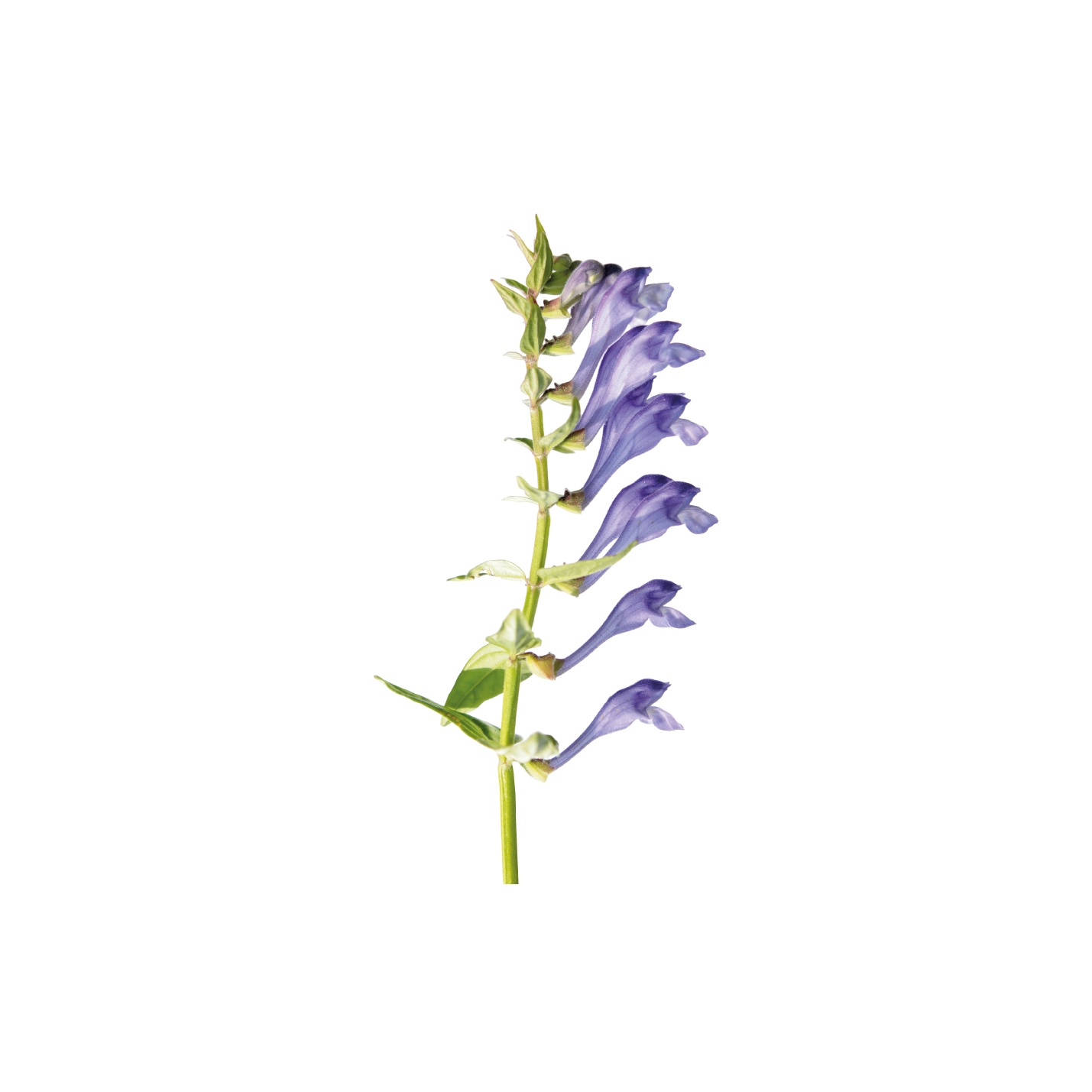 Principal source Chinese Skullcap Scutellaria baicalensis Herb monograph →
Photo coming soon
Source American Skullcap Scutellaria lateriflora Herb monograph →
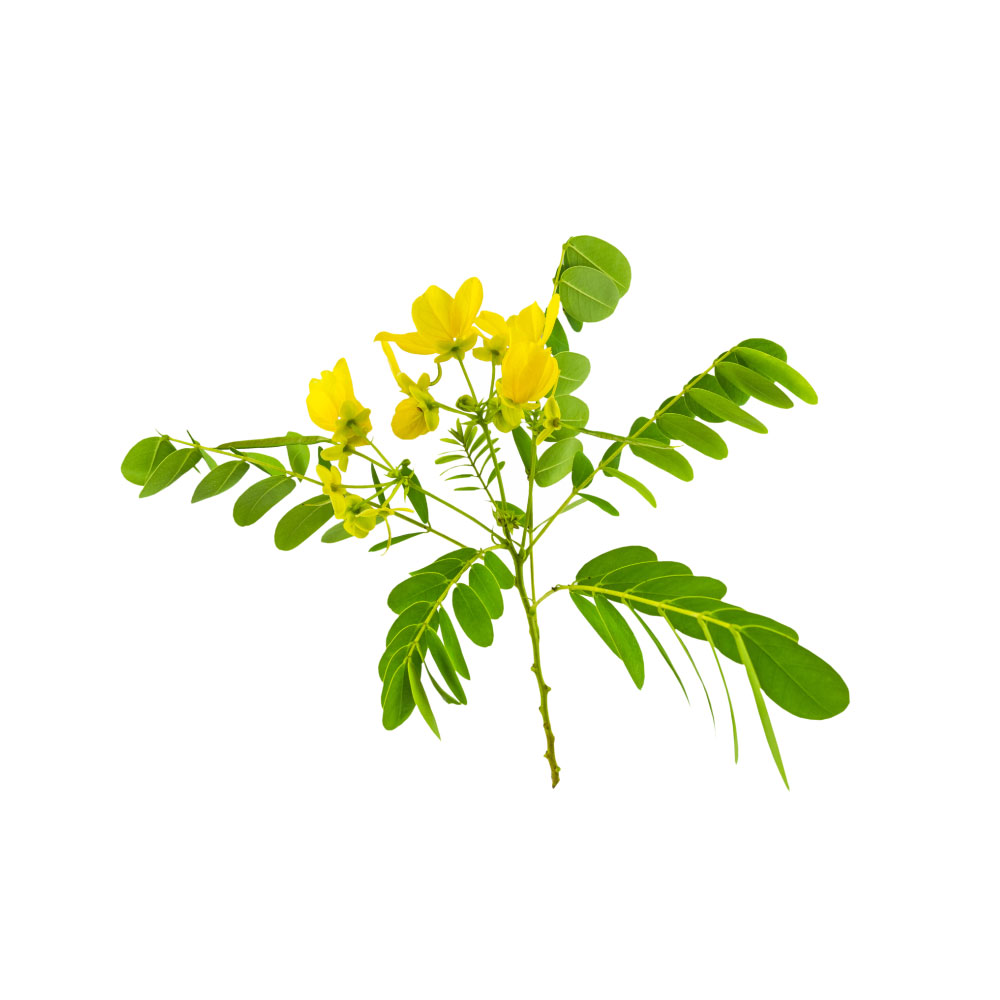 Source Senna Cassia angustifolia Herb monograph →
Concentration
Content by Source
Concentrations not reported. No percent-dry-weight or mg/g figures have been published for this compound in its source plants.
Scutellarein at a Glance
Scutellarein is a flavone — 6-hydroxyapigenin, or 5,6,7,4’-tetrahydroxyflavone — best understood as apigenin with an extra hydroxyl at the 6-position. It occurs in skullcap (Scutellaria), in the Chinese medicinal daisy Erigeron breviscapus (Dengzhanhua), and scattered across the Lamiaceae, Compositae and Verbenaceae 1,
Its single most important relationship is to scutellarin, its 7-O-glucuronide. Scutellarin is the standardised active of breviscapine / Dengzhan, a widely used injectable Chinese cerebrovascular medicine — so much of scutellarein’s real-world footprint reaches people as the glycoside, with scutellarein being the aglycone released on hydrolysis 2Reference 2ReviewReview on the pharmacological effects and pharmacokinetics of scutellareinView study →. Keeping the two straight is essential: scutellarein is the free aglycone discussed here; scutellarin is the glycoside drug-lead.
The isolated aglycone shows a broad preclinical repertoire — anti-inflammatory, neuroprotective, anticancer, antiviral and antioxidant activity — but almost all of it is cell-culture and rodent work, and its poor oral bioavailability and enzyme-inhibition profile are the load-bearing caveats 1,
Scutellarein vs. Scutellarin
The names differ by two letters and the molecules by one sugar, but the distinction runs through the whole page.
- Scutellarein is the aglycone — the free flavone, 6-hydroxyapigenin.
- Scutellarin is scutellarein-7-O-glucuronide — the glycoside, and the actual clinical material behind breviscapine / Dengzhan injections used for ischaemic stroke and cerebrovascular disease in China 2Reference 2ReviewReview on the pharmacological effects and pharmacokinetics of scutellareinView study →.
In the living plant the compound is stored mostly as the glycoside; scutellarein is liberated when that glucuronide is hydrolysed, including by gut microbiota after oral dosing 3Reference 3In vitroIn vitro evidence of possible influence of scutellarein towards bile acids’ metabolism — competitive inhibition of UGT1A3 (Ki ≈ 5.8 µM)View study →. This matters for evidence because the human cerebrovascular record belongs to the glycoside (given by injection precisely because oral absorption is poor), while most mechanistic studies of the aglycone are in vitro or in rodents. Two rat stroke studies found the aglycone gave better focal-ischaemia protection than scutellarin itself, which is part of why the free flavone is studied as a lead in its own right 4,
What It's Used For
Scutellarein’s activity is real and mechanistically specific in places — a direct Src-kinase inhibitor, an EZH2/FOXO1 modulator, a SARS-helicase binder — but the discipline of the compound page applies hard: nearly everything is isolate work in cells or rodents, and the only human-scale efficacy signal is carried by the glycoside scutellarin, not the aglycone 1,
Support is an experimental score — weighted by study type (human > animal > in vitro) and volume. A beta, not a validated metric. Every row is preclinical isolate work (the human data belong to the glycoside), so scores stay modest by design.
Scutellarein’s most mechanistically pinned-down action. In LPS-activated macrophages the isolated flavone suppresses NO and pro-inflammatory cytokines by inhibiting NF-κB and MAPK signalling 6Reference 6Scutellarein inhibits LPS-induced inflammation through NF-κB/MAPKs signaling pathway in RAW264.7 cellsView study →, and a target-level study showed it directly inhibits Src kinase — blocking Src autophosphorylation and the downstream NF-κB activation that drives the response 7Reference 7Scutellarein reduces inflammatory responses by inhibiting Src kinase activityView study →.
The related scutellarein-6-O-glucuronide was the major anti-inflammatory principle of a Codariocalyx motorius extract acting through the Syk/Src axis, reinforcing the same kinase target for the scaffold 8Reference 8Syk/Src-targeted anti-inflammatory activity of Codariocalyx motorius ethanolic extractView study →.
Downstream applications reported for the aglycone include atopic-dermatitis relief via TRPV3 channel block 14Reference 14Scutellarein attenuates atopic dermatitis by selectively inhibiting transient receptor potential vanilloid 3 channelsView study → and attenuation of COPD-type lung injury by inhibiting ferroptosis (iron chelation + ALOX15 interaction) 13Reference 13Scutellarein alleviates chronic obstructive pulmonary disease through inhibition of ferroptosis by chelating iron and interacting with arachidonate 15-lipoxygenaseView study →.
Gap: all isolate work in cell lines and rodents; no human anti-inflammatory trial of scutellarein, and the concentrations used often exceed what poor oral absorption would deliver 3Reference 3In vitroIn vitro evidence of possible influence of scutellarein towards bile acids’ metabolism — competitive inhibition of UGT1A3 (Ki ≈ 5.8 µM)View study →.
The application closest to real-world use — but mostly through the glycoside. Scutellarein was synthesised and tested in a rat middle-cerebral-artery-occlusion (focal ischaemia–reperfusion) model, where it protected brain tissue better than scutellarin 4Reference 4AnimalSynthesis and protective effect of scutellarein on focal cerebral ischemia/reperfusion in ratsView study →; a follow-up on the methylated analogue 6-O-methyl-scutellarein likewise outperformed scutellarin on repeated cerebral ischaemia 5Reference 5AnimalProtective effect of 6-O-methyl-scutellarein on repeated cerebral ischemia/reperfusion in ratsView study →.
The free aglycone recurs as a candidate in reviews of flavones for Alzheimer’s, Parkinson’s and cerebral ischaemia, credited to overlapping antioxidant and anti-inflammatory routes 9Reference 9Therapeutic role of scutellarein in neurological disordersView study →.
The whole tradition — breviscapine / Dengzhan — is cerebrovascular, but that clinical material is the injected glycoside scutellarin, not oral scutellarein 2Reference 2ReviewReview on the pharmacological effects and pharmacokinetics of scutellareinView study →.
Gap: the human cerebrovascular evidence is the glycoside given by injection; the aglycone’s neuroprotection is rodent/in-vitro, and its poor oral bioavailability is exactly why the drug form is injected 2,
A specific, mechanistically framed isolate signal. In ovarian-cancer lines A2780 and SKOV-3, scutellarein (25–100 µM) inhibited proliferation, migration and invasion and induced apoptosis by down-regulating EZH2 and de-repressing FOXO1, with anti-tumour and anti-metastatic effects reported in a mouse xenograft arm 10Reference 10Scutellarein induces apoptosis and inhibits proliferation, migration, and invasion in ovarian cancer via inhibition of EZH2/FOXO1 signalingView study →. Scutellarein appears across broader flavone anticancer reviews for antioxidant/anti-proliferative activity, but the ovarian EZH2/FOXO1 work is the best-characterised single study 1Reference 1ReviewScutellarein: a review of chemistry and pharmacologyView study →.
Gap: micromolar in-vitro concentrations plus a single tumour type; no human oncology data, and clinical translation is constrained by the same bioavailability problem 3,
A genuinely interesting, multi-target preclinical line. Scutellarein was identified as a strong inhibitor of the SARS-coronavirus helicase (nsP13), blocking its ATPase activity in screening of natural flavones 11Reference 11Development of chemical inhibitors of the SARS coronavirus: viral helicase as a potential targetView study →, and it features in coronavirus phytochemical reviews as a candidate scaffold 15Reference 15ReviewNatural product-derived phytochemicals as potential agents against coronaviruses: a reviewView study →. Against influenza, scutellarein suppressed viral replication by acting on the host enzyme glycyl-tRNA synthetase (GlyRS) 12Reference 12Glycyl-tRNA synthetase as a target for antiviral drug screening against influenza virusView study →; more broadly, flavones carrying scutellarein’s exact 4’-OH / 7-OH / C4=O / C2=C3 substitution rank among the more potent flavonoid neuraminidase inhibitors in structure–activity work (though that survey did not test scutellarein by name) 16Reference 16In vitroStructure-activity relationship of flavonoids as influenza virus neuraminidase inhibitors and their in vitro anti-viral activitiesView study →.
Gap: enzyme-inhibition and cell-culture assays only; no animal or human antiviral efficacy for the isolate, and the neuraminidase link is a class inference, not a scutellarein-specific measurement 12,
As a tetrahydroxy flavone, scutellarein is a competent radical scavenger and contributes to the antioxidant capacity of the extracts it occurs in; it also chelates Fe²⁺, which underlies the anti-ferroptosis effect seen in the lung-injury model 13Reference 13Scutellarein alleviates chronic obstructive pulmonary disease through inhibition of ferroptosis by chelating iron and interacting with arachidonate 15-lipoxygenaseView study →. It is one of the pharmacologically active flavonoids isolated from the antioxidant fraction of senna (Cassia angustifolia) 17Reference 17Pharmacologically active flavonoids from the anticancer, antioxidant and antimicrobial extracts of Cassia angustifolia VahlView study →.
Gap: antioxidant activity is a generic property of polyhydroxy flavones measured in chemical/cell assays, where scutellarein is one contributor among many and is seldom the isolated variable 1,
Mechanisms
| Target / pathway | Effect | Relevant to |
|---|---|---|
| Src (and Syk) tyrosine kinase | direct inhibition of kinase activity / autophosphorylation → blocks downstream NF-κB | anti-inflammatory |
| NF-κB / MAPK signalling | suppressed activation → ↓ NO, TNF-α, pro-inflammatory cytokines | anti-inflammatory |
| EZH2 / FOXO1 axis | ↓ EZH2, ↑ FOXO1 → apoptosis, ↓ migration/invasion | anticancer |
| SARS-CoV helicase (nsP13) ATPase | direct inhibition of unwinding/ATPase activity | antiviral |
| Host glycyl-tRNA synthetase (GlyRS) | inhibition → suppressed influenza replication | antiviral |
| TRPV3 channel | selective block → ↓ itch/inflammation | anti-inflammatory (skin) |
| Fe²⁺ chelation / ALOX15 | iron chelation + 15-LOX interaction → ↓ ferroptosis/lipid peroxidation | antioxidant / lung protection |
| UGT & CYP450 enzymes | inhibition (the safety watch-point, not a therapeutic effect) | drug-interaction risk |
The kinase story (Src/Syk → NF-κB) is the load-bearing mechanism; the antiviral targets are the most distinctive; and the UGT/CYP inhibition sits in the table as a caution, not a benefit.
Pharmacokinetics
The defining PK fact is poor oral bioavailability — the reason the clinical form of this chemistry is the injected glycoside scutellarin rather than an oral aglycone tablet 2,
Clinical Trials
There are no controlled efficacy trials of isolated scutellarein. The human clinical footprint belongs to the glycoside scutellarin (breviscapine / Dengzhan) in cerebrovascular disease, given largely by injection 2Reference 2ReviewReview on the pharmacological effects and pharmacokinetics of scutellareinView study →. Everything on the aglycone is preclinical.
| Completed | Planned | Terminated | Preclinical |
|---|---|---|---|
| —(human data are for the glycoside scutellarin) | — | — | Anti-inflammatory, neuroprotective, anticancer, antiviral, antioxidant (cell/rodent) |
Last checked: July 2026.
Isolate vs. Plant Studies
Scutellarein’s evidence is almost entirely the isolated aglycone in cells and rodents — the Src-kinase, EZH2/FOXO1, SARS-helicase and cerebral-ischaemia studies all test the pure compound (or a close derivative) 4,
Prevalence in Nature
Scutellarein occurs across three plant families — Lamiaceae (notably Scutellaria, the skullcaps), Compositae/Asteraceae (notably Erigeron breviscapus, the Dengzhanhua daisy that is the commercial source of scutellarin), and Verbenaceae 1Reference 1ReviewScutellarein: a review of chemistry and pharmacologyView study →. In Scutellaria baicalensis (Chinese skullcap/Huang Qin) and S. lateriflora (American skullcap) it sits alongside the genus’s characteristic free-B-ring flavones (baicalein, wogonin) and their glycosides 2Reference 2ReviewReview on the pharmacological effects and pharmacokinetics of scutellareinView study →.
The crucial point about its occurrence is speciation of form: in the living plant the compound is present largely as its 7-O-glucuronide, scutellarin, rather than as the free aglycone, so quantitative figures for free scutellarein are scarce and it is often reported qualitatively 2,
Discovery & Synthesis
Scutellarein was not introduced by a single datable isolation but emerged through twentieth-century flavonoid chemistry as the aglycone of scutellarin, the Scutellaria/Erigeron glucuronide — its name deriving from the genus Scutellaria 1Reference 1ReviewScutellarein: a review of chemistry and pharmacologyView study →. Structurally it is 6-hydroxyapigenin (5,6,7,4’-tetrahydroxyflavone), placing it one hydroxyl group away from apigenin and two methyls away from cirsimaritin. It can be obtained by hydrolysing scutellarin (removing the 7-O-glucuronide) and by total synthesis; medicinal-chemistry work continues on synthetic routes and on derivatives (e.g. 6-O-methyl-scutellarein) aimed at improving the aglycone’s poor bioavailability 1,
Patents: not yet researched.
Toxicity & Safety
Scutellarein carries a low toxicity flag — consistent with a dietary-type polyhydroxy flavone and with the long clinical use of its glycoside scutellarin. The meaningful caveat is not acute toxicity but a pharmacokinetic interaction risk and the near-total absence of isolate safety characterisation in humans.
- Low intrinsic toxicity. A tetrahydroxy flavone with no acute-toxicity signal at studied doses; its glycoside scutellarin has an extensive clinical safety record in cerebrovascular use 2Reference 2ReviewReview on the pharmacological effects and pharmacokinetics of scutellareinView study →.
- Enzyme-inhibition / interaction risk. Scutellarein inhibits UGTs and CYP450 enzymes, so co-administration with drugs cleared by those routes is a theoretical herb–drug-interaction concern 3Reference 3In vitroIn vitro evidence of possible influence of scutellarein towards bile acids’ metabolism — competitive inhibition of UGT1A3 (Ki ≈ 5.8 µM)View study →.
- Poor oral bioavailability. Little of an oral dose is absorbed intact, so isolate potency in vitro should not be read as an oral effect in people 3Reference 3In vitroIn vitro evidence of possible influence of scutellarein towards bile acids’ metabolism — competitive inhibition of UGT1A3 (Ki ≈ 5.8 µM)View study →.
- Human isolate safety not characterised. No dedicated human toxicology, genotoxicity or repeat-dose dataset exists for the free aglycone; the safety inference borrows from the glycoside and the flavone class.
Reproductive and developmental toxicity have not been characterised for the isolated aglycone; any such decision belongs to the herb or product where intake is decided, not to this molecule page. No comprehensive isolate genotoxicity or repeat-dose package is established here beyond the class-level and interaction points above.
Dosage
There is no established or recommended human dose for isolated scutellarein. Cited figures in the literature are preclinical rodent research doses or in-vitro concentrations (e.g. the 25–100 µM used in the ovarian-cancer work 10Reference 10Scutellarein induces apoptosis and inhibits proliferation, migration, and invasion in ovarian cancer via inhibition of EZH2/FOXO1 signalingView study →) and are not convertible to human self-dosing. The only human-scale dosing for this chemistry is the glycoside scutellarin (breviscapine / Dengzhan), given largely by injection for cerebrovascular indications — a different molecule and a different route 2Reference 2ReviewReview on the pharmacological effects and pharmacokinetics of scutellareinView study →. These are research figures, not a personal recommendation.
References
- Thoa NT, Son NT (2025). Scutellarein: a review of chemistry and pharmacology. Journal of Pharmacy and Pharmacology. https://pubmed.ncbi.nlm.nih.gov/38579142/
- Lai J, Li C (2024). Review on the pharmacological effects and pharmacokinetics of scutellarein. Archiv der Pharmazie. https://pubmed.ncbi.nlm.nih.gov/38849327/
- Zhu SY, Jiang H, Li CX, et al. (2013). In vitro evidence of possible influence of scutellarein towards bile acids’ metabolism — competitive inhibition of UGT1A3 (Ki ≈ 5.8 µM). African Health Sciences. https://pubmed.ncbi.nlm.nih.gov/24250288/
- Qian L, Shen M, Tang H, et al. (2012). Synthesis and protective effect of scutellarein on focal cerebral ischemia/reperfusion in rats. Molecules. https://pubmed.ncbi.nlm.nih.gov/22955455/
- Wu WY, Zhong Y, Lu YT, et al. (2018). Protective effect of 6-O-methyl-scutellarein on repeated cerebral ischemia/reperfusion in rats. Journal of Asian Natural Products Research. https://pubmed.ncbi.nlm.nih.gov/28971689/
- Park MY, Ha SE, Kim HH, et al. (2022). Scutellarein inhibits LPS-induced inflammation through NF-κB/MAPKs signaling pathway in RAW264.7 cells. Molecules. https://pubmed.ncbi.nlm.nih.gov/35744907/
- Sung NY, Kim MY, Cho JY (2015). Scutellarein reduces inflammatory responses by inhibiting Src kinase activity. Korean Journal of Physiology & Pharmacology. https://pubmed.ncbi.nlm.nih.gov/26330757/
- Kim E, Yoon KD, Lee WS, et al. (2014). Syk/Src-targeted anti-inflammatory activity of Codariocalyx motorius ethanolic extract. Journal of Ethnopharmacology. https://pubmed.ncbi.nlm.nih.gov/24866386/
- Kumar R, Bai S, Shukla R, Naqvi S (2025). Therapeutic role of scutellarein in neurological disorders. Current Pharmaceutical Design. https://pubmed.ncbi.nlm.nih.gov/39781738/
- Lang X, Chen Z, Yang X, et al. (2021). Scutellarein induces apoptosis and inhibits proliferation, migration, and invasion in ovarian cancer via inhibition of EZH2/FOXO1 signaling. Journal of Biochemical and Molecular Toxicology. https://pubmed.ncbi.nlm.nih.gov/34350670/
- Keum YS, Jeong YJ (2012). Development of chemical inhibitors of the SARS coronavirus: viral helicase as a potential target. Biochemical Pharmacology. https://pubmed.ncbi.nlm.nih.gov/22935448/
- Zhang J, Li X, Liang J, et al. (2025). Glycyl-tRNA synthetase as a target for antiviral drug screening against influenza virus. International Journal of Molecular Sciences. https://pubmed.ncbi.nlm.nih.gov/40243525/
- Liu L, Zhang Y, Wang L, et al. (2023). Scutellarein alleviates chronic obstructive pulmonary disease through inhibition of ferroptosis by chelating iron and interacting with arachidonate 15-lipoxygenase. Phytotherapy Research. https://pubmed.ncbi.nlm.nih.gov/37353982/
- Wang Y, Tan L, Jiao K, et al. (2022). Scutellarein attenuates atopic dermatitis by selectively inhibiting transient receptor potential vanilloid 3 channels. British Journal of Pharmacology. https://pubmed.ncbi.nlm.nih.gov/35771623/
- Mani JS, Johnson JB, Steel JC, et al. (2020). Natural product-derived phytochemicals as potential agents against coronaviruses: a review. Virus Research. https://pubmed.ncbi.nlm.nih.gov/32360300/
- Liu AL, Wang HD, Lee SM, Wang YT, Du GH (2008). Structure-activity relationship of flavonoids as influenza virus neuraminidase inhibitors and their in vitro anti-viral activities. Bioorganic & Medicinal Chemistry. https://pubmed.ncbi.nlm.nih.gov/18640042/
- Ahmed SI, Hayat MQ, Tahir M, et al. (2016). Pharmacologically active flavonoids from the anticancer, antioxidant and antimicrobial extracts of Cassia angustifolia Vahl. BMC Complementary and Alternative Medicine. https://pubmed.ncbi.nlm.nih.gov/27835979/



