
Compound Monograph
Terrestrosin D
Terrestrosin D is the major spirostanol saponin of tribulus fruit and the compound identified in 2022 as a likely driver of the herb's hepatorenal toxicity — a molecule that entered the literature as a liability rather than a benefit. It accumulates in rat liver and kidney on repeated oral dosing, and the same traditional stir-frying step that Chinese pharmacy uses to "detoxify" the fruit works by stopping the plant from making it.

Sources · 1
Where Does It Come From?
Terrestrosin D is a naturally occurring steroidal saponin (spirostanol glycoside — a hecogenin tetrasaccharide), found in Tribulus. It is flagged as moderately toxic.
Concentration
Content by Source
Concentrations not reported. No percent-dry-weight or mg/g figures have been published for this compound in its source plants.
Terrestrosin D at a Glance
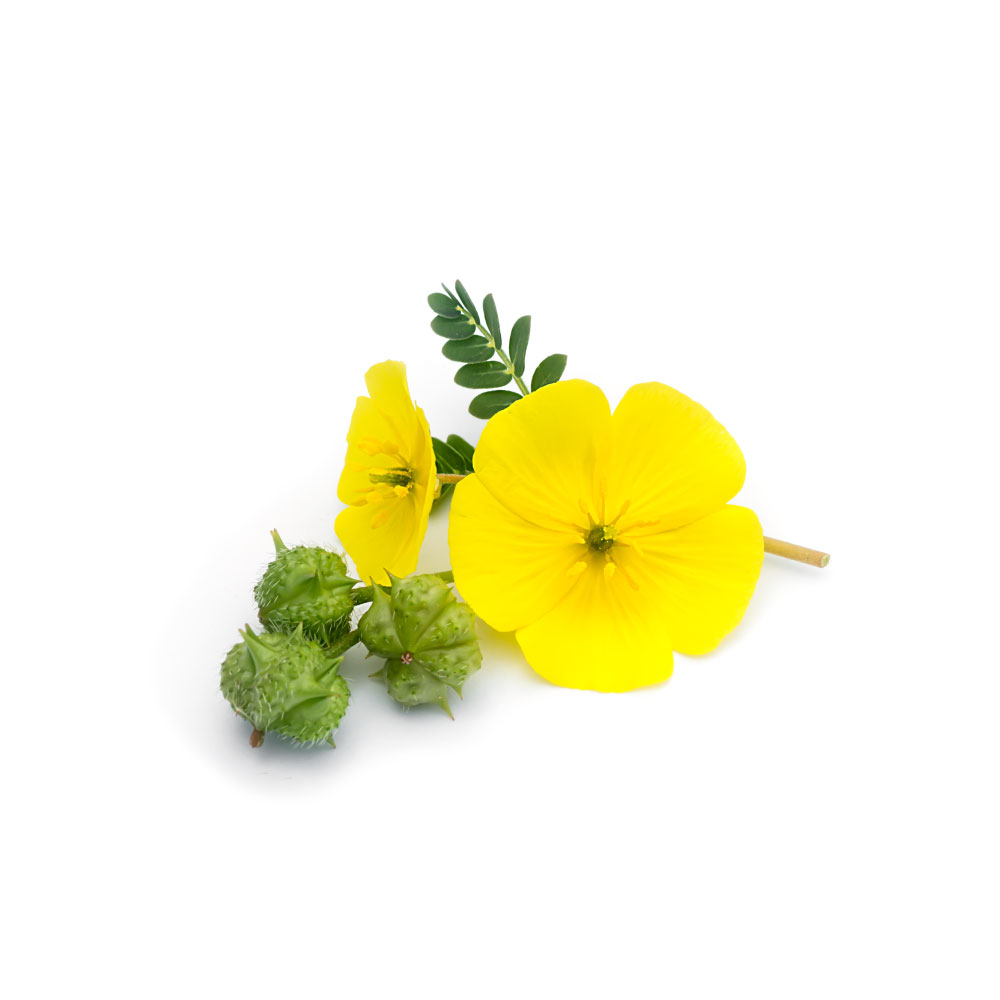
Terrestrosin D is the principal spirostanol saponin of tribulus fruit (Tribulus terrestris, Chinese Fructus Tribuli, Ayurvedic gokshura). It is a large glycoside — 1,049 Da, four sugars hung off a hecogenin steroid core — and it is unusual among the compounds here in that it entered the literature as a problem to be explained, not as an activity to be exploited.
Chinese pharmacognosy had a long-standing question: tribulus fruit is associated with liver and kidney injury, and traditional practice stir-fries it before use, but nobody knew which molecule was responsible. A 2022 study at Shandong University of Traditional Chinese Medicine proposed terrestrosin D, and tested it directly — cytotoxicity assays, a 28-day repeated-dose rat study, toxicokinetics and tissue distribution, all on the isolated compound 1Reference 1AnimalTerrestrosin D, a spirostanol saponin from Tribulus terrestris L. with potential hepatorenal toxicity — 28-day repeated-dose rats, toxicokinetics and tissue distribution — [animal model]View study →. The molecule turned out to concentrate in liver and kidney and to accumulate there across repeated dosing. A companion paper from the same institution then closed the loop on processing: stir-frying inactivates the fruit’s own β-glucosidase, which is what stops furostanol saponins converting into spirostanol ones like this 2Reference 2AnimalThe stir-frying can reduce hepatorenal toxicity of Fructus Tribuli by inactivating β-glucosidase and inhibiting the conversion of furostanol saponins to spirostanol saponins — rats and cell assays — [animal model]View study →.
There is a second, smaller literature in which terrestrosin D is a candidate drug — anti-fibrotic in mouse lung, anti-inflammatory in a psoriasis model, cytotoxic to prostate and breast cancer lines. It is real work, but it is all rodent and cell-culture work, from a handful of groups, and the doses used overlap the doses that damaged organs in the toxicology study. No human has ever been given this molecule. Nothing here is a recommendation.
What Terrestrosin D Is Not
Three misattributions are worth heading off, because tribulus is one of the most aggressively marketed herbs in the supplement category and this molecule sits inside that marketing without belonging to it.
It is not the aphrodisiac molecule. Tribulus’s sexual-function evidence — which is genuinely the herb’s strongest thread — tracks the furostanol saponin protodioscin and the standardised Bulgarian extracts titrated to it. Terrestrosin D has no reported activity on nitric-oxide/cGMP cavernosal signalling, on libido, or on any sexual endpoint in any species.
It is not a testosterone booster, and neither is its aglycone. Terrestrosin D’s steroid core is hecogenin, released when the four sugars are stripped off 10,
It is not the sheep-poisoning molecule either — at least not on the available evidence. Tribulus causes a well-characterised liver disease in grazing sheep, and the saponins responsible have been chemically identified. They are the diosgenin- and yamogenin-derived ones. See Tribulosis below; the distinction matters, and it cuts in this molecule’s favour.
Furostanol In, Spirostanol Out: Why Processing Changes the Risk
This is the most useful thing on the page, and it is the reason a 2,000-year-old preparation instruction turns out to be a toxicology control.
Steroidal saponins in tribulus fruit exist in two interconvertible forms. Furostanol saponins have an open F-ring with a sugar at C-26; spirostanol saponins have that ring closed into a spiroketal. The plant’s own β-glucosidase cleaves the C-26 sugar, and the ring snaps shut — furostanol becomes spirostanol. Terrestrosin D is on the spirostanol side of that reaction.
The 2022 Shandong work measured what this means in practice 2Reference 2AnimalThe stir-frying can reduce hepatorenal toxicity of Fructus Tribuli by inactivating β-glucosidase and inhibiting the conversion of furostanol saponins to spirostanol saponins — rats and cell assays — [animal model]View study →:
- Storage does the conversion for you. Held at room temperature for 12 months, crude fruit lost roughly 30–36% of its furostanol saponins while spirostanol saponins — terrestrosin D and 25R-tribulosin — rose by roughly 24–36%. Stir-fried fruit showed no significant change over the same period.
- The two forms are not equally cytotoxic. Terrestrosin D was cytotoxic to liver and kidney cells at IC₅₀ 16.88 µM and 21.80 µM respectively. The corresponding furostanol saponin showed no cytotoxicity in the same assay.
- Stir-frying works by killing the enzyme. Stir-fried fruit showed no β-glucosidase activity at all where crude fruit did (p < 0.01), which is why the conversion stops.
- A spirostanol-enriched fraction reproduced the injury in rats. In a 56-day oral study in Sprague-Dawley rats, the 75% ethanol eluate — the spirostanol-rich one — raised ALT, AST, ALP, total bilirubin, BUN and creatinine, raised the urinary tubular-injury markers NAG and KIM-1, and produced inflammatory infiltration and renal tubular distension on histology.
Independent chemistry backs the direction of travel. Stir-frying at 220–240 °C progressively deglycosylates terrestrosin D to free hecogenin — the sugar chain is removed one unit at a time from the outside in — and the authors describe this explicitly as the detoxification mechanism of processed tribulus fruit 10Reference 10In vitroStudy on transformation rules of terrestrosin D in the course of Tribuli Fructus stir-frying based on simulated processing technology — [in vitro]View study →. A broader analysis of stir-frying confirmed the same pattern across six saponins 11Reference 11In vitroAnalysis of variations in the contents of steroidal saponins in Fructus Tribuli during stir-frying treatment — [in vitro]View study →, and a rat pharmacokinetic comparison found that stir-fried fruit gives significantly lower Cmax and AUC for terrestrosin D than crude fruit does 12Reference 12AnimalPharmacokinetic comparisons of six steroid saponins in rat plasma following oral administration of crude and stir-fried Fructus Tribuli extracts by UHPLC-MS/MS — [animal model]View study →.
The practical reading: the raw-versus-processed distinction that Chinese pharmacy makes about this herb is a real chemical distinction, and Western tribulus supplements — typically raw-fruit or aerial-part extracts standardised to furostanol saponins, stored for months — sit on the wrong side of it in one respect while sitting on the right side in another. Nobody has assayed terrestrosin D in a Western commercial product.
What the 28-Day Rat Study Actually Showed
The claim “terrestrosin D is hepatorenally toxic” traces to one paper 1Reference 1AnimalTerrestrosin D, a spirostanol saponin from Tribulus terrestris L. with potential hepatorenal toxicity — 28-day repeated-dose rats, toxicokinetics and tissue distribution — [animal model]View study →. Stated at exactly its strength:
| Test article | Isolated terrestrosin D, purified from Fructus Tribuli — not an extract |
| Species | Sprague-Dawley rats (plus cell-based cytotoxicity assays) |
| Route | Oral |
| Dose | 5–15 mg/kg/day |
| Duration | 28 consecutive days, repeated-dose design |
| Result | Hepatorenal toxicity in vitro and in vivo |
| Reversibility | Reversible after 14 days of withdrawal |
| Toxicokinetics | Systemic exposure showed accumulation and a dose-dependent trend across the 28 days |
| Tissue distribution | Targeted distribution to liver and kidney, again with accumulation |
| Mechanism | Key targets HSP90AA1, CNR1 and DRD2 — screened by network pharmacology and molecular docking, i.e. computational, not experimentally validated |
Two honest caveats. First, the paper is paywalled and its abstract does not state which biochemical or histopathological endpoints moved or by how much — so only the design and the conclusion are reported, not the numbers. (The endpoint detail in the section above is from the companion fraction study 2Reference 2AnimalThe stir-frying can reduce hepatorenal toxicity of Fructus Tribuli by inactivating β-glucosidase and inhibiting the conversion of furostanol saponins to spirostanol saponins — rats and cell assays — [animal model]View study →, which is a fraction, not this molecule.) Second, the three “key targets” are docking predictions. HSP90AA1, the cannabinoid receptor CB1 and the dopamine D2 receptor are a mechanistically odd trio for organ toxicity, and none has been confirmed by knockdown, binding assay or any wet experiment. Treat them as a hypothesis.
What the study does establish cleanly: at 5–15 mg/kg orally, this molecule reaches the systemic circulation of a rat in measurable amounts, concentrates in the two organs that later show damage, builds up rather than clearing between doses, and causes injury that resolves when dosing stops. That is a real, isolated-molecule, in-vivo repeated-dose finding — a higher standard of evidence than most of the benefit claims here rest on.
The Human Case Reports
There is no human data on terrestrosin D. There is human data on tribulus products, and it needs to be reported carefully, because a case report about a supplement is not a finding about a molecule.
The published series is small and consistent in character: a young Iranian man who developed seizures with markedly raised aminotransferases and creatinine after two days of a tribulus preparation taken to prevent kidney stones, resolving on discontinuation 4Reference 4Case reportTribulus terrestris-induced severe nephrotoxicity in a young healthy male — [case report]View study →; a young man with severe hyperbilirubinaemia followed by acute kidney injury, whose biopsy showed bile casts in the renal tubules 6Reference 6Case reportAcute kidney injury and hyperbilirubinemia in a young male after ingestion of Tribulus terrestris — bile casts on renal biopsy — [case report]View study →; and a 46-year-old man who took tribulus supplements daily for two months, presented with a total bilirubin of 48 mg/dL and creatinine of 7.1, had a liver biopsy consistent with drug-induced injury, required three sessions of plasmapheresis, and recovered 7Reference 7Case reportSevere liver and renal injury from Tribulus terrestris — biopsy-confirmed drug-induced liver injury — [case report]View study →. Separately, a 71-year-old man on long-term atorvastatin developed rhabdomyolysis with transaminitis after starting tribulus — attributed to the herb’s moderate CYP3A4 inhibition raising statin exposure 8Reference 8Case reportRhabdomyolysis risk: the dangers of Tribulus terrestris, an over-the-counter supplement — interaction with atorvastatin — [case report]View study →. Tribulus appears in the systematic tabulation of dietary supplements associated with kidney injury in PubMed case reports 17Reference 17Case reportKidney toxicity related to herbs and dietary supplements: online table of case reportsView study →.
Three things temper that list. The first case was publicly disputed — a 2011 letter from Schmidt, Thomsen and Bone challenged the attribution, with an author reply 5Reference 5Tribulus terrestris-induced nephrotoxicity? — letter disputing the attribution, with author replyView study →, and the herbal-medicine literature does not treat it as settled. Second, the NIH LiverTox monograph, as of 2022, states the plant causes serious liver injury in grazing animals but that tribulus extracts “have not been linked convincingly” to clinically apparent human liver injury at typical doses 9Reference 9ReviewTribulus — NIDDK monograph, chapter last updated 8 August 2022 — [monograph]. https://pubmed.ncbi.nlm.nih.gov/35998246/View study → — a judgement that predates the 2024 biopsy-confirmed case 7Reference 7Case reportSevere liver and renal injury from Tribulus terrestris — biopsy-confirmed drug-induced liver injury — [case report]View study →. Third, and most important here: none of these cases identified a causative compound. No terrestrosin D was measured in any product, in any patient, ever. The molecule is a laboratory hypothesis for a clinical pattern, not a demonstrated cause of it.
Controlled trials of standardised tribulus extracts, by contrast, report adverse-event rates no different from placebo, and much of the animal literature actually finds tribulus extract hepato- and nephroprotective against carbon tetrachloride, carboplatin, cisplatin, gentamicin and ischaemia–reperfusion injury. That contradiction is not resolved. It is exactly what you would expect, though, if the toxic species is a minor spirostanol whose content varies with chemotype, plant part, processing and storage — present in some material, absent in most.
Tribulosis: What Sheep Tell Us About This Class
The single richest body of evidence on steroidal-saponin organ toxicity is veterinary, and it is worth reading properly — including for what it says this molecule is probably not doing.
Geeldikkop (“yellow thick head”) is a hepatogenous photosensitisation of sheep grazing T. terrestris, described in South Africa and reported since from Australia, Argentina and Iran. It was reproduced experimentally by dosing sheep with crude steroidal saponins from the plant: the animals developed birefringent crystalloid material in the bile ducts, concentric periductal lamellar fibrosis, raised AST and GGT, and bilirubinaemia 14Reference 14AnimalPhotosensitivity in South AfricaView study →. Feeding sheep an 80% tribulus diet produced the same picture within 11 days — icterus, photosensitivity, and on necropsy crystals in both bile ducts and renal tubules, with hepatocellular degeneration, biliary fibrosis and renal tubular necrosis 15Reference 15AnimalExperimental Tribulus terrestris poisoning in sheep: clinical, laboratory and pathological findings — [animal model]View study →. An Argentine field outbreak affected 40% of a grazing flock 18Reference 18ObservationalAn outbreak of hepatogenous photosensitization in sheep grazing Tribulus terrestris in Argentina — [observational]View study →. The same crystal-associated cholangiohepatopathy is inducible with sapogenin-containing extracts from unrelated plants such as Brachiaria decumbens, so it is a property of the chemical class rather than of tribulus 19Reference 19AnimalExperimentally induced cholangiohepatopathy by dosing sheep with fractionated extracts from Brachiaria decumbens — [animal model]View study →.
The chemistry was then pinned down precisely, which is the part that matters here. The biliary crystals are a 6:1 mixture of the calcium salts of the β-D-glucuronides of epismilagenin and episarsasapogenin 13Reference 13AnimalPhotosensitivity in South AfricaView study →. Tracing the metabolism through rumen, bile, faeces and urine showed these arise specifically from diosgenin and yamogenin glycosides. And in the same analysis the authors state it explicitly: the saponins derived from tigogenin, neotigogenin, gitogenin and neogitogenin appear to be non-lithogenic 16Reference 16AnimalPhotosensitivity in South AfricaView study →. South African tribulus populations split into chemotypes on exactly this axis — some sites carry the lithogenic diosgenin-type saponins, others carry only the non-lithogenic ones 20Reference 20In vitroPhotosensitivity in South AfricaView study →.
Terrestrosin D’s aglycone is hecogenin, a 12-oxo derivative in the tigogenin (5α-spirostan-3β-ol) family, not the Δ⁵ diosgenin family. On structure it belongs to the branch the sheep work found non-lithogenic. That is an inference, not a tested result — no one has fed terrestrosin D to a sheep — but it is a reasoned one, and it means the correct reading is that tribulus has at least two separable saponin toxicity mechanisms: a diosgenin-type biliary-crystal cholangiopathy seen in ruminants, and a spirostanol hepatorenal accumulation toxicity seen in rats. Terrestrosin D belongs to the second.
“Tribulus staggers” is a third thing again, and not a saponin story at all. It is a chronic motor-neurone disease of sheep in Australia, clinically distinct from geeldikkop. It was originally attributed to the β-carboline alkaloids harman and norharman, which reproduced limb paresis when given to sheep subcutaneously at 54 mg/kg 21Reference 21AnimalLocomotor effects in sheep of alkaloids identified in Australian Tribulus terrestris — [animal model]View study →; a competing hypothesis from the same investigator later implicated the purine xanthosine combined with molybdenum deficiency in cultivated soils 22Reference 22AnimalMotor neurone disease in molybdenum-deficient sheep fed the endogenous purine xanthosine: possible mechanism for Tribulus staggers — [animal model]View study →; and a third candidate alkaloid, tribulusterine, turned out on synthesis to have been misidentified in the original literature 23Reference 23ReviewSouthwell IA (2005). 25 years of natural product R&D with New South Wales agriculture — includes the tribulusterine misidentification — [review]. Molecules. https://pubmed.ncbi.nlm.nih.gov/18007515/View study →. It has nothing to do with terrestrosin D, and pages that fold “staggers” into tribulus saponin toxicity are conflating two unrelated syndromes.
What It's Used For
Terrestrosin D’s benefit literature is four disease models across four papers, all animal or cell-based, none human. The applications below are ranked on that basis. Note that the best-evidenced fact about this molecule is not in this table — it is the repeated-dose organ toxicity above, which is the only finding here supported by a toxicokinetic and tissue-distribution study.
Support is an experimental score — weighted by study type (human > animal > in vitro) and volume. A beta, not a validated metric. Every row is capped by the same two ceilings: no human has taken this compound, and the effective doses overlap the toxic ones.
The most developed therapeutic thread. In bleomycin-injured mice, isolated terrestrosin D at 10 mg/kg intraperitoneally, once daily, reduced macrophage, neutrophil and lymphocyte infiltration into bronchoalveolar lavage fluid, lowered TNF-α, IL-6, IL-8, TGF-β1 and PDGF-AB, cut lung hydroxyproline content, and improved Ashcroft fibrosis scores at 2 and 6 weeks 24Reference 24AnimalTerrestrosin D from Tribulus terrestris attenuates bleomycin-induced inflammation and suppresses fibrotic changes in the lungs of mice — [animal model]View study →.
A follow-up combining plasma metabolomics with network pharmacology reported the effect again at 20 mg/kg, reversing bleomycin-induced shifts in amino-acid and lipid metabolism and nominating TNF-α and TGF-β1 as the therapeutic targets 25Reference 25AnimalMechanisms exploration of terrestrosin D on pulmonary fibrosis based on plasma metabolomics and network pharmacology — [animal model]View study →.
Gap: both papers come from Baotou Medical College with overlapping authorship, so this is effectively a single-group result awaiting independent replication. Both used the intraperitoneal route, which bypasses the gut entirely — nothing here says an oral dose would reach the lung. And 10–20 mg/kg is at or above the 5–15 mg/kg oral range that damaged rat liver and kidney 1Reference 1AnimalTerrestrosin D, a spirostanol saponin from Tribulus terrestris L. with potential hepatorenal toxicity — 28-day repeated-dose rats, toxicokinetics and tissue distribution — [animal model]View study →, in a different species, with no toxicology reported alongside the efficacy.
Terrestrosin D suppressed the growth of PC-3 castration-resistant prostate cancer cells dose-dependently, induced cell-cycle arrest and apoptosis, lowered mitochondrial membrane potential, and reduced VEGF secretion; in nude mice bearing PC-3 xenografts it significantly suppressed tumour growth “without any overt toxicity”, with immunohistochemistry showing apoptosis and reduced angiogenesis in the tumour 27Reference 27In vitroTerrestrosin D, a steroidal saponin from Tribulus terrestris L., inhibits growth and angiogenesis of human prostate cancer in vitro and in vivo — [animal model]View study →. The apoptosis did not run through the caspase pathway.
Gap: the same paper reports that terrestrosin D suppressed growth and induced apoptosis in human umbilical vein endothelial cells — normal, non-malignant cells — at the same concentrations, and lowered their mitochondrial membrane potential too. That is presented as the anti-angiogenic mechanism, and it may be; it is also indistinguishable from non-selective membrane and mitochondrial toxicity, which is precisely what a surfactant saponin would do. No selectivity index against normal cells was reported. The “no overt toxicity” observation in mice is a body-weight-and-behaviour judgement in a short xenograft study, not a serum-chemistry or histopathology assessment, and it sits uneasily beside the 28-day rat data 1Reference 1AnimalTerrestrosin D, a spirostanol saponin from Tribulus terrestris L. with potential hepatorenal toxicity — 28-day repeated-dose rats, toxicokinetics and tissue distribution — [animal model]View study →.
The newest finding and mechanistically the most specific. In triple-negative breast cancer cells, terrestrosin D suppressed proliferation and induced both autophagy and apoptosis; RNA sequencing pointed to P53, and the authors report that the compound directly targets PSMD1, a 19S proteasome regulatory subunit, thereby stabilising P53 and activating its signalling. The effect held in xenograft models 28Reference 28AnimalTerrestrosin D promotes autophagy and apoptosis of breast cancer cells through PSMD1-dependent activation of the P53 pathway — [animal model]View study →.
Gap: a single 2025 paper, no independent replication, and again no reported selectivity index against non-malignant cells. Proteasome regulatory subunits are broadly essential, so a PSMD1 inhibitor would be expected to have effects well outside tumour tissue — the liver and kidney distribution reported for this molecule 1Reference 1AnimalTerrestrosin D, a spirostanol saponin from Tribulus terrestris L. with potential hepatorenal toxicity — 28-day repeated-dose rats, toxicokinetics and tissue distribution — [animal model]View study → is a reason to want that tested rather than assumed.
In imiquimod-induced psoriasis-like lesions in mice, terrestrosin D reduced PASI severity scores, epidermal thickness and Ki-67 expression, cut the splenic dendritic-cell fraction and the secretion of IL-12p70, IL-18 and TNF-α, raised IL-10, and improved open-field and elevated-plus-maze behaviour. In vitro it blocked substance-P-driven maturation and activation of CD11c⁺ dendritic cells and their release of IL-12p70 and IL-23 26Reference 26AnimalTerrestrosin D ameliorates skin lesions in an imiquimod-induced psoriasis-like murine model by inhibiting the interaction between substance P and dendritic cells — [animal model]View study →.
Gap: one study, one model, one group. The proposed mechanism — interrupting a substance P → dendritic cell axis — is interesting and specific to this compound, but it has not been replicated, and the psoriasis model in question responds to a wide range of anti-inflammatory interventions.
Mechanisms
| Target / pathway | Effect | Relevant to |
|---|---|---|
| Hepatocyte and renal tubular cell viability | cytotoxicity, IC₅₀ 16.88 µM (liver) / 21.80 µM (kidney); matched furostanol saponin inactive | hepatorenal toxicity |
| Liver and kidney tissue compartments | preferential distribution with accumulation on repeated oral dosing in rats | hepatorenal toxicity |
| HSP90AA1, CNR1, DRD2 | nominated as key toxicity targets by network pharmacology + molecular docking — computational only, unvalidated | toxicity mechanism (hypothesis) |
| TNF-α, IL-6, IL-8, TGF-β1, PDGF-AB | suppressed in bronchoalveolar lavage after bleomycin injury; hydroxyproline deposition reduced | anti-inflammatoryanti-fibrotic |
| Substance P → CD11c⁺ dendritic cell axis | blocks SP-induced DC maturation and IL-12p70 / IL-23 release | anti-inflammatory (skin) |
| Mitochondrial membrane potential | lowered in PC-3 tumour cells and in normal HUVEC endothelium | anticancer / anti-angiogenic — and a selectivity concern |
| VEGF secretion | reduced | anti-angiogenic |
| PSMD1 (19S proteasome regulatory subunit) | direct inhibition → P53 stabilisation → autophagy and apoptosis | anticancer |
| Membrane integrity (class property) | spirostanol saponins are surfactants and permeabilise lipid bilayers | confounds every cytotoxicity row above |
Read the top three rows first. They are the only ones supported by an in-vivo pharmacokinetic and distribution study; the rest are effects observed at concentrations applied to cells or injected into the peritoneum.
Pharmacokinetics
Terrestrosin D is the rare large saponin whose parent molecule is measurable enough in plasma to run toxicokinetics on. A validated UHPLC-MS/MS method quantified it, alongside five other tribulus steroidal saponins, in rat plasma after oral dosing of fruit extract 12Reference 12AnimalPharmacokinetic comparisons of six steroid saponins in rat plasma following oral administration of crude and stir-fried Fructus Tribuli extracts by UHPLC-MS/MS — [animal model]View study →, and the toxicology study ran a full toxicokinetic and tissue-distribution arm on the isolated compound 1Reference 1AnimalTerrestrosin D, a spirostanol saponin from Tribulus terrestris L. with potential hepatorenal toxicity — 28-day repeated-dose rats, toxicokinetics and tissue distribution — [animal model]View study →. Three findings stand:
- It accumulates. Systemic exposure rose across the 28-day repeated-dose course rather than reaching steady state cleanly, with a dose-dependent trend 1Reference 1AnimalTerrestrosin D, a spirostanol saponin from Tribulus terrestris L. with potential hepatorenal toxicity — 28-day repeated-dose rats, toxicokinetics and tissue distribution — [animal model]View study →.
- It targets liver and kidney. Tissue distribution was preferential to exactly the two organs that showed injury, again with accumulation 1Reference 1AnimalTerrestrosin D, a spirostanol saponin from Tribulus terrestris L. with potential hepatorenal toxicity — 28-day repeated-dose rats, toxicokinetics and tissue distribution — [animal model]View study →.
- Processing changes exposure. Stir-fried fruit gave significantly lower Cmax and AUC for terrestrosin D than crude fruit — the largest such drop among the six saponins measured 12Reference 12AnimalPharmacokinetic comparisons of six steroid saponins in rat plasma following oral administration of crude and stir-fried Fructus Tribuli extracts by UHPLC-MS/MS — [animal model]View study →.
What is not known is more important. No absolute oral bioavailability figure has been published — no F%, no half-life, no clearance, no volume of distribution, in any species. At 1,049 Da with four sugars, passive intestinal absorption should be poor, and by the general rule for this class most of an oral dose would be deglycosylated by gut microbiota to the aglycone before absorption. The 2019 stir-frying chemistry shows the same deglycosylation happening thermally, stepwise from the outside of the sugar chain inward, ending at free hecogenin 10Reference 10In vitroStudy on transformation rules of terrestrosin D in the course of Tribuli Fructus stir-frying based on simulated processing technology — [in vitro]View study →. Whether the species doing the work in a dosed animal is intact terrestrosin D, a partially deglycosylated intermediate, or hecogenin has not been resolved — and that question sits underneath every in-vitro IC₅₀ here.
Clinical Trials
None. There is no registered or completed clinical trial of terrestrosin D under any name, and no human has been administered the isolated compound. The human tribulus trials — for erectile dysfunction, sexual function and exercise performance — dose whole standardised extracts and do not report terrestrosin D content.
| Completed | Planned | Terminated | Preclinical |
|---|---|---|---|
| —(none) | — | — | 1toxicology, 1 processing-toxicology, 4 efficacy models, 3 PK/chemistry |
Last checked: August 2026.
Isolate vs. Plant Studies
This axis is unusually clean, and it is a genuine strength of the file.
Every pharmacology and toxicology result here used the purified molecule. The 28-day rat study dosed isolated terrestrosin D 1Reference 1AnimalTerrestrosin D, a spirostanol saponin from Tribulus terrestris L. with potential hepatorenal toxicity — 28-day repeated-dose rats, toxicokinetics and tissue distribution — [animal model]View study →; the cytotoxicity IC₅₀ values are on the isolate 2Reference 2AnimalThe stir-frying can reduce hepatorenal toxicity of Fructus Tribuli by inactivating β-glucosidase and inhibiting the conversion of furostanol saponins to spirostanol saponins — rats and cell assays — [animal model]View study →; the lung, skin, prostate and breast studies all used the purified compound 24,
The transfer runs the other way, and that is where the care is needed. The reverse inference — from this molecule back to tribulus the herb — is the one that is not licensed. Nobody has measured how much terrestrosin D a person taking a tribulus supplement actually ingests. The concentration in the plant is unquantified in any accessible source, varies with chemotype, plant part and geography (as protodioscin does, more than twenty-fold), and rises during storage as β-glucosidase converts furostanols to spirostanols 2Reference 2AnimalThe stir-frying can reduce hepatorenal toxicity of Fructus Tribuli by inactivating β-glucosidase and inhibiting the conversion of furostanol saponins to spirostanol saponins — rats and cell assays — [animal model]View study →. A raw, long-stored fruit preparation and a freshly stir-fried one are chemically different products.
Nor is the reverse inference licensed for the human case reports 4,
Prevalence in Nature
Terrestrosin D appears to be effectively a tribulus fruit compound. The entire PubMed corpus for "terrestrosin D" is 10 records, and terrestrosin AND "Tribulus terrestris" returns 9 — every substantive one concerns T. terrestris, mostly the fruit (Fructus Tribuli) as used in Chinese medicine. No occurrence in another genus has been reported.
Within the plant it is the dominant spirostanol saponin and has been formally validated as the quality marker (Q-marker) of raw Fructus Tribuli, with terrestrosin K serving the same role for the stir-fried drug 29Reference 29In vitroWang S, Du DF, Li F, Chen MY, Sheng HG, Zhang C, Guo F, Chen Z, Cao GS (2024). “UHPLC-Q-TOF/MS-chemometrics-network pharmacology” integrated strategy to discover quality markers of raw and stir-fried Fructus Tribuli and process optimization of stir-fried Fructus Tribuli — [in vitro]. Phytochemical Analysis. https://pubmed.ncbi.nlm.nih.gov/38487966/View study →. That is a meaningful status: it means Chinese analytical pharmacognosy regards this compound as the single best chemical index of the raw herb’s identity.
No absolute concentration figure is available. Every quantitative statement in the literature is relative — percentage change on stir-frying, percentage change over 12 months of storage, Cmax and AUC ratios between crude and processed fruit 2,
The aglycone is a different story. Hecogenin is widespread among the Agavaceae and is recovered industrially from sisal (Agave sisalana) waste, where it occurs alongside tigogenin 30Reference 30AnimalIn vivo anthelmintic activity of an aqueous extract from sisal waste (Agave sisalana Perr.) against gastrointestinal nematodes in goats — hecogenin and tigogenin identified as the sapogenins — [animal model]View study → — but hecogenin’s occurrence is not terrestrosin D’s occurrence, and the two should not be conflated.
Discovery & Synthesis
Terrestrosin D was described in 1996 by Wen Yan, Kazuhiro Ohtani, Ryoji Kasai and Kazuo Yamasaki at the Institute of Pharmaceutical Sciences, Hiroshima University School of Medicine, in a study of the fruits of Tribulus terrestris that yielded five new steroidal saponins named terrestrosins A–E alongside five already-known ones including desgalactotigonin, F-gitonin and gitonin 31Reference 31In vitroSteroidal saponins from fruits of Tribulus terrestris — the original isolation of terrestrosins A–E — [in vitro]View study →. Terrestrosin D is the hecogenin member of that series: hecogenin 3-O-β-D-galactopyranosyl(1→2)-[β-D-xylopyranosyl(1→3)]-β-D-glucopyranosyl(1→4)-β-D-galactopyranoside. The name is simply the genus.
Its formula is C₅₀H₈₀O₂₃, molecular weight 1,049.2 (PubChem CID 101995328; CAS 179464-23-4) — a 12-oxo-5α-spirostanol aglycone carrying a branched tetrasaccharide at C-3. The 12-ketone is what distinguishes hecogenin from tigogenin and, incidentally, what made hecogenin valuable to the mid-century steroid industry.
No total synthesis has been reported. All material used in the pharmacology and toxicology literature was isolated by chromatography from tribulus fruit, and the compound is sold only as an analytical reference standard. The one well-documented chemical transformation is the reverse direction: controlled thermal deglycosylation to hecogenin during stir-frying, characterised stepwise by UPLC-TOF/MS 10Reference 10In vitroStudy on transformation rules of terrestrosin D in the course of Tribuli Fructus stir-frying based on simulated processing technology — [in vitro]View study →. Patents: not yet researched.
Toxicity & Safety
The moderate grading here is not an inference from class or from the parent herb. It is the direct read of a repeated-dose oral toxicology study on the isolated molecule 1Reference 1AnimalTerrestrosin D, a spirostanol saponin from Tribulus terrestris L. with potential hepatorenal toxicity — 28-day repeated-dose rats, toxicokinetics and tissue distribution — [animal model]View study →, supported by cell-level IC₅₀ values 2Reference 2AnimalThe stir-frying can reduce hepatorenal toxicity of Fructus Tribuli by inactivating β-glucosidase and inhibiting the conversion of furostanol saponins to spirostanol saponins — rats and cell assays — [animal model]View study → — a firmer evidence base for a toxicity call than most compound pages have.
It is set at moderate rather than higher for four reasons: the injury was reversible within 14 days of withdrawal; no mortality or irreversible lesion was reported; there is no human toxicology for the isolate at all; and the plant-level toxicity most often cited against tribulus — the ruminant biliary-crystal disease — traces chemically to a different saponin sub-family 13,
- Demonstrated liver and kidney toxicity in rats. Isolated terrestrosin D, 5–15 mg/kg/day orally for 28 days, produced hepatorenal toxicity — reversible after 14 days off 1Reference 1AnimalTerrestrosin D, a spirostanol saponin from Tribulus terrestris L. with potential hepatorenal toxicity — 28-day repeated-dose rats, toxicokinetics and tissue distribution — [animal model]View study →.
- It accumulates in the target organs. Tissue distribution is preferential to liver and kidney, and systemic exposure builds across repeated doses rather than clearing 1Reference 1AnimalTerrestrosin D, a spirostanol saponin from Tribulus terrestris L. with potential hepatorenal toxicity — 28-day repeated-dose rats, toxicokinetics and tissue distribution — [animal model]View study →.
- Cytotoxic to liver and kidney cells at low micromolar concentrations — IC₅₀ 16.88 µM and 21.80 µM. The matched furostanol saponin was not cytotoxic at all 2Reference 2AnimalThe stir-frying can reduce hepatorenal toxicity of Fructus Tribuli by inactivating β-glucosidase and inhibiting the conversion of furostanol saponins to spirostanol saponins — rats and cell assays — [animal model]View study →.
- The therapeutic doses overlap the toxic ones. Every efficacy study used 10–20 mg/kg, inside or above the range that damaged rat organs 1,
24, .25Reference 1AnimalTerrestrosin D, a spirostanol saponin from Tribulus terrestris L. with potential hepatorenal toxicity — 28-day repeated-dose rats, toxicokinetics and tissue distribution — [animal model]View study →Reference 24AnimalTerrestrosin D from Tribulus terrestris attenuates bleomycin-induced inflammation and suppresses fibrotic changes in the lungs of mice — [animal model]View study →Reference 25AnimalMechanisms exploration of terrestrosin D on pulmonary fibrosis based on plasma metabolomics and network pharmacology — [animal model]View study → - Tribulus products carry human hepatorenal case reports — severe drug-induced liver injury with acute kidney injury and bile-cast nephropathy 4,
6, , and rhabdomyolysis via CYP3A4 inhibition of a statin 8Reference 8Case reportRhabdomyolysis risk: the dangers of Tribulus terrestris, an over-the-counter supplement — interaction with atorvastatin — [case report]View study →. None identified a causative compound; the first was formally disputed 5Reference 5Tribulus terrestris-induced nephrotoxicity? — letter disputing the attribution, with author replyView study →, and LiverTox does not regard the human link as convincingly established 9Reference 9ReviewTribulus — NIDDK monograph, chapter last updated 8 August 2022 — [monograph]. https://pubmed.ncbi.nlm.nih.gov/35998246/View study →.7Reference 4Case reportTribulus terrestris-induced severe nephrotoxicity in a young healthy male — [case report]View study →Reference 6Case reportAcute kidney injury and hyperbilirubinemia in a young male after ingestion of Tribulus terrestris — bile casts on renal biopsy — [case report]View study →Reference 7Case reportSevere liver and renal injury from Tribulus terrestris — biopsy-confirmed drug-induced liver injury — [case report]View study → - Content rises during storage. Room-temperature storage of raw fruit converts furostanol saponins into spirostanols, raising terrestrosin D by roughly a quarter to a third over 12 months; stir-fried material does not change 2Reference 2AnimalThe stir-frying can reduce hepatorenal toxicity of Fructus Tribuli by inactivating β-glucosidase and inhibiting the conversion of furostanol saponins to spirostanol saponins — rats and cell assays — [animal model]View study →.
- No selectivity data for the anticancer work. Normal human endothelial cells were affected as readily as tumour cells in the prostate study 27Reference 27In vitroTerrestrosin D, a steroidal saponin from Tribulus terrestris L., inhibits growth and angiogenesis of human prostate cancer in vitro and in vivo — [animal model]View study →; no selectivity index was reported in either cancer paper.
- Assume a saponin surfactant effect. Spirostanol saponins permeabilise membranes; treat any concentrated, injected or nanoformulated preparation as an unknown.
- No reproductive, developmental, genotoxicity or carcinogenicity data exist for this molecule. Whole-extract tribulus was non-genotoxic in Comet and Ames assays but showed estrogenic activity for the water extract 32Reference 32In vitroInvestigation on the toxic potential of Tribulus terrestris in vitro — Comet, Ames, YES/YAS and MTT assays on whole-plant extracts — [in vitro]View study → — that is the extract, not this compound.
- The rat injury reversed. Fourteen days after dosing stopped, the hepatorenal toxicity had resolved; no permanent lesion, and no mortality, was reported 1Reference 1AnimalTerrestrosin D, a spirostanol saponin from Tribulus terrestris L. with potential hepatorenal toxicity — 28-day repeated-dose rats, toxicokinetics and tissue distribution — [animal model]View study →.
- Traditional processing lowers it. Stir-fried tribulus fruit — the standard Chinese preparation — carries less terrestrosin D, generates less of it in storage, and produces lower systemic exposure than raw fruit 2,
10, .12Reference 2AnimalThe stir-frying can reduce hepatorenal toxicity of Fructus Tribuli by inactivating β-glucosidase and inhibiting the conversion of furostanol saponins to spirostanol saponins — rats and cell assays — [animal model]View study →Reference 10In vitroStudy on transformation rules of terrestrosin D in the course of Tribuli Fructus stir-frying based on simulated processing technology — [in vitro]View study →Reference 12AnimalPharmacokinetic comparisons of six steroid saponins in rat plasma following oral administration of crude and stir-fried Fructus Tribuli extracts by UHPLC-MS/MS — [animal model]View study →
Full Safety & Interactions Detail
Interactions have never been assessed for terrestrosin D. No CYP inhibition or induction data, no transporter data, no protein-binding data exist for the isolated molecule. What is known belongs to the herb: tribulus behaves as a moderate CYP3A4 inhibitor, which is the proposed basis of the rhabdomyolysis case in a man taking atorvastatin 8Reference 8Case reportRhabdomyolysis risk: the dangers of Tribulus terrestris, an over-the-counter supplement — interaction with atorvastatin — [case report]View study →, and by extension a concern with any narrow-therapeutic-index CYP3A4 substrate. Whether terrestrosin D contributes to that inhibition is unknown.
The liver and kidney signal deserves the same caution regardless of attribution. The convergence is what makes it notable: a molecule that distributes preferentially to liver and kidney and accumulates there 1Reference 1AnimalTerrestrosin D, a spirostanol saponin from Tribulus terrestris L. with potential hepatorenal toxicity — 28-day repeated-dose rats, toxicokinetics and tissue distribution — [animal model]View study →; a spirostanol-enriched fraction that raises ALT, AST, ALP, bilirubin, BUN, creatinine, NAG and KIM-1 in rats 2Reference 2AnimalThe stir-frying can reduce hepatorenal toxicity of Fructus Tribuli by inactivating β-glucosidase and inhibiting the conversion of furostanol saponins to spirostanol saponins — rats and cell assays — [animal model]View study →; human case reports of exactly that combined hepatic-plus-tubular pattern after tribulus products 4,
The countervailing evidence is genuine and should not be suppressed. Whole tribulus extract is repeatedly reported as hepato- and nephroprotective in rodent models of carbon-tetrachloride, carboplatin, cisplatin, gentamicin and ischaemia–reperfusion injury; controlled human trials of standardised extracts report placebo-level adverse-event rates; and LiverTox’s 2022 position is that the human liver-injury link is not convincingly established 9Reference 9ReviewTribulus — NIDDK monograph, chapter last updated 8 August 2022 — [monograph]. https://pubmed.ncbi.nlm.nih.gov/35998246/View study →. One rat study found the opposite for a hydroalcoholic extract — 8 weeks of dosing produced kidney histopathology independent of the antidiabetic effect, with unhydrolysed saponins accumulating in plasma and kidney tissue 33Reference 33AnimalPotential nephrotoxic effects produced by steroidal saponins from hydroalcoholic extract of Tribulus terrestris in STZ-induced diabetic rats — [animal model]View study →. The most parsimonious account of the whole picture is that it depends on which saponins the material contains, which depends on chemotype, plant part, processing and storage age.
Reproductive and developmental toxicity have not been studied for terrestrosin D in any species. The parent herb is treated as an avoid in pregnancy and lactation on the basis of its steroidal-saponin content and endocrine-relevant animal activity; that caution carries over by default, not by evidence about this molecule.
A note on who this actually concerns. Nobody is taking terrestrosin D. People are taking tribulus, in which this is one saponin among dozens at an unmeasured level. The reasonable practical reading is not “avoid terrestrosin D” but: treat prolonged, high-dose tribulus supplementation as carrying a real if uncommon hepatorenal risk; take the liver/kidney-disease and statin cautions on the tribulus monograph seriously; and note that traditionally processed material has a chemical argument in its favour that raw long-stored material does not.
Dosage
There is no dose, and this is one of the few compound pages where the absence is the point.
Terrestrosin D has never been administered to a human being. The only doses in the literature are rodent doses, and they fall into two overlapping sets: the toxic range (5–15 mg/kg/day, oral, 28 days, rats — hepatorenal injury 1Reference 1AnimalTerrestrosin D, a spirostanol saponin from Tribulus terrestris L. with potential hepatorenal toxicity — 28-day repeated-dose rats, toxicokinetics and tissue distribution — [animal model]View study →) and the therapeutic range (10–20 mg/kg, intraperitoneal, mice — anti-fibrotic and anti-inflammatory effects 24,
Real-world human exposure is incidental — as an unquantified minor constituent of tribulus fruit preparations. It cannot be converted into a figure, because the concentration in the plant has never been published as an absolute number. What can be said is directional: raw fruit carries more of it than stir-fried fruit, and long-stored raw fruit carries more than fresh 2,
These are doses used in animal research and are not a personal recommendation.
References
- Sun XC, Song X, Guo F, Yuan YH, Wang SY, Wang S, Liu KL, Lv XY, Han B, Zhang C, Liu JT (2022). Terrestrosin D, a spirostanol saponin from Tribulus terrestris L. with potential hepatorenal toxicity — 28-day repeated-dose rats, toxicokinetics and tissue distribution — [animal model]. Journal of Ethnopharmacology. https://pubmed.ncbi.nlm.nih.gov/34626781/
- Yuan YH, Liu KL, Wang S, Wang SY, Sun XC, Lv XY, Han B, Zhang C, Guo F (2022). The stir-frying can reduce hepatorenal toxicity of Fructus Tribuli by inactivating β-glucosidase and inhibiting the conversion of furostanol saponins to spirostanol saponins — rats and cell assays — [animal model]. Arabian Journal of Chemistry 15(7):103892. https://doi.org/10.1016/j.arabjc.2022.103892
- Seeman JI (2023). Russell Earl Marker and the beginning of the steroidal pharmaceutical industry — [review]. The Chemical Record. https://pubmed.ncbi.nlm.nih.gov/36995067/
- Talasaz AH, Abbasi MR, Abkhiz S, Dashti-Khavidaki S (2010). Tribulus terrestris-induced severe nephrotoxicity in a young healthy male — [case report]. Nephrology Dialysis Transplantation. https://pubmed.ncbi.nlm.nih.gov/20667992/
- Schmidt M, Thomsen M, Bone K (2011). Tribulus terrestris-induced nephrotoxicity? — letter disputing the attribution, with author reply. Nephrology Dialysis Transplantation. https://pubmed.ncbi.nlm.nih.gov/21712491/
- Ryan M, Lazar I, Nadasdy GM, Nadasdy T, Satoskar AA (2015). Acute kidney injury and hyperbilirubinemia in a young male after ingestion of Tribulus terrestris — bile casts on renal biopsy — [case report]. Clinical Nephrology. https://pubmed.ncbi.nlm.nih.gov/25295577/
- Mohy-Ud-Din N, Jonassaint N (2024). Severe liver and renal injury from Tribulus terrestris — biopsy-confirmed drug-induced liver injury — [case report]. ACG Case Reports Journal. https://pubmed.ncbi.nlm.nih.gov/38328764/
- Huff R, Karpinska-Leydier K, Maddineni G, Begosh-Mayne D (2024). Rhabdomyolysis risk: the dangers of Tribulus terrestris, an over-the-counter supplement — interaction with atorvastatin — [case report]. American Journal of Case Reports. https://pubmed.ncbi.nlm.nih.gov/39012853/
- LiverTox: Clinical and Research Information on Drug-Induced Liver Injury (2012). Tribulus — NIDDK monograph, chapter last updated 8 August 2022 — [monograph]. https://pubmed.ncbi.nlm.nih.gov/35998246/
- Yuan R, Su T, Zhang C, Song X, Yuan YH, Li RT, Liu YJ (2019). Study on transformation rules of terrestrosin D in the course of Tribuli Fructus stir-frying based on simulated processing technology — [in vitro]. China Journal of Chinese Materia Medica. https://pubmed.ncbi.nlm.nih.gov/31602852/
- Zhang C, Wang S, Guo F, Ma T, Zhang L, Sun L, Wang Y, Zhang X (2020). Analysis of variations in the contents of steroidal saponins in Fructus Tribuli during stir-frying treatment — [in vitro]. Biomedical Chromatography. https://pubmed.ncbi.nlm.nih.gov/31944362/
- Song X, Yuan Y, Wang S, Sun X, Zhang C, Gao P, Shi L (2021). Pharmacokinetic comparisons of six steroid saponins in rat plasma following oral administration of crude and stir-fried Fructus Tribuli extracts by UHPLC-MS/MS — [animal model]. Biomedical Chromatography. https://pubmed.ncbi.nlm.nih.gov/33939847/
- Miles CO, Wilkins AL, Erasmus GL, Kellerman TS, Coetzer JA (1994). Photosensitivity in South Africa. VII. Chemical composition of biliary crystals from a sheep with experimentally induced geeldikkop — [animal model]. Onderstepoort Journal of Veterinary Research. https://pubmed.ncbi.nlm.nih.gov/7596574/
- Kellerman TS, Erasmus GL, Coetzer JA, Brown JM, Maartens BP (1991). Photosensitivity in South Africa. VI. The experimental induction of geeldikkop in sheep with crude steroidal saponins from Tribulus terrestris — [animal model]. Onderstepoort Journal of Veterinary Research. https://pubmed.ncbi.nlm.nih.gov/2052320/
- Aslani MR, Movassaghi AR, Mohri M, Pedram M, Abavisani A (2003). Experimental Tribulus terrestris poisoning in sheep: clinical, laboratory and pathological findings — [animal model]. Veterinary Research Communications. https://pubmed.ncbi.nlm.nih.gov/12625403/
- Miles CO, Wilkins AL, Erasmus GL, Kellerman TS (1994). Photosensitivity in South Africa. VIII. Ovine metabolism of Tribulus terrestris saponins during experimentally induced geeldikkop — [animal model]. Onderstepoort Journal of Veterinary Research. https://pubmed.ncbi.nlm.nih.gov/7501366/
- Brown AC (2017). Kidney toxicity related to herbs and dietary supplements: online table of case reports. Part 3 of 5 series — [review]. Food and Chemical Toxicology. https://pubmed.ncbi.nlm.nih.gov/28755953/
- Tapia MO, Giordano MA, Gueper HG (1994). An outbreak of hepatogenous photosensitization in sheep grazing Tribulus terrestris in Argentina — [observational]. Veterinary and Human Toxicology. https://pubmed.ncbi.nlm.nih.gov/7975136/
- Cruz C, Driemeier D, Pires VS, Schenkel EP (2001). Experimentally induced cholangiohepatopathy by dosing sheep with fractionated extracts from Brachiaria decumbens — [animal model]. Journal of Veterinary Diagnostic Investigation. https://pubmed.ncbi.nlm.nih.gov/11289217/
- Wilkins AL, Miles CO, De Kock WT, Erasmus GL, Basson AT, Kellerman TS (1996). Photosensitivity in South Africa. IX. Structure elucidation of a β-glucosidase-treated saponin from Tribulus terrestris, and the identification of saponin chemotypes of South African T. terrestris — [in vitro]. Onderstepoort Journal of Veterinary Research. https://pubmed.ncbi.nlm.nih.gov/9173364/
- Bourke CA, Stevens GR, Carrigan MJ (1992). Locomotor effects in sheep of alkaloids identified in Australian Tribulus terrestris — [animal model]. Australian Veterinary Journal. https://pubmed.ncbi.nlm.nih.gov/1445080/
- Bourke CA (2012). Motor neurone disease in molybdenum-deficient sheep fed the endogenous purine xanthosine: possible mechanism for Tribulus staggers — [animal model]. Australian Veterinary Journal. https://pubmed.ncbi.nlm.nih.gov/22731949/
- Southwell IA (2005). 25 years of natural product R&D with New South Wales agriculture — includes the tribulusterine misidentification — [review]. Molecules. https://pubmed.ncbi.nlm.nih.gov/18007515/
- Qiu M, An M, Bian M, Yu S, Liu C, Liu Q (2019). Terrestrosin D from Tribulus terrestris attenuates bleomycin-induced inflammation and suppresses fibrotic changes in the lungs of mice — [animal model]. Pharmaceutical Biology. https://pubmed.ncbi.nlm.nih.gov/31608748/
- Yang X, Zhao G, Bo Y, Yang D, Dong Z, Wu G, Xu N, An M, Zhao L (2022). Mechanisms exploration of terrestrosin D on pulmonary fibrosis based on plasma metabolomics and network pharmacology — [animal model]. Biomedical Chromatography. https://pubmed.ncbi.nlm.nih.gov/35789496/
- Guo J, Qi C, Liu Y, Guo X, Meng Y, Zhao J, Fu J, Di T, Zhang L, Guo X, Liu Q, Wang Y, Li P, Wang Y (2022). Terrestrosin D ameliorates skin lesions in an imiquimod-induced psoriasis-like murine model by inhibiting the interaction between substance P and dendritic cells — [animal model]. Phytomedicine. https://pubmed.ncbi.nlm.nih.gov/34923236/
- Wei S, Fukuhara H, Chen G, Kawada C, Kurabayashi A, Furihata M, Inoue K, Shuin T (2014). Terrestrosin D, a steroidal saponin from Tribulus terrestris L., inhibits growth and angiogenesis of human prostate cancer in vitro and in vivo — [animal model]. Pathobiology. https://pubmed.ncbi.nlm.nih.gov/24642631/
- Jia LL, Wu CJ, Ye PW, Zhang Q, Liu H, Li TP, Hu XL (2025). Terrestrosin D promotes autophagy and apoptosis of breast cancer cells through PSMD1-dependent activation of the P53 pathway — [animal model]. Phytomedicine. https://pubmed.ncbi.nlm.nih.gov/40412055/
- Wang S, Du DF, Li F, Chen MY, Sheng HG, Zhang C, Guo F, Chen Z, Cao GS (2024). “UHPLC-Q-TOF/MS-chemometrics-network pharmacology” integrated strategy to discover quality markers of raw and stir-fried Fructus Tribuli and process optimization of stir-fried Fructus Tribuli — [in vitro]. Phytochemical Analysis. https://pubmed.ncbi.nlm.nih.gov/38487966/
- Botura MB, Silva GD, Lima HG, Oliveira JV, Souza TS, Santos JD, Branco A, Moreira EL, Almeida MA, Batatinha MJ (2011). In vivo anthelmintic activity of an aqueous extract from sisal waste (Agave sisalana Perr.) against gastrointestinal nematodes in goats — hecogenin and tigogenin identified as the sapogenins — [animal model]. Veterinary Parasitology. https://pubmed.ncbi.nlm.nih.gov/21156340/
- Yan W, Ohtani K, Kasai R, Yamasaki K (1996). Steroidal saponins from fruits of Tribulus terrestris — the original isolation of terrestrosins A–E — [in vitro]. Phytochemistry 42(5):1417–1422. https://doi.org/10.1016/0031-9422(96)00131-8
- Abudayyak M, Jannuzzi AT, Özhan G, Alpertunga B (2015). Investigation on the toxic potential of Tribulus terrestris in vitro — Comet, Ames, YES/YAS and MTT assays on whole-plant extracts — [in vitro]. Pharmaceutical Biology. https://pubmed.ncbi.nlm.nih.gov/25471616/
- Gandhi S, Srinivasan BP, Akarte AS (2013). Potential nephrotoxic effects produced by steroidal saponins from hydroalcoholic extract of Tribulus terrestris in STZ-induced diabetic rats — [animal model]. Toxicology Mechanisms and Methods. https://pubmed.ncbi.nlm.nih.gov/23594260/



