
Compound Monograph
Tropine
Tropine (tropan-3α-ol) is the bicyclic amino-alcohol at the heart of the tropane alkaloids — the esterifiable half of atropine and hyoscyamine. On its own it is pharmacologically weak; the potent anticholinergic activity belongs to its tropic-acid esters, not to free tropine.

Sources · 4
Where Does It Come From?
Tropine is a naturally occurring tropane alkaloid (bicyclic amino alcohol; tropan-3α-ol), found in Ashwagandha, Coca, Other Solanaceae and 1 other source. It is well tolerated orally (low toxicity).
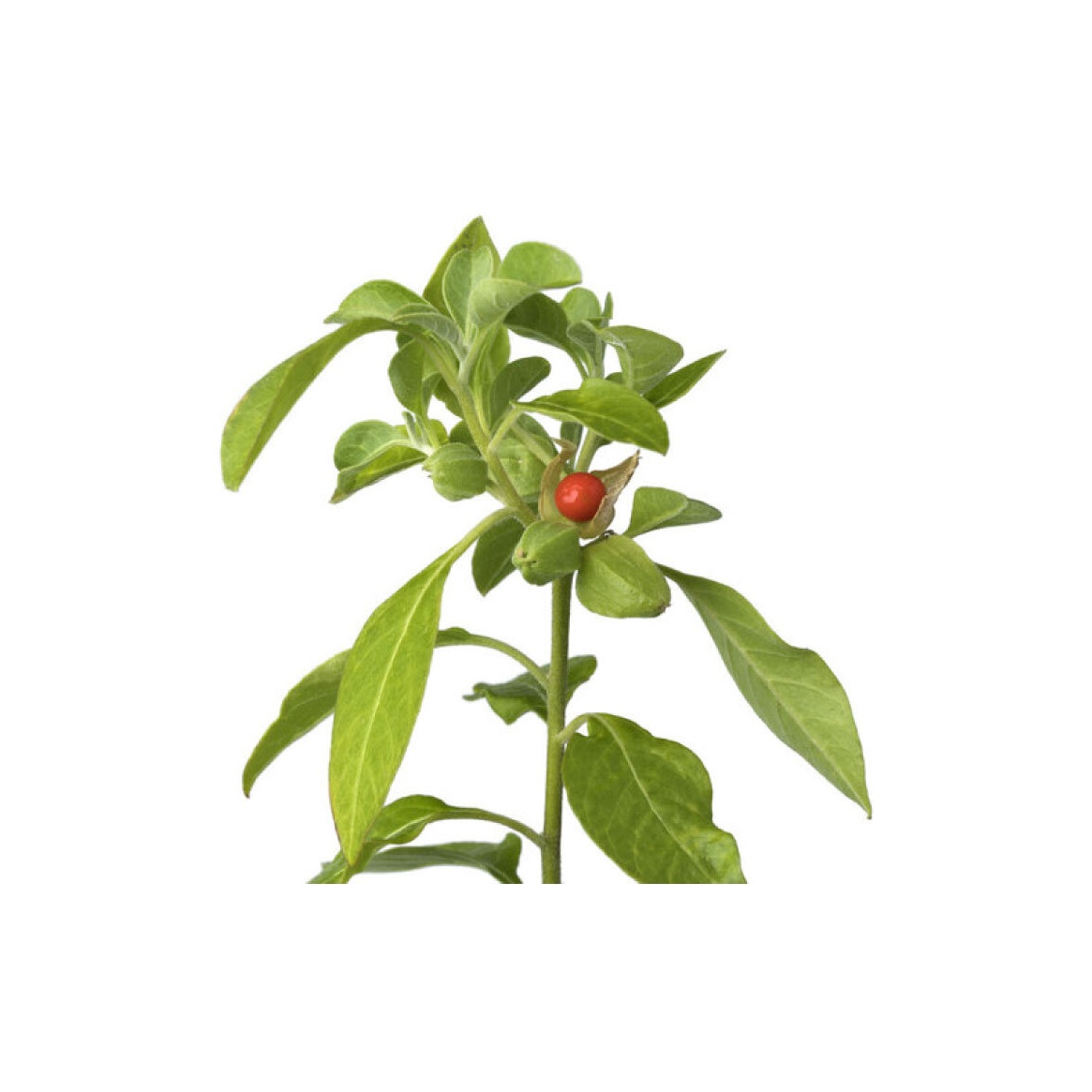 Principal source Ashwagandha Withania somnifera Herb monograph →
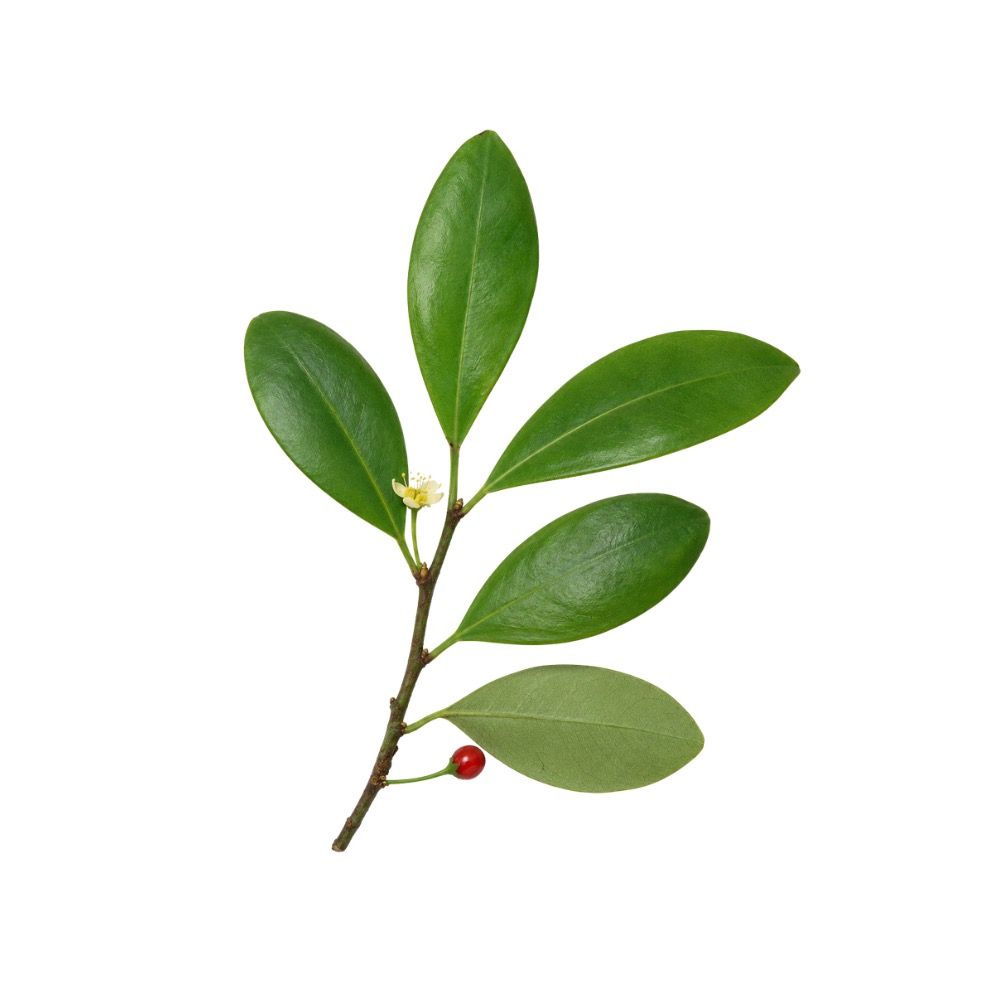 Source Coca Erythroxylum coca Herb monograph →
Concentration
Content by Source
Concentrations not reported. No percent-dry-weight or mg/g figures have been published for this compound in its source plants.
Tropine at a Glance
Tropine, or tropan-3α-ol, is the small bicyclic amino alcohol that forms the core of the tropane alkaloids. It is the esterifiable “half” of the famous nightshade drugs: join tropine to tropic acid and you get hyoscyamine (and its racemate atropine) 2,
The most important honesty point about this molecule is that free tropine is not the potent anticholinergic — that activity belongs to its tropic-acid esters, not to the bare alcohol 8Reference 8StatPearls [Internet]View study →. Tropine itself is pharmacologically weak, and its interest is almost entirely as a biosynthetic hub and structural building block rather than as an agent in its own right.
In herbs it appears only as a trace free alkaloid. In ashwagandha (Withania somnifera) it is one of a minor tropane-alkaloid fraction and is not a driver of the herb’s activity — that role belongs to the withanolides 4Reference 4Tropine forming tropinone reductase gene from Withania somnifera (Ashwagandha): biochemical characteristics of the recombinant enzyme and novel physiological overtones of tissue-wide gene expression patternsView study →. It also occurs across other Solanaceae and, with its close relative ecgonine, in coca 6Reference 6Chemotaxonomy and geographical distribution of tropane alkaloidsView study →.
Tropine as the Structural Core of the Tropane Alkaloids
This is the point of the page. Tropine is not a drug so much as a chemical scaffold — the amino-alcohol from which the pharmacologically active tropane alkaloids are built by esterifying its C3 hydroxyl group 2Reference 2Tropinone reductases, enzymes at the branch point of tropane alkaloid metabolismView study →.
- Hyoscyamine / atropine: tropine esterified with (S)-tropic acid gives hyoscyamine; the racemate is atropine 6,
8Reference 6Chemotaxonomy and geographical distribution of tropane alkaloidsView study →Reference 8StatPearls [Internet]View study → . This is the reaction that turns an inert alcohol into a potent muscarinic antagonist. - Scopolamine: further oxidation of the tropine-derived ring (to scopine) and esterification gives scopolamine, downstream of the same pathway 2,
3Reference 2Tropinone reductases, enzymes at the branch point of tropane alkaloid metabolismView study →Reference 3ReviewTropinone reductase: a comprehensive review on its role as the key enzyme in tropane alkaloids biosynthesisView study → . - The coca alkaloids: in Erythroxylum, the closely related amino-alcohol ecgonine — a tropine analogue — is the core esterified into cocaine and its congeners 6Reference 6Chemotaxonomy and geographical distribution of tropane alkaloidsView study →.
Biosynthetically, tropine sits at a branch point. The precursor tropinone is reduced by tropinone reductase I (TR-I, EC 1.1.1.206) to tropine, which is committed toward hyoscyamine and scopolamine; the parallel enzyme TR-II reduces the same tropinone to the 3β-epimer pseudotropine, which heads instead toward the calystegines 1,
What It's Used For
There is very little “pharmacology of tropine” to report, because the molecule’s significance is chemical, not therapeutic. The evidence is about how tropine is made and used as a building block, not about effects of the free alcohol in animals or people.
Support is an experimental score — weighted by study type and volume. A beta, not a validated metric. Note the unusual profile: the best-evidenced “application” here is a biochemical role (precursor), not a health effect, and the intrinsic-activity row is deliberately low.
The genuine, well-evidenced role — and it is chemistry, not therapy. Tropine is formed when tropinone reductase I stereospecifically reduces tropinone to the 3α-alcohol; the enzyme has been purified from Datura root cultures, cloned and expressed, and kinetically characterised 1,
The tropine so formed is then esterified (through the littorine intermediate) and rearranged by the cytochrome P450 CYP80F1 into hyoscyamine 5Reference 5Functional genomic analysis of alkaloid biosynthesis in Hyoscyamus niger reveals a cytochrome P450 involved in littorine rearrangementView study →.
This is isolate/enzyme-level evidence — purified proteins and defined substrates — not whole-plant pharmacology, and it establishes tropine as a committed precursor rather than an endpoint 2Reference 2Tropinone reductases, enzymes at the branch point of tropane alkaloid metabolismView study →.
Gap: the pathway is well mapped, but “precursor” is a metabolic fact about the molecule, not a demonstrated benefit of taking tropine; nothing here supports using free tropine for any purpose.
Because atropine and hyoscyamine are tropine esters, hydrolysis of those alkaloids (chemically or enzymatically) releases free tropine plus tropic acid — so tropine turns up as a degradation product and metabolic marker in studies of tropane-alkaloid plants and preparations 2,
Gap: this is an analytical/metabolic use of the molecule as a signpost, seen in plant and in-vitro work; it is not a human pharmacological finding and implies no activity of tropine itself.
The application most likely to be mis-attributed to tropine. Structure–activity work on the tropane anticholinergics is clear that high-affinity binding at muscarinic receptors depends on the ester — specifically an aromatic hydroxy-acid (tropic acid) bearing an asymmetric carbon esterified to the C3 hydroxyl — so the potent antagonism of atropine and hyoscyamine is a property of the whole ester, not of the tropine ring alone 8Reference 8StatPearls [Internet]View study →. Stripped of its acid, free tropine is a weak, largely inert amino alcohol.
Gap: there is no isolate clinical (or meaningful preclinical anticholinergic) dataset for free tropine as a drug; the anticholinergic pharmacology in the literature belongs to atropine and hyoscyamine, which are different, esterified molecules.
Mechanisms
| Target / pathway | Effect | Relevant to |
|---|---|---|
| Tropinone reductase I (TR-I, EC 1.1.1.206) | NADPH-dependent stereospecific reduction of tropinone → tropine (3α-ol) | biosynthesis / precursor role |
| Esterification at the C3 hydroxyl (littorine route) | tropine + a phenyl-lactate/tropate unit → littorine → hyoscyamine — the step that creates the active drug | how the ester (the real anticholinergic) is made |
| CYP80F1 (cytochrome P450) | oxidative rearrangement of (R)-littorine → hyoscyamine aldehyde → hyoscyamine | downstream of tropine |
| Muscarinic ACh receptors (M1–M5) | free tropine binds weakly; the intact tropic-acid ester confers the high-affinity antagonism | why free tropine ≠ atropine |
| Tropinone reductase II (TR-II, EC 1.1.1.236) — contrast | reduces the same tropinone → pseudotropine (3β-ol) → calystegines | the epimeric branch point |
The load-bearing point is the second and fourth rows: esterification is what turns an inert alcohol into a potent drug, so the anticholinergic record is the ester’s, not tropine’s.
Pharmacokinetics
There is no dedicated human pharmacokinetic dataset for free tropine — unsurprisingly, since it is not administered as a drug. Chemically it is a small, water-soluble tertiary amino alcohol, and it appears in the body chiefly as the hydrolysis product liberated when tropine esters such as atropine are broken down by esterases 2,
Clinical Trials
There are no clinical trials of free tropine as an isolate — it is a biosynthetic intermediate and trace phytochemical, not a candidate drug. The human clinical record in this family belongs to the esters (atropine, hyoscyamine, scopolamine). What exists for tropine itself is preclinical biochemistry — enzyme characterisation and pathway engineering 1,
| Completed | Planned | Terminated | Preclinical |
|---|---|---|---|
| — | — | — | Enzyme/biosynthesis studies (TR-I, littorine/CYP80F1, microbial pathway reconstruction) |
Last checked: July 2026.
Isolate vs. Plant Studies
The isolate-vs-plant axis here is unusual: the isolate evidence is biochemical, not therapeutic. Where tropine has been studied as a purified species, it is as an enzyme substrate/product — TR-I assays on isolated recombinant enzyme, littorine and CYP80F1 chemistry, and full-pathway reconstitution in engineered yeast 1,
Its Role in Plants
In tropane-alkaloid plants tropine is a committed metabolic intermediate rather than a defensive end-product in its own right. It is produced from tropinone by tropinone reductase I and then consumed — esterified into hyoscyamine and, downstream, scopolamine, the alkaloids that actually deter herbivores through their anticholinergic toxicity 1,
The branch point it sits on is biologically important: whichever tropinone reductase (TR-I vs TR-II) is more active in a given tissue determines whether carbon flows to the tropine → hyoscyamine/scopolamine arm or the pseudotropine → calystegine arm, and both enzymes and their tissue distribution regulate that split 1,
Prevalence in Nature
Tropine occurs across the plants that make tropane alkaloids, but almost always as a minor free base with most of the molecule locked up as ester. It is characteristic of the Solanaceae — Datura, Brugmansia, Duboisia, henbane, deadly nightshade — and, as the review chemistry shows, tropane alkaloids (with tropine or its analogues at their core) also extend into the Erythroxylaceae (coca and relatives) and several other families 6Reference 6Chemotaxonomy and geographical distribution of tropane alkaloidsView study →.
In ashwagandha (Withania somnifera) tropine is one of a small tropane-alkaloid fraction (with pseudotropine, isopelletierine and anaferine) that is not responsible for the herb’s adaptogenic activity — the withanolides are 4Reference 4Tropine forming tropinone reductase gene from Withania somnifera (Ashwagandha): biochemical characteristics of the recombinant enzyme and novel physiological overtones of tissue-wide gene expression patternsView study →. In coca (Erythroxylum coca) tropine appears among the minor alkaloids alongside the ecgonine-based coca alkaloids 6Reference 6Chemotaxonomy and geographical distribution of tropane alkaloidsView study →. Quantitative free-tropine figures are rarely reported, because analysts usually measure the ester alkaloids (hyoscyamine/atropine/scopolamine) that carry the pharmacology — so the honest statement is that free tropine is present at trace-to-minor levels without a well-documented percentage.
Discovery & Synthesis
Tropine entered chemistry through atropine: nineteenth-century hydrolysis of atropine cleanly splits it into tropine plus tropic acid, which is how the amino alcohol was first characterised and named as the alkaloid’s “base” half 6,
Today tropine is not manufactured as a product in its own right — it is either an intermediate on the way to synthetic/semisynthetic tropane esters or, more recently, a pathway node in engineered microbial production: yeast and bacterial platforms reconstituting the plant genes (including a tropinone reductase to make tropine, then the esterification and CYP80F1 steps) have produced tropane alkaloids de novo from simple feedstocks 7Reference 7Engineering a microbial biosynthesis platform for de novo production of tropane alkaloidsView study →. Extraction from plants remains the commercial source of the ester alkaloids, with tropine appearing only as a minor by-product.
Patents: not yet researched.
Toxicity & Safety
Tropine carries a low flag — deliberately, and this is the crux of the page. The dangerous, poisonous members of this family are the esters (atropine, hyoscyamine, scopolamine): free tropine lacks the tropic-acid ester that confers potent muscarinic antagonism, so it is not the deliriant anticholinergic those plants are feared for 8Reference 8StatPearls [Internet]View study →. It should not be read as “safe to consume,” however — it is not a food or supplement ingredient, it is a trace intermediate, and it has essentially no isolate safety dataset of its own.
- Not the potent anticholinergic. Free tropine lacks the tropic-acid ester that makes atropine/hyoscyamine dangerous, so on its own it is pharmacologically weak 8Reference 8StatPearls [Internet]View study →.
- Its esters are genuinely poisonous. The nightshade toxicity people worry about belongs to atropine, hyoscyamine and scopolamine — the tropine esters — not to free tropine.
- No isolate safety data. Tropine is a trace biosynthetic intermediate, not a characterised ingredient; absence of toxicity reports is not evidence of safety.
- Don’t infer herb safety from it. Whether ashwagandha, coca or any tropane plant is safe is decided on the herb page, where the whole alkaloid mixture and intake are considered — not from the weak activity of one precursor molecule.
Dosage
There is no dose for tropine. It is not used therapeutically, has no established human dosing, and is present in herbs only at trace levels — the molecules with actual dosing in this family are the esters (atropine, hyoscyamine), and even those are clinician-controlled drugs, not self-dosed supplements. Any figure you might see for “tropine” in the wild is an analytical measurement, not a recommendation.
References
- Portsteffen A, Dräger B, Nahrstedt A (1994). The reduction of tropinone in Datura stramonium root cultures by two specific reductases. Phytochemistry. https://pubmed.ncbi.nlm.nih.gov/7765621/
- Dräger B (2006). Tropinone reductases, enzymes at the branch point of tropane alkaloid metabolism. Phytochemistry. https://pubmed.ncbi.nlm.nih.gov/16426652/
- Hu X, Liu W, Yan Y, Deng H, Cai Y (2023). Tropinone reductase: a comprehensive review on its role as the key enzyme in tropane alkaloids biosynthesis. International Journal of Biological Macromolecules. https://pubmed.ncbi.nlm.nih.gov/37839598/
- Kushwaha AK, Sangwan NS, Trivedi PK, Negi AS, Misra L, Sangwan RS (2013). Tropine forming tropinone reductase gene from Withania somnifera (Ashwagandha): biochemical characteristics of the recombinant enzyme and novel physiological overtones of tissue-wide gene expression patterns. PLoS One. https://pubmed.ncbi.nlm.nih.gov/24086372/
- Li R, Reed DW, Liu E, Nowak J, Pelcher LE, Page JE, Covello PS (2006). Functional genomic analysis of alkaloid biosynthesis in Hyoscyamus niger reveals a cytochrome P450 involved in littorine rearrangement. Chemistry & Biology. https://pubmed.ncbi.nlm.nih.gov/16720272/
- Griffin WJ, Lin GD (2000). Chemotaxonomy and geographical distribution of tropane alkaloids. Phytochemistry. https://pubmed.ncbi.nlm.nih.gov/10746874/
- Srinivasan P, Smolke CD (2019). Engineering a microbial biosynthesis platform for de novo production of tropane alkaloids. Nature Communications. https://pubmed.ncbi.nlm.nih.gov/31406117/
- Atropine. StatPearls [Internet]. Treasure Island (FL): StatPearls Publishing; 2024. https://www.ncbi.nlm.nih.gov/books/NBK470551/



