
Compound Monograph
Withanolide A
Withanolide A — the neurotrophic withanolide (steroidal lactone) of ashwagandha root. Best known for neuroregeneration: it drives neurite outgrowth, axonal and dendritic regeneration and synaptic reconstruction in cultured neurons (the Kuboyama/Tohda work), with anxiolytic/anti-stress and neuroprotective signals proposed to run through GABAergic/HPA-axis mediation. It is the counterpoint to withaferin A — where withaferin A kills neurons, withanolide A rebuilds them. All efficacy data are preclinical; no isolated-molecule human trials exist.

Sources · 3
Where Does It Come From?
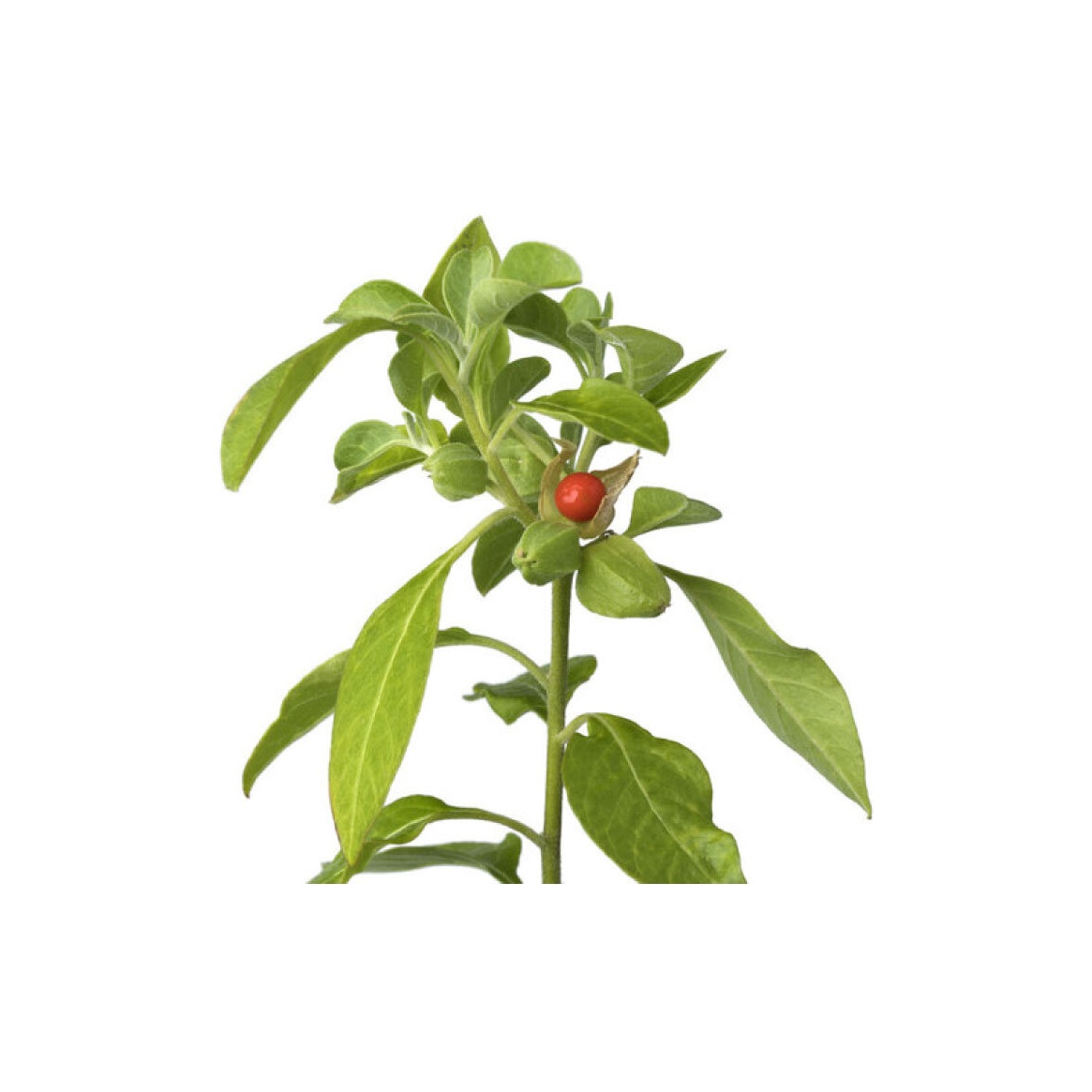
Withanolide A is a naturally occurring steroidal lactone (withanolide), found in Ashwagandha root and 2 other sources. It is well tolerated orally (low toxicity).
Concentration
Content by Source
Reported concentrations across the plants that contain withanolide A — the bar marks the typical level, the line shows the reported range.
Literature figures for varying plant parts and preparations. Read them as a comparative guide, not exact assays.
Withanolide A at a Glance
Withanolide A is a C28 steroidal lactone (withanolide) from the root of ashwagandha (Withania somnifera), and one of the plant’s principal anti-stress, neuroactive constituents. Where its famous sibling withaferin A is a reactive, cytotoxic electrophile studied mostly as an anticancer agent, withanolide A is the neurotrophic withanolide — the molecule associated with rebuilding neurons rather than killing them.
Its signature finding is neuroregeneration: in cultured neurons, withanolide A promotes neurite outgrowth, regenerates damaged axons and dendrites, and reconstructs synapses — even after the network has been degraded 1,
The honest posture up front: the evidence is preclinical — cultured neurons and rodent models — and much of the anxiolytic data belongs to the glycowithanolide fraction or whole extract, not the isolated molecule. There are no isolated-molecule human trials, and oral bioavailability of the molecule is modest 11Reference 11AnimalDetermination of withaferin A and withanolide A in mice plasma using HPLC-tandem mass spectrometry: application to pharmacokinetics after oral administration of Withania somnifera aqueous extractView study →. As a compound it appears low-toxicity — non-cytotoxic to neurons, indeed neuroprotective 7Reference 7Withaferin-A kills neuronal cells: an off-putting facet of Withania somnifera as a neuroprotectantView study → — but no isolated-molecule human safety dataset exists to anchor that firmly.
Neuroregeneration — The Neurotrophic Withanolide
This is the point of the page. Most natural “neuroprotectants” only shield neurons from further damage; withanolide A is unusual in that the isolated molecule promotes active regrowth of already-damaged neuronal structures.
The defining series comes from Kuboyama, Tohda and Komatsu. In cultured cortical and neuroblastoma neurons, withanolide A induced significant neurite outgrowth at low-micromolar concentrations (~1 µM) 3Reference 3Withanolide derivatives from the roots of Withania somnifera and their neurite outgrowth activitiesView study →. When neurons were exposed to different Ashwagandha constituents, withanolide A produced axon-predominant outgrowth, while the related withanosides drove dendrite-predominant outgrowth — a genuine structural specificity, not just generic “growth” 2Reference 2Axon- or dendrite-predominant outgrowth induced by constituents from AshwagandhaView study →. The landmark 2005 paper went further: withanolide A regenerated both axons and dendrites and reconstructed synapses in neurons that had already been damaged, i.e. it acted on a degenerated network rather than merely a healthy one 1Reference 1Neuritic regeneration and synaptic reconstruction induced by withanolide AView study →.
Mechanistically, later work profiled withanolide A against neurodegenerative targets and found it reverses the neurite-outgrowth inhibition caused by dexamethasone — implicating a glucocorticoid/stress-hormone axis in its neurotrophic action, and tying the neuroregeneration story back to the adaptogenic, anti-stress framing of the whole herb 5Reference 5Profiling withanolide A for therapeutic targets in neurodegenerative diseasesView study →. A related withanoside (withanoside IV) and its active metabolite sominone independently rescued memory and prevented neuronal loss in amyloid-β mouse models when given orally — the in-vivo bookend to the in-vitro withanolide A data 6Reference 6Withanoside IV and its active metabolite, sominone, attenuate Aβ(25-35)-induced neurodegenerationView study →.
The caveat that keeps this honest: essentially all of this is cultured-neuron and rodent work. Withanolide A has never been tested as an isolated molecule in a human neuroregeneration trial, and the molecule’s own oral pharmacokinetics are modest 11Reference 11AnimalDetermination of withaferin A and withanolide A in mice plasma using HPLC-tandem mass spectrometry: application to pharmacokinetics after oral administration of Withania somnifera aqueous extractView study →. The signal is mechanistically striking; the clinical proof does not yet exist.
Withanolide A vs. Withaferin A
The two headline withanolides of ashwagandha point in opposite pharmacological directions, and conflating them is the most common error about this chemistry.
- Withaferin A carries an α,β-unsaturated (reactive) lactone that acts as a Michael acceptor, covalently modifying protein cysteines. That reactivity makes it a broad-spectrum, cytotoxic molecule — the anticancer withanolide — and a 2025 study bluntly titled its effect on neurons “an off-putting facet,” showing withaferin A kills differentiated neuronal cells through ROS-driven mitochondrial dysfunction and apoptosis 7Reference 7Withaferin-A kills neuronal cells: an off-putting facet of Withania somnifera as a neuroprotectantView study →.
- Withanolide A lacks that promiscuous electrophilic reactivity in the same way, and the same research lineage identifies it (with withanone) as neuroprotective — the molecule that regenerates neurons 1,
2, .7Reference 1Neuritic regeneration and synaptic reconstruction induced by withanolide AView study →Reference 2Axon- or dendrite-predominant outgrowth induced by constituents from AshwagandhaView study →Reference 7Withaferin-A kills neuronal cells: an off-putting facet of Withania somnifera as a neuroprotectantView study →
There is also a tissue split that matters for real-world exposure: withaferin A concentrates in the leaf and in withaferin-A-rich chemotypes, whereas withanolide A is more root-associated — and the root is the part used in essentially all traditional preparations and human trials. So the withanolide most people actually ingest from root ashwagandha is skewed toward the neurotrophic, not the cytotoxic, member.
What It's Used For
Beyond the neuroregeneration signature, withanolide A’s pharmacology spans anxiolytic/anti-stress, neuroprotective and immunomodulatory activity. The evidence splits sharply by whether the isolated molecule — rather than the glycowithanolide fraction or whole extract — was the thing tested.
Support is an experimental score — weighted by study type (human > animal > in vitro) and volume. A beta, not a validated metric. Every application here is preclinical, so scores reflect mechanistic depth and consistency, not clinical proof, and stay modest by design. Each application links to its write-up.
The best-supported and most compound-specific application. In cultured cortical and neuroblastoma neurons, isolated withanolide A induced significant neurite outgrowth at ~1 µM 3Reference 3Withanolide derivatives from the roots of Withania somnifera and their neurite outgrowth activitiesView study →, produced axon-predominant outgrowth (versus dendrite-predominant for the withanosides) 2Reference 2Axon- or dendrite-predominant outgrowth induced by constituents from AshwagandhaView study →, and — the landmark result — regenerated axons and dendrites and reconstructed synapses in already-damaged neurons 1Reference 1Neuritic regeneration and synaptic reconstruction induced by withanolide AView study →.
Modern target profiling shows it reverses dexamethasone-induced neurite inhibition, implicating a glucocorticoid/stress-hormone pathway 5Reference 5Profiling withanolide A for therapeutic targets in neurodegenerative diseasesView study →.
This is genuinely isolate-level evidence.
Gap: all in-vitro cultured-neuron or ex-vivo work — no human neuroregeneration trial of the isolated molecule, and the molecule’s modest oral PK 11Reference 11AnimalDetermination of withaferin A and withanolide A in mice plasma using HPLC-tandem mass spectrometry: application to pharmacokinetics after oral administration of Withania somnifera aqueous extractView study → leaves brain exposure from oral dosing unquantified.
Ashwagandha’s anxiolytic, calming, sleep-adjacent reputation is often attributed to withanolide A, but the direct evidence is largely fraction-level: the glycowithanolide fraction (an equimolar mix of sitoindosides — including sitoindoside IX and sitoindoside X — and withanolides) produced an anxiolytic effect comparable to lorazepam and an antidepressant effect comparable to imipramine in rodents 8Reference 8Anxiolytic-antidepressant activity of Withania somnifera glycowithanolides: an experimental studyView study →, and whole W. somnifera extract shows direct GABAergic activity at ionotropic GABA-A/GABA-ρ receptors — a plausible mechanism for anxiolysis and sleep 9Reference 9Direct evidence for GABAergic activity of Withania somnifera on mammalian ionotropic GABA-A and GABA-ρ receptorsView study →. A GABAergic/HPA-axis route fits the “adaptogen” framing.
Gap: the isolated molecule itself was not the test article in the marquee behavioural studies — these used the glycowithanolide fraction or whole extract 8,
Distinct from regeneration, withanolide A is also repeatedly identified as neuroprotective: a research lineage that found withaferin A to be neurotoxic explicitly names withanolide A (with withanone) as a protective agent 7Reference 7Withaferin-A kills neuronal cells: an off-putting facet of Withania somnifera as a neuroprotectantView study →, and target-profiling work places it against neurodegenerative-disease pathways 5Reference 5Profiling withanolide A for therapeutic targets in neurodegenerative diseasesView study →. The in-vivo bookend comes from the closely related withanoside IV / sominone, which rescued memory and prevented neuronal loss in amyloid-β mice given orally 6Reference 6Withanoside IV and its active metabolite, sominone, attenuate Aβ(25-35)-induced neurodegenerationView study →.
Gap: the strongest in-vivo memory data are for the related withanoside/sominone, not pure withanolide A 6Reference 6Withanoside IV and its active metabolite, sominone, attenuate Aβ(25-35)-induced neurodegenerationView study →; the isolate’s own neuroprotection is chiefly in-vitro and mechanistic 5,
A standardized W. somnifera root extract and its isolated constituent withanolide A up-regulated humoral and cell-mediated immunity via Th1-dominant polarization in mice — withanolide A raised Th1 cytokines and moderately lowered IL-4 in cultured splenocytes, so the isolate was directly tested here 10Reference 10AnimalA standardized root extract of Withania somnifera and its major constituent withanolide-A elicit humoral and cell-mediated immune responses by up regulation of Th1-dominant polarization in BALB/c miceView study →.
Gap: a single study; the in-vivo immune effect was measured for the extract, with the isolate shown active only in the ex-vivo splenocyte arm 10Reference 10AnimalA standardized root extract of Withania somnifera and its major constituent withanolide-A elicit humoral and cell-mediated immune responses by up regulation of Th1-dominant polarization in BALB/c miceView study →.
Mechanisms
| Target / pathway | Effect | Relevant to |
|---|---|---|
| Neurite / axon-dendrite machinery | promotes neurite outgrowth (axon-predominant); regenerates axons + dendrites | neuroregeneration |
| Synaptic reconstruction | rebuilds pre-/post-synaptic contacts in damaged neurons | neuroregeneration |
| Glucocorticoid / dexamethasone pathway | reverses dexamethasone-induced neurite-outgrowth inhibition | neuroregenerationanti-stress |
| GABA-A / GABA-ρ receptors (extract) | direct GABAergic activation → anxiolytic/sedative tone | anxiolytic / anti-stress |
| HPA axis / stress hormones | proposed normalization of the stress response | anti-stress (adaptogenic) |
| Th1 cytokine polarization | ↑ Th1 cytokines, moderate ↓ IL-4 | immunomodulatory |
Unifying reading: withanolide A is a non-electrophilic, neurotrophic withanolide — its defining action is promoting structural neuronal repair, with a glucocorticoid/stress-axis link that dovetails with ashwagandha’s adaptogenic anti-stress profile. This is the mechanistic opposite of withaferin A’s reactive cytotoxicity.
Pharmacokinetics
The value-add caveat. In mice given oral W. somnifera aqueous extract, withanolide A was rapidly absorbed but had only ~two-thirds the relative oral bioavailability of withaferin A (withaferin A showed ~1.5× the relative bioavailability of withanolide A) 11Reference 11AnimalDetermination of withaferin A and withanolide A in mice plasma using HPLC-tandem mass spectrometry: application to pharmacokinetics after oral administration of Withania somnifera aqueous extractView study → — i.e. modest oral exposure. No validated human pharmacokinetics exist, and brain penetration after oral dosing is not quantified, which is the key unknown for a molecule whose headline effects are all central-nervous-system regeneration observed in vitro. The persistent tension here is that the striking neurotrophic data are cell-culture concentrations (~1 µM), while the achievable oral exposure of the isolated molecule in a living animal — let alone a human brain — is unestablished.
Clinical Trials
There is no published human efficacy trial of purified withanolide A for any indication. Human ashwagandha trials test standardized root extracts (e.g. KSM-66, Sensoril/Shoden) — for stress, anxiety, sleep and related outcomes 12Reference 12RCTA prospective, randomized double-blind, placebo-controlled study of safety and efficacy of a high-concentration full-spectrum extract of ashwagandha root in reducing stress and anxiety in adultsView study → — and their results cannot be attributed to withanolide A specifically, since the extracts are complex mixtures of withanolides, withanosides and glycowithanolides. The entire efficacy literature for the isolated molecule is preclinical.
| Completed | Planned | Terminated | Preclinical |
|---|---|---|---|
| —(none, isolate) | — | — | Extensive |
Last checked: July 2026.
Isolate vs. Plant Studies
Withanolide A sits in an unusual middle. Its neuroregeneration evidence is genuinely isolate-level — the Kuboyama/Tohda cell studies dosed the purified molecule and saw axon/dendrite/synapse effects 1,
Prevalence in Nature
Withanolide A is a characteristic withanolide of ashwagandha (Withania somnifera), most associated with the root — the part used in traditional preparations and nearly all clinical research. It is one member of a large family: standardized root extracts are typically standardized to total withanolides (~1.5–5%) 12Reference 12RCTA prospective, randomized double-blind, placebo-controlled study of safety and efficacy of a high-concentration full-spectrum extract of ashwagandha root in reducing stress and anxiety in adultsView study →, within which withanolide A is a minor individual fraction rather than the dominant single compound. Content varies markedly with chemotype, plant part, extract type and standardization target — a recurring theme in the ashwagandha literature, where Indian germplasm splits into withaferin-A-rich and withanolide-rich chemotypes. Notably, the root/leaf split tilts withanolide A toward the root and withaferin A toward the leaf, so root-based products are relatively enriched in the neurotrophic member. Withanolides as a class are otherwise distributed across several Solanaceae genera, but withanolide A itself is reported chiefly from Withania.
A precise, separately-quantified withanolide-A percentage for defined root material is not well documented in the sources reviewed — see the gaps tracker.
Discovery & Synthesis
The withanolides — C28 steroidal lactones built on an ergostane skeleton with a characteristic δ-lactone side chain — were first characterized by David Lavie, Erwin Glotter and Yaffa Kirson at the Weizmann Institute of Science beginning in 1965, with withaferin A as the founding, name-giving member of the class. Withanolide A was described among the Withania somnifera root withanolides in the years that followed, as the class was systematically catalogued (the “withanolide A/B/…” naming convention dates from that structural work). Its neuroactivity was not appreciated until the Kuboyama/Tohda neurite-outgrowth studies of the early 2000s 1,
Manufacture today is by extraction from ashwagandha root (or, for research quantities, chromatographic isolation from root extract); withanolide A is used essentially as a research reference compound and analytical marker rather than a bulk commercial ingredient — commercial ashwagandha products are standardized to total withanolides, not to isolated withanolide A. No widely used total synthesis is established as the production route.
Patents: not yet researched.
Toxicity & Safety
Withanolide A carries a low flag — and the reasoning is the mirror image of its sibling’s. Unlike withaferin A (flagged moderate for reactive, cytotoxic electrophilic chemistry), withanolide A is non-cytotoxic to neurons and is repeatedly described as neuroprotective/neurotrophic 1,
- Non-cytotoxic, neurotrophic profile. In neuronal studies withanolide A promotes regeneration rather than causing cell death — the opposite of withaferin A.
- No isolate cytotoxicity signal. No reactive-electrophile liability of the kind that flags its sibling withanolide.
- Preclinical only — no human safety data. The low flag rests on rodent/cell studies; there is no isolated-molecule human toxicity or interaction dataset.
- Possible additive sedation. The parent extract’s GABAergic activity means theoretical additive effects with sedatives; immune (Th1) modulation is worth noting in autoimmune/immunosuppressed contexts.
- Pregnancy is an herb-level call. Ashwagandha is traditionally avoided in pregnancy; that precaution belongs to the herb/product, not to conclusions about this molecule.
Dosage
No human therapeutic dose exists and none is recommended. For context only, research exposures are: in vitro, low-micromolar (~1 µM) for the neurite-outgrowth/neuroregeneration effects 1,
References
- Kuboyama T, Tohda C, Komatsu K (2005). Neuritic regeneration and synaptic reconstruction induced by withanolide A. British Journal of Pharmacology. https://pubmed.ncbi.nlm.nih.gov/15711595/
- Kuboyama T, Tohda C, Zhao J, Nakamura N, Hattori M, Komatsu K (2002). Axon- or dendrite-predominant outgrowth induced by constituents from Ashwagandha. Neuroreport. https://pubmed.ncbi.nlm.nih.gov/12395110/
- Zhao J, Nakamura N, Hattori M, Kuboyama T, Tohda C, Komatsu K (2002). Withanolide derivatives from the roots of Withania somnifera and their neurite outgrowth activities. Chemical & Pharmaceutical Bulletin. https://pubmed.ncbi.nlm.nih.gov/12045329/
- Tohda C, Kuboyama T, Komatsu K (2005). Search for natural products related to regeneration of the neuronal network. Neurosignals. https://pubmed.ncbi.nlm.nih.gov/15956813/
- Crane EA, Heydenreuter W, Beck KR, Strajhar P, Vomacka J, Smiesko M, Mons E, Barth L, Neuburger M, Vedani A, Odermatt A, Sieber SA, Gademann K (2019). Profiling withanolide A for therapeutic targets in neurodegenerative diseases. Bioorganic & Medicinal Chemistry. https://pubmed.ncbi.nlm.nih.gov/30929949/
- Kuboyama T, Tohda C, Komatsu K (2006). Withanoside IV and its active metabolite, sominone, attenuate Aβ(25-35)-induced neurodegeneration. European Journal of Neuroscience. https://pubmed.ncbi.nlm.nih.gov/16553605/
- Dar NJ, Gull B, Hamid A, Ahmed Z, Ahmad M (2025). Withaferin-A kills neuronal cells: an off-putting facet of Withania somnifera as a neuroprotectant. Steroids. https://pubmed.ncbi.nlm.nih.gov/40695418/
- Bhattacharya SK, Bhattacharya A, Sairam K, Ghosal S (2000). Anxiolytic-antidepressant activity of Withania somnifera glycowithanolides: an experimental study. Phytomedicine. https://pubmed.ncbi.nlm.nih.gov/11194174/
- Candelario M, Cuellar E, Reyes-Ruiz JM, Darabedian N, Feimeng Z, Miledi R, Russo-Neustadt A, Limon A (2015). Direct evidence for GABAergic activity of Withania somnifera on mammalian ionotropic GABA-A and GABA-ρ receptors. Journal of Ethnopharmacology. https://pubmed.ncbi.nlm.nih.gov/26068424/
- Malik F, Singh J, Khajuria A, Suri KA, Satti NK, Singh S, Kaul MK, Kumar A, Bhatia A, Qazi GN (2007). A standardized root extract of Withania somnifera and its major constituent withanolide-A elicit humoral and cell-mediated immune responses by up regulation of Th1-dominant polarization in BALB/c mice. Life Sciences. https://pubmed.ncbi.nlm.nih.gov/17336338/
- Patil D, Gautam M, Mishra S, Karupothula S, Gairola S, Jadhav S, Pawar S, Patwardhan B (2013). Determination of withaferin A and withanolide A in mice plasma using HPLC-tandem mass spectrometry: application to pharmacokinetics after oral administration of Withania somnifera aqueous extract. Journal of Pharmaceutical and Biomedical Analysis. https://pubmed.ncbi.nlm.nih.gov/23584079/
- Chandrasekhar K, Kapoor J, Anishetty S (2012). A prospective, randomized double-blind, placebo-controlled study of safety and efficacy of a high-concentration full-spectrum extract of ashwagandha root in reducing stress and anxiety in adults. Indian Journal of Psychological Medicine. https://pubmed.ncbi.nlm.nih.gov/23439798/



