
Condition
Chronic Kidney Disease
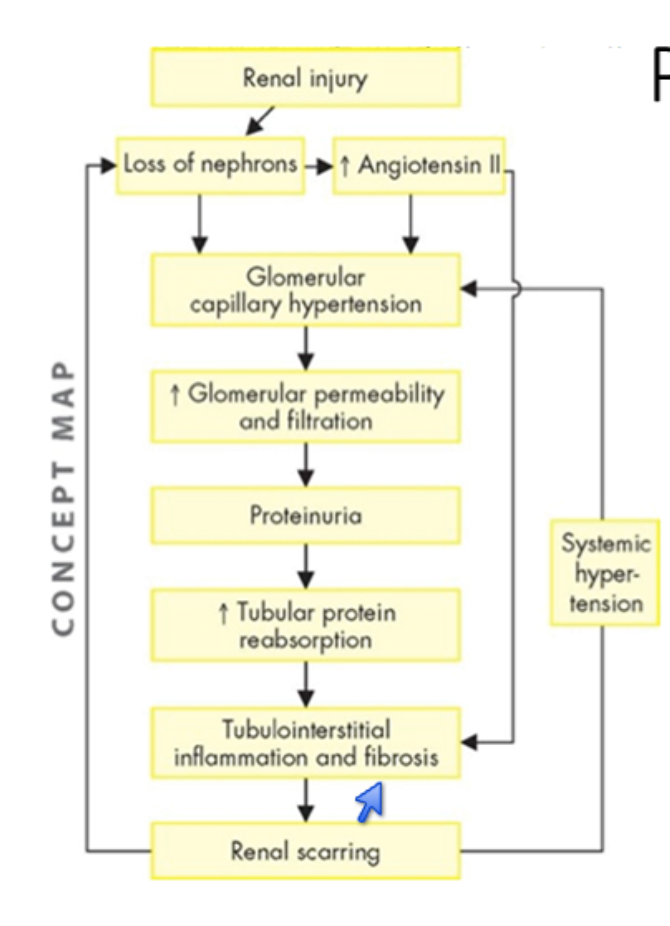
CKD involves a loss of nephron function, and deterioration of glomerular filtration, tubular reabsorption, and endocrine capability of the kidneys over time.

Overview
Aetiology
CKD involves a loss of nephron function, and deterioration of glomerular filtration, tubular reabsorption, and endocrine capability of the kidneys over time.
Risk factors include; proteinuria, congenital defects, polycystic kidney disease (PKD), obesity, diabetic nephropathy, hypertension, IgA nephropathy, chronic, polynephritis, vasculitis, systemic inflammation, systemic lupus erethematosus.
Complications of Chronic Kidney Disease
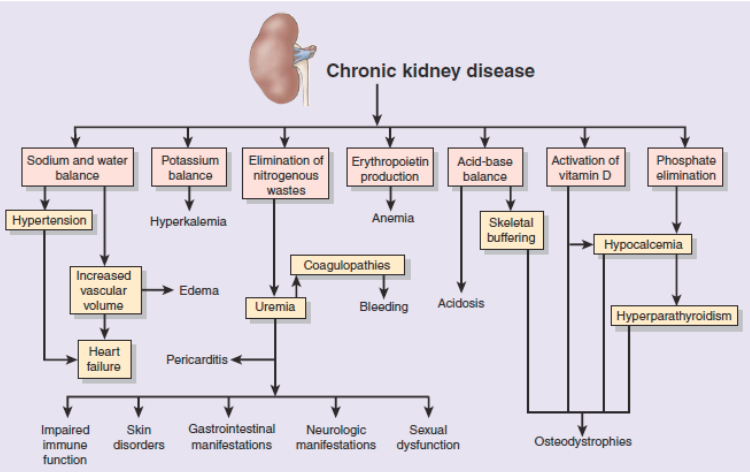
CKD brings a major risk for developing cardiovascular disease especially atherosclerosis and left ventricular hypertrophy. This will be exacerbated by any existing hypertension that may be present.
Other complications includes metabolic acidosis, hyperkalemia, vitamin D deficiency, hyperparathyroidism, and anemia.
Uremic Complications:
- Impaired immune function
- Inability for vitamin D to activate, resulting in hypertension and osteotrophy
- Chronic GIT symptoms (such as nausea and vomiting) due to nitrogen buildup in bloodstream
- Increased intravascular volume, left ventrical needs to pump harder and often atrophies
Presentation
Symptoms
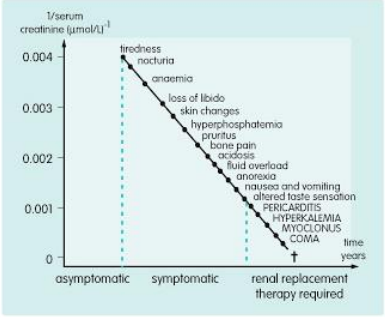
Early chronic kidney disease is often asymptomatic. As function declines, symptoms may include fatigue, swelling of the legs and ankles, reduced or foamy urine, nausea, loss of appetite, itching, and difficulty concentrating.
Assessment
Diagnostic Considerations
May be indicated by increased creatinine lab results in combination with hypertension, proteinuria, and anemia.
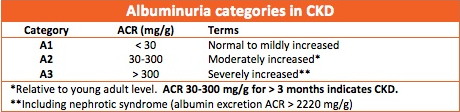
Serum eGFR, urinary albumin:creatinine ratio (UACR), and blood pressure should all be considered. Blood urea nitrogen (BUN) and urine dipstick testing are also useful in the initial assessment.
Assessment
Differential Diagnosis
Acute kidney injury should be excluded, as it is potentially reversible and develops over a much shorter time frame. Other causes of similar laboratory or clinical findings include dehydration, urinary tract obstruction, and primary cardiovascular disease.
Treatment of Chronic Kidney Disease
herbal medicine approaches not recommended as first line of treatment for chronic kidney disease past stage 2. The introduction of more metabolites into the bloodstream may increase the rate of damage to the basement membrane of the kidneys.
The Herbs
Materia Medica (1)
Herbs traditionally or clinically used for chronic kidney disease.
Supplementation
Supplementation (2)
Supplements, nutrients and compounds used for chronic kidney disease.
Gum Arabic
Soluble fiber (plant exudate gum)
Gum arabic is the dried sap of two African thorn trees — Senegalia senegal and Vachellia seyal — sold as a soluble prebiotic fiber. It is barely fermented in the small intestine, reaches the distal colon largely intact, and feeds butyrate-producing bacteria there; small randomized trials consistently show a drop in C-reactive protein, with weaker signals on body fat, blood pressure and dental plaque.
Semaglutide (Ozempic / Wegovy / Rybelsus)
GLP-1 receptor agonist
A prescription GLP-1 receptor agonist approved for type 2 diabetes, chronic weight management, and cardiovascular, renal and liver (MASH) risk reduction.
References:
- National Kidney Foundation. (2015, December 24). Glomerular Filtration Rate (GFR). Retrieved from https://www.kidney.org/atoz/content/gfr
- Sarris, J., & Wardle, J. (2014). Clinical naturopathy: an evidence-based guide to practice. Elsevier Health Sciences.