
Compound Monograph
6-Hydroxy-7-methoxycoumarin
6-Hydroxy-7-methoxycoumarin — better known as isoscopoletin — is a minor plant hydroxycoumarin and the positional isomer of scopoletin. Its research is entirely preclinical: low-micromolar antiproliferative activity against leukaemia and liver-cancer cells in vitro, plus anti-inflammatory, antiviral and antimicrobial signals. It is not phototoxic, and it should not be conflated with its better-studied isomer scopoletin.

Sources · 6
Where Does It Come From?
6-Hydroxy-7-methoxycoumarin is a naturally occurring coumarin (hydroxy-methoxycoumarin), found in Chinese Mugwort, Mexican Tarragon, Chinese Ash and 3 other sources. It is well tolerated orally (low toxicity).
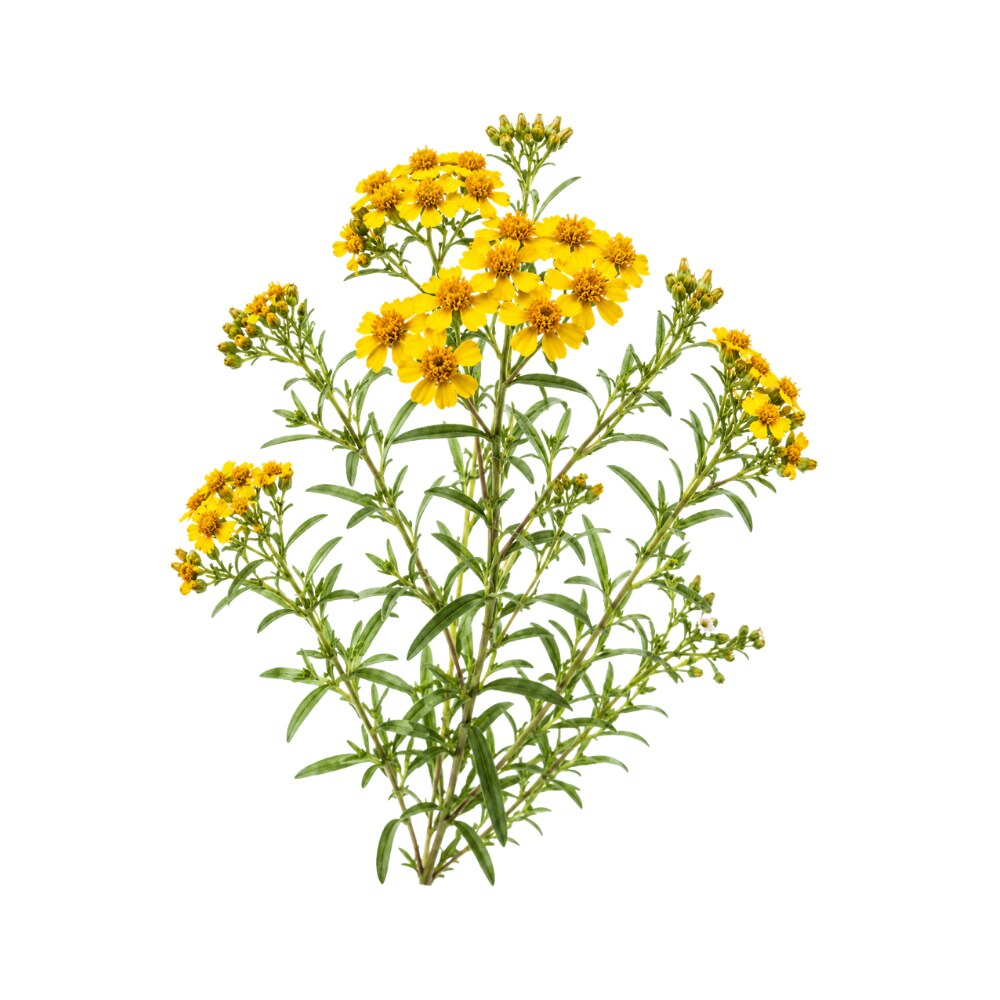
Concentration
Content by Source
Concentrations not reported. No percent-dry-weight or mg/g figures have been published for this compound in its source plants.
6-Hydroxy-7-methoxycoumarin at a Glance
6-Hydroxy-7-methoxycoumarin, almost always called isoscopoletin, is a simple plant hydroxycoumarin. It carries a hydroxyl at position 6 and a methoxy at position 7 of the coumarin ring — the exact mirror of scopoletin (7-hydroxy-6-methoxycoumarin), with which it is easily and often confused. It occurs as a minor constituent of Chinese mugwort (Artemisia argyi), Mexican tarragon (Tagetes lucida), Chinese ash bark (Fraxinus chinensis) and various buttercups (Ranunculus spp.), and it can form in the body as a demethylation product of the dimethoxycoumarin scoparone 1,
Its pharmacology is entirely preclinical — there are no human trials of the isolated molecule. The best-defined signals are a genuinely potent, low-micromolar antiproliferative effect on leukaemia and liver-cancer cell lines in vitro 1,
Unlike the furanocoumarins it shares a chemical family with (psoralen, bergapten, imperatorin), isoscopoletin has no furan ring and is not phototoxic.
Isoscopoletin vs. Scopoletin — The Isomer Distinction
This is the single most important point about the molecule. Isoscopoletin and scopoletin are positional isomers: both are 6,7-disubstituted coumarins carrying one hydroxyl and one methoxy group, but the two substituents are swapped.
- Scopoletin = 7-hydroxy-6-methoxycoumarin (hydroxyl at 7, methoxy at 6).
- Isoscopoletin = 6-hydroxy-7-methoxycoumarin (hydroxyl at 6, methoxy at 7).
They are frequently isolated from the same plants — both appear together in Artemisia argyi and in Mexican tarragon 1,
What It's Used For
All of the evidence is in vitro, on the isolated molecule, and none of it has reached animals-in-disease models or people. The strongest thread is anticancer cell-proliferation data; the anti-inflammatory work is next; antiviral and antimicrobial signals are single-study or screen-level.
Support is an experimental score — weighted by study type (human > animal > in vitro) and volume. A beta, not a validated metric. Every application here is in-vitro isolate data, so scores stay low by design.
The best-evidenced use, and the one built on the isolated, isomer-named molecule. In the pivotal study, activity-guided fractionation of Artemisia argyi leaves isolated scopoletin and isoscopoletin side by side as the cytotoxic principles against human CCRF-CEM leukaemia cells (isoscopoletin IC50 4.0 µM; scopoletin 2.6 µM); against the multidrug-resistant CEM/ADR5000 subline both were, if anything, more potent (IC50 1.6 µM) and showed no cross-resistance to the P-glycoprotein-driven resistance that defeats doxorubicin, vincristine and paclitaxel 1Reference 1Activity-guided isolation of scopoletin and isoscopoletin, the inhibitory active principles towards CCRF-CEM leukaemia cells and multi-drug resistant CEM/ADR5000 cells, from Artemisia argyiView study →.
A later study reported isoscopoletin inhibits hepatocellular-carcinoma (HepG2) proliferation, tracing the effect to reduced glucose consumption and lactate production via binding of glycolysis-related proteins (GPD2, GPI, Hsp90α, PGK2) — i.e. starving the tumour cells of energy 2Reference 2Isoscopoletin inhibits hepatocellular carcinoma cell proliferation via regulating glycolysis-related proteinsView study →.
Gap: both are cell-culture studies of the isolate — no animal tumour models, no in-vivo dosing, no pharmacokinetics, and no human data. The MDR result is intriguing but preliminary.
Two independent in-vitro studies support an anti-inflammatory action. In TNF-α/IFN-γ-stimulated HaCaT keratinocytes and PMA/ionomycin-stimulated RBL-2H3 basophils — a skin-inflammation/atopic-dermatitis model — isoscopoletin (≤40 µM, non-cytotoxic) suppressed the chemokines/cytokines TARC, MDC, MCP-1, IL-8 and IL-1β (and IL-4 in basophils), by dampening phosphorylation of MAPK, NF-κB, STAT and AKT/PKB signalling 3Reference 3Effect of isoscopoletin on cytokine expression in HaCaT keratinocytes and RBL-2H3 basophils: preliminary studyView study →.
Separately, as a constituent of Chinese ash (Fraxinus chinensis) stem bark, isoscopoletin inhibited superoxide generation and elastase release by activated human neutrophils and LPS-induced nitric oxide production in macrophages 4Reference 4Secoiridoid glucosides and anti-inflammatory constituents from the stem bark of Fraxinus chinensisView study →.
Gap: isolate/in-vitro throughout. Note that in the Fraxinus paper the deeper MAPK/IκBα mechanistic work was demonstrated for other compounds in the set, not isoscopoletin specifically — isoscopoletin’s role there is the measured neutrophil/NO inhibition, not the mechanism 4Reference 4Secoiridoid glucosides and anti-inflammatory constituents from the stem bark of Fraxinus chinensisView study →.
A single screening study of nineteen compounds isolated from Ranunculus sieboldii and R. sceleratus found isoscopoletin (alongside several flavonoids) possessed inhibitory activity against hepatitis B virus (HBV) replication in a cell-based assay 5Reference 5Evaluation of antiviral activity of compounds isolated from Ranunculus sieboldii and Ranunculus sceleratusView study →.
Gap: one in-vitro screen, no potency ranking that singles isoscopoletin out as a lead, no follow-up, no animal or human data.
6-Hydroxy-7-methoxycoumarin was one of seven coumarins isolated from the aerial parts of Mexican tarragon (Tagetes lucida) and assayed in a broad antibacterial and antifungal panel (Gram-positive/-negative bacteria and fungi) 6Reference 6Antifungal and antibacterial activities of Mexican tarragon (Tagetes lucida)View study →. It thus contributes to the antimicrobial coumarin fraction of that plant.
Gap: this is a whole-panel screen in which the compound is one of many coumarins tested; the abstract does not resolve a strong, isomer-specific potency figure, so treat this as a supporting rather than headline activity 6Reference 6Antifungal and antibacterial activities of Mexican tarragon (Tagetes lucida)View study →.
Mechanisms
| Target / pathway | Effect | Relevant to |
|---|---|---|
| Glycolysis proteins (GPD2, GPI, Hsp90α, PGK2) | binds/inhibits → ↓ glucose consumption & lactate → energy starvation of tumour cells | anticancer (liver) |
| Cell proliferation (CCRF-CEM & MDR CEM/ADR5000) | low-µM growth inhibition; no cross-resistance in P-gp-overexpressing line | anticancer (leukaemia) |
| MAPK / NF-κB / STAT / AKT phosphorylation | suppressed in stimulated keratinocytes → ↓ TARC, MDC, MCP-1, IL-8, IL-1β | anti-inflammatory (skin) |
| Neutrophil superoxide & elastase; LPS-induced NO | inhibition | anti-inflammatory |
| HBV replication | inhibition in a cell-based assay | antiviral |
Everything in this table is in-vitro. The load-bearing distinction is that these are isoscopoletin’s own measured effects — they are not borrowed from its isomer scopoletin, whose signature xanthine-oxidase/urate-lowering activity is not among them.
Pharmacokinetics
There is essentially no dedicated pharmacokinetic dataset for isoscopoletin. As a small, lipophilic 6,7-disubstituted coumarin it would be expected to absorb reasonably and undergo hepatic phase-I/II metabolism (glucuronidation/sulfation of the free 6-hydroxyl), but oral bioavailability, plasma levels and half-life have not been characterised for the isolate. What is documented is the reverse relationship: isoscopoletin arises as one of the primary O-demethylation metabolites of scoparone (6,7-dimethoxycoumarin), so some systemic exposure to isoscopoletin can occur after intake of scoparone-rich material 2,
Clinical Trials
There are no clinical trials of isoscopoletin — completed, ongoing or terminated. The entire evidence base is preclinical cell-culture work.
| Completed | Planned | Terminated | Preclinical |
|---|---|---|---|
| — | — | — | Anticancer(leukaemia, HCC), anti-inflammatory, anti-HBV, antimicrobial — all in vitro |
Last checked: July 2026.
Isolate vs. Plant Studies
Unusually for a trace phytochemical, isoscopoletin’s evidence is almost entirely on the purified isolate, not on whole extracts — the leukaemia and liver-cancer work used the isolated compound with defined IC50s 1,
Prevalence in Nature
Isoscopoletin is a minor, scattered coumarin rather than a bulk plant metabolite. It has been isolated from the leaves of Chinese mugwort (Artemisia argyi), where it co-occurs with scopoletin 1Reference 1Activity-guided isolation of scopoletin and isoscopoletin, the inhibitory active principles towards CCRF-CEM leukaemia cells and multi-drug resistant CEM/ADR5000 cells, from Artemisia argyiView study →; from the aerial parts of Mexican tarragon (Tagetes lucida) alongside six other coumarins (esculetin, umbelliferone, scoparone, herniarin, scopoletin and 7,8-dihydroxycoumarin) 6Reference 6Antifungal and antibacterial activities of Mexican tarragon (Tagetes lucida)View study →; from the stem bark of Chinese ash (Fraxinus chinensis) 4Reference 4Secoiridoid glucosides and anti-inflammatory constituents from the stem bark of Fraxinus chinensisView study →; and from buttercups (Ranunculus sieboldii, R. sceleratus) 5Reference 5Evaluation of antiviral activity of compounds isolated from Ranunculus sieboldii and Ranunculus sceleratusView study →. It is also reported from Viola species and citrus. Across these sources it is present at trace levels; no clean quantitative abundance (% dry weight) figure is well established for the isolate, so its natural concentrations remain poorly quantified.
Discovery & Synthesis
Isoscopoletin (CAS 776-86-3) is a long-known natural coumarin — the 6-hydroxy-7-methoxy positional isomer of scopoletin and the 7-O-methyl ether of esculetin (hence the synonym 7-methoxyesculetin). Its precise first isolation is not well documented in the accessible literature, reflecting its status as a minor constituent repeatedly re-encountered in coumarin surveys rather than a molecule with a landmark discovery. Synthetically it is straightforward to reach by selective mono-O-methylation of esculetin at the 7-position (the complementary methylation gives scopoletin), and it also arises biologically as an O-demethylation product of scoparone 2,
Patents: not yet researched.
Toxicity & Safety
Isoscopoletin carries a low flag. It is a simple hydroxycoumarin occurring at trace levels in edible and medicinal plants (mugwort, Mexican tarragon, citrus), it lacks the furan ring responsible for furanocoumarin phototoxicity, and no specific toxicity alerts have been reported for it. That said, the low rating reflects an absence of adverse findings plus a benign structure, not a completed safety dossier — there is no dedicated repeat-dose, genotoxicity or reproductive-toxicology package for the isolated molecule.
- Not phototoxic. Unlike the furanocoumarins in its chemical family (psoralen, bergapten, imperatorin), isoscopoletin has no furan ring and does not photosensitise skin.
- Trace occurrence in edible/medicinal plants. Dietary and herbal exposure is at low background levels, with no reported toxicity signal.
- No dedicated toxicology or human data. Genotoxicity, repeat-dose and reproductive endpoints have not been characterised for the isolate; the low rating is provisional.
- Do not infer safety — or activity — from scopoletin. It is a different molecule; interactions and effects have not been studied for isoscopoletin specifically.
No reproductive- or developmental-toxicity dataset exists for isolated isoscopoletin, and drug-interaction potential (CYP/UGT/transporter effects) has not been assessed. Pregnancy and lactation decisions belong to the herb or product where intake is actually decided, not to this molecule page.
Dosage
There is no established human dose and no clinical use. Every figure in the literature is an in-vitro concentration: the antiproliferative IC50s sit at 1.6–4.0 µM (leukaemia/MDR cells) 1Reference 1Activity-guided isolation of scopoletin and isoscopoletin, the inhibitory active principles towards CCRF-CEM leukaemia cells and multi-drug resistant CEM/ADR5000 cells, from Artemisia argyiView study →, the anti-inflammatory work used ≤40 µM in cultured cells 3Reference 3Effect of isoscopoletin on cytokine expression in HaCaT keratinocytes and RBL-2H3 basophils: preliminary studyView study →, and the Fraxinus neutrophil assays reported IC50s in the low µg/mL range 4Reference 4Secoiridoid glucosides and anti-inflammatory constituents from the stem bark of Fraxinus chinensisView study →. These are laboratory concentrations used to characterise the molecule, not doses studied in — or recommended for — people.
References
- Adams M, Efferth T, Bauer R (2006). Activity-guided isolation of scopoletin and isoscopoletin, the inhibitory active principles towards CCRF-CEM leukaemia cells and multi-drug resistant CEM/ADR5000 cells, from Artemisia argyi. Planta Medica. https://pubmed.ncbi.nlm.nih.gov/16881019/
- Ruan C, Wang C, Gu J, Zhu Z (2024). Isoscopoletin inhibits hepatocellular carcinoma cell proliferation via regulating glycolysis-related proteins. PLoS One. https://pubmed.ncbi.nlm.nih.gov/39509399/
- Seo DY, Park JW, Kim SH, Oh SR, Han SB, Kwon OK, Ahn KS (2024). Effect of isoscopoletin on cytokine expression in HaCaT keratinocytes and RBL-2H3 basophils: preliminary study. International Journal of Molecular Sciences. https://pubmed.ncbi.nlm.nih.gov/39000019/
- Chang HC, Wang SW, Chen CY, Hwang TL, Cheng MJ, Sung PJ, Liao KW, Chen JJ (2020). Secoiridoid glucosides and anti-inflammatory constituents from the stem bark of Fraxinus chinensis. Molecules. https://pubmed.ncbi.nlm.nih.gov/33327368/
- Li H, Zhou C, Pan Y, et al. (2005). Evaluation of antiviral activity of compounds isolated from Ranunculus sieboldii and Ranunculus sceleratus. Planta Medica. https://pubmed.ncbi.nlm.nih.gov/16395649/
- Céspedes CL, Avila JG, Martínez A, Serrato B, Calderón-Mugica JC, Salgado-Garciglia R (2006). Antifungal and antibacterial activities of Mexican tarragon (Tagetes lucida). Journal of Agricultural and Food Chemistry. https://pubmed.ncbi.nlm.nih.gov/19127719/
- Hui Y, Wang X, Yu Z, et al. (2020). Scoparone as a therapeutic drug in liver diseases: pharmacology, pharmacokinetics and molecular mechanisms of action. Pharmacological Research. https://pubmed.ncbi.nlm.nih.gov/32877694/



