
Compound Monograph
Artecanin
Artecanin is a minor guaianolide sesquiterpene lactone of feverfew and related Asteraceae — the same molecule as chrysartemin B, and a stereoisomer of canin. Its chemistry is settled; its pharmacology is two in-vitro papers deep, and it has never been given to an animal or a person.

Sources · 3
Where Does It Come From?
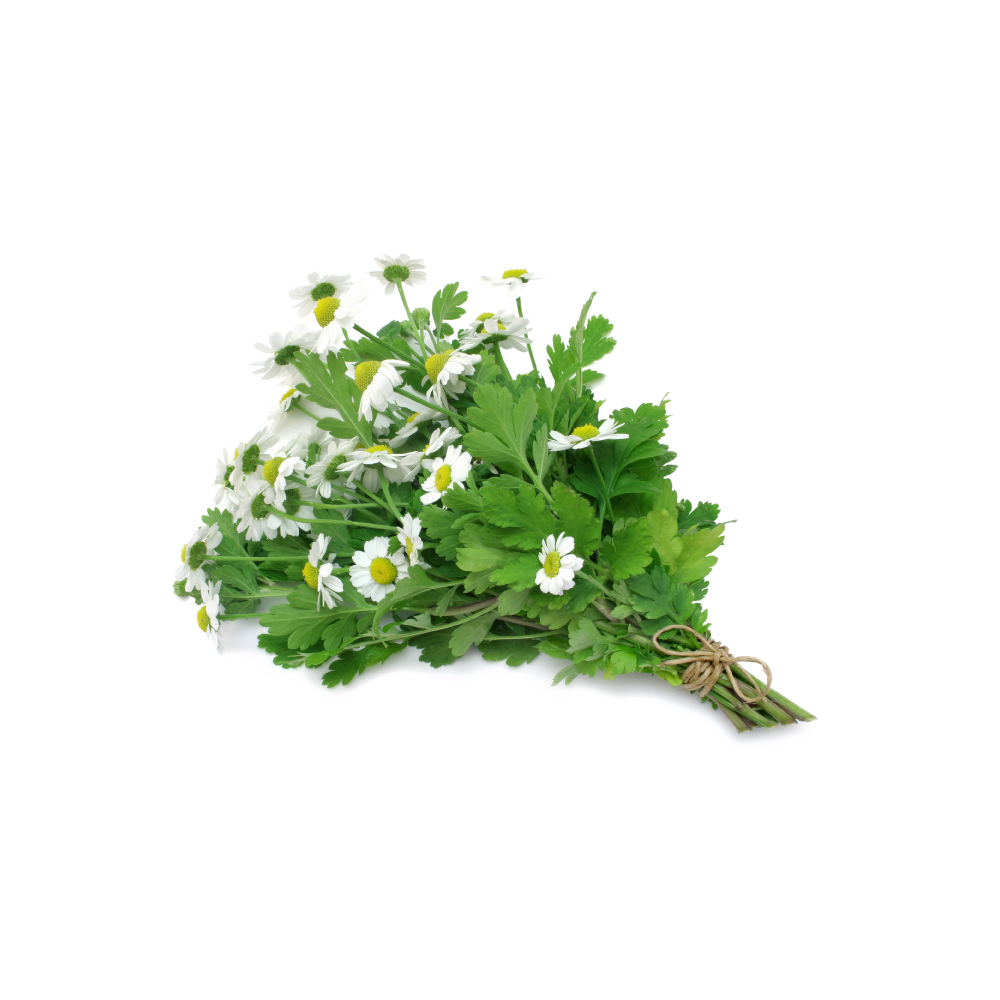
Artecanin is a naturally occurring sesquiterpene lactone (guaianolide — a bis-epoxide carrying the α-methylene-γ-lactone), found in Feverfew and 2 other sources. Its toxicity is not yet characterized.
Concentration
Content by Source
Concentrations not reported. No percent-dry-weight or mg/g figures have been published for this compound in its source plants.
Artecanin at a Glance
Artecanin is a guaianolide sesquiterpene lactone — one of the minor lactones of feverfew (Tanacetum parthenium), where it lives in the long shadow of parthenolide, the germacranolide that products are standardised to and that carries essentially all of the herb’s pharmacology 8Reference 8Systematic reviewFeverfew (Tanacetum parthenium L.): a systematic reviewView study →.
Its chemistry is well settled and its identity is tangled. Artecanin is the same molecule as chrysartemin B 13,
The pharmacology, by contrast, barely exists. A PubMed all-fields search for artecanin returns four records; Europe PMC returns 39, nearly all of them passing mentions inside metabolomics or docking papers; ClinicalTrials.gov returns zero (all checked 31 July 2026). Two of those four PubMed records are in-vitro cytotoxicity papers from a single Hungarian group, one is the 1986 feverfew fractionation that first put artecanin on this database’s radar, and one is a computer-docking exercise with no wet-lab component. The absence is the finding — and it is worth stating plainly that nothing from parthenolide’s IKKβ/NF-κB record has ever been shown for this molecule.
Artecanin, Chrysartemin B and Canin
Three names, two molecules, and one recurring source of confusion — worth untangling before anything else, because the literature does not untangle it for you.
Artecanin and chrysartemin B are the same compound. KEGG lists the entry for C09302 as “Artecanin; Chrysartemin B”, classified as a guaianolide sesquiterpenoid 15Reference 15Kyoto Encyclopedia of Genes and GenomesView study →, and PubChem resolves both names to the same record — CID 442147, C15H18O5, MW 278.30, CAS 29431-84-3 13Reference 13National Center for Biotechnology InformationView study →. The two names arose independently five years apart: Romo and colleagues described chrysartemin A and B from Chrysanthemum parthenium — the plant now called Tanacetum parthenium, i.e. feverfew — in 1970 3Reference 3Constituents of Artemisia and Chrysanthemum species — the structures of chrysartemins A and BView study →, while Bhadane and Shafizadeh named and assigned artecanin from Artemisia cana in 1975 1Reference 1Sesquiterpene lactones of sagebrush: the structure of artecaninView study →. So feverfew’s claim on this molecule actually predates the name artecanin.
Artecanin and canin are stereoisomers, not the same compound. Both are C15H18O5, MW 278.30, and their connectivity is identical — PubChem’s structures for artecanin (CID 442147) and canin (CID 442175) differ only in the stereo layer of the InChIKey 13,
Both names trace to the same plant. Lee, Simpson and Geissman established canin from Artemisia cana subsp. cana in 1969 2Reference 2Sesquiterpenoid lactones of ArtemisiaView study →; Bhadane and Shafizadeh worked out artecanin from the same species six years later 1Reference 1Sesquiterpene lactones of sagebrush: the structure of artecaninView study → — “Artemisia” + “canin”. They are also isolated together: the 1986 feverfew fractionation that identified artecanin identified canin in the very same active fractions 4Reference 4In vitroCompounds extracted from feverfew that have anti-secretory activity contain an alpha-methylene butyrolactone unit — in vitroView study →.
Two cautions follow from this, and they run through the rest of the page:
- Data on one is not data on the other. Where a paper reports “canin and artecanin” as a pair, the pair is what was measured.
- The assignments in this series have been revisited. Names in the canin/artecanin/chrysartemin family have been reassigned more than once in the literature, so older reports should be read against the current structural consensus rather than assumed. That reassignment history is logged as an open question here rather than asserted here, because no primary source establishing it could be retrieved.
What It's Used For
Two in-vitro papers on the isolate, one 1986 fractionation study on feverfew, and a docking exercise. That is the whole record.
Support is an experimental score — weighted by study type (human > animal > in vitro) and volume. A beta, not a validated metric. Both rows here are floor-level by design: there is no human, no animal and no oral data of any kind for this molecule, and the scores exist only to rank two thin lines against each other.
The only application anyone has tested on the isolated molecule. Molnár and colleagues isolated artecanin (compound 1) from Artemisia asiatica and ran it against HL-60 promyelocytic leukaemia cells alongside three other sesquiterpene lactones; the set gave IC50 values in the range 3.6–13.5 µM, with compounds 3 and 4 more potent than artecanin 5Reference 5In vitroInvestigation of the antiproliferative properties of natural sesquiterpenes from Artemisia asiatica and Onopordum acanthium on HL-60 cells — in vitroView study →.
Mechanistically, artecanin increased the G1 and G2/M populations at the expense of S phase, produced concentration-dependent nuclear condensation and membrane disruption, significantly raised caspase-3 and caspase-9 activity, increased the Bax/Bcl-2 ratio and lowered CDK1 and cyclin B2 at 10 µM — a mitochondrial apoptosis signature — and was substantially less active against normal human fibroblasts than against HL-60 5Reference 5In vitroInvestigation of the antiproliferative properties of natural sesquiterpenes from Artemisia asiatica and Onopordum acanthium on HL-60 cells — in vitroView study →.
An earlier paper from the same group, working from a bioassay-guided fractionation of A. asiatica, rated artecanin moderately active against A2780, A431, HeLa and MCF7 6Reference 6In vitroAntiproliferative activity of Artemisia asiatica extract and its constituents on human tumor cell lines — in vitroView study →.
Gap: this is two papers from one group, in a single cell-line panel, with no independent replication, no animal study, no per-compound IC50 itemised in the accessible text, and no comparison against a standard cytotoxic. Low-micromolar cytotoxicity is also close to the default for an α-methylene-γ-lactone, so nothing here distinguishes artecanin from the class. Nothing has been shown in a living organism.
The claim that puts artecanin on the feverfew monograph, and the one that most needs deflating. Groenewegen, Knight and Heptinstall fractionated a feverfew extract, recovered eleven fractions with anti-secretory activity against platelet and polymorphonuclear-leucocyte granule release, and found that every active fraction contained an α-methylene butyrolactone unit; five compounds were identified across those fractions — parthenolide, 3β-hydroxyparthenolide, secotanapartholide A, canin and artecanin 4Reference 4In vitroCompounds extracted from feverfew that have anti-secretory activity contain an alpha-methylene butyrolactone unit — in vitroView study →.
The authors concluded that the sesquiterpene lactones as a group most likely account for feverfew’s inhibition of secretion.
Gap: artecanin was identified, not assayed. No potency, no dose–response and no isolate comparison against parthenolide exists from that work, and the α-methylene butyrolactone finding is explicitly a class conclusion — it applies to every lactone in the fraction. The later reviews that list canin, artecanin and secotanapartholide A among feverfew’s anti-migraine/anti-secretory constituents 8Reference 8Systematic reviewFeverfew (Tanacetum parthenium L.): a systematic reviewView study → are secondary characterisations resting on this single 1986 paper, not independent support.
Mechanisms
| Target / pathway | Effect | Relevant to |
|---|---|---|
| Caspase-9 and caspase-3 | activation in HL-60 cells — the intrinsic (mitochondrial) apoptosis route | antiproliferative (in vitroisolate) |
| Bax / Bcl-2 | Bax/Bcl-2 expression ratio increased at 10 µM | antiproliferative (in vitroisolate) |
| CDK1 and cyclin B2 | expression lowered; G1 and G2/M accumulation with S-phase depletion | antiproliferative (in vitroisolate) |
| α-Methylene-γ-lactone (Michael acceptor) | the class electrophile — thiol alkylation is assumed for artecanin from its structure, never demonstrated for it | class-level chemistrynot an artecanin finding |
| NF-κB / IKKβ | not established for artecanin. The cysteine-179 IKKβ binding is parthenolide’s, shown for parthenolide only | the read-across to avoid |
The honest summary: one cell line, one group, one mechanism panel. Everything else in the table above is either a class property or a target that belongs to a different molecule.
Pharmacokinetics
No data. Absorption, oral bioavailability, distribution, metabolism, half-life, protein binding and active metabolites are all completely unstudied for artecanin. No pharmacokinetic parameter has been published for it in any species, and the compound has never been administered by any route in a published study.
This is not a small caveat. The low-micromolar cytotoxicity above was measured in a dish; without any absorption or exposure figure there is no basis for supposing those concentrations are reachable in a living animal, let alone in a person drinking feverfew tea.
Clinical Trials
None, and none preclinical in vivo. Artecanin has never entered a clinical trial in any indication; a ClinicalTrials.gov query for the compound name returns zero records (checked 31 July 2026). The human trial record that exists in this space belongs to whole feverfew preparations for migraine prophylaxis — see the feverfew monograph — not to this molecule.
| Completed | Planned | Terminated | Preclinical |
|---|---|---|---|
| — | — | — | In vitro only (HL-60 + four solid-tumour lines) |
Last checked: July 2026.
The SARS-CoV-2 Docking Claim
The single most visible artecanin result online is a 2021 virtual screen: 3,392 compounds from sixty-six medicinal plants were docked against the SARS-CoV-2 main protease, and artecanin came out with “the most favourable druglikeness potentials,” with no predicted hepatotoxicity, carcinogenicity, mutagenicity or cytotoxicity, and molecular-dynamics stability comparable to the ligand-free protease 7Reference 7Artecanin of Laurus nobilis is a novel inhibitor of SARS-CoV-2 main protease with highly desirable druglikeness — in silico molecular docking and dynamics studyView study →.
Three things about that paper matter more than its headline:
- It is entirely computational. No enzyme assay, no cell assay, no virus. Docking scores and predicted toxicity are hypothesis-generating, not findings; no wet-lab follow-up on artecanin has appeared since.
- The “no predicted cytotoxicity” output contradicts the only measured data. Artecanin is cytotoxic in cells at low micromolar concentrations 5Reference 5In vitroInvestigation of the antiproliferative properties of natural sesquiterpenes from Artemisia asiatica and Onopordum acanthium on HL-60 cells — in vitroView study →. That mismatch is a useful calibration of what those prediction tools are worth.
- The plant attribution is doubtful. The paper titles artecanin a compound “of Laurus nobilis” — bay laurel, a Lauraceae. Artecanin’s confirmed occurrence is in Asteraceae (Tanacetum, Artemisia, Chrysanthemum), and no primary isolation of artecanin from Laurus nobilis could be located in PubMed (checked 31 July 2026). The attribution looks like a phytochemical-database artefact carried into the paper’s title.
None of this makes the docking result wrong. It makes it a computational hypothesis about a molecule with no antiviral data at all.
Isolate vs. Plant Studies
The split here is unusually clean, and it runs the opposite way to the usual herbal pattern.
The isolate work exists but is tiny and is not about feverfew. Both antiproliferative papers used artecanin purified from Artemisia asiatica, not from feverfew 5,
The feverfew work is fraction-level and never isolated it. The 1986 anti-secretory study identified artecanin inside active fractions but assayed the fractions, not the compound 4Reference 4In vitroCompounds extracted from feverfew that have anti-secretory activity contain an alpha-methylene butyrolactone unit — in vitroView study →. Everything downstream of that — including the review attributions of anti-migraine and anti-secretory activity to canin, artecanin and secotanapartholide A 8Reference 8Systematic reviewFeverfew (Tanacetum parthenium L.): a systematic reviewView study → — inherits that limitation.
And the plant-level human evidence belongs to something else entirely. Feverfew’s randomised migraine trials tested whole preparations standardised to parthenolide, which can account for as much as ~85% of total sesquiterpene lactone content 16Reference 16ReviewHerbal medications commonly used in the practice of rheumatology: mechanisms of action, efficacy, and side effects — reviewView study →. There is no basis for assigning any share of feverfew’s clinical signal to artecanin — it has never been separated out, quantified, or dosed.
Biosynthesis in Feverfew
Artecanin’s biosynthetic origin is better characterised than its pharmacology, thanks to work aimed at a different molecule.
Feverfew makes its guaianolides from the germacranolide costunolide. Liu and colleagues identified kauniolide synthase (TpKLS) from Tanacetum parthenium — a cytochrome P450 that performs an unusual combination of stereoselective C3 hydroxylation of costunolide, water elimination, cyclisation and regioselective deprotonation to give kauniolide, the first committed guaianolide of the pathway 9Reference 9In vitroKauniolide synthase is a P450 with unusual hydroxylation and cyclization-elimination activity — in vitro enzyme characterisationView study →. The authors name artecanin explicitly as a downstream product: its formation “requires multiple oxidation steps of kauniolide, likely catalysed by P450s” 9Reference 9In vitroKauniolide synthase is a P450 with unusual hydroxylation and cyclization-elimination activity — in vitro enzyme characterisationView study →.
Those downstream P450s have not been identified. The pathway is therefore established at its first committed step and hypothesised beyond it — which is why artecanin cannot currently be produced by pathway reconstruction in a heterologous host, one of the stated motivations for finding the missing enzymes 9Reference 9In vitroKauniolide synthase is a P450 with unusual hydroxylation and cyclization-elimination activity — in vitro enzyme characterisationView study →.
Prevalence in Nature
Artecanin’s occurrence is confirmed in several Asteraceae and quantified in none of them.
Feverfew (Tanacetum parthenium). The oldest record predates the name: Romo and colleagues described chrysartemin B — the same molecule 13,
Silver sagebrush (Artemisia cana). The type source for both the artecanin and canin names — Bhadane and Shafizadeh isolated and assigned artecanin from A. cana collected in Montana 1Reference 1Sesquiterpene lactones of sagebrush: the structure of artecaninView study →, six years after Lee, Simpson and Geissman had done the same for canin from A. cana subsp. cana 2Reference 2Sesquiterpenoid lactones of ArtemisiaView study →.
Artemisia asiatica. The practical source for the pharmacology: both antiproliferative papers obtained artecanin by bioassay-guided fractionation of A. asiatica herb 5,
No concentration figure exists. No study located reports artecanin as a percentage of dry weight, as a percentage of total sesquiterpene lactones, or as a mg/g figure in any species. That is why there is no “Content by Source” chart here. The one quantitative anchor available for context is the comparator: parthenolide runs at roughly 0.2–1.8% of dried feverfew herb and can be up to ~85% of the total sesquiterpene lactone pool 16Reference 16ReviewHerbal medications commonly used in the practice of rheumatology: mechanisms of action, efficacy, and side effects — reviewView study → — leaving artecanin somewhere in the remaining minority fraction, alongside canin, costunolide, secotanapartholide A and the rest. That is an inference from the parthenolide figure, not a measurement of artecanin.
Discovery & Synthesis
First described (1970), under another name. Romo, Romo de Vivar, Treviño, Joseph-Nathan and Díaz reported the new guaianolides chrysartemin A and B from Chrysanthemum and Artemisia species, with chrysartemin B a constituent of Chrysanthemum parthenium — feverfew 3Reference 3Constituents of Artemisia and Chrysanthemum species — the structures of chrysartemins A and BView study →. That compound is artecanin 13,
Named and assigned (1975). Bhadane and Shafizadeh published “Sesquiterpene lactones of sagebrush: the structure of artecanin” in Phytochemistry, working from Artemisia cana material collected in Montana 1Reference 1Sesquiterpene lactones of sagebrush: the structure of artecaninView study →. The name is a contraction of Artemisia and canin — the lactone Lee, Simpson and Geissman had characterised from the same species in 1969 2Reference 2Sesquiterpenoid lactones of ArtemisiaView study → — which is exactly why the two are so easily confused.
Total synthesis. None located. Searches of PubMed and the open web for a total or semi-synthesis of artecanin returned nothing (checked 31 July 2026); the synthetic literature in this area targets other guaianolides. The molecule is obtained only by extraction from plant material, in research quantities.
Manufacture today. None. Artecanin is not produced commercially, is not sold as a supplement or a drug, and exists as a reference standard and a research isolate. The biotechnological route — reconstructing the costunolide → kauniolide → artecanin pathway in a heterologous host — is an explicitly stated goal that remains blocked on unidentified P450s 9Reference 9In vitroKauniolide synthase is a P450 with unusual hydroxylation and cyclization-elimination activity — in vitro enzyme characterisationView study →.
Patents: not yet researched.
Toxicity & Safety
Artecanin’s toxicity is not established, and the unknown grading means exactly that: no acute or repeat-dose toxicology, no LD50, no genotoxicity assay, no reproductive or developmental data, no interaction work, and no human exposure data of any kind for the isolated molecule. There is nothing to grade.
Do not read safety from silence — and do not read it from a prediction engine either. The docking paper’s “no predicted hepatoxicity, carcinogenicity, mutagenicity, and cytotoxicity” 7Reference 7Artecanin of Laurus nobilis is a novel inhibitor of SARS-CoV-2 main protease with highly desirable druglikeness — in silico molecular docking and dynamics studyView study → is software output, and it is already contradicted by the measured low-micromolar cytotoxicity in HL-60 cells 5Reference 5In vitroInvestigation of the antiproliferative properties of natural sesquiterpenes from Artemisia asiatica and Onopordum acanthium on HL-60 cells — in vitroView study →. An untested compound is unassessed, not benign.
The one real, class-level hazard is Asteraceae contact allergy. Sesquiterpene lactones carrying the α-methylene-γ-lactone are the classic Compositae sensitisers, and they are screened for in dermatology with the sesquiterpene-lactone (SL) mix and Compositae mix patch tests — in one occupational series Compositae mix was positive in 4.2% of patients against 0.7% for SL mix, and patch testing itself actively sensitised four patients 11Reference 11Patch test sensitization to Compositae mix, sesquiterpene-lactone mix, Compositae extracts, laurel leaf, chlorophorin, mansonone A, and dimethoxydalbergione — occupational patch-test studyView study →. Feverfew is a recognised member of that group: two published cases describe Compositae dermatitis flaring from a feverfew-containing moisturiser 12Reference 12Case reportTwo cases of compositae dermatitis exacerbated by moisturizer containing feverfew — case reportView study →. Artecanin has the reactive lactone that drives this chemistry, but it has never itself been tested as a contact allergen, and the SL mix does not contain it — so the caution is inherited from its class and its plant, not demonstrated for the molecule.
- Toxicity genuinely unknown. No toxicology, genotoxicity, reproductive or human data exist for isolated artecanin. Absence of reported harm is not evidence of safety.
- Asteraceae contact-allergy class risk. α-Methylene-γ-lactones are the classic Compositae sensitisers; feverfew products have caused Compositae dermatitis. Inherited from the class, not tested for artecanin.
- Cytotoxic in cells at low micromolar concentrations. It kills leukaemia cells in vitro — a reason for caution about the unknown, not a therapeutic claim.
- Do not import parthenolide’s profile — benefits or risks. Parthenolide’s IKKβ/NF-κB pharmacology and its allergen status are parthenolide’s; neither has been shown for this molecule.
- Structurally well defined. Formula, CAS number, stereochemistry and biosynthetic origin are settled, so there is a defined molecule to study if anyone ever does.
Dosage
There is no dose, and no basis for one. Artecanin has never been administered to an animal or a person in any published study. It has no bioavailability, half-life or exposure data, is not sold in any form, and appears in no standardisation specification — feverfew products are standardised to parthenolide (commonly a ≥0.2% target), never to artecanin 8,
The only quantities that exist for artecanin are in-vitro assay concentrations — the 3.6–13.5 µM band across the four lactones tested on HL-60 cells, and the 10 µM used for the gene-expression work 5Reference 5In vitroInvestigation of the antiproliferative properties of natural sesquiterpenes from Artemisia asiatica and Onopordum acanthium on HL-60 cells — in vitroView study →. Those are dish concentrations, not doses, and with no absorption data there is no way to translate them into an intake. Nothing here is dosing guidance.
References
- Bhadane NR, Shafizadeh F (1975). Sesquiterpene lactones of sagebrush: the structure of artecanin. Phytochemistry 14:2651–2653. https://doi.org/10.1016/0031-9422(75)85243-5
- Lee KH, Simpson RF, Geissman TA (1969). Sesquiterpenoid lactones of Artemisia. Constituents of Artemisia cana ssp. cana. The structure of canin. Phytochemistry. https://doi.org/10.1016/S0031-9422(00)85924-5
- Romo J, Romo de Vivar A, Treviño R, Joseph-Nathan P, Díaz E (1970). Constituents of Artemisia and Chrysanthemum species — the structures of chrysartemins A and B. Phytochemistry 9:1615–1621. https://doi.org/10.1016/S0031-9422(00)85285-1
- Groenewegen WA, Knight DW, Heptinstall S (1986). Compounds extracted from feverfew that have anti-secretory activity contain an alpha-methylene butyrolactone unit — in vitro. Journal of Pharmacy and Pharmacology 38(9):709–712. https://pubmed.ncbi.nlm.nih.gov/2877077/
- Molnár J, Szebeni GJ, Csupor-Löffler B, Hajdú Z, Szekeres T, Saiko P, Ocsovszki I, Puskás LG, Hohmann J, Zupkó I (2016). Investigation of the antiproliferative properties of natural sesquiterpenes from Artemisia asiatica and Onopordum acanthium on HL-60 cells — in vitro. International Journal of Molecular Sciences 17(2):83. https://pubmed.ncbi.nlm.nih.gov/26901188/
- Hajdú Z, Hohmann J, Forgo P, Máthé I, Molnár J, Zupkó I (2014). Antiproliferative activity of Artemisia asiatica extract and its constituents on human tumor cell lines — in vitro. Planta Medica 80(18):1692–1697. https://pubmed.ncbi.nlm.nih.gov/25295671/
- Al-Shuhaib MBS, Hashim HO, Al-Shuhaib JMB, Obayes DH (2023). Artecanin of Laurus nobilis is a novel inhibitor of SARS-CoV-2 main protease with highly desirable druglikeness — in silico molecular docking and dynamics study. Journal of Biomolecular Structure and Dynamics 41(6):2355–2367. https://pubmed.ncbi.nlm.nih.gov/35067202/
- Pareek A, Suthar M, Rathore GS, Bansal V (2011). Feverfew (Tanacetum parthenium L.): a systematic review. Pharmacognosy Reviews 5(9):103–110. https://doi.org/10.4103/0973-7847.79105
- Liu Q, Beyraghdar Kashkooli A, Manzano D, et al. (2018). Kauniolide synthase is a P450 with unusual hydroxylation and cyclization-elimination activity — in vitro enzyme characterisation. Nature Communications 9:4657. https://pubmed.ncbi.nlm.nih.gov/30405138/
- Kwok BH, Koh B, Ndubuisi MI, Elofsson M, Crews CM (2001). The anti-inflammatory natural product parthenolide from the medicinal herb feverfew directly binds to and inhibits IκB kinase — in vitro. Chemistry & Biology 8(8):759–766. https://pubmed.ncbi.nlm.nih.gov/11514225/
- Kanerva L, Estlander T, Alanko K, Jolanki R (2001). Patch test sensitization to Compositae mix, sesquiterpene-lactone mix, Compositae extracts, laurel leaf, chlorophorin, mansonone A, and dimethoxydalbergione — occupational patch-test study. American Journal of Contact Dermatitis 12(1):18–24. https://pubmed.ncbi.nlm.nih.gov/11244135/
- Killoran CE, Crawford GH, Pedvis-Leftick A (2007). Two cases of compositae dermatitis exacerbated by moisturizer containing feverfew — case report. Dermatitis 18(4):225–229. https://pubmed.ncbi.nlm.nih.gov/18021604/
- PubChem CID 442147 — Artecanin (synonym chrysartemin B; CAS 29431-84-3). National Center for Biotechnology Information. https://pubchem.ncbi.nlm.nih.gov/compound/442147
- PubChem CID 442175 — Canin. National Center for Biotechnology Information. https://pubchem.ncbi.nlm.nih.gov/compound/442175
- KEGG COMPOUND C09302 — Artecanin (Chrysartemin B), guaianolide sesquiterpenoid. Kyoto Encyclopedia of Genes and Genomes. https://www.kegg.jp/entry/C09302
- Setty AR, Sigal LH (2005). Herbal medications commonly used in the practice of rheumatology: mechanisms of action, efficacy, and side effects — review. Seminars in Arthritis and Rheumatism 34(6):773–784. https://pubmed.ncbi.nlm.nih.gov/15942912/



